ScienceBasedKids.com may earn a commission from affiliate links in this guide. Our ratings are never influenced by affiliate relationships. Read our full methodology.
A Note on “For Girls” Framing
Gift-givers search “STEM gifts for 10-year-old girl” to find something specific they hope will land. We’ve used that framing for search reasons; the products in this guide are all appropriate for any 10-year-old. A parallel guide for 8-year-old boys covers that search intent with substantial product overlap. Where 10 differs from 8 is developmental ceiling — 10-year-olds handle content and complexity that 8-year-olds still struggle with — not gender.
Developmental Frame for Age 10
A 10-year-old can:
- Work through a 100-page technical manual at adult reading level
- Execute multi-hour projects in a single session
- Handle abstract concepts (circuit theory, chemical reactions, algebra) with light scaffolding
- Use real tools (screwdrivers, tweezers, pipettes) without adult hovering
- Recognize and reject “toy version” products that feel beneath their age
The last point is the single biggest shift from age 8. A 10-year-old evaluates a gift partly on whether it signals respect for their growing capability. Products that get this right (real chemistry reagents, real electronics, real engineering) outperform products that get it wrong (bright plastic “STEM toys” with minimal content).
The Short Answer
| Budget | Top pick |
|---|---|
| Under $50 | Thames & Kosmos Chem C500 or Snap Circuits Classic SC-300 |
| $50–$100 | GraviTrax Starter Set + expansion, or Thames & Kosmos C1000 |
| $100–$150 | Thames & Kosmos Chem C1000 + accessories |
| Subscription | Mel Chemistry ($44.90/mo) |
| $200+ | LEGO SPIKE Essential or Thames & Kosmos C2000 |
Chemistry
1. Thames & Kosmos Chem C1000 — $100
The standard entry point for serious chemistry at age 10. 125 experiments, real reagents at EN 71-4 concentration caps, alcohol burner for heated reactions. Requires committed adult supervision but delivers genuine chemistry content. See our ASTM F963 safety guide for the standards context.
2. Mel Chemistry Subscription — $44.90/mo
The curriculum-driven alternative. 18-month sequenced progression through secondary-school chemistry topics, paired with a VR app for molecular visualization. For a 10-year-old already interested in chemistry, this delivers depth no one-time kit matches. See Mel vs Thames & Kosmos for the decision framework.
3. Thames & Kosmos Chem C500 — $70
The budget-tier entry. 28 experiments, moderate reagent exposure, appropriate if C1000 is out of budget or if the chemistry interest is unproven.
Electronics & Engineering
4. Snap Circuits Classic SC-300 — $45
Real electronics, 300+ projects. At 10, a kid works through the manual independently and starts modifying circuits to see what happens. See our Jr vs Classic piece for sizing.
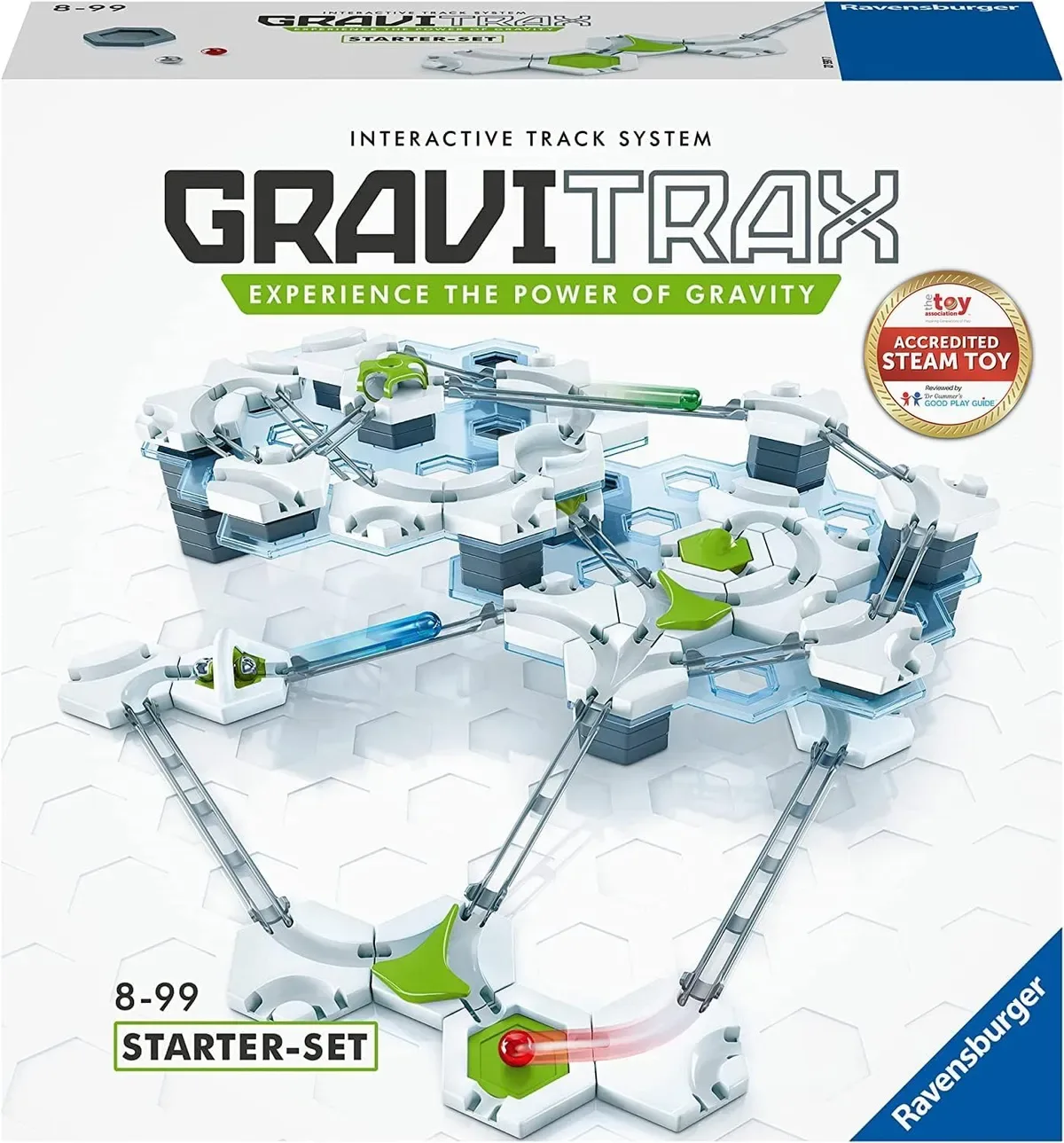
5. GraviTrax Starter Set — $60
Marble-run physics that scales into genuine engineering challenges. Pair with the GraviTrax PRO expansion ($40) for more ambitious builds. Replay value is exceptional.
6. LEGO SPIKE Essential — $290
Programmable robotics, real sensors and motors, block-based coding. At 10, a kid can work through guided projects and start on self-designed builds. Expensive but high-ceiling.
7. CrunchLabs Hack Pack Subscription — $25/mo
Teen-focused electronics monthly kit (Arduino-adjacent). For a 10-year-old already familiar with circuit basics, this is the step-up. See KiwiCo vs CrunchLabs for the sibling product.
Coding & Robotics
8. Cubetto Coding Robot — $225
Screen-free Montessori-adjacent coding. A bit young for 10 (peak fit is 3–6), but the coding blocks’ progression into Logo-style programming can engage an older kid who enjoys the aesthetic. Expensive. Best for gifting contexts where the packaging and Montessori positioning matter.
9. Osmo Genius Starter Kit — $100
Physical-digital hybrid (requires iPad). At 10, the word and math games are age-appropriate but probably not challenging enough by themselves — pair with a Coding Starter Kit expansion for more substantive programming practice.
Puzzles & Logic
10. ThinkFun Gravity Maze — $35
60 challenges, by age 10 the harder levels become actually hard. A kid works through the whole set over months.
11. Kingdomino — $25
Spatial-strategy family game. Plays 2–4 in 20 minutes. At 10, a kid can develop meaningful strategic thinking; plays near-equal with adults. Good for family game nights.
12. Rush Hour Jr. + Rush Hour Deluxe — $40
A 10-year-old has outgrown Jr. specifically but will work through the adult Rush Hour set productively. The bundle is a cheap way to extend into harder challenges.
Arts-Meets-STEM
13. Spirograph Deluxe — $25
Mathematical geometry through art. A 10-year-old who enjoys drawing encounters real rotational-symmetry mathematics by making patterns. Pairs well with a sketch notebook.
14. Arteza Watercolors — $40
Adjacent to STEM but valuable: a 10-year-old who has been drawing for years benefits from stepping up to real materials. The “adult materials for a kid” signal lands well at this age.
Outdoor & Nature Science
15. Beginner Microscope Under $50
See our full microscope buying guide — the AmScope M30 and My First Lab Duo-Scope both work for 10-year-olds (though both are rated from age 8). A 10-year-old uses these at the upper end of their capability — preparing their own slides, collecting outdoor specimens, pairing with a sketch notebook for observation-drawing.
Book Recommendations (Pair With a Gift)
STEM gifts benefit from a good companion book — it extends the gift’s engagement window. For 10-year-old girls specifically (where representation in science biography matters), the following pair well with the gifts above:
- Women in Science: 50 Fearless Pioneers Who Changed the World by Rachel Ignotofsky — pairs with any chemistry gift
- Rosie Revere, Engineer by Andrea Beaty (technically younger audience but the message reads well at 10 too) — pairs with engineering/building gifts
- The Disappearing Spoon by Sam Kean (adult-level but accessible to a reading-advanced 10-year-old) — pairs with chemistry kits
- Caroline’s Comets by Emily Arnold McCully — pairs with astronomy / telescope gifts
What to Avoid at Age 10
- Anything packaged in explicitly “for girls” aesthetics (pink, sparkly, princess-themed) that has less substance than the standard version. Ten-year-olds register this as condescension.
- “Makeup chemistry” kits. Some are fine, most are chemistry-adjacent marketing without much chemistry. If you want cosmetics-as-chemistry, a Thames & Kosmos Chemistry kit that includes formulation experiments is better.
- Products with a lower cognitive ceiling than the age. A kit that a 7-year-old would complete in an afternoon is a mismatch for 10.
- Subscription boxes without a specific “for this age” track. KiwiCo’s Tinker Crate (ages 9–14) is a better fit than Kiwi Crate (ages 5–8) for a 10-year-old. See our KiwiCo vs Mel and KiwiCo vs CrunchLabs pieces for subscription fit.
- Toys that require an adult to operate. A 10-year-old wants to use the thing themselves. Products that require parental setup every time get abandoned.
A Combination That Works
With ~$150 to spend on a cohesive gift:
- Thames & Kosmos Chem C1000 — $100
- ThinkFun Gravity Maze — $35
- Sketch notebook + safety goggles upgrade — $15
Total: $150. Real chemistry plus logic puzzle plus the accessories that signal respect. Lower-risk than trying to hit with one $150 pick when the kid’s specific interests aren’t fully known.
What the Research Says About Age 10 STEM Engagement
The developmental window of ages 9–12 is identified in the education research as a critical period for shaping sustained STEM interest — particularly for girls, where enrollment in upper-level science courses in later adolescence correlates strongly with engagement patterns formed in this window.1 The implication for gift-giving: this age is substantive for STEM identity formation, and gifts that treat the child as genuinely capable of real content matter more than gifts that just entertain.
Every product recommended has been reviewed in depth. The “for girls” framing in this article reflects search intent, not product attributes — all picks are appropriate for any 10-year-old.
Footnotes
-
Aschbacher, P. R., Li, E., & Roth, E. J. (2010). “Is science me? High school students’ identities, participation and aspirations in science, engineering, and medicine.” Journal of Research in Science Teaching, 47(5), 564–582. ↩