ScienceBasedKids.com may earn a commission from affiliate links in this review. Our ratings are never influenced by affiliate relationships. Read our full methodology.
Here’s a question that would have seemed absurd twenty years ago: should a three-year-old learn to code? The tech industry’s answer is an enthusiastic yes, backed by a growing market of coding toys aimed at preschoolers. The research community’s answer is more nuanced: computational thinking — the ability to break problems into sequences, identify patterns, and debug errors — is a genuinely valuable cognitive skill. Whether a toy robot is the right way to develop it in a three-year-old is a different question.
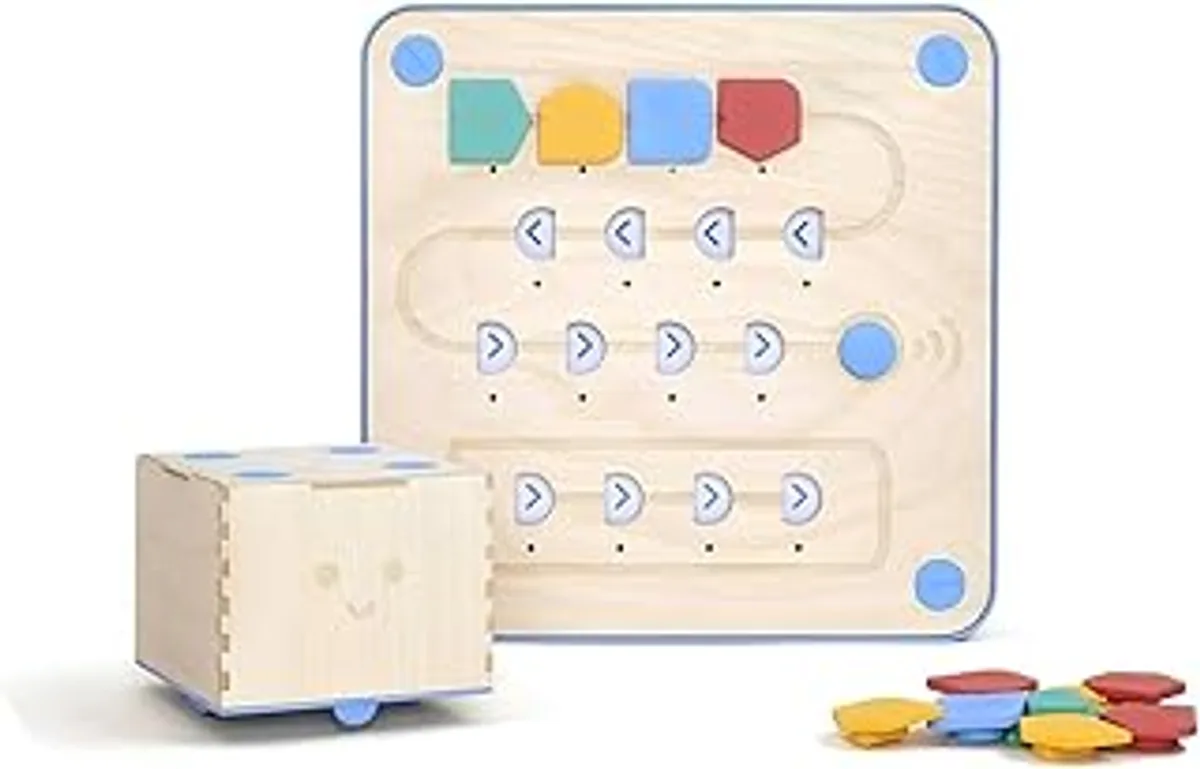
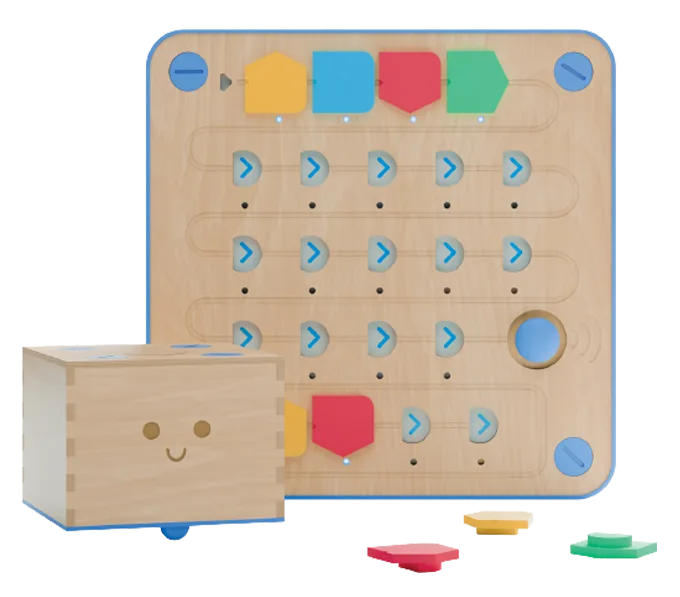
Cubetto ($225) is perhaps the most philosophically ambitious entry in the preschool coding category. Created by Primo Toys and inspired by the Montessori tradition, it’s a screen-free, tactile coding system where children program a small wooden robot by placing colored blocks into a physical coding board. No apps, no screens, no text. Just wood, colors, and spatial logic. We tested it for eight weeks with children ages 3 through 6.
Product Overview
The Cubetto Playset includes:
- Cubetto robot — a small wooden cube on wheels with a friendly face, controlled via Bluetooth
- Coding board — a wooden board with 12 slots for instruction blocks plus a 4-slot “function” area
- 16 direction blocks — color-coded: green (forward), red (right), yellow (left), blue (function call)
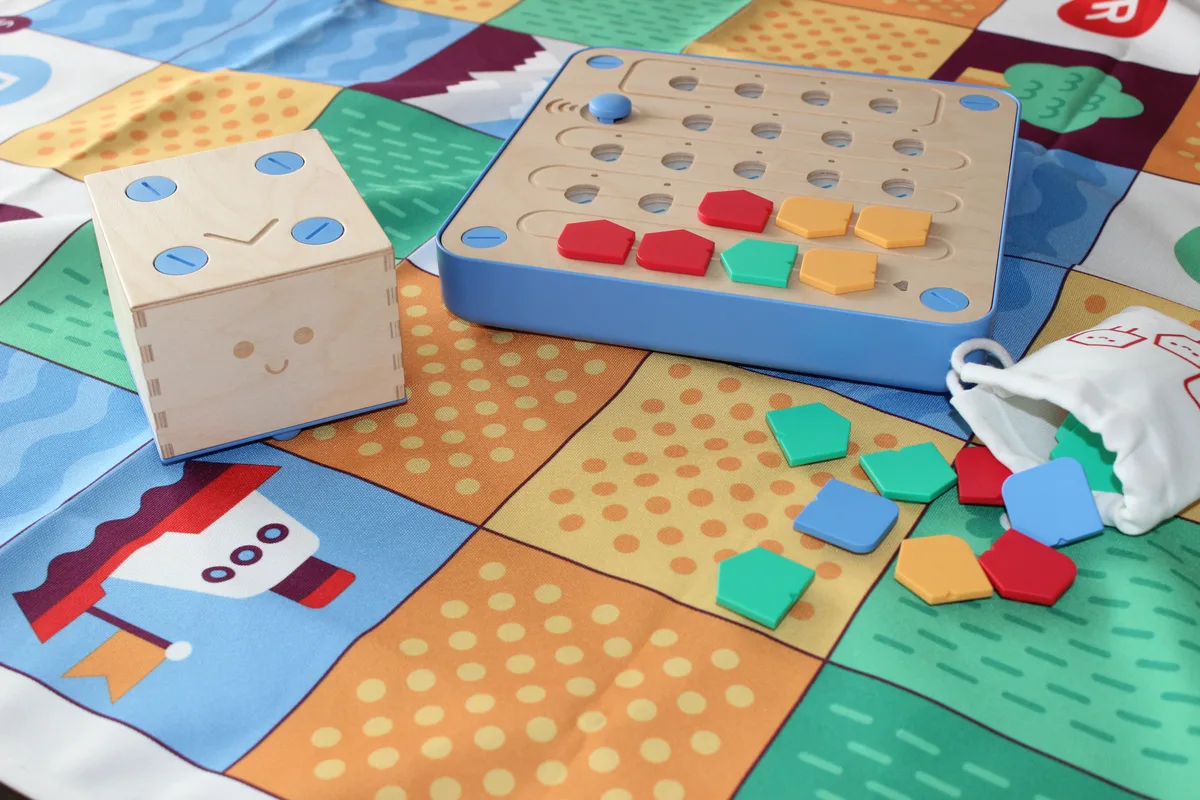
- World map — a fabric play mat with a grid of illustrated squares representing locations
- Story book — a companion narrative that provides context for navigation challenges
The gameplay loop: place a block in the coding board to represent a movement command. Press the blue button. Cubetto executes the sequence, moving on the grid map. Green moves forward one square, red turns right, yellow turns left. The blue block calls the “function” — a subroutine of up to 4 commands that can be reused. Children navigate Cubetto to specific locations on the map, solving increasingly complex routing challenges.
Our Evaluation

Build Quality: 9/10
Cubetto is gorgeous. The robot is solid beechwood with a smooth finish and a satisfying weight. The coding board is equally well-made — thick wood with precisely routed slots that hold the direction blocks firmly. The direction blocks themselves are chunky, colorful, and sized perfectly for preschool hands.
The fabric play mat is durable and colorful, with a grid that aligns well with Cubetto’s movement increments. The story book is well-illustrated and sturdy enough for repeated handling.
The Bluetooth connection between the coding board and robot is reliable — in eight weeks, we experienced only two connection drops, both resolved by turning the robot off and on. Battery life (6 AA batteries for the robot, 3 for the board) is adequate for approximately 4-5 hours of active play per set.
Play Value: 7/10
The initial play experience is magical. A three-year-old places a green block, presses the button, and watches Cubetto move forward. Cause and effect, made tangible. The progression from single commands to multi-step sequences to function calls is well-scaffolded and introduces programming concepts in a developmentally appropriate way.
In our testing, children grasped the basic concept (place block, robot moves) within the first session. Multi-step sequences were understood by session 2-3. The function concept (blue block calls the subroutine) was the most challenging and wasn’t reliably understood until sessions 5-8, varying by age.
The play value limitation is longevity. Unlike open-ended toys like Magna-Tiles or LEGO, Cubetto has a curriculum — and curricula end. Most children in our testing had explored the full range of challenges within 20-30 play sessions over 2-3 months. After that, engagement dropped significantly. The expansion packs add new maps and narratives but use the same coding mechanics, so they extend the content without deepening the challenge.
Age Appropriateness: 8/10
The 3-6 age range is accurate. Three-year-olds can engage with basic commands (forward, turn) with adult scaffolding. Five-year-olds can work independently through the full challenge set. Six-year-olds may find the system too simple and be ready for more complex coding interfaces.
Value for Money: 5/10
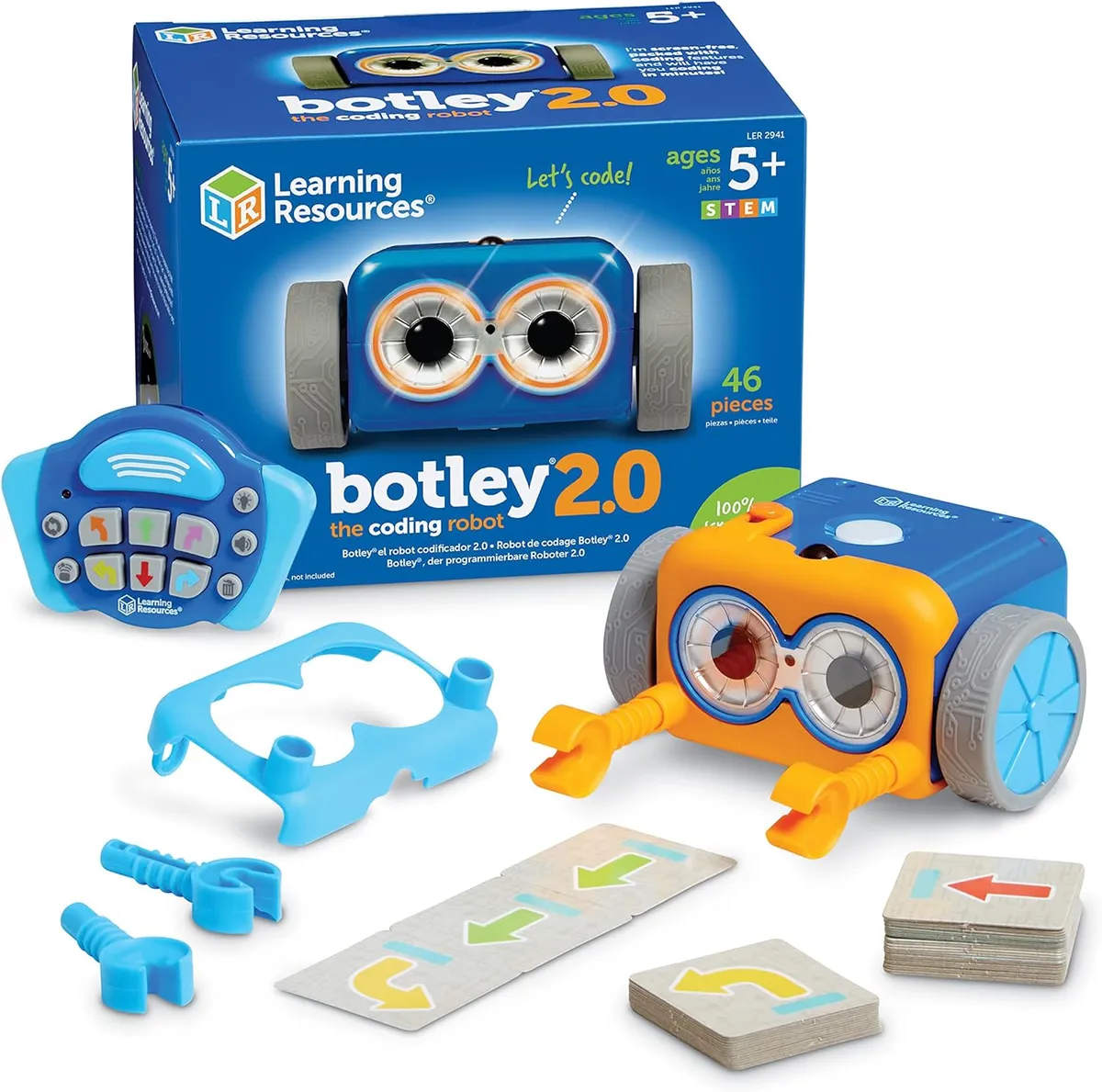
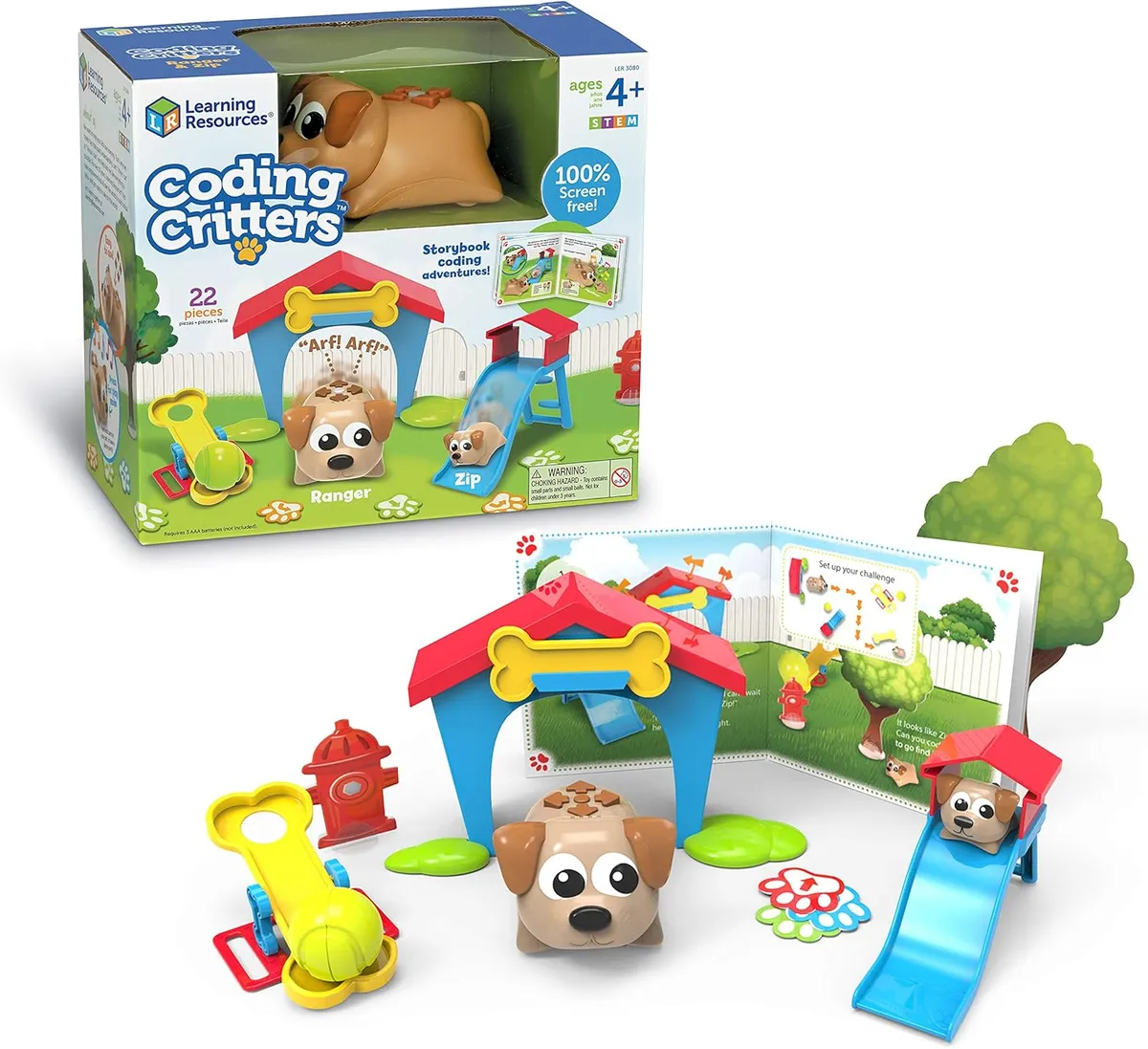
At $225, Cubetto is the most expensive coding toy in our testing portfolio. Botley 2.0 ($85) introduces similar concepts at one-third the price. Coding Critters ($40) provides a simpler entry at one-fifth the price. The Cubetto premium buys you wooden materials, Montessori-inspired design philosophy, and arguably the most elegant physical coding interface available — but the per-session cost, given the 2-3 month engagement window, is steep.
The Evidence
Computational Thinking in Early Childhood. Bers et al. (2014) found that kindergartners could learn sequencing, flow of control, and debugging concepts through age-appropriate programming environments.1 The Cubetto system aligns well with this research — its tactile interface removes literacy barriers while preserving the core computational thinking concepts.
Screen-Free Learning. The AAP recommends limiting screen time for children under 5. Cubetto’s screen-free design sidesteps this concern entirely. Hirsh-Pasek et al. (2015) argued that the most effective educational technologies are those that promote active, engaged, meaningful, and socially interactive learning.2 Cubetto’s physical manipulation and parent-child collaborative play align with these principles.
Executive Function and Sequencing. Programming requires sequencing — putting instructions in the correct order. Diamond (2013) identified sequencing as a component of executive function that develops rapidly between ages 3 and 5.3 Cubetto provides structured practice in sequencing within a low-stakes, playful context.
The honest summary: Computational thinking can be introduced to preschoolers, and tactile, screen-free interfaces are developmentally appropriate ways to do it. No evidence demonstrates that Cubetto produces better outcomes than cheaper coding toys using similar principles.
Safety Notes
Cubetto meets ASTM F963, EN-71, and CPSIA safety standards. All pieces exceed the small-parts threshold. The wooden construction is free of sharp edges and uses non-toxic finishes. Battery compartments are screw-secured.
No CPSC recalls have been issued for Cubetto.
The Verdict
Cubetto is the most elegant preschool coding toy available — a thoughtfully designed system that introduces programming concepts to children as young as three, without screens or literacy requirements. The wooden construction is beautiful, the coding interface is inspired, and the learning progression is well-scaffolded.
The price is the barrier. At $225 with a 2-3 month engagement window, the cost-per-session is significantly higher than alternatives. Botley 2.0 teaches similar concepts with more features at one-third the price. Cubetto is the better design; whether it’s the better value depends on your priorities.
Product Rating: 7/10 — Inspired design and genuine educational value. Limited longevity and steep price prevent a higher score.
Evidence Rating: Emerging — Computational thinking is teachable in preschool. Screen-free, tactile interfaces are developmentally appropriate. No Cubetto-specific outcome research.
Who Should Buy This
- Montessori families who value natural materials and screen-free learning
- Parents specifically seeking coding exposure for children ages 3-5
- Schools or learning centers that can amortize the cost across many children
- Design-conscious families who want educational toys that are also beautiful
Who Should Skip This
- Budget-conscious families — Botley 2.0 or Coding Critters offer similar concepts for far less
- Children over 6 who are ready for more complex coding environments
- Families looking for a toy with multi-year engagement potential
- Anyone who prioritizes play longevity over design elegance
This review reflects our independent evaluation. ScienceBasedKids.com purchased this product at retail price. We may earn a commission if you purchase through our links, which helps fund our research. This never influences our ratings.
Footnotes
-
Bers, M. U., Flannery, L., Kazakoff, E. R., & Sullivan, A. (2014). “Computational thinking and tinkering: Exploration of an early childhood robotics curriculum.” Computers & Education, 72, 145-157. ↩
-
Hirsh-Pasek, K., Zosh, J. M., Golinkoff, R. M., Gray, J. H., Robb, M. B., & Kaufman, J. (2015). “Putting education in ‘educational’ apps: Lessons from the science of learning.” Psychological Science in the Public Interest, 16(1), 3-34. ↩
-
Diamond, A. (2013). “Executive functions.” Annual Review of Psychology, 64, 135-168. ↩
Enjoyed this review? We publish two new evidence-based evaluations every week.
Free. No spam. Unsubscribe anytime.
All children grasped sequential instructions by session 3. Function concept (subroutine) took longer.
Recommended Accessories
Affiliate links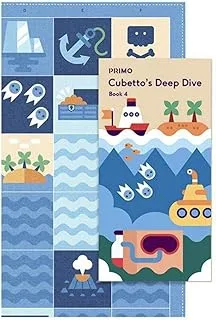
Cubetto Adventure Pack - Ocean
“New map and story book that extends the play narrative. Fresh challenges for the same coding system.”
Cubetto Logic Blocks Pack
“Additional coding blocks including negation and random direction. Adds complexity for older children.”
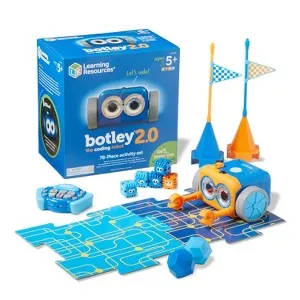
Learning Resources Botley 2.0 Coding Robot
“Screen-free alternative at 1/3 the price. Plastic, not wood. More features but less elegant.”
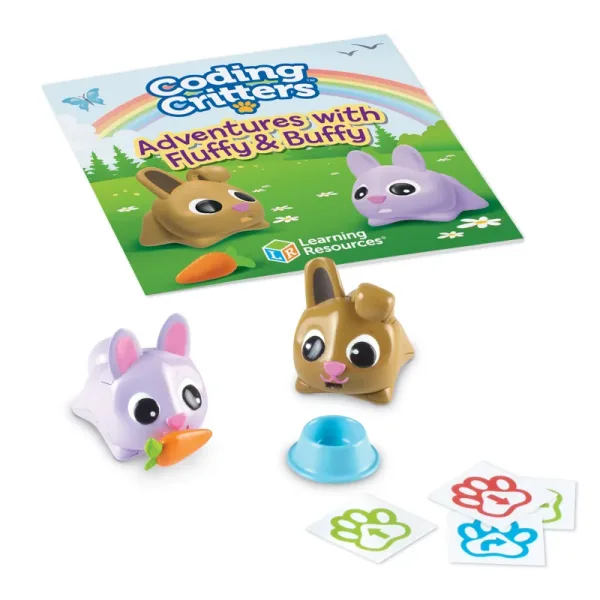
Learning Resources Coding Critters
“Budget screen-free coding for younger children. Simpler but more affordable entry point.”
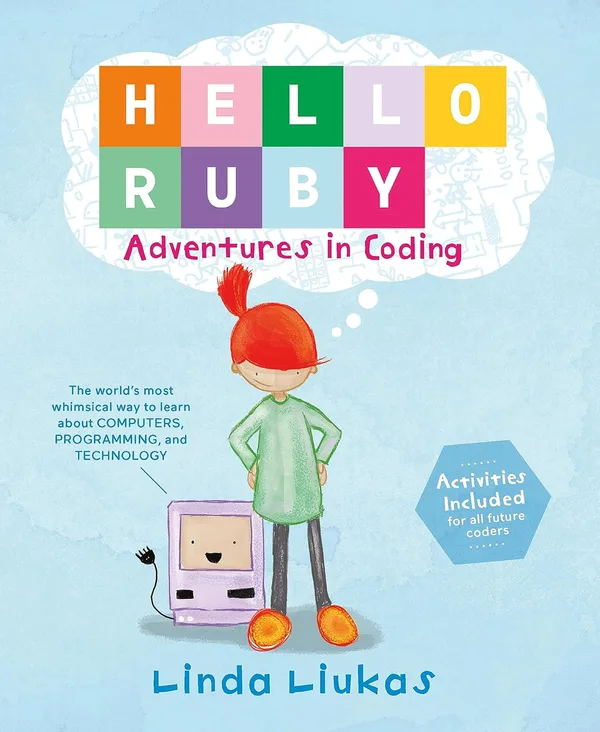
Hello Ruby: Adventures in Coding by Linda Liukas
“Beautifully illustrated children's book about coding concepts. Perfect companion to hands-on Cubetto play.”