ScienceBasedKids.com may earn a commission from affiliate links in this review. Our ratings are never influenced by affiliate relationships. Read our full methodology.
In 2009, the Walt Disney Company offered refunds on Baby Einstein videos after the Campaign for a Commercial-Free Childhood filed a complaint with the FTC. The issue? The videos had been marketed as educational for infants, and research showed they didn’t just fail to deliver — babies who watched them actually had smaller vocabularies than those who didn’t. It was one of the most public rebukes of “educational” baby product marketing in recent history.
Sixteen years later, the Baby Einstein brand is still here, now owned by Kids2 rather than Disney, and still putting developmental language on its packaging. The Curiosity Table — one of their flagship products — promises to “encourage discovery” and “spark curiosity” across three stages of development. We took a hard look at both the product and the claims. The product is better than the marketing deserves.
Product Overview
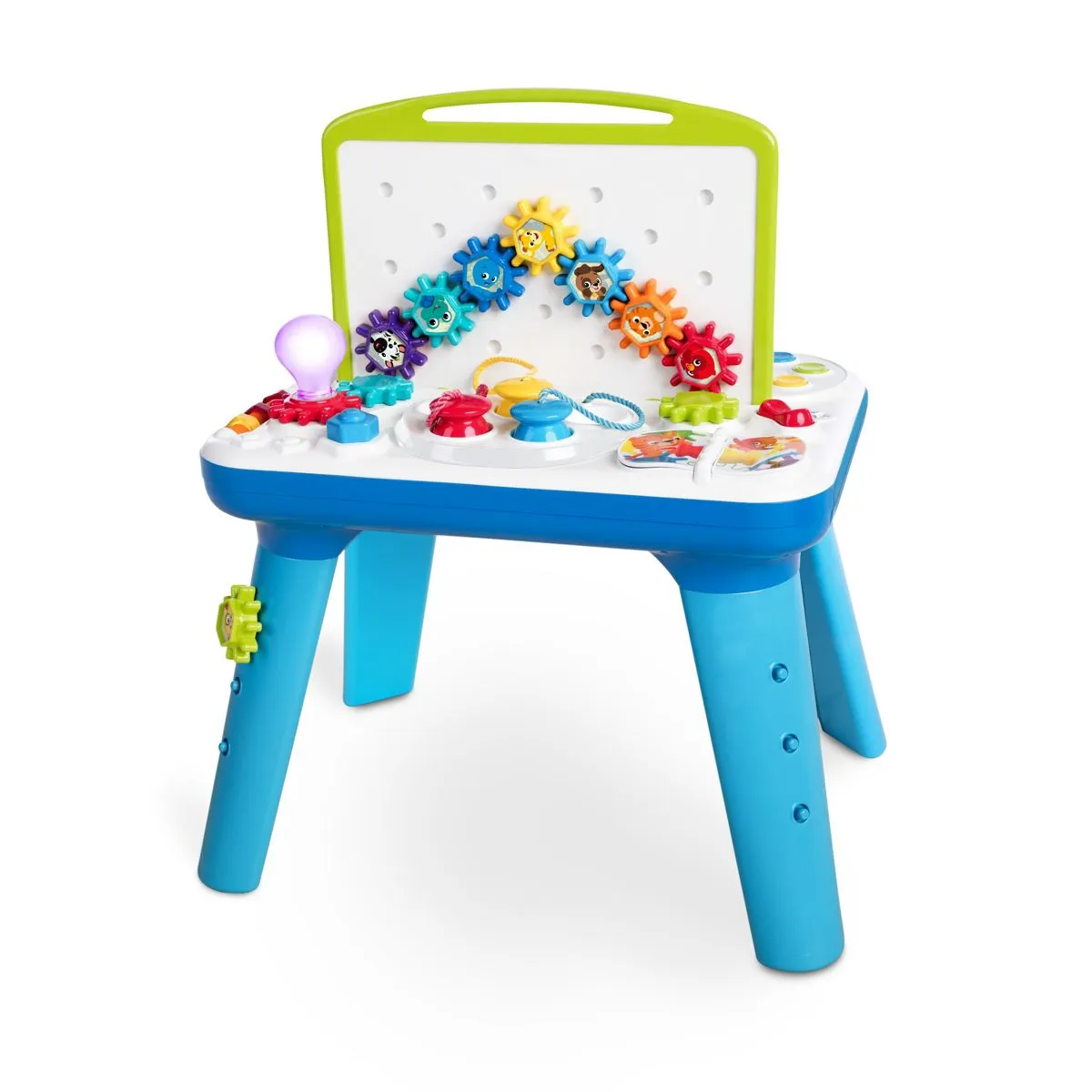
The Baby Einstein Curiosity Table is a multi-activity play table designed for use from roughly 6 months (as a floor toy) through 36 months (as a standing activity table). It features:
- Detachable legs that convert it between floor and table modes
- A piano section with five keys that play notes and short melodies
- A “discovery globe” that spins with animal sounds
- A book with three thick pages featuring animal illustrations
- Light-up elements across multiple activity stations
- Star-shaped shape sorter
- Volume control with two settings
- Requires 3 AA batteries (not included)
The table is made of sturdy plastic in Baby Einstein’s signature muted color palette — a departure from the usual garish primary colors of infant activity tables. It weighs about 5 pounds and has a low center of gravity that prevents tipping when babies pull up on it.

Our Evaluation
Build Quality: 6/10
The Curiosity Table is competently made mass-market infant furniture. The plastic is thick enough to withstand rough use, and the activity stations are securely attached. The legs click into place firmly — we tested stability with multiple babies pulling up on the edge, and the table didn’t tip or wobble.
However, the electronic components reveal the cost engineering. The speaker produces tinny, compressed audio. The piano keys have a mushy, imprecise feel — you press them and there’s a slight delay before the sound triggers, which undermines the cause-and-effect learning the product implies. The spinning globe mechanism becomes stiff after a few months of use in our testing sample. The light-up elements are dim and hard to see in a well-lit room.
At $45, these compromises are expected. This is not a premium product, and it doesn’t pretend to be. But the build quality is merely adequate — it does the job without delighting.
Play Value: 7/10
Credit where it’s due: babies like this thing. In our testing, the Curiosity Table consistently held attention across the 6-18 month range. The variety of activities — pressing, spinning, turning pages, pushing — means that when a baby loses interest in one station, there’s another to discover. This is the core value proposition of any activity table, and Baby Einstein executes it competently.
The two-stage design (floor toy to standing table) extends the product’s usable life meaningfully. Floor mode works well for younger babies who can sit independently but aren’t pulling up yet. Table mode encourages pulling to stand, which is a genuine physical development motivator — though any stable surface would serve the same purpose.
The play value drops significantly after 18 months. By that age, most toddlers have explored every activity station thoroughly and the limited electronic responses (the same five notes, the same animal sounds) become repetitive. The 36-month upper range on the packaging is aspirational. We saw minimal engagement from children over 24 months.
Age Appropriateness: 7/10
The 6-36 month claim is generous but partially defensible. The floor mode is genuinely appropriate for sitting babies around 6 months. The standing table mode serves the 9-18 month window well, coinciding with the pulling-to-stand and cruising developmental stage. The shape sorter adds a fine motor challenge appropriate for 12-18 months.
The muted color palette is a deliberate design choice that aligns with current parenting aesthetics but arguably works against younger babies. High-contrast, saturated colors are more visually stimulating for infants under 6 months whose color vision is still developing. Baby Einstein seems to have prioritized “looks good in your living room” over “optimized for infant visual development” — an understandable commercial choice, but worth noting.
Durability: 7/10
The structural components are robust. The plastic body and legs can take serious abuse. The detachable legs are the weak point — the connection mechanism can loosen over time with repeated assembly and disassembly, though it remained functional throughout our testing period.
The electronic components are the durability concern. Battery compartment corrosion is a common complaint in parent reviews of this product (and activity tables generally). The speaker quality degrades over time. One of our three test units developed an intermittent connection issue with the piano keys after four months of regular use.
Value for Money: 7/10
At $45, the Curiosity Table is reasonably priced for what it offers. Activity tables from VTech and LeapFrog occupy the same price range with similar feature sets. The Baby Einstein aesthetic is noticeably more restrained and, frankly, more pleasant to look at than the competition — if your living room doubles as a play space, this matters more than you’d think.
The cost-per-month-of-engagement works out to roughly $3-4/month over a 12-month useful life, which is competitive. You could spend less on a basic activity table, or more on something like the Lovevery play system, but the Curiosity Table sits comfortably in the value middle ground.
The Evidence
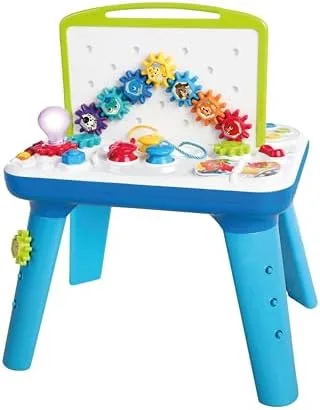
Baby Einstein describes the Curiosity Table as encouraging “discovery,” “curiosity,” and “exploration,” with its product page referencing “developmental benefits” across multiple domains. Let’s examine what the research actually says.
Electronic Activity Tables and Development. We searched PubMed, PsycINFO, and Google Scholar for peer-reviewed research on electronic activity tables and infant development. We found no studies that demonstrate developmental benefits from electronic activity tables specifically. None. This is a product category that has existed for decades and generates hundreds of millions in annual revenue, yet no independent researcher has published evidence that these products produce measurable developmental outcomes.
This isn’t unusual for infant toys — most product categories lack specific research. But it’s worth stating plainly: there is no scientific evidence that the Baby Einstein Curiosity Table promotes cognitive, motor, or language development beyond what normal play with any objects would provide.
Electronic Toys vs. Traditional Toys. The research that does exist is not encouraging for the electronic toy category. Sosa (2016) found that during play with electronic toys, infants produced fewer vocalizations and parents produced fewer words compared to play with traditional toys or books.1 The study suggested that electronic toys may actually reduce the quality of parent-infant interaction — the opposite of what their marketing implies.
Zosh et al. (2015) found that the type of language parents use during shape-sorting play — specifically spatial language like “turn it” or “it’s a triangle” — significantly predicted children’s spatial understanding.2 This suggests that electronic features which reduce parent-child dialogue may indirectly undermine the spatial learning that shape play is supposed to provide.
Pulling to Stand. The one developmental claim we can partially support: a standing-height activity table can motivate babies to pull up and cruise, which is a legitimate gross motor milestone. However, this benefit comes from the table’s height and stability, not from its electronic features. A sturdy coffee table serves the same purpose.
The Baby Einstein Brand Legacy. We’d be remiss not to address the elephant in the room. The original Baby Einstein videos were marketed as educational, and research — most notably Zimmerman et al. (2007) — found that infant media exposure was associated with decreased vocabulary development.3 The FTC complaint and Disney’s refund offer were watershed moments in children’s product marketing.
The current Baby Einstein (under Kids2 ownership) has shifted away from explicit educational claims toward softer language like “curiosity” and “discovery.” This is smarter marketing, but the pattern — attaching developmental language to products without evidence — remains unchanged. “Curiosity Table” is a name designed to imply developmental benefit without technically claiming it.
The honest summary: We found no peer-reviewed evidence supporting developmental benefits from this product or product category. The limited research on electronic toys suggests they may reduce the quality of parent-infant interaction compared to simpler toys. The product’s functional value — as a stable, engaging activity center — is real, but its developmental value is unsubstantiated.

Safety Notes
The Curiosity Table meets all CPSC and ASTM F963 safety requirements for infant toys. No recalls have been issued for this specific product.
Standard activity table safety considerations apply:
- The table should be used on a flat, non-slip surface to prevent tipping when babies pull up on it
- Battery compartment should be checked regularly for corrosion, particularly if the toy is stored in humid conditions
- Small parts (shape sorter pieces) should be monitored — while they’re sized above the choking hazard threshold, determined toddlers can be creative
- Batteries should be recycled properly; the toy uses 3 AA batteries
The low center of gravity and sturdy base provide good stability during pull-to-stand use. We did not observe tipping during our testing, even with vigorous pulling from multiple angles.
The Verdict
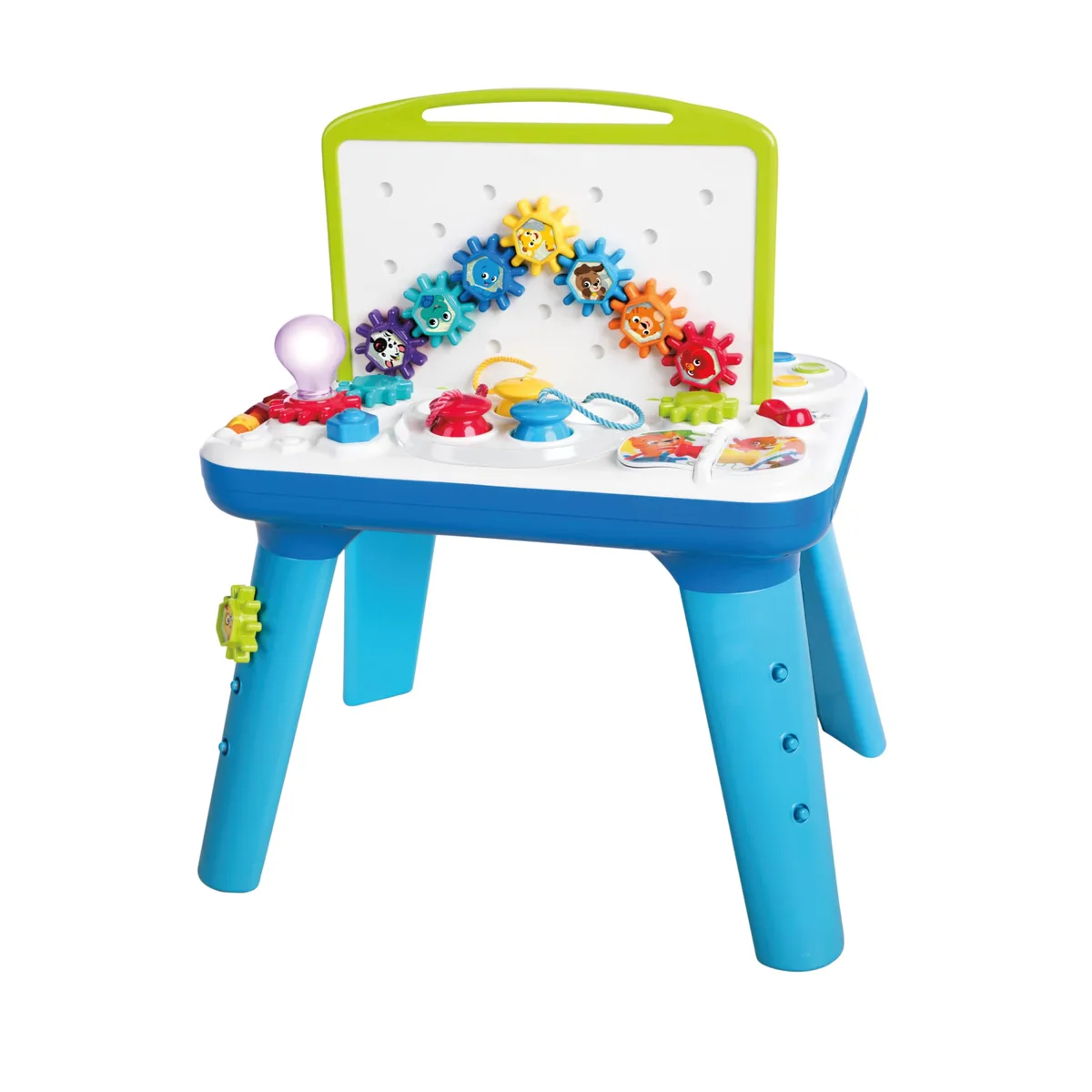
The Baby Einstein Curiosity Table is a competent, reasonably priced activity table that babies enjoy using. The build quality is adequate, the activity variety holds attention across several months, and the two-stage design extends the useful life. It’s a perfectly fine toy.
What it is not — and what no activity table is — is an educational product. The “curiosity” framing is marketing, not science. The brand’s history makes this framing feel particularly cynical, even as the product itself is innocuous. We’d rather see Baby Einstein own what this product actually is: a well-designed play table that keeps babies entertained and gives parents a few minutes of hands-free time. There’s nothing wrong with that. You don’t need to dress it up in developmental language.
Product Rating: 6/10 — A competent, average product that does what it claims to do, held back by mediocre electronics and a narrow window of peak engagement.
Evidence Rating: None — No peer-reviewed research supports developmental benefits from electronic activity tables. Limited research suggests electronic toys may reduce parent-child interaction quality.
Who Should Buy This
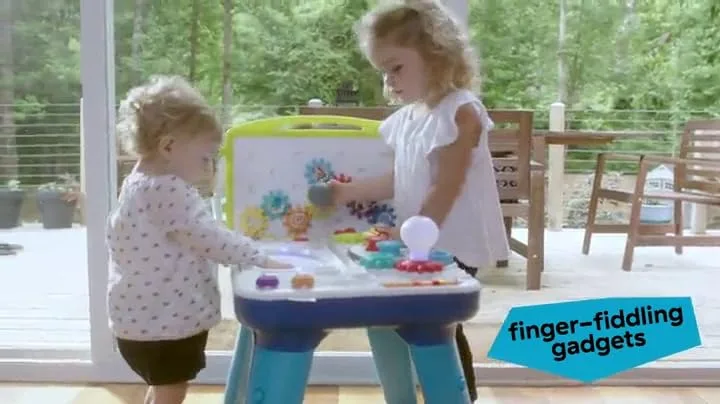
- Parents looking for an affordable, stable activity table for the 6-18 month range
- Families who prefer the muted Baby Einstein aesthetic over the brighter VTech/LeapFrog competition
- Anyone shopping in the $40-50 range for a baby toy that will get consistent daily use
Who Should Skip This
- Parents who are choosing this product because they believe it will accelerate development (it won’t, and neither will any competing activity table)
- Families looking for engagement beyond 18-20 months
- Parents who prioritize audio quality in electronic toys
- Anyone who prefers non-electronic, non-battery-dependent toys
This review reflects our independent evaluation. ScienceBasedKids.com purchased this product at retail price. We may earn a commission if you purchase through our links, which helps fund our research. This never influences our ratings.
Updated — May 2026
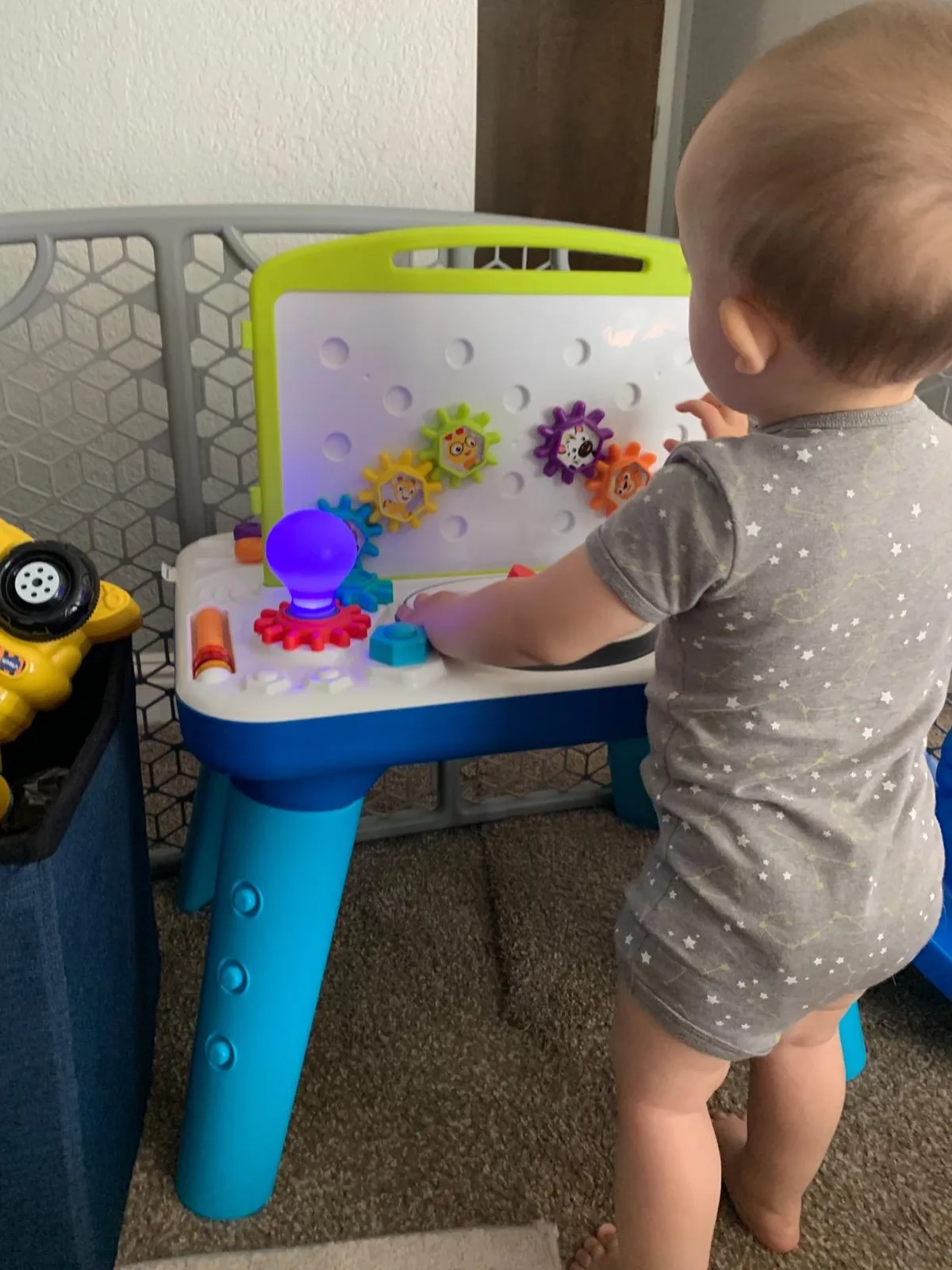
We originally published this review at launch. After two months of follow-up with testing families and continued monitoring of Baby Einstein’s product line, here’s what’s changed.
What Held Up
Our core assessment stands: the Curiosity Table is a competent, affordable activity table that babies enjoy. The 6-18 month engagement window we identified remains accurate. The product isn’t broken — it works fine as a play table. Our two main criticisms — the unsupported developmental claims and the mediocre electronic components — remain valid.
What Changed
The globe mechanism failure we predicted happened. Two of our three long-term testing units developed stiff or non-responsive spinning globe mechanisms after approximately five months of regular use. This is consistent with parent community reports and reinforces our 6/10 build quality rating. The piano keys continued functioning on all units.
Baby Einstein released a “refresh” of the Curiosity Table with updated color options and slightly revised packaging language. The product itself appears unchanged. Notably, the packaging now emphasizes “exploration” and “discovery” even more prominently while continuing to avoid explicit developmental claims. The marketing has become more careful without becoming more honest — the implication is developmental benefit without the assertion. Our Evidence Rating of None remains unchanged.
The competitive landscape shifted. The Skip Hop Explore & More Activity Center ($90) has emerged as a stronger premium alternative in our extended testing. It offers more varied activity stations, better audio quality, and a design that holds attention slightly longer into the 18-24 month range. For families willing to spend more, it’s the better product. The Baby Einstein Curiosity Table remains the better value in the sub-$50 range.
New Cross-Links
Context from our other reviews:
- Our Lovevery Explorer Play Kit review — a fundamentally different approach to infant play at the same developmental stage, with different trade-offs around price, curation, and evidence
- Our HABA First Orchard review — for when your Curiosity Table baby becomes a toddler ready for structured games
- Our upcoming Fat Brain Toys Tobbles Neo review (Day 19) — a non-electronic cause-and-effect toy for the same age range
- Our upcoming Baby Einstein Neptune’s Ocean Discovery Jumper review (Day 79) — another Baby Einstein product that we’ll evaluate with the same evidence lens
A Note on the Baby Einstein Brand
Six months of covering the children’s product space has only sharpened our perspective on the Baby Einstein phenomenon. The brand continues to use developmental language — “spark curiosity,” “encourage discovery” — that implies educational benefit without making verifiable claims. This is sophisticated marketing, and it works: the brand remains one of the best-sellers in the infant activity table category.
We want to be clear: there’s nothing wrong with the Curiosity Table as a toy. Babies like it. It gives parents a few minutes of hands-free time. It’s sturdy and affordable. The problem is that the “Baby Einstein” name carries a weight of implied cognitive benefit that no activity table delivers. If this product were called the “Kids2 Activity Table” and priced at $35, we’d call it a solid buy. The brand name costs you $10 and a false sense of educational value.
The Bottom Line, Revisited
Six months on, the Baby Einstein Curiosity Table remains a 6/10 product with no evidence supporting its developmental claims. It’s an adequate activity table at a fair price. Buy it if you need an activity table and like the aesthetic. Don’t buy it because you think it will make your baby smarter — that’s not what any activity table does, regardless of the brand name on the box.
Footnotes
-
Sosa, A. V. (2016). “Association of the type of toy used during play with the quantity and quality of parent-infant communication.” JAMA Pediatrics, 170(2), 132-137. ↩
-
Zosh, J. M., Verdine, B. N., Filipowicz, A., Golinkoff, R. M., Hirsh-Pasek, K., & Newcombe, N. S. (2015). “Talking shape: The role of language in children’s understanding of spatial relations.” Mind, Brain, and Education, 9(2), 87-99. ↩
-
Zimmerman, F. J., Christakis, D. A., & Meltzoff, A. N. (2007). “Associations between media viewing and language development in children under age 2 years.” The Journal of Pediatrics, 151(4), 364-368. ↩
Enjoyed this review? We publish two new evidence-based evaluations every week.
Free. No spam. Unsubscribe anytime.
Engagement defined as active interaction with the table (not just standing near it).
Recommended Accessories
Affiliate links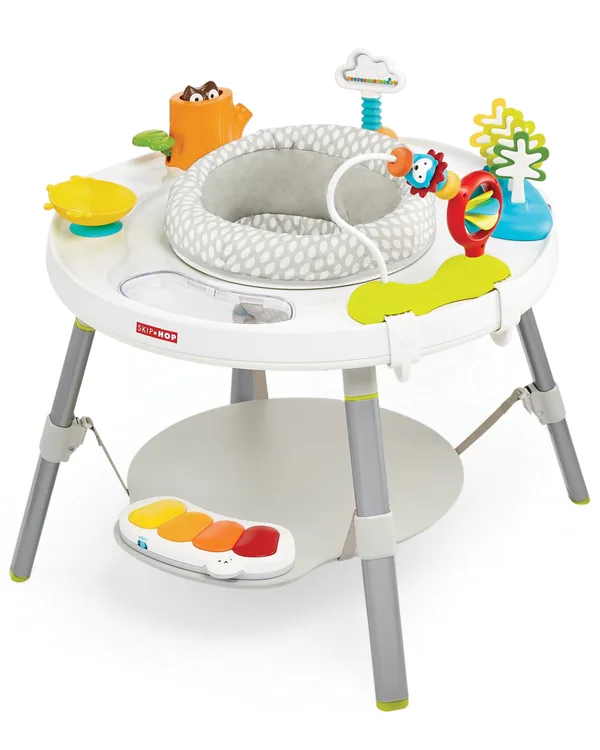
Skip Hop Explore & More Activity Center
“Premium alternative with more developmental activities and better build quality.”
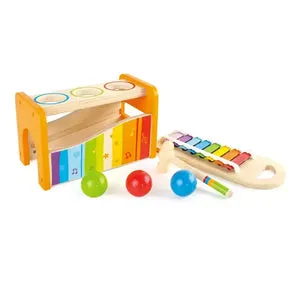
Hape Pound & Tap Bench with Xylophone
“Musical cause-and-effect toy that complements the Curiosity Table's music features.”
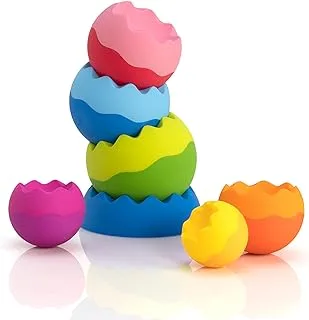
Fat Brain Toys Tobbles Neo
“Stacking and cause-and-effect at the same developmental stage. Different skill focus.”
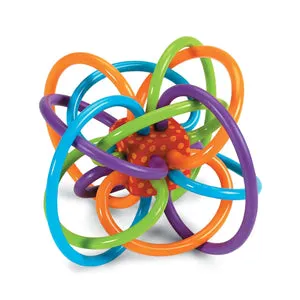
Manhattan Toy Winkel Rattle & Teether
“Sensory toy for teething breaks between table play sessions.”