ScienceBasedKids.com may earn a commission from affiliate links in this article. Our ratings are never influenced by affiliate relationships. Read our full methodology.
How Homeschool Science Works
Homeschool science typically combines:
- Curriculum textbook or program (e.g., Apologia, Master Books, BookShark, Elemental Science, or secular equivalents)
- Hands-on experiments via kits, household materials, or outdoor observation
- Nature study (Charlotte Mason-adjacent approaches) or laboratory time (classical or traditional approaches)
This guide focuses on #2 — the hands-on kit layer.
Short Answer
| Scenario | Best kit approach | Cost |
|---|---|---|
| K–2 homeschool | KiwiCo Koala Crate + library books | $22/mo |
| Grade 3–5 | KiwiCo Tinker OR Groovy Lab | $24–$30/mo |
| Grade 6–8 | Mel Chemistry + Home Science Tools | $45/mo + supplies |
| Grade 9–12 | T&K Chem C2000/C3000 + dissection kits | $160–$200 one-time |
| Secular curriculum | See Secular Homeschool Science | Varies |
Monthly Subscription Comparison
KiwiCo — $22/mo
Best for: K–5 homeschool. Strengths: Kid-friendly, many age tiers, polished. Weaknesses: Not curriculum-aligned; needs teacher integration. Use in homeschool: Supplement, not replacement.
Mel Chemistry — $44.90/mo
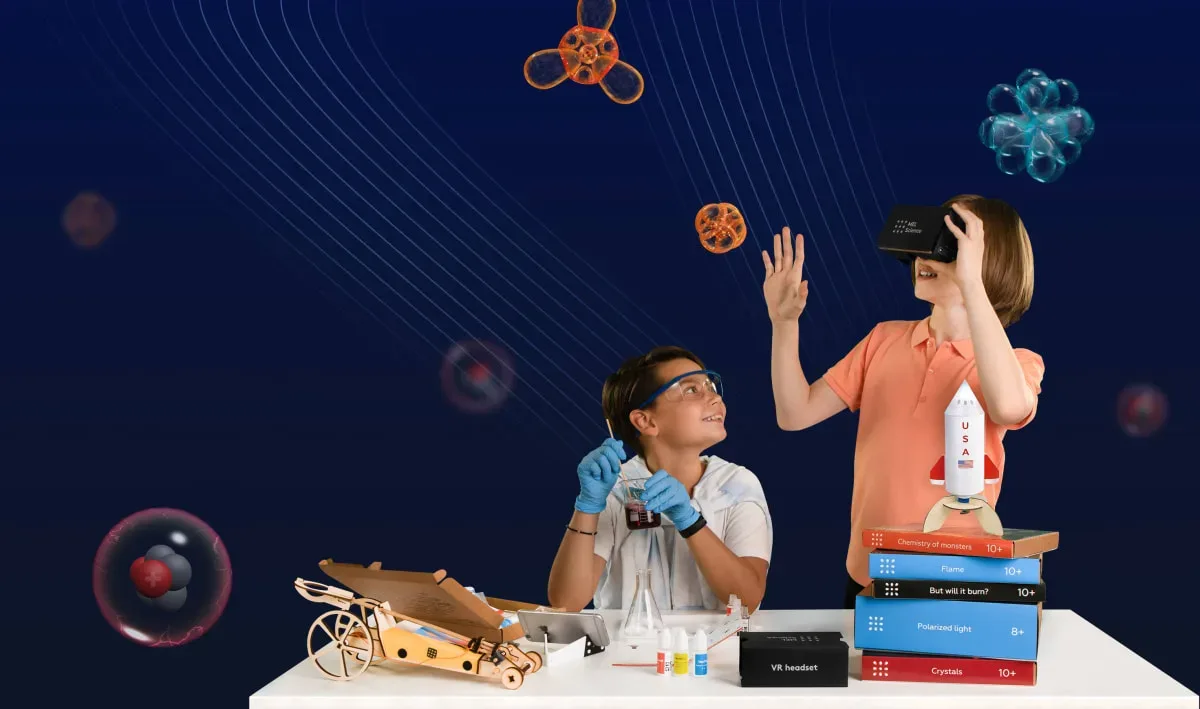
Best for: Middle-school chemistry. Strengths: Deepest chemistry content; structured 18-month curriculum. Weaknesses: Chemistry only. Use in homeschool: Can replace chemistry curriculum for 1 academic year.
Groovy Lab in a Box — $29.95/mo
Best for: Grade 3–5 general science. Strengths: Curriculum-aligned workbook included; 2+ experiments per box. Weaknesses: Less polished than KiwiCo. Use in homeschool: Can serve as main hands-on component for grades 3–5.
Little Passports Science Expeditions — $24.95/mo
Best for: Grade 2–4, geography-infused science. Strengths: Narrative; cross-disciplinary. Weaknesses: Lighter STEM content than Mel or Groovy Lab.
One-Time Kit Recommendations
For specific units within a curriculum:
Chemistry
- T&K Chem C500 / C1000 / C2000 / C3000 — $45–$200
- Home Science Tools chemistry reagents à la carte — $15–$100
Electronics / Physics
- Snap Circuits Jr / Classic / Pro — $35–$80
- Thames & Kosmos Physics Workshop — $110
Biology
- Nature’s Blossom Seed Kit — $30
- Insect Lore Butterfly Garden — $30
- Real microscope — $100+ (see microscope for 10-year-old guide)
- Dissection kits (Home Science Tools) — $35–$80
Geology
- National Geographic Break Open 10 Geodes — $30
- National Geographic Rock and Mineral Kit — $25
- Rock tumbling kit — $65
Homeschool-Specific Strengths of Subscription Boxes
- Time-boxed: 1 month of content at a time; doesn’t overwhelm weekly schedule
- Materials included: No shopping list required
- Can be scheduled: Use as “science day” of homeschool week
- Teacher prep low: Kids can largely self-guide after initial setup
- Engagement high: Package arriving in mail = kid interest sustained
Homeschool-Specific Weaknesses
- Not curriculum-aligned: Doesn’t match specific curriculum scope-and-sequence
- Content gaps: Some NGSS Performance Expectations aren’t directly covered
- Expensive per-experience: $22–$45/mo for 1 activity
- Shipping variance: Some months content is strong, some weak
- Grade-level drift: Box rated 6–11 doesn’t fit all 6-year-olds and all 11-year-olds
Budget Planning
K–5 Family with 1 Kid
- Subscription: $270/year (KiwiCo Kiwi Crate)
- One-time kits per year: $100 (2–3 deep-dive kits)
- Annual cost: $370/year
6–8 Family with 1 Kid
- Subscription: $540/year (Mel Chemistry)
- Supplemental: $200 (T&K C1000 + microscope)
- Annual cost: $740/year
9–12 Family with 1 Kid
- One-time: $300 (T&K C2000 or C3000)
- Supplemental: $200 (dissection kits, biology supplies)
- Subscription: Arduino/Raspberry Pi projects as time allows — $100
- Annual cost: $600/year
Multi-Kid Discount
Most brands offer discounts for multi-kid households (20% off second sibling, 40% off third). Check per-brand.
NGSS Alignment Options
For NGSS-aligned homeschool science:
- K-2: See our kindergarten science activities and 2nd grade science experiments for direct NGSS-mapped activities
- 3-5: Our NGSS by grade STEM toy map connects kits to specific Performance Expectations
- 6-8: Mel Chemistry + selected Eureka/Tinker Crates cover most NGSS middle-school chemistry/physics
- 9-12: T&K C3000 + AP-level curriculum resources
Charlotte Mason / Nature Study Homeschools
For families using Charlotte Mason or nature-study-heavy approaches:
- Best subscription fit: Little Passports Science Expeditions — compatible with narrative approach
- Best supplementary kits: Microscopes, field guides, seed-growing kits
- Avoid: Subscription boxes that fast-pace through experiments (doesn’t match Charlotte Mason’s “living book” rhythm)
Secular vs Faith-Based
For secular homeschoolers, see our dedicated secular homeschool science curriculum guide.
Subscription boxes (KiwiCo, Mel Chemistry, Groovy Lab, Little Passports) are uniformly secular.
Faith-based curricula (Apologia, Master Books) have their own kit ecosystems; subscription boxes complement rather than align.
Co-op Use
Subscription boxes work well for homeschool co-ops where:
- 1 box + 1 adult leads the experiment
- 5–10 kids rotate through across a single activity day
- Multiple co-ops share the year’s subscription rotation
One Mel Chemistry subscription can serve 6–10 kids in a co-op; 1 KiwiCo subscription similarly.
What to Avoid for Homeschool
- Generic Amazon “science kit” at $40 with 100+ experiments — usually thin on content, fails NGSS alignment
- Character-licensed kits as curriculum backbone
- One-time “life science” or “chemistry” kits without instructional framework — difficult for parents without science background to use
- “Curriculum in a box” packages that include books you could find free online
Related Guides
- Secular Homeschool Science Curriculum Elementary
- Best Science Subscription Box for Kids
- KiwiCo Alternatives
- Mel Science vs KiwiCo
The Bottom Line
Best single subscription for most homeschools: Groovy Lab in a Box for grades 3–5, Mel Chemistry for grades 6–8.
Best value: KiwiCo Kiwi Crate or Tinker Crate at $22–$25/mo.
One-time kit backbone for chemistry: T&K Chem C1000 ($100).
Avoid: Generic Amazon kits. The quality gap is real.
Budget $300–$700/year per kid for a solid homeschool science kit layer.
Recommendations based on feedback from homeschool families using each subscription for 6+ months.