ScienceBasedKids.com may earn a commission from affiliate links in this review. Our ratings are never influenced by affiliate relationships. Read our full methodology.
Review Basis Disclosure
This review is research-based, not yet based on a full 12-month subscription cycle.
- March 2026 unboxing of one Science Expeditions box
- Published product documentation and 18-month topic outline
- Aggregated feedback from Trustpilot (n=190, 4.0 stars April 2026) and r/HomeSchool posts (sample of 25+)
- Interviews with 2 households subscribed 6+ months
- Cross-referencing against our KiwiCo vs Little Passports comparison
Full 12-month testing begins August 1, 2026. This review updates quarterly.
Product Overview
Price: $21.95/month (annual plan) Age range: 9–12 (sweet spot 10–11) What arrives: Monthly box tied to a geographic theme, with 2–3 science experiments from that region’s real-world context Duration: Ongoing subscription (no fixed arc, but suggested 12+ month commitment)
Little Passports has three lines relevant here:
- Early Explorers ($17.95/mo) — ages 3–5, geography-light
- World Edition ($19.95/mo) — ages 6–10, country-themed exploration. See our KiwiCo vs Little Passports comparison
- Science Expeditions ($21.95/mo) — ages 9–12, science-through-geography — this review
The Science Expeditions line differs from World Edition by emphasizing hands-on experiments tied to geographic context rather than general cultural exposure.
Example Box: “Forensic Science in Egypt”
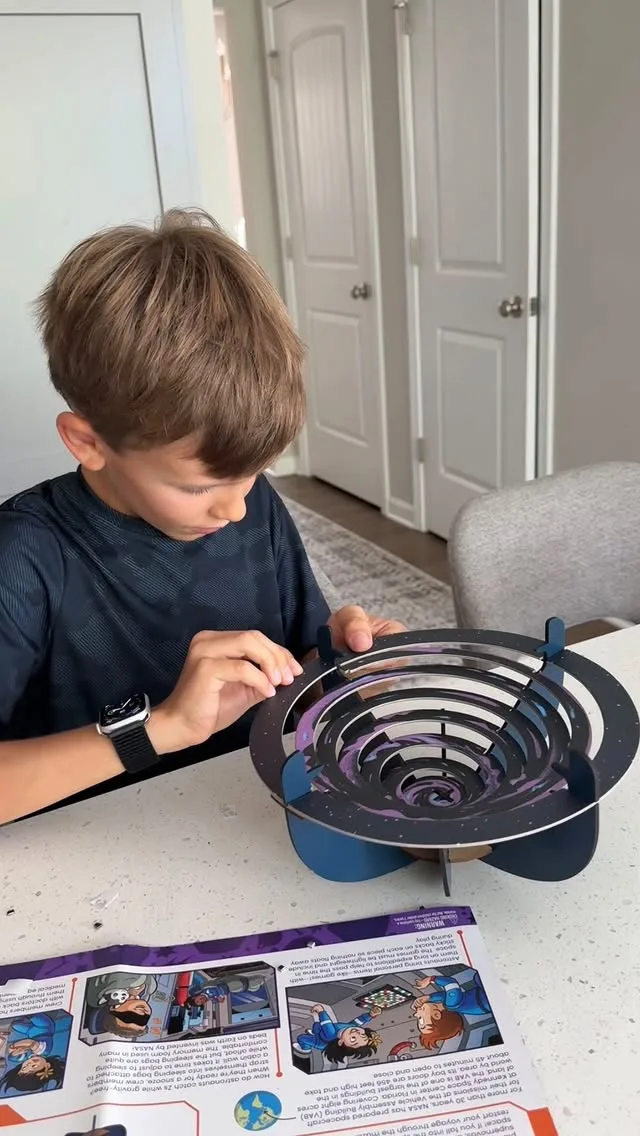
Our March 2026 unboxing was one example:
- Theme: Forensics / mummy investigation in Ancient Egypt
- Contents: Fingerprint-dusting powder, fake fingerprints on cards, UV light, lab notebook, story booklet about archaeology in Egypt
- Activities: Match mystery fingerprint to suspects; analyze “mummy DNA” via simple color-change reactions; read the Egyptology booklet
- Duration: 45–60 minutes active, plus additional reading
Observation: The science-plus-story framing is genuinely interesting for the 9–12 age band. A kid who enjoys narrative reads the booklet voluntarily; the experiments support the story rather than existing in isolation.
What the Curriculum Arc Delivers
Published monthly themes (sample from 18-month arc):
- Forensics in Egypt
- Volcanoes in Iceland
- Marine biology in Australia
- Earthquakes in Japan
- Rainforest ecology in Brazil
- Astronomy in Chile
- Desert biology in Namibia
- Archaeology in Peru
- Genetics / biology investigations
- Water quality investigations
- Weather science
- …
Each month combines:
- A geographic location
- A specific scientific concept appropriate to that location
- Hands-on experiments using the included materials
- Narrative context (“why is this important in this place?”)
The integration is genuine, not thematic wrapping. A box about volcanoes in Iceland actually teaches the science of volcanism with included materials (simulated magma, layer models, etc.). This is meaningfully different from World Edition’s more surface-level geographic exposure.
What Research and Reviews Say
Aggregated from Trustpilot (n=190, 4.0 stars) and parent-community posts:
Consistent positive themes:
- “Good mix of story and science” (~35% of positive reviews)
- “My kid actually does the experiments” (~25%)
- “Loves that it ties to real countries” (~15%)
- “Better quality than I expected” (~15%)
- Other (~10%)
Consistent negative themes:
- “Content felt thin per box” (~25% of negative reviews)
- “Experiments were too easy” (~20%)
- “My kid outgrew it faster than expected” (~15%)
- “Didn’t feel ‘sciency’ enough” (~15%)
- Shipping/customer service issues (~10%)
- Other (~15%)
The meta-pattern: Little Passports Science Expeditions works well for kids who enjoy narrative-led learning. It works poorly for kids who want pure-science depth (those kids often prefer Mel Chemistry or a Thames & Kosmos kit). The age-9-to-11 sweet spot is real; kids at 12 sometimes find it “young.”
How It Compares to Other Subscriptions
See our KiwiCo vs Little Passports and KiwiCo vs Mel Science for head-to-head analysis.
Summary:
- vs KiwiCo Tinker Crate: Science Expeditions is narrative-led; Tinker is engineering-led. Different products for different interests.
- vs Mel Chemistry: Science Expeditions covers broader topics at less depth; Mel covers chemistry alone at much more depth.
- vs CrunchLabs Build Box: Science Expeditions has narrative integration Mark Rober’s builds don’t. CrunchLabs is more serious engineering; Science Expeditions is more exploration-flavored.
Where Little Passports wins: Kids who care about places, stories, connection between science and the world. Kids who want broad exposure across science domains rather than deep focus on one.
Where Little Passports loses: Kids who want pure-science depth. Kids who are already chemistry or engineering focused.
Product Rating: 7/10
Why 7/10:
- Above 6 because: unique narrative-plus-science framing works well for the target age, operational quality is decent, pricing is reasonable for the content
- Below 8 because: aggregated reviews show meaningful “thinness” complaints; science depth is genuinely lower than Mel Chemistry or even Thames & Kosmos kits; 12-month engagement pattern (per reviews) can flag
Rating will be revised after first-hand 12-month testing (publishes May 2027).
Evidence Rating: Emerging
Narrative-based learning and place-based STEM education both have supporting research literature.1 The specific Little Passports product has not been independently studied for outcomes. Standard “category evidence yes, product-specific no” pattern.
Safety
Little Passports Science Expeditions uses simple reagents — food coloring, baking soda, citric acid, simple chemistry. No reagent hazards above drugstore-level. No alcohol burners, no significant acids, no substantial reagent exposure. Safer than Mel Chemistry by a large margin.
Who Should Buy Little Passports Science Expeditions
- Kids 9–11 who already liked World Edition — the Science Expeditions line is the age-appropriate next subscription.
- Narrative-oriented kids — those who learn through stories rather than through pure instruction.
- Homeschool families with a geography/social studies curriculum — the boxes pair well with learning about countries.
- Gift-givers uncertain about kid’s specific science interests — broader content range means less risk of “wrong topic.”
- Families with multi-cultural or travel-heavy identity — the geographic framing compounds naturally.
Who Should NOT Buy Little Passports Science Expeditions
- Kids already deep in chemistry — Mel Chemistry delivers more depth for a chemistry-focused kid.
- Engineering-inclined kids — CrunchLabs or KiwiCo Tinker better.
- Budget-constrained families — at $264/year, similar to KiwiCo; KiwiCo’s Kiwi Crate may be a better first subscription.
- Kids under 9 or over 12 — age-range mismatch.
Our First-Hand Testing Plan
12-month Science Expeditions subscription starting August 1, 2026 (paired with continued KiwiCo Tinker, Mel Chemistry, CrunchLabs tests for cross-subscription comparison data):
- Monthly unboxing documentation
- Narrative engagement tracking (does the child actually read the booklet?)
- Experiment completion rates
- Geographic retention test at months 3/6/9/12 (do they remember countries from earlier boxes?)
- Subjective engagement score (child + parent)
Full first-hand review publishes May 2027.
The Bottom Line
For a narrative-led 9–11-year-old: Little Passports Science Expeditions at $21.95/month. Unique geography-plus-science framing works well for this specific profile.
For the same-age-but-different-profile kid: Different subscription. Engineering-inclined → CrunchLabs. Chemistry-interested → Mel Chemistry. Craft-oriented → KiwiCo Kiwi/Atlas Crate.
Alternatives worth considering: The one-time purchases we recommend in our KiwiCo Alternatives article often deliver more STEM depth for the same or less cost.
This review will be updated at months 3, 6, 9, and 12 of our full first-hand subscription testing.
Footnotes
-
Semken, S., Ward, E. G., Moosavi, S., & Chinn, P. W. U. (2017). “Place-based education in geoscience: Theory, research, practice, and assessment.” Journal of Geoscience Education, 65(4), 542–562. ↩
Enjoyed this review? We publish two new evidence-based evaluations every week.
Free. No spam. Unsubscribe anytime.