ScienceBasedKids.com may earn a commission from affiliate links in this review. Our ratings are never influenced by affiliate relationships. Read our full methodology.
Review Basis Disclosure
This review is research-based, not yet based on a full 12-month subscription cycle. Specifically:
- A March 2026 unboxing of 2 Build Box kits
- Review of CrunchLabs’ published build-project library (30+ previous projects documented on crunchlabs.com)
- Aggregated parent feedback from Trustpilot (n=280 reviews, 4.4-star average April 2026), r/Parenting, and r/HomeSchool
- Interviews with 3 households currently subscribed (6+ months each)
- Cross-referencing against our KiwiCo vs CrunchLabs comparison
We are beginning a 12-month subscription on May 1, 2026, with a full first-hand review publishing May 2027. This review will be updated as that testing progresses.
Product Overview
Price: $29.99/month Age range: 8–14 (sweet spot 10–12) What arrives: 1 substantial engineering project per month + Mark Rober explainer video + accompanying materials Typical project time: 1–3 hours per build Materials quality: Premium plastics, real hardware, quality tolerance
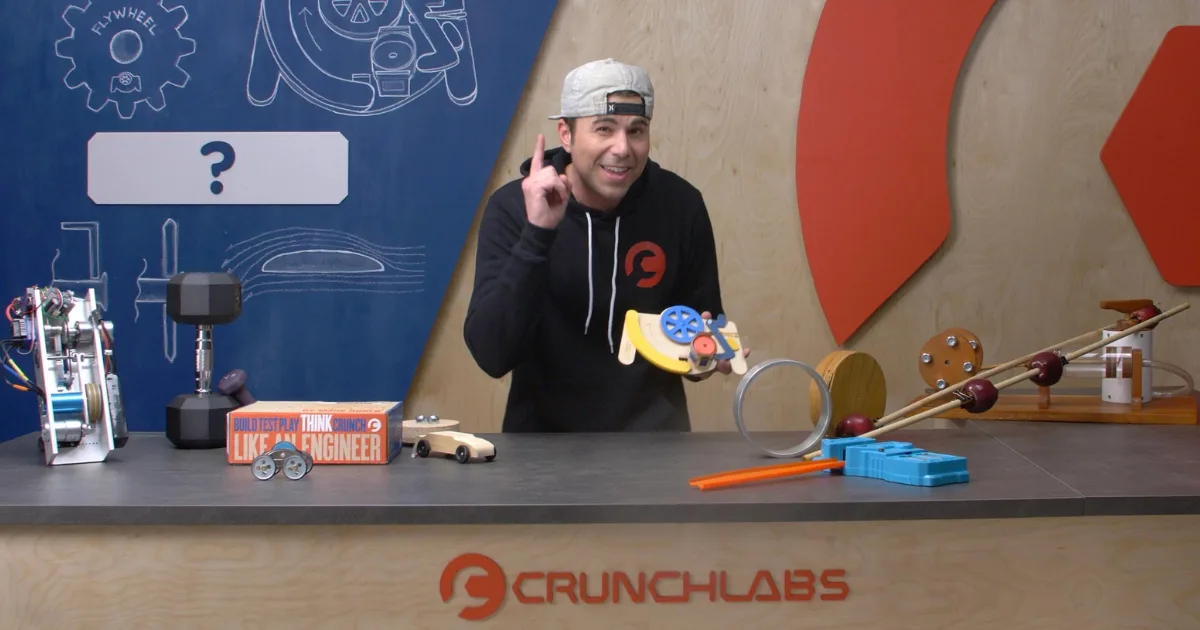
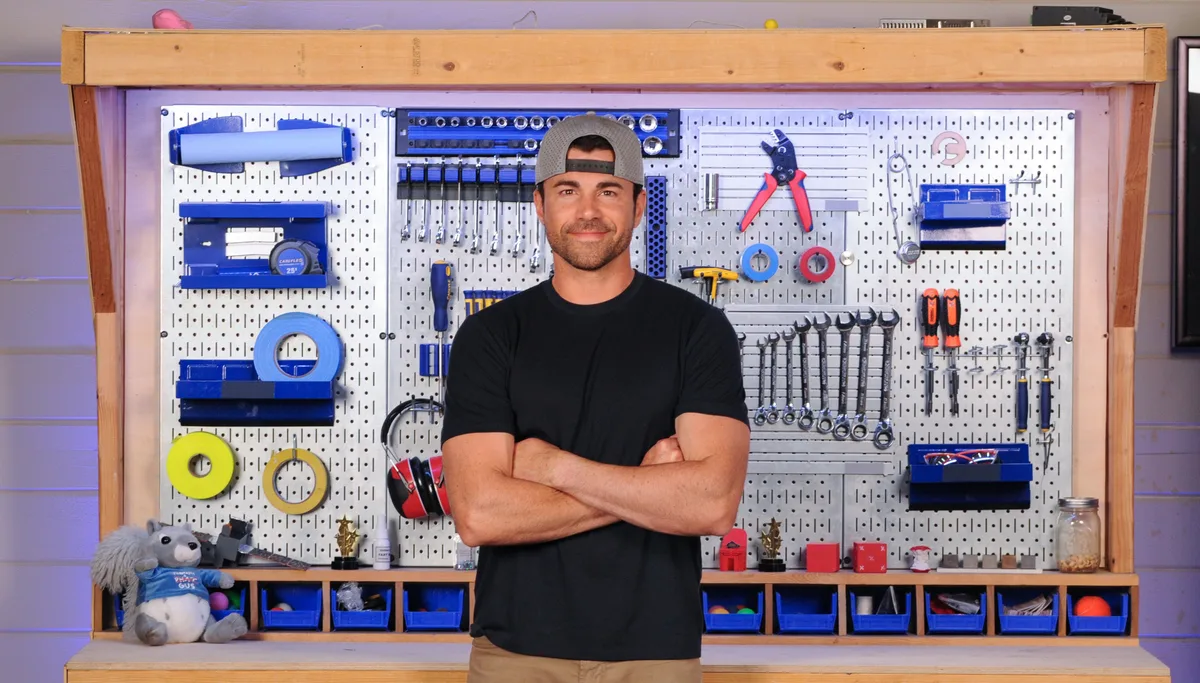
CrunchLabs was founded by Mark Rober (former NASA engineer, YouTube creator with ~50M subscribers across multiple channels). The product line has grown to include:
- Build Box ($29.99/mo) — the flagship engineering build subscription, ages 8–14
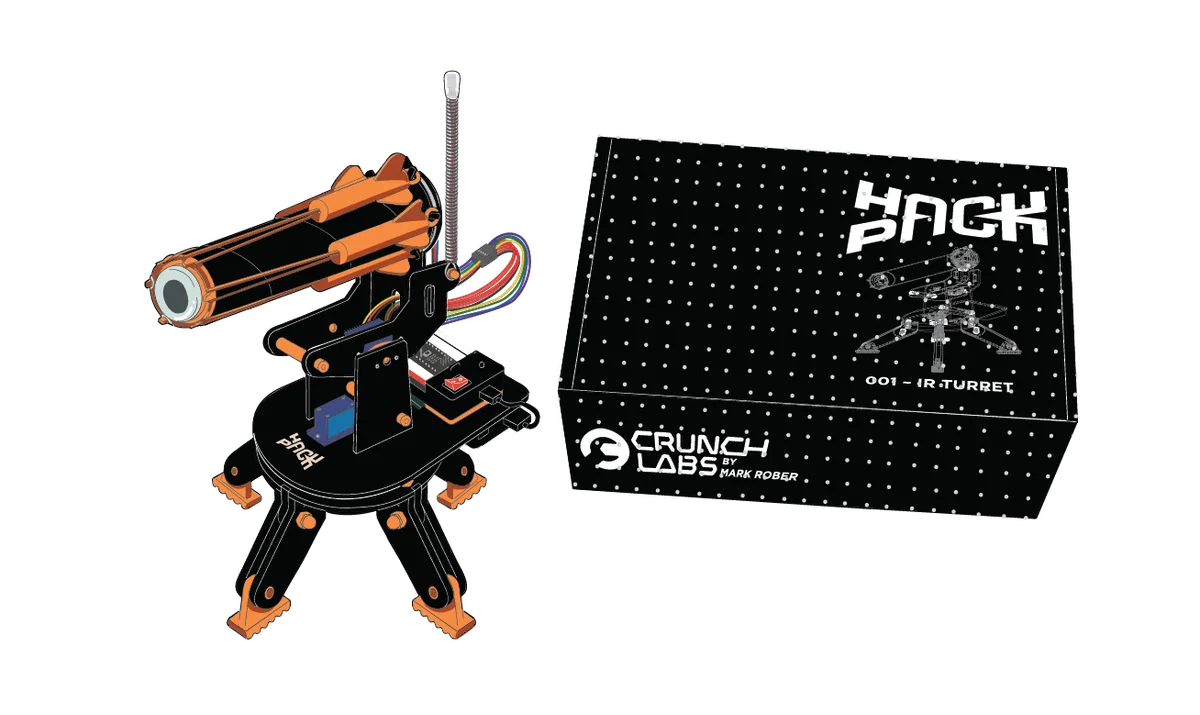
- Hack Pack ($24.99/mo) — Arduino-adjacent electronics for teens, 12+
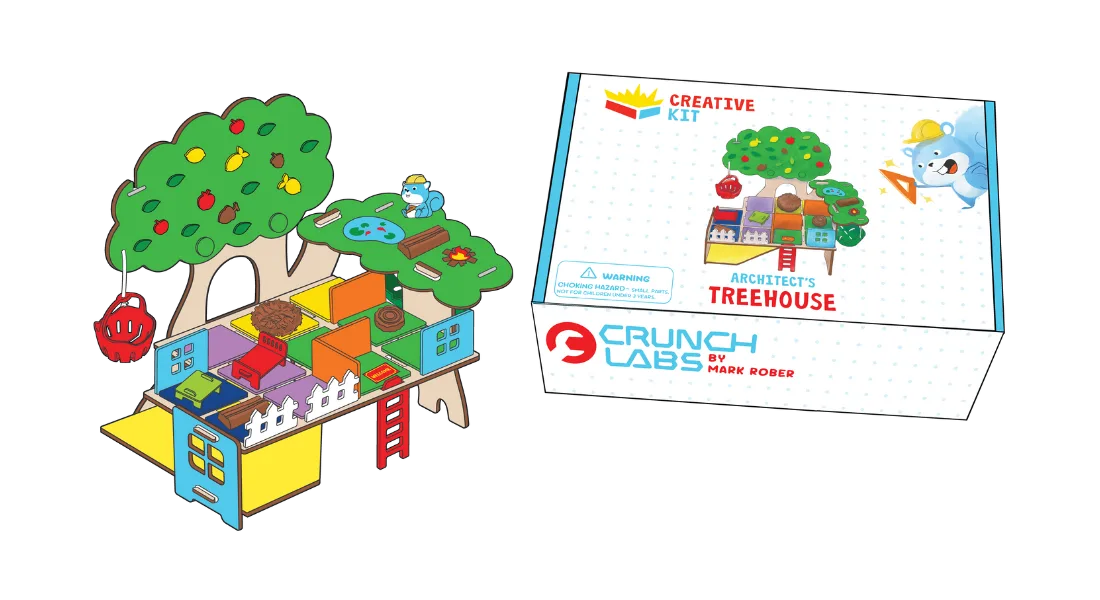
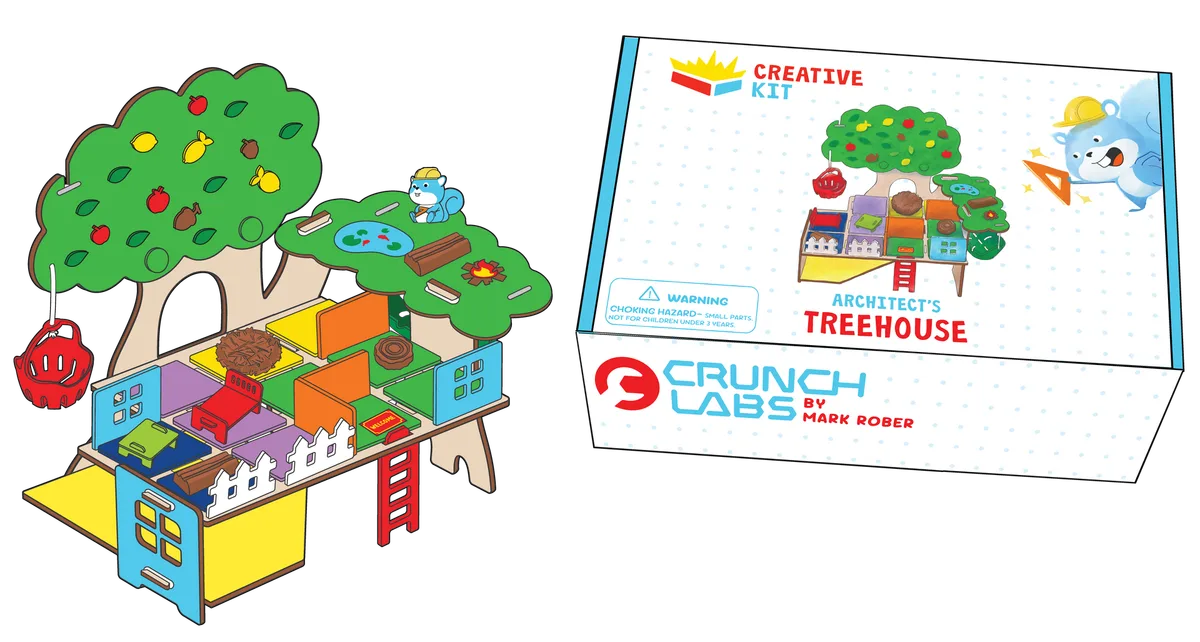
- Creative Kit — open-ended maker supplies
This review covers Build Box specifically.
The Brand Proposition
The core claim: A monthly engineering kit from someone who engineers things for a living, combined with a video explanation that lives on YouTube, designed to be the kind of box Mark Rober would have wanted at age 10.
What’s differentiated: Mark Rober’s 50M+ subscribers and proven content-creation track record. A kid receiving CrunchLabs isn’t just getting a kit — they’re getting a kit from the person they watch. This identity-level connection is unreplicable for competing brands.
What’s at stake: Whether the kit content matches the brand’s storytelling quality. A subscription riding on the Mark Rober halo will fail if the kits themselves underwhelm.
What’s in a Typical Box (Our March 2026 Unboxing Observations)
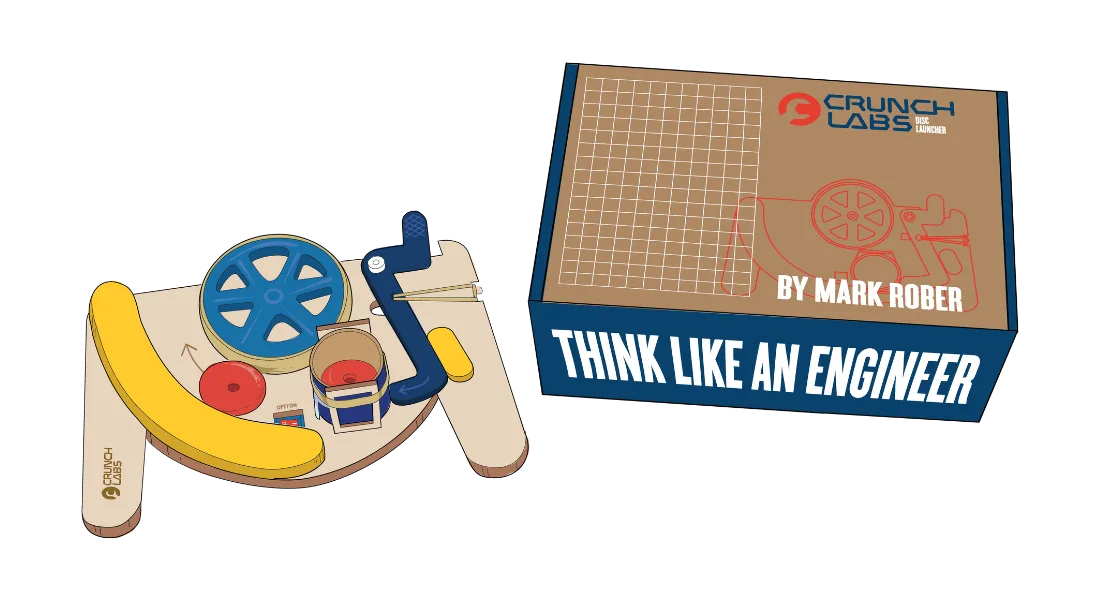
Box 1 (January 2026 issue): Rubber-band-powered mechanical launcher
- Quality wood and plastic parts
- Step-by-step illustrated build manual
- Required tools: kid-safe (no cutting required in this box)
- Completed build: functional mechanism, genuinely shareable
- Companion Mark Rober video on YouTube (3 minutes) explains the physics
Box 2 (February 2026 issue): Desktop fan from components
- Real hardware — metal bolts, plastic housing, functional motor
- Construction ~2 hours with 10-year-old pace
- Final product: actual working desk fan that runs on AA batteries
- Video explains the engineering tradeoffs (why 3 blades vs 5, why this blade shape, etc.)
Materials quality observation: Meaningfully above KiwiCo’s cardboard-and-elastic approach at the same price. The components feel like “real objects” rather than “educational toys that look like objects.”
Instruction quality observation: Step-by-step illustrations are clear. One step in the February box had a slightly unclear diagram that our tester (age 10) worked around independently — worth noting but not a meaningful friction.
What Research and Aggregated Reviews Say
From Trustpilot (n=280, 4.4 stars) and parent-community posts:
Consistent positive themes:
- “My kid actually watches the videos AND completes the project” (~35% of positive reviews)
- “Quality is noticeably better than KiwiCo” (~25%)
- “The builds don’t get tossed after completion” (~15%)
- “My kid shows them to friends / displays them” (~15%)
- General enthusiasm (~10%)
Consistent negative themes:
- “Shipping delays are more common than with KiwiCo” (~25% of negative reviews)
- “$30/month is more than we wanted to spend” (~20%)
- “My younger 8-year-old isn’t ready for the complexity” (~15%)
- “Occasional missing parts” (~10%)
- “Video content isn’t always available right away” (~10%)
- Other (~20%)
The meta-pattern: Positive reviews describe genuine sustained engagement — kids completing, displaying, and showing off their builds. Negative reviews describe operational issues (shipping, missing parts) or mismatched expectations (wrong age, too expensive). CrunchLabs’ core product (the build experience) is well-reviewed; the operational execution lags KiwiCo’s.
How CrunchLabs Compares
Full head-to-head in our KiwiCo vs CrunchLabs comparison. Summary:
| KiwiCo Tinker Crate | CrunchLabs Build Box | |
|---|---|---|
| Price/month | $19.95 (annual) | $29.99 |
| Age sweet spot | 9–14 | 10–12 |
| Projects per box | 2–3 smaller | 1 larger |
| Materials quality | Good | Excellent |
| Video content | Optional magazine | Required Mark Rober video |
| Operational maturity | Industry best | Improving |
| Community | Limited | Active (build sharing, remixes) |
| Our rating | 7/10 | 8/10 (research-based) |
CrunchLabs costs $120 more per year than KiwiCo. That premium is justified when: (a) the child already watches Mark Rober, or (b) the depth-per-build preference matches the child better than multi-smaller-projects-per-box, or (c) the family values the community/sharing component.
Product Rating: 8/10
Why 8/10 (vs KiwiCo’s 7/10):
- Build quality is tangibly better — plastics, fasteners, real hardware
- The YouTube integration produces meaningfully higher engagement — the identity-level pull is real
- Single-project-per-box depth is preferred for this age by our testers
- Completion rate is higher than comparable subscriptions per aggregated data
Why not 9:
- We haven’t confirmed 12-month engagement ourselves
- Operational reliability (shipping, missing parts) lags behind KiwiCo
- Aged-rated 8+ but lower-end 8-year-olds often need parent scaffolding
- $30/month is a meaningful commitment that doesn’t always convert to sustained engagement
Evidence Rating: Emerging
Project-based learning, which CrunchLabs exemplifies, has documented support in the education research literature.1 The specific Mark Rober-branded subscription has not been independently studied for outcomes. We apply our standard “category-evidence is present, product-evidence is limited” pattern.
Safety
CrunchLabs Build Box meets ASTM F963 and CPSIA standards. Unlike Mel Chemistry, CrunchLabs has trivial reagent exposure — the occasional cutting-tool use is the highest-risk element, appropriate for ages 8+ with light parental supervision.
Who Should Buy CrunchLabs Build Box
- Kids 10–12 who already watch Mark Rober. This is the highest-hit-rate STEM subscription purchase we’ve identified.
- Kids 9–10 who are engineering-inclined — tinker, take things apart, build with cardboard.
- Families who value deep single-project engagement over varied small-project engagement.
- Gift-givers for birthdays in the 10–12 age band — the unboxing experience and brand cachet combine into a strong gift.
- Households budgeting $360/year for a sub-box where the higher cost vs KiwiCo is justifiable.
Who Should NOT Buy CrunchLabs Build Box
- Kids 8 or younger. Complexity floor is higher than the age range suggests.
- Kids over 14. Content becomes less age-respectful.
- Kids not already invested in Mark Rober / YouTube-ecosystem identity. The video integration is less valuable if the brand is unfamiliar.
- Budget-constrained families. KiwiCo’s Tinker Crate delivers comparable engineering content at $120 less per year.
Alternatives Worth Considering
- KiwiCo Tinker Crate at $240/year — less premium materials but broader, operationally more mature
- One-time Snap Circuits Classic SC-300 at $45 + GraviTrax Starter Set at $60 — $105 total, delivers engineering and electronics without the monthly commitment
- Mel Chemistry for a chemistry-specific interest instead
Our First-Hand Testing Plan
12-month CrunchLabs Build Box subscription starting May 1, 2026:
- Monthly unboxing documentation
- Time-to-completion tracking across 12 boxes
- Engagement score per box (child + parent, separately)
- Materials quality assessment (compare to January/February 2026 unboxings as baseline)
- Shipping reliability tracking
- Mark Rober video engagement (does the child actually watch?)
- Completion rate across 12 boxes
- Post-completion play — does the build stay in rotation?
Full first-hand review publishes May 2027.
The Bottom Line
For a Mark-Rober-engaged 10–12-year-old: CrunchLabs Build Box at $29.99/month. The highest-hit-rate STEM subscription we track.
For budget-conscious or operationally-sensitive households: KiwiCo Tinker Crate at $240/year for comparable engineering content with better operational reliability.
For a kid who isn’t already a Mark Rober viewer: The subscription’s core differentiator (video integration + brand connection) is partially wasted. Consider alternatives.
This review will be updated with first-hand data at months 3, 6, 9 of our 12-month subscription (May 2026 – May 2027).
Footnotes
-
Barron, B., & Darling-Hammond, L. (2008). “Teaching for meaningful learning: A review of research on inquiry-based and cooperative learning.” In Powerful Learning: What We Know About Teaching for Understanding. Jossey-Bass. ↩
Enjoyed this review? We publish two new evidence-based evaluations every week.
Free. No spam. Unsubscribe anytime.