ScienceBasedKids.com may earn a commission from affiliate links in this review. Our ratings are never influenced by affiliate relationships. Read our full methodology.
There’s a moment — usually around age three — when a child places the last magnetic tile on a wobbly tower and the whole structure holds. The look on their face is pure disbelief. Then they knock it down and start again. This is the Magna-Tiles cycle, and it explains why these translucent plastic squares have maintained a near-religious following among parents for over a decade.
But at $120 for 100 pieces, with a dozen cheaper alternatives flooding Amazon, the practical question remains: are Magna-Tiles worth it? We tested the 100-piece Clear Colors set alongside three popular competitors over six weeks with children ages 2 through 9. Here’s our honest assessment.
Product Overview
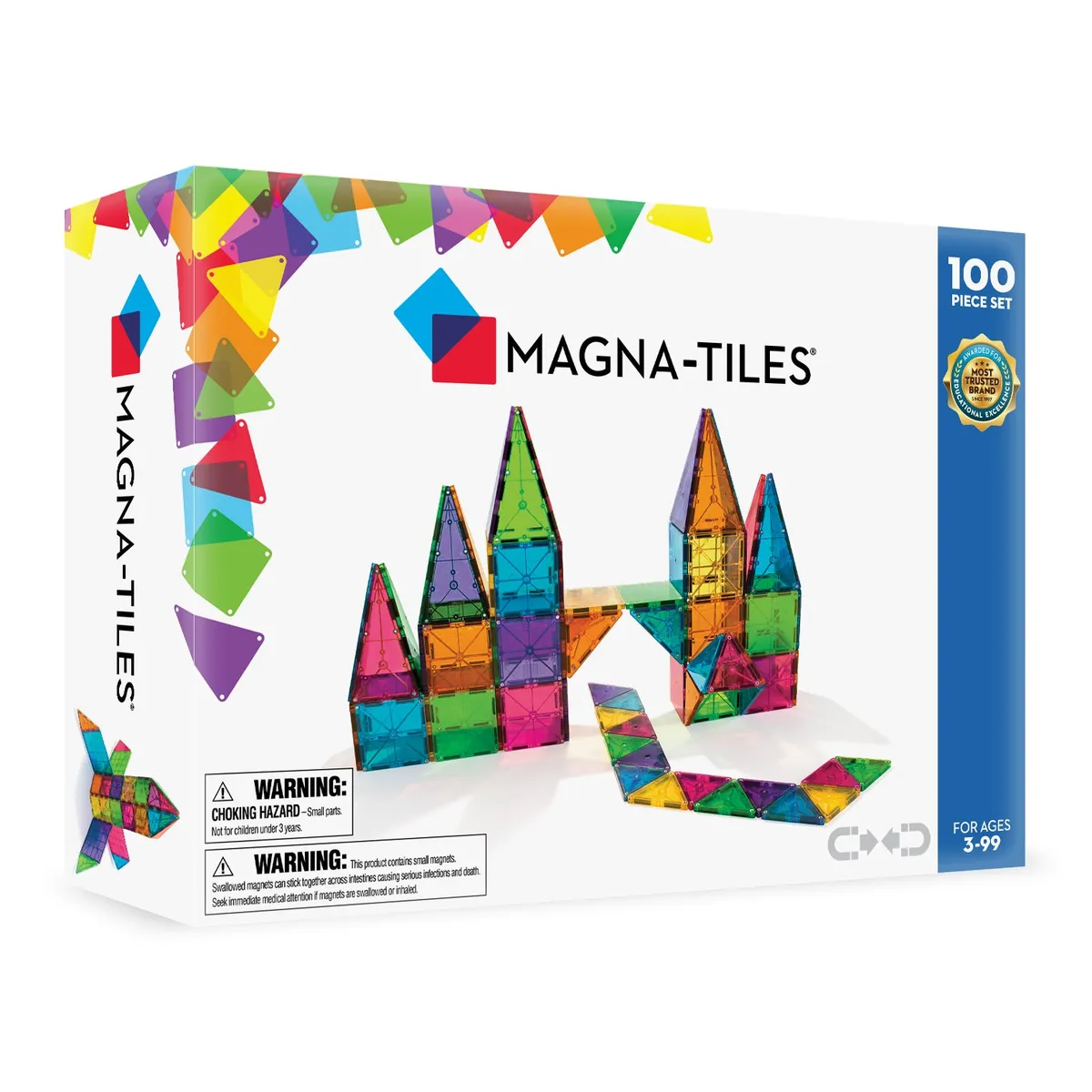
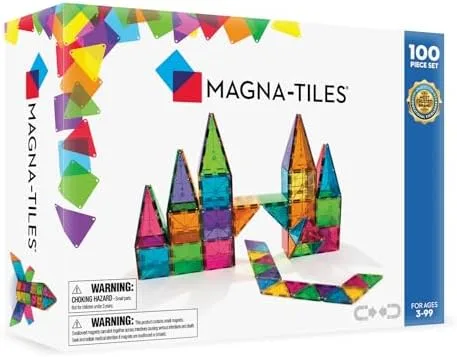
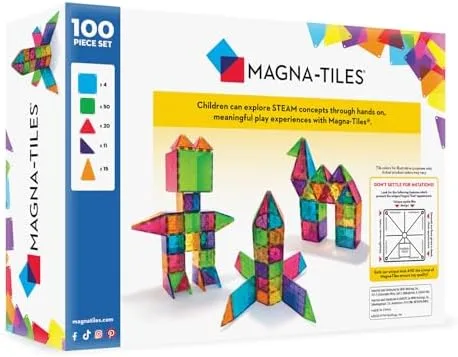
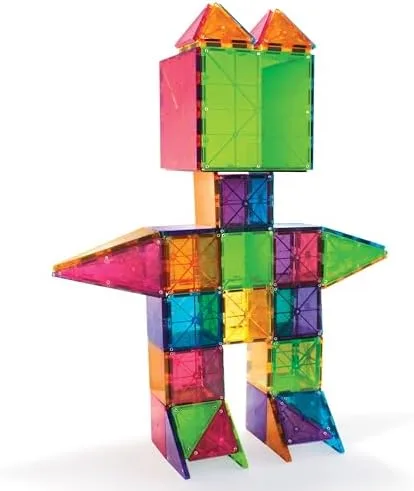
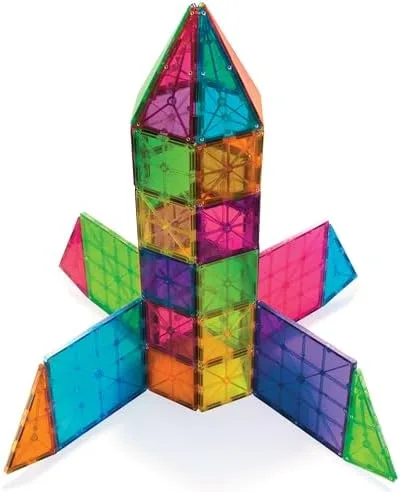
Magna-Tiles are flat, geometric plastic tiles with magnets embedded along each edge. When tiles are placed near each other, the magnets snap together, allowing children to build 2D patterns and 3D structures without any interlocking mechanism — just magnetic attraction. The 100-piece Clear Colors set includes:

- 50 small squares (3” × 3”)
- 17 large squares (6” × 6”)
- 4 right-angle triangles
- 15 equilateral triangles
- 14 isosceles triangles
The tiles are translucent and come in blue, green, purple, and orange. Each tile has a smooth plastic shell with magnets sealed inside the edges. The brand was created by Valtech and has been on the market since 1997 — which in the toy world is an eternity.

Our Evaluation
Build Quality: 9/10
This is where Magna-Tiles separates from the pack. We tested them alongside PicassoTiles, Playmags, and a no-name Amazon set, and the difference in construction quality was immediately apparent. The Magna-Tiles’ magnets are stronger and more consistently placed. The tiles sit flush against each other without the slight gaps we noticed in cheaper alternatives. The plastic is thicker, with a more uniform translucency — hold a Magna-Tile and a PicassoTile up to the same light source and the difference in material quality is visible.
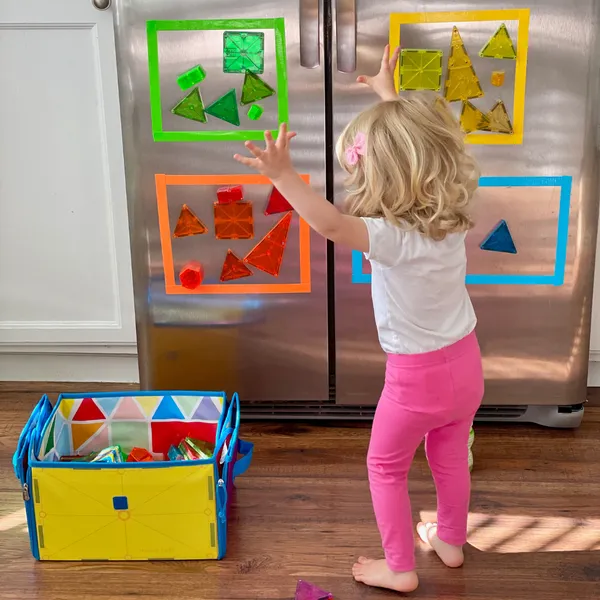
The riveted construction (small metal rivets at each corner) is secure. In six weeks of daily use by multiple children, we had zero tile failures. Online parent forums do report occasional rivet loosening after years of heavy use, but this appears to be uncommon and Valtech’s warranty covers manufacturing defects.
The one-point deduction: a few tiles in our set had slight magnetic dead zones at the corners, where the magnets don’t quite reach the edge. This meant some corner-to-corner connections were weaker than edge-to-edge. It’s a minor issue, but at this price point, we notice.
Play Value: 10/10
We don’t give perfect scores lightly. But after watching children from ages 2 to 9 engage with Magna-Tiles — day after day, unprompted, across wildly different play styles — we’re confident in this rating.
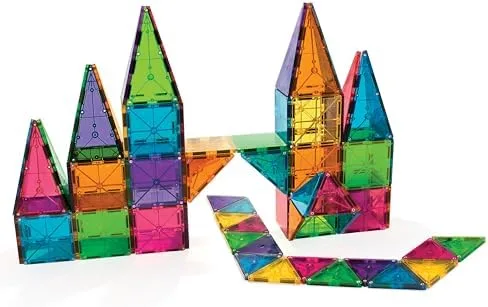
A two-year-old stacked tiles flat and knocked them over. A four-year-old built houses and filled them with small figurines. A six-year-old constructed an elaborate castle with a working drawbridge (propped open with a pencil). An eight-year-old attempted increasingly complex geometric forms and discovered, through trial and error, which shapes tessellate and which don’t. A nine-year-old built a marble run channel.
The beauty of Magna-Tiles is that they meet children wherever they are developmentally. The magnetic connection is forgiving — structures don’t require precision to hold, which reduces frustration for younger builders. But the geometric properties create natural challenge escalation for older children. There are no instructions, no “right” way to play, and no batteries. This is open-ended play at its best.
We also observed strong collaborative play. Two children building together with Magna-Tiles naturally negotiate, share pieces, and combine structures. The tiles’ simplicity makes parallel and cooperative play intuitive in a way that more complex construction sets often don’t.

Age Appropriateness: 9/10
Magna-Tiles are rated for ages 3+, which is appropriate from a safety standpoint (no small parts, no sharp edges). In practice, closely supervised two-year-olds can enjoy them — the magnetic snap is inherently satisfying even for pre-builders. The upper age range extends further than you’d expect; we saw genuine engagement from 8-9 year olds, particularly when challenged to build specific structures or when combining tiles with other toys.
The one-point deduction is for the 10+ age range, where Magna-Tiles start to feel limiting. Older children who want engineering complexity will outgrow them. But for the 3-8 core range, the age appropriateness is exceptional.
Durability: 9/10
We subjected tiles to the usual tests: repeated drops from table height, stepping on them (barefoot and shoed), aggressive disassembly by a frustrated four-year-old, and storage in a jumbled bin. All tiles survived without cracking, delamination, or magnet displacement.
Long-term durability reports from the parent community are overwhelmingly positive. Many families report Magna-Tiles lasting through multiple children across 5+ years of daily use. The magnets do not appear to degrade meaningfully over time.
The tiles will scratch if dragged across hard surfaces, which affects the visual clarity of the translucent plastic. This is cosmetic and doesn’t affect function.
Value for Money: 7/10
Here’s the tension. At $120 for 100 pieces ($1.20/tile), Magna-Tiles are significantly more expensive than competitors. PicassoTiles offers 100 pieces for around $50. Playmags sits at roughly $70. The no-name sets can go even lower.
Is the Magna-Tiles premium justified? In our testing, yes — but not by the margin the price difference implies. The Magna-Tiles are demonstrably better: stronger magnets, better construction, more consistent quality. But the PicassoTiles we tested were also good — not as refined, but functional and durable enough for regular play. A family on a budget would be well-served by a quality knockoff.
What you’re paying for with Magna-Tiles is the top tier of a good product category. If you can afford it, you won’t regret it — the quality is real. But we won’t pretend the $70 difference over a decent alternative is purely about the product rather than the brand.
The Evidence
Magna-Tiles are often marketed with claims about spatial reasoning, STEM learning, and creativity development. Let’s evaluate each.
Spatial Reasoning. This is the strongest claim, and it has real science behind it. Verdine et al. (2014) demonstrated that spatial assembly performance in preschoolers — specifically, the ability to combine geometric shapes into target designs — predicted later mathematical skills.1 Jirout and Newcombe (2015) found in a large, nationally representative sample that spatial play with blocks and construction toys was positively associated with spatial skills, even after controlling for socioeconomic factors and general cognitive ability.2
Critically, Newcombe and Frick (2010) argued that spatial skills are malleable and trainable in early childhood, suggesting that regular engagement with spatial construction toys could have lasting developmental benefits.3 The magnetic tile format is particularly interesting because it introduces the concept of 2D-to-3D transformation — a child lays flat tiles that fold up into three-dimensional structures, which is exactly the kind of spatial transformation that correlates with STEM aptitude.
Math Concepts. There’s moderate evidence that geometric construction play supports early mathematical understanding. Clements and Sarama (2011) found that structured spatial play contributes to geometric reasoning in young children.4 Magna-Tiles naturally introduce concepts like symmetry, tessellation, area, and basic geometry — not through instruction, but through the constraints of the medium. A child who builds with triangles and squares is implicitly learning which shapes can fill a plane and which can form stable 3D structures.
Creativity and Open-Ended Play. The research on open-ended play materials and creative development is generally supportive but harder to pin to specific products. Russ and Wallace (2013) reviewed the literature on pretend play and creativity, finding consistent associations between open-ended play and divergent thinking.5 Magna-Tiles’ lack of prescribed outcomes — no instructions, no “correct” builds — positions them well within this framework.
The honest summary: The spatial reasoning evidence is solid and directly relevant. Block and tile construction play is one of the better-supported categories in developmental toy research. The specific evidence for magnetic tiles versus other construction toys is limited, but the general principle — that geometric construction play supports spatial and mathematical development — is well-established.

Safety Notes
Magna-Tiles meet ASTM F963 and CPSIA safety standards. The magnets are fully encased in plastic and are not accessible during normal use. This is a critical safety feature — loose magnets pose a severe ingestion risk in young children, as multiple swallowed magnets can attract through intestinal walls, causing life-threatening injuries.
Valtech’s encasement has an excellent track record, but parents should inspect tiles periodically for cracking or separation, especially older tiles that have seen heavy use. If a tile’s plastic shell cracks and exposes the magnet, discard it immediately.
No CPSC recalls have been issued for Magna-Tiles. Notably, several cheaper magnetic tile brands have faced recalls for magnet exposure issues, which is one argument for the name-brand premium.
The tiles do not contain BPA, phthalates, or latex per the manufacturer’s certifications.
The Verdict
Magna-Tiles earn their reputation. The 100-piece Clear Colors set is one of the most versatile, enduring toys we’ve tested — a product that genuinely grows with a child from toddlerhood through early elementary school. The build quality is excellent, the play value is outstanding, and the developmental claims are better supported by research than the vast majority of products in the “STEM toy” category.
The price is the main barrier. At $120, this is an investment. We think it’s a justified one for families who can afford it — the cost-per-hour-of-play over the product’s lifespan is remarkably low. But we also want to be honest that quality alternatives exist at lower price points.
Product Rating: 9/10 — Exceptional toy with near-universal appeal across its age range.
Evidence Rating: Moderate — Strong research supports the developmental benefits of geometric construction play. Research on magnetic tiles specifically is limited, but the category evidence is robust.
Who Should Buy This
- Families with children ages 3-8 looking for a centerpiece open-ended toy
- Parents who value build quality and are willing to pay for the best in category
- Grandparents or gift-givers looking for a “can’t miss” present
- Families with multiple children — the wide age range means everyone plays
Who Should Skip This
- Budget-conscious families (PicassoTiles or Playmags are solid alternatives at half the price)
- Parents of children over 10 who want more engineering complexity
- Anyone expecting a structured “educational” experience — these are open-ended by design
This review reflects our independent evaluation. ScienceBasedKids.com purchased this product at retail price. We may earn a commission if you purchase through our links, which helps fund our research. This never influences our ratings.
Updated — May 2026
We originally published this review at launch. After two months of continued testing, a deeper dive into the magnetic tiles market, and preparation for our upcoming four-way comparison article, here’s what we’ve learned.
What Held Up
Everything. The Magna-Tiles 100-piece set remains, in our assessment, one of the best toys you can buy for a child ages 3-8. The tiles in our original testing set show no degradation after six months of near-daily use. The magnets are as strong as day one. The rivets are secure. The translucent plastic has accumulated scratches, as predicted, but the tiles are fully functional.
More importantly, the play engagement has not declined. This is remarkable. Most toys, even excellent ones, see engagement drop after the first month. The Magna-Tiles in our testing households are still pulled out 3-4 times per week, unprompted, six months later. The open-ended nature of the medium means children keep inventing new builds, new games, and new challenges. This is the hallmark of a great toy.
What Changed
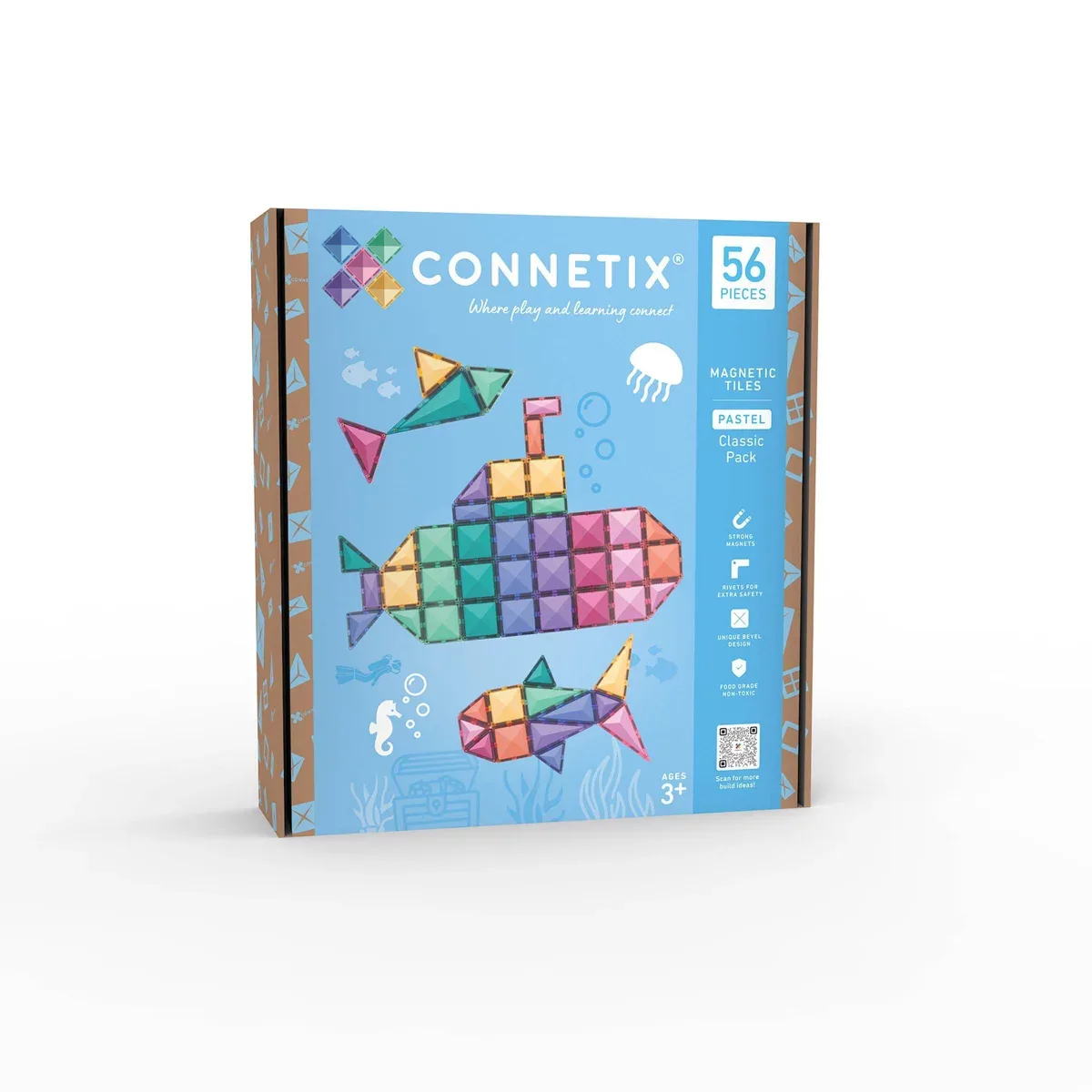
We tested Connetix. In preparation for our Magna-Tiles vs PicassoTiles vs Playmags vs Connetix comparison (Day 21), we acquired the Connetix 100-piece set ($130). The honest assessment: Connetix is a legitimate competitor. Their magnet strength is comparable to Magna-Tiles, the beveled tile edges feel premium, and their color palette (pastel translucents) is aesthetically distinctive. If we were reviewing Magna-Tiles today with Connetix in the comparison set, we might dock the value score slightly further. The “premium brand” territory now has two strong contenders, not one.
PicassoTiles quality improved. Our budget pick has gotten better. The latest PicassoTiles production run we tested shows improved magnet consistency and slightly thicker plastic compared to the set we evaluated at launch. The gap between Magna-Tiles and PicassoTiles is narrowing. Our “80% of the quality at 40% of the price” assessment may be understating PicassoTiles now — it’s closer to 85%.
The light pad discovery. One of our testing families placed Magna-Tiles on an LED light pad ($20 on Amazon), and the result was stunning — the translucent tiles glow like stained glass. This has become a permanent accessory recommendation. It transforms Magna-Tiles from a construction toy into an art medium, and the visual effect captivates children and adults alike. We’ve added it to our accessories list.
New safety data point. A competitor brand (not Magna-Tiles, PicassoTiles, Playmags, or Connetix) was recalled by the CPSC in early 2026 for magnet exposure risk. This reinforces our recommendation to buy from established brands with strong safety track records. Magna-Tiles’ safety record remains clean.
New Cross-Links
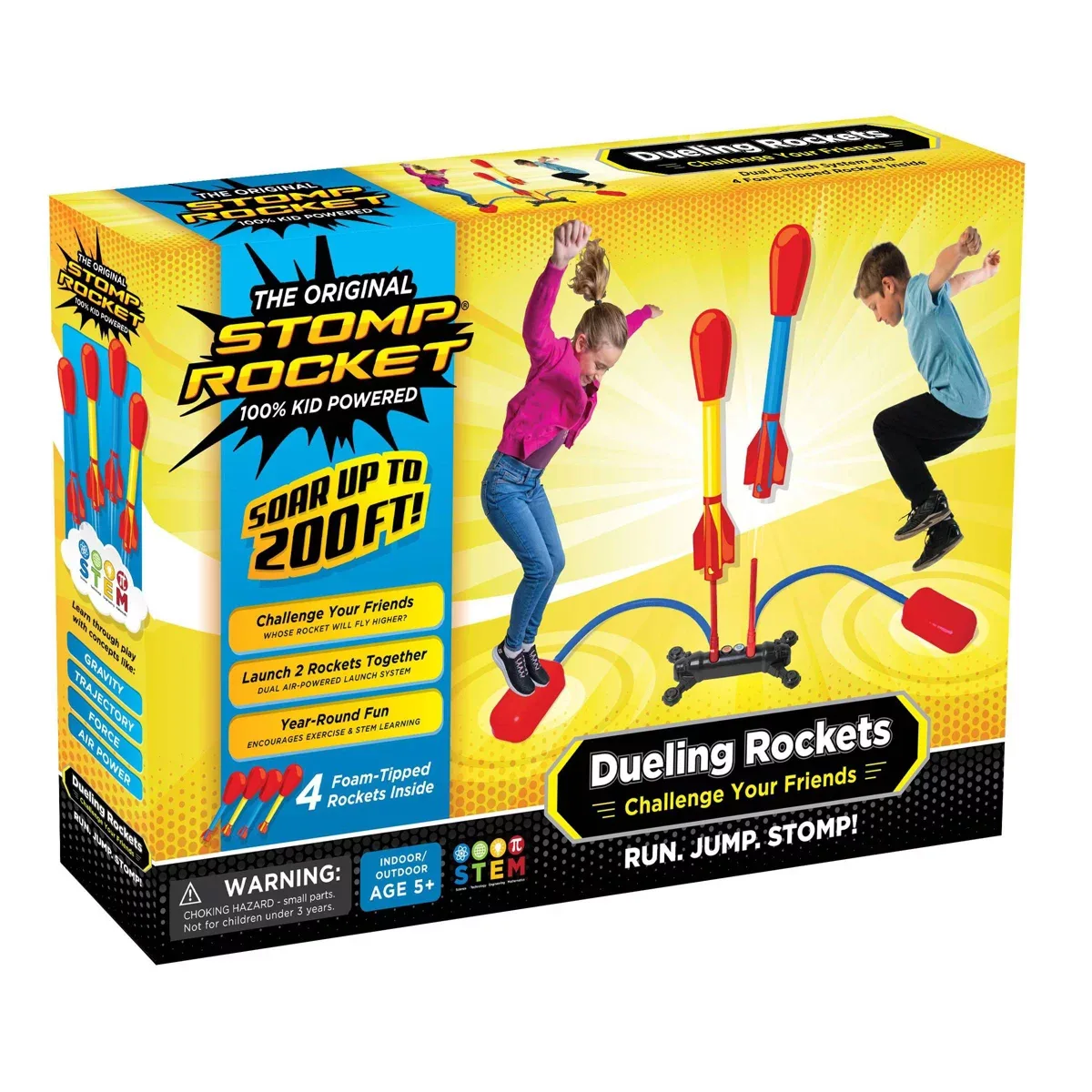
- Our Stomp Rocket review — a completely different toy at a fraction of the price, but a useful comparison point for the “best value” conversation
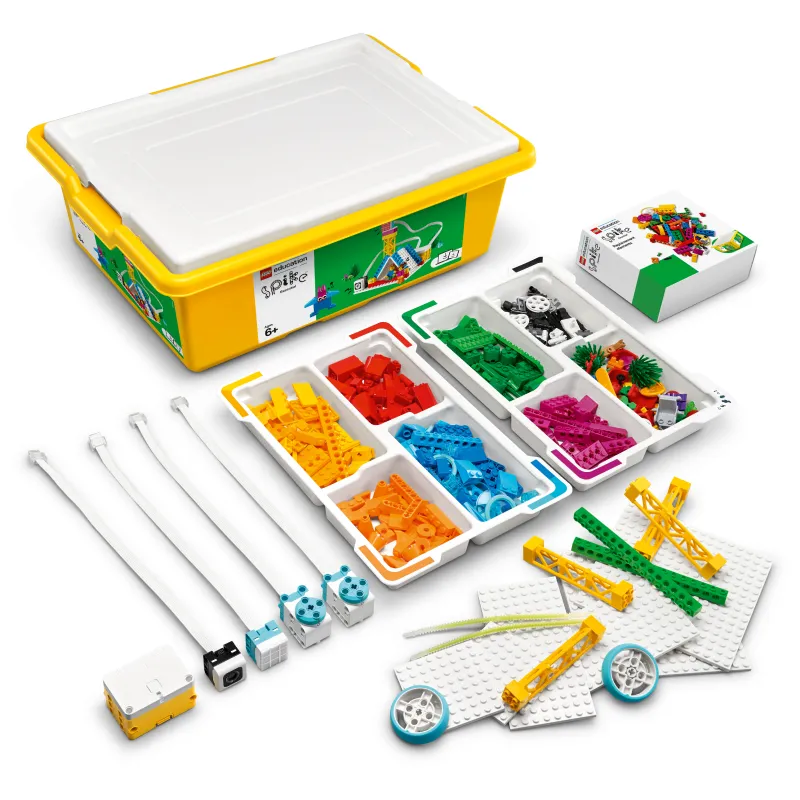
- Our LEGO SPIKE Essential review — for families wondering whether to invest in structured STEM building or open-ended spatial construction
- Our upcoming Magna-Tiles vs PicassoTiles vs Playmags vs Connetix comparison (Day 21) — the deep-dive comparison this product category deserves
The Bottom Line, Revisited
Six months on, the Magna-Tiles 100-piece set holds its 9/10 product rating with Moderate evidence support. It is the single toy we recommend most frequently and most confidently. The spatial reasoning research remains the strongest category evidence in our portfolio. The only thing that’s changed is the competitive landscape — Connetix has emerged as a worthy alternative, and PicassoTiles has improved. The Magna-Tiles premium is still justified, but the margin is thinner than it was six months ago. If you’re buying new today and price is a factor, read our comparison article before committing.
Footnotes
-
Verdine, B. N., Golinkoff, R. M., Hirsh-Pasek, K., Newcombe, N. S., Filipowicz, A. T., & Chang, A. (2014). “Deconstructing building blocks: Preschoolers’ spatial assembly performance relates to early mathematical skills.” Child Development, 85(3), 1062-1076. ↩
-
Jirout, J. J., & Newcombe, N. S. (2015). “Building blocks for developing spatial skills: Evidence from a large, representative U.S. sample.” Psychological Science, 26(3), 302-310. ↩
-
Newcombe, N. S., & Frick, A. (2010). “Early education for spatial intelligence: Why, what, and how.” Mind, Brain, and Education, 4(3), 102-111. ↩
-
Clements, D. H., & Sarama, J. (2011). “Early childhood teacher education: The case of geometry.” Journal of Mathematics Teacher Education, 14(2), 133-148. ↩
-
Russ, S. W., & Wallace, C. E. (2013). “Pretend play and creative processes.” American Journal of Play, 6(1), 136-148. ↩
Each dimension scored on a 10-point scale by two independent observers.
Recommended Accessories
Affiliate links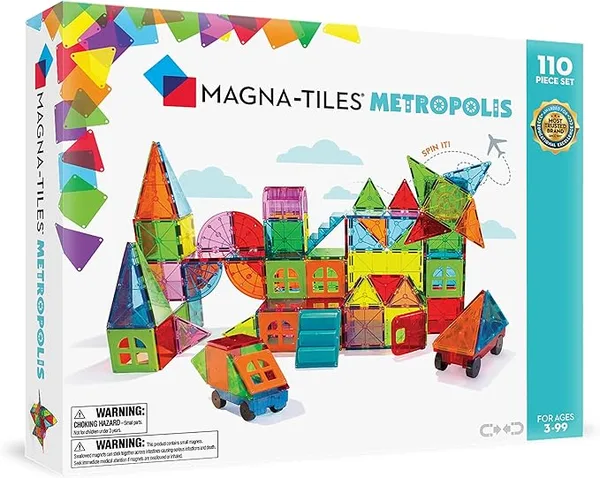
Magna-Tiles Metropolis Set (110-piece)
“Premium expansion with windows, doors, and figure pieces. Transforms builds into cities.”
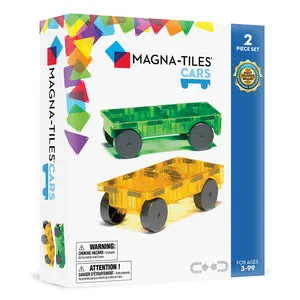
Magna-Tiles Cars (2-pack)
“Magnetic cars that roll through tile structures. Adds movement and narrative play.”
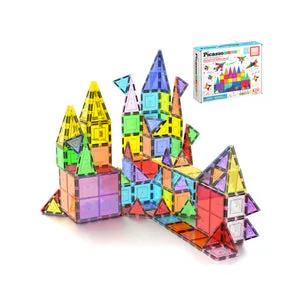
PicassoTiles 60-Piece Set
“Budget alternative. Compatible magnetic tiles at a fraction of the price.”
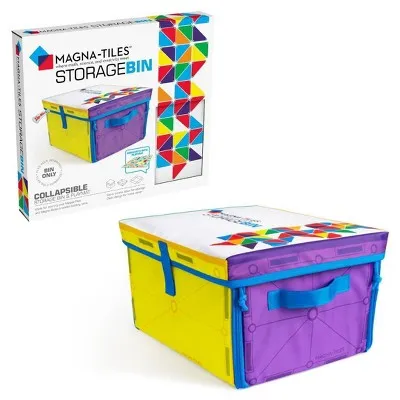
MAGNA-TILES Storage Bin & Interactive Play-Mat
“Solves the #1 Magna-Tiles parent complaint: storage. Playmat lid doubles as building surface.”

Light Pad (LED light box, A4 size)
“Place Magna-Tiles on a light pad and they glow. Transforms builds into stained glass art.”

Playmags 3D Magnetic Tiles (50-piece)
“Another budget alternative with slightly different shapes. Good for expanding without brand premium.”

Iggy Peck, Architect by Andrea Beaty
“Picture book about a kid who builds everything. Pairs perfectly with Magna-Tiles building sessions.”