ScienceBasedKids.com may earn a commission from affiliate links in this article. Our ratings are never influenced by affiliate relationships. Read our full methodology.
What Kindergarten Science Should Do
See our NGSS-by-grade STEM toy map for the full framework. For kindergarten specifically, NGSS expects:
- K-PS2-1: Investigate pushes and pulls on object motion
- K-PS2-2: Analyze data about object motion
- K-LS1-1: Use observations about what plants and animals need
- K-ESS2-1: Describe patterns of weather
- K-ESS3-1: Use a model to represent needs/environments
- K-ESS3-2: Communicate weather data over time
Each activity below maps to one of these standards.
K-PS2 (Motion and Forces) — 5 activities
1. Plasma Car Force Exploration
Kid pushes and pulls on a Plasma Car. The car moves forward. Changes in direction or speed come from changes in push/pull. Direct practice with K-PS2-1.
2. Ball Rolling on Different Surfaces
Roll the same ball on carpet, tile, grass, hardwood. Measure distance. Direct practice with K-PS2-1 and K-PS2-2.
3. Stomp Rocket Launches
Stomp Rocket Original — harder stomp = higher launch. Direct practice with variable force and measurable outcome.
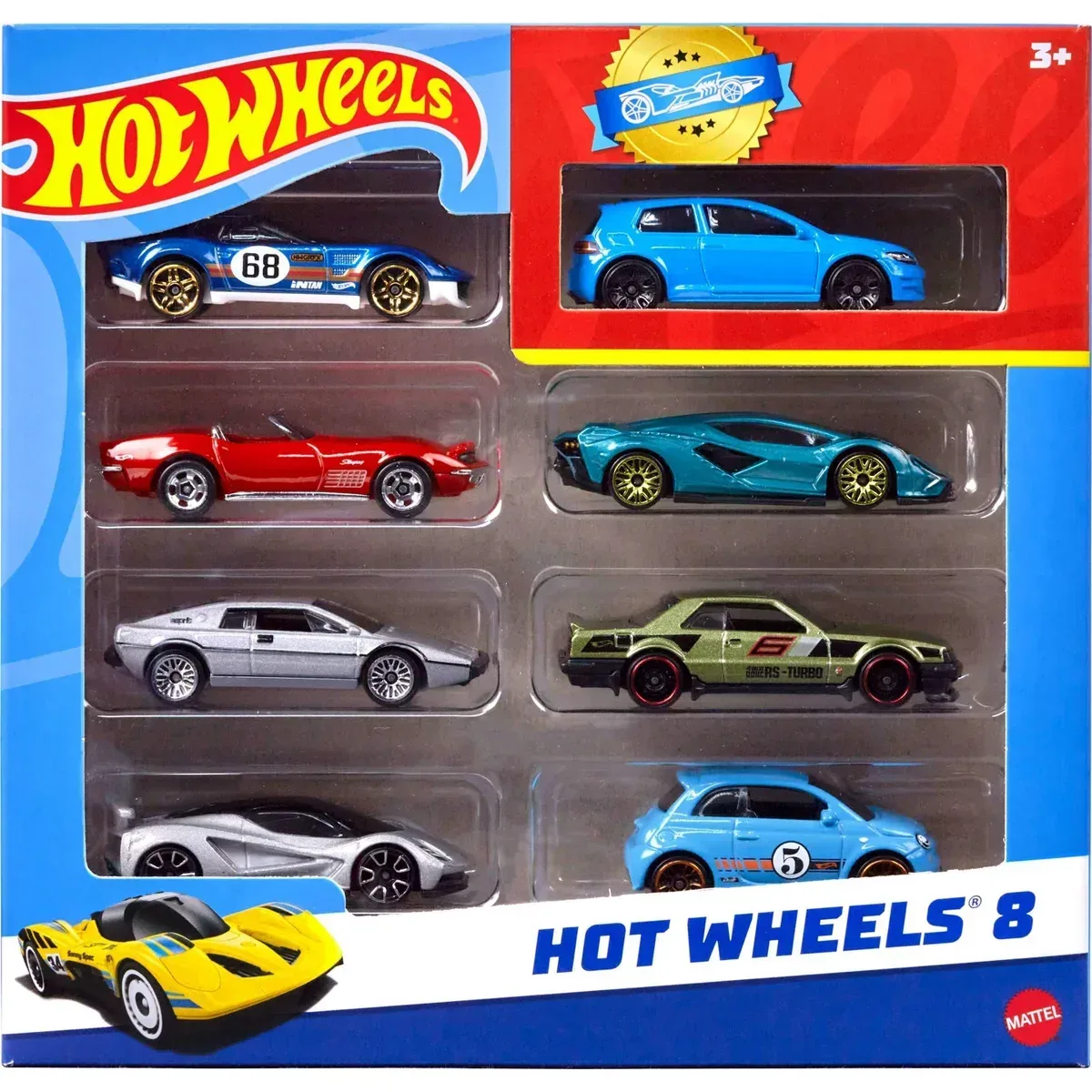
4. Car-Track Ramp
Toy cars on a cardboard ramp at different angles. Measure distance traveled. Demonstrates: force of gravity and ramp angle.
5. Pushing Objects of Different Weights
Push a toy truck. Push the same truck loaded with blocks. Compare the effort. Demonstrates: force required scales with mass.
K-LS1 (Living Things) — 5 activities
6. Plant a Seed and Observe
Bean seeds in clear cups. Measure height each week. Draw observations. Demonstrates: plants grow over time with water + light.
7. Pet Observation (If Classroom Has One)
Watch classroom pet (fish, hamster). Document what it needs (food, water, shelter). If no classroom pet, a brief nature-walk observation works.
8. Tree Identification Walk
Walk outside; identify 3–5 different trees by leaf shape. Use a simple field guide. Demonstrates: diversity of plants + observation skills.
9. Bird Feeder Observations
Set up a bird feeder near the classroom window. Count what birds visit over a week. Demonstrates: animals need food; different species have different preferences.
10. Habitat Matching Game
Show pictures of animals and habitats. Kids match each animal to its home. Demonstrates: different living things need different environments.
K-ESS2 (Weather) — 5 activities
11. Daily Weather Journal
Every morning, the class draws and records the weather (sunny, rainy, cloudy, snowy, windy). Track for a month. Demonstrates: weather patterns over time.
12. Temperature Chart
Record outside temperature daily for 2 weeks. Graph it. Demonstrates: measurable variable that changes over time.
13. Rain Gauge
Clear container outside. Measure rainfall after storms. Demonstrates: measurement of a natural phenomenon.
14. Cloud Watching
Go outside; identify cloud types (cumulus, stratus, cirrus). Demonstrates: observation and classification.
15. Shadow Tracking on a Sunny Day
Mark a stick’s shadow every 30 minutes for a school day. Demonstrates: sun moves across sky (actually Earth rotates).
K-ESS3 (Human Needs and Environment) — 3 activities
16. Classroom Trash Audit
Over 3 days, collect classroom trash. Sort by category (paper, food, plastic). Count and discuss. Demonstrates: human impact on environment. See our Earth Day guide #1 for more.
17. Where Does Our Water Come From?
Trace classroom water from faucet back to source (tap → pipes → city water → reservoir/river). Demonstrates: human dependence on natural systems.
18. Growing Food vs Buying Food
Discuss: what if we had to grow all our food? Plant a classroom herb garden (basil is fast). Demonstrates: food production.
Cross-Cutting (2 activities)
19. Color Mixing With Paint
Red + blue = purple. Classic kindergarten activity, but reframe as science: mixing colors follows predictable rules. Demonstrates: systematic observation.
20. Sink or Float Tournament
Collection of classroom objects. Predict which sink/float, then test. Demonstrates: prediction + testing (early hypothesis-forming).
Kit-Based Additions
If budget allows, these kits enhance kindergarten science:
- Thames & Kosmos Kids First Chemistry ($40) — age-appropriate chemistry for ages 4+
- Stomp Rocket Original ($20) — physics activity #3 above
- Plasma Car ($65) — force activity #1 above
- Classroom magnifying glass pack ($15–$25) — extends observation activities
- Kitchen scale ($15) — extends any measurement activity
Classroom Management
- Station rotations: With 20 kids, run 4 stations of 5 kids each. Rotate every 15 minutes.
- Partner observations: Kids draw/describe what they see; partner checks.
- Science notebook: Small notebook per kid, used for drawing observations (not writing — kindergarten writing develops variably).
- Class discussion: After each activity, 5–10 minutes of “what did we observe?” builds the reasoning habit.
What to Avoid at Kindergarten
- Complex multi-step experiments — attention span mismatch
- Chemistry with significant reagents — save for age 8+
- Activities requiring fine motor precision — kindergarteners still developing this
- “Science experiments” that are actually demonstrations — kids should do, not watch
- Over-explanation. At 5, showing > telling. Let them observe and draw conclusions.
Research Context
Early-childhood science education research consistently supports hands-on observation at this age. Gopnik’s work on preschool causal reasoning documents that 4–6-year-olds engage with cause-and-effect at higher levels than adults often expect.1 The activities above scaffold this naturally — observable phenomena, clear variables, predictable outcomes.
The Bottom Line
Kindergarten science should be:
- Hands-on, not watch-on
- 10–20 minutes per activity
- Observation + drawing > writing + abstraction
- Multi-day patterns (weather, plants) work well for tracking
- Classroom-scaled — activities for 20 kids at once
For the broader K–5 picture, see our NGSS-by-grade STEM toy map.
Activities aligned with NGSS K Performance Expectations and tested in classroom settings.
Footnotes
-
Gopnik, A. (2012). “Scientific thinking in young children: Theoretical advances, empirical research, and policy implications.” Science, 337(6102), 1623–1627. ↩