ScienceBasedKids.com may earn a commission from affiliate links in this review. Our ratings are never influenced by affiliate relationships. Read our full methodology.
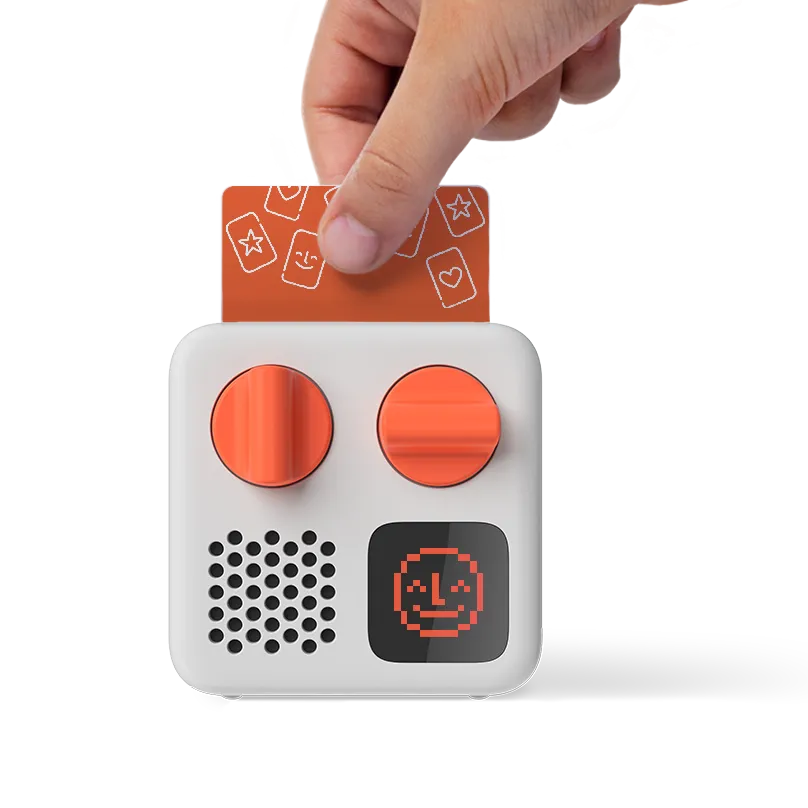
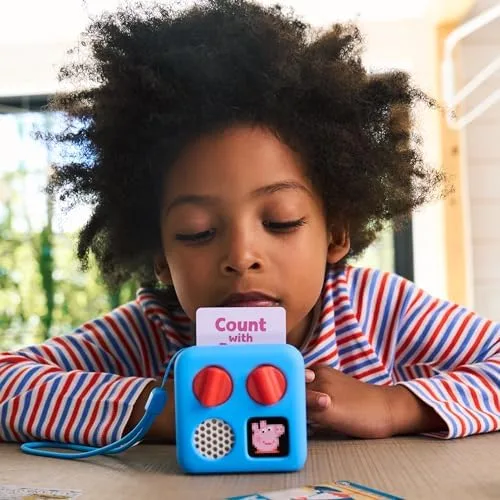
My daughter asked me to “put on the card about the fox” last Tuesday, and I handed her the Yoto Mini so she could do it herself. She’s four. She found the card in a small basket, slid it into the slot on top, and Roald Dahl’s Fantastic Mr Fox began playing from the small speaker. Then she adjusted the volume by twisting the right dial — too loud — twisted it back, and carried the device to her room. The entire interaction took eight seconds and involved zero screens, zero apps, and zero parental IT support. For a device that costs $70, that’s a remarkably polished experience.
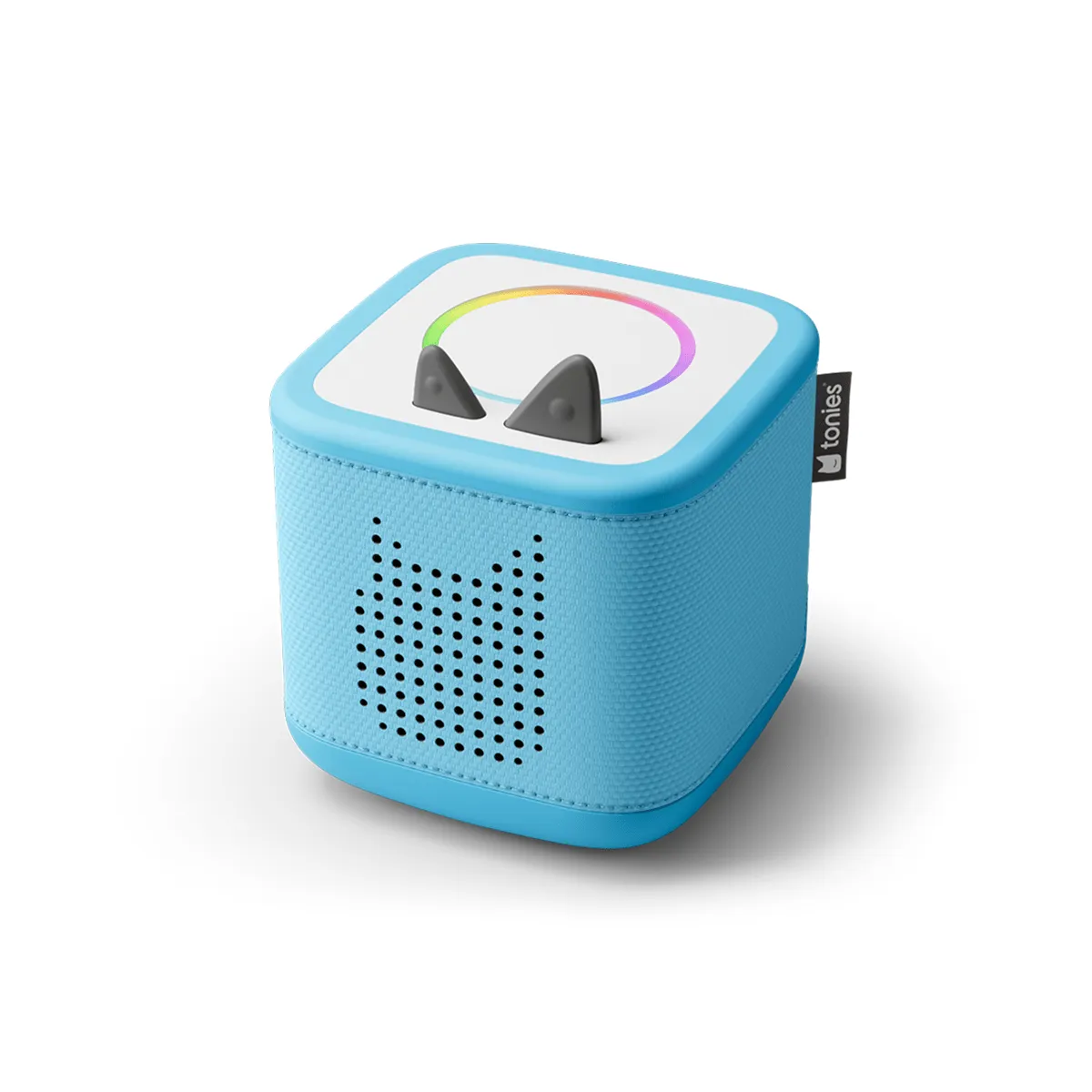
The Yoto Player Mini is the compact, portable version of Yoto’s card-based audio player. At $70, it undercuts the Toniebox ($100) and the full-size Yoto Player ($100), while sharing the same content library and card format as its bigger sibling. We tested it over six weeks with children ages 3 through 7, alongside the Toniebox and the full Yoto Player. Here’s our assessment.
Product Overview
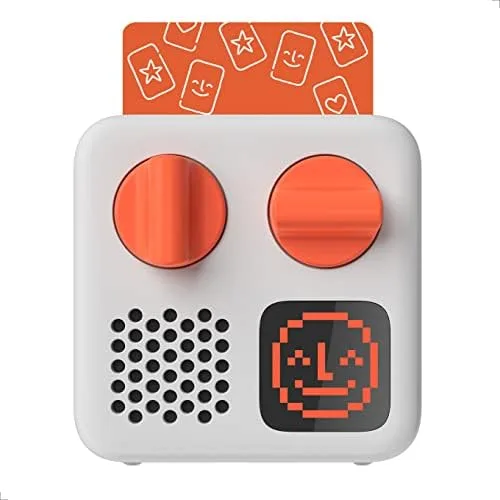
The Yoto Mini is a small, rounded-rectangle audio player that fits comfortably in a child’s hand. Content comes on NFC-enabled cards — about the size of a credit card but thicker — that slot into the top of the device. The player has two rotary dials (left for navigation/track selection, right for volume), a small pixel-art display, and a built-in speaker.
Key specs:
- Dimensions: 3.5” × 3.5” × 1.6” (genuinely pocket-sized)
- Weight: 5.6 oz (lighter than a smartphone)
- Battery life: Up to 18 hours (we measured 14-16 hours in real-world use)
- Speaker: Single driver, adequate for a bedroom, not for filling a large room
- Display: Low-resolution pixel-art screen showing illustrations, clock, or nightlight
- Connectivity: WiFi (for content download), Bluetooth (for headphones)
- Storage: Internal storage holds downloaded content; no SD card
The device connects to the Yoto app (parent’s phone) for initial setup, content purchases, and managing Make Your Own cards. Day-to-day use requires no phone or app — the cards work offline once content is downloaded.
Our Evaluation
Build Quality: 7/10
The Yoto Mini is solidly built for its size, with a matte plastic shell that resists fingerprints and provides a good grip. The rotary dials have a satisfying click-detent feel that children found intuitive. The card slot accepts cards smoothly and holds them firmly during playback.
The plastic construction is the main trade-off against the Toniebox’s padded fabric exterior. A drop from table height onto hardwood produced a worrying sound but no damage in our testing. A drop onto tile or concrete would carry more risk. The device survived being tossed into a bag, sat on, and carried around by a four-year-old for six weeks, so the durability is adequate for the target age — but it’s not toddler-proof in the way the Toniebox is.
The cards themselves are a vulnerability. They’re thin enough to bend if sat on and small enough to lose in couch cushions. Our testing household lost two cards in six weeks (both recovered from under furniture). A card organizer or dedicated storage basket is an essential companion purchase.
The charging cable is USB-C, which is convenient for families who already have USB-C cables everywhere. Battery life is impressive — we regularly got three to four days of moderate use between charges.
Play Value: 8/10
The Yoto Mini’s play value is directly proportional to the content you feed it. The device itself is a delivery mechanism — elegantly designed, but inert without cards. This is where Yoto’s content ecosystem becomes the product’s strongest argument.
The content library exceeds 1,000 titles, spanning:
- Audiobooks: Roald Dahl, David Walliams, Julia Donaldson, Enid Blyton, classic fairy tales
- Educational: BrainBots (science), Times Tables, phonics-focused cards
- Music: Nursery rhymes, classical music compilations, kids’ pop
- Podcasts: Curated podcast collections on cards
- Activities: Sleep sounds, guided meditations, radio station simulations
Individual cards run $5-$8 for most titles, with bundles offering better per-card value. The Yoto Club subscription ($10/month) delivers a curated card monthly and opens up a streaming library through the app.
The Make Your Own cards ($12 for a 5-pack) are a standout feature. Through the app, you can load any audio onto a blank card — library audiobooks, your own recordings, Spotify playlists via recording, grandparent voice messages. A resourceful parent with a library card can build a massive audio library at minimal cost.
Our testers developed strong card preferences and clear listening routines. The four-year-old had a “morning card” (nursery rhymes) and a “bedtime card” (stories). The seven-year-old binged Roald Dahl systematically, finishing one book and immediately asking for the next. This kind of self-directed audio consumption is exactly what the device is designed to encourage.
Age Appropriateness: 7/10
Yoto markets the Mini for ages 3+, and that’s mostly accurate — with a caveat about fine motor demands. Inserting a card into the top slot requires aligning the card and pushing it straight down. Our three-year-old tester managed this after a few attempts but sometimes inserted cards backward or at an angle, requiring adult intervention. By age 4, the interaction was fully independent.
The rotary dials are intuitive across the age range. Even the three-year-old understood “turn right for louder, turn left for quieter” within the first session. Track skipping via the left dial took longer to master but was reliable by session three.
The content library supports a wide age range. The youngest listeners (3-4) gravitated toward nursery rhymes, simple stories, and sleep sounds. The oldest (7-8) used the device as an audiobook player for chapter books. The pixel-art display adds a layer of engagement for visual learners — it shows simple animations related to the playing content, which several of our testers watched while listening.
The upper age limit depends on the child. A voracious reader/listener at age 8-9 may still enjoy the Yoto Mini for audiobooks, especially at bedtime. By 10, most children will prefer a phone or tablet for audio content — the Yoto’s advantage is specifically that it isn’t a connected screen device, and that advantage diminishes as children age into screen use.
Durability: 7/10
Adequate for the target age, not exceptional. The plastic shell handles daily use well but is more fragile than the Toniebox. The cards are the weak point — they can bend, scratch, and get lost. We recommend a card case or organizer as a day-one purchase.
The rechargeable battery showed no degradation over our six-week testing period. Long-term battery health in lithium-ion devices is always a question mark, but Yoto’s track record over several product generations has been solid based on community reports.
Value for Money: 9/10
At $70 for the device, the Yoto Mini is the clear value leader in children’s audio players. The per-content cost advantage over the Toniebox ($5-$8 per card versus $12-$17 per Tonie) compounds significantly for families who purchase content regularly. The Make Your Own cards further reduce costs for resourceful parents.
The Yoto Club subscription ($10/month) is reasonable for active listeners but not essential — the à la carte library is large enough to buy selectively.
Compared to the full-size Yoto Player ($100), the Mini sacrifices some audio quality and speaker size but gains portability and saves $30. For most families with children under 8, the Mini is the better choice. The full Player makes sense for families who want room-filling sound or who see the device serving an older child into tween years.
The Evidence
The Yoto Mini is a content delivery device, so the relevant research concerns audio exposure and language development — not the device itself.
Vocabulary acquisition through audio. Montag et al. (2015) demonstrated that children’s books contain significantly more rare words than adult conversation or television dialogue.1 Audio versions of these texts deliver the same vocabulary richness. A child listening to Fantastic Mr Fox on a Yoto encounters words like “boggis,” “bunce,” “bean,” “desperately,” and “ravenous” — words they’re unlikely to hear in daily conversation. Repeated exposure to rich vocabulary in narrative context is one of the most well-supported pathways to vocabulary growth in early childhood.
The read-aloud analogue. Whitehurst et al. (1988) showed that interactive reading produces vocabulary gains — particularly when caregivers ask questions and engage in dialogue about the story.2 Audio players like the Yoto can partially replicate this if a parent listens alongside the child. They cannot fully replicate it when the child listens alone. The distinction matters: independent audio listening is a good supplement to, not a replacement for, shared reading.
Phonological awareness and prosody. Audio stories preserve the prosodic features of language — intonation, rhythm, stress patterns — that contribute to phonological awareness, a key predictor of reading readiness. Bus et al. (1995) meta-analyzed the relationship between book exposure and literacy outcomes, finding consistent positive associations.3 High-quality audiobook narration (and Yoto’s content partners produce excellent narration) delivers these prosodic cues faithfully.
Screen displacement. There’s an indirect benefit worth noting. Rideout (2017) documented that average screen time for children ages 2-8 exceeds two hours daily.4 Every hour a child spends listening to a Yoto is an hour not spent watching a screen. The language input from an audiobook is richer than most children’s video content, making audio players a net positive displacement — replacing passive visual consumption with active auditory engagement that demands imagination and internal visualization.
The honest summary: The Yoto Mini delivers content that supports language development through vocabulary exposure, narrative comprehension, and phonological processing. The evidence base is about audio and language exposure broadly, not this device specifically. But the device is well-designed to maximize that exposure — portable, independent, distraction-free, with a content library deep enough to support daily use across years.
Safety Notes
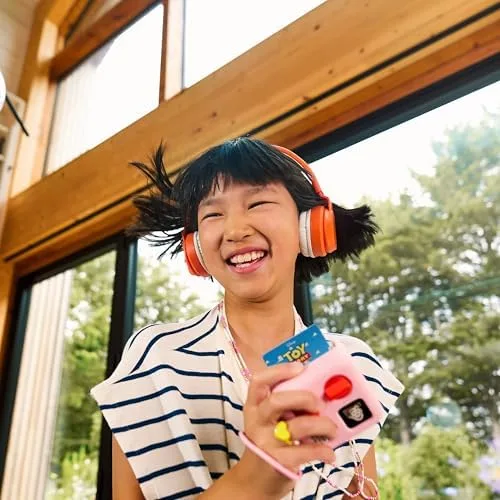
The Yoto Mini has no small parts that present a choking hazard. The cards are too large to swallow. The device has built-in volume limiting that parents can control through the app, with a maximum that complies with WHO recommendations for children’s audio exposure.5
The pixel-art display emits minimal blue light and is not bright enough to disrupt sleep when used in nightlight/clock mode — we measured it at well below the threshold that sleep researchers flag as concerning.
The device requires WiFi for initial content download but does not provide internet access to the child. There is no browser, no social media, no messaging, and no way for the child to access content that a parent hasn’t purchased or loaded. The walled-garden approach is one of the Yoto’s strongest safety features.
The Verdict
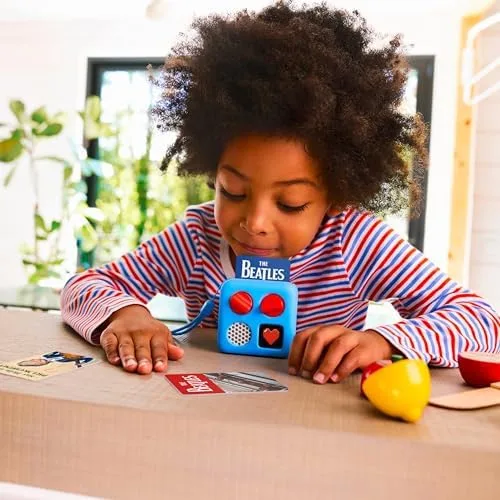
The Yoto Player Mini is the audio player we’d recommend to most families. It’s affordable ($70), portable, screen-free in daily use, and connected to a content library that will keep a child supplied with stories, music, and educational content for years. The language development research supports audio exposure as a meaningful contributor to vocabulary growth and reading readiness, and the Yoto delivers that exposure in a format that children can control independently.
The Toniebox remains the better choice for children under 3, where the tactile figurine interaction is more developmentally accessible than the Yoto’s card-slot mechanism. But from age 4 onward, the Yoto Mini’s advantages in content value, portability, and library depth make it our top pick.
Product Rating: 8/10 — Excellent value, well-designed for independent use, with a content ecosystem that rewards long-term investment.
Evidence Rating: Moderate — Strong research supports audio exposure for language development. No device-specific studies, but the underlying mechanism is well-established.
Who Should Buy This
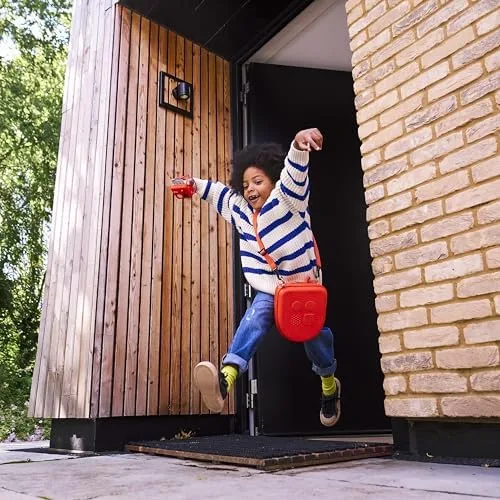
- Families with children ages 4-8 looking for a screen-free audio solution
- Parents who want the largest content library at the lowest per-story cost
- Families who travel frequently (the battery life and portability are ideal)
- Parents looking for a bedtime routine anchor (stories + nightlight/clock)
- Gift-givers who want a $70 present that keeps delivering value through content
Who Should Skip This
- Families with children under 3 (the card mechanism is too fiddly; consider the Toniebox)
- Parents who want absolutely zero display on their child’s device (the pixel screen, while minimal, exists)
- Families who only need a handful of stories (at low content volumes, the per-story cost advantage over Toniebox is less meaningful)
- Households with very rough handlers (the Toniebox’s padded construction is more durable)
For a detailed comparison with the Toniebox, see our Toniebox vs Yoto: Audio Player Showdown.
This review reflects our independent evaluation. ScienceBasedKids.com purchased this product at retail price. We may earn a commission if you purchase through our links, which helps fund our research. This never influences our ratings.
Footnotes
-
Montag, J. L., Jones, M. N., & Smith, L. B. (2015). “The words children hear: Picture books and the statistics for language learning.” Psychological Science, 26(9), 1489-1496. ↩
-
Whitehurst, G. J., Falco, F. L., Lonigan, C. J., Fischel, J. E., DeBaryshe, B. D., Valdez-Menchaca, M. C., & Caulfield, M. (1988). “Accelerating language development through picture book reading.” Developmental Psychology, 24(4), 552-559. ↩
-
Bus, A. G., van IJzendoorn, M. H., & Pellegrini, A. D. (1995). “Joint book reading makes for success in learning to read: A meta-analysis on intergenerational transmission of literacy.” Review of Educational Research, 65(1), 1-21. ↩
-
Rideout, V. (2017). The Common Sense Census: Media Use by Kids Age Zero to Eight. Common Sense Media. ↩
-
World Health Organization. (2019). Make Listening Safe. WHO Technical Report. ↩
Enjoyed this review? We publish two new evidence-based evaluations every week.
Free. No spam. Unsubscribe anytime.
Make Your Own cards and library audiobooks can significantly reduce Yoto content costs.
Recommended Accessories
Affiliate links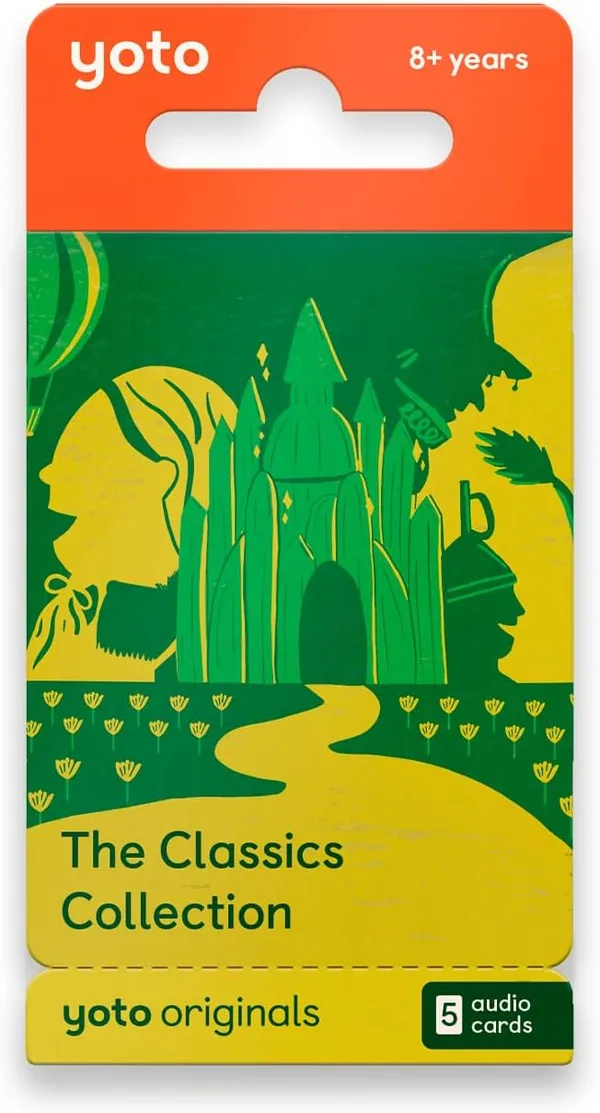
Yoto The Classics Collection (5 Audio Cards)
“Additional story cards. Content is the product — the player is just the device.”
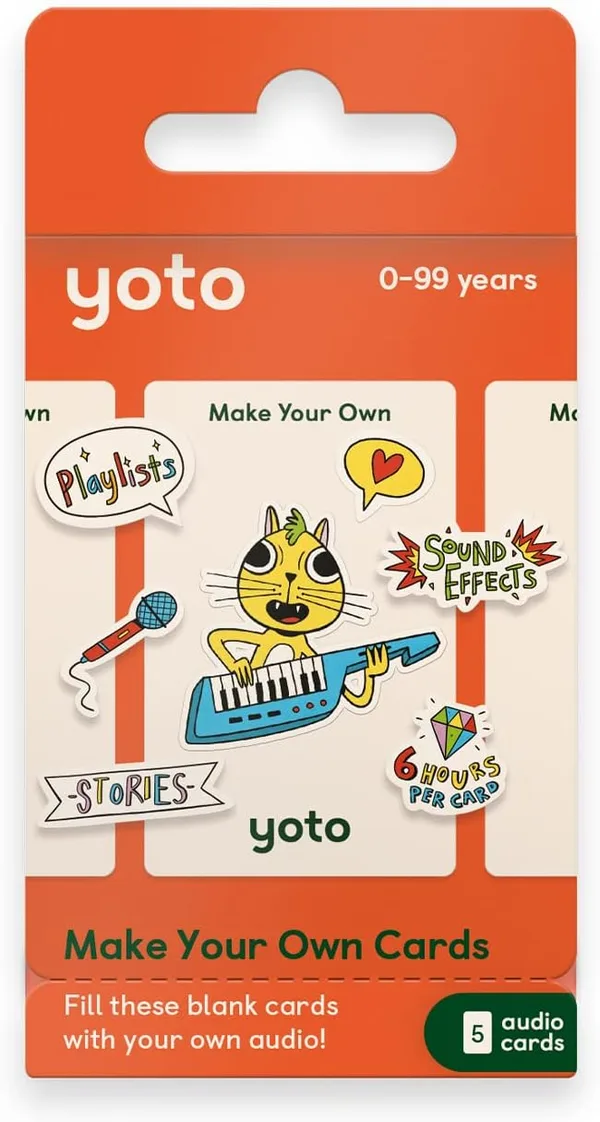
Yoto Make Your Own Cards (5-Pack Blank)
“Record custom content via the app. Grandparent messages, own audiobooks, playlists.”
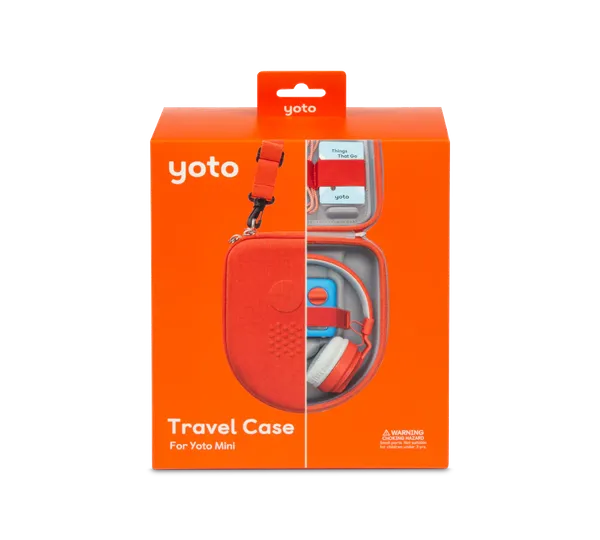
Yoto Mini Travel Case (Hard-Shell with Shoulder Strap)
“Protective hard-shell case for travel. Holds Mini, headphones, and up to 30 cards.”
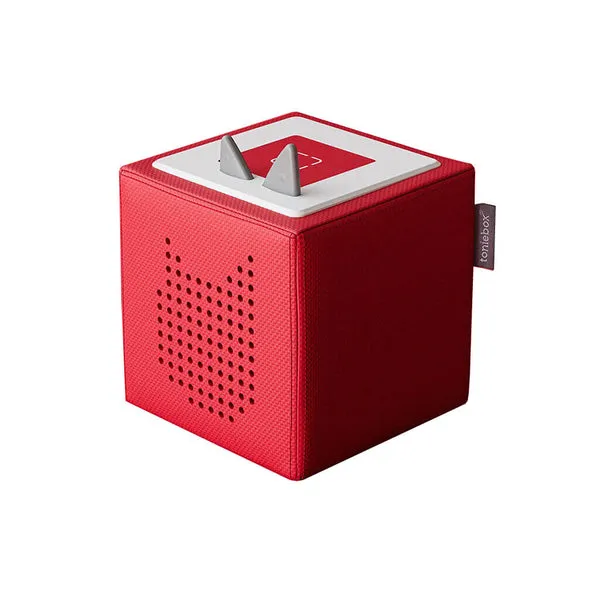
Toniebox Starter Set with Playtime Puppy
“Figurine-based alternative. More tactile interaction, higher per-content cost.”
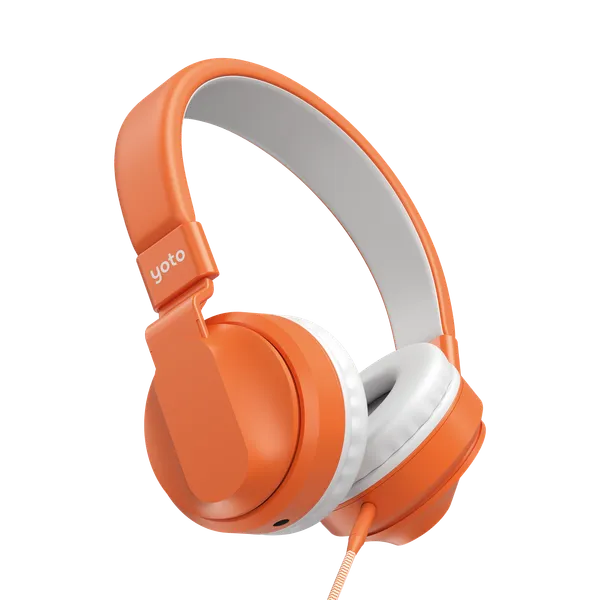
Yoto Wired Headphones for Kids (Volume-Limiting, Foldable)
“Volume-limited headphones designed for Yoto with daisy chain for audio sharing. Essential for car trips.”