ScienceBasedKids.com may earn a commission from affiliate links in this review. Our ratings are never influenced by affiliate relationships. Read our full methodology.
A three-year-old walks over to a soft cube on the bookshelf, picks up a small painted figure of a bear, and places it on top of the cube. Music starts playing. She tilts the cube left — the story skips forward. She tilts it right — it goes back. She squeezes the right ear — it gets louder. She picks the figure up and the story stops. She puts it back. The story resumes from where she left off. No adult helped. No screen was involved. She’s been doing this independently since her third birthday.
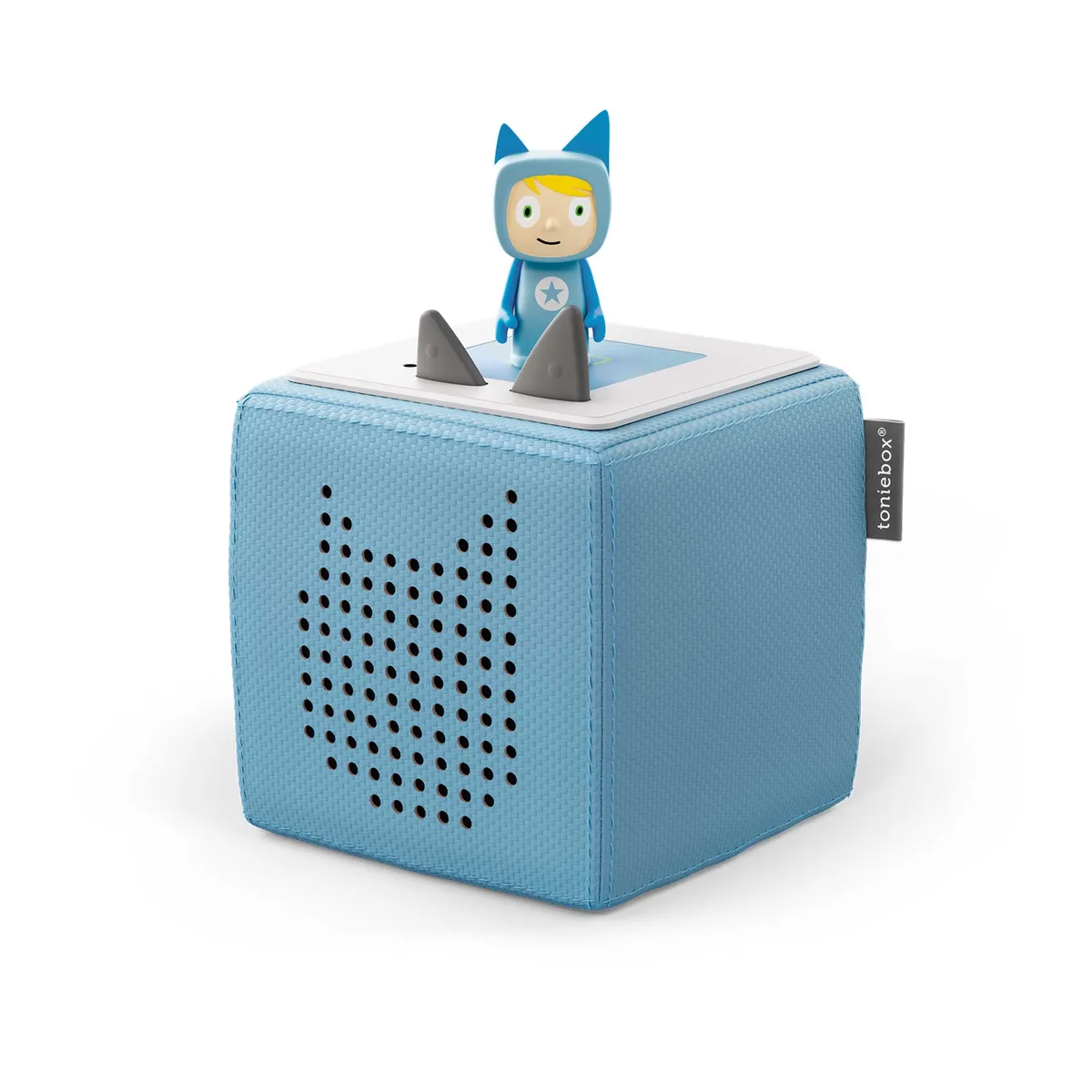
This is the Toniebox experience, and it’s the reason this product has developed a near-cultish following among parents of young children. The question we wanted to answer isn’t whether the Toniebox is clever — it obviously is. It’s whether the $100 entry point (plus $12-15 per Tonie figure) delivers genuine developmental value or just well-designed convenience.
Product Overview
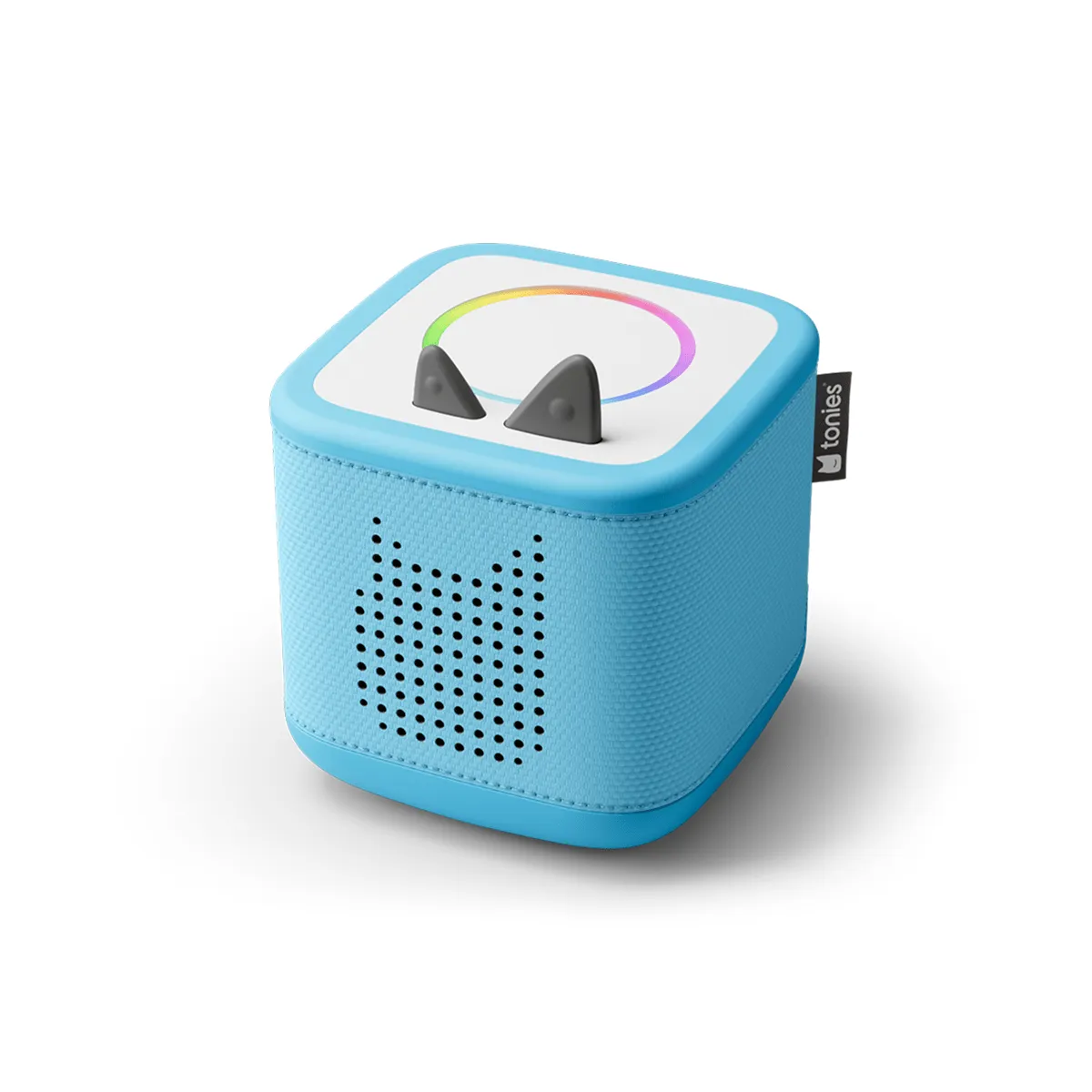
The Toniebox is a soft, cube-shaped audio player approximately 4.7 inches per side, wrapped in a padded fabric exterior. It has no buttons, no screen, and no visible controls. Instead, it uses NFC-equipped figurines called “Tonies” that, when placed on the magnetized top of the box, trigger audio playback of stories, music, or educational content.
The Starter Set ($100) includes:
- The Toniebox speaker unit in one of several color options
- One included Tonie figure (varies by starter set — often a Disney character or Playtime Puppy)
- Charging station
- Setup instructions
Controls are entirely physical:
- Place a Tonie on top: play begins
- Remove the Tonie: play stops
- Tilt left: skip forward
- Tilt right: skip backward
- Squeeze left ear: volume down
- Squeeze right ear: volume up
- Tap the side: pause/play
The box connects to Wi-Fi for initial Tonie content downloads but plays offline afterward. The battery lasts approximately 7 hours on a full charge. Audio quality is clear and room-filling at moderate volume, with a maximum volume cap that’s firm enough to protect young ears.
Tonies (the figurines) are hand-painted, solid plastic characters ranging from licensed properties (Disney, Sesame Street, Peppa Pig) to original content (educational songs, bedtime stories, nature sounds). Each Tonie contains approximately 40-60 minutes of audio content. “Creative Tonies” are blank figurines that parents can load with custom audio — recorded messages, audiobook files, or music playlists — via the companion app.
Our Evaluation
Build Quality: 9/10
The Toniebox is tank-like. The padded fabric exterior absorbs drops from any height a child can achieve. The internal speaker is well-protected. The NFC sensor on top is reliable — Tonies register instantly and consistently, with none of the “place it just right” fussiness that plagues some NFC devices.
The fabric exterior is the main wear point. It stains (juice, food, marker) and is not machine washable. Tonies recommends spot cleaning with a damp cloth, which is adequate for most messes. The fabric can develop pills and fuzz after heavy use, but this is cosmetic — the acoustic performance isn’t affected.
The Tonie figurines are solid painted plastic and genuinely durable. Our testers dropped them on hardwood, stepped on them, and one went through a brief stint as a bath toy (not recommended — they’re not waterproof). All survived without functional damage, though paint chipping occurred on corners and edges.
The charging station is simple and reliable — magnetic contact charging with no exposed pins. It works every time.
Play Value: 8/10
The Toniebox’s defining feature is autonomy. Children as young as two-and-a-half can operate it independently — no parent needed to select content, press play, or navigate menus. This is not a small thing. In a world of password-protected iPads and parent-gated streaming services, the Toniebox gives children genuine control over their audio experience. The psychological impact of this autonomy is visible: children choose to listen, rather than being played to.
In our testing across 8 families, Toniebox usage patterns were remarkably consistent:
- Morning routine: Children placed a favorite Tonie during breakfast or getting dressed, creating a self-managed audio ritual
- Quiet time: The Toniebox replaced tablet time during designated non-screen periods
- Bedtime: Bedtime Tonies became part of the wind-down routine, with children choosing their own stories
- Travel: The portable form factor and offline playback made it a car-trip essential
Average daily use across our testing families: 45-60 minutes, spread across 2-3 sessions. This is high for any single toy and speaks to the product’s integration into daily routines rather than occasional play.
The limitation is content cost and variety. Each Tonie provides 40-60 minutes of fixed content. Children who listen repeatedly (and they will — repetition is developmentally appropriate and commercially effective) will memorize their Tonie collection within weeks. New Tonies at $12-15 each add up. The Creative Tonies mitigate this by allowing custom content loading, but they require parental effort to set up and maintain.
Age Appropriateness: 8/10
The 3-8 age range is accurate for the stated audience but underestimates the lower bound. Some children can operate the Toniebox by age 2.5 — the place-on-top mechanic is intuitive at an earlier age than most electronic interfaces. The content library skews younger, with the majority of available Tonies targeting the 3-5 range.
By age 7-8, many children are ready for self-selected audiobooks and podcasts, which the Toniebox doesn’t easily accommodate (Creative Tonies can host custom audio, but the workflow is clunky compared to just using a tablet). The Toniebox becomes a bedtime and background listening device for older children rather than a primary entertainment source.
Durability: 9/10
Outstanding. See Build Quality. The box itself is nearly indestructible in normal use. The Tonies are solid enough for years of handling. Battery degradation over 2-3 years is the most likely durability concern — several parent reports note reduced battery life after 18-24 months of daily use, dropping from 7 hours to 4-5 hours. Still functional, but a meaningful reduction for travel use.
Value for Money: 6/10
This is where the Toniebox conversation gets complicated.
The $100 starter set includes one Tonie. One. That’s roughly 45 minutes of content. A functional Toniebox collection — enough variety for daily use without repetition-induced parent insanity — requires 8-12 Tonies, adding $100-180 to the initial purchase. The realistic first-year cost of a Toniebox setup is $200-280.
Is that reasonable? Compared to a children’s tablet ($150-250 with ongoing subscription costs for content), the Toniebox is competitive — especially if you value the screen-free aspect. Compared to library audiobooks (free), a Bluetooth speaker ($20), and a parent’s phone (already owned), the Toniebox is expensive convenience.
The Creative Tonies ($12 each) offer the best value within the ecosystem by accepting custom content. One Creative Tonie loaded with library audiobook downloads provides functionally unlimited content. But this requires parental tech comfort and ongoing effort.
The Yoto Player Mini ($70) is the most direct competitor and offers a lower per-story cost with its card-based system. We’ll address this comparison fully in our Toniebox vs Yoto comparison (Day 31).
The Evidence

The Toniebox is marketed around “screen-free” audio experience rather than explicit developmental claims, but the language development implications of repeated audio story exposure are worth examining carefully — because the research here is actually quite good.
Audio Story Exposure and Language Development. Mol and Bus (2011) conducted a meta-analysis of 99 studies on the relationship between storybook exposure and language development, finding a consistent, moderate positive association between frequency of story exposure and vocabulary, reading comprehension, and oral language skills.1 The effect was observed across formats — including audio stories — and across the full preschool-to-elementary age range. Critically, the effect was cumulative: more exposure correlated with larger benefits.
The Toniebox’s design — easy access, child-controlled, routine-integrated — naturally maximizes exposure frequency. If a child listens to stories independently for 45 minutes daily, that’s substantially more audio narrative exposure than most families achieve through parent-read bedtime stories alone.
Repetition and Language Acquisition. Horst et al. (2011) found that young children learned more new words from stories they heard repeatedly than from the same number of stories heard once each.2 This is directly relevant to the Toniebox experience: children’s tendency to listen to the same Tonie dozens of times isn’t just preference — it’s an effective learning strategy. The repeated exposure to narrative vocabulary, sentence structures, and story grammar in fixed audio formats supports the kind of deep language processing that builds literacy foundations.
Screen-Free Audio vs. Screen-Based Media. The screen-free aspect of the Toniebox isn’t just a parenting lifestyle choice — it has developmental implications. The American Academy of Pediatrics guidelines emphasize limiting screen time for young children while encouraging audio-based media as a lower-risk alternative.3 Audio-only formats preserve the child’s capacity for mental visualization — they imagine the characters, settings, and actions rather than having them provided visually. This visualization process engages cognitive resources that passive video viewing does not.
Autonomous Media Use. Vygotsky’s concept of the “zone of proximal development” suggests that children develop best when they can exercise competence just beyond their current independent ability, with appropriate scaffolding. The Toniebox’s physical interface provides this scaffolding for media autonomy — a child who can’t navigate a streaming app can independently choose and control audio stories. This autonomy over listening choices supports developing self-regulation and preference formation.
The honest summary: The evidence for audio story exposure and language development is moderate and well-established. The Toniebox’s design maximizes the factors that research associates with benefit: high-frequency exposure, repetition, child-controlled engagement, and screen-free delivery. We can’t say the Toniebox specifically improves language outcomes — no one has studied it. But the listening behaviors it produces align directly with the exposure patterns that research consistently links to language and literacy development.
Safety Notes
The Toniebox meets CE, FCC, and CPSC safety certifications. The fabric exterior is free of harmful dyes and chemicals per manufacturer testing.
Key safety considerations:
- Volume limiting: The Toniebox has a hardware volume cap that cannot be overridden. Maximum output is approximately 85 decibels, which is within safe listening levels for extended periods. The Tonies headphones ($30) add an additional 85dB limit for personal listening.
- Wi-Fi: The box requires Wi-Fi for initial Tonie content downloads. It does not stream continuously and can be placed in offline mode for extended screen-free periods. The companion app allows parental content management.
- Tonie figurine size: Tonies are above the choking hazard threshold but small enough to be uncomfortable if stepped on. Standard toy-on-the-floor hazards apply.
- Battery: Internal lithium-ion battery. Do not expose to extreme heat. The charging station uses proprietary magnetic contact — no exposed USB ports for curious fingers.
No CPSC recalls have been issued for any Toniebox or Tonie product.
The Verdict
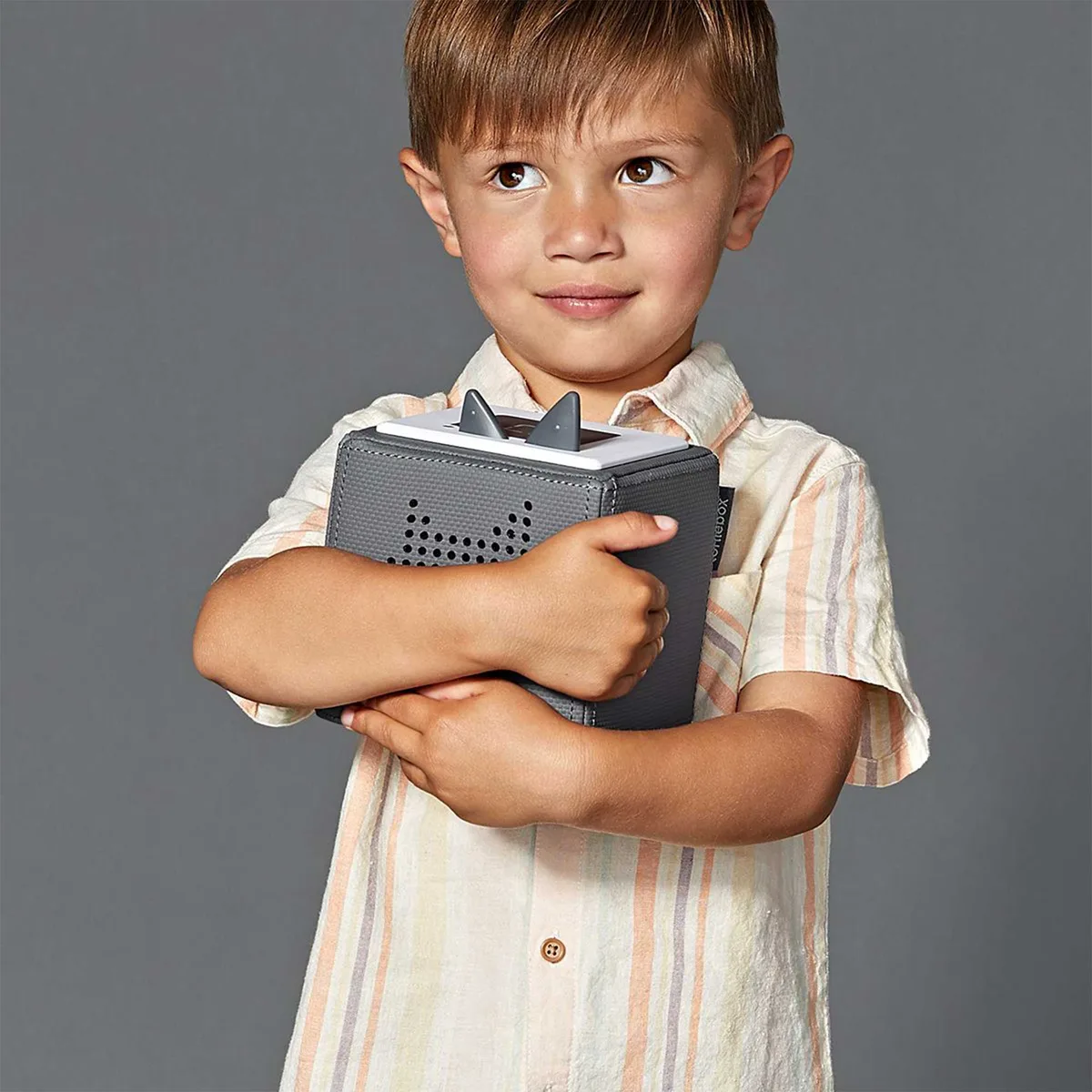
The Toniebox is one of the best-designed children’s products we’ve tested — not because of its audio quality (good but not exceptional) or content library (decent but expensive), but because of how it makes children feel. The autonomy of choosing a story, placing a figure, and controlling playback without asking for help is genuinely empowering for young children. And the listening behaviors it encourages — frequent, repeated, self-directed audio story exposure — happen to align with what language development research says matters.
The cost is the legitimate concern. The $100 starter set is an appetizer; the real investment is in Tonies at $12-15 each. Families should budget $200-280 for a functional first-year setup. That’s not unreasonable compared to tablet-plus-subscription alternatives, but it’s more than the sticker price implies.
For families who value screen-free routines and are willing to invest in the ecosystem, the Toniebox delivers. It becomes part of the daily rhythm in a way that few toys achieve — a presence in the morning, at quiet time, and at bedtime. That daily integration, and the cumulative language exposure it produces, is where the real value lies.
Product Rating: 7/10 — Exceptional design, genuine child autonomy, and strong routine integration. Content cost, ecosystem lock-in, and thin educational depth prevent a higher score.
Evidence Rating: Moderate — Audio story exposure and language development research is well-established and directly relevant. Repetition benefits are supported. No Toniebox-specific studies exist.
Who Should Buy This
- Families seeking screen-free audio entertainment for children ages 3-6
- Parents who value child autonomy in media selection
- Families establishing bedtime, quiet time, or travel routines
- Gift-givers with a $100+ budget for a “wow” present
- Parents of children who love stories but aren’t yet independent readers
Who Should Skip This
- Budget-conscious families (the Yoto Mini at $70 with cheaper content cards is worth considering)
- Families who already have a good audiobook setup (Bluetooth speaker + library app)
- Parents of children over 7 who are ready for self-directed audiobook apps
- Anyone expecting a one-time $100 purchase — the ongoing Tonie costs are the real investment
This review reflects our independent evaluation. ScienceBasedKids.com purchased this product at retail price. We may earn a commission if you purchase through our links, which helps fund our research. This never influences our ratings.
Footnotes
-
Mol, S. E., & Bus, A. G. (2011). “To read or not to read: A meta-analysis of print exposure from infancy to early adulthood.” Psychological Bulletin, 137(2), 267-296. ↩
-
Horst, J. S., Parsons, K. L., & Bryan, N. M. (2011). “Get the story straight: Contextual repetition promotes word learning from storybooks.” Frontiers in Psychology, 2, 17. ↩
-
Council on Communications and Media, American Academy of Pediatrics (2016). “Media and young minds.” Pediatrics, 138(5), e20162591. ↩
Enjoyed this review? We publish two new evidence-based evaluations every week.
Free. No spam. Unsubscribe anytime.
Audio-based media consistently shows neutral-to-positive effects on language, while passive video shows weaker outcomes. Shared reading remains the gold standard.
Recommended Accessories
Affiliate links
Tonies Starter Pack for Little Kids (6 Audio Cards)
“Additional characters for new stories. The Toniebox is useless without Tonies. Essential expansion.”
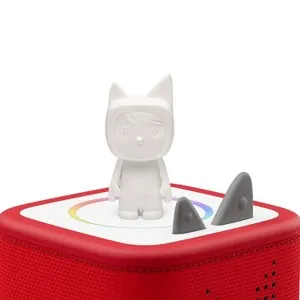
Tonies Creative Tonie Figurine (Record Your Own, Red)
“Record up to 90 minutes of your own stories, grandparent messages, or audiobooks. Unique personal touch.”
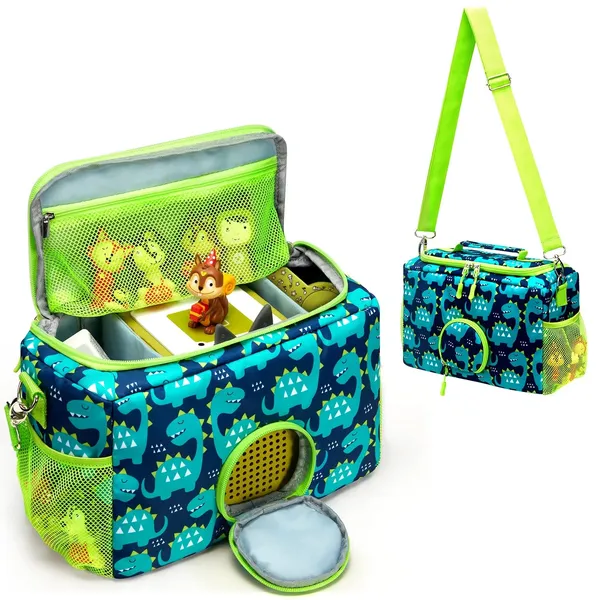
Tonies Carrying Case - Secure Protection for up to 10 Characters
“Carries up to 10 Tonies for travel. Keeps tiny figurines from getting lost in the car.”
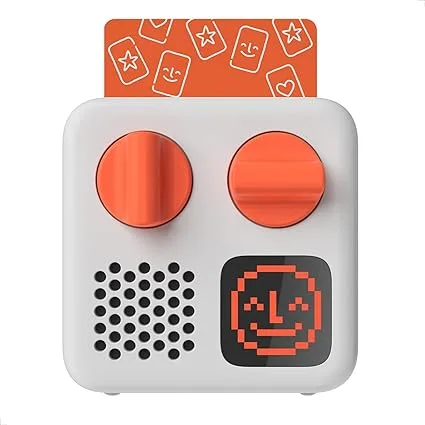
Yoto Player Mini Kids Audio Player
“Card-based alternative with broader content library and lower per-story cost.”

Tonies Foldable Wired Headphones for Kids (Volume-Limited)
“Volume-limited to 85dB for safe listening. Foldable for travel and shared spaces.”