ScienceBasedKids.com may earn a commission from affiliate links in this review. Our ratings are never influenced by affiliate relationships. Read our full methodology.
You hand a child a curved piece of bamboo and step back. What happens next is the most honest product test possible: either the child finds something to do with it, or they don’t. The Kinderfeets Wobble Board passed this test with every single child in our eight-week evaluation. Not because we suggested activities. Not because there were instructions. But because a gently curved board is, it turns out, an irresistible invitation to move.
The wobble board — a simple curved plank used for balance training — has exploded in popularity in early childhood settings over the past five years, driven by the Montessori and Waldorf communities, Instagram aesthetics, and growing awareness of vestibular development. The Kinderfeets version ($90) is among the most popular premium options. We tested it with children ages 2 through 8, observing how they used it, how long they engaged, and whether the developmental claims hold up.
Product Overview
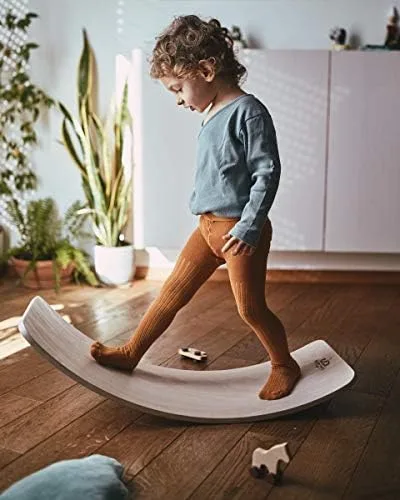
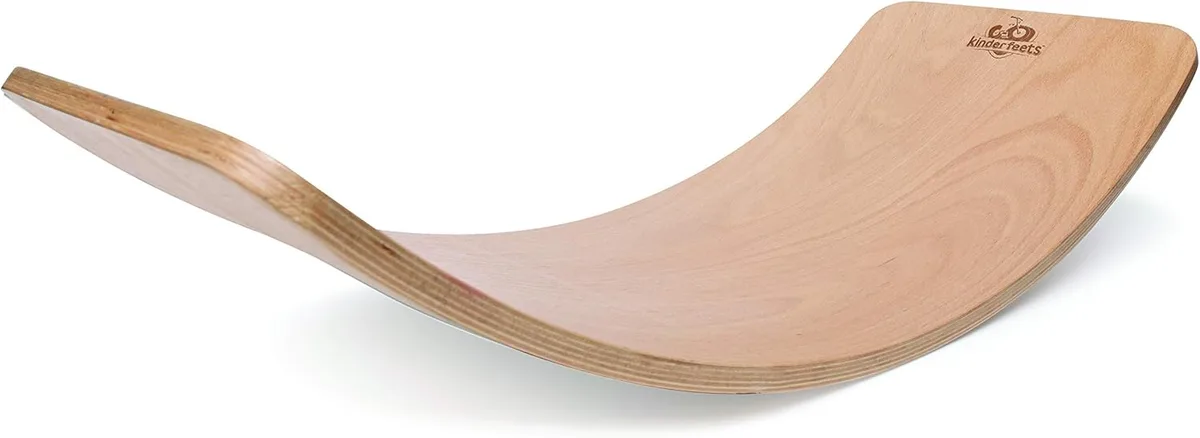
The Kinderfeets Wobble Board is a curved bamboo plank, approximately 32 inches long and 12 inches wide, with a gentle rocker curve. That’s it. There are no moving parts, no electronics, no accessories (though a felt liner is available). The board weighs approximately 5 pounds and supports up to 485 pounds, making it usable by adults as well.
The bamboo construction is sustainably sourced and finished with a natural lacquer. The curve radius is calibrated for a gentle, controlled rocking motion — aggressive enough to provide vestibular input but not so steep that young children feel unstable.
The simplicity is the design philosophy. Wobble boards in the Montessori/Waldorf tradition are intentionally open-ended — the child determines the use, not the manufacturer. This makes the product either brilliant or frustrating, depending on your perspective on unstructured play.
Our Evaluation
Build Quality: 9/10
The bamboo construction is excellent. The board is dense, smooth, and precisely curved. The edges are rounded and sanded smooth — no splinters, no rough spots. The lacquer finish is uniform and has survived eight weeks of heavy use without visible wear. The board has been stood on, jumped on, flipped over, slid across hardwood floors, and used as a bridge between two stools. It shows no signs of stress, cracking, or delamination.
The 485-pound weight capacity means adults can use it for balance training and yoga, extending the product’s household utility well beyond childhood.
Play Value: 9/10
This is where the wobble board defied our expectations. We anticipated balance training — standing on the board and rocking. What we observed was far more varied:
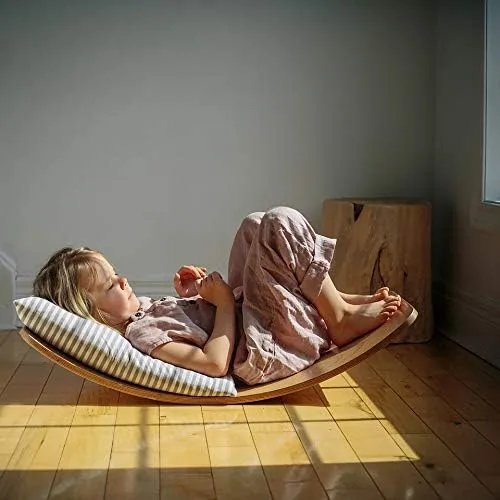
Rocking (all ages): The most common use — sitting in the curve and rocking back and forth. Children from age 2 did this spontaneously and repeatedly. The rocking provides vestibular stimulation that children clearly find calming and enjoyable.
Balance standing (ages 3+): Standing on the board and maintaining balance while it rocks. This is the “intended” use and provides genuine proprioceptive and vestibular challenge.
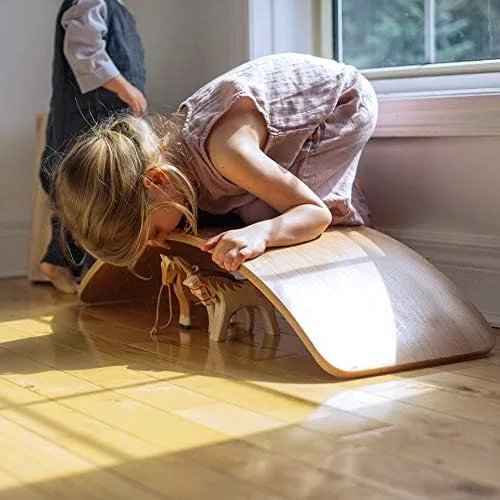
Bridge/tunnel (ages 2-6): Flipping the board upside down creates a bridge or tunnel for toy cars, dolls, and animals. This was one of the most popular uses, transforming the balance tool into a pretend play prop.
Slide/ramp (ages 2-5): Propping one end on a low surface creates a ramp for sliding objects or a slope for climbing.
Spinning (ages 3-7): Sitting in the curve and spinning was discovered independently by multiple children and became a favorite activity.
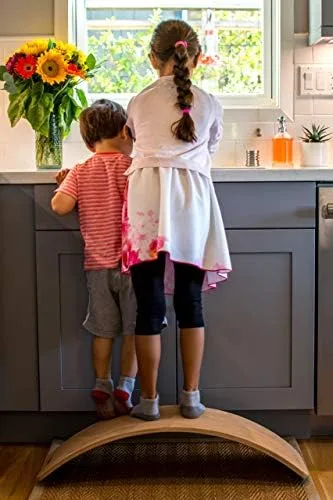
Step/obstacle (all ages): The board placed flat becomes a stepping obstacle in movement courses, often combined with pillows, stools, and other household items.
The variety of uses — most discovered by children without adult prompting — is remarkable. In eight weeks of daily availability, we never observed a child ignore the wobble board entirely.
Age Appropriateness: 9/10
The 2+ rating is appropriate with supervision. The gentle curve prevents dramatic tips, and the weight of the board provides stability. Children under 3 should be supervised during standing use but can rock and play safely with minimal oversight.
Durability: 10/10
The board is essentially indestructible under normal use. Bamboo is harder and more resilient than most hardwoods. The simple design has no moving parts, no joints, and no weak points.
Value for Money: 7/10
At $90, the Kinderfeets is premium-priced for a curved plank. Generic wobble boards on Amazon start around $40, and the Gonge Balance Board (plastic) costs $55. The Kinderfeets premium buys superior materials, precise curvature, and beautiful aesthetics.
Given the multi-year play lifespan, the multiple daily uses, and the 485-pound adult capacity, the per-use cost is extremely low. This is a product that earns its price over time.
The Evidence
Vestibular Stimulation and Sensory Integration. The vestibular system — responsible for balance and spatial orientation — develops rapidly in early childhood. Ayres (1972) established the theoretical framework for sensory integration, arguing that vestibular stimulation is foundational to motor planning, attention, and emotional regulation.1 Subsequent research has largely supported the importance of vestibular input, though the specific therapeutic claims of sensory integration theory remain debated.
Balance and Motor Development. Proprioceptive and balance activities support gross motor development. Adolph and Franchak (2017) documented that motor skill development in early childhood involves continuous calibration between the child’s body and the environment.2 Balance boards provide a controlled environment for this calibration — the rocking surface requires constant postural adjustment.
Active Play and Self-Regulation. Becker et al. (2014) found that physical activity in preschool-age children was positively associated with self-regulation.3 The wobble board provides low-intensity active play that can be sustained for extended periods, which is particularly valuable for indoor environments.
The honest summary: Vestibular stimulation and balance training have solid developmental foundations. Wobble boards provide both in a simple, accessible format. No research specifically examines wobble boards versus other balance activities, but the underlying developmental principles are well-established.
Safety Notes
The Kinderfeets Wobble Board meets ASTM F963 safety standards. Key safety considerations:
- Use on appropriate surfaces. On hard floors, the board can slide. A non-slip pad underneath is recommended. On carpet, the board is naturally more stable.
- Supervision for young children. Standing balance is challenging for children under 3. Seated rocking is safe with minimal supervision.
- Finger pinch risk. The rocking edge can pinch fingers if a child places them under the board during rocking. Teach children to keep fingers away from the floor edge.
No CPSC recalls have been issued for the Kinderfeets Wobble Board.
The Verdict
The Kinderfeets Wobble Board is a masterclass in simple design. A curved piece of bamboo shouldn’t be this engaging, but children prove otherwise — finding dozens of uses that span balance training, pretend play, sensory seeking, and creative movement. The build quality is exceptional, the developmental foundations are solid, and the multi-year, multi-use play lifespan justifies the premium price.
Product Rating: 8/10 — Exceptional open-ended play value with premium construction. Niche appeal and high price for a simple product prevent a higher score.
Evidence Rating: Moderate — Vestibular stimulation and balance training have strong developmental foundations. No wobble-board-specific research, but category evidence is robust.
Who Should Buy This
- Families seeking open-ended, screen-free active play equipment
- Montessori or Waldorf families who value simple, natural materials
- Parents of sensory-seeking children who benefit from vestibular input
- Families with limited space who need versatile, multi-use equipment
Who Should Skip This
- Families wanting structured play equipment with clear activities
- Budget-conscious buyers — generic alternatives cost half as much
- Anyone who needs a product that entertains children without any adult initiation
- Families with only hard floors and no willingness to add non-slip padding
This review reflects our independent evaluation. ScienceBasedKids.com purchased this product at retail price. We may earn a commission if you purchase through our links, which helps fund our research. This never influences our ratings.
Footnotes
-
Ayres, A. J. (1972). Sensory integration and learning disorders. Western Psychological Services. ↩
-
Adolph, K. E., & Franchak, J. M. (2017). “The development of motor behavior.” Wiley Interdisciplinary Reviews: Cognitive Science, 8(1-2), e1430. ↩
-
Becker, D. R., McClelland, M. M., Loprinzi, P., & Trost, S. G. (2014). “Physical activity, self-regulation, and early academic achievement in preschool children.” Early Education and Development, 25(1), 56-70. ↩
Enjoyed this review? We publish two new evidence-based evaluations every week.
Free. No spam. Unsubscribe anytime.
Children discovered new uses throughout the testing period — variety increased rather than decreased over time.
Recommended Accessories
Affiliate links
Kinderfeets Wobble Board Felt Liner
“Reduces noise on hard floors and protects floor surfaces. Also makes board sliding smoother.”
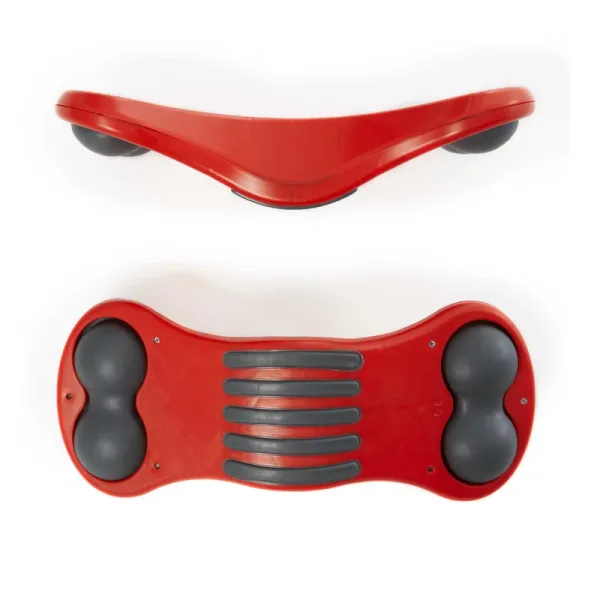
Gonge Balance Board
“Plastic alternative at lower price point. Less aesthetic but functional for balance work.”
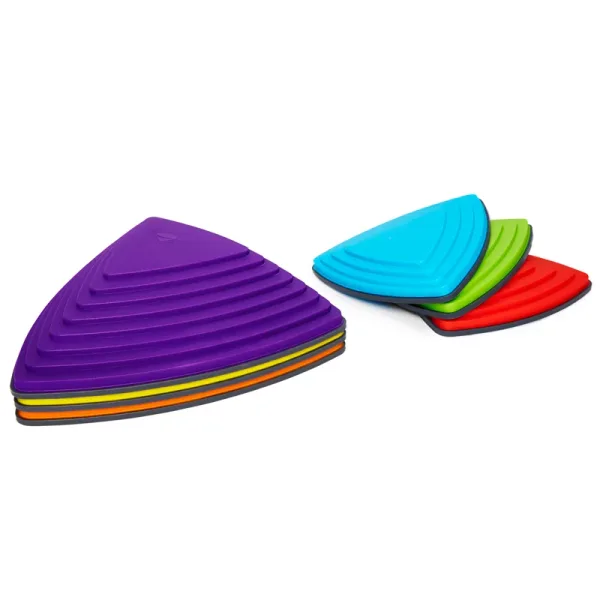
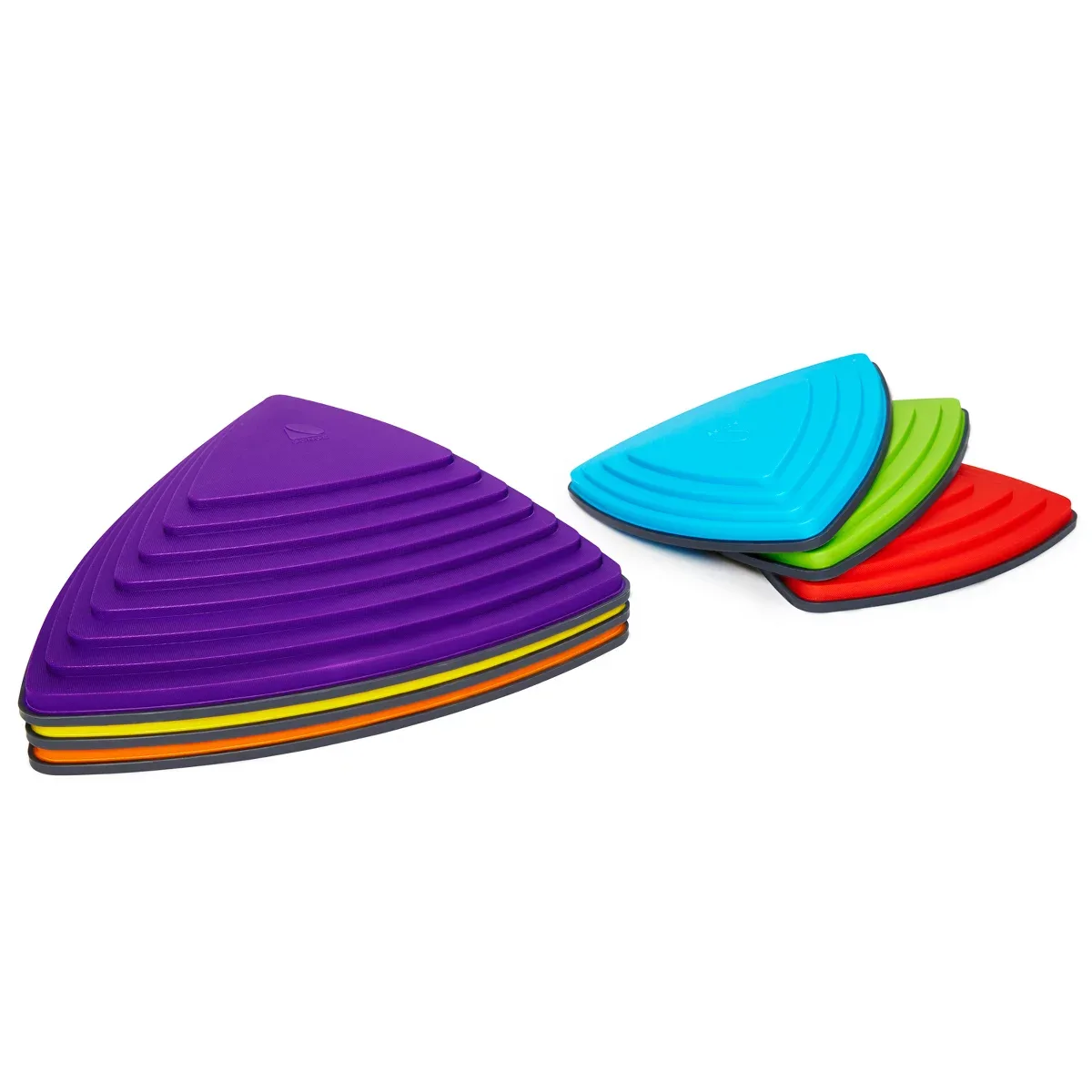
Gonge Riverstones (6-pack)
“Stepping stones that create balance courses. Combines perfectly with wobble board for obstacle play.”
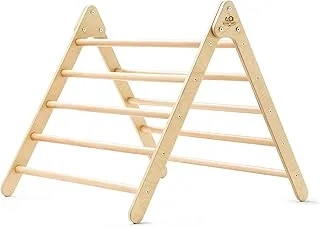
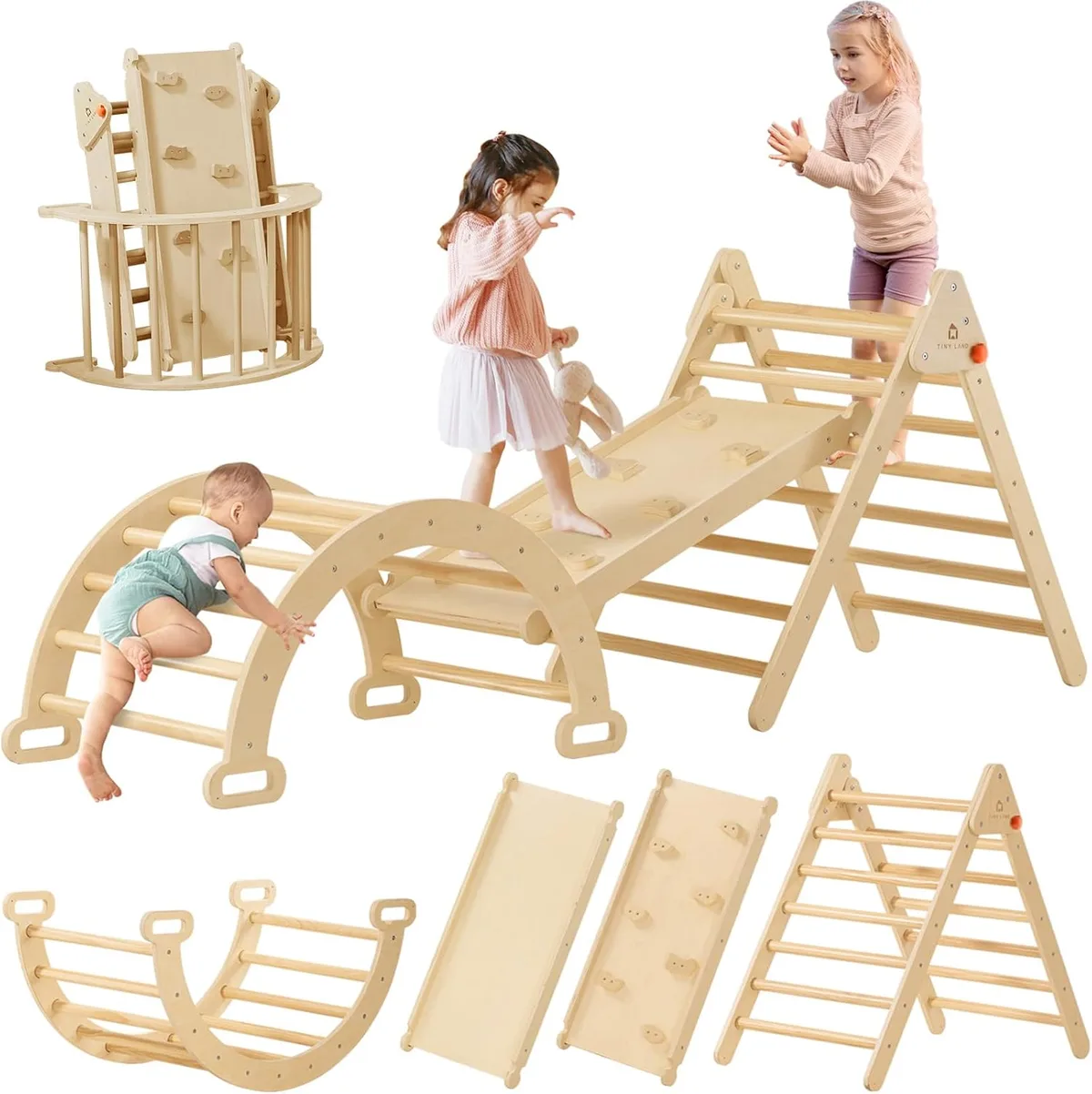
Kinderfeets Pikler Triangle
“Climbing triangle in the same bamboo construction. Creates a complete gross motor play system.”
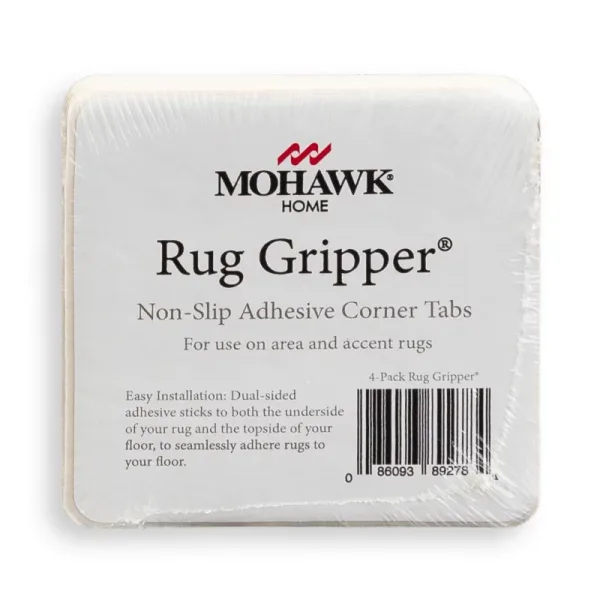
Gorilla Grip Non-Slip Area Rug Pad
“Place under the wobble board on hard floors to prevent sliding. Essential safety accessory.”