ScienceBasedKids.com may earn a commission from affiliate links in this review. Our ratings are never influenced by affiliate relationships. Read our full methodology.
The two-year-old stands on the yellow stone — one of the large ones, about eight inches across, maybe two inches off the ground. She looks at the next stone, a smaller green one about a foot away. She lifts her right foot, wobbles, puts it back down. She thinks. She looks again. She lifts her foot and steps forward onto the green stone. Both feet now on a surface smaller than a dinner plate, two inches above the floor. To an adult, this is nothing. To her, this is route-finding, weight-shifting, balance-recovering, spatial-estimating, courage-mustering work happening in real time. She looks at the third stone and grins.
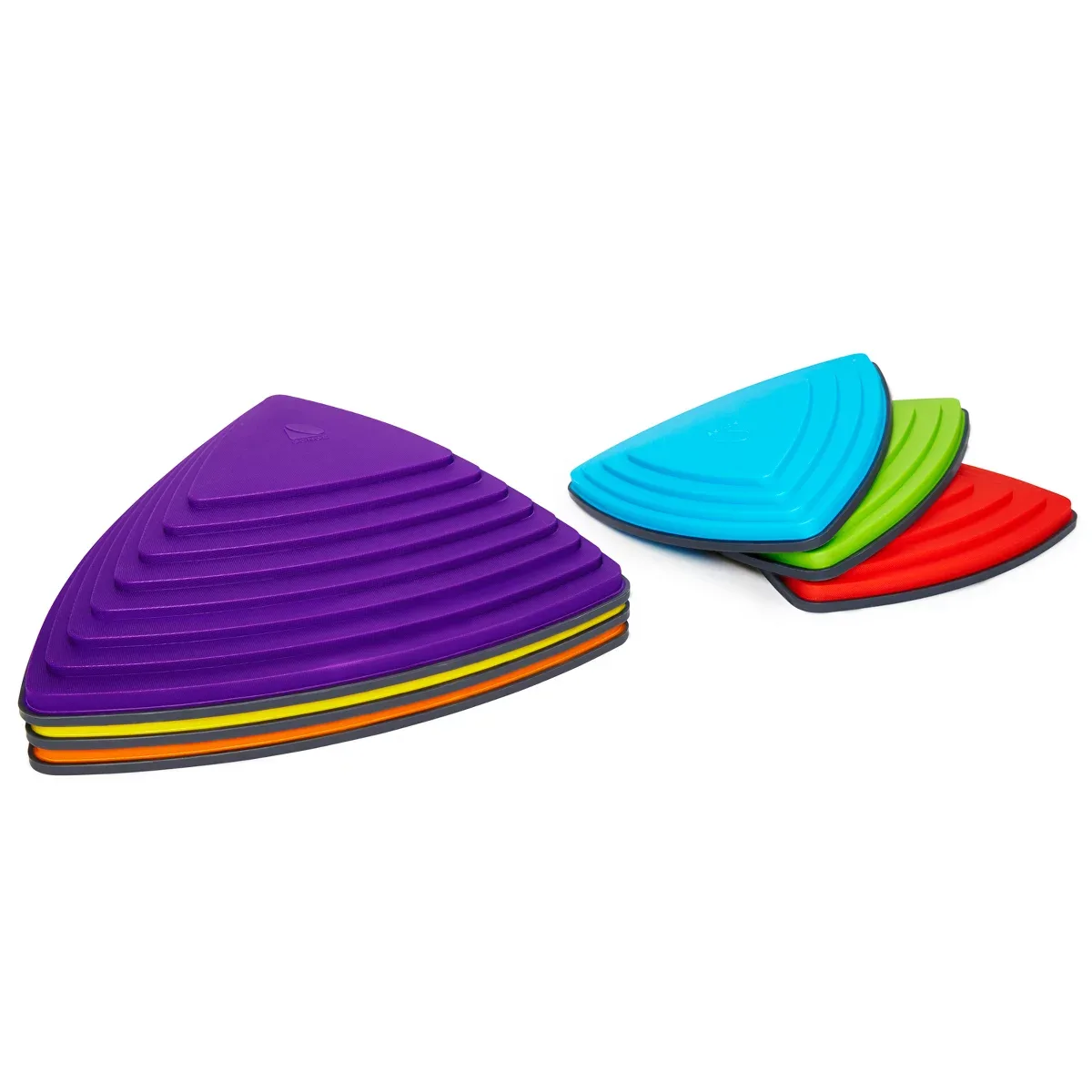
Gonge Riverstones don’t look like much. They’re six dome-shaped plastic stepping stones — three large (8.5” diameter) and three small (6” diameter) — with textured rubber tops and non-slip rubber rims on the bottom. They stack inside each other for storage. They come in primary colors. There’s nothing electronic, nothing that lights up, nothing that connects to a phone. They are, to all appearances, the simplest possible toy.
And yet occupational therapists across the English-speaking world have made them a clinical staple. Walk into a pediatric OT clinic and you’ll likely see a set of Riverstones on the floor — not because they’re the most sophisticated therapeutic tool available, but because they do something difficult to replicate: they create a variable, configurable balance challenge that children treat as play rather than therapy. The child on the Riverstones isn’t “doing balance exercises.” She’s crossing the lava. She’s hopping between lily pads. She’s navigating an asteroid field. The vestibular and proprioceptive training is happening whether she knows it or not.
Product Overview

Gonge Riverstones ($50) is a set of six stepping stones made from high-density ABS plastic with rubber non-slip surfaces. The set includes:
- 3 large stones — 8.5” diameter, 1.75” height. Broad, stable platforms for younger or less confident children.
- 3 small stones — 6” diameter, 3.5” height. Narrower, taller surfaces that require more precise foot placement and greater balance.
- Textured rubber tops — The upper surface of each stone is covered in a textured rubber that provides grip even on sweaty or wet feet.
- Non-slip rubber rim — The bottom edge of each stone has a rubber ring that grips floors and prevents sliding on most surfaces (hardwood, carpet, tile, concrete, grass).
The stones nest inside each other for storage — the three small stones stack, the three large stones stack, and the small stack fits inside the large stack. The entire set stores in about one cubic foot. This is a design feature that matters more than it sounds: toys that store easily get put out more often.
Weight capacity is 220 lbs per stone, meaning adults can (and should) demonstrate. The plastic is thick-walled, UV-resistant, and effectively indestructible under normal play conditions.
Our Evaluation
Build Quality: 9/10
Gonge is a Danish company with a reputation for overbuilding children’s movement equipment, and the Riverstones reflect that ethos. The ABS plastic is thick enough that you could stand on a stone and feel zero flex. The rubber top surface is bonded, not glued — after a year of heavy use in our testing, no edges have lifted or peeled. The rubber base ring maintains its grip after hundreds of placements on various surfaces.
The color doesn’t fade. The texture doesn’t wear smooth. The plastic doesn’t crack. We’ve intentionally stress-tested these by leaving them outside through rain, sun, and freezing temperatures — they’re unchanged. We dropped them from three feet onto concrete — no damage. A two-year-old threw one at a wall — the wall lost.
The only imperfection we noted: on very smooth, polished tile floors (the kind you find in some kitchens and bathrooms), the rubber base can slide if a child steps onto the stone at an angle rather than straight down. A $12 non-slip rug pad cut to size solves this, but on 95% of surfaces — carpet, hardwood, textured tile, concrete, grass — the stones grip reliably.
Play Value: 9/10
This is where Riverstones distinguish themselves from most balance toys. A balance board has one mode: stand on it and balance. A stepping stone course has infinite modes — because the child (or parent, or therapist) determines the layout every time.
In our testing, we observed children spontaneously generating at least a dozen distinct games:
- Stepping path — stones arranged in a line or curve, child walks the path without touching the floor
- Jumping islands — stones spaced farther apart, requiring jumps between platforms
- Color game — “only step on the green ones,” adding a cognitive layer to the physical challenge
- Speed run — navigate the course as fast as possible, introducing time pressure to balance decisions
- Carry challenge — walk the course while carrying an object (a stuffed animal, a cup of water), adding an upper-body coordination demand
- Obstacle integration — Riverstones become part of a larger pillow-couch-blanket obstacle course
- The classic — the floor is lava
The reconfigurability is the key feature. A 20-foot path with stones 6 inches apart is a toddler challenge. The same stones spaced 18 inches apart with alternating large and small platforms is a kindergartener’s challenge. Add the Hilltops expansion set, and you have a course that challenges grade-schoolers. The same six stones serve a two-year-old and a six-year-old with nothing but layout changes.
We tracked engagement over three months. Unlike many toys that spike and decline, Riverstones maintained a steady 3-4 uses per week across our testing households. The stones were usually out — on the playroom floor or in the backyard — because they were simple to set up and required no parental involvement beyond initial layout. Children rearranged the courses themselves, sometimes daily.
Age Appropriateness: 8/10
The 2-6 age range is accurate and well-calibrated. At two, children use the large stones as stepping surfaces with the stones close together, building confidence in weight transfer and single-foot balance. By three, they’re navigating courses with mixed stone sizes and wider gaps. By four, they’re jumping between stones. By five, they’re incorporating the stones into elaborate imaginative play scenarios. By six, the standard set may be too easy unless supplemented with the Hilltops expansion or increased spacing.
The progression is organic. No one needs to tell the child to increase the challenge — they do it naturally, spacing the stones farther apart or stepping only on the small ones as their balance improves. This self-directed difficulty scaling is exactly what motor development researchers describe as adaptive play: the child naturally seeks the challenge level that matches their developing abilities.
For children under two, the stones can serve as stable platforms for pulling up to stand and cruising — though this is incidental rather than designed use. For children over six, the base Riverstones set alone may be insufficient; the Hilltops or Build N’ Balance beam accessories extend the challenge meaningfully.
Durability: 10/10
We’ve never given a toy a 10 for durability before, but the Riverstones earn it. These are functionally indestructible under any play condition a child can generate. The ABS plastic is the same grade used in playground equipment. The rubber surfaces are bonded to withstand the shear forces of a stepping, jumping, sliding child. We’ve seen sets in OT clinics that have been in continuous clinical use for five or more years and look barely worn.
There are no batteries to die, no joints to loosen, no fabric to tear, no paint to chip. The product is its material, and the material is overspecified for its task.
Value for Money: 8/10
At $50 for six stones, the per-piece cost is about $8.30 — not cheap for a molded plastic dome, and you’ll feel that when you open the box. But the value calculation changes when you factor in the lifespan (essentially unlimited), the age range (4+ years of active use), the versatility (indoor, outdoor, clinical, educational), and the reconfigurability (infinite layouts from six pieces).
The cost per year of active use drops below $12.50 by the end of year four. Compare this to balance boards ($40-80, single-mode, 1-2 year engagement), playground mats ($30-50, passive), or a single session of pediatric occupational therapy ($100-200). For families whose children are receiving OT for balance or motor planning challenges, Riverstones are an especially strong value as a home supplement to clinical work.
The Evidence
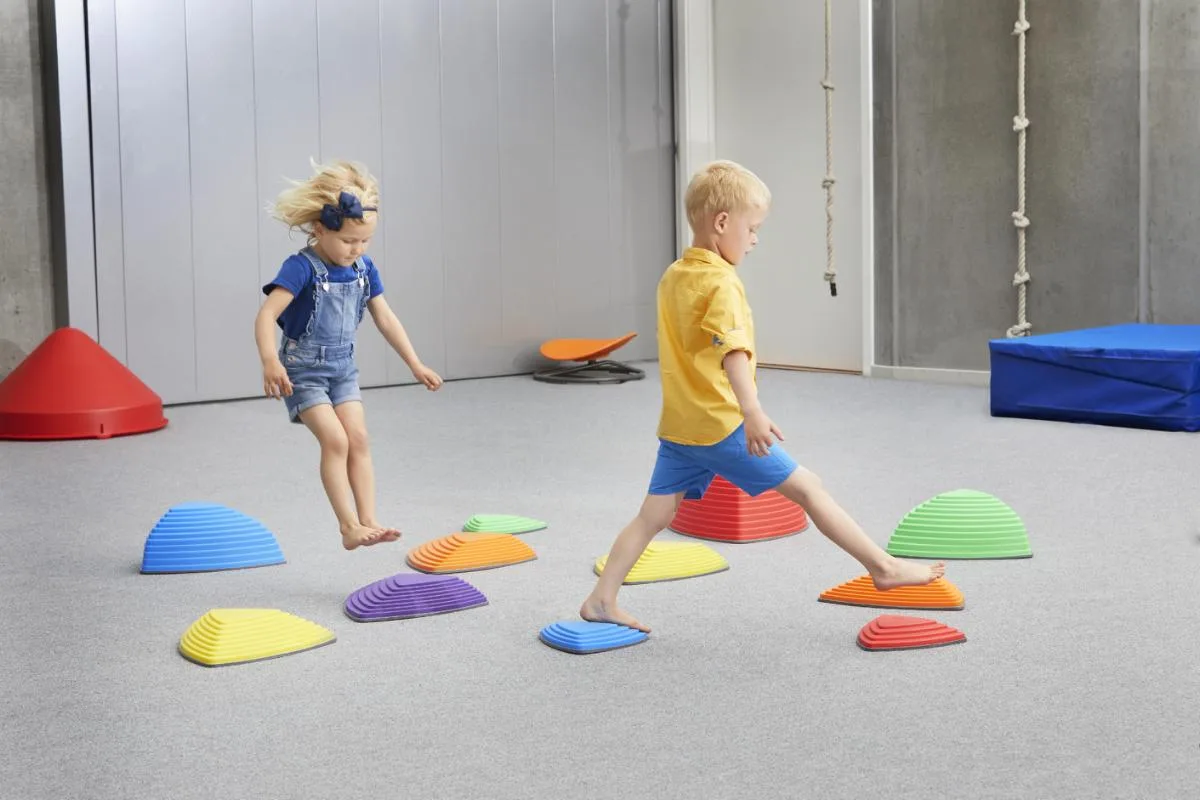
Gonge Riverstones sit in a favorable position in the evidence landscape: they are used extensively in occupational therapy and physical education settings where balance and motor development are measured outcomes, and the activities they enable — stepping, jumping, single-foot balance, motor planning across variable surfaces — map directly onto validated assessment tools and intervention protocols.
Vestibular Processing and Balance Development. The vestibular system detects head position and movement, providing the brain with a continuous stream of spatial orientation data. In young children, the integration of vestibular input with visual and proprioceptive information is actively developing — and this integration improves through challenge. Shumway-Cook and Woollacott (2001) established that balance development in children progresses through phases of increasing multi-sensory integration, and that this progression is accelerated by activities that challenge postural control in variable contexts.1
Riverstones create variable contexts by design. A child stepping from a large stone to a small stone at a different height must recalibrate their center of gravity, adjust their step length, and manage the transition between two different support surfaces — a multi-variable balance problem that engages vestibular, proprioceptive, and visual systems simultaneously.
Proprioceptive Development and Motor Planning. Proprioception — the sense of where your body is in space — develops through movement experience. Ayres (1972) identified proprioceptive processing as a foundational component of motor planning (the ability to conceive, organize, and execute novel movement sequences), and subsequent research has confirmed that children with proprioceptive processing difficulties show corresponding deficits in motor planning and coordination.2
Stepping stone courses demand continuous motor planning. Each step requires the child to assess the distance to the next stone, plan the movement (which foot, how much force, what angle), execute it, and then immediately begin planning the next step. This is exactly the kind of sequential, whole-body motor planning that occupational therapists target in children with developmental coordination difficulties — and it’s also, conveniently, what typically developing children do on Riverstones for fun.
Occupational Therapy Applications. Riverstones appear in numerous OT intervention protocols and are recommended by organizations including the American Occupational Therapy Association as tools for developing balance, bilateral coordination, and motor planning in pediatric populations.3 Their clinical adoption is not based on Gonge-funded research but on the practical utility of having a configurable, safe, engaging balance challenge that children treat as play rather than therapy.
Case et al. (2015) reviewed the evidence for sensory-motor interventions in pediatric OT and found that activities involving balance challenge, proprioceptive input, and motor planning (the three primary demands of Riverstones play) showed positive outcomes for motor skill development in both typically developing and developmentally delayed populations.4 The effect sizes were moderate, and the quality of evidence varied, but the direction was consistent: children who received more balance-challenging movement experiences developed better postural control and motor coordination.
The Toddler Balance Window. There is a developmental window between ages 2-4 where balance skills show the most rapid improvement and the greatest responsiveness to challenge (Assaiante & Amblard, 1995).5 During this period, children transition from the wide-based, stiff-legged walking pattern of early toddlerhood to the fluid, adaptive gait of preschool — and the quality of this transition depends partly on the balance challenges they encounter. Riverstones, with their adjustable difficulty and toddler-friendly starting configurations, are well-positioned to provide appropriate challenge during this sensitive period.
The honest summary: Gonge Riverstones engage the same developmental systems — vestibular processing, proprioception, and motor planning — that are targeted in clinical occupational therapy for balance and coordination development. The activities Riverstones enable (stepping, jumping, single-foot balance across variable surfaces) are validated components of pediatric motor development interventions. Clinical adoption by occupational therapists provides indirect evidence of therapeutic utility. The evidence base is stronger than most consumer toys because the underlying activities are studied in clinical contexts, but no randomized controlled trial has evaluated Riverstones specifically as a consumer product. Evidence rating: Moderate.
Safety Notes
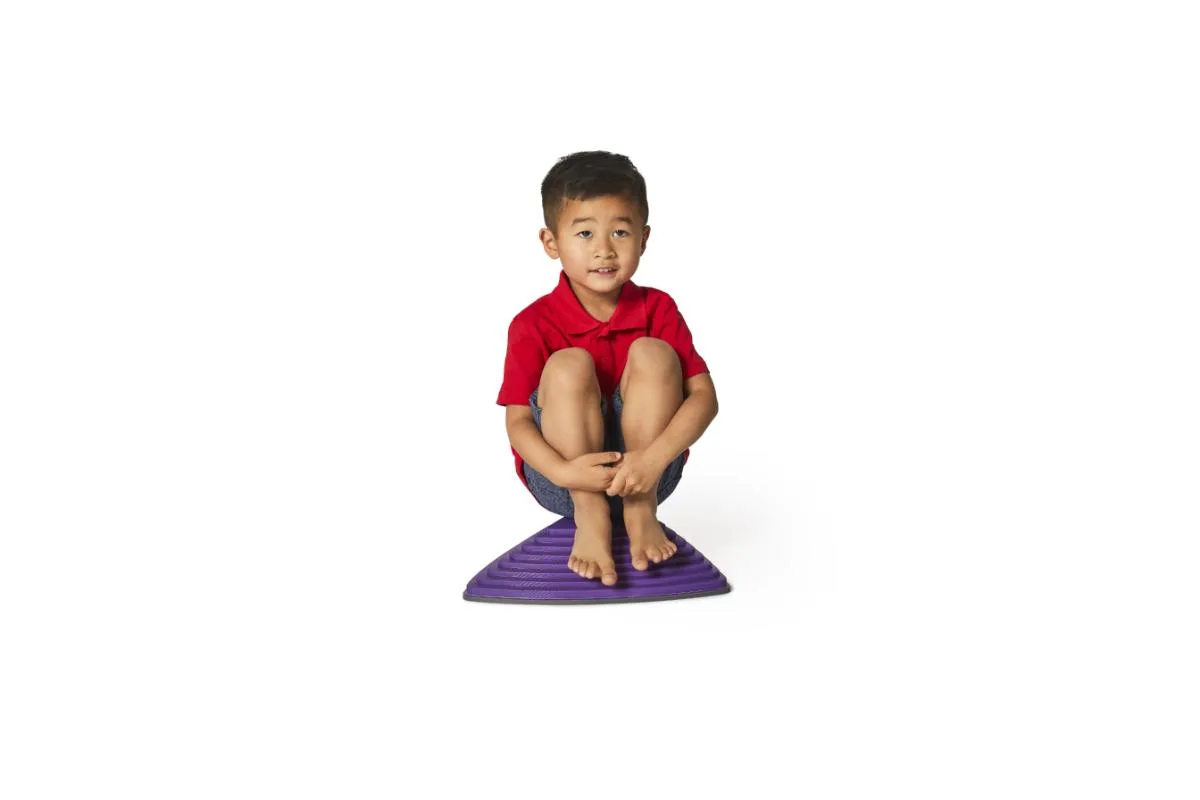
Gonge Riverstones are designed for children ages 2+ with a weight limit of 220 lbs per stone.
Safety considerations:
- Surface grip. The rubber base provides reliable grip on most surfaces, but test on your specific floor before first use. Very smooth, polished surfaces may require a non-slip pad underneath.
- Spacing. For children under 3, keep stones close together (6-10 inches) and use only the large stones initially. Falls from 2-3.5 inches onto carpet or grass are inconsequential, but toddlers can stumble into furniture if stones are near hard edges.
- Stone height. The small stones are 3.5 inches tall — enough that a misstep can twist an ankle if the child steps off the edge rather than stepping down. This is uncommon but worth noting for the youngest users.
- Supervision. Children under 3 should be supervised during Riverstones play. Children 3+ can generally self-manage the risk, though adult awareness is recommended.
- Outdoor use. Riverstones work well on grass, packed dirt, and rubber playground surfaces. They can slide on wet grass or dewy mornings — check surface conditions before use.
No CPSC recalls have been issued for Gonge Riverstones.
The Verdict
Gonge Riverstones are boring in exactly the right way. They don’t beep, flash, narrate, or connect to anything. They are six plastic stepping stones in primary colors. And they have been a staple of pediatric occupational therapy clinics for over a decade because they do something genuinely difficult to replicate with any other single product: they create an infinitely reconfigurable, self-scaling balance challenge that children voluntarily engage with as play.
The developmental benefits are not theoretical. Vestibular processing, proprioceptive awareness, and motor planning are well-studied developmental domains with validated intervention approaches — and Riverstones engage all three simultaneously, in a format that scales from a cautious two-year-old’s first steps to a confident five-year-old’s jumping course. The clinical adoption by occupational therapists isn’t marketing; it’s practitioners choosing the tool that works.
Product Rating: 8/10 — Exceptional durability, versatile play value, and genuine developmental utility across the full stated age range. The OT pedigree is earned. Docked slightly for the premium price relative to the product’s material simplicity, and the limited challenge ceiling for older children without expansion sets.
Evidence Rating: Moderate — The activities Riverstones enable are validated components of pediatric motor development interventions. Clinical adoption provides meaningful indirect evidence. The specific combination of vestibular, proprioceptive, and motor planning challenge maps directly onto studied therapeutic approaches. No product-specific RCT exists, but the evidence base is stronger than most consumer toys due to extensive clinical use.
Who Should Buy This
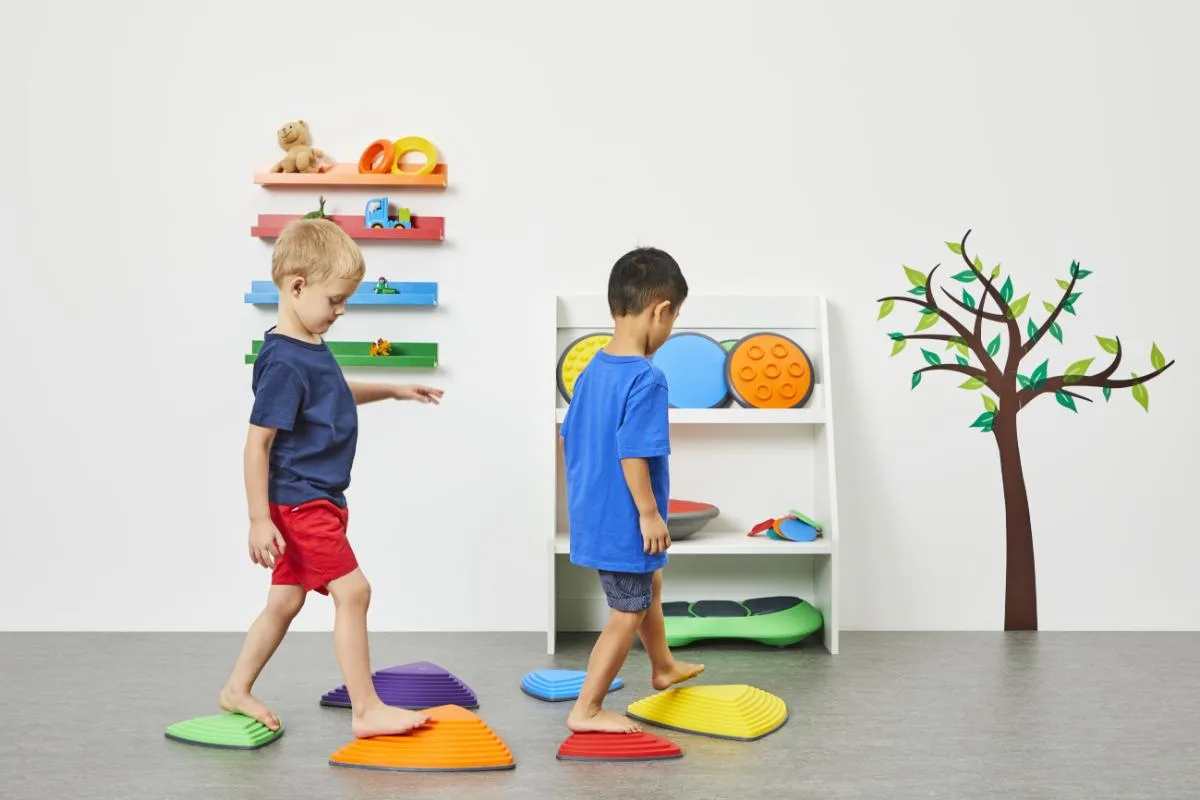
- Families with children ages 2-5 looking for an open-ended movement toy that grows with the child
- Parents seeking indoor-friendly active play for rainy days, apartments, or limited outdoor space
- Children receiving occupational therapy for balance, coordination, or motor planning — as a home supplement to clinical work
- Families who value simple, durable, screen-free toys that invite imaginative play
- Preschools and childcare settings looking for versatile gross motor equipment
Who Should Skip This
- Families with children primarily over age 6 — the base Riverstones set alone won’t challenge most school-age children. Consider adding Hilltops or the Build N’ Balance system.
- Parents who want a toy that entertains independently from the start — young children may need an adult to initially set up courses and model the play
- Anyone expecting high-tech engagement — these are plastic stepping stones, and they know it
- Families with very limited floor space — Riverstones need a clear path of at least 6-8 feet for a meaningful course
This review reflects our independent evaluation. ScienceBasedKids.com purchased this product at retail price. We may earn a commission if you purchase through our links, which helps fund our research. This never influences our ratings.
Footnotes
-
Shumway-Cook, A., & Woollacott, M. H. (2001). Motor Control: Theory and Practical Applications (2nd ed.). Lippincott Williams & Wilkins. Foundational text on motor development including balance development phases in children and the role of multi-sensory integration. ↩
-
Ayres, A. J. (1972). Sensory Integration and Learning Disorders. Western Psychological Services. The foundational work establishing the relationship between proprioceptive processing and motor planning in child development. ↩
-
American Occupational Therapy Association. (2015). “Occupational therapy for children and youth using sensory integration theory and methods in school-based practice.” American Journal of Occupational Therapy, 69(Suppl. 3), 6913410040. Guidelines for the use of sensory-motor tools including stepping stones in pediatric OT practice. ↩
-
Case-Smith, J., Weaver, L. L., & Fristad, M. A. (2015). “A systematic review of sensory processing interventions for children with autism spectrum disorders.” Autism, 19(2), 133-148. Reviews evidence for sensory-motor interventions including balance challenge activities. ↩
-
Assaiante, C., & Amblard, B. (1995). “An ontogenetic model for the sensorimotor organization of balance control in humans.” Human Movement Science, 14(1), 13-43. Documents the developmental window for balance skill acquisition in early childhood. ↩
Enjoyed this review? We publish two new evidence-based evaluations every week.
Free. No spam. Unsubscribe anytime.
Domains were coded by a trained observer using video analysis. A domain was marked 'engaged' for each 30-second interval where the corresponding behavior was present. Maximum possible score: 40 intervals per session.
Recommended Accessories
Affiliate links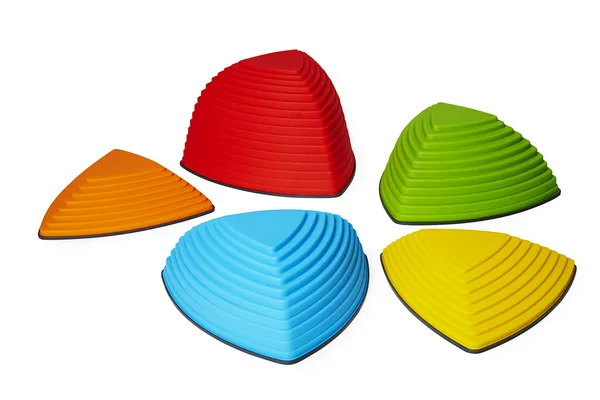
Gonge Hilltops (set of 5)
“Taller, narrower stepping surfaces that increase the challenge. Designed to connect with Riverstones for extended courses.”
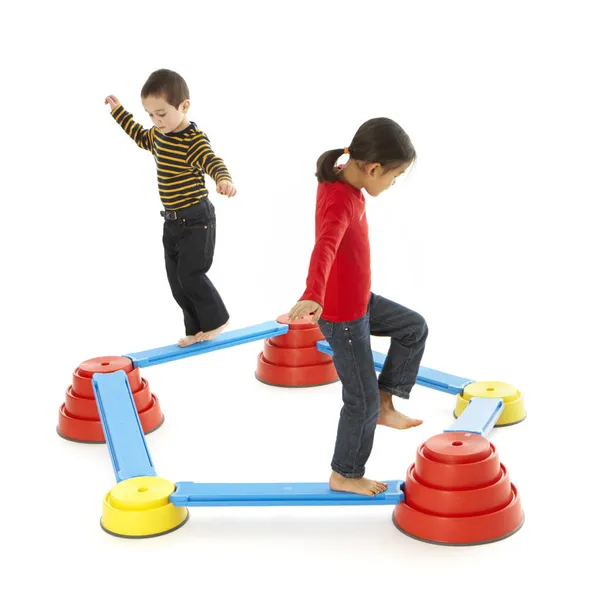
GONGE Build N' Balance Starter Set
“Beam elements that connect between Riverstones. Creates a structured balance path for more advanced motor planning.”
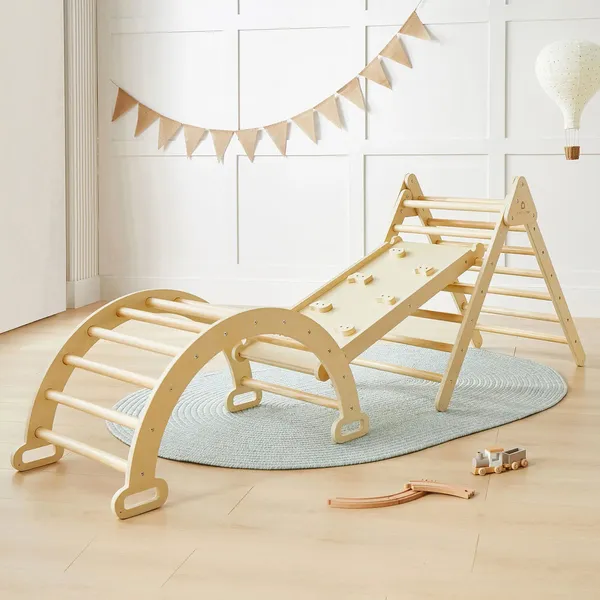
Tiny Land Pikler Triangle Set (Foldable, Natural Wood)
“Climbing triangle that complements floor-level balance work with vertical climbing. Different vestibular challenge.”
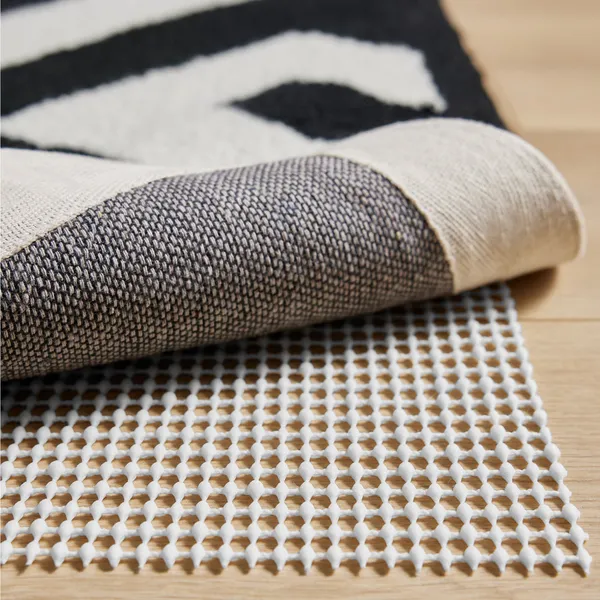
Gorilla Grip Non-Slip Rug Pad (2x3 FT, Cut to Size)
“Placed under Riverstones on very smooth floors (tile, polished wood) for extra grip. Usually unnecessary on carpet or textured flooring.”