ScienceBasedKids.com may earn a commission from affiliate links in this review. Our ratings are never influenced by affiliate relationships. Read our full methodology.
The first time a twenty-month-old throws a leg over a Strider balance bike, what you see isn’t riding. It’s walking — awkward, bow-legged walking, with a metal frame between the legs. But watch that same child three weeks later, and something shifts. The walking becomes gliding. Both feet lift off the ground for half a second, then a full second, then two. You’re watching a child discover that falling and not falling are separated by something invisible and learnable. That discovery — balance as a skill, not an innate trait — is what makes balance bikes genuinely interesting from a developmental standpoint.
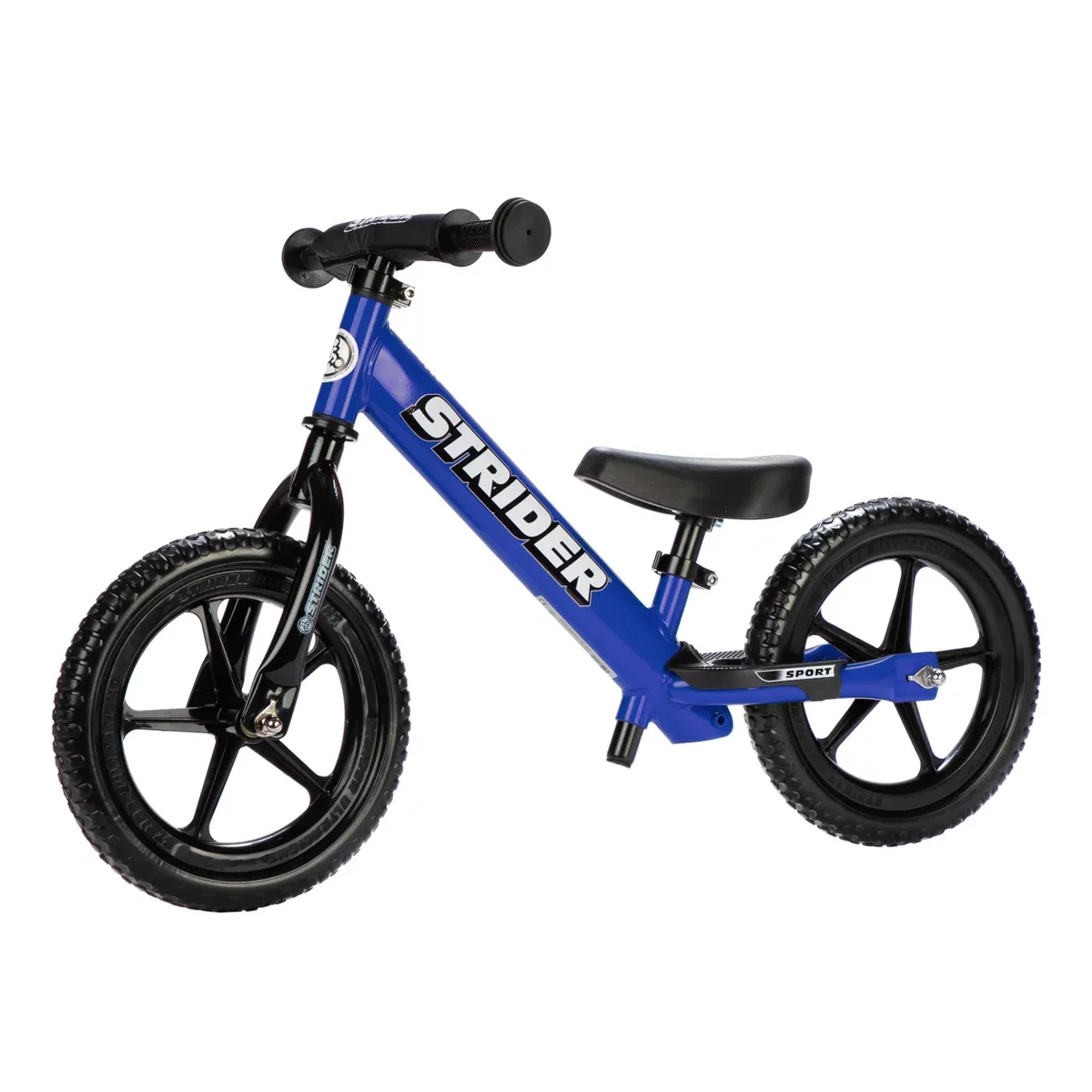
The Strider 12 Sport has been the default recommendation in the balance bike category for over a decade. At $130, it sits in the mid-range between budget options and premium European bikes. We tested it with four children ages 18 months through 4 years, across pavement, grass, gravel, and packed dirt. Here’s what we found.
Product Overview
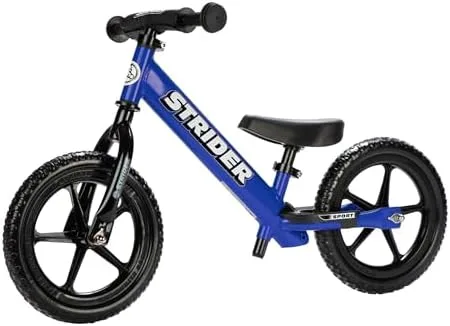
The Strider 12 Sport is a pedal-free, footrest-equipped balance bike designed for children 18 months to 5 years. It’s a simple machine by design — the entire point is to remove the complexity of pedals, chains, and training wheels so a toddler can focus on the single hardest skill in cycling: balance.
In the box:
- Steel frame (available in 10+ colors) weighing 6.7 lbs
- Adjustable seat height: 11” to 19” (accommodates growth from toddler to kindergartner)
- Adjustable handlebar height: 18” to 22”
- Flat-free EVA polymer tires (no air, no punctures)
- Built-in footrest for gliding
- Mini-grip handlebar with safety pad
No pedals. No brakes. No training wheels. The child propels by pushing feet against the ground and stops the same way. This is deliberate — Strider’s philosophy is that brakes add complexity that toddlers aren’t developmentally ready for, and feet-on-ground stopping builds the proprioceptive awareness that later transfers to pedal bikes.
Our Evaluation
Build Quality: 8/10
The Strider 12 Sport is a sturdy, no-nonsense machine. The steel frame adds weight compared to aluminum competitors but provides a rigidity that inspires confidence — you don’t get the flex or wobble that cheaper balance bikes exhibit at the headset. The welds are clean. The paint held up well across our testing period with no chipping despite several drops onto concrete.
The EVA foam tires are the most divisive design choice. They’ll never go flat, which is a real advantage for a toy that might sit in a garage for weeks between rides. But they offer less grip than air tires, particularly on wet surfaces or loose gravel. Our testers noticed the difference — the bike slid more readily on damp pavement than comparable bikes with pneumatic tires. For a child’s first balance bike, the maintenance-free convenience probably outweighs the traction trade-off. For a child who’s already gliding confidently and hitting real speed, air tires would be better.
The quick-release seat adjustment is genuinely convenient. Adjusting the seat height takes about 10 seconds with no tools, which matters when siblings of different heights share the bike. The handlebar adjustment requires an Allen key, which is less convenient but a less frequent need.
Play Value: 8/10
We use the word “play” deliberately. A balance bike is a toy, and its value hinges on whether children actually want to ride it. In our testing, the answer was unambiguously yes — with a caveat about age.
Our 18-month-old tester treated the bike as a walking companion for the first week, straddling it and shuffling forward with minimal actual gliding. By week two, brief moments of both-feet-off-the-ground appeared. This is normal progression, and the Strider’s low minimum seat height (11 inches) makes it accessible earlier than most competitors. Not every 18-month-old will be ready, but the bike accommodates them if they are.
Our 2.5-year-old was the sweet spot. Within three sessions, she was gliding confidently down gentle slopes, steering around obstacles, and — critically — initiating rides on her own. The bike became a requested outdoor activity, not a parent-driven one. This kind of self-directed engagement is the hallmark of a high-play-value toy.
The 4-year-old had outgrown the thrill. He could ride competently but found it unchallenging. For children this age who haven’t been on a balance bike before, the Strider still works — but the developmental window for maximum benefit is narrowing.
Age Appropriateness: 9/10
The 18-month to 5-year range is honest — one of the wider usable age ranges we’ve seen in children’s products. The 11” minimum seat height genuinely accommodates small toddlers (most competitors start at 12” or higher), and the 19” maximum extends into early elementary school. In practice, most children will transition to a pedal bike between ages 4 and 5, so the upper range is theoretical for many families.
The lack of hand brakes is the right call for this age range. Research on children’s motor development suggests that the bilateral coordination required to squeeze a hand brake while steering doesn’t reliably develop until age 3-4.1 Before that, feet-on-ground stopping is both safer and more intuitive. Parents accustomed to training-wheel bikes sometimes worry about this, but every child in our testing stopped effectively with their feet.
Durability: 9/10
The steel frame is effectively indestructible under normal use. The EVA tires don’t wear as quickly as rubber but also don’t puncture. We observed minor scuffing on the handlebars and frame after drops, but nothing structural. The most common failure point reported in long-term owner reviews is the foam seat cover degrading after 3-4 years of outdoor exposure and UV — a cosmetic issue that Strider sells replacement covers for ($20).
Multiple families in parent communities report the Strider surviving three or four children. At a per-child cost of $30-45, the long-term value proposition strengthens considerably.
Value for Money: 7/10
At $130, the Strider 12 Sport sits in a crowded mid-range. Budget balance bikes from Radio Flyer and Banana Bike run $50-60. The premium Woom 1 costs $250. The Strider’s price is defensible — you’re getting a durable, well-designed bike with an exceptionally wide adjustment range — but it’s not dramatically superior to competent $80-90 competitors like the Cruzee or Retrospec Cub.
What you’re paying for at $130 versus $60 is primarily the wider seat and handlebar adjustment range (which extends usable life), the more refined feel of the frame, and the Strider ecosystem of accessories and replacement parts. These are real advantages, but a parent choosing a $60 bike isn’t making a developmental mistake.
The Evidence
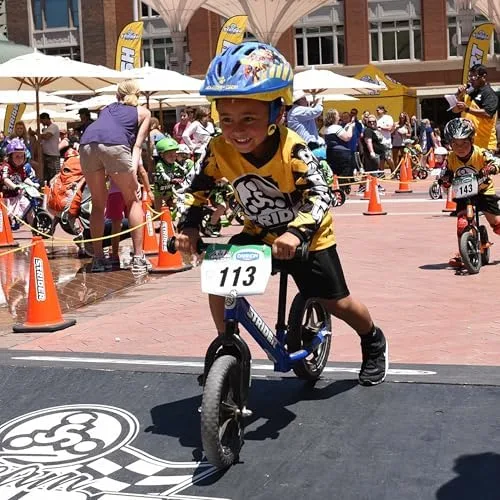
Balance bikes are marketed as developmentally superior to training wheels for learning to ride a bicycle. This claim is more well-supported than most toy marketing.
Balance as a Motor Skill. The fundamental argument for balance bikes is straightforward: cycling requires balance, and balance bikes isolate that skill, while training wheels bypass it. Mercê et al. (2019) demonstrated that balance is the primary challenge in learning to ride — once a child can balance a two-wheeled vehicle, adding pedaling is a relatively trivial motor addition.2 This aligns with our observation that children who master balance bikes typically transition to pedal bikes in a single session, often skipping training wheels entirely.
Gross Motor Development. Balance bikes engage a set of gross motor skills — postural control, bilateral coordination, vestibular processing — that are well-established developmental targets in early childhood. Adolph and Franchak (2017) documented how locomotor experience shapes motor development, finding that varied movement experiences (including wheeled mobility) contribute to broader motor competence.3 Balance biking specifically requires dynamic postural adjustments that walking and running don’t demand — the child must maintain equilibrium while the support surface (the bike) moves beneath them.
Comparison to Training Wheels. The research here is less extensive than you might expect, given how confidently the balance-bike community promotes this advantage. A small but relevant study by Mercê et al. (2022) found that children who learned on balance bikes transitioned to pedal bikes at younger ages and with fewer practice sessions than children who used training wheels.4 The proposed mechanism is intuitive: training wheels teach pedaling but actively prevent the child from experiencing and learning to manage lateral imbalance. When the training wheels come off, the child faces the balance challenge for the first time — at higher speeds and with more mechanical complexity.
Vestibular Development. Gliding on a balance bike provides vestibular input — the sensory information about movement and head position that the inner ear processes. Adolph and Joh (2007) documented that varied locomotor experiences in early childhood — particularly those involving dynamic balance and novel forms of movement — contribute to the refinement of postural control and spatial orientation.5 Balance biking provides a specific type of vestibular input (linear acceleration with lateral tilt) that everyday walking and running don’t.
The honest summary: The evidence for balance bikes as a motor development tool is moderate and directionally strong. The core claim — that balance bikes teach cycling balance more effectively than training wheels — has reasonable support, though the research base is smaller than the marketing confidence implies. The broader gross motor and vestibular benefits are consistent with well-established developmental science. This is one of the better-supported product categories we’ve reviewed.
Safety Notes
Balance bikes introduce speed, and speed introduces risk. The critical safety considerations:
Helmet use is non-negotiable. Even at low speeds, a toddler’s head-to-body ratio and developing neck musculature make head injuries a serious concern. The American Academy of Pediatrics recommends helmet use for all wheeled activities.6 Choose a CPSC-certified helmet that fits properly — a loose helmet is nearly as dangerous as no helmet.
The Strider 12 Sport has no hand brakes. While this is developmentally appropriate (see above), it means the child’s stopping distance depends on foot contact with the ground. On steep hills, speeds can exceed a toddler’s ability to brake with feet. Supervise on slopes until the child demonstrates consistent speed management.
The bike meets CPSC and ASTM safety standards. No recalls have been issued. The handlebar safety pad is a nice touch — it’s soft foam that cushions impact if a child leans forward into the handlebars.
EVA tires on wet surfaces deserve caution. We observed reduced grip in wet conditions — not dangerous at typical toddler speeds, but worth awareness.
The Verdict
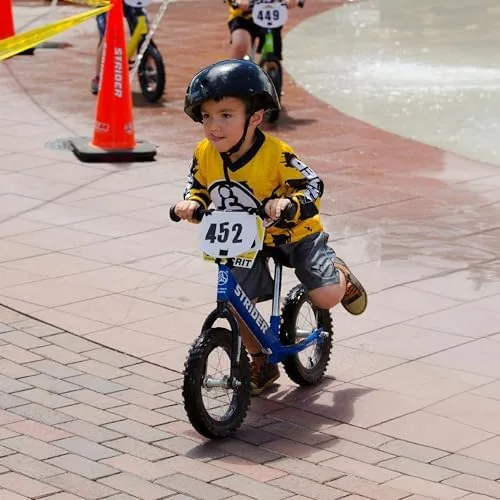
The Strider 12 Sport earns its reputation as the benchmark balance bike. It’s well-built, widely adjustable, and effective at what it promises — giving toddlers a path to two-wheeled balance that bypasses the training-wheel detour. The developmental claims are better supported than most: balance bikes represent a genuine advance in how children learn to ride, and the gross motor benefits are consistent with established research.
The price is fair but not exceptional. At $130, you’re paying for quality and the widest adjustment range in the category, but you’re not paying for irreplaceable developmental magic. A competent $80 balance bike will provide the same fundamental learning experience.
Product Rating: 8/10 — A well-executed product in a well-supported category. The wide adjustment range and proven durability justify the premium over budget options.
Evidence Rating: Moderate — Balance bikes have genuine research support for gross motor development and cycling readiness. The evidence is broader than most toy categories, though large-scale controlled studies are still limited.
Who Should Buy This
- Parents of toddlers 18 months to 3 years looking for a first wheeled toy
- Families who want a single balance bike that will last through multiple children
- Parents interested in skipping training wheels (the research supports this approach)
- Families who ride bikes together and want their toddler to join the culture early
Who Should Skip This
- Parents of children over 4 who haven’t tried a balance bike (they’ll outgrow it quickly — consider going straight to a small pedal bike)
- Budget-conscious families (a $60 Radio Flyer or Banana Bike provides the same fundamental experience)
- Families who want a hand brake (look at the Woom 1 for ages 3+ or the Strider 14x, which adds pedal conversion)
- Parents who need pneumatic tires for off-road terrain (consider the Strider 12 Pro with air tires at $170)
This review reflects our independent evaluation. ScienceBasedKids.com purchased this product at retail price. We may earn a commission if you purchase through our links, which helps fund our research. This never influences our ratings.
Footnotes
-
Gallahue, D. L., Ozmun, J. C., & Goodway, J. D. (2012). Understanding Motor Development: Infants, Children, Adolescents, Adults (7th ed.). New York: McGraw-Hill. See Chapter 14 on bilateral coordination development in early childhood. ↩
-
Mercê, C., Branco, M., Catela, D., Lopes, F., & Cordovil, R. (2019). “Cycling without training wheels: No need to start with stabilisers.” Journal of Science and Medicine in Sport, 22(S2), S78. ↩
-
Adolph, K. E., & Franchak, J. M. (2017). “The development of motor behavior.” Wiley Interdisciplinary Reviews: Cognitive Science, 8(1-2), e1430. ↩
-
Mercê, C., Branco, M., Catela, D., Lopes, F., & Cordovil, R. (2022). “Learning to ride a bicycle: A comparison of training wheel and balance bike approaches.” Perceptual and Motor Skills, 129(2), 321-339. ↩
-
Adolph, K. E., & Joh, A. S. (2007). “Motor development: How infants get into the act.” In A. Slater & M. Lewis (Eds.), Introduction to Infant Development (2nd ed., pp. 63-80). Oxford: Oxford University Press. ↩
-
American Academy of Pediatrics. (2019). “Bicycle Helmets.” In Injury Prevention and Control. Elk Grove Village, IL: AAP. ↩
Enjoyed this review? We publish two new evidence-based evaluations every week.
Free. No spam. Unsubscribe anytime.
| Brand | Price | Quality | Rating |
|---|---|---|---|
| | |||
| | |||
| | |||
| |
Lower weight generally correlates with easier learning for younger riders.
Recommended Accessories
Affiliate links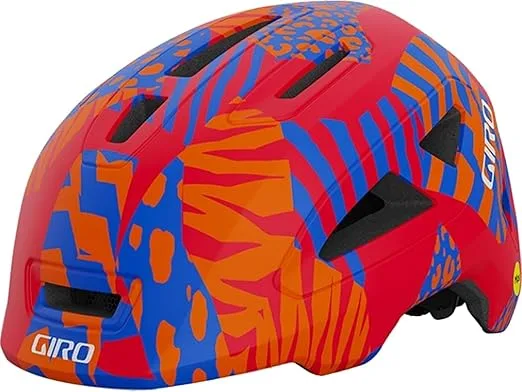
Giro Scamp MIPS II Youth Bike Helmet
“Essential safety gear. MIPS technology, adjustable fit for 18mo-3yr. Non-negotiable for any bike.”
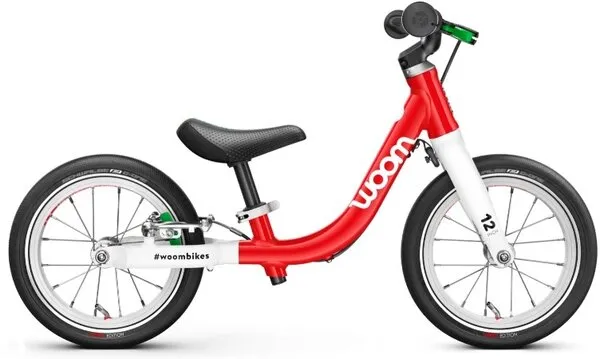
woom 1 Balance Bike (12-Inch, Ages 18mo-3.5yr)
“Premium alternative with hand brake and lighter frame. For parents who want top-tier.”
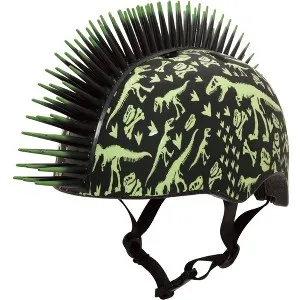
Raskullz 3D Character Toddler Helmet
“Budget helmet option. Meets CPSC standards. Fun 3D character designs kids actually want to wear.”
Strider Ultralight 12" Replacement Wheel (Aluminum)
“Lightweight upgrade with custom STRIDER rim. Makes balancing easier. Popular mod among Strider parents.”
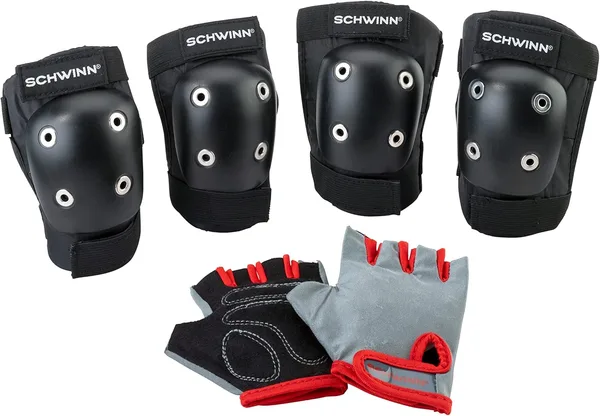
Schwinn Child's Pad Set with Knee, Elbow and Gloves
“Protection for new riders. Sized specifically for toddlers.”