ScienceBasedKids.com may earn a commission from affiliate links in this review. Our ratings are never influenced by affiliate relationships. Read our full methodology.
A twenty-two-month-old sits in a sandbox. She fills a cup with sand, pours it out, and watches the grains scatter. She does this again. And again. And again. If you’re watching from a distance, it looks like nothing is happening. But at the neurological level, she’s processing tactile feedback from thousands of individual grains pressing against her skin, calibrating the force required to scoop and pour, observing how a granular solid flows like a liquid, and building the kind of sensory-motor map that no electronic toy can replicate. The fact that she’s also having a wonderful time is almost beside the point — though it shouldn’t be. Joy and development aren’t in competition. The sandbox is one of those rare places where they’re the same thing.
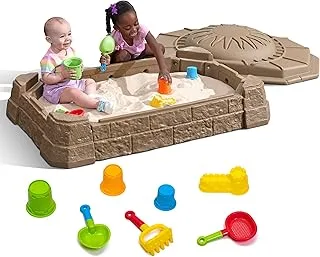
The Step2 Naturally Playful Sandbox ($80) is one of the most popular residential sandboxes in the United States, and for understandable reasons: it’s big enough for two kids, durable enough to live outdoors, and cheap enough to buy without deliberation. We tested it over four weeks with children ages 18 months through 6 years. Here’s our assessment — of the sandbox, of sand play research, and of the surprisingly important question of what kind of sand to put in it.
Product Overview
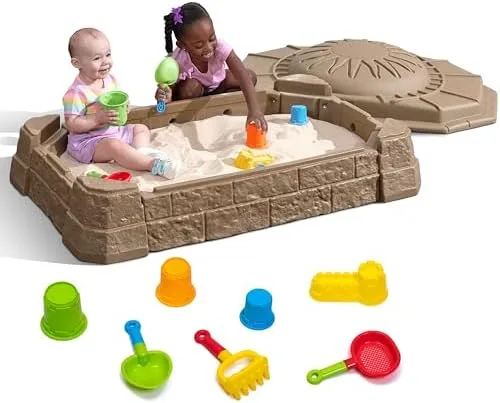
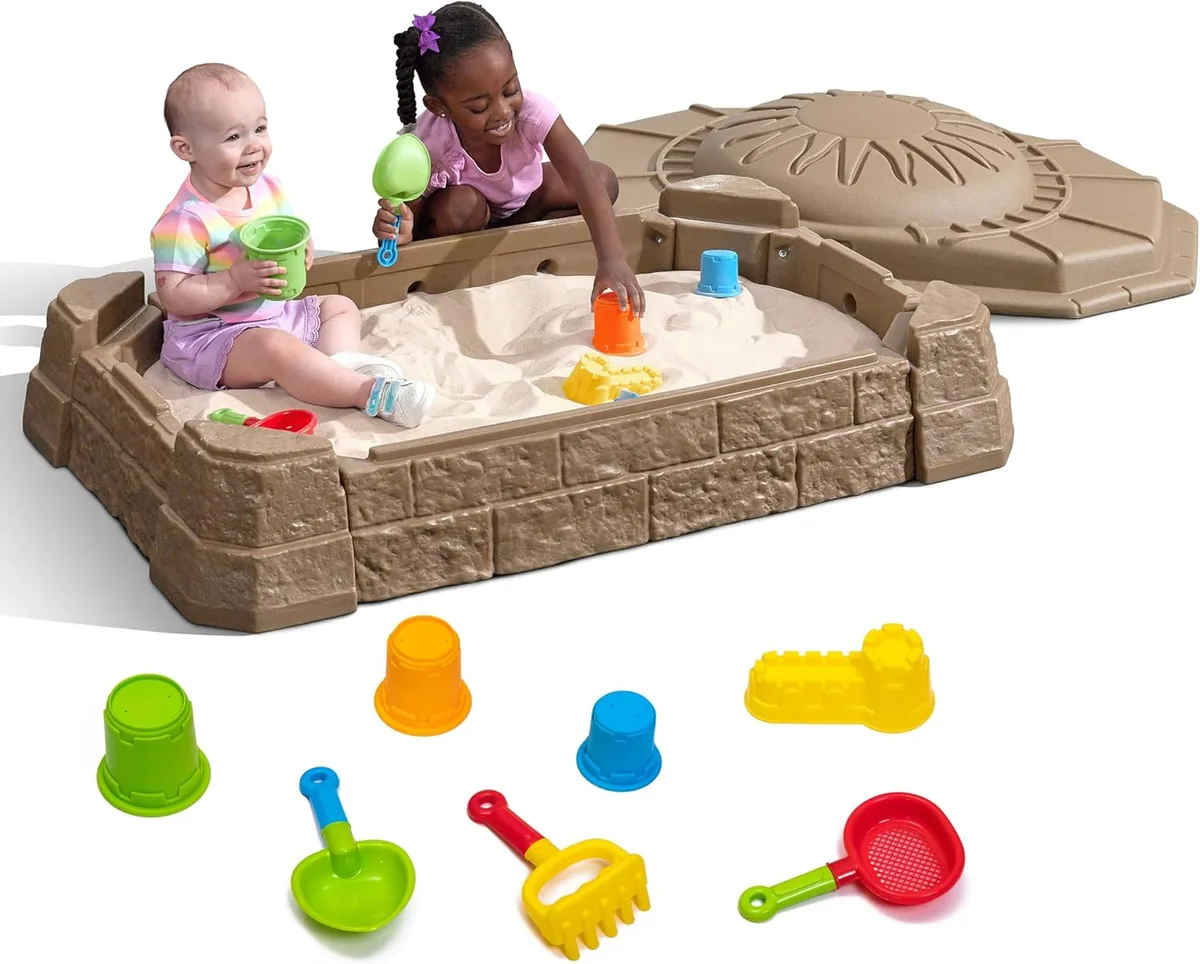
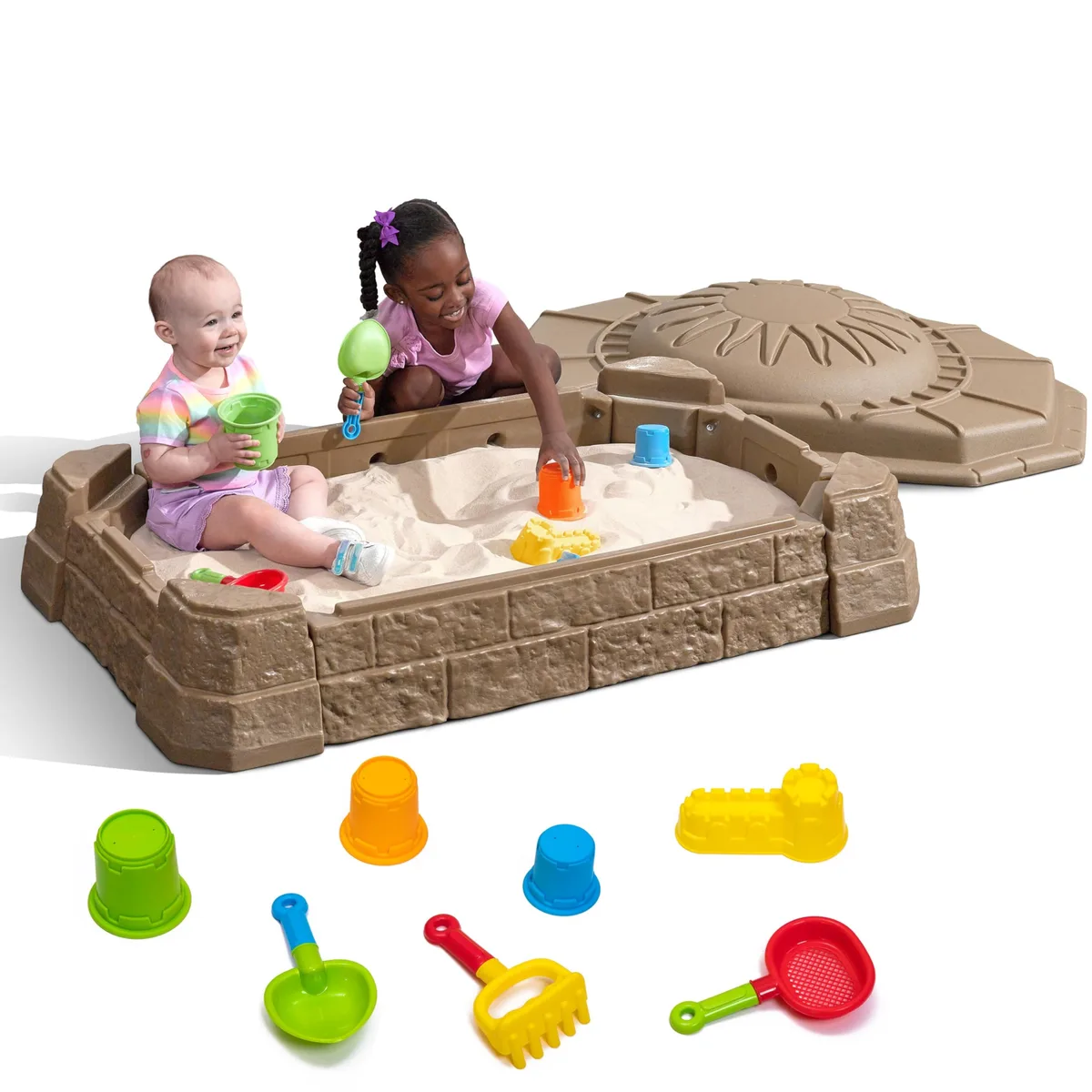
The Step2 Naturally Playful Sandbox is a large, molded plastic sandbox designed for backyard use. It seats two children comfortably and can squeeze a third.
Key specs:
- Dimensions: 47” × 47” × 9.5” (large enough for cooperative play)
- Material: Rotational-molded polyethylene plastic
- Weight: 20 lbs (empty)
- Sand capacity: Requires approximately 100 lbs of play sand (two 50-lb bags, sold separately)
- Color: Natural brown with faux-wood texture
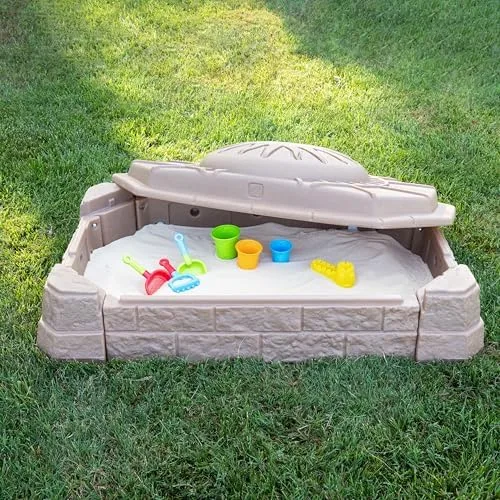
- Lid: Sold separately or available in a bundle — the base model has no cover
- Features: Molded-in seat corners, no sharp edges, drain plug
Important note: the sandbox ships empty. You need to purchase sand separately ($8-$16 for two bags of washed play sand). You should also purchase a cover unless you want the sandbox to become a neighborhood cat bathroom within the first week. These aren’t optional accessories — they’re completion costs. The true startup cost is approximately $100-$120 (sandbox + sand + cover), not the advertised $80.
Our Evaluation
Build Quality: 7/10
The rotational-molded plastic is thick, UV-resistant, and unlikely to crack under normal use. Step2 has been making plastic outdoor toys for decades, and their manufacturing process is well-proven. The sandbox feels substantial — 20 lbs empty — and sits flat on grass or patio surfaces without rocking.
The faux-wood texture is purely aesthetic and contributes nothing to function, but it looks better in a backyard than raw primary-colored plastic. The molded corner seats are comfortable enough for small children and provide a perching spot for sand play without sitting in the sand.
The drain plug at the bottom is a thoughtful inclusion. After rain, you can tilt the sandbox slightly and drain accumulated water rather than letting the sand become a swamp. In practice, preventing water incursion with a cover is more effective than draining after the fact, but the plug is useful for periodic cleaning.
Deductions: the sandbox walls are only 9.5 inches high, which is adequate for containing sand during calm play but insufficient during enthusiastic digging or deliberate sand-throwing (a developmental phase every toddler goes through). Sand will migrate outside the box regularly. This is inherent to sandbox design, not a Step2-specific failure, but deeper walls would be welcome.
The lack of an included cover is the biggest frustration. A sandbox without a cover is an open invitation to animals, insects, leaves, and rain. That Step2 sells the cover as a separate $20 purchase rather than including it in the base price feels like a revenue decision dressed up as a product variant.
Play Value: 8/10
Sand is one of the highest-engagement play materials we’ve tested. This isn’t about the sandbox — it’s about the medium. Sand invites open-ended play in a way that few materials can match: it can be poured, molded, sculpted, buried, sifted, mixed with water, and destroyed, all within a single play session. The cycle of creation and destruction is endlessly renewable — a sandcastle can be rebuilt immediately after demolition, removing the permanence anxiety that some children experience with other creative media.
Our engagement data tells the story. Average session length across all testers peaked at 35 minutes for three-to-four-year-olds — longer than any indoor toy in our testing portfolio except Magna-Tiles. The 18-to-24-month-old range showed shorter sessions (15 minutes average) but remarkably consistent engagement — they returned to the sandbox daily without prompting.
The sandbox’s size supports cooperative play for two children. We observed parallel play (each child digging in their own section) transitioning to cooperative play (building a shared structure) in children as young as three — a social development milestone that sand play seems to facilitate naturally. The shared resource (sand) and shared space create organic opportunities for negotiation, turn-taking, and collaboration.
The accessory ecosystem matters here. The sandbox alone is just a container. Sand tools — shovels, molds, buckets, sifters — extend and diversify the play. We’d budget $12-$15 for a basic tool set as an essential companion purchase.
Age Appropriateness: 9/10
The 18-month-to-6-year age range is one of the most honest and accurate we’ve seen. Sand play is accessible to toddlers the moment they can sit independently and grasp a scoop. The sensory experience — gritty texture, temperature variation, granular flow — is compelling across the entire early childhood range.
We observed age-appropriate play progression that maps neatly onto developmental milestones:
18-24 months: Exploratory sensory play. Filling and dumping. Texture exploration (wet sand versus dry sand). Mouthing attempts (expected and manageable with supervision).
2-3 years: Functional play. Digging holes. Making piles. Using tools with increasing precision. First attempts at molding shapes.
3-4 years: Constructive play. Building sandcastles and structures. Creating roads and rivers with water additions. Narrative play begins (the sandbox becomes a construction site, a beach, a dinosaur world).
4-6 years: Complex constructive and dramatic play. Multi-structure builds. Cooperative projects. Rule-based games using sand. Integration with other toy systems (figurines, trucks, buckets).
The upper range depends on the child and the peer group. A five-year-old playing alone in a sandbox may lose interest. Two five-year-olds with a shared building project can play for an hour.
Durability: 8/10
The sandbox itself will outlast the sand. The rotational-molded plastic is weather-resistant, UV-stable, and effectively immune to the abuse children inflict. Step2 outdoor products routinely last 5-10 years based on community reports. Color fading is the most common long-term issue — the brown plastic lightens after several years of sun exposure — but this is cosmetic.
The sand is the consumable. Uncovered sand degrades: it accumulates organic debris, gets wet and compacted, and eventually needs replacing. A covered sandbox with periodic maintenance (raking, debris removal, occasional topping off) can maintain the same sand for 2-3 seasons. Budget $16-$32 per year for sand replacement or top-up.
Value for Money: 7/10
The sandbox itself is reasonably priced at $80 for the size and build quality. The hidden costs — sand ($16), cover ($20), basic tools ($12) — push the true all-in cost to approximately $130 for a ready-to-use sandbox. At that price, the value is fair but not exceptional.
The counter-argument: cost-per-hour. A sandbox used three to four times per week from April through October, with average 25-minute sessions, delivers approximately 75-100 hours of play per summer. Over three summers (the typical engagement window for a single child), that’s 225-300 hours of play for $130 plus $30-$60 in sand replacement. The per-hour cost is well under $1, which competes favorably with almost any toy in our portfolio.
The Evidence
Sand play falls under the broader category of sensory play, and the research here is genuine — though more oriented toward the sensory and motor domains than the cognitive ones that dominate STEM toy marketing.
Tactile processing and sensory integration. Sand provides rich tactile input: varying grain sizes, temperature differences (cool in shade, warm in sun), texture changes with moisture content, and pressure feedback during digging and molding. Ayres (1972, 2005) established the sensory integration framework that underpins much of occupational therapy’s approach to sensory play, arguing that varied sensory experiences in early childhood contribute to the organization and integration of sensory information in the developing brain.1
More recently, Bundy et al. (2009) demonstrated that children who had access to unstructured outdoor play materials — including sand and water — showed improvements in social skills, creativity, and resilience compared to children in more structured play environments.2 The effect was strongest for children who were initially less adventurous in play, suggesting that sand play may be particularly valuable for sensory-cautious children as a graded exposure to tactile stimulation.
Fine motor development. Sand play engages fine motor skills through scooping, pouring, molding, and tool manipulation. Cameron et al. (2012) found that fine motor skills in preschoolers predicted later academic achievement, including math and reading scores, suggesting that early fine motor practice has downstream cognitive benefits.3 Sand play is not the only route to fine motor development — any manipulation of materials contributes — but the variety of motor patterns sand invites (pinching, raking, patting, carving, pouring) is broader than most single-medium activities.
Open-ended play and creativity. Sand is the quintessential open-ended material. It has no prescribed outcome, no correct use, and no failure state — a sandcastle that collapses is just raw material for the next attempt. Russ and Wallace (2013) reviewed the relationship between open-ended play and creative development, finding consistent associations between unstructured play with flexible materials and divergent thinking in children.4 Sand’s infinite malleability makes it an ideal medium for the kind of exploratory, improvisational play that supports creative development.
Social development. Sandbox play is inherently social in group settings. Shared sand is a shared resource, and shared space requires negotiation. Parten’s (1932) classic framework of play stages — from solitary to parallel to associative to cooperative — can be observed in a single sandbox session with multiple children.5 The sandbox creates natural opportunities for the social skill practice that structured games formalize: sharing materials, negotiating space, collaborating on projects, and resolving conflicts over territory.
The honest summary: The sensory play research is genuine and supports sand play as a valuable medium for tactile processing, fine motor development, and open-ended creative play. The evidence is broader than sandbox-specific — it encompasses sensory play generally — but sand is one of the most naturally rich and accessible sensory materials available. The developmental claims are modest by toy marketing standards, which actually makes them more credible: nobody is claiming a sandbox will teach your child calculus. What it will do is provide rich, varied sensory input during a developmental period when that input matters.
Safety Notes
Sandbox safety deserves more attention than most parents give it. The key concerns:
Sand quality matters. Use play sand that is specifically labeled as washed and screened. Construction sand and some bulk sands may contain silica dust, which poses a respiratory risk with repeated inhalation. The CPSC does not regulate sandbox sand specifically, but play-grade sand from reputable suppliers has been processed to remove fine particles and contaminants. Do not use beach sand (potential contamination with marine bacteria and debris) or decorative sand (may contain dyes or coatings).
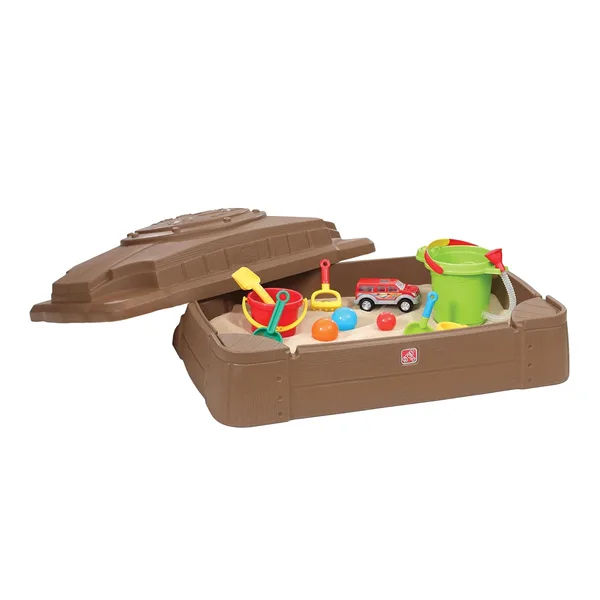
Cover the sandbox when not in use. Outdoor sandboxes attract animals — cats in particular use uncovered sandboxes as litter boxes, which introduces the risk of parasitic infection (toxoplasmosis and toxocariasis). A fitted cover eliminates this risk almost entirely. This isn’t paranoia; it’s the most common sandbox health concern and the most easily prevented.
Supervise toddlers. Children under 2 will attempt to eat sand. Small amounts are harmless (sand is inert silica), but persistent sand consumption should be discouraged. Sand throwing is a developmental phase; redirect rather than punish, and protect eyes during group play.
Sun protection. Sandbox play tends to be stationary and prolonged, which increases sun exposure risk. Position the sandbox in partial shade if possible, or use a shade canopy. Apply sunscreen before play. The AAP recommends shade protection for outdoor play exceeding 15 minutes.6
The Step2 sandbox itself has no sharp edges, no small parts, and is made from food-safe polyethylene plastic. It meets ASTM outdoor toy safety standards.
The Verdict
The Step2 Naturally Playful Sandbox is a solid, well-built container for one of the best play materials available to young children. It’s not going to win design awards or inspire Instagram posts, and its lack of an included cover and sand is a genuine irritation. But the sandbox isn’t really the product — the sand is. And sand play, backed by legitimate sensory integration and motor development research, is one of the simplest, cheapest, and most effective developmental activities available for children 18 months through 6 years.
The true cost of a ready-to-play sandbox setup is $130, not $80. Factor that in. The per-hour play value is excellent if your family uses it regularly through the warm months. If your sandbox sits unused after the first week of novelty, it’s an expensive plastic tub in your backyard.
Product Rating: 7/10 — A reliable, durable sandbox at a fair price, held back by hidden completion costs and the absence of an included cover.
Evidence Rating: Emerging — Sensory play research supports sand play for tactile processing, fine motor development, and open-ended creative play. The evidence is category-level, not product-specific, and the research base is more clinical (occupational therapy) than experimental (randomized trials).
Who Should Buy This
- Families with children 18 months to 5 years who have outdoor space
- Parents looking for a screen-free, low-cost-per-hour outdoor activity
- Families in warmer climates or with long outdoor seasons
- Parents of sensory-seeking children who benefit from tactile play
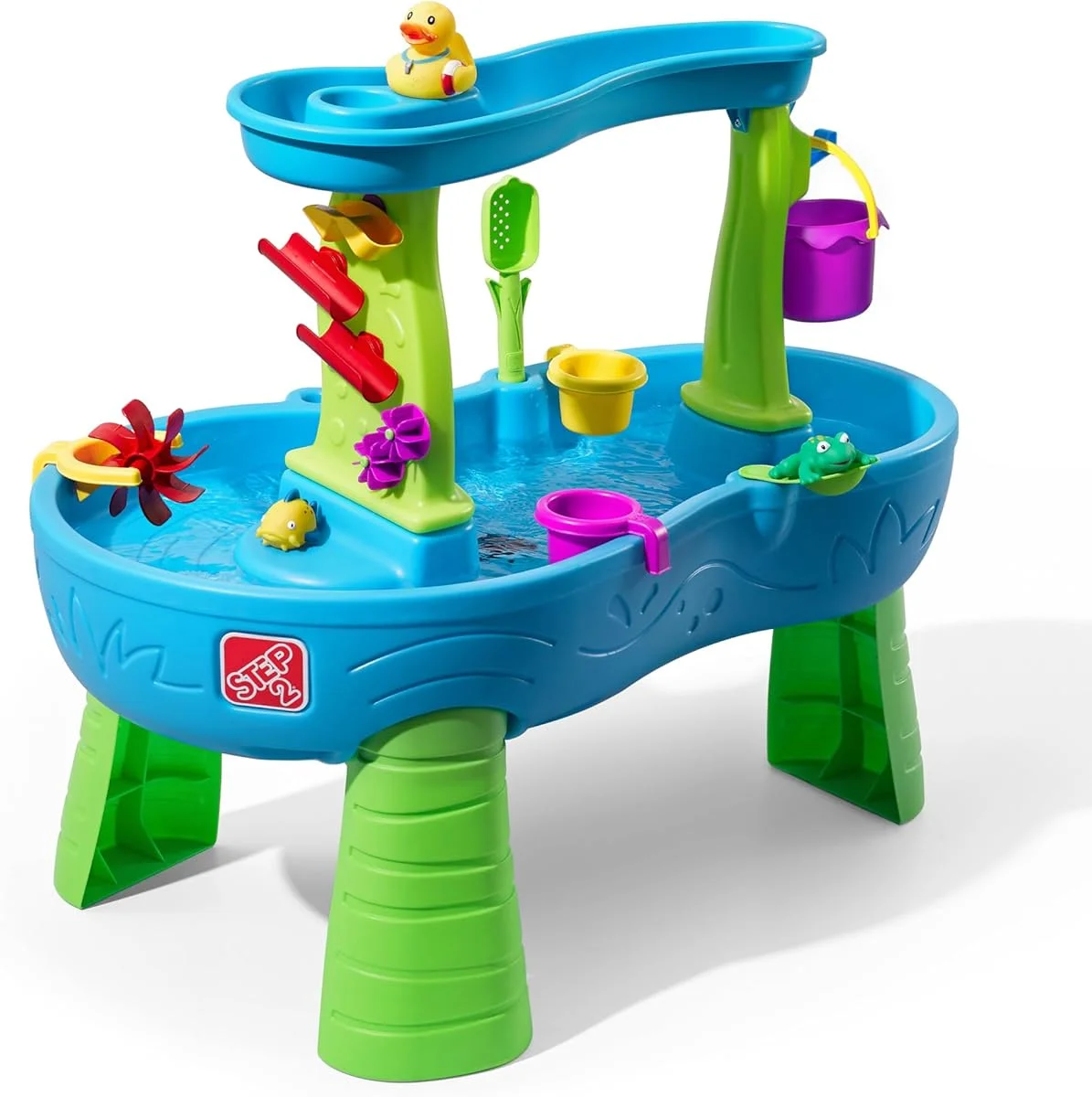
- Families who already love water table play and want a complementary outdoor sensory station
Who Should Skip This
- Families without outdoor space or with strict HOA restrictions
- Parents in climates with very short outdoor seasons (the per-use cost rises fast)
- Families with cats and no commitment to covering the sandbox daily
- Parents who find ongoing sand maintenance (cleaning, replacing, covering) more hassle than it’s worth
- Families looking for a “set it and forget it” toy — sandboxes require upkeep
This review reflects our independent evaluation. ScienceBasedKids.com purchased this product at retail price. We may earn a commission if you purchase through our links, which helps fund our research. This never influences our ratings.
Footnotes
-
Ayres, A. J. (1972/2005). Sensory Integration and the Child: Understanding Hidden Sensory Challenges (25th Anniversary ed.). Western Psychological Services. The foundational text on sensory integration theory. ↩
-
Bundy, A. C., Luckett, T., Tranter, P. J., Naughton, G. A., Wyver, S. R., Ragen, J., & Spies, G. (2009). “The risk is that there is ‘no risk’: A simple, innovative intervention to increase children’s activity levels.” International Journal of Early Years Education, 17(1), 33-45. ↩
-
Cameron, C. E., Brock, L. L., Murrah, W. M., Bell, L. H., Worzalla, S. L., Grissmer, D., & Morrison, F. J. (2012). “Fine motor skills and executive function both contribute to kindergarten achievement.” Child Development, 83(4), 1229-1244. ↩
-
Russ, S. W., & Wallace, C. E. (2013). “Pretend play and creative processes.” American Journal of Play, 6(1), 136-148. ↩
-
Parten, M. B. (1932). “Social participation among pre-school children.” The Journal of Abnormal and Social Psychology, 27(3), 243-269. ↩
-
American Academy of Pediatrics. (2020). “Sun Safety and Protection Tips.” HealthyChildren.org. ↩
Enjoyed this review? We publish two new evidence-based evaluations every week.
Free. No spam. Unsubscribe anytime.
Sessions conducted in afternoon shade, 65-80°F. Engagement drops sharply above 85°F.
Recommended Accessories
Affiliate links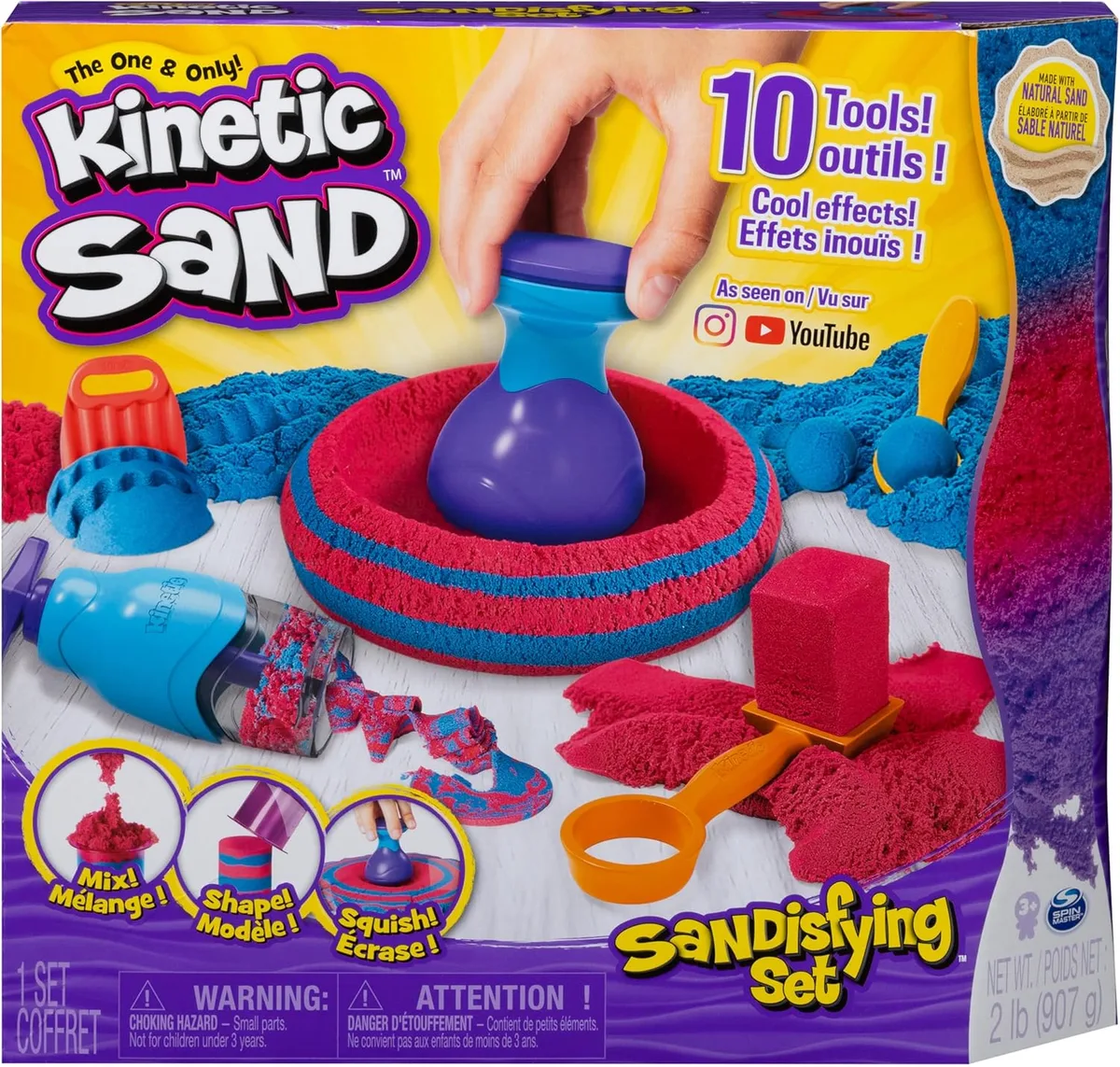
Kinetic Sand Natural Brown Play Sand (11 lb)
“Indoor sand play companion for rainy days. Different texture, same sensory benefits.”
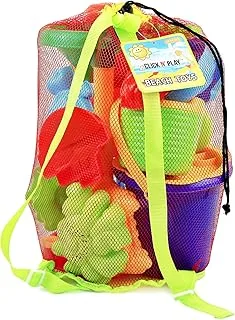
Click N' Play 18-Piece Beach Sand Toy Set
“Bucket, shovels, rakes, molds, and mesh bag. The sandbox ships empty of tools.”
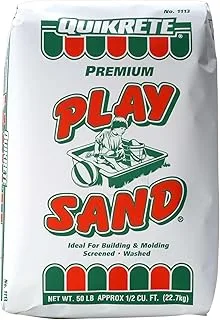
Quikrete Premium Play Sand (50 lb)
“Washed, dried, and screened play sand. Safer than random hardware store sand.”
Step2 Play and Store Sandbox with Cover
“Keeps cats, rain, and debris out. Extends the life of the sand significantly.”
AMMSUN 5ft Kids Outdoor Umbrella for Sandbox & Water Table
“Sun protection during extended outdoor sand play. Fits most sandbox and water tables.”