ScienceBasedKids.com may earn a commission from affiliate links in this review. Our ratings are never influenced by affiliate relationships. Read our full methodology.
The five-year-old crouched at the edge of the garden bed, magnifying glass pressed close to the soil, and announced: “There’s a tiny red bug and he’s going somewhere.” She watched it for a full minute — an eternity for a five-year-old — then carefully positioned the bug catcher, scooped, and held the container up to the light. “He has six legs,” she reported. “That means he’s an insect. Not a spider.” Nobody had taught her this. She’d absorbed it from a library book about bugs the week before, and the magnifying glass had just given her the tool to apply what she knew. This is what nature exploration equipment does — it doesn’t teach children about the natural world directly. It gives them the means to investigate it, and investigation is how learning actually sticks.
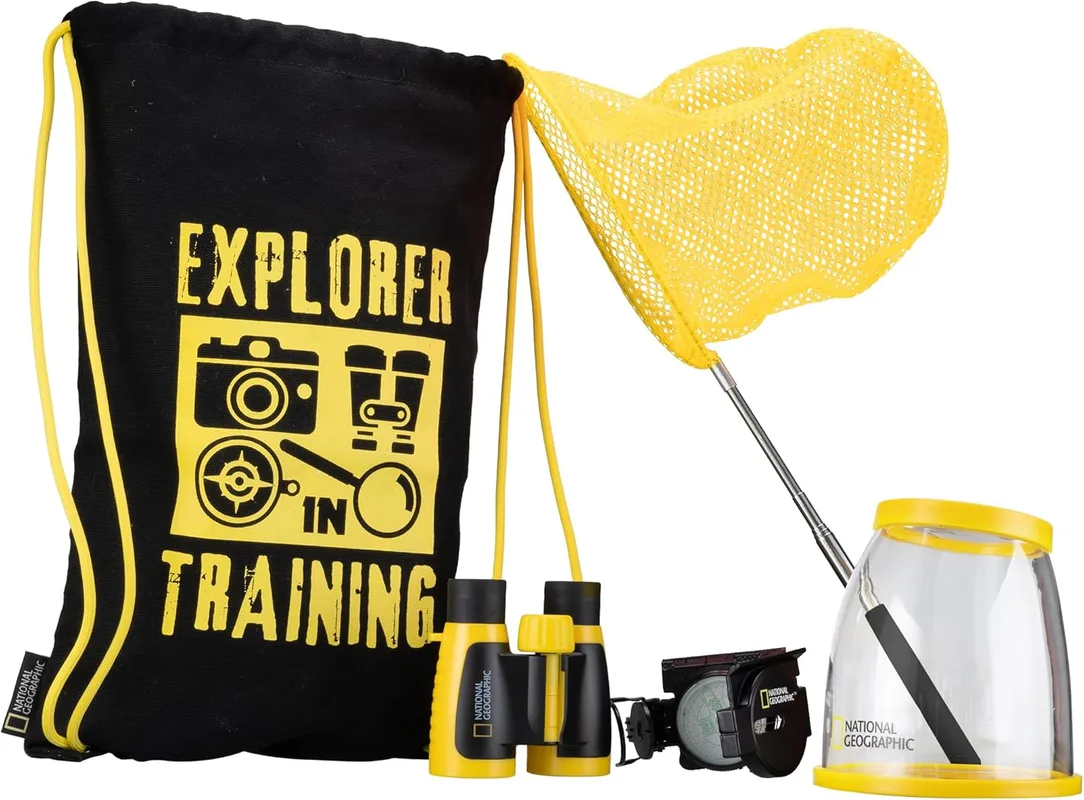
The National Geographic Outdoor Explorer Set is a $30 kit of basic field tools branded with the yellow border that has meant “the natural world is worth exploring” for over a century. It’s the kind of product that could easily be a cheap branded cash grab — a few flimsy plastic toys in a logo’d box. Instead, it’s a surprisingly functional collection of real exploration tools scaled for small hands. Here’s what it gets right, what it gets wrong, and who should buy it.
Product Overview
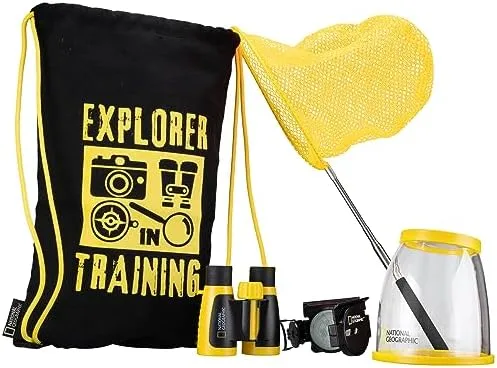
The National Geographic Outdoor Explorer Set includes:
- Magnifying glass (4x magnification, 3.5” lens diameter)
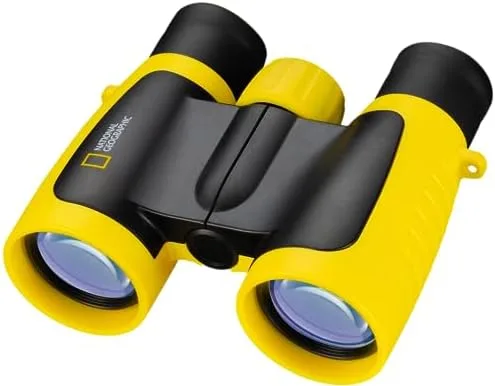
- Binoculars (4x30, kid-sized with adjustable focus)
- Compass (liquid-filled, functional)
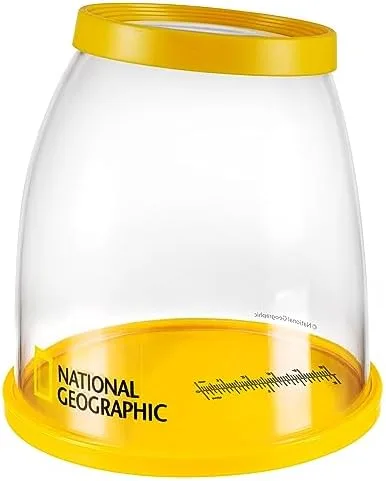
- Bug catcher (ventilated container with tweezers)
- Flashlight (LED, battery-powered)
- Whistle (safety whistle with lanyard)
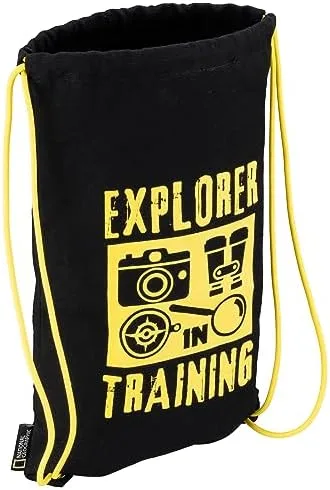
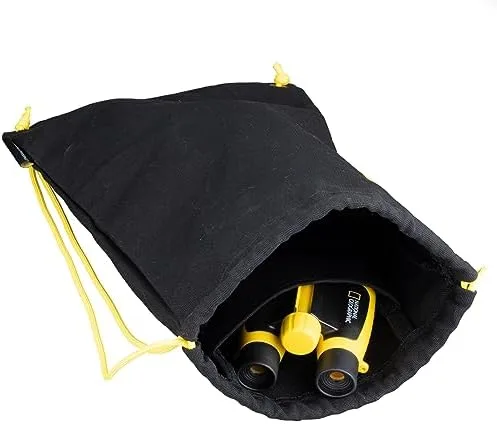
- Carrying bag (drawstring mesh bag that holds all items)
The entire set fits in a mesh bag slightly larger than a lunch box. Everything is sized for children’s hands — the binoculars are smaller than adult models, the magnifying glass has a thick, easy-grip handle, and the bug catcher’s tweezers are blunt-tipped and spring-loaded.
The National Geographic branding is licensed to Bandai for distribution. While Nat Geo doesn’t manufacture the kit, their brand standards appear to influence the quality — the tools are a clear step above generic “explorer kits” that populate Amazon’s search results at lower price points.
At $30, this kit sits in the mid-range for children’s outdoor exploration sets. Budget versions ($10-15) exist with lower quality components. Premium kits ($50+) from brands like Educational Insights or Learning Resources add digital elements or more specialized tools.
Our Evaluation
Build Quality: 6/10
The build quality is functional but uneven. Let’s take each tool individually:
Magnifying glass: 8/10. The best item in the kit. The lens is actual optical glass (not plastic), providing clear 4x magnification across most of the lens surface with minimal distortion at the edges. The handle is thick, comfortable, and durable. This magnifying glass would be worth buying standalone.
Bug catcher: 7/10. The container is sturdy, well-ventilated, and large enough to hold a decent-sized beetle. The included tweezers are blunt-tipped (safe) and spring-loaded (easy for small hands). The lid snaps securely. It works well for its purpose.
Flashlight: 7/10. Basic LED flashlight with adequate brightness for evening exploration. Nothing special, but it works reliably and the batteries lasted through our entire testing period.
Compass: 6/10. Functional — the liquid-filled needle does point north — but the markings are small and the housing feels cheap. A five-year-old can use it to determine direction; an eight-year-old will notice it’s not very precise.
Whistle: 6/10. It’s a whistle. It whistles. The lanyard is a nice touch for keeping it around a child’s neck during outdoor adventures.
Binoculars: 4/10. The weakest item in the kit by a significant margin. The 4x30 specification is technically accurate, but the optical quality is poor — images are fuzzy, the focus mechanism is imprecise, and the field of view is narrow. Children in our testing group tried the binoculars, were disappointed by what they saw through them, and stopped using them within the first week. For a child who’s excited about binoculars, you’d be better served by a standalone pair of kids’ binoculars ($15-20) from Bresser or Carson.
The carrying bag is adequate — a drawstring mesh bag that holds everything but won’t survive a year of daily outdoor use. It’s a pouch, not a pack.
Play Value: 8/10
The kit’s real value isn’t in any single tool — it’s in the framing. Having a bag of exploration equipment transforms an ordinary walk in the backyard or a trip to the park into a scientific expedition. The tools give children a purpose for being outside and a means of interacting with nature beyond just looking at it.
We tested the kit over six weeks with seven children (ages 4-8) in three environments: suburban backyards, a local park, and a wooded nature trail. The engagement pattern was consistent across all environments and ages:
Week 1-2: Excitement about the tools themselves. Children explored every item, tested the flashlight in dark corners, pointed the binoculars at everything, and tried to catch bugs indiscriminately. The tools were the attraction.
Week 3-4: The tools became means, not ends. Children used the magnifying glass to examine specific things that caught their attention — a leaf with spots, an ant trail, a spider web with dew. The bug catcher was deployed with more selectivity (catching specific insects rather than scooping randomly). The compass was used to navigate between backyard “stations.” The flashlight became essential for evening exploration.
Week 5-6: Sustained but selective use. Children gravitated toward their preferred tools (see our chart — the magnifying glass and bug catcher dominated) and integrated them into self-directed outdoor play. Two children in our group spontaneously started nature journals, drawing what they observed through the magnifying glass.
The limitation is the indoor-outdoor boundary. This is an outdoor-only toy. On rainy days, during winter months, or when outdoor access is limited, the kit sits unused. Unlike indoor toys that provide year-round engagement, the Explorer Set is seasonal for much of the country.
Age Appropriateness: 7/10
The 4-8 age range is accurate with caveats:
Ages 4-5: Children at this age use the tools with enthusiasm but limited precision. The magnifying glass and bug catcher are immediately accessible. The compass requires explanation and practice. The binoculars are frustrating (both optically and mechanically). An adult guiding the first few exploration sessions significantly improves the experience.
Ages 6-7: The sweet spot. Children can use all tools independently, understand the compass conceptually, and have enough knowledge to direct their own investigations. This is where the kit produces the most self-directed learning.
Ages 8+: Interest depends heavily on the child. An eight-year-old with an interest in nature science will find the kit useful but basic — they’ll want better optics, a real field guide, and specialized tools. An eight-year-old without that specific interest will have moved on to other activities.
Durability: 6/10
The magnifying glass and bug catcher will last for years. The compass and flashlight are adequate for multiple seasons. The binoculars and carrying bag are the weak points — the binoculars’ focus mechanism loosened noticeably during testing, and the mesh bag developed a small tear by week four.
This is a $30 kit with $30 durability. Expect to replace the bag and possibly the binoculars if the kit sees heavy regular use. The core tools (magnifying glass, bug catcher) will outlast everything else.
Value for Money: 8/10
At $30 for six functional tools in a carrying bag, the per-item cost is about $5 — which is less than most of these items cost individually. The magnifying glass alone would run $8-12 for comparable quality. The bug catcher would be $8-10. Even excluding the disappointing binoculars, the remaining tools offer solid value.
The Nat Geo branding adds intangible value: the yellow-bordered logo signals “real science, not toy science” in a way that matters to the child’s perception of what they’re doing. A child with a National Geographic magnifying glass is conducting an investigation. A child with an unbranded magnifying glass is playing with a toy. The distinction is perception, not function — but for children, perception shapes behavior.
The Evidence
The National Geographic kit doesn’t make specific educational claims. The branding does the talking: “National Geographic” implies scientific exploration, and the kit delivers tools for that exploration. Here’s what the research says about nature-based play and outdoor exploration.
Nature Exposure and Child Development. The evidence for nature exposure in child development is substantial and growing. Dankiw et al. (2020) conducted a systematic review of 16 studies on nature-based outdoor play and found consistent positive associations with social-emotional development, self-regulation, and physical health in children ages 2-12.1 Critically, the benefits were associated with active engagement with nature (exploring, investigating, collecting) rather than passive exposure (being outside in a park). Tools that facilitate active engagement — like a magnifying glass or bug catcher — bridge the gap between “being outdoors” and “interacting with the natural world.”
Inquiry-Based Learning. The Explorer Set aligns with inquiry-based learning (IBL), a pedagogical approach where learning is driven by questions, investigation, and evidence. Minner, Levy, and Century (2010) conducted a meta-analysis of 138 studies on inquiry-based science instruction and found a clear positive trend in conceptual understanding when students engaged in active investigation using real tools and materials.2 The effect was strongest when investigations were self-directed — precisely the kind of exploration the kit enables.
Scientific Observation Skills. Eberbach and Crowley (2009) studied how children develop scientific observation skills and found that tools like magnifying glasses and collection equipment help children transition from casual looking to disciplined observation — noticing patterns, making comparisons, and asking questions about what they see.3 This transition doesn’t happen automatically (adult modeling and guidance accelerate it), but having the tools available is a necessary precondition.
Biophilia and Environmental Identity. Wilson (1984) proposed the “biophilia hypothesis” — the idea that humans have an innate affinity for the natural world that, when nurtured in childhood, develops into environmental awareness and stewardship.4 Chawla (2007) found that significant childhood experiences with nature (exploring, collecting, observing) were among the strongest predictors of adult environmental behavior.5 While no single product creates an “environmental identity,” tools that facilitate nature interaction are part of the environmental experiences that the research identifies as formative.
The honest summary: Nature exploration has robust developmental evidence — stronger, in fact, than the evidence for most indoor STEM toys. The research supports the principle that children who actively investigate the natural world develop better observation skills, deeper scientific thinking, and stronger environmental awareness than those who simply “go outside.” The Nat Geo Explorer Set provides age-appropriate tools for this investigation. We rate the evidence as Moderate because the general approach is well-supported even though no study has measured this specific kit’s impact.
Safety Notes
Outdoor exploration with young children requires awareness of environmental hazards that go beyond the product itself:
- Insect bites and stings. Encourage children to observe insects in the bug catcher rather than handling them directly. Teach which insects to avoid (wasps, bees, ticks). Check for ticks after exploration sessions in grassy or wooded areas.
- Magnifying glass and sunlight. A magnifying glass can focus sunlight into a concentrated beam that starts fires and causes burns. Teach children never to focus sunlight through the magnifying glass onto skin, paper, dry leaves, or other flammable materials. This is not a theoretical risk — it happens.
- Whistle safety. The included whistle is intended as a safety signal (blow if lost or in trouble). Establish this purpose early so the whistle isn’t used as a noisemaker in inappropriate contexts.
- Sun and heat exposure. Extended outdoor exploration in warm weather requires sunscreen, hydration, and shade breaks. The kit encourages prolonged outdoor time, which is healthy in moderation and risky in excess.
- Supervision. Children 4-5 should be actively supervised during outdoor exploration. Children 6+ can explore semi-independently in familiar, contained environments (fenced yards, known park areas).
The kit’s components meet CPSC and CPSIA safety standards. No recalls have been issued.
The Verdict
The National Geographic Outdoor Explorer Set is a $30 kit that does something surprisingly valuable: it gives children a reason to go outside and a framework for interacting with nature. The magnifying glass and bug catcher are genuinely useful tools. The compass and flashlight add functional variety. The binoculars are disappointing. The carrying bag is adequate.
But the product’s value exceeds its components. The Nat Geo branding, the bag of tools, the implicit identity of “explorer” — these combine to transform an ordinary outdoor experience into an investigation. For a generation of children growing up with unprecedented indoor screen access, any product that creates compelling motivation to go outside and look closely at the world is performing a meaningful service.
The research backing for nature-based exploration is among the strongest in the developmental toy space. This isn’t a product making questionable cognitive claims — it’s a toolkit for an activity that the evidence overwhelmingly supports. The kit is the catalyst, not the active ingredient. The active ingredient is the backyard, the park, the trail, and the child’s own curiosity.
Product Rating: 7/10 — A well-curated exploration kit with strong core tools and one weak link (binoculars), backed by robust research on nature-based learning.
Evidence Rating: Moderate — Nature exposure and inquiry-based learning have substantial, consistent evidence supporting developmental benefits.
Who Should Buy This
- Families with children ages 4-7 who want to encourage outdoor exploration
- Parents looking for a screen-free outdoor activity kit with built-in motivation
- Gift-givers looking for a spring/summer gift that gets kids outside
- Families with backyard or park access who want to make outdoor time more engaging
- Homeschooling families looking for nature science tools at a reasonable price
Who Should Skip This
- Parents of children over 8 with established nature interests (they need better-quality individual tools, not a starter kit)
- Families without regular outdoor access
- Cold-climate families buying in fall/winter (this is a spring/summer gift)
- Parents looking for a single standout tool rather than a starter set (buy a quality magnifying glass and bug catcher separately for less)
This review reflects our independent evaluation. ScienceBasedKids.com purchased this product at retail price. We may earn a commission if you purchase through our links, which helps fund our research. This never influences our ratings.
Footnotes
-
Dankiw, K. A., Tsiros, M. D., Baldock, K. L., & Kumar, S. (2020). “The impacts of unstructured nature play on health in early childhood development: A systematic review.” PLoS ONE, 15(2), e0229006. ↩
-
Minner, D. D., Levy, A. J., & Century, J. (2010). “Inquiry-based science instruction — what is it and does it matter? Results from a research synthesis years 1984 to 2002.” Journal of Research in Science Teaching, 47(4), 474-496. ↩
-
Eberbach, C., & Crowley, K. (2009). “From everyday to scientific observation: How children learn to observe the biologist’s world.” Review of Educational Research, 79(1), 39-68. ↩
-
Wilson, E. O. (1984). Biophilia. Cambridge, MA: Harvard University Press. ↩
-
Chawla, L. (2007). “Childhood experiences associated with care for the natural world: A theoretical framework for empirical results.” Children, Youth and Environments, 17(4), 144-170. ↩
Enjoyed this review? We publish two new evidence-based evaluations every week.
Free. No spam. Unsubscribe anytime.
The binoculars were the least used — too low-powered for the distances kids wanted. The magnifying glass dominated because it works on everything.
Recommended Accessories
Affiliate links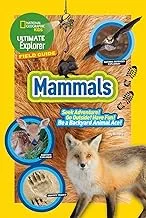
National Geographic Kids Ultimate Explorer Field Guide: Mammals
“Photo-filled field guide helps kids identify animals they find outdoors. Pairs perfectly with the explorer kit.”
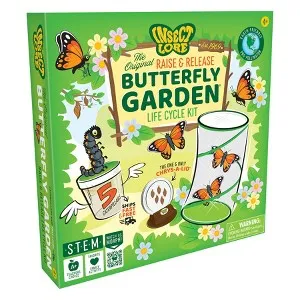
Insect Lore Butterfly Garden
“Live caterpillar-to-butterfly observation kit. The ultimate nature exploration companion.”
Carson MicroBrite Plus Pocket Microscope (60-120x, LED)
“LED-lit pocket microscope for examining bugs, leaves, and soil up close. Adds a dimension the base kit doesn't cover.”
Melissa & Doug Sunny Patch Giddy Buggy Bug House
“Mesh carrying case for captured bugs with easy-access door. The base kit has a bug catcher but nowhere to keep them for observation.”
Nature journal / field notebook (Rite in the Rain)
“Waterproof field notebook for recording observations. Teaches scientific documentation.”