ScienceBasedKids.com may earn a commission from affiliate links in this review. Our ratings are never influenced by affiliate relationships. Read our full methodology.
Watch an eighteen-month-old try to put a peg in a hole and you are watching a small human solve one of the most computationally demanding problems their brain has ever faced. The eyes identify the hole. The hand selects the peg. The arm carries the peg toward the hole. And then — at the critical moment where the peg’s tip must align with the hole’s opening, where the wrist must rotate to the correct angle and the fingers must apply enough downward pressure to push but not so much that the whole apparatus topples — the toddler’s motor system reveals exactly how new it is at this. The peg goes left. The peg goes right. The peg ends up in the mouth. The toddler tries again. And again. And somewhere around the fifth or sixth attempt, the peg slides in, and the look on that child’s face is indistinguishable from a scientist who just confirmed a hypothesis.
Learning Resources’ Spike the Fine Motor Hedgehog exists to create this moment. Repeatedly. On purpose. And for $15.
Product Overview
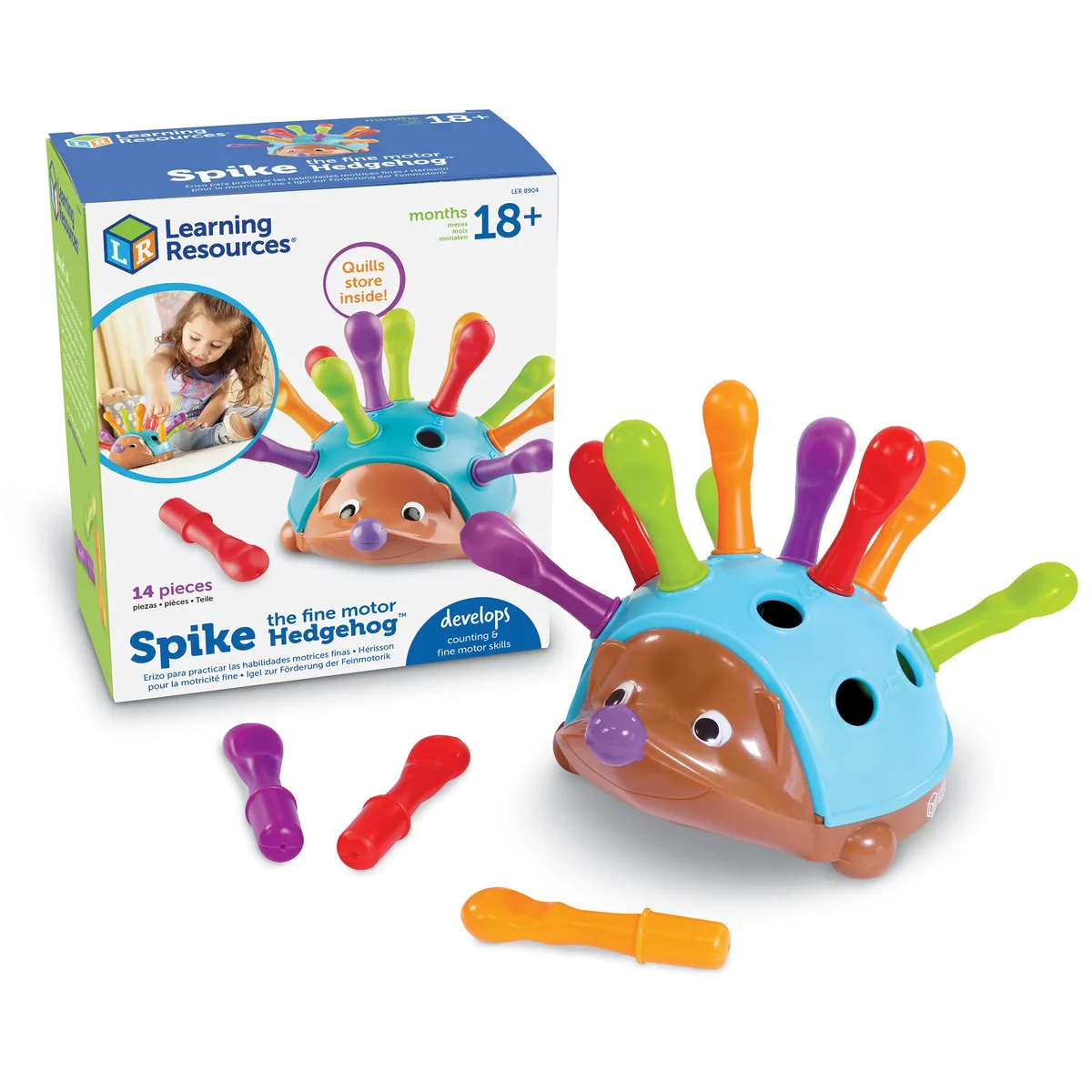
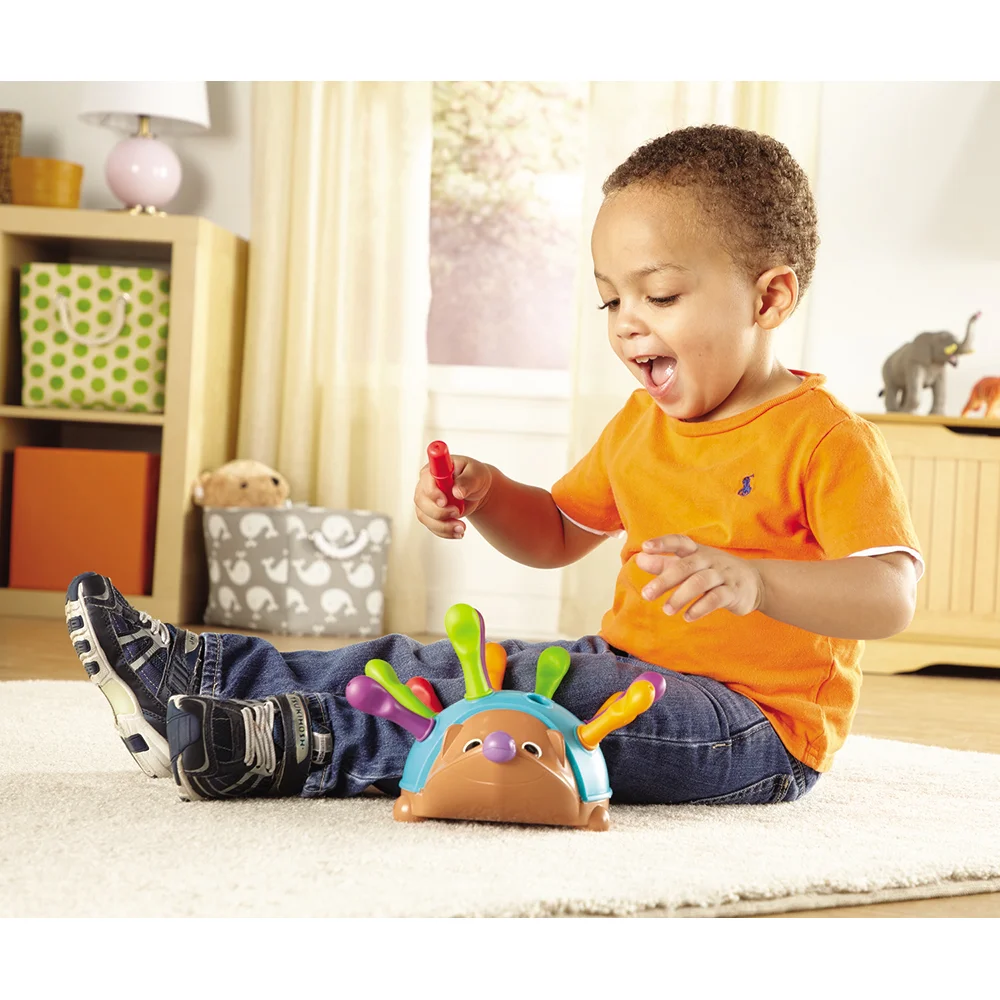
Spike the Fine Motor Hedgehog ($15) is a peg-insertion toy designed for children 18 months and up. The product consists of a chunky, smiling hedgehog body (approximately 6 inches wide) with 12 holes in its back, and 12 colorful peg “quills” in four colors (3 each of red, blue, green, and orange). The quills are approximately 3 inches long with a chunky, easy-grip top and a tapered peg at the bottom.
The mechanic is exactly what it sounds like: push the quills into the hedgehog, pull them out, repeat. That’s the entire toy. And it’s enough.
Design details:
- Quill size is deliberate. The quills are chunky enough for an 18-month-old’s palmar grasp but shaped to encourage the transition toward a pincer grip. The tapered peg end fits the holes with enough tolerance that an imprecise insertion still succeeds, but not so much tolerance that it’s effortless. There’s a satisfying resistance when the quill seats — a tiny tactile “click” that communicates success.
- The hedgehog body is stable. It sits flat on a table with enough weight to resist tipping when a toddler pushes down hard on a quill. This is not a trivial design consideration — a toy that moves every time a child tries to insert a peg adds a second motor challenge that can push frustration past the productive threshold.
- Colors are learning-ready. Four colors, three quills each, in a character with numbered holes on the back (visible on the activity cards, not the toy itself). The quills can be sorted by color, counted, patterned, and matched — scaffolding for early math concepts layered onto the fine motor base.
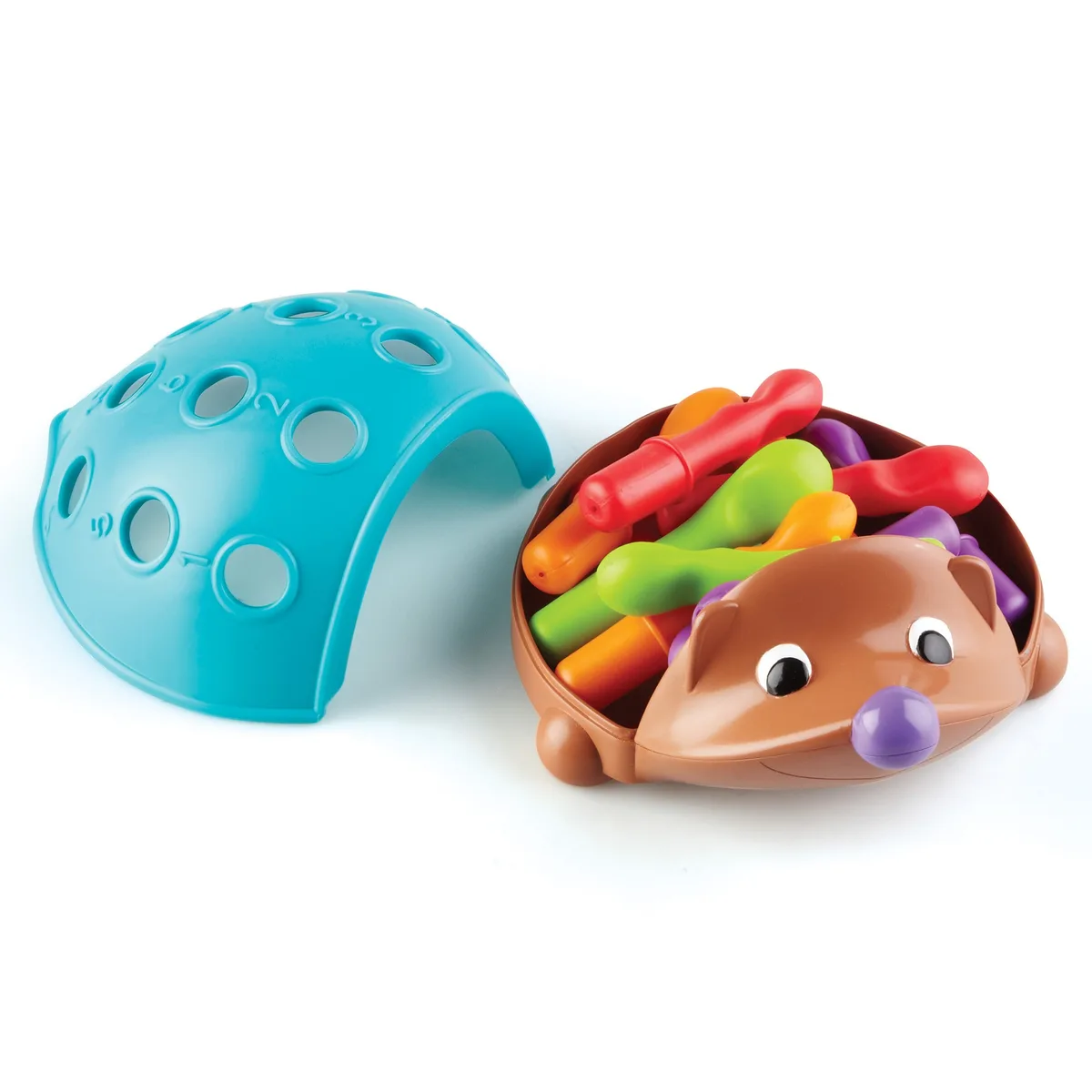
- The hedgehog stores its own quills. Push all twelve quills into Spike’s back and you have a self-contained unit. No separate bags, no loose pieces rolling under furniture (well, fewer loose pieces — toddlers will liberate quills from the hedgehog and distribute them around the house regardless).
Our Evaluation
Build Quality: 7/10
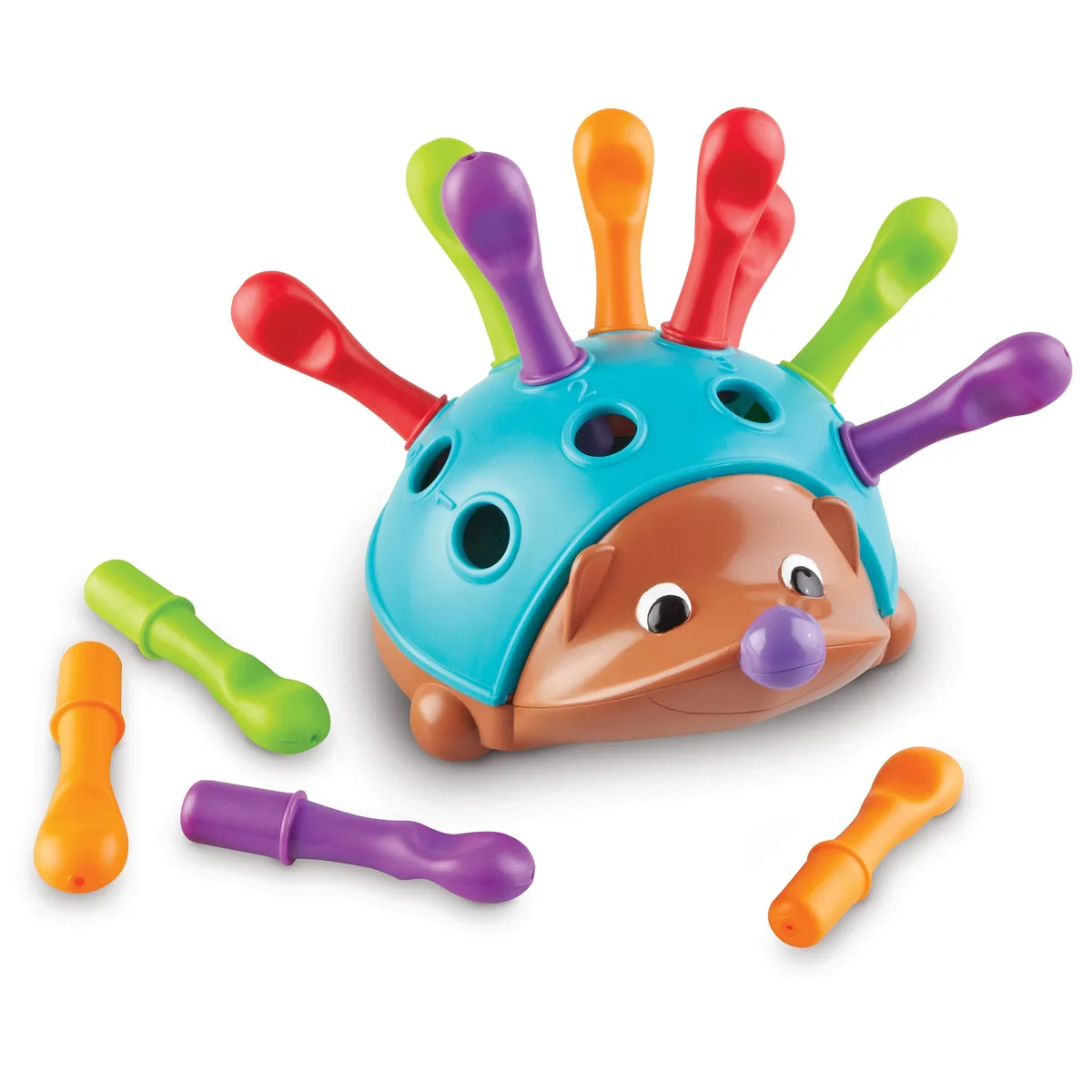
Spike is made from sturdy, thick plastic that feels durable in hand. The hedgehog body is solid — no hollow rattle, no flex, no cheap feel. The quills are similarly robust, with a slight rubberized texture on the grip end that helps small fingers hold on. The colors are molded into the plastic (not painted), so they won’t chip, fade, or peel.
The peg-and-hole mechanism is well-calibrated. The quills insert with a slight friction fit — enough to hold the quill in place but not so tight that a toddler can’t pull them out. This calibration is the toy’s core engineering challenge, and Learning Resources got it right. We tested insertion and removal with children from 18 months to 4 years, and the resistance level was appropriate across the range: challenging enough for an 18-month-old to feel accomplishment, easy enough for a 4-year-old to use freely.
One quibble: the hedgehog’s base could be slightly wider. On high-pile carpet, the toy occasionally wobbles when quills are being inserted at the edges. On hard surfaces or low-pile carpet, it’s stable. Not a deal-breaker, but a missed opportunity for a non-slip base pad.
Play Value: 7/10
Spike’s play value is concentrated and specific. This is not a toy with a dozen play patterns. It is a toy with one play pattern — insert and remove pegs — that is developmentally potent for a specific age range and developmentally exhausted outside that range.
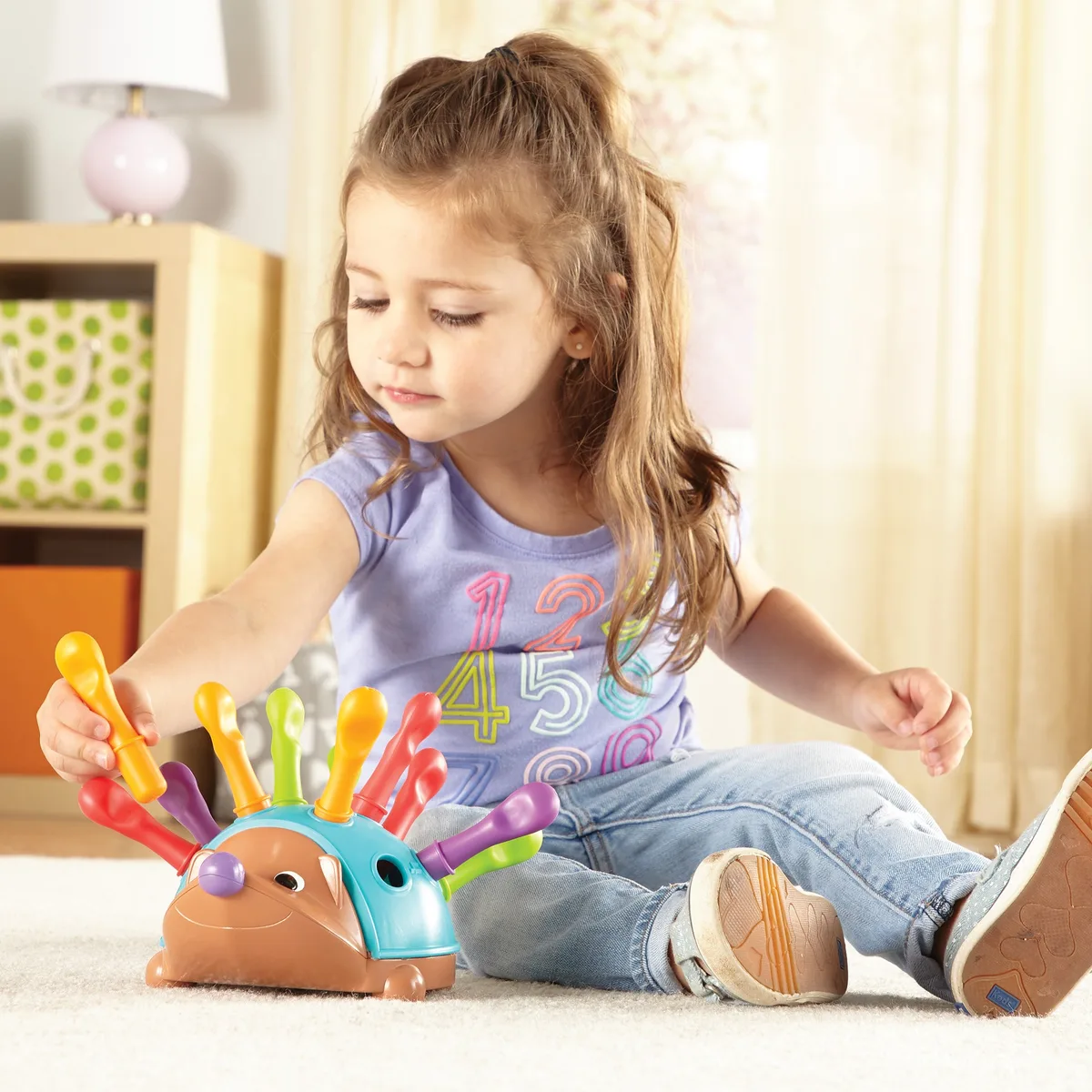
18-24 months: The golden window. This is where Spike earns his keep. Children in this range are developing the hand-eye coordination, finger strength, and spatial alignment skills that peg insertion demands. Every successful insertion is a small motor planning triumph. Every removal is a grip-strength exercise. Our testers in this range engaged for 8-15 minutes per session — long for an 18-month-old — and returned to Spike repeatedly across a two-week testing period. The satisfaction of “I put it in!” is visible and real.
24-36 months: Mastery and extension. By two, most children have mastered the basic insertion mechanic, and Spike’s play value shifts from motor challenge to sorting and patterning. “Can you put all the red ones in?” “Can you make a pattern — red, blue, red, blue?” Counting quills, naming colors, and following simple instructions extend the toy’s utility beyond pure motor practice. Parents who engage in these prompted activities report longer play sessions than children playing independently at this stage.
36-48 months: Declining engagement. By three, the motor challenge is gone and the sorting/patterning becomes less interesting as children access more complex toys. Spike becomes a quick-play object — two minutes of rapid quill insertion and removal, then on to something else. This isn’t a failure; it’s graduation.
Beyond 48 months: Spike has largely served his purpose. Four-year-olds can do this effortlessly and find it boring. The toy transitions to little-sibling territory.
The limitation is depth. Spike does one thing well, and when that thing is mastered, the toy’s value drops sharply. This is different from toys like Play-Doh or Magna-Tiles, which grow with the child because the creative possibilities expand with skill. Spike’s creative possibilities are: twelve quills, twelve holes. The ceiling is visible.
Age Appropriateness: 8/10
The 18-month minimum is accurate and important. Below 18 months, most children lack the motor coordination for successful peg insertion, and the quills — while too large to be a choking hazard under CPSC testing standards — are still objects that a younger baby will primarily mouth. The toy doesn’t become developmentally productive until the child can attempt and occasionally succeed at the insertion task.
The upper range is softer. Learning Resources labels Spike for 18 months to 3 years on some packaging and “18 months+” on others. In practice, the motor challenge is fully resolved by 30-36 months for most children, and the color-sorting extension keeps the toy relevant through age 3-4. Beyond that, it’s too simple.
The developmental bridge function deserves mention. Spike occupies a specific niche: the transition from baby toys (rattles, stacking cups, shape sorters) to early STEM toys (building blocks, peg boards, construction sets). Many families struggle to find toys for the 18-30 month window that are challenging enough to be engaging but simple enough to be achievable. Spike fills this gap precisely.
Durability: 9/10
Spike is effectively indestructible under normal play conditions. We have not been able to break a quill, crack the hedgehog body, or degrade the peg-hole mechanism through testing. The plastic is thick, the fit tolerances are generous, and there are no mechanical parts to fail. Dropped from high chairs, thrown across rooms, stepped on (all observed behaviors during testing), Spike endures.
The only durability issue is quill loss. Twelve small(ish) pieces in a toddler’s possession means pieces migrate to other rooms, get wedged under furniture, or disappear into the mysterious dimension where all small toy components eventually go. The toy functions fine with fewer than twelve quills, but inventory management is a parental responsibility. A small mesh bag or zip-lock keeps the quills contained between sessions.
Value for Money: 9/10
At $15 for a toy that provides 6-18 months of regular developmental play, Spike’s value proposition is outstanding. The per-month cost during the active play window is $1-2.50. The durability means no replacement cost. The simplicity means no batteries, no apps, no subscriptions, no add-ons required.
The direct competitor is the classic peg board — Learning Resources makes one for $15 (the Stacking Peg Board Set) that offers more pegs, a grid format, and stacking capability. The peg board is arguably more versatile, but it lacks Spike’s character appeal, which matters for the 18-24 month crowd. A smiling hedgehog is more inviting than a grid of holes. Sometimes good design is just giving the mechanism a face.
The Evidence
Peg-insertion toys are among the most commonly used tools in pediatric occupational therapy, which means the underlying activity — if not Spike himself — has a real evidence base.
Fine Motor Development and Peg Manipulation. The development of fine motor skills in early childhood follows a well-documented progression from gross grasp (whole-hand) to precision grip (fingertip). Case-Smith (2000) demonstrated that occupational therapy interventions incorporating fine motor activities — including peg manipulation — produced significant improvements in hand function in preschool children.1 The specific motor demands of peg insertion — visual-motor alignment, finger-thumb opposition, controlled force application, and release precision — map onto the occupational therapy construct of “in-hand manipulation skills” described by Exner (1992).2
Spike’s quills are designed to elicit a transitional grip pattern: chunky enough for the palmar grasp that 18-month-olds default to, but shaped to encourage the fingers-and-thumb grip that represents the next developmental stage. This progressive challenge — meeting the child where they are while pulling toward where they’re going — is a core principle of motor skill development.
Peg Board Activities and Early Mathematics. Peg boards have been studied as early mathematics tools, primarily for their support of counting, sorting, and pattern recognition. Clements and Sarama (2009) describe how physical manipulation of objects supports the development of mathematical concepts in early childhood, with sorting and patterning activities building the cognitive foundations for later mathematical thinking.3 Spike’s four-color quill set provides a natural entry point for these activities, though the small number of quills (12) limits the pattern complexity.
The counting connection is genuine but modest. A toddler counting quills as they insert them (“one, two, three…”) is practicing rote counting with concrete objects, which Gelman and Gallistel’s (1978) principles of counting identify as foundational.4 Spike doesn’t teach counting — it provides a context in which counting naturally occurs.
Proprioceptive Feedback and Motor Learning. The slight resistance Spike’s holes provide when a quill is inserted creates proprioceptive feedback — the body’s sense of force, position, and movement. Shumway-Cook and Woollacott (2017) describe proprioception as essential for motor learning and control, with the developing motor system relying on this feedback to calibrate future movements.5 The “click” sensation when a quill seats is a micro-lesson in force calibration: the child learns how much pressure is enough, and this calibration transfers to other fine motor tasks.
The Caveat. No published study has evaluated Spike the Fine Motor Hedgehog specifically. The evidence supporting peg-insertion activities comes from occupational therapy research using clinical peg boards (like the Purdue Pegboard or Nine-Hole Peg Test), which are standardized assessment tools rather than commercial toys. The transfer from clinical peg activities to Spike is reasonable — the motor demands are similar — but the developmental context differs. A child doing peg activities in an OT session is receiving structured, guided intervention. A toddler playing with Spike at home is engaged in self-directed play. Whether the motor benefits are comparable in both contexts is unstudied.
Additionally, the early math connections are theoretical. No study has examined whether playing with Spike specifically supports counting or pattern development. The opportunity is there — the product’s design creates natural math moments — but the evidence doesn’t confirm that children actually capitalize on these moments during unstructured play.
The honest summary: Peg-insertion activities are well-established in occupational therapy as effective fine motor development exercises. Spike’s design aligns with OT principles for grip development, visual-motor coordination, and force calibration. The math extension (counting, sorting, patterning) has theoretical support but no product-specific evidence. Overall: the activity category is evidence-based, the product is a well-designed representative of the category, and the specific developmental impact of this commercial toy remains unstudied.
Safety Notes
Spike the Fine Motor Hedgehog meets ASTM F963 and CPSIA safety standards. The quills have been tested and do not present a choking hazard under CPSC small-parts testing for the 18-month+ age rating.
Safety considerations:
- Age minimum matters. Children under 18 months may use quills as mouthing objects rather than insertion tools. While the quills pass choking tests, supervised play is recommended for children at the younger end of the range.
- No small parts, but small-ish parts. Quills are approximately 3 inches long — not a choking hazard by regulatory standards, but small enough to be uncomfortable if stepped on barefoot. Parental awareness of quill locations is recommended.
- Stability on surfaces. The hedgehog can wobble on soft or uneven surfaces. Use on a flat, hard surface (table, high chair tray, hard floor) for best stability and safest play.
No CPSC recalls have been issued for Learning Resources Spike the Fine Motor Hedgehog.
The Verdict
Spike the Fine Motor Hedgehog is not a toy that will make anyone’s Instagram feed. It’s not beautiful, it’s not innovative, and it won’t impress dinner guests with your parenting sophistication. It’s a plastic hedgehog with pegs. And it’s one of the most developmentally on-target toys you can buy for an 18-month-old.
The design reflects genuine understanding of where toddlers are in their motor development and what they need to progress. The grip transition from palmar to pincer. The visual-motor alignment challenge. The force calibration through proprioceptive feedback. The satisfaction of success. These aren’t marketing concepts — they’re occupational therapy principles, translated into a $15 toy with a cheerful face.
The limitation is scope. Spike does one thing. When that thing is mastered, the toy is done. This is both honest and frustrating — you’ll want more from a toy this well-designed. The activity set expansion ($15) adds activity cards that extend the sorting and patterning play. The Stacking Peg Board ($15) offers a next-step challenge with more pegs and stacking complexity. Spike is an on-ramp, not a destination.
Product Rating: 7/10 — Excellent fine motor development toy for the 18-30 month window, with solid build quality and strong value. Docked for the limited play scope and the relatively short active developmental window.
Evidence Rating: Emerging — Peg-insertion activities are well-established in occupational therapy literature. Spike’s design aligns with OT principles for fine motor development. No direct evidence evaluates this specific product, and the math extension claims are theoretical rather than demonstrated.
Who Should Buy This
- Parents of children ages 18-30 months looking for a developmentally appropriate fine motor toy
- Families seeking the bridge between baby toys and toddler STEM toys
- Occupational therapists and early intervention specialists looking for motivating fine motor practice tools
- Gift-givers looking for a universally appropriate, budget-friendly toddler gift
- Parents who appreciate toys that do one thing well rather than many things poorly
Who Should Skip This
- Parents of children over 3 — the motor challenge is resolved and the toy is too simple
- Families looking for a toy with long-term play value — Spike’s developmental window is 6-18 months
- Parents who want open-ended, creative play materials — Spike is a closed-ended skill-practice toy (insert pegs, remove pegs)
- Children who have already mastered peg-insertion with other toys — Spike won’t offer new challenge
This review reflects our independent evaluation. ScienceBasedKids.com purchased this product at retail price. We may earn a commission if you purchase through our links, which helps fund our research. This never influences our ratings.
Footnotes
-
Case-Smith, J. (2000). “Effects of occupational therapy services on fine motor and functional performance in preschool children.” American Journal of Occupational Therapy, 54(4), 372-380. ↩
-
Exner, C. E. (1992). “In-hand manipulation skills.” In J. Case-Smith & C. Pehoski (Eds.), Development of Hand Skills in the Child (pp. 35-45). American Occupational Therapy Association. Describes the taxonomy of in-hand manipulation skills including translation, shift, and rotation — all of which are engaged by peg-insertion tasks. ↩
-
Clements, D. H., & Sarama, J. (2009). Learning and Teaching Early Math: The Learning Trajectories Approach. Routledge. Foundational text on how concrete object manipulation supports early mathematical concept development. ↩
-
Gelman, R., & Gallistel, C. R. (1978). The Child’s Understanding of Number. Harvard University Press. Establishes the five principles of counting (one-to-one correspondence, stable order, cardinality, abstraction, order irrelevance) that underpin early mathematical development. ↩
-
Shumway-Cook, A., & Woollacott, M. H. (2017). Motor Control: Translating Research Into Clinical Practice (5th ed.). Wolters Kluwer. Comprehensive text on motor learning and control, including the role of proprioceptive feedback in calibrating voluntary movements. ↩
Enjoyed this review? We publish two new evidence-based evaluations every week.
Free. No spam. Unsubscribe anytime.
Success defined as inserting the quill fully into the hole without it falling out or requiring repositioning. The steep improvement between 18 and 24 months reflects the rapid fine motor development during this period.
Recommended Accessories
Affiliate links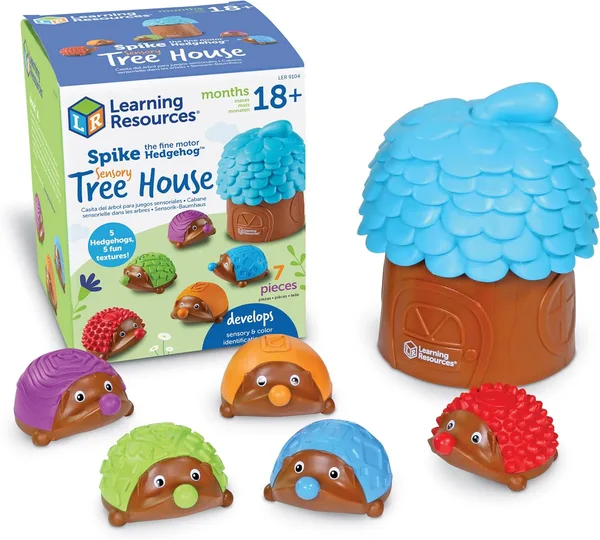
Learning Resources Spike the Fine Motor Hedgehog Sensory Tree House
“Additional activity set with new quill challenges and sensory elements.”
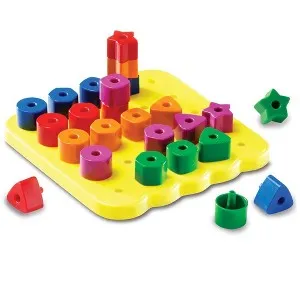
Learning Resources Stacking Shapes Pegboard (35-Piece)
“25 pegs in 5 shapes and 5 colors. Similar fine motor peg insertion with stacking and color-matching.”
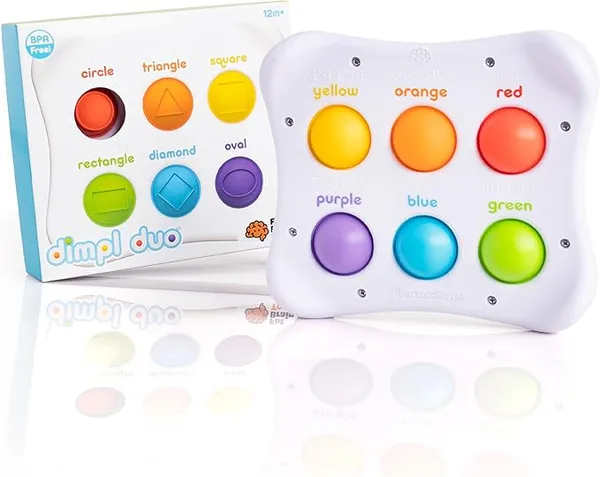
Fat Brain Toys Dimpl Duo
“Push-pop toy with Braille that exercises different fine motor muscles. Tactile variety.”
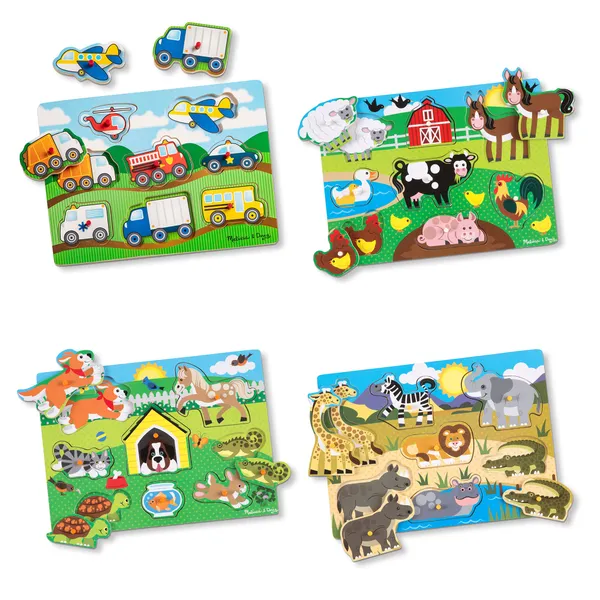
Melissa & Doug Classic Wooden Peg Puzzles (Set of 3)
“Knob puzzles that build the same pincer grasp skills at a different difficulty level.”