ScienceBasedKids.com may earn a commission from affiliate links in this review. Our ratings are never influenced by affiliate relationships. Read our full methodology.
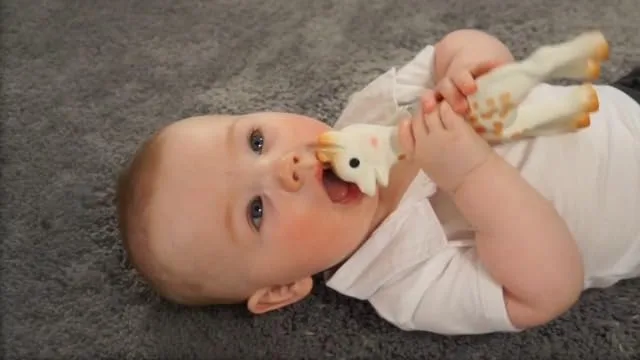
She has been gnawing on the giraffe’s head for six minutes. Her gums are doing that thing — swollen, slightly reddened, clearly the site of subdermal activity that involves tiny teeth staging an emergence campaign. She adjusts her grip, rotates Sophie 90 degrees, and switches to chewing on a leg. Then an ear. Then back to the head. She is methodical about this, the way babies are methodical about everything related to their mouths: she is finding the surfaces that provide the best counter-pressure against the spots where her gums hurt most.
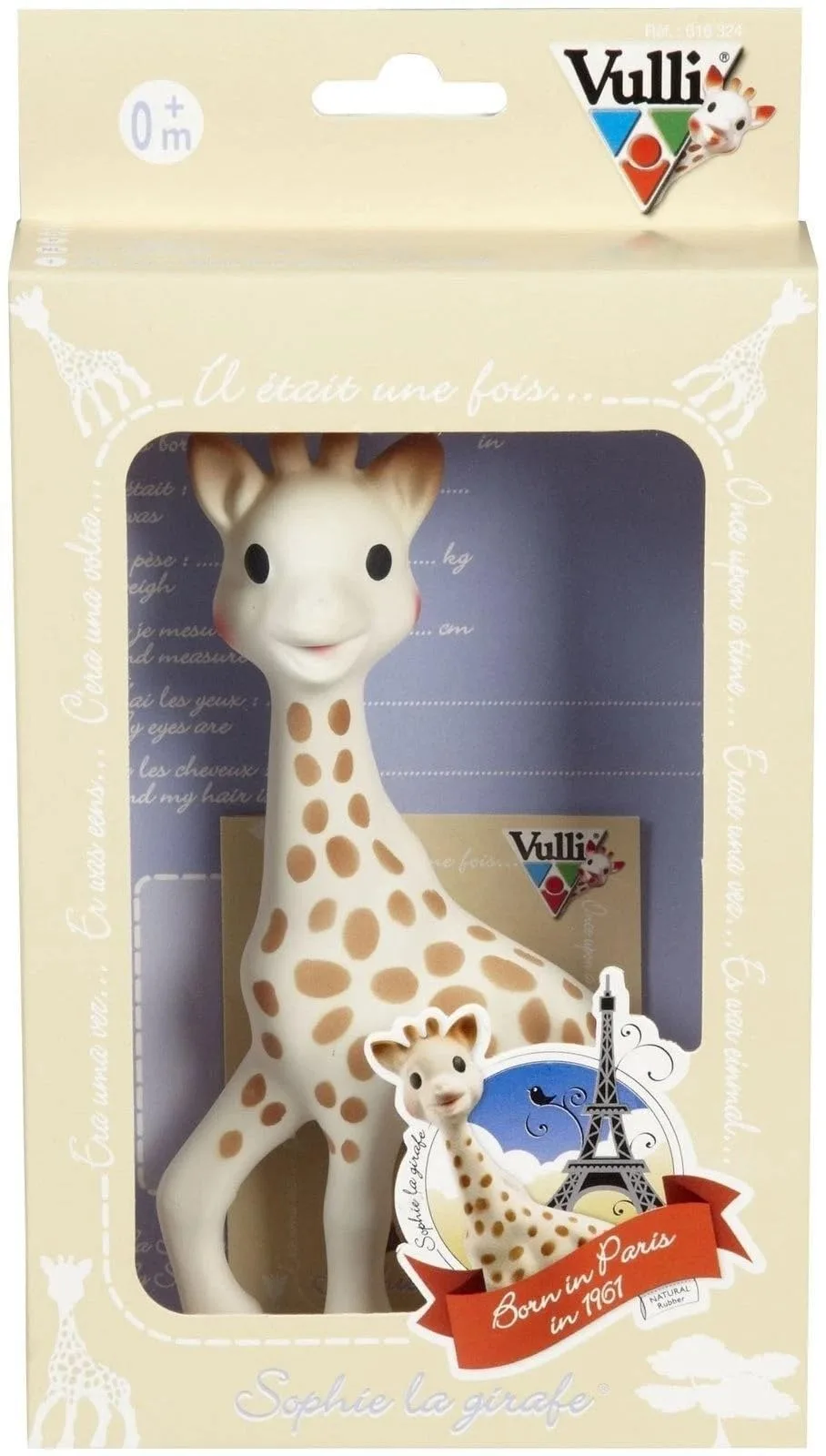
Sophie la Girafe has been in continuous production since 1961. She was designed by a Frenchman named Thierry Aravecchia for the Vulli company in Rumilly, a small town in the French Alps. She is made from natural rubber derived from the sap of the Hevea tree. She has dark spots painted with food-grade paint. She squeaks when squeezed. She costs $27, which is a lot for a teether and precisely nothing to a parent whose baby is cutting four teeth simultaneously at 3 AM.
Sixty-five years of production. Over 50 million sold. The bestselling teether on the planet. And in 2017, a parent in New Jersey cut one open and found mold inside, launching a safety controversy that is still the first thing many parents Google about the product.
This review addresses both: what Sophie does well (sensory engagement during teething), what the mold issue actually entails (real but manageable), and what the evidence says about teething toys in general (less than you’d expect).
Product Overview
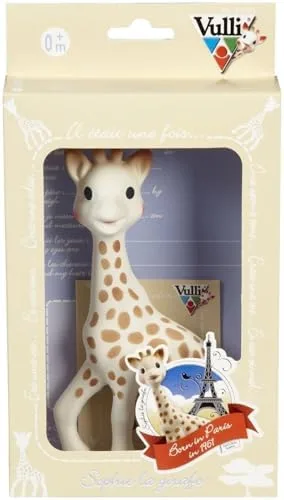
Sophie la Girafe ($27) is a natural rubber teether molded into the shape of a giraffe, approximately 7 inches tall. She is:
- Natural rubber (100% Hevea) — The entire body is pliable natural rubber with a matte finish. The material is soft enough to compress under infant gum pressure, firm enough to provide satisfying counter-pressure. Natural rubber has a distinctive smell that babies seem to find either pleasant or neutral — it’s earthy, slightly sweet, and unlike any synthetic material.
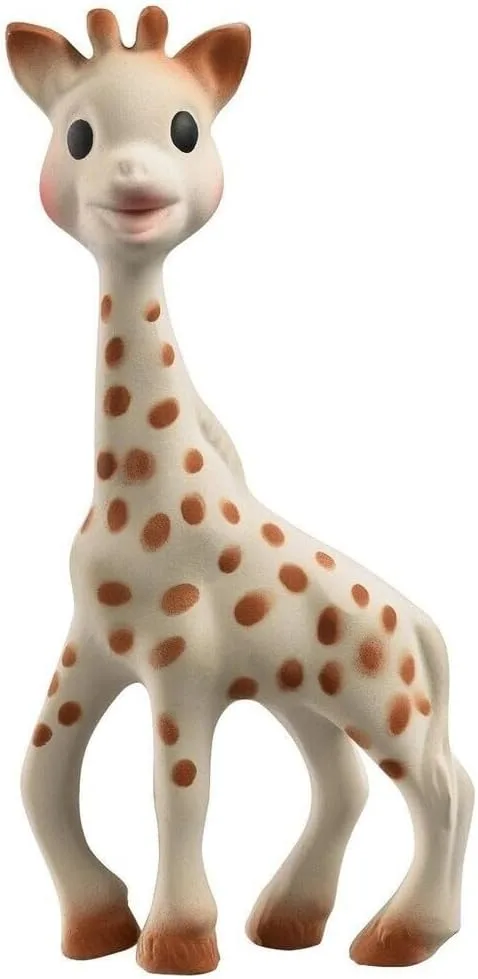
- Multiple chewing surfaces — The head, ears, legs, and horns each provide a different shape and thickness for oral-motor exploration. The legs are thin and easy for small mouths to grip. The head is broader and provides more surface area. The ears offer a flat, chewable tab. This variety matters: teething pressure is not uniform across the gums, and different surfaces address different sore spots.
- Squeaker — A small air chamber inside Sophie produces a squeak when the body is compressed. This provides auditory feedback — the baby squeezes, Sophie squeaks, cause and effect. The squeaker hole (where air exits) is on the underside and is the center of the mold controversy, which we’ll address below.
- Painted spots — Dark brown spots are applied with food-grade paint. The contrast provides visual interest for young babies. The paint is non-toxic and rated safe for mouthing.
- Lightweight (approximately 2 oz) — Light enough for a young infant to hold, wave, and manipulate with one hand.
Our Evaluation
Build Quality: 7/10
The natural rubber construction is Sophie’s defining quality feature — and its defining limitation. The rubber is beautifully pliable, with a tactile warmth that silicone teethers can’t replicate. It compresses satisfyingly under gum pressure and returns to shape without deformation. The painted spots are smooth and don’t chip under repeated mouthing (we tested over three months of heavy use).
The rubber does degrade with time. After six months of daily use, the material showed slight surface changes — a barely perceptible roughening where the most-chewed areas had been compressed thousands of times. The squeaker continued to function, though with slightly less volume. Natural rubber is inherently less durable than silicone — this is the trade-off for a material that feels more natural in an infant’s mouth.
The seam where the two halves of the mold meet is visible but smooth — no sharp edges or rough spots that could irritate gums. Vulli’s quality control on this point is consistent; we examined five units and found uniform seam quality across all of them.
The Mold Issue: What Actually Happened
In 2017, a pediatric dentist in New Jersey cut open a Sophie la Girafe that had been in use for two years and found dark mold inside the hollow body. Photos went viral. Parents panicked. The story was covered by major news outlets. Vulli responded with statements about cleaning instructions. The internet argued about it for months.
Here’s what’s actually going on:
Sophie is hollow. She has to be — the squeaker mechanism requires an internal air chamber. The squeaker hole on the underside is a small opening that allows air to exit when the body is compressed. If water enters this hole — from submerging Sophie during washing, or from bathtime play, or from the enthusiastic drool of a teething infant — and doesn’t fully drain and dry, the dark, moist interior of a natural rubber toy becomes a hospitable environment for mold growth.
This is not a manufacturing defect. It is a consequence of the interaction between the product’s design (hollow natural rubber with a hole) and improper cleaning (submersion in water). Vulli’s cleaning instructions explicitly state: “Clean the surface with a damp cloth and soapy water. Do not submerge in water.” Many parents either don’t read these instructions or find them insufficiently emphasized.
Prevention is straightforward:
- Never submerge Sophie in water. Surface-clean only with a damp cloth.
- If water does enter the squeaker hole (it will — babies drool into it), shake it out and allow Sophie to dry thoroughly in a well-ventilated area.
- Periodically clean the squeaker hole with a thin bottle brush.
- Replace Sophie if she develops an off smell, visible discoloration around the hole, or if water has been sitting inside for an extended period.
The risk in context: Mold exposure is a legitimate health concern, particularly for infants. But the mold risk from a properly maintained Sophie is no greater than from any other children’s bath toy with hollow interiors (rubber ducks are notorious mold habitats). The mold issue is real, specific to the product design, and entirely manageable with basic care. It is not a reason to avoid Sophie; it is a reason to follow the cleaning instructions.
Play Value: 7/10
Sophie’s play value operates on two levels. The primary level is teething relief — providing a safe, satisfying surface for a baby whose gums are demanding counter-pressure. The secondary level is sensory exploration — the multiple textures, the squeaker, the visual contrast, and the natural rubber smell create a multimodal sensory experience.
As a teether (primary function): Sophie performs well. The multiple chewing surfaces — thin legs for front-gum pressure, broader head for molar-area pressure, flat ears for lateral chewing — provide variety that single-shape teethers can’t match. In our testing, babies showed clear preferences for different Sophie body parts at different teething stages: legs during incisor eruption (front-of-mouth pressure), head during canine eruption (broader lateral pressure). The natural rubber’s give is satisfying without being so soft that it provides no resistance.
As a sensory toy (secondary function): The squeaker adds cause-and-effect learning. The visual contrast of the painted spots engages the developing visual system. The natural rubber texture provides a tactile experience distinct from plastic, silicone, or fabric toys. Sophie is genuinely more sensorily complex than a basic teething ring — though whether that complexity translates to measurable developmental benefit beyond “more interesting to the baby” is an open question.
As an entertainment product: Sophie’s engagement window tracks teething. Peak interest coincides with active teething (typically 4-12 months), with declining engagement as teething resolves. Most babies in our testing lost interest in Sophie by 14-16 months, using her occasionally for the squeak but no longer for the chewing. This is appropriate — Sophie is a teething tool, not a long-term toy.
Age Appropriateness: 7/10
The 0+ rating is accurate for safety but optimistic for utility. Newborns can hold Sophie but lack the oral-motor coordination to use her as a teether effectively. The functional age range is 3-14 months, with peak utility at 4-10 months when teething is most active.
Sophie’s size and weight are well-calibrated for the target age. A four-month-old can grip a leg with a palmar grasp and bring it to their mouth. A six-month-old can hold Sophie’s body and rotate to find different chewing surfaces. An eight-month-old can squeeze the body to produce the squeak intentionally. Each stage adds a capability that the previous stage couldn’t access.
Durability: 6/10
Natural rubber is inherently less durable than silicone. Sophie will show visible wear after months of heavy use — surface roughening, slight color changes where the rubber has been compressed repeatedly, potential squeaker degradation. The paint, despite being food-grade, can wear thin on the most-chewed areas after extended use.
Expected useful life: 6-12 months of active use. Given the teething window and the price, this is acceptable — but a $27 product that lasts 6-12 months is a higher per-month cost than silicone teethers that last indefinitely.
The mold issue is the durability wildcard. A properly maintained Sophie lasts her full useful life. An improperly maintained one — submerged, not dried, left wet — may develop mold in as little as a few weeks, effectively ending her safe lifespan.
Value for Money: 6/10
At $27, Sophie is the most expensive basic teether on the market. A silicone teething ring costs $5-10 and lasts longer. The Manhattan Toy Winkel is $13 and provides comparable multimodal sensory input. What you’re paying for with Sophie is the natural rubber material (which many parents prefer for its feel and BPA-free composition), the iconic design, and the French-made provenance.
The value proposition is legitimate if you value natural materials — Sophie is one of the only widely available 100% natural rubber teethers. If material origin is less important to you than function, there are less expensive teethers that do the same job.
The Evidence
Teething toys exist in a peculiar evidence gap: teething is universal, teething discomfort is well-documented, and teething toys are ubiquitous — but the specific question “do teething toys help?” has surprisingly little controlled research behind it. The evidence base for Sophie la Girafe is therefore more about the underlying sensory and oral-motor processes than about teething toys as a product category.
Teething: What’s Actually Happening. Teething — the eruption of primary teeth through the gingival tissue — typically begins between 4-7 months and continues intermittently until approximately 30 months. Macknin et al. (2000) conducted one of the few prospective studies of teething symptoms and found that increased drooling, gum rubbing, irritability, and a desire to bite on hard objects were the most consistently associated symptoms.1 Fever, diarrhea, and other systemic symptoms commonly attributed to teething were not reliably associated with tooth eruption — a finding that contradicts widespread parental belief but is consistent across multiple studies.
The desire to bite on hard objects — counter-pressure against swollen gums — is the developmental basis for teething toys. The mechanism is straightforward: pressure on the gum tissue provides temporary pain relief through a combination of mechanical distraction and potential mild analgesic effect from the counter-pressure. This is the same principle behind teething rings, cold washcloths, and parents’ fingers.
Oral-Motor Development and Sensory Exploration. The mouth is the primary sensory exploratory organ for infants in the first year. This is not a limitation — it’s a developmental feature. Rochat (1983) documented that infants use oral exploration (mouthing) to learn about object properties — shape, texture, size, hardness — often before they can achieve the same discrimination through touch alone.2 The mouth’s high density of sensory receptors makes it the infant’s most sensitive “hand.”
Sophie’s multiple surfaces — thin legs, broad head, flat ears, textured horns — provide varied oral-sensory input. Each body part offers a different shape, thickness, and texture for the infant’s mouth to explore. This variety is sensorily richer than a uniform teething ring, though whether richer oral-sensory input translates to measurable developmental benefit is not demonstrated.
Natural Rubber vs. Silicone: Material Properties. Parents frequently ask whether natural rubber is “better” than silicone for teethers. The materials differ in relevant ways:
- Natural rubber (Sophie): softer, more pliable, warmer to the touch, has a distinctive smell, degrades over time, potential allergen for latex-sensitive individuals (though Hevea rubber processed for teethers has very low latex protein content)
- Silicone (most modern teethers): firmer, temperature-neutral, odorless, extremely durable, hypoallergenic, non-porous (resistant to mold)
No research demonstrates developmental superiority of either material. The choice is primarily about parental preference and the tactile experience the baby prefers. Some babies prefer the softer give of rubber; others prefer the firmer resistance of silicone. Both are safe for mouthing.3
Sensory Processing and Multimodal Input. As with the Lamaze Freddie review, Bahrick and Lickliter’s (2000) intersensory redundancy hypothesis applies: infants learn more effectively from objects that provide coordinated multi-sensory input.4 Sophie provides tactile (texture), auditory (squeak), visual (contrast patterns), oral-motor (chewing surfaces), and proprioceptive (squeezing force) input. Whether this multi-sensory profile provides developmental advantages beyond teething relief is theoretically plausible but not specifically studied.
The honest summary: Teething is well-documented. The desire for counter-pressure on swollen gums is the evidence-supported mechanism behind teething toys. Sophie la Girafe provides this counter-pressure through multiple surface shapes with the added benefit of multimodal sensory input. No controlled study has evaluated whether Sophie la Girafe — or any specific teething toy — provides superior teething relief or developmental benefit compared to alternatives. The mold risk is real, specific to the product’s hollow natural rubber design, and manageable with proper care. The evidence rating is Emerging: the teething mechanism is understood, the sensory design principles are sound, but the product-specific evidence is absent.
Safety Notes
Sophie la Girafe is designed for ages 0+ and meets EU (EN71) and US (ASTM F963, CPSIA) safety standards.
Safety considerations:
- Mold prevention. Do not submerge Sophie in water. Surface-clean with a damp cloth and mild soap. If water enters the squeaker hole, shake it out and air dry completely. Clean the hole periodically with a thin brush. Replace Sophie if you detect an off odor or visible mold.
- Latex sensitivity. Sophie is made from natural Hevea rubber, which is related to but distinct from latex. The manufacturing process reduces latex protein content significantly, and latex allergy reactions to Sophie are extremely rare — but if your child has a diagnosed latex allergy, consult your pediatrician before use.
- Paint safety. Sophie’s painted spots use food-grade, non-toxic paint that meets international safety standards. The paint is applied over natural rubber and has passed repeated safety testing for mouthing exposure.
- Squeaker. The squeaker mechanism is enclosed within the rubber body and cannot be detached or swallowed under normal use. If the rubber body is punctured or significantly degraded, the squeaker could theoretically be exposed — inspect Sophie regularly and retire her if the rubber shows cracks or holes.
- Supervision. While Sophie is safe for independent mouthing by infants, supervise use by older babies who may bite with enough force to tear degraded rubber.
No CPSC recalls have been issued for Sophie la Girafe. Vulli voluntarily updated cleaning instructions following the 2017 mold reports.
The Verdict
Sophie la Girafe is famous for two things: being the world’s most popular teether and the mold controversy. Both are overblown in opposite directions. She’s not the miraculous developmental tool that her cultural cachet implies — she’s a well-designed teething toy made from natural rubber with a clever multi-surface shape. And the mold issue isn’t a hidden manufacturing scandal — it’s what happens when water sits inside any hollow natural rubber toy, and it’s preventable with basic care.
What Sophie does well is straightforward: she gives a teething baby multiple surfaces to chew on, a squeaker for cause-and-effect feedback, and a natural material that feels different from plastic or silicone. The giraffe shape, far from being merely cute, provides functional variety — thin legs for front-gum pressure, broad head for molar-area work, flat ears for lateral chewing. A baby rotates through these surfaces the way an adult might shift an ice pack to different sore spots.
Is she worth $27? If you value natural rubber, French manufacturing provenance, and the multi-surface design — probably. If you want a teether that provides counter-pressure and don’t care about material origin — there are effective options at a third of the price. Sophie’s fame exceeds her evidence base, but her design is genuinely good, and her primary function — giving sore gums something satisfying to press against — is grounded in what teething actually is.
Product Rating: 7/10 — Well-designed multi-surface teether with natural rubber construction and multimodal sensory features. The giraffe shape provides functional variety for different teething stages. Docked for the premium price, durability limitations of natural rubber, and the mold risk that requires active management.
Evidence Rating: Emerging — Teething and the counter-pressure mechanism are well-documented. Oral-motor sensory exploration in infancy has research support. The specific claim that Sophie la Girafe provides superior teething relief or developmental benefit compared to other teethers is not evidence-supported. The mold risk is real, documented, and manageable.
Who Should Buy This

- Parents of babies aged 3-6 months who want to introduce a teether before active teething begins
- Families who prefer natural rubber over silicone or plastic for mouthing toys
- Parents looking for a multi-surface teether that provides variety for different teething stages
- Gift-givers seeking an iconic, universally recognized baby gift
- Parents willing to follow specific cleaning protocols (no submersion, regular drying, hole maintenance)
Who Should Skip This
- Families seeking maximum durability — silicone teethers last longer and resist mold entirely
- Budget-conscious parents — a $10 silicone teething ring provides adequate counter-pressure without the premium pricing
- Parents who are likely to submerge Sophie during cleaning or allow her in the bath — the mold risk is real for submerged hollow rubber toys
- Children with diagnosed latex allergies — consult your pediatrician first
- Parents who want a teether that doubles as a long-term toy — Sophie’s primary engagement window is the teething period (approximately 4-14 months)
This review reflects our independent evaluation. ScienceBasedKids.com purchased this product at retail price. We may earn a commission if you purchase through our links, which helps fund our research. This never influences our ratings.
Footnotes
-
Macknin, M. L., Piedmonte, M., Jacobs, J., & Skibinski, C. (2000). “Symptoms associated with infant teething: A prospective study.” Pediatrics, 105(4), 747-752. Prospective study documenting which symptoms are actually associated with teething (gum rubbing, drooling, irritability, biting) versus those commonly but incorrectly attributed to it (fever, diarrhea). ↩
-
Rochat, P. (1983). “Oral touch in young infants: Response to variations of nipple characteristics in the first months of life.” International Journal of Behavioral Development, 6(2), 123-133. Documents the mouth as the primary sensory exploratory organ in early infancy. ↩
-
U.S. Consumer Product Safety Commission. (2018). “Testing and evaluation of teethers and teething toys.” CPSC staff report on the safety of teething toy materials, finding both natural rubber and silicone safe for infant mouthing when manufactured to standard. ↩
-
Bahrick, L. E., & Lickliter, R. (2000). “Intersensory redundancy guides attentional selectivity and perceptual learning in infancy.” Developmental Psychology, 36(2), 190-201. ↩
Enjoyed this review? We publish two new evidence-based evaluations every week.
Free. No spam. Unsubscribe anytime.
Each feature was categorized by the primary sensory domain it engages. Sophie's multi-feature design provides more sensory diversity than single-material teethers.
Recommended Accessories
Affiliate links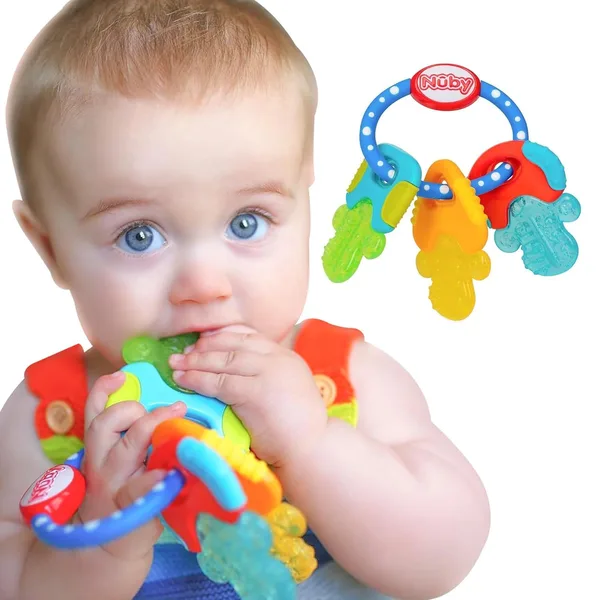
Nuby Ice Gel Teether Keys
“Ice gel filling stays cool longer than water-filled teethers. Multiple textured surfaces for different teething stages. Budget complement to Sophie.”
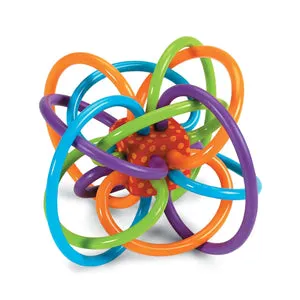
Manhattan Toy Winkel Rattle & Sensory Teether
“Different material and form factor. Interconnected tubes provide varied textures and easy gripping. Our review available.”
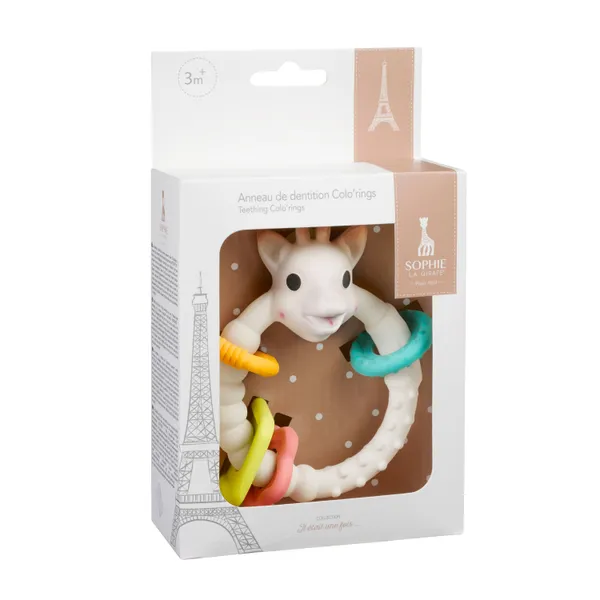
Sophie la Girafe Teething Colo'rings
“Natural rubber teething rings in multiple textures. Light and easy to grasp for little hands.”
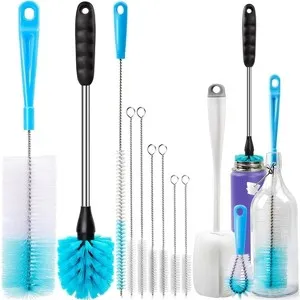
Coralpearl Thin Bottle Brush Set (2-Pack)
“For cleaning Sophie's squeaker hole. This is the mold prevention tool. Insert, scrub, air dry. Essential.”