ScienceBasedKids.com may earn a commission from affiliate links in this review. Our ratings are never influenced by affiliate relationships. Read our full methodology.
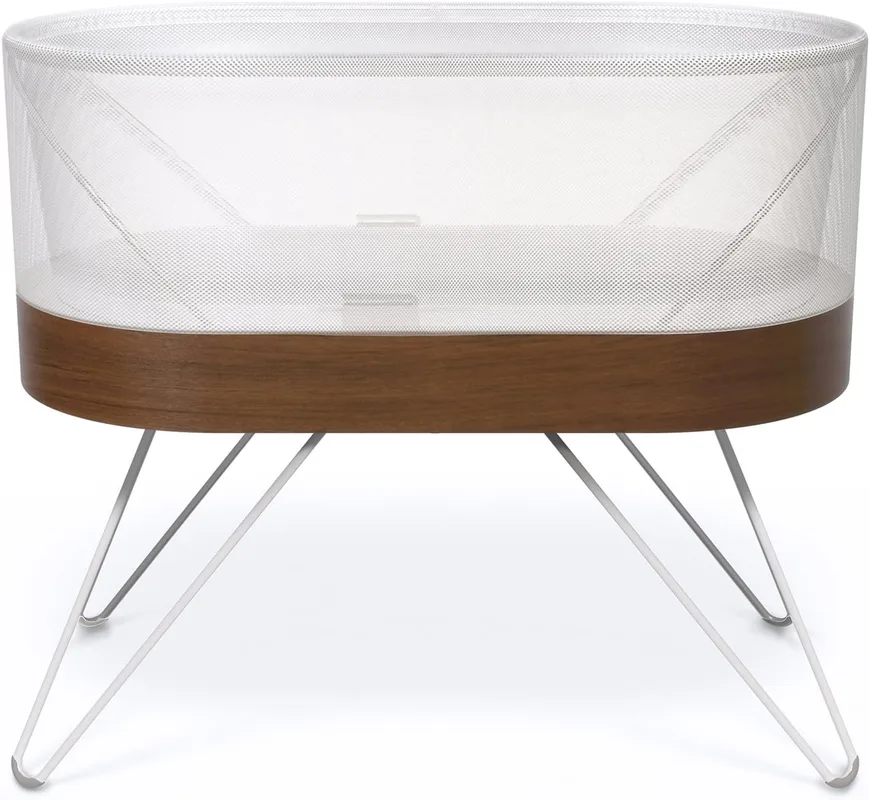
The SNOO Smart Sleeper Bassinet arrives in a box the size of a small coffin, which is an unfortunate metaphor for a product that markets itself around infant death prevention. Inside: a mesh-walled bassinet on an elevated platform, a proprietary swaddle sack, a power cord, and the implicit promise that technology can solve the most primal anxiety of new parenthood — the fear that your baby will stop breathing in the night.
Dr. Harvey Karp, the pediatrician behind the SNOO and the best-selling book The Happiest Baby on the Block, has built an empire on a simple, powerful insight: newborns are calmed by stimuli that mimic the womb. Swaddling (containment), shushing (white noise), swinging (rhythmic motion), side/stomach positioning (for soothing, not sleep), and sucking — the “5 S’s” — are effective calming techniques that generations of parents have used in various forms. Karp systematized them, branded them, and then built a $1,695 robot to automate three of them.
The question is not whether the 5 S’s work. They do, within limits. The question is whether the SNOO — which automates swaddling, shushing, and swinging in a bassinet that costs more than many families’ monthly rent — delivers outcomes that justify its price and its claims. This is the question we came to answer, and the answer is more complicated than either Happiest Baby’s marketing or its critics suggest.
Product Overview
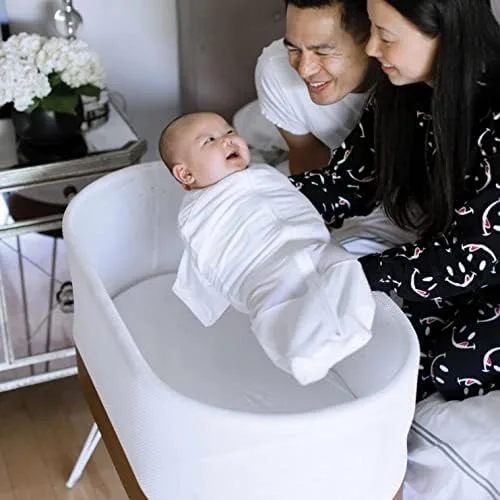
The SNOO Smart Sleeper Bassinet is a motorized bassinet with integrated sensors that detect infant crying and respond with escalating levels of rocking motion and white noise. It retails for $1,695 or rents for $159/month (5-month minimum, approximately $795 total rental cost).
- Price: $1,695 purchase / $159/month rental
- Age range: Birth to approximately 6 months (or when infant can get on hands and knees)
- Weight limit: 25 pounds
- Dimensions: 35.5” L x 19” W x 33.5” H
- Features:
- Responsive rocking: Detects crying via microphone and responds with graduated motion levels (baseline gentle rocking → Level 1 → Level 2 → Level 3 → Level 4)
- White noise: Plays womb-like sounds that intensify with rocking level
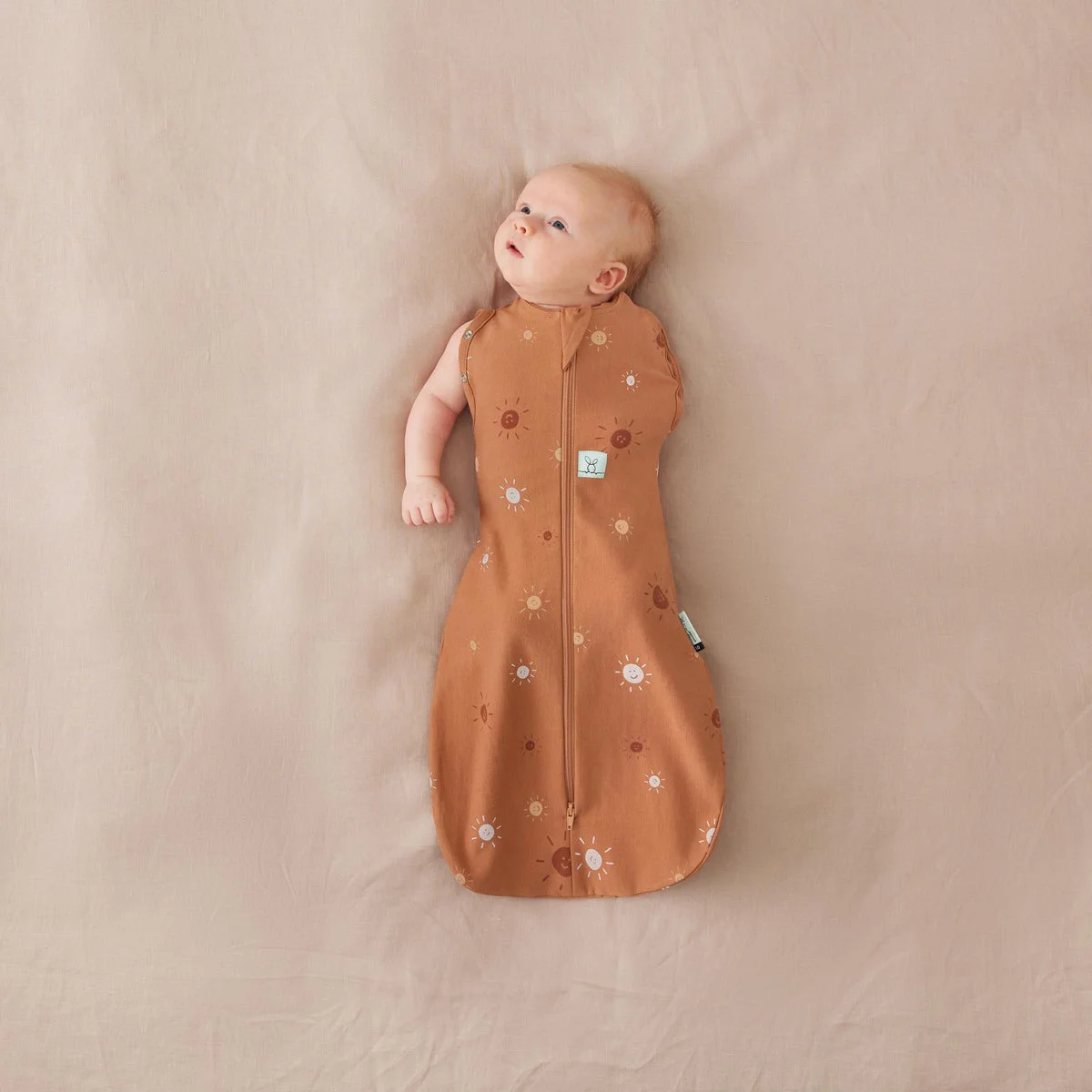
- SNOO Sack: Proprietary swaddle that clips into the bassinet, securing the infant on their back
- App connectivity: Tracks sleep data, allows remote level adjustment, provides “weaning mode” for crib transition
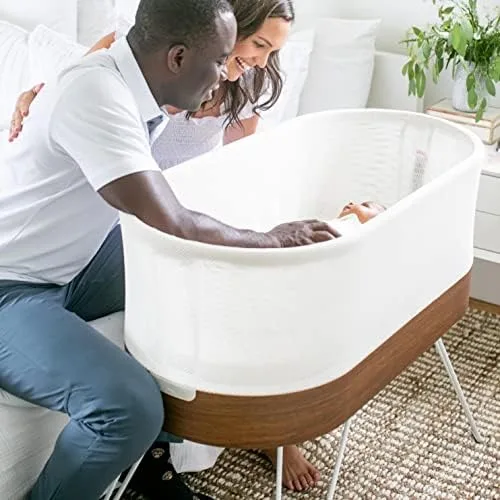
- Mesh walls: For airflow and visibility
- FDA designation: The SNOO received FDA De Novo authorization as a medical device for infant supine sleep positioning in 2020. This is important and we’ll discuss what it means (and doesn’t mean) below.
The Claims
Happiest Baby makes several distinct claims about the SNOO, and evaluating them requires separating each claim and examining its evidence independently. Bundling them — as the marketing does — creates the impression of a coherent, well-supported scientific case. Unbundling them reveals a more fragmented picture.
Claim 1: “The Safest Bassinet Ever Made”
The claim: The SNOO prevents infants from rolling to a prone (face-down) position during sleep, reducing the risk of positional asphyxiation and SIDS.
The mechanism: The SNOO Sack clips into the bassinet base, securing the infant in a supine (back) position. The infant cannot roll from back to stomach while clipped in. This is a genuine, verifiable feature — the infant is mechanically prevented from achieving a prone position.
The evidence: The FDA’s 2020 De Novo authorization classified the SNOO as a medical device specifically for this feature — keeping infants on their backs during sleep. This authorization means the FDA reviewed the mechanism and agreed that it does what it claims: maintains supine positioning. It does not mean the FDA found that the SNOO reduces SIDS, improves sleep, or is safer than other bassinets. The authorization is narrow and specific.1
Back-sleeping is the single most evidence-supported intervention for SIDS risk reduction. The AAP’s “Back to Sleep” campaign, launched in 1994, is associated with a more than 50% reduction in SIDS rates.2 The evidence that supine positioning reduces SIDS risk is Strong — this is among the most robust findings in pediatric medicine.
But here’s the critical distinction: the SNOO does not produce supine positioning that didn’t exist before. Parents already place infants on their backs for sleep. The AAP recommendation has been standard practice for three decades. The SNOO’s contribution is maintaining supine position in infants who might otherwise roll — but infants in the SNOO’s age range (0-6 months) have limited rolling ability, and most rolling-related SIDS risk occurs when infants who have always slept supine are placed prone for the first time by a caregiver or roll to prone for the first time in an environment without adequate airflow.
The SNOO’s back-sleep enforcement is a real feature with a real safety rationale. Whether it provides a meaningful safety increment over a standard firm-mattress bassinet where the infant is placed on their back by a parent following AAP guidelines is an open question that no study has answered.
Evidence for the specific claim: Emerging. The mechanism is sound; the incremental benefit over standard safe sleep practices is undemonstrated.
Claim 2: “Adds 1-2 Hours of Sleep Per Night”
The claim: Infants in the SNOO sleep 1-2 hours longer per night than infants in standard bassinets.
The evidence: This claim originates primarily from a company-funded study (Karp et al., 2020) that used data from SNOO app logs compared to parent-reported sleep data from the National Sleep Foundation’s survey of non-SNOO families.3
The methodological problems with this comparison are significant:
-
No control group. The study did not randomize infants to SNOO and non-SNOO conditions. It compared SNOO app data to population survey data — two different measurement methods on two different populations.
-
Measurement mismatch. The SNOO app records motion data (absence of crying/movement as a proxy for sleep). The comparison data relies on parent-reported sleep, which is known to be inaccurate — parents tend to underestimate infant sleep duration.4 Comparing automated measurement to self-report inflates the apparent difference.
-
Selection bias. Families who purchase a $1,695 bassinet are not representative of the general population. They tend to have higher incomes, more education, and potentially different infant sleep environments (quieter homes, separate nurseries, support staff). Any sleep advantage could reflect environment, not equipment.
-
No blinding. Parents who spent $1,695 on a sleep device may be motivated to perceive improved sleep (confirmation bias). This is human nature, not a character flaw.
A more rigorous study would randomize families to SNOO and standard-bassinet conditions, measure sleep using actigraphy or polysomnography (objective measures), and control for socioeconomic and environmental confounders. This study does not exist.
Evidence for the specific claim: Emerging. The data is suggestive but methodologically insufficient to support the specific “1-2 hours” figure.
Claim 3: “Reduces Infant Crying”
The claim: The SNOO’s responsive rocking and white noise reduce crying episodes and duration.
The evidence: The mechanism is plausible and partially supported by independent research — though not on the SNOO specifically.
Rocking/vestibular stimulation has been shown to reduce crying in newborns in multiple studies.5 White noise has demonstrated calming effects in infant populations.6 Swaddling reduces crying and improves sleep continuity in the first weeks of life, though its effects diminish as infants age.7
The SNOO combines all three mechanisms (rocking, noise, swaddling) and adds a responsive element — the system escalates intensity based on detected crying. This is an intelligent design approach. Whether the automated escalation produces better outcomes than a parent picking up a crying infant, adjusting the swaddle, and turning on a sound machine is, again, an empirical question without an answer.
The SNOO’s marketing materials include testimonials from parents reporting dramatic reductions in crying. Testimonials are not evidence. Every product in every category has ecstatic testimonials. The plural of anecdote is not data.
Evidence for the specific claim: Emerging. The underlying mechanisms are supported; the specific product implementation is not independently validated.
Claim 4: “Reduces SIDS Risk”
The claim: Implied through marketing language, packaging, and the “safest bassinet” branding, though Happiest Baby has become more careful about explicit SIDS claims following FDA guidance.
The evidence: No study has demonstrated that the SNOO reduces SIDS rates. No study has compared SIDS rates between SNOO users and non-users. The sample sizes required for such a study would be enormous — SIDS is rare (approximately 0.03% of live births in the US), meaning you’d need tens of thousands of SNOO users and controls to detect a difference.8
The SNOO’s back-sleep enforcement could theoretically reduce SIDS risk in infants who would otherwise be placed prone or roll to prone. But in a population that already follows AAP safe sleep guidelines, the incremental risk reduction is speculative.
This is the most important claim to evaluate carefully, because it’s the claim that drives the most emotionally charged purchasing decisions. Parents who buy the SNOO are often motivated by anxiety about SIDS — an understandable, deeply human fear. Happiest Baby’s marketing, whether intentionally or not, leverages this anxiety. The company’s website, media appearances, and packaging consistently associate the SNOO with safety and SIDS prevention, even when the specific language is technically careful.
Evidence for the specific claim: None. No study has demonstrated a SIDS reduction attributable to the SNOO.
The Dr. Karp Question
Dr. Harvey Karp is a charismatic, media-savvy pediatrician whose book The Happiest Baby on the Block (2002) popularized the 5 S’s framework. The book is useful. The techniques work. Parents who learn to swaddle effectively, use white noise, and employ rhythmic motion to calm crying newborns report better outcomes than parents who don’t have these tools — and the calming effect is visible and immediate.
But Dr. Karp occupies a dual role that requires scrutiny: he is both the scientific authority behind the SNOO’s claims and the financial beneficiary of its sales. He is the founder and CEO of Happiest Baby, Inc. The company’s revenue depends on parents believing that the 5 S’s are best delivered by a $1,695 robot rather than by human hands.
This doesn’t mean Dr. Karp is dishonest. It means his claims about the SNOO should be evaluated with the same skepticism applied to any product inventor’s claims about their own product — which is considerably more skepticism than most parenting media applies.
The 5 S’s work because they address real physiological needs of newborns. But the 5 S’s are free. A parent can swaddle with a $12 muslin blanket, shush by mouth or with a $30 sound machine, swing in their arms, hold the baby on their side for soothing (placing on back for sleep), and offer a pacifier. The entire 5 S’s toolkit costs under $50 and is infinitely adjustable to the individual infant’s preferences — something the SNOO’s algorithm cannot replicate.
The Rental Model
The SNOO rental ($159/month, 5-month minimum = ~$795) is the more defensible price point. At $795, the SNOO competes with the Owlet + sound machine + premium swaddle bundle that many anxious new parents assemble anyway. The rental eliminates the sunk-cost anxiety of a $1,695 purchase that’s used for 5-6 months, and Happiest Baby has improved the rental logistics (free shipping both ways, cleaned and refurbished units).
If you’re considering the SNOO, rent. The $795 rental cost vs. $1,695 purchase price makes the risk calculation significantly more palatable, and the resale market for used SNOOs (while active) has softened as rental availability has increased.
What We’d Need to See
For the SNOO to earn a higher evidence rating, we would need to see:
- An independent, randomized controlled trial comparing SNOO to standard bassinet, with objective sleep measurement (actigraphy or polysomnography), adequate sample size, and control for socioeconomic confounders.
- Independent replication of the “1-2 hours additional sleep” claim using methodology that doesn’t compare app data to self-report survey data.
- Long-term outcome data — does SNOO use affect the crib transition? Do SNOO babies have more difficulty sleeping independently? The company claims easy transitions; independent data doesn’t exist.
- Transparent data sharing — raw data from the SNOO app represents an enormous dataset that could answer many questions about infant sleep. Happiest Baby has not made this data available to independent researchers in a form that allows rigorous analysis.
Until this evidence exists, the SNOO remains a product whose engineering exceeds its evidence.
The Comparison to the Baby Brezza
We reviewed the Baby Brezza Sleep & Soothe Smart Bassinet ($500) on Day 40. The Baby Brezza offers similar features (vibration, rocking, white noise, automatic response to crying) at one-third the SNOO’s price, with the same amount of evidence behind it: effectively none.
The SNOO’s advantages over the Baby Brezza are the proprietary back-sleep swaddle (the Baby Brezza doesn’t clip the infant in), the FDA medical device designation, and the more sophisticated responsive algorithm. Whether these advantages justify a $1,195 price premium is a question each family must answer for themselves.
The Verdict
ScienceBasedKids.com Rating: 6/10 Evidence Level: Emerging
The SNOO is an impressive piece of engineering — responsive, well-designed, and built with genuine attention to infant safety principles. The 6/10 rating reflects a product that works as a soothing device but cannot substantiate its most important claims with the quality of evidence that a $1,695 infant product should command. The back-sleep enforcement is a legitimate safety feature; the sleep improvement claims are methodologically unsupported; the SIDS reduction implication is unproven. The “Emerging” evidence rating acknowledges that the underlying mechanisms (swaddling, rocking, white noise) have research support, but the specific product claims do not meet the evidentiary bar we apply to all products.
We recognize that rating the SNOO a 6/10 will be controversial. Parents who love their SNOO will feel that our rating dismisses their experience. It doesn’t — individual positive experiences are real and valid. But they are not evidence, and this review evaluates evidence.
The Bottom Line
Buy (or rent) this if: You understand that you’re purchasing a well-engineered soothing device, not a scientifically proven sleep solution. The rental option ($159/month) is the financially responsible choice. The back-sleep enforcement feature is genuinely useful for families anxious about infant rolling. And if the SNOO buys an exhausted parent an extra 45 minutes of sleep — even through placebo-enhanced perception — that has real value for postpartum wellbeing.
Skip this if: You’re buying it because you believe it will prevent SIDS or because you believe the “1-2 hours more sleep” claim is scientifically established. These claims are not supported by the available evidence. A standard bassinet meeting AAP safe sleep guidelines ($100-200), a quality swaddle ($15-35), and a white noise machine ($25-40) deliver the same evidence-supported interventions for a fraction of the cost.
The honest middle ground: The SNOO is probably a good product. It is definitely an expensive one. And its marketing consistently asks parents to pay premium prices for premium evidence that doesn’t exist. We wish the product were $500. We wish the evidence were strong. Neither wish has been granted.
Footnotes
-
U.S. Food and Drug Administration. (2020). De Novo Classification Request for SNOO Smart Sleeper. The authorization specifically covers the device’s “intended use to provide supine sleep positioning for infants.” It does not authorize claims about SIDS reduction, sleep improvement, or any other clinical outcome. ↩
-
Task Force on Sudden Infant Death Syndrome. (2016). SIDS and other sleep-related infant deaths: Updated 2016 recommendations for a safe infant sleeping environment. Pediatrics, 138(5), e20162938. The AAP’s comprehensive safe sleep guidelines, which form the evidence basis for supine positioning. ↩
-
Karp, H., Rao, N., Engwall, E., Sheth, S., Goldberg, K., & Bambino, D. (2020). Comparison of SNOO Smart Sleeper Baby Bassinet user data to National Sleep Foundation published norms for infant sleep. Presented at the American Academy of Pediatrics National Conference. Note: conference presentation, not a peer-reviewed publication in a journal. ↩
-
Sadeh, A. (2004). A brief screening questionnaire for infant sleep problems: Validation and findings for an Internet sample. Pediatrics, 113(6), e570-e577. Parent-reported sleep data consistently underestimates sleep duration and overestimates night wakings compared to actigraphy. ↩
-
Korner, A. F., & Thoman, E. B. (1972). The relative efficacy of contact and vestibular-proprioceptive stimulation in soothing neonates. Child Development, 43(2), 443-453. Early demonstration that vestibular stimulation (rocking) is effective at soothing crying newborns. ↩
-
Spencer, J. A., Moran, D. J., Lee, A., & Talbert, D. (1990). White noise and sleep induction. Archives of Disease in Childhood, 65(1), 135-137. Found that 80% of newborns fell asleep within 5 minutes of white noise exposure, compared to 25% in quiet conditions. ↩
-
van Sleuwen, B. E., Engelberts, A. C., Reijneveld, S. A., Brouwer, O. F., Schulpen, T. W. J., & L’Hoir, M. P. (2007). Swaddling: A systematic review. Pediatrics, 120(4), e1097-e1106. Comprehensive review finding that swaddling reduces crying time and promotes sleep in young infants, with effects diminishing after 3 months. ↩
-
Given the US SIDS rate of approximately 33 per 100,000 live births, demonstrating a statistically significant reduction would require sample sizes in the tens of thousands with matched controls — a study that would cost millions and has never been proposed. ↩
Enjoyed this review? We publish two new evidence-based evaluations every week.
Free. No spam. Unsubscribe anytime.
Evidence levels scored 0-3: 'Strong' (3) = multiple independent RCTs demonstrating effect; 'Moderate' (2) = some controlled studies with adequate methodology; 'Emerging' (1) = preliminary research, company-funded studies with limitations, or tangential evidence; 'None' (0) = no peer-reviewed evidence for this claim. The SNOO's evidence base is almost entirely company-funded.
Recommended Accessories
Affiliate links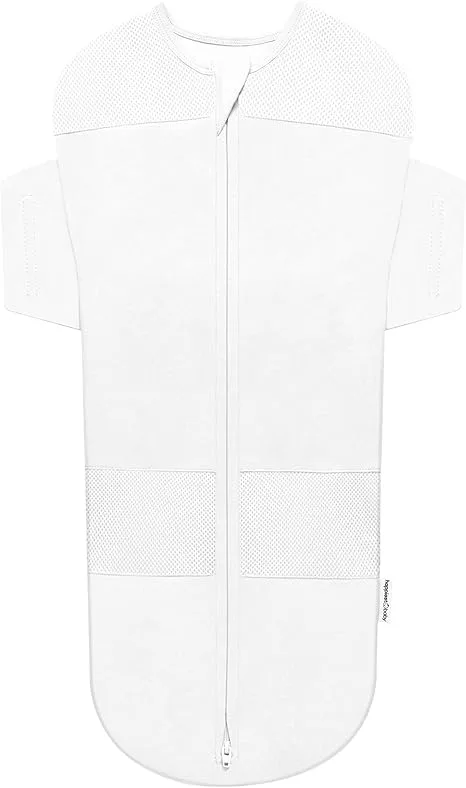
Happiest Baby SNOO Sleep Sack (Organic Cotton)
“Extra swaddle sacks for laundry rotation. Proprietary — must be SNOO-brand.”
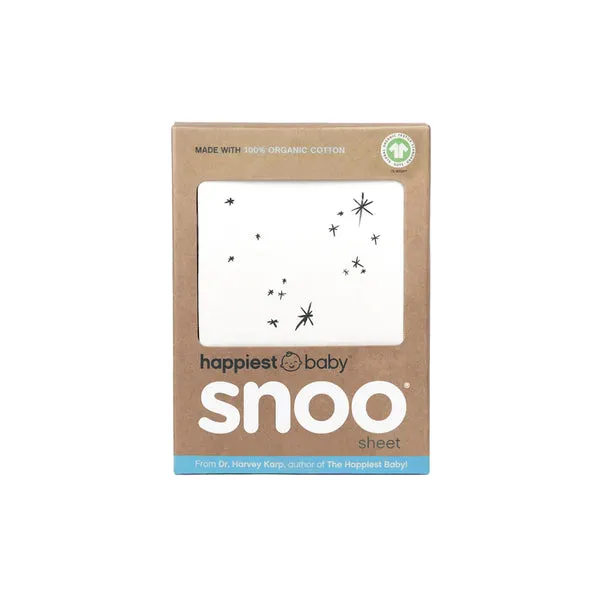
Happiest Baby SNOO Bassinet Fitted Sheet (Organic Cotton)
“Proprietary fitted sheets. You need at least 2 for washing rotation.”
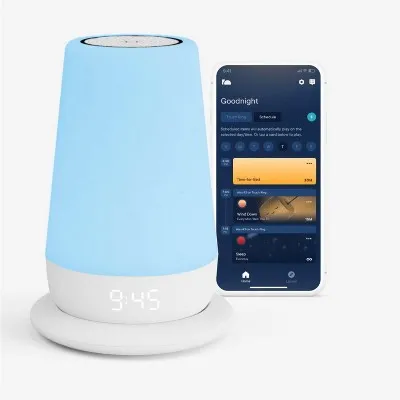
Hatch Rest+ Sound Machine (2nd Gen)
“White noise, night light, time-to-rise trainer. Complements the nursery and outlasts the SNOO.”
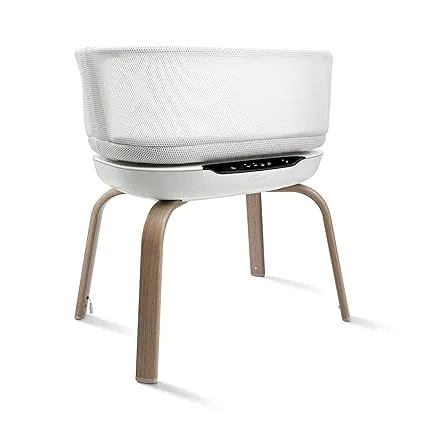
Graco SmartSense Soothing Baby Bassinet
“Budget smart bassinet at 1/3 the price. Similar soothing features, also no evidence. See our review.”
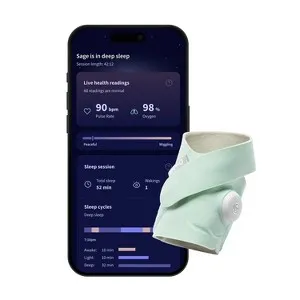
Owlet Dream Sock - FDA-Cleared Smart Baby Monitor
“Wearable oxygen/heart rate monitor. Pairs with SNOO for the full 'nursery tech' stack.”