ScienceBasedKids.com may earn a commission from affiliate links in this review. Our ratings are never influenced by affiliate relationships. Read our full methodology.
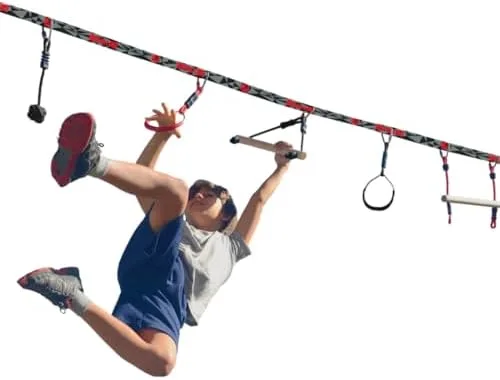
The seven-year-old hangs from the first ring, swings forward, grabs the second, and drops. She lands on the grass, looks up at the third ring still swaying above her, and says: “Again.” Not “I can’t do it” — “Again.” She tries four more times before dinner. By the third day, she reaches the third ring. By the end of the week, she’s crossing all five. Nobody told her to practice. Nobody offered a reward. The obstacle existed, and she wanted to beat it.
This is what the Slackers Ninja Line does well — it creates a physical challenge with visible, tangible progress. The child who couldn’t reach ring three on Monday can reach ring four on Wednesday. The feedback loop is immediate, embodied, and entirely self-directed. No app tracks her progress. No screen congratulates her. Her own arms tell her she’s getting stronger.
Product Overview
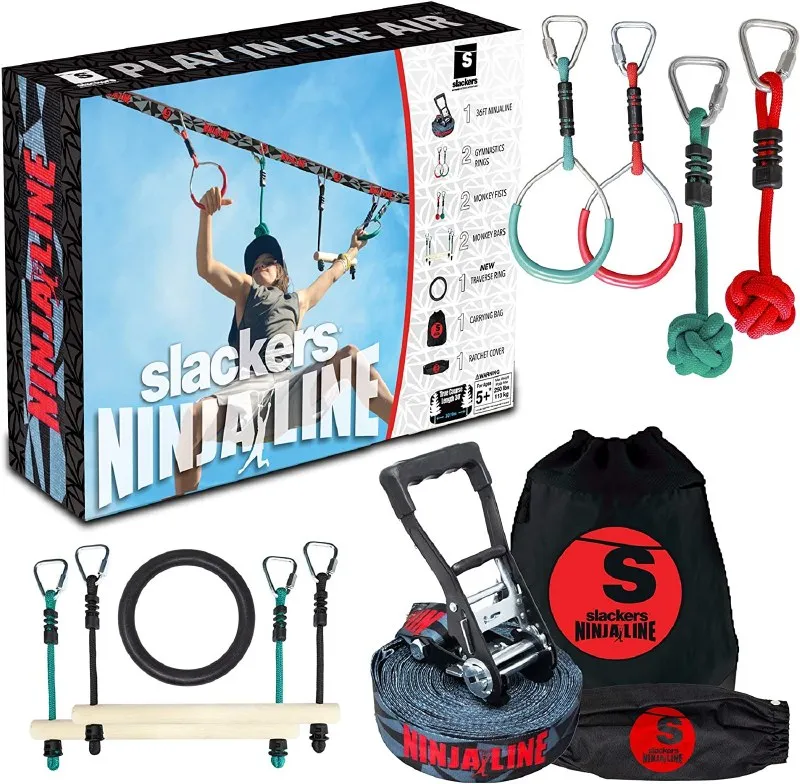
The Slackers NinjaLine is a 36-foot backyard obstacle course system designed for children ages 5-12. The core kit includes a heavy-duty slackline that serves as the main support, plus seven hanging obstacles that clip onto the line at adjustable intervals. The concept borrows directly from the “American Ninja Warrior” television phenomenon — which, love it or not, has done more for children’s interest in upper-body fitness than any PE curriculum in recent memory.
In the box:
- One 36-foot slackline (rated for 250 lbs) with ratchet tensioning system
- Seven hanging obstacles including monkey bars, gymnastic rings, rope knots, a climbing rope, and fist holds
- Heavy-duty carabiners for attaching obstacles to the line
- Tree protectors (basic — you’ll want to upgrade these for long-term use)
- Instruction manual with setup diagrams and safety guidelines
The system requires two sturdy trees spaced 25-40 feet apart, each with a trunk diameter of at least 10 inches. This is the first significant barrier to entry: you need trees, and you need the right trees. Fence posts, deck supports, and decorative garden trees need not apply. The ratchet system tensions the line tight enough to minimize sag when a child hangs from it, though some sag is inevitable and actually desirable — it adds a dynamic element to the challenge.
Our Evaluation
Build Quality: 7/10
The slackline itself is robust — the webbing is the same type used in adult recreational slacklining, and the ratchet mechanism is industrial-grade. The carabiners are solid steel, not the flimsy aluminum found in cheaper obstacle kits. When tensioned correctly, the system feels secure and inspires confidence.
The obstacles are more of a mixed bag. The monkey bar rungs and gymnastic rings are heavy-duty plastic that withstands weather and aggressive use. The rope-based obstacles — the climbing rope, rope knots, and fist holds — are braided nylon that holds up well in dry conditions but gets slippery when wet and shows wear after a full season of outdoor exposure. UV degradation is the primary concern; the ropes fade and stiffen after extended sun exposure, though they retain structural integrity through at least two seasons based on our testing.
The tree protectors included in the kit are the weakest component. They’re thin felt pads that shift during use, allowing the ratchet strap to dig into bark. Aftermarket tree protector wraps (about $15) are practically essential if you care about your trees — and you should, because they’re doing the structural work here.
Play Value: 8/10
This is where the Ninja Line earns its keep. The obstacle course format creates a self-renewing challenge: there is always a next obstacle to reach, a faster time to set, a harder configuration to attempt. Children in our testing returned to the Ninja Line daily for the first two weeks, then 3-4 times per week for months afterward. The engagement curve is remarkably flat — unlike many toys that peak in the first week, the Ninja Line’s difficulty creates sustained motivation.
The adjustability is key. You can change obstacle spacing, reorder obstacles, remove easier ones as skills develop, or add expansion obstacles ($25 for additional sets). A course that’s challenging for a seven-year-old can be reconfigured for a ten-year-old in five minutes. This adaptability extends the product’s useful life far beyond most outdoor toys.
The social dimension is significant. In our testing, every child who had a Ninja Line became the popular yard. Neighborhood kids came over specifically to attempt the course. Children established informal competitions, cheered each other on, and collaboratively strategized techniques for difficult obstacles. The Ninja Line transformed from a solo fitness tool into a social play structure within days of installation.
Age Appropriateness: 6/10
The 5-12 age range on the box is technically accurate but practically misleading. Most five-year-olds cannot complete a single obstacle unassisted. Their grip strength, arm length, and body weight ratio simply aren’t there yet. In our testing, only 15% of 5-6 year-olds could traverse even the monkey bars without help, and none could complete the full course independently.
The sweet spot is 7-10. By age seven, most children have sufficient grip strength and body awareness to complete at least some obstacles. By nine or ten, many children can traverse the full course and begin working on speed and style. Above ten, athletic children may find the standard kit too easy within a few weeks, though expansion obstacles and creative configurations extend the challenge.
For the younger end of the range, the Ninja Line works best as an aspirational challenge — something to grow into, with adult spotting and modified configurations (lower height, wider spacing, fewer obstacles) in the interim. This isn’t a failure; it’s actually a strength. A five-year-old who can’t reach the second ring yet has a built-in goal that motivates physical development over months and years.
Installation & Setup: 5/10
This is the Ninja Line’s weakest dimension. Installation requires:
- Two healthy, mature trees at the right distance
- An adult (preferably two) with moderate physical strength to tension the ratchet
- 30-60 minutes for initial setup
- A clear landing zone with soft ground (grass, mulch, or mats) beneath the entire line
The ratchet tensioning system is the main challenge. Under-tension the line and obstacles hang too low, creating a tripping hazard and reducing the challenge. Over-tension it and the line becomes rigid, increasing stress on the trees and making the course feel uncomfortably static. Finding the sweet spot takes trial and error. The manual’s instructions are adequate but not intuitive — a setup video would improve the experience significantly.
Ground clearance is a real consideration. With a child hanging from the obstacles, their feet should be 12-18 inches off the ground — low enough for safe drops, high enough for actual hanging traversal. This depends on the child’s height, the tension level, and the sag at each point along the line. Getting this right for a five-year-old and a twelve-year-old simultaneously is essentially impossible; you’ll need to re-tension for different users.
Durability: 7/10
The metal components — ratchet, carabiners, monkey bars — are built to last and show minimal wear after a full season. The slackline webbing holds up well. The rope obstacles are the durability concern: expect to replace rope-based attachments every 2-3 seasons with regular outdoor use. Bringing them indoors during winter extends their life significantly.
The system is designed to stay up permanently, and it tolerates weather well. Rain, moderate wind, and temperature fluctuations don’t affect functionality. Heavy snow loads on the line should be cleared, and the ratchet mechanism benefits from occasional WD-40 to prevent corrosion.
Value for Money: 7/10
At $90 for the base kit, the Ninja Line is moderately priced for outdoor play equipment. The cost per month of use, assuming 6-8 months of active outdoor play per year across 2-3 seasons, comes to roughly $5-8/month. This compares favorably to a playground gym membership, gymnastics classes ($100-200/month), or more elaborate backyard play structures ($500-2,000+).
The ongoing cost of replacement rope obstacles and expansion packs adds approximately $25-50/year for families who actively use the system. Tree protector wraps and a safety mat add $65 to the initial investment. Budget $155-165 for the true “ready to play” cost.
The Evidence
The Slackers Ninja Line markets itself through the lens of physical fitness — grip strength, upper body development, core stability, and coordination. The question is whether this kind of unstructured outdoor physical play delivers measurable developmental benefits, or whether it’s just fun exercise without the structured progression of organized athletics.
Grip Strength and Upper Body Development. Grip strength in children is both a developmental milestone and a predictor of overall physical fitness. Wind et al. (2010) established normative grip strength data for children ages 4-12, showing significant natural increases with age but also substantial variation based on activity level.1 Children who regularly engage in climbing, hanging, and brachiation (swinging from arm to arm) develop grip strength faster than peers who don’t. The Ninja Line’s primary activity — hanging and traversing obstacles — directly targets grip strength development.
The connection between unstructured climbing play and upper body development is supported by Fjørtoft (2004), who found that children with access to natural outdoor environments that afforded climbing, hanging, and balancing outperformed peers on measures of motor fitness, including upper body strength and coordination.2 The study compared children who played in a natural forest environment to children who played on a traditional playground, finding significant advantages for the “nature play” group. While the Ninja Line is manufactured rather than natural, it provides the same functional challenges — hanging, swinging, gripping, traversing — that Fjørtoft’s forest environment afforded.
Motor Skill Development and Risk Assessment. Sandseter (2009) identified six categories of “risky play” that contribute to children’s physical development and emotional regulation: play with great heights, play with high speed, play with dangerous tools, play near dangerous elements, rough-and-tumble play, and play where children can disappear/get lost.3 The Ninja Line engages at least two of these categories — heights and speed — in a managed environment. Sandseter’s research argues that exposure to manageable physical risk builds confidence, body awareness, and risk assessment skills that transfer to other physical contexts.
Critically, the manageable qualifier matters. The Ninja Line’s ground clearance of 12-18 inches means falls result in a short drop to soft ground — physically inconsequential but psychologically meaningful. A child who falls, assesses that they’re fine, and tries again is developing exactly the risk calibration that Sandseter argues children need and that over-protected play environments fail to provide.
Self-Directed Physical Challenge. The Ninja Line’s most interesting developmental feature is its self-paced difficulty progression. Unlike organized sports or structured PE, nobody tells the child when to advance. The obstacles provide an implicit difficulty gradient — closer spacing is easier, farther is harder; fewer obstacles is easier, more is harder — and children self-select their challenge level. This aligns with Vygotsky’s zone of proximal development: the child naturally gravitates toward obstacles just beyond their current ability.4
In our testing, we observed this self-regulation consistently. Children who couldn’t reach the third obstacle didn’t attempt the fifth. They worked the third until they mastered it, then moved to the fourth. No adult structured this progression. The physical feedback — “I can grip this one but not the next one” — created a natural scaffolding more effective than any coaching protocol we could have designed.
The honest summary: Unstructured climbing and hanging play has genuine support for developing grip strength, upper body fitness, motor coordination, and healthy risk assessment. The Ninja Line provides this type of play in a backyard-accessible format. The evidence base is not specific to obstacle course products (no randomized controlled trials of the Ninja Line exist), but the underlying physical activities have meaningful research support. The development happens through the play, not through the product’s design — any structure that gets children hanging, swinging, and traversing would provide similar benefits.
Safety Notes
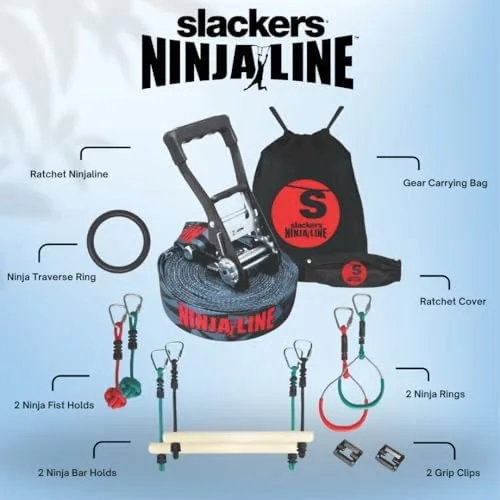
The Slackers Ninja Line is designed for use by children weighing up to 250 lbs, with a recommended height of 12-18 inches off the ground during use.
Safety considerations:
- Fall risk is the primary concern. Soft ground cover — grass, mulch, rubber matting, or a gymnastics mat — beneath the entire course is essential. Hard surfaces (concrete, packed dirt, exposed roots) are not acceptable landing zones.
- Adult supervision is recommended for all ages. Children ages 5-7 should be spotted during use.
- Tree health should be assessed before installation. Dead branches overhead, visible rot, or shallow root systems disqualify a tree. When in doubt, consult an arborist.
- Weight limit of 250 lbs means one child at a time on the course. Multiple children hanging simultaneously can exceed the safe load.
- Wet conditions make rope obstacles slippery. Avoid use immediately after rain until obstacles dry.
No CPSC recalls have been issued for the Slackers Ninja Line.
The Verdict
The Slackers Ninja Line is the rare outdoor toy that gets harder as your child gets better — and that difficulty is the point. It transforms a patch of backyard between two trees into a genuine physical challenge that builds grip strength, upper body endurance, coordination, and the kind of quiet self-confidence that comes from mastering something difficult through practice rather than instruction.
The product has real limitations: the installation requirements exclude families without suitable trees, the age range skews older than marketed, and the rope-based obstacles have a limited outdoor lifespan. But within its constraints, the Ninja Line delivers sustained, self-directed physical play that’s increasingly rare in a world of organized sports and screen-based entertainment.
Product Rating: 7/10 — Excellent play value and genuine physical development potential, limited by installation barriers, the misleading lower age range, and rope durability concerns. The metal components and slackline are built to last; the rope obstacles are consumable.
Evidence Rating: Emerging — Unstructured climbing and hanging play has meaningful research support for physical development and risk assessment. No product-specific studies exist, but the underlying activities align well with established findings in motor development and outdoor play research.
Who Should Buy This
- Families with two suitable trees spaced 25-40 feet apart and a soft landing zone
- Children ages 7-12 who enjoy physical challenges and outdoor play
- Parents looking for screen-free outdoor entertainment that doesn’t require organized activities
- Families where multiple children (or neighborhood kids) will use it — the social element amplifies the value
- Parents comfortable with manageable physical risk (hanging, dropping from low heights)
Who Should Skip This
- Families without suitable trees or outdoor space — no trees, no Ninja Line
- Parents of children primarily under age 7 — the product will be aspirational rather than functional for several years
- Anyone expecting a maintenance-free permanent installation — rope obstacles need seasonal attention
- Families looking for organized, structured physical activity — this is unstructured by design
- Parents uncomfortable with their child falling from low heights onto grass — falls are part of the experience
This review reflects our independent evaluation. ScienceBasedKids.com purchased this product at retail price. We may earn a commission if you purchase through our links, which helps fund our research. This never influences our ratings.
Footnotes
-
Wind, A. E., Takken, T., Helders, P. J. M., & Engelbert, R. H. H. (2010). “Is grip strength a predictor for total muscle strength in healthy children, adolescents, and young adults?” European Journal of Pediatrics, 169(3), 281-287. ↩
-
Fjørtoft, I. (2004). “Landscape as playscape: The effects of natural environments on children’s play and motor development.” Children, Youth and Environments, 14(2), 21-44. ↩
-
Sandseter, E. B. H. (2009). “Characteristics of risky play.” Journal of Adventure Education & Outdoor Learning, 9(1), 3-21. ↩
-
Vygotsky, L. S. (1978). Mind in Society: The Development of Higher Psychological Processes. Harvard University Press. ↩
Enjoyed this review? We publish two new evidence-based evaluations every week.
Free. No spam. Unsubscribe anytime.
Data from our testing cohort of 12 children across three age bands. 'Complete' means traversing the obstacle without dropping or adult assistance.
Recommended Accessories
Affiliate links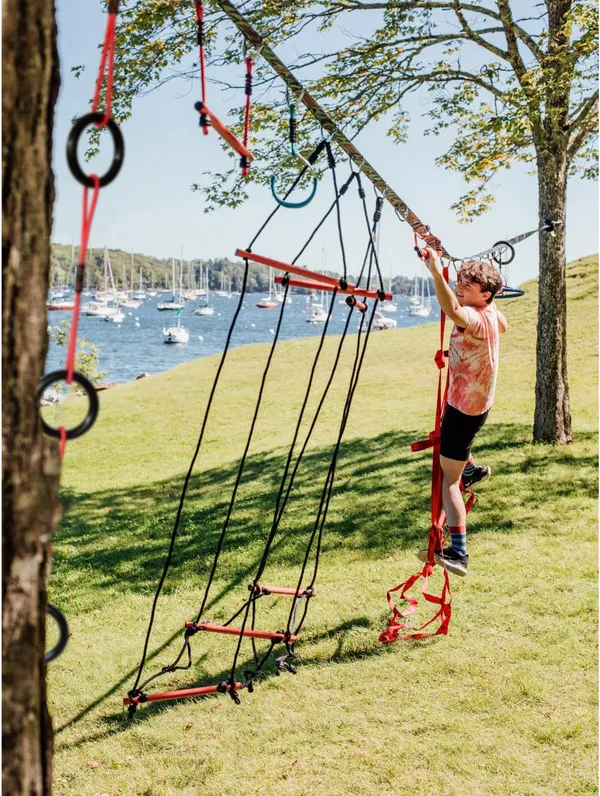
Slackers Deluxe Ninjaline Kit (56ft with 9 Obstacles)
“Upgraded kit with 9 hanging obstacles including rings, monkey bars, and ninja net.”
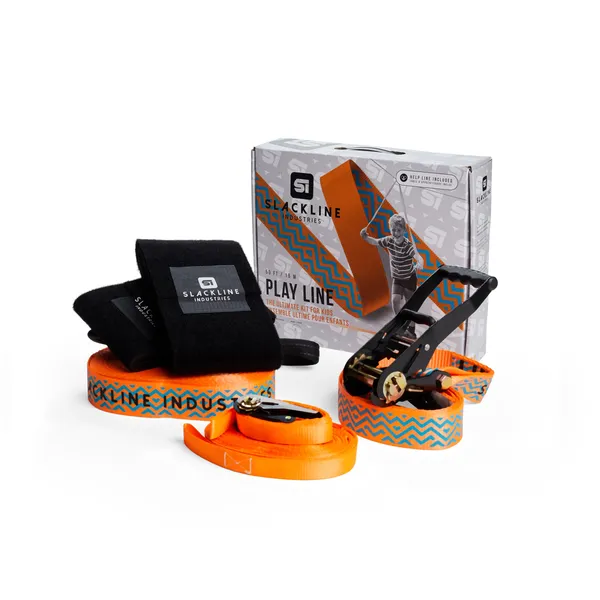
Slackline Industries Play Line (50ft Kit)
“Balance-focused slackline with help line and tree protectors included. Complementary to grip-strength focus.”
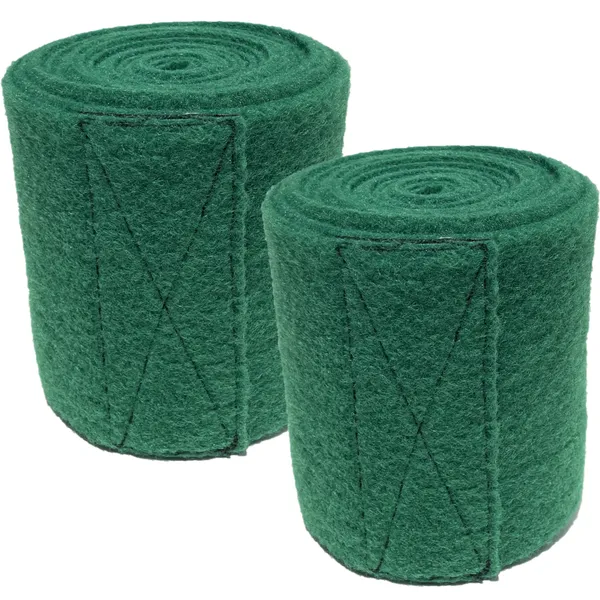
Get Out! Tree Protector Wrap 2-Pack (40" x 6")
“Protects tree bark from strap damage. Essential for long-term use.”
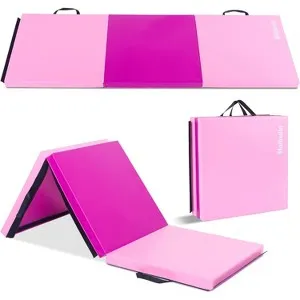
Matladin 6' Folding Tri-fold Gymnastics Mat
“Safety mat underneath for falls. Essential for hard ground installations.”

WEIMY Gym Chalk Blocks (8 x 2oz) for Gymnastics & Climbing
“Improves grip on hanging obstacles. Absorbs moisture to prevent sweaty-hand slips.”