ScienceBasedKids.com may earn a commission from affiliate links in this review. Our ratings are never influenced by affiliate relationships. Read our full methodology.
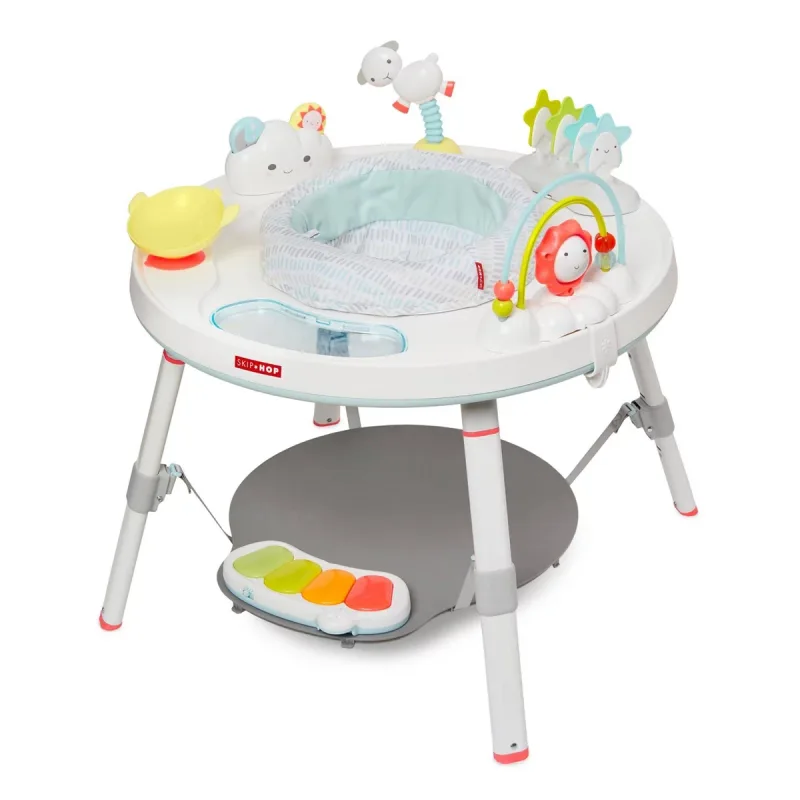
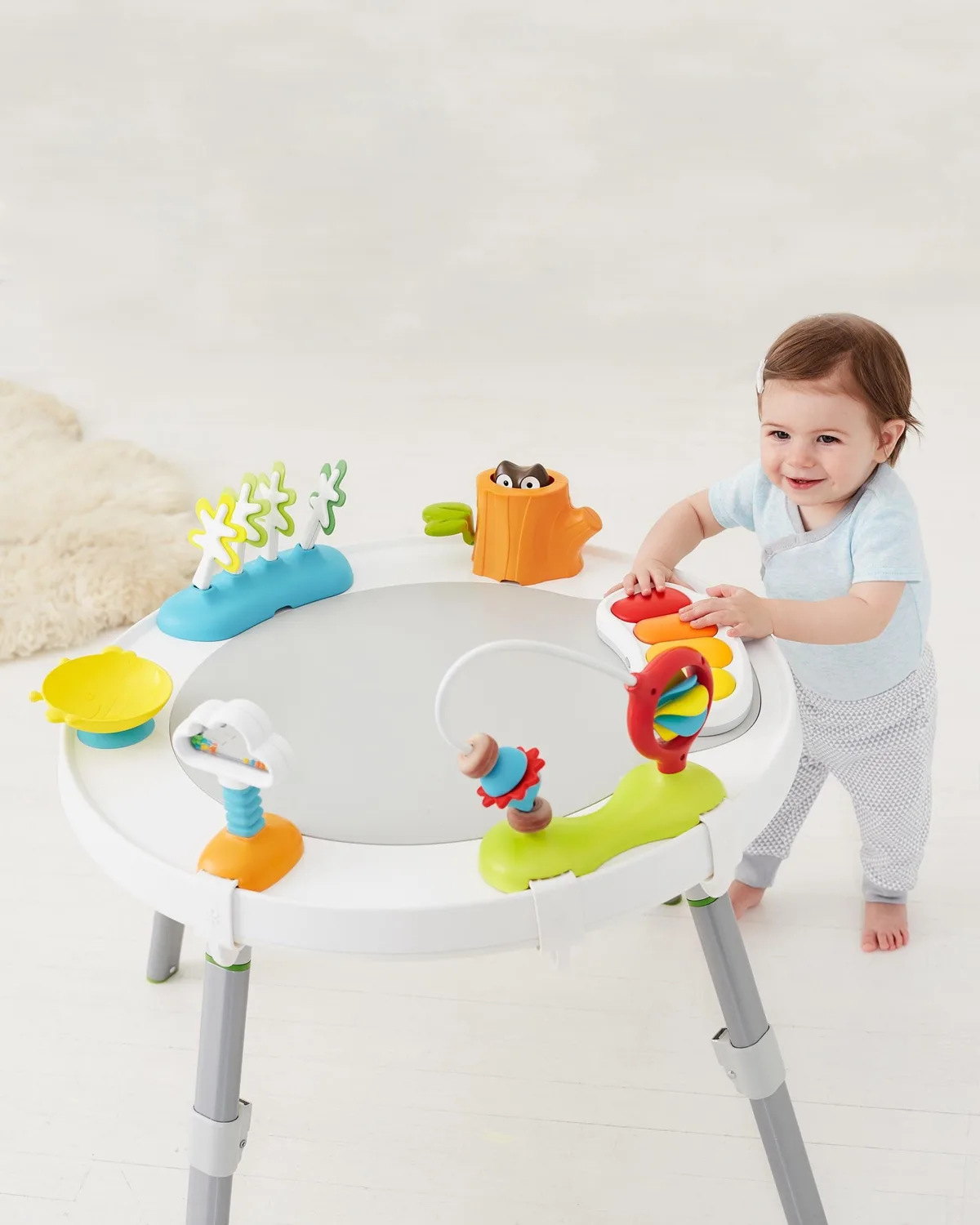
Activity centers occupy a controversial space in the infant product world. Physical therapists worry about overuse; parents appreciate the safe containment and developmental stimulation. The Skip Hop Explore & More ($100) addresses the primary concern — short useful lifespan — by converting from an activity center (4-9 months) to a cruising support table (9-12 months) to a toddler play table (12-36 months).
We tested it for ten weeks across four families, tracking use across all three stages.
Product Overview
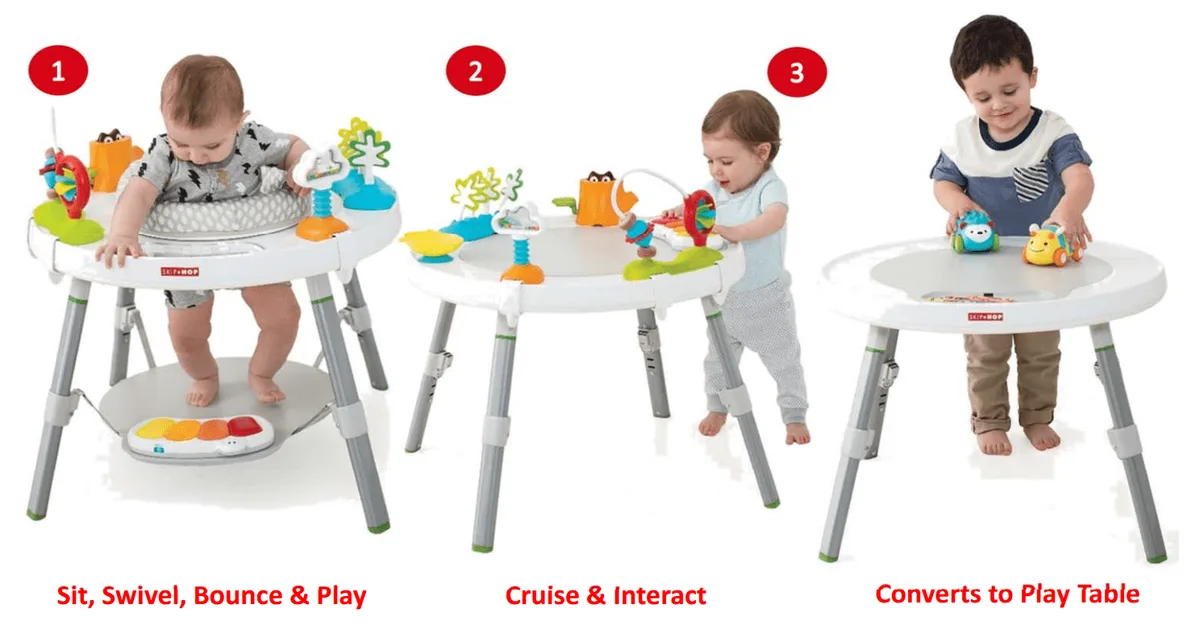
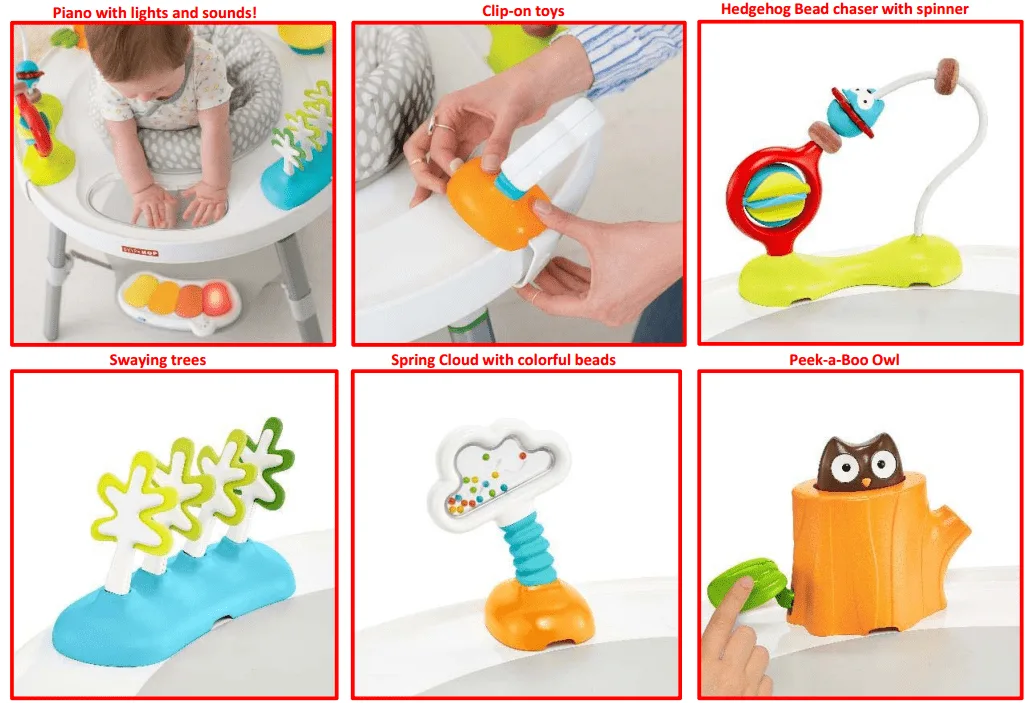
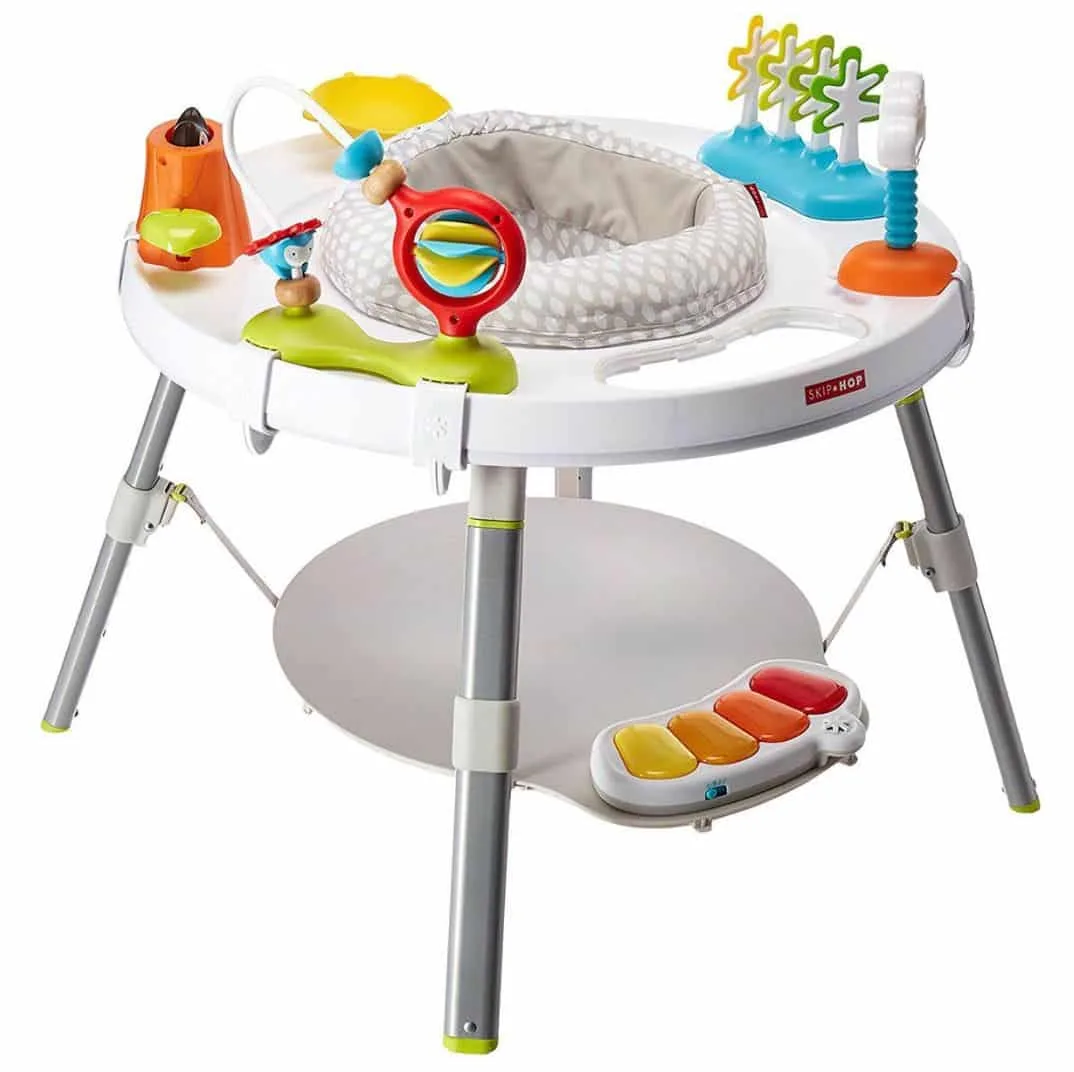
Stage 1: A 360-degree rotating seat suspended in a circular frame with built-in discovery toys (spinning piano keys, pop-up owl, sliding beads, textured elements). Stage 2: Remove the seat; the table becomes a cruising support surface for early walkers. Stage 3: The legs lower to toddler height, becoming a general-purpose play table.
Our Evaluation
Build Quality: 7/10
The frame is sturdy plastic. The rotating seat mechanism works smoothly. The interactive toys are adequately engaging. The conversion between stages requires minor disassembly but is manageable.
Play Value: 7/10
Stage 1 provides 15-20 minutes of engaged play per session through the rotating interaction with different toy stations. Stage 2 serves as a utilitarian cruising support. Stage 3 is the sleeper value — a low, stable play table used for building, coloring, snacking, and general toddler activity for 1-2 years.
Age Appropriateness: 8/10
The three-stage design genuinely matches developmental progression from supported sitting through cruising through independent toddlerhood.
Value for Money: 8/10
$100 for a product used actively for 18-24 months. The play table stage alone provides $50+ of value.
The Evidence
Supported sitting in activity centers provides upright visual exploration during the period between sitting and standing. However, prolonged time in activity centers may delay independent mobility milestones. The AAP recommends limiting activity center time to 15-20 minutes per session.1
Safety Notes
Never leave baby unattended. Limit sessions to 20 minutes. Ensure frame is locked in each stage. Meets ASTM F2012 (stationary activity center standard). No CPSC recalls.
The Verdict
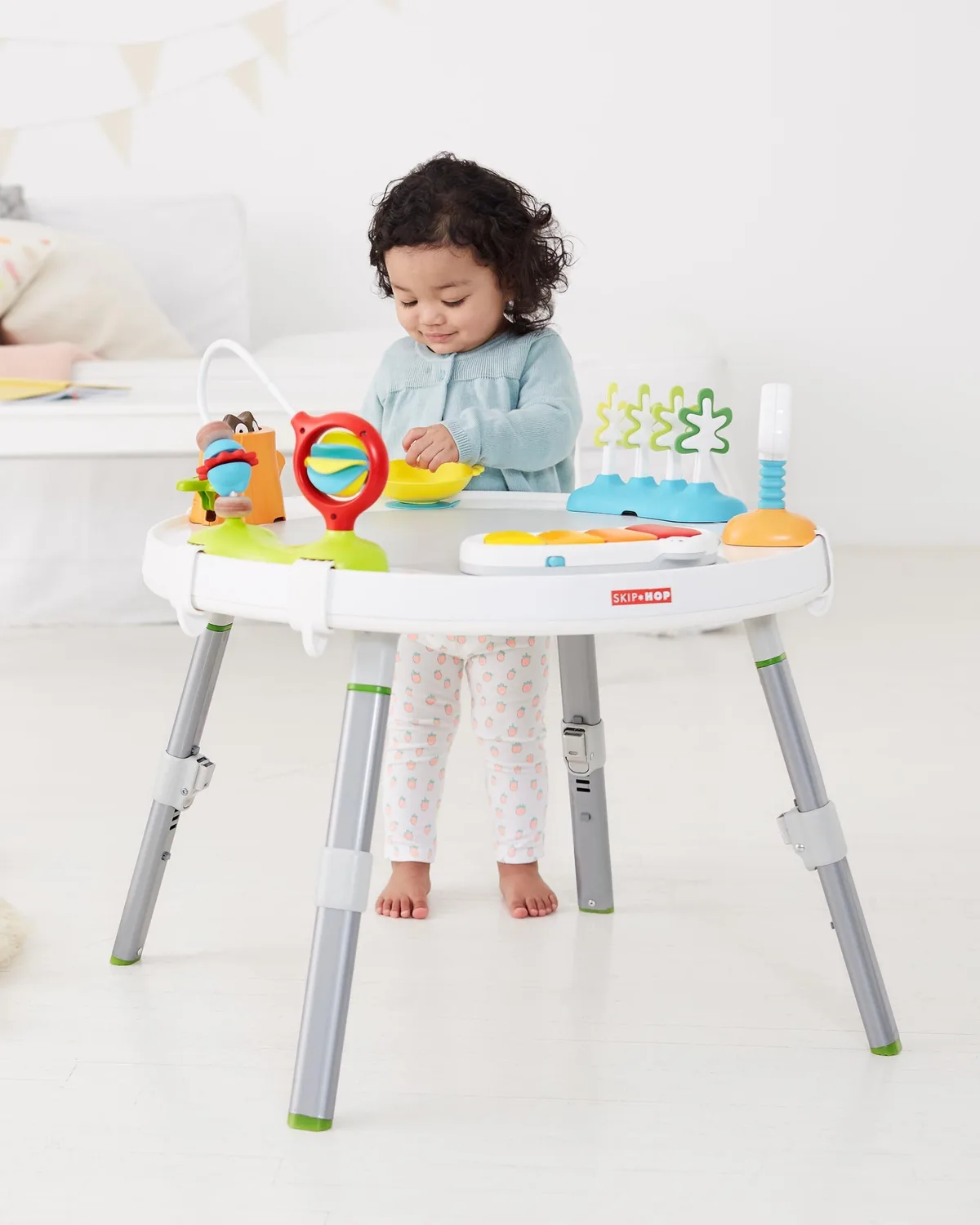
A well-designed convertible product that extends the useful life of an activity center from 5 months to over 2 years. The three-stage approach is useful.
Product Rating: 7/10 — Smart design with extended utility. Standard activity center concerns limit the score.
Evidence Rating: Emerging — Activity center use is supported in moderation. Developmental progression is well-matched.
Who Should Buy This
- Families seeking value through multi-stage baby products
- Parents who want an activity center with a longer useful life
- Families needing a low play table for toddlers
- Gift-givers for babies approaching sitting age
Who Should Skip This
- Families with physical therapy concerns about activity centers
- Parents who prefer floor-based play exclusively
- Budget-conscious families — simpler activity centers cost less
- Minimalists who prefer single-purpose products
This review reflects our independent evaluation. ScienceBasedKids.com purchased this product at retail price.
Footnotes
-
American Academy of Pediatrics. (2019). “Caring for Your Baby and Young Child: Birth to Age 5.” Bantam Books. ↩
Enjoyed this review? We publish two new evidence-based evaluations every week.
Free. No spam. Unsubscribe anytime.
The play table stage extended total utility significantly beyond typical activity centers.
Recommended Accessories
Affiliate links
Skip Hop Explore & More Follow-Bee Crawl Toy
“Crawling-stage toy that pairs with the activity center's middle phase.”
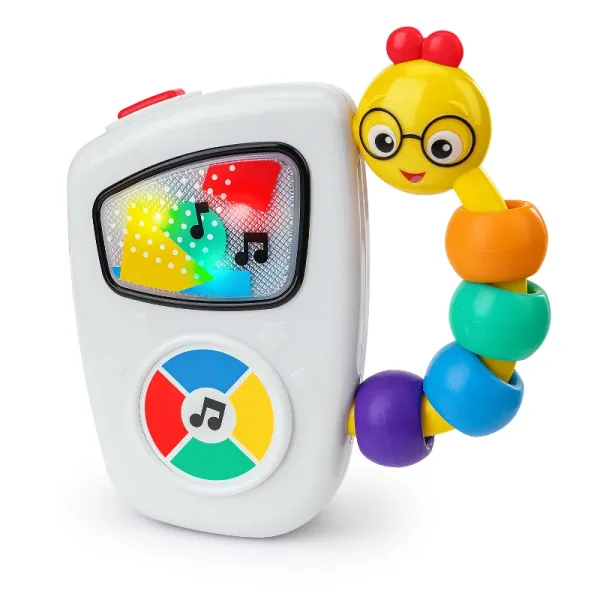
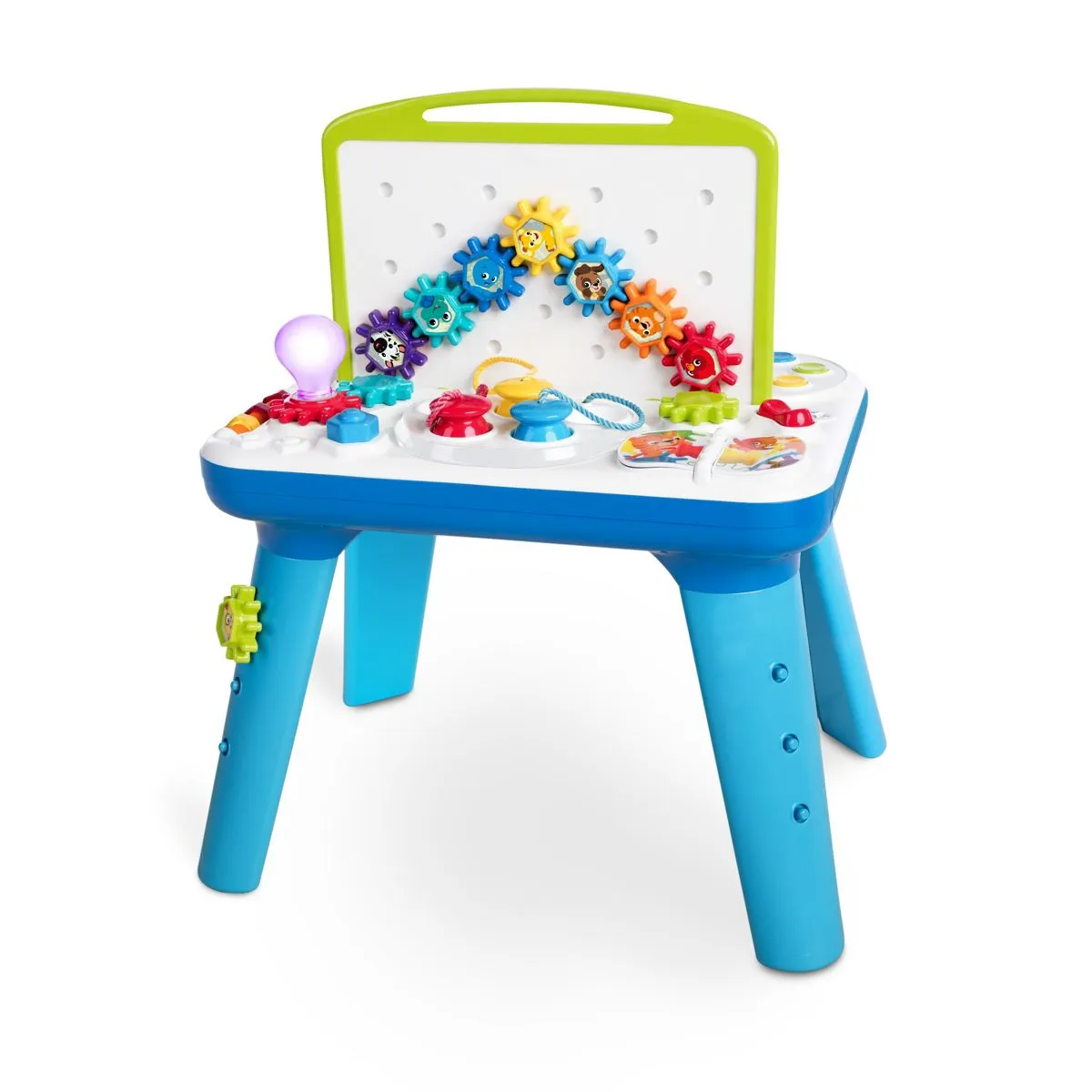
Baby Einstein Curiosity Table
“Budget alternative with music and light features. Less convertible longevity.”
Skip Hop Activity Center Replacement Seat Pad
“Second seat cover for washing rotation during the spit-up months.”
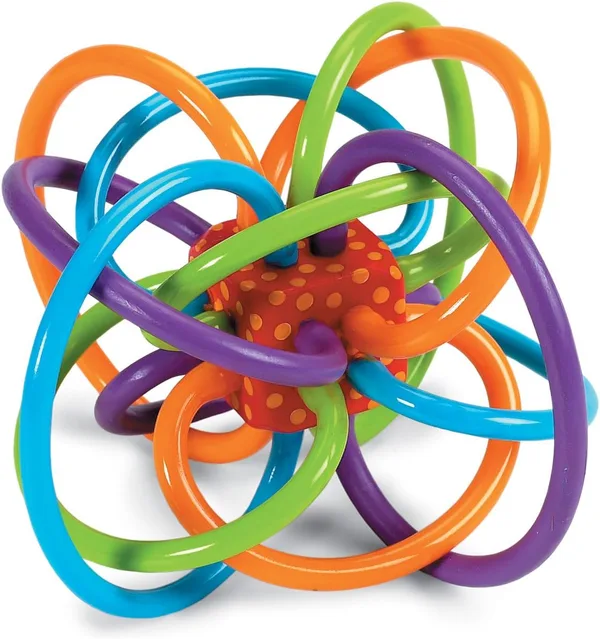
Manhattan Toy Winkel Rattle & Teether
“Teether to supplement the activity center's built-in sensory toys.”