ScienceBasedKids.com may earn a commission from affiliate links in this review. Our ratings are never influenced by affiliate relationships. Read our full methodology.
There is a seven-year-old in our testing group who hates math worksheets with a passion that borders on philosophical. She has articulated, clearly and at length, why being asked to add 7 + 5 on a piece of paper is “pointless” and “boring” and “not even real.” But put an iPad in front of her with a virtual customer ordering a pepperoni-and-mushroom pizza for $3.50, hand her felt toppings and a cardboard pizza, and she’ll spend forty-five minutes making change, calculating profits, and dividing pizzas into halves and quarters without once registering that she’s doing math. This is Osmo Pizza Co.’s value proposition: children will do math they refuse to do if the math feels like something else.
The question — and it’s a genuine one — is whether “math that doesn’t feel like math” actually teaches math, or whether it just teaches children to run a pretend pizza restaurant.
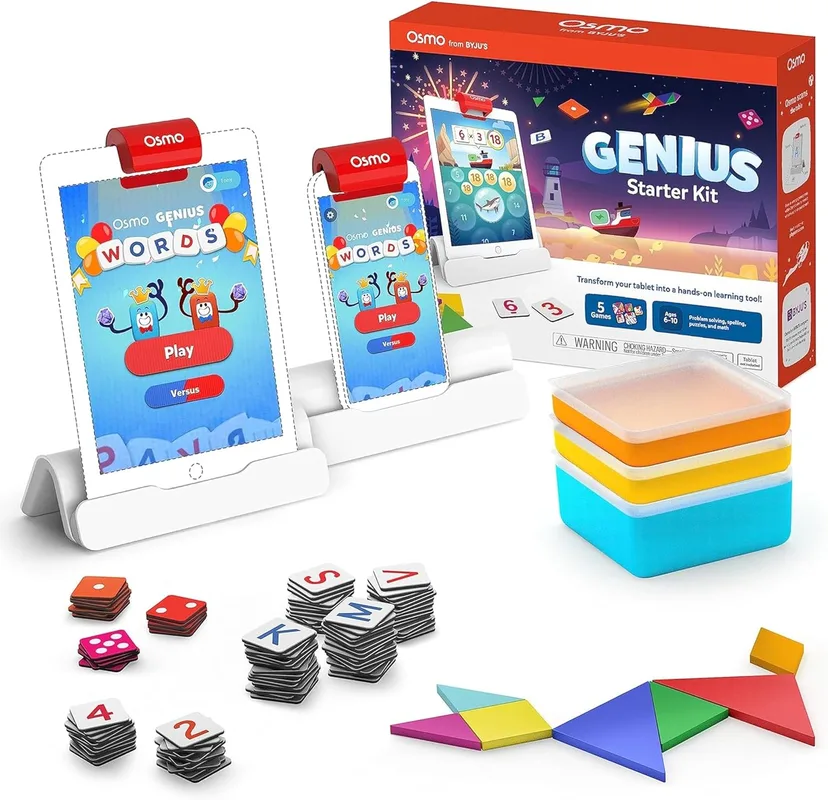
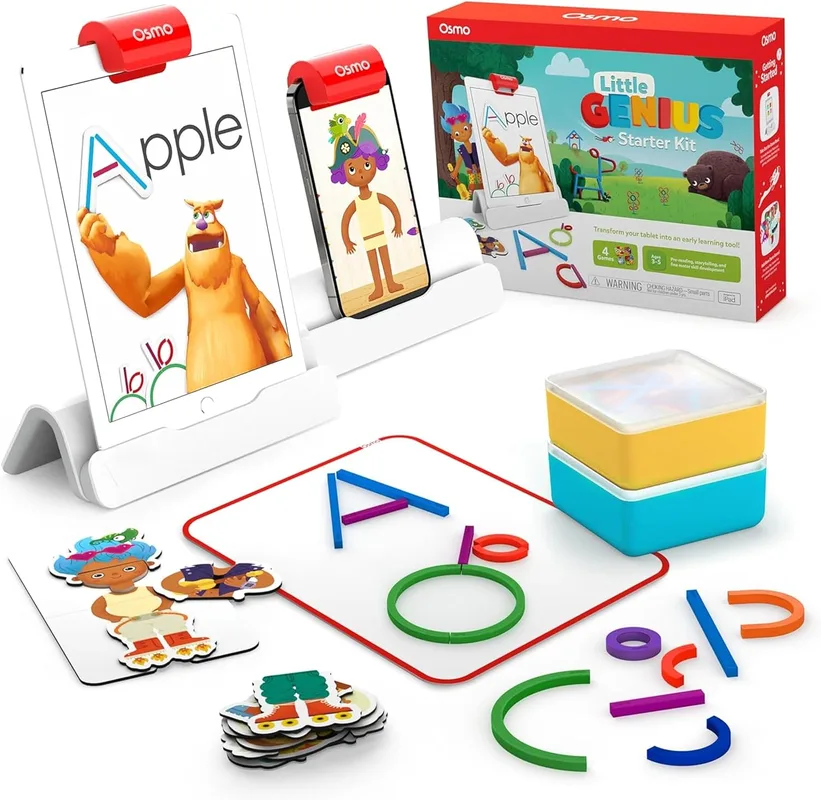
We’ve reviewed the Osmo Genius Starter Kit (6/10) and the Osmo Little Genius previously. Pizza Co. is one of the most popular individual Osmo games, and the math-specific claims deserve standalone evaluation.
Product Overview
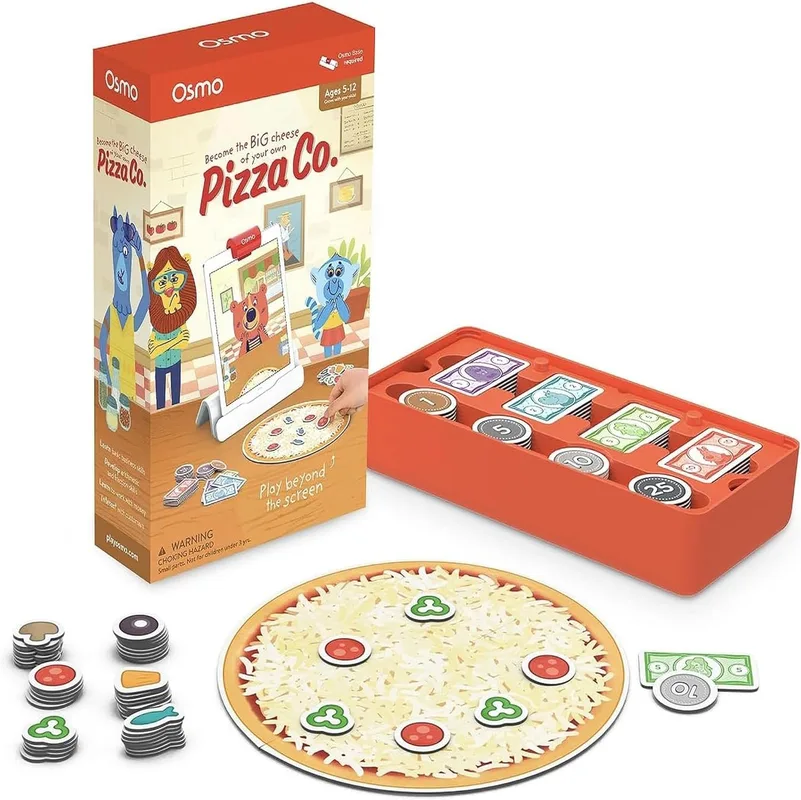
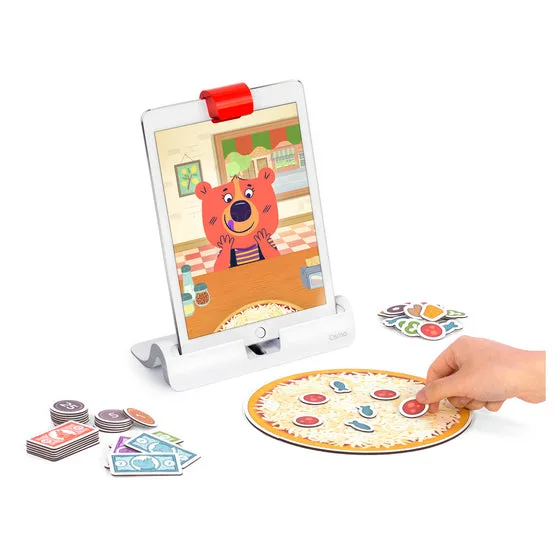
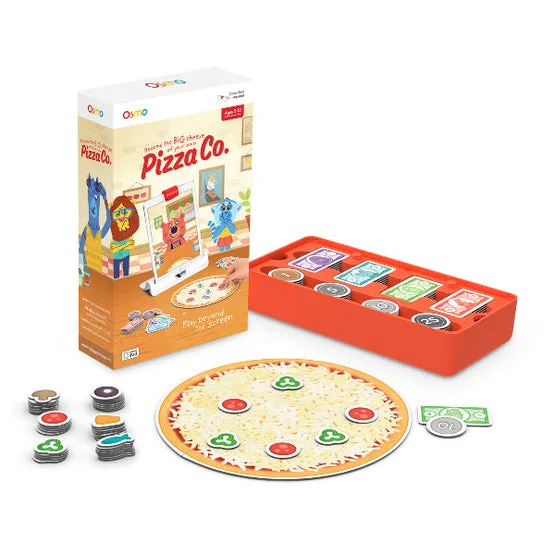
Osmo Pizza Co. is an iPad-based math game that uses Osmo’s reflective AI camera technology to blend physical and digital play. The package includes:
- A felt pizza base and felt toppings (pepperoni, mushrooms, olives, peppers, and more)
- A cardboard pizza box for “delivering” completed orders
- An Osmo reflective camera attachment (if not already owned from another Osmo product)
- The Pizza Co. app (free download, requires Osmo base or reflective mirror)
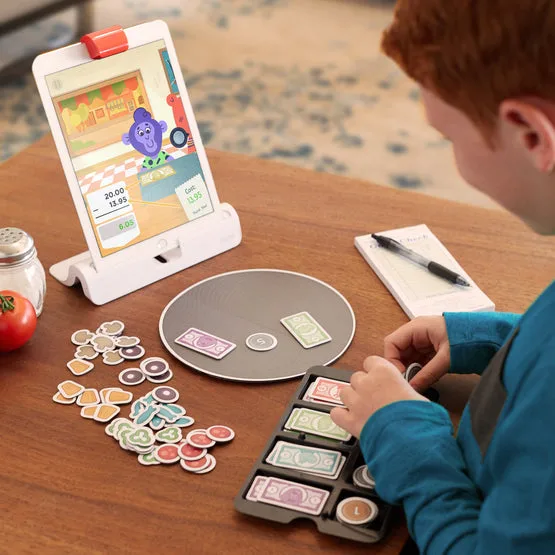
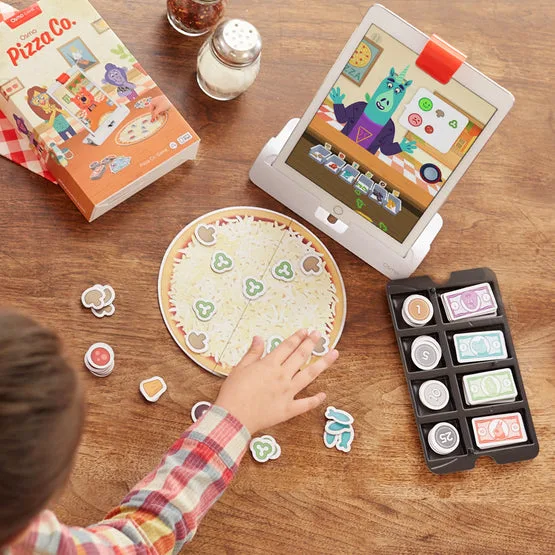
The gameplay: virtual customers appear on the iPad screen and order pizzas with specific toppings and quantities. The child places real felt toppings on the real felt pizza while the Osmo camera reads the arrangement and confirms accuracy on-screen. Once the pizza matches the order, the child “serves” it and collects payment. As the game progresses, customers pay different amounts, the child must make change, and profits can be reinvested to upgrade the restaurant (new toppings, decorations, upgrades).
The math emerges naturally from the business simulation. Early levels: counting toppings (put 3 pepperonis on). Middle levels: fractions (the customer wants half pepperoni, half mushroom), money (the pizza costs $4.75, the customer pays $5.00, what’s the change?). Later levels: profit management (ingredients cost money; pricing too high loses customers; pricing too low loses profit).
Our Evaluation
Build Quality: 6/10
The physical components are adequate but uninspiring. The felt pizza base and toppings are cut from standard craft felt — they look and feel like a school art project, not a premium toy. After three weeks of use, our felt toppings showed pilling, color bleeding (the red pepperoni tinted the pizza base pink), and fraying at the edges. The cardboard pizza box was crushed within a week.
The Osmo reflective camera attachment is well-made — it’s the same piece used across all Osmo products. If you already own an Osmo kit, you already have this. If you don’t, it adds approximately $30-40 to the total investment (Osmo base or reflective mirror required).
The app itself is polished. The character animations are charming, the customer interactions have personality, and the visual design is bright and engaging without being overwhelming. Load times are fast and we experienced no crashes during our testing.
Play Value: 7/10
The business simulation is genuinely engaging. Children in our testing consistently chose to play Pizza Co. over other available activities — including non-educational screen time. The combination of physical manipulation (placing toppings) and digital feedback (customer reactions, profit tracking) creates a loop that feels more like a game than a learning tool.
The engagement drivers are social and entrepreneurial, not mathematical. Children cared about their customer satisfaction ratings, their restaurant’s appearance, and their profit totals. The math was the cost of doing business — literally. “I need to figure out the change so I can get the next customer” is a very different relationship with arithmetic than “solve problem 12 on the worksheet.”
The progression is well-paced for the first 3-4 hours of gameplay. New toppings unlock, customer orders become more complex, and the profit-management layer adds strategic thinking. After 4-5 hours, however, the gameplay loop becomes repetitive. Orders vary in topping combinations but not in mathematical complexity. The money mechanic caps at making change for amounts under $10. Fractions appear but aren’t deeply explored — the game asks children to divide a pizza in half but doesn’t progress to thirds, sixths, or equivalent fractions.
We observed a clear age-dependent engagement curve. Children ages 5-7 sustained interest for 3-4 weeks of regular play. Children ages 8-10 enjoyed it for 1-2 weeks before the math ceiling became apparent. Children over 10 found it too easy within the first session.
Age Appropriateness: 6/10
The 5-12 age range on the box is optimistic. Our assessment:
Ages 5-7: the core audience. Counting toppings, basic addition, and introductory fractions are developmentally appropriate. The business simulation adds enough complexity to keep the play interesting without overwhelming the math.
Ages 8-9: still engaging as a game, but the math rarely challenges. Most 8-year-olds can make change and divide a pizza in half without effort. The learning value at this age is in the business-thinking layer (pricing strategy, profit management), not the arithmetic.
Ages 10-12: too easy. The math is below grade level, and the game mechanics aren’t complex enough to compensate. The “12” in the age range appears to be marketing aspiration rather than developmental reality.
The honest age range is 5-8.
Durability: 5/10
The felt components are the weakest physical materials in any Osmo product we’ve tested. Felt pills, absorbs moisture, attracts pet hair, and degrades with repeated handling. Our set was noticeably worn after four weeks. The cardboard box is fragile. The felt toppings are small and easily lost — we were missing two pieces by week two.
The app and digital components are durable in the software sense — Osmo maintains their apps well, with regular updates and bug fixes. The Osmo camera attachment is solid hardware.
The physical-digital mismatch is the core durability concern: the technology is designed to last years, but the felt accessories are designed to last months.
Value for Money: 6/10
At $40 (assuming you already own the Osmo base/reflective mirror), Pizza Co. delivers 10-20 hours of engaged math play. That’s $2-4 per hour of engagement — reasonable for a specialized educational game.
The hidden cost: an iPad. Osmo requires an iPad (iPad 2 or later, or specific Amazon Fire tablets). If you don’t already own a compatible tablet, the total cost of entry is $40 (Pizza Co.) + $30-40 (Osmo base) + $250+ (iPad) = $320+. For families who already have an iPad and Osmo base, $40 is a fair price for the game. For families starting from scratch, the math doesn’t work as well as the math the game teaches.
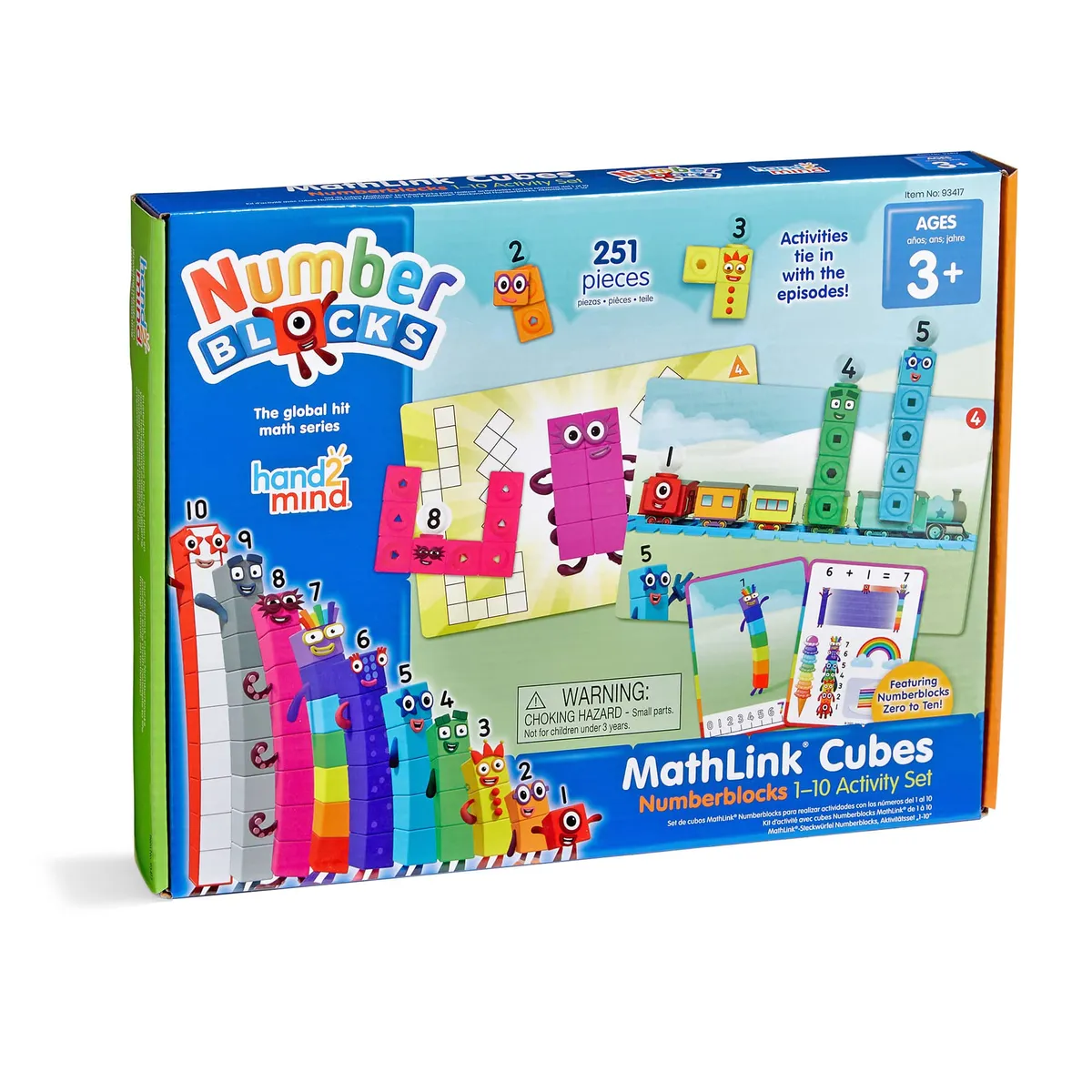
For comparison: Numberblocks MathLink Cubes ($25) provide comparable math concept exposure with no screen dependency. Math Dice Jr. ($10) offers mental math practice for a fraction of the cost. Neither is as engaging as Pizza Co., but both are far more cost-effective.
The Evidence
“Gamified math” is a crowded research space, and the findings are more nuanced than either the enthusiasts or skeptics suggest.
Does Gamified Math Improve Math Skills? The answer is: sometimes, modestly, and with caveats. Wouters et al. (2013) conducted a meta-analysis of serious games for learning and found that game-based learning produced higher learning outcomes than conventional instruction, but the effect sizes were small to moderate.1 Critically, the benefit was strongest when games were supplementary to instruction, not a replacement for it. A child who plays Osmo Pizza Co. and receives math instruction will likely benefit more than a child who plays the game alone — but the game alone is not a math curriculum.
The Contextualized Math Advantage. Carraher et al. (1985) conducted a landmark study on Brazilian street vendors — children who could perform complex arithmetic when selling candy but failed the same arithmetic on a written test.2 The finding: mathematical competence is context-dependent. Children who learn math in a meaningful context (making change, calculating profits) develop strong contextual math skills but don’t automatically transfer those skills to abstract mathematical reasoning.
This finding is directly relevant to Osmo Pizza Co. The game teaches math in the context of running a pizza restaurant. Children in our testing could calculate change quickly and accurately within the game but did not consistently demonstrate the same speed or accuracy when we presented identical problems on paper. The contextual math was learned; the transfer to abstract math was not automatic.
Physical Manipulation and Mathematical Understanding. Moyer (2001) reviewed the literature on physical manipulatives in mathematics education and found that manipulatives (physical objects used to represent mathematical concepts) improved mathematical understanding when their use was connected to explicit mathematical instruction.3 Osmo Pizza Co.’s felt toppings function as manipulatives — placing 3 pepperonis on a pizza is equivalent to using counting blocks. The physical-digital bridge adds a feedback layer (the app confirms or corrects) that pure physical manipulatives lack.
The limitation: the felt toppings are manipulatives for counting and basic fractions, not for the more complex mathematical concepts the game claims to teach. Making change is primarily modeled on-screen (digital coin representations), not physically. The physical-digital connection is strongest for the simplest math and weakest for the most interesting math.
The honest summary: Gamified math has modest evidence of effectiveness as a supplement to math instruction. Osmo Pizza Co.’s contextual approach (business simulation) engages children effectively and develops contextual math skills. Transfer from contextual game math to abstract mathematical reasoning is not automatic and depends on external instruction. The physical-digital mechanic is supported by manipulatives research but is most effective for the simplest mathematical concepts.
Safety Notes
Osmo Pizza Co. meets the safety profile of all Osmo products. The felt pieces contain no harmful materials per manufacturer certifications. The pieces are small enough to present a choking hazard for children under 3 — keep away from younger siblings.
Screen time considerations: a typical Pizza Co. session runs 20-40 minutes. The American Academy of Pediatrics recommends limiting screen time for children under 6 and ensuring screen time is “high-quality” for older children. Osmo’s physical-digital design means children aren’t purely staring at a screen — the physical manipulation component requires looking away from the iPad to interact with the felt pieces. Whether this qualifies as “better” screen time than purely digital games is debatable, but the physical engagement component is genuinely present.
The game requires no internet connection during play (after initial download) and collects no personal data from children per Osmo’s privacy policy.
The Verdict
Osmo Pizza Co. does the hardest thing in math education: it makes children want to do math. The business simulation is engaging, the physical-digital mechanic is clever, and the progression from counting to fractions to money management is well-designed for the 5-8 core age range. Children who “hate math” will play this game without complaint, and the math they’re doing — however contextualized — is real arithmetic.
The limitations are equally real. The math depth plateaus too quickly for children over 8. The felt materials deteriorate faster than any other component in the Osmo ecosystem. The iPad dependency adds cost and complexity. And the central question of gamified math — does playing a pizza game make you better at math, or better at playing a pizza game? — remains answered with “mostly the second thing, but some of the first, and the first thing increases significantly if a parent connects the game math to real math.”
Product Rating: 6/10 — Engaging math game with a clever physical-digital mechanic that genuinely motivates mathematical practice for children ages 5-8. Docked for shallow math depth, poor material durability, narrow effective age range, and the recurring question of whether contextual game-math transfers to mathematical understanding.
Evidence Rating: Emerging — Gamified math research shows modest supplementary benefit. Contextual learning theory supports the approach but flags the transfer problem. No Osmo Pizza Co.-specific studies exist. The physical-digital mechanic has theoretical support from manipulatives research.
Who Should Buy This
- Parents of children ages 5-8 who struggle with math motivation — this is the game’s strongest use case
- Families who already own an iPad and Osmo base — $40 is a reasonable addition to the ecosystem
- Homeschooling parents looking for a math supplement that doesn’t feel like a worksheet
- Families who own Osmo Genius Starter Kit and want to expand into math-specific content
Who Should Skip This
- Families without an iPad — the total cost of entry is prohibitive for a single math game
- Parents looking for a comprehensive math curriculum tool — this supplements, it doesn’t replace
- Children over 9 — the math is below their level and the game mechanics won’t compensate
- Parents concerned about screen time who prefer fully offline math tools — try Numberblocks MathLink Cubes instead
- Anyone expecting the physical materials to last more than a few months of regular use
This review reflects our independent evaluation. ScienceBasedKids.com purchased this product at retail price. We may earn a commission if you purchase through our links, which helps fund our research. This never influences our ratings.
Footnotes
-
Wouters, P., van Nimwegen, C., van Oostendorp, H., & van der Spek, E. D. (2013). “A meta-analysis of the cognitive and motivational effects of serious games.” Journal of Educational Psychology, 105(2), 249-265. ↩
-
Carraher, T. N., Carraher, D. W., & Schliemann, A. D. (1985). “Mathematics in the streets and in schools.” British Journal of Developmental Psychology, 3(1), 21-29. ↩
-
Moyer, P. S. (2001). “Are we having fun yet? How teachers use manipulatives to teach mathematics.” Educational Studies in Mathematics, 47(2), 175-197. ↩
Enjoyed this review? We publish two new evidence-based evaluations every week.
Free. No spam. Unsubscribe anytime.
| Brand | Price | Quality | Rating |
|---|---|---|---|
| | |||
| | |||
| | |||
| | |||
| |
Concept exposure rated as 'introduced' (encountered in gameplay), 'practiced' (repeated with variation), or 'not covered.' Based on structured gameplay sessions with 6 children, ages 5-10.
Recommended Accessories
Affiliate links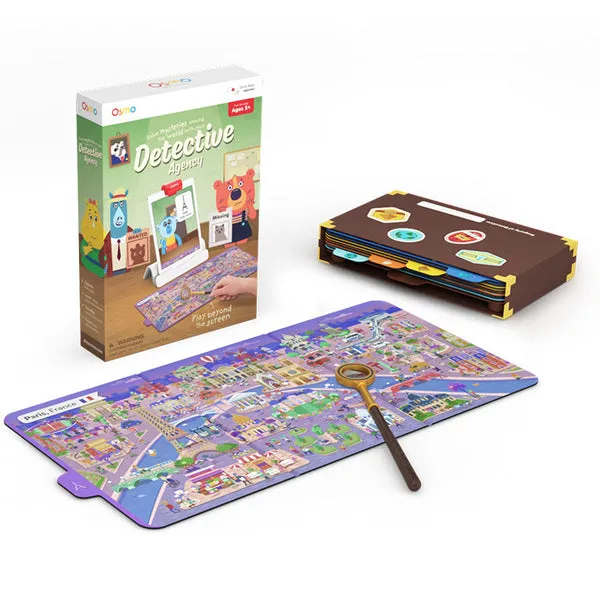
Osmo Detective Agency Game
“Geography + problem-solving. Extends the Osmo ecosystem with a different content area.”
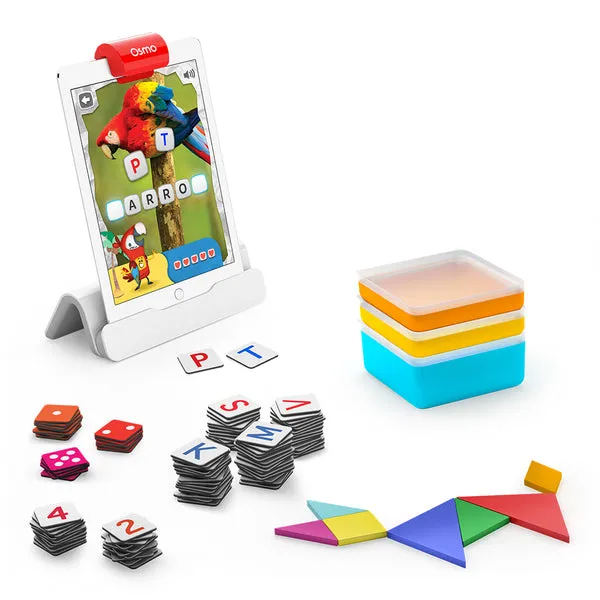
Osmo Genius Starter Kit
“The full Osmo platform with multiple games. See our full review.”
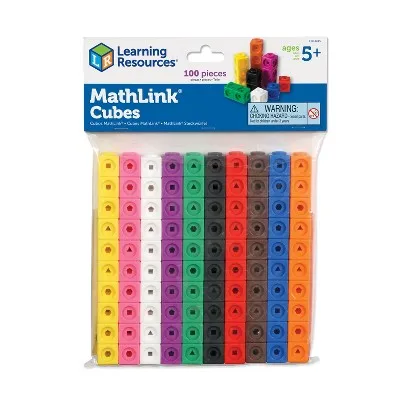
Numberblocks MathLink Cubes
“Screen-free math manipulatives. The offline complement to Osmo's digital math.”
ProCase Kids Case for iPad 10th Generation (Shockproof EVA Foam)
“Protects the iPad during pizza-making enthusiasm. EVA foam, handles, convertible stand.”

ThinkFun Math Dice Junior Game (Ages 6+)
“No-tech math game for $10. Less engaging but more portable and no screen required.”