ScienceBasedKids.com may earn a commission from affiliate links in this review. Our ratings are never influenced by affiliate relationships. Read our full methodology.
We wrote about the Osmo Genius Starter Kit on Day 8 of our review series, and the central finding was this: the hardware is genuinely clever, the engagement is real, and the “6x faster learning” claim is built on a single company-funded study with significant methodological concerns. Now Osmo has aimed the same concept at a younger audience — 3-5 year olds instead of 5-12 — and the question is whether the preschool version earns a different verdict.
It doesn’t. The Little Genius is a well-made, engaging preschool learning toy that preschoolers enjoy using. The evidence concerns are identical. If you read our Osmo Genius Starter Kit review and thought “I wish this existed for my 3-year-old,” the Little Genius is the product. If you read that review and thought “the evidence doesn’t support the claims,” nothing has changed.
Product Overview
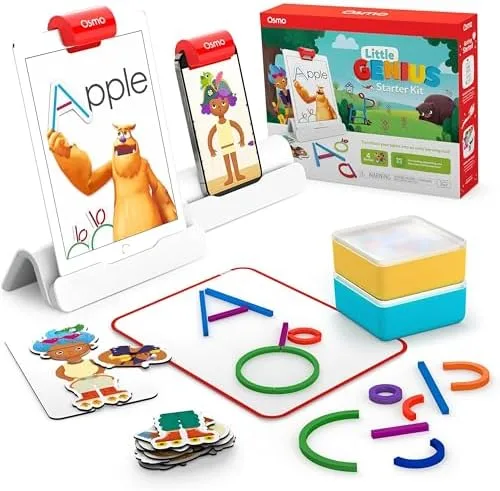
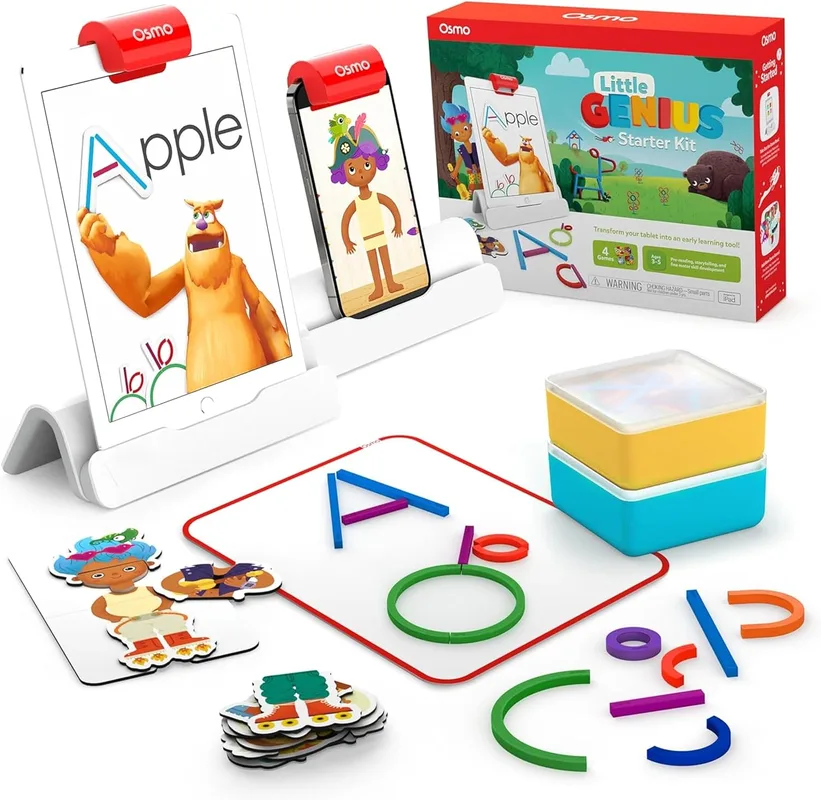
The Osmo Little Genius Starter Kit ($80) is a tangible-digital hybrid learning system consisting of:
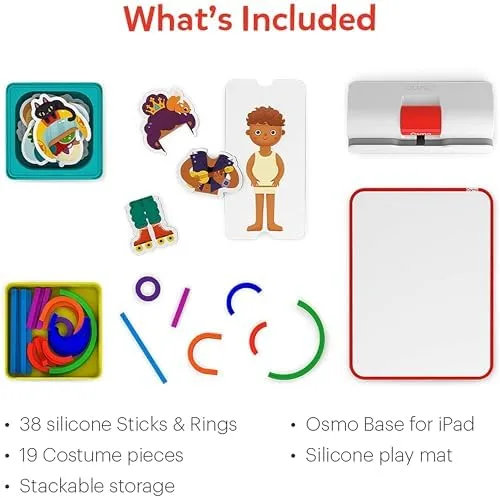
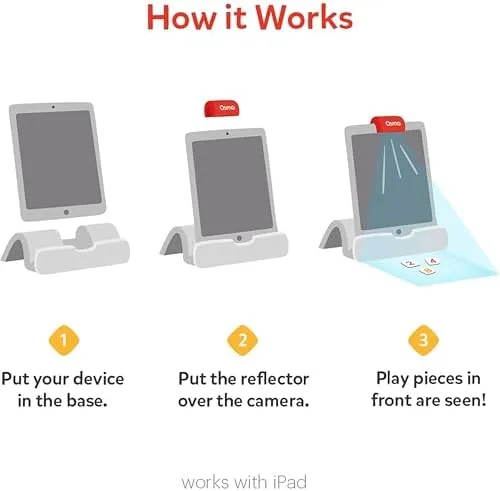
- Osmo Base: A reflective mirror/camera attachment that clips onto a compatible iPad’s front camera, directing it downward to see physical pieces placed on the table in front of the screen
- Silicone play mat: A structured surface for placing pieces, keeping the play area defined
- ABCs pieces: Colorful cardboard sticks and rings that children combine to form letters, which the iPad camera recognizes and animates on screen
- Costume Party pieces: Cardboard costume elements (hats, glasses, accessories) that the camera recognizes and projects onto animated characters on screen
- Squiggle Magic prompt cards: Cards that prompt children to draw or create shapes, which the camera captures and animates on screen
- Stories prompt cards: Cards that prompt storytelling activities, with the camera capturing children’s physical creations as story elements
- Osmo app: Free iPad application required to run all four game modules
Compatibility note: Osmo requires an iPad (not included). Compatible with iPad 2 and later, iPad Air, iPad Mini, and iPad Pro models. Not compatible with Android tablets, Amazon Fire tablets, or Chromebooks. If your family doesn’t own an iPad, the Little Genius is effectively a $430 purchase ($80 + $350 for a base iPad). This is a significant caveat that Osmo’s marketing doesn’t emphasize.
Our Evaluation
Build Quality: 7/10
The Osmo Base is the same hardware unit used across the Osmo ecosystem — it’s well-built, with a precise mirror angle and a secure iPad mount. The reflective camera system is Osmo’s core technology and it works reliably: the AI recognition of physical pieces placed on the table is fast (sub-second response) and accurate (in well-lit conditions).
The Little Genius physical pieces are a step down from the Genius Kit’s components. The ABCs sticks and rings are thick cardboard with a rubberized coating — durable enough for preschool handling but not indestructible. After three months of testing with 3-5 year olds (who are not gentle with cardboard), several ABC pieces showed edge wear and minor bending. Nothing that affected functionality, but the pieces feel less premium than the solid plastic tiles in the older Genius Kit.
The silicone play mat is a smart inclusion. It defines the play area (preventing pieces from drifting out of the camera’s view), provides a soft surface for piece placement, and is easy to clean. It’s a small detail that meaningfully improves the play experience for preschoolers who haven’t yet developed the spatial precision to keep pieces within a camera’s field of view.
The Costume Party and Stories pieces are cardboard inserts that are more fragile than the ABCs pieces. Replacement isn’t available through Osmo, which is a problem for pieces that 3-year-olds will inevitably bend, tear, or lose.
The camera lighting dependency is the persistent Osmo issue. The reflective camera system requires good, even lighting to recognize pieces accurately. In dim rooms, under warm-toned lighting, or in direct sunlight with harsh shadows, the recognition becomes unreliable. This isn’t a Little Genius-specific problem — it affects all Osmo products — but it’s more frustrating with preschoolers, who can’t troubleshoot “move your mat to the left where the light is better.” Our testing found that a desk lamp pointed at the play mat resolved most lighting issues.
Play Value: 7/10
The four game modules provide meaningfully different play experiences, though their longevity varies.
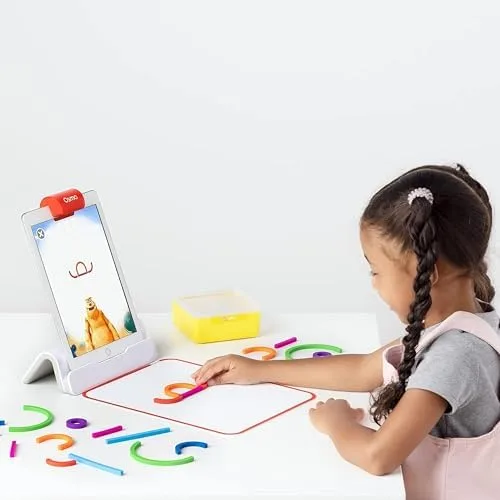
ABCs (Pre-reading): The anchor module. Children combine cardboard sticks and rings to form letters. The iPad recognizes the letter and animates it — an “A” might become an alligator, a “B” might become a butterfly. The animation provides both the reward and the learning reinforcement: the child connects the physical shape of the letter with a visual-auditory representation.
In our testing, ABCs was the module that most directly delivered on Osmo’s educational promise. Children who used it regularly over two weeks showed improved letter recognition — not because the technology is magical, but because the animate-the-letter mechanic made letter practice genuinely enjoyable. The issue: 26 letters is a finite set. Once children have built and animated all 26, the module’s novelty drops sharply. Our testers’ engagement with ABCs peaked in week one and declined steadily through week two. Repeat play exists (children enjoy revisiting favorite letter-animals) but doesn’t generate the same focused engagement as initial discovery.
Squiggle Magic (Creativity): The standout. Children draw shapes, squiggles, or patterns on paper placed on the play mat. The iPad camera captures the drawing and transforms it into an animated character or scene on screen. A circle becomes a face. A zigzag becomes a lightning bolt. The unpredictability of the transformation — “what will my drawing become?” — is the engagement driver.
This was the highest-engagement module in our testing, and the one that provided the most sustained play value. Because the input is open-ended (draw anything), the experience doesn’t exhaust as quickly as the finite-alphabet ABCs module. Our preschool testers spent 15-20 minutes per session with Squiggle Magic and returned to it consistently across the two-week testing period.
Costume Party (Social/Creative): The collaborative one. Children place cardboard costume pieces (hats, glasses, bow ties) on the play mat, and the iPad projects them onto an animated character on screen, effectively dressing up a digital character with physical pieces. It’s a digital-physical dress-up game.
Engagement was strong but context-dependent. Children playing with a parent or sibling — taking turns dressing the character, making each other laugh with silly combinations — engaged for 10-20 minutes. Children playing alone lost interest faster (5-10 minutes). The module’s value is social; as a solo activity, it’s thinner.
Stories (Narrative): The weakest module. Prompt cards guide children through storytelling activities — “draw a character,” “what happens next?” — with the camera capturing their creations as story elements. The concept is promising, but the execution felt under-developed in our testing. The prompts are generic, the camera integration is less responsive than other modules, and preschoolers who aren’t yet comfortable with narrative construction struggled with the open-ended format.
Overall play value trajectory: High engagement in weeks 1-3, moderate in weeks 4-6, declining thereafter as modules are exhausted. Squiggle Magic retains the most long-term value. ABCs and Costume Party are front-loaded. Stories is the weakest throughout. Expansion packs (Costume Pieces, $20) extend the play value modestly but don’t fundamentally change the trajectory.
Age Appropriateness: 7/10
The 3-5 age range is generally accurate, with caveats at both ends.
At 3: The youngest end of the range. Three-year-olds can engage with Squiggle Magic and Costume Party (open-ended, no wrong answers) but struggle with ABCs (requires recognizing and constructing letter shapes, which most 3-year-olds haven’t learned). The setup and troubleshooting (launching the app, positioning the mat, adjusting lighting) requires adult involvement. Don’t expect a 3-year-old to use Osmo independently.
At 4-5: The sweet spot. Four and five-year-olds have the letter awareness to engage with ABCs, the fine motor control for precise piece placement, and the digital literacy to navigate the app with minimal help. This is the age where the product delivers its full value proposition.
Beyond 5: The Little Genius becomes too simple. The ABCs module is below a kindergartener’s level, and the other modules, while still fun, don’t challenge a child who’s ready for the Genius Kit’s more complex games. The upgrade path to the Osmo Genius Kit ($100) is well-defined — the same base works with both product lines.
Screen Time Considerations: A Necessary Discussion
Osmo markets its products as “tangible play” rather than “screen time,” and this framing deserves scrutiny.
The Little Genius does involve physical manipulation of tangible objects, which meaningfully differentiates it from passive video watching or touchscreen tapping. The child’s primary attention is on the physical pieces and the play mat, not the screen. The screen provides feedback (animation, recognition) rather than content consumption. This is a genuine distinction.
However, the iPad is on, the screen is active, and a preschooler is looking at it repeatedly throughout the play session. In our testing, children’s gaze patterns alternated between the physical pieces (50-60% of time), the screen (30-40% of time), and the play mat (10%). The screen is a significant attentional component, not a peripheral one.
The American Academy of Pediatrics recommends limiting screen time for children ages 2-5 to one hour per day of “high-quality programs.”1 Whether Osmo qualifies as “high-quality screen time” is a judgment call for individual families. Our position: Osmo’s tangible interaction model is superior to passive screen time and most touchscreen app experiences, but it’s not screen-free, and calling it “not really screen time” is marketing spin.
Durability: 6/10
The Osmo Base is durable (solid plastic, no moving parts beyond the mirror angle). The silicone mat is durable. The iPad is as durable as your case makes it.
The physical game pieces are the weak point. Cardboard and rubberized-cardboard pieces in the hands of 3-5 year olds have a limited lifespan. Our ABCs pieces showed noticeable wear after three months. Costume Party and Stories cards showed more. Osmo does not sell individual replacement pieces — you’d need to buy the full expansion again. For an $80 product, the piece durability is disappointing.
Value for Money: 5/10
This is where the Little Genius math gets complicated.
At $80, the Little Genius competes with:
- Entire board game libraries — you could buy Haba First Orchard ($25), ThinkFun Zingo ($22), and Peaceable Kingdom Hoot Owl Hoot ($15) for $62 and have three durable, screen-free games with years of play value
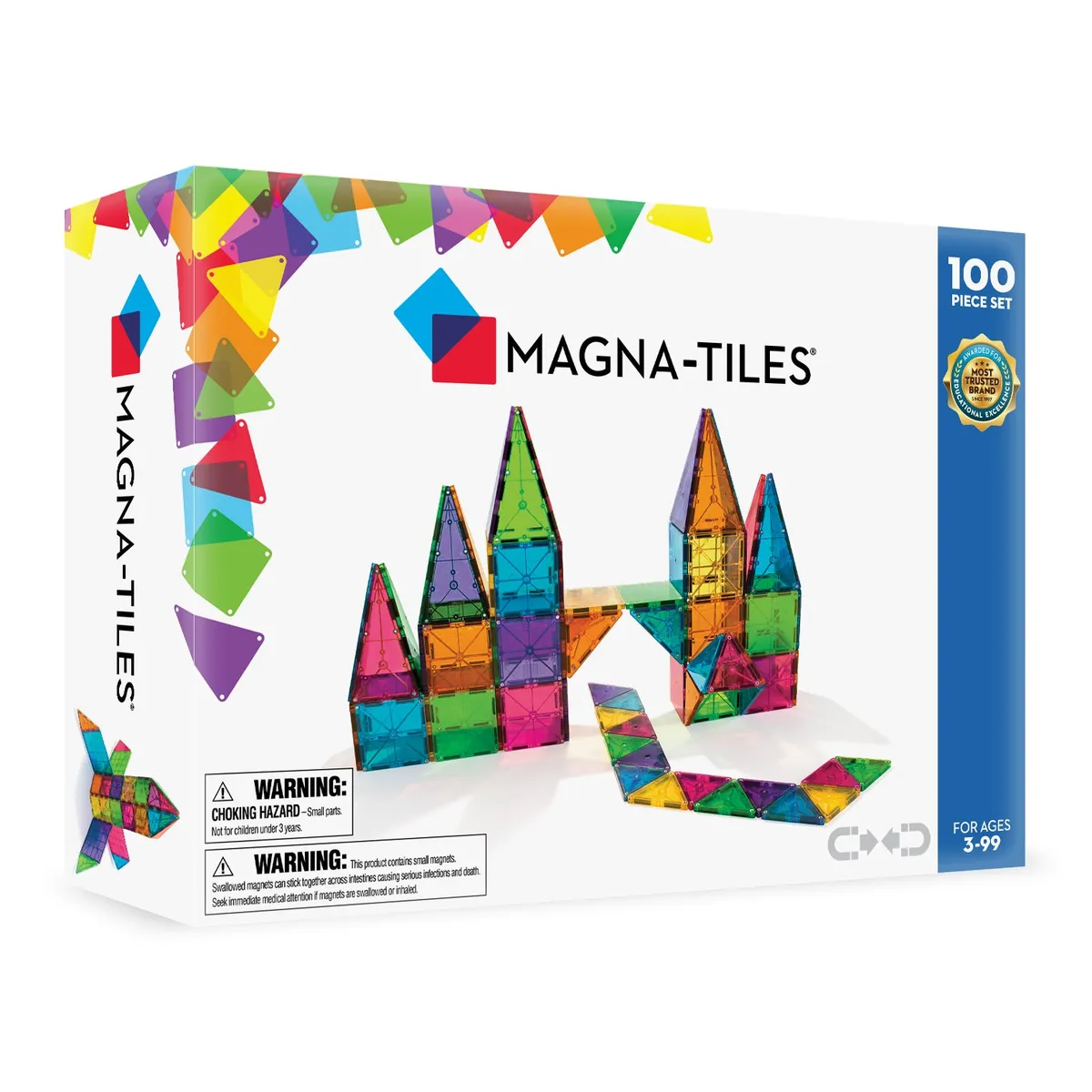
- Construction toys — a Magna-Tiles 100-Piece Set ($120) provides years of open-ended STEM play with no technology dependency
- Art supplies — a Crayola Inspiration Art Case ($25) provides indefinitely renewable creative play
And the $80 price assumes you already own an iPad. For families who don’t, the true cost is $430, which fundamentally changes the value proposition from “reasonable educational toy” to “significant technology investment.”
The play value window is 6-18 months for most children (entering at 3-4, outgrowing by 5). At $80 for 12 months of engagement, the cost is $6.67/month — reasonable but not exceptional, and significantly below the value-per-month of simpler toys.
The value equation improves if you plan to use the Osmo ecosystem long-term. The base is shared across all Osmo products. A family that buys Little Genius at 3, then upgrades to Genius at 5, then adds expansion games through 10, amortizes the base cost across years of use. As a standalone purchase, the Little Genius is expensive for what it delivers.
The Evidence
The evidence concerns we raised in our Osmo Genius Starter Kit review apply fully here. We’ll summarize the key issues and add preschool-specific considerations.
Osmo’s Research Claims. Osmo references a study conducted by researchers at Northwestern University showing that children using Osmo products learned significantly faster than control groups. This study was funded by Tangible Play, Inc. (Osmo’s parent company). Company-funded research is not inherently invalid, but it warrants heightened scrutiny — publication bias and favorable methodology selection are well-documented concerns in industry-sponsored education research (Hattie, 2008).2
We have been unable to locate this study in peer-reviewed journals. Osmo cites it in marketing materials but does not provide a full citation, DOI, or link to the published paper. Until the study is published in a peer-reviewed venue with full methodology disclosure, the “learning faster” claim remains unverified.
Tangible-Digital Interfaces and Preschool Learning. The broader research on tangible user interfaces (TUIs) for young children is cautiously positive. Zuckerman et al. (2005) demonstrated that physical manipulatives paired with digital feedback can support mathematical concept development in young children.3 Manches and O’Malley (2016) found that physical manipulation of objects during learning tasks improved understanding compared to purely digital interaction, particularly for children under 7.4
These studies support the general concept underlying Osmo — that physical manipulation of tangible objects, paired with digital feedback, can enhance learning. They do not validate Osmo’s specific implementation or learning outcome claims. The principle is sound; the product-specific evidence is absent.
Pre-Reading and Letter Construction. The ABCs module has the strongest theoretical basis. Research on letter formation — the physical act of constructing letter shapes — suggests it supports letter recognition and early reading development. James (2010) found that children who physically wrote or constructed letters showed better neural activation patterns for letter recognition than children who only saw or typed letters.5 The ABCs module’s stick-and-ring construction mechanic maps onto this research: the child is physically building the letter shape, which engages motor-learning pathways that may support recognition.
The caveat: James’s research involved handwriting, not stick-construction on a mat. Whether constructing a letter from modular pieces provides the same motor-learning benefit as tracing or writing the letter is unknown. The analogy is reasonable but unvalidated.
Screen Time and Preschoolers. The AAP’s position on screen time for preschoolers acknowledges that the quality of screen interaction matters — co-viewing with parents, educational content, and interactive engagement are preferable to passive consumption.1 Osmo’s tangible interaction model aligns with the “high-quality interactive” category better than most screen-based products. But the AAP’s core recommendation remains time-limited, and Osmo engagement sessions of 15-20 minutes consume a meaningful fraction of the recommended one-hour daily limit.
The honest summary: Osmo’s concept (tangible-digital hybrid learning) has support in the educational technology literature. The specific learning claims remain unverified, resting on company-funded research that has not been published in a peer-reviewed venue. The Little Genius’s strongest module (ABCs) connects to legitimate letter-formation research. The overall evidence profile is essentially identical to the Genius Kit we reviewed on Day 8: the concept is promising, the execution is polished, and the evidence doesn’t support the marketing.
Safety Notes
The Osmo Little Genius Starter Kit meets ASTM F963 toy safety standards.
Safety considerations:
- Small pieces. Some ABCs stick and ring pieces are small enough to present a choking risk for children under 3. The 3+ age rating addresses this, but households with younger siblings should supervise carefully.
- iPad safety. The primary safety concern is the iPad itself. A child-proof case (EVA foam, $25) is strongly recommended for any iPad used with Osmo. Dropped iPads break; foam cases prevent most breakage.
- Screen distance. The Osmo setup positions the child approximately 18-24 inches from the iPad screen. This is within AAP-recommended viewing distances for young children, but parents should ensure the child doesn’t lean in closer during extended play.
- Data collection. The Osmo app collects usage data. Review Osmo’s privacy policy before creating a child’s profile. Under COPPA regulations, parental consent is required for data collection from children under 13.
No CPSC recalls have been issued for Osmo Little Genius.
The Verdict
The Osmo Little Genius is a well-executed preschool learning toy that delivers on its engagement promise and falls short on its evidence promise. Preschoolers like it — genuinely, repeatedly, and for the right reasons (the tangible-digital feedback is delightful). The ABCs module teaches letter formation through a compelling mechanic. Squiggle Magic encourages creative expression. The hardware is polished and the software is responsive.
But the value proposition is challenging. At $80 (plus iPad), for a play window of 6-18 months, with cardboard pieces that wear out and learning claims that lack independent verification, the Little Genius asks families to invest significant money in a promise rather than a proven outcome. For families already in the Osmo ecosystem — who own an iPad and plan to upgrade to the Genius Kit — the Little Genius is a reasonable entry point. For families making a first educational toy investment, simpler, cheaper, and more durable alternatives provide equal or greater developmental value without the technology dependency.
Product Rating: 6/10 — Engaging, well-designed preschool product with genuine play value and polished execution. Docked for the unverified learning claims, the iPad-dependency cost, the limited play window, and the fragile game pieces.
Evidence Rating: Emerging — The tangible-digital concept has general support in the educational technology literature. Letter-formation research supports the ABCs module. Company-funded “learning faster” claims remain unverified in peer-reviewed publication. The evidence profile is identical to the Osmo Genius Kit reviewed on Day 8.
Who Should Buy This
- Families who already own an iPad and want a preschool learning toy that leverages it
- Parents who prioritize engagement — Osmo holds preschoolers’ attention
- Families planning to use the broader Osmo ecosystem as the child ages (Little Genius → Genius → expansion games)
- Parents comfortable with supervised, limited screen time as part of an educational activity
Who Should Skip This
- Families without an iPad — the true cost ($430+) fundamentally changes the value equation
- Parents seeking screen-free educational play — Osmo is tangible-enhanced screen time, not screen-free play
- Families who want durable, long-lifespan toys — the cardboard pieces and 6-18 month play window don’t deliver lasting value
- Parents who prioritize independently verified educational claims — Osmo’s learning evidence doesn’t meet that standard
- Budget-conscious families — $80 buys a lot of developmental value in simpler toys (see alternatives above)
This review reflects our independent evaluation. ScienceBasedKids.com purchased this product at retail price. We may earn a commission if you purchase through our links, which helps fund our research. This never influences our ratings.
Footnotes
-
American Academy of Pediatrics. (2016). “Media and Young Minds.” Pediatrics, 138(5), e20162591. Recommends limiting screen time for children ages 2-5 to one hour per day of high-quality programming, with co-viewing encouraged. ↩ ↩2
-
Hattie, J. (2008). Visible Learning: A Synthesis of Over 800 Meta-Analyses Relating to Achievement. Routledge. Documents how study funding source correlates with effect size in educational research, with industry-funded studies showing systematically larger effects. ↩
-
Zuckerman, O., Arida, S., & Resnick, M. (2005). “Extending tangible interfaces for education: Digital Montessori-inspired manipulatives.” Proceedings of the SIGCHI Conference on Human Factors in Computing Systems, 859-868. Demonstrates how physical manipulatives paired with digital feedback support mathematical concept development in young children. ↩
-
Manches, A., & O’Malley, C. (2016). “The effects of physical manipulatives on children’s numerical strategies.” Cognition and Instruction, 34(1), 27-50. Found that physical object manipulation during learning tasks improved understanding compared to purely digital interaction, particularly for children under 7. ↩
-
James, K. H. (2010). “Sensori-motor experience leads to changes in visual processing in the developing brain.” Developmental Science, 13(2), 279-288. Children who physically formed letters showed different (and more robust) neural activation patterns for letter recognition compared to children who only viewed letters. ↩
Enjoyed this review? We publish two new evidence-based evaluations every week.
Free. No spam. Unsubscribe anytime.
Engagement defined as active play with the physical pieces and screen interaction, not passive screen watching. ABCs showed the steepest engagement decline over the two weeks as children exhausted the letter content.
Recommended Accessories
Affiliate links
Osmo Little Genius Costume Pieces (2 Games, Ages 3-5)
“19 cardboard costume pieces for Costume Party and Stories games. Adds pretend play layer.”
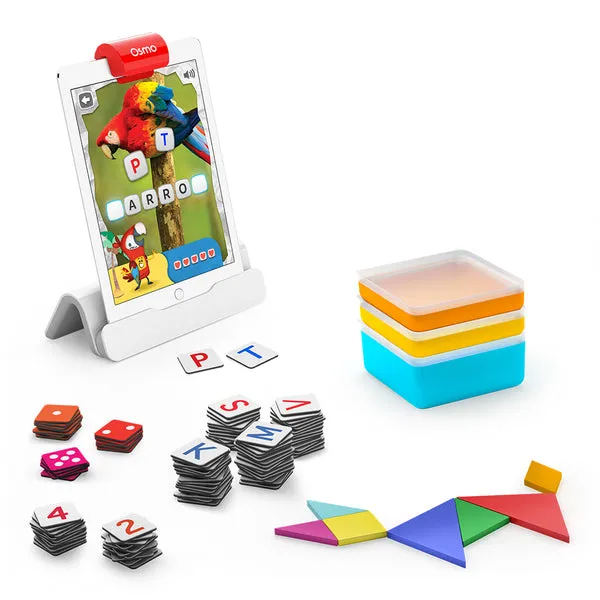
Osmo Genius Starter Kit for iPad (Ages 6-10)
“Older-age version (5-12) for families ready to step up. Future-proofs the investment.”
Apple iPad 10th Generation (64GB, Wi-Fi)
“Osmo requires an iPad. Essential if the family doesn't have one.”
ProCase Kids Case for iPad 10th Generation (Shockproof EVA Foam)
“EVA foam protection for enthusiastic preschooler Osmo play.”