ScienceBasedKids.com may earn a commission from affiliate links in this review. Our ratings are never influenced by affiliate relationships. Read our full methodology.
There’s a reason every children’s museum has a pretend grocery store or restaurant — transactional play is one of the richest vehicles for social, mathematical, and language development in early childhood. Children practice turn-taking, number concepts, social scripts, and creative expression simultaneously, all while having genuine fun. The Melissa & Doug Wooden Ice Cream Counter ($50) brings this museum-quality experience home.
We tested it for six weeks with children ages 3 through 7, and the engagement was remarkably consistent — this set was requested daily throughout the testing period.
Product Overview
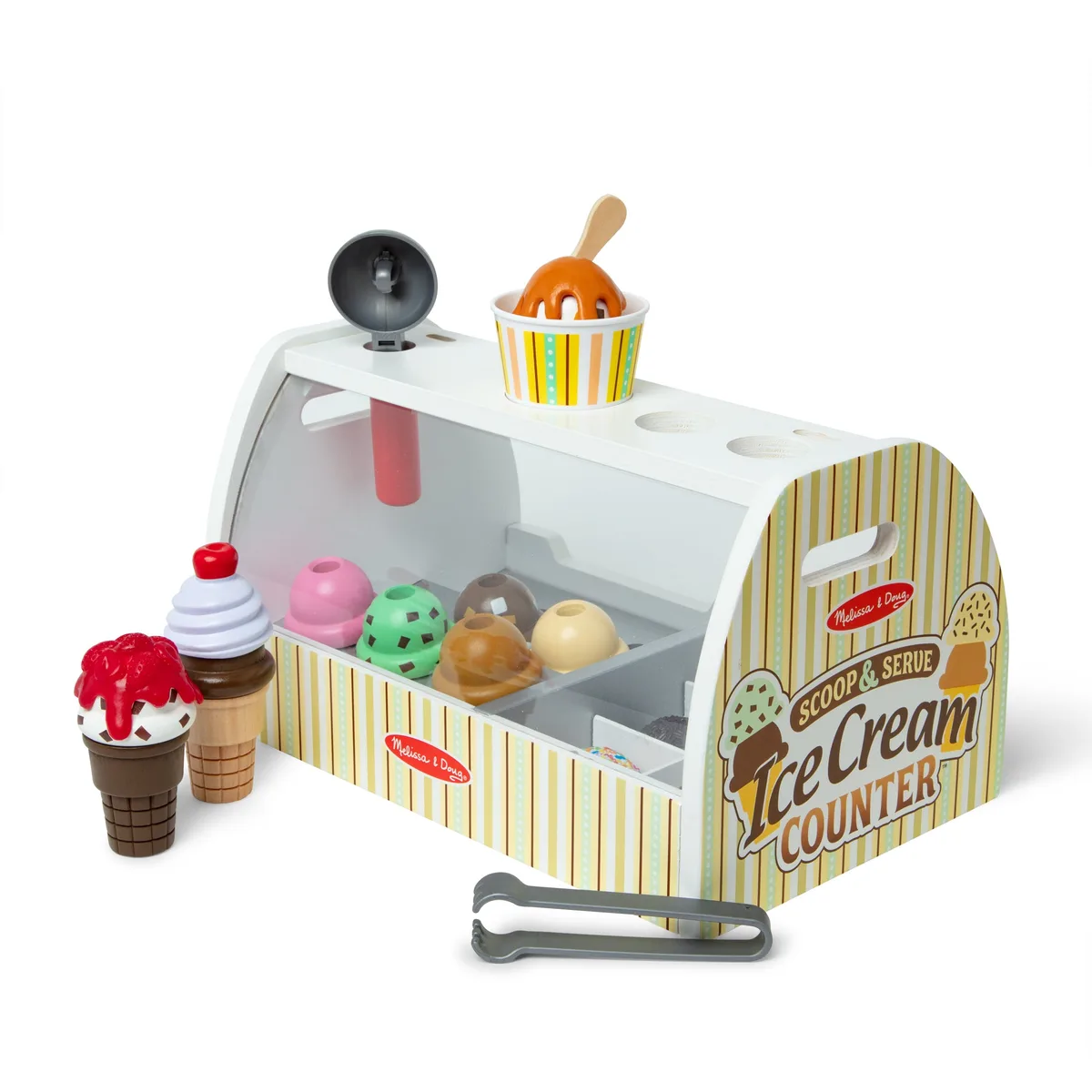
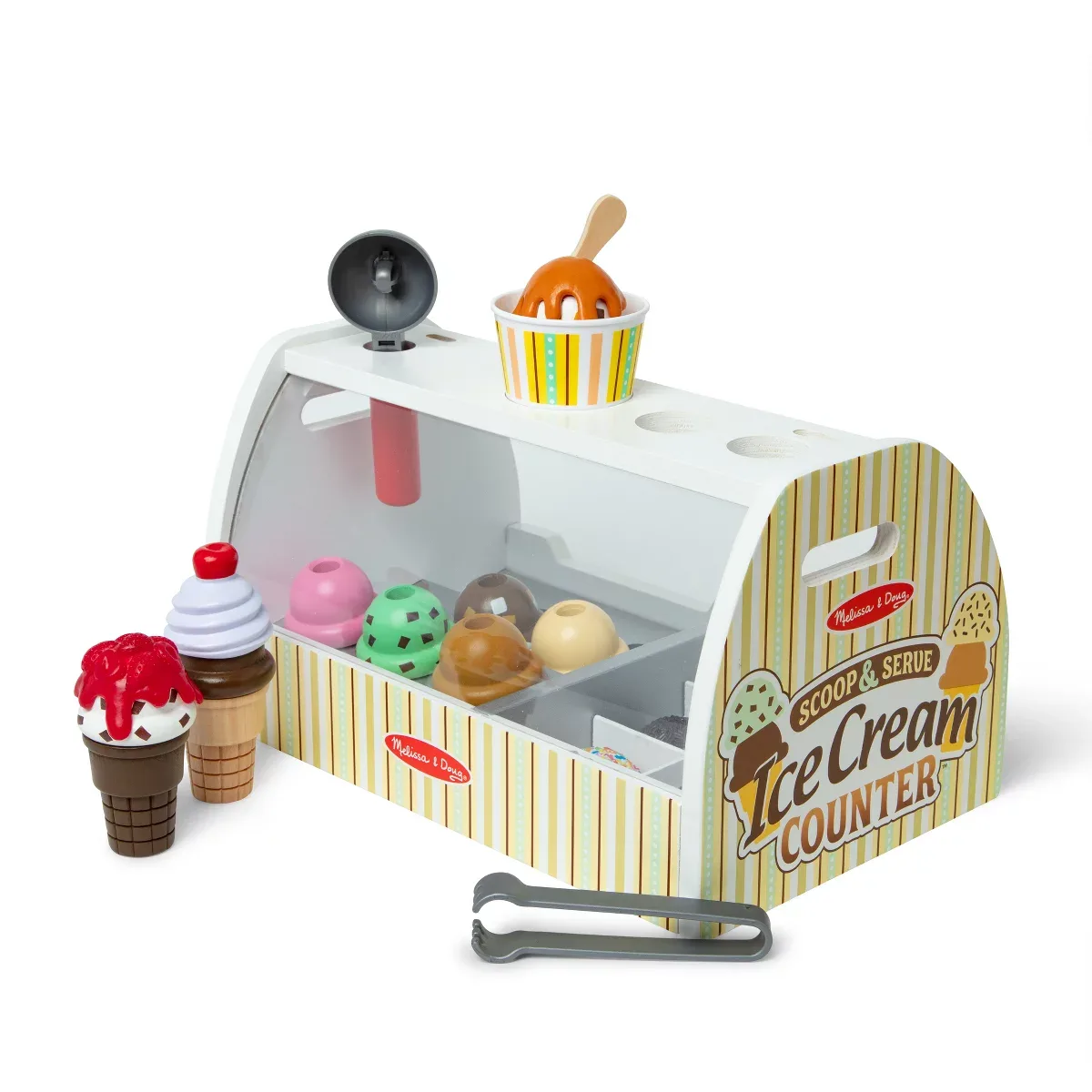
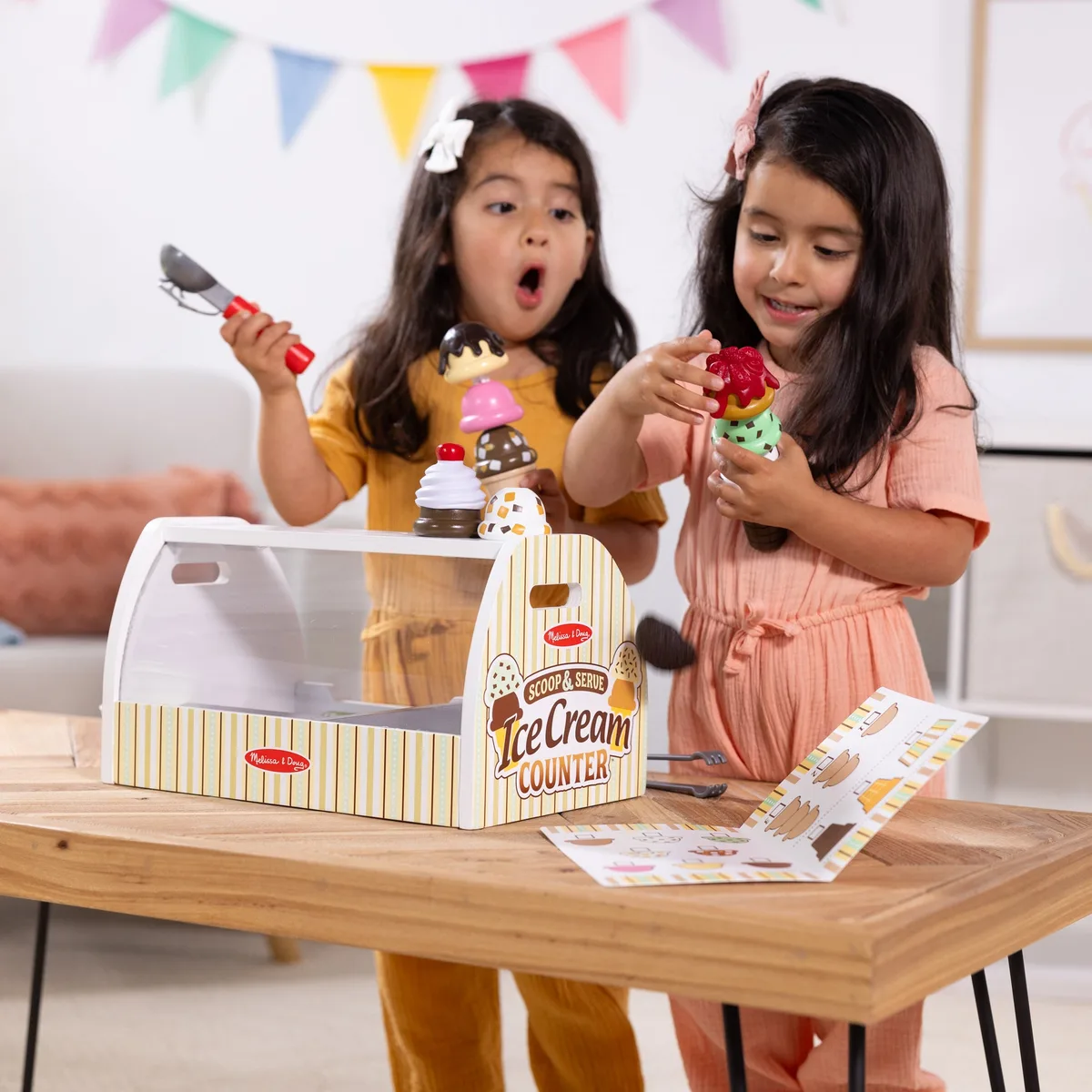
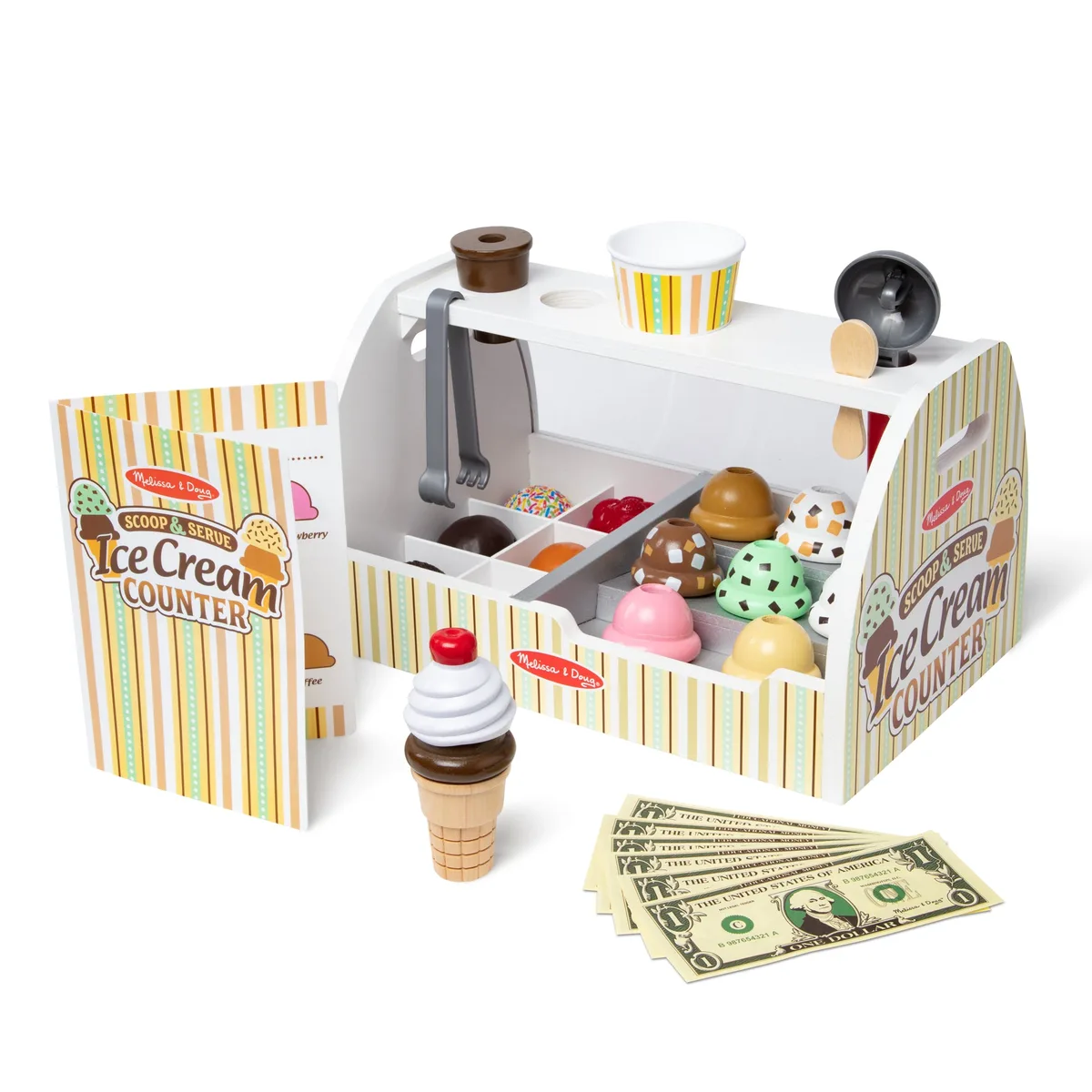
The set includes 28 pieces: 8 wooden ice cream scoops in different “flavors” (colors), 6 toppings, 2 cones, 2 cups, a wooden scooper that lifts and places scoops, a topping dispenser, a stand, and a menu. The scooper uses a lever mechanism to grab and release scoops — a satisfying fine motor activity that mimics the real ice cream scooping experience.
Our Evaluation
Build Quality: 8/10
Classic Melissa & Doug wooden quality — smooth, colorful, durable. The scooper mechanism works reliably. The scoops are weighted to stay on cones. The toppings are small enough to require precision but large enough for 3-year-old hands.
Play Value: 9/10
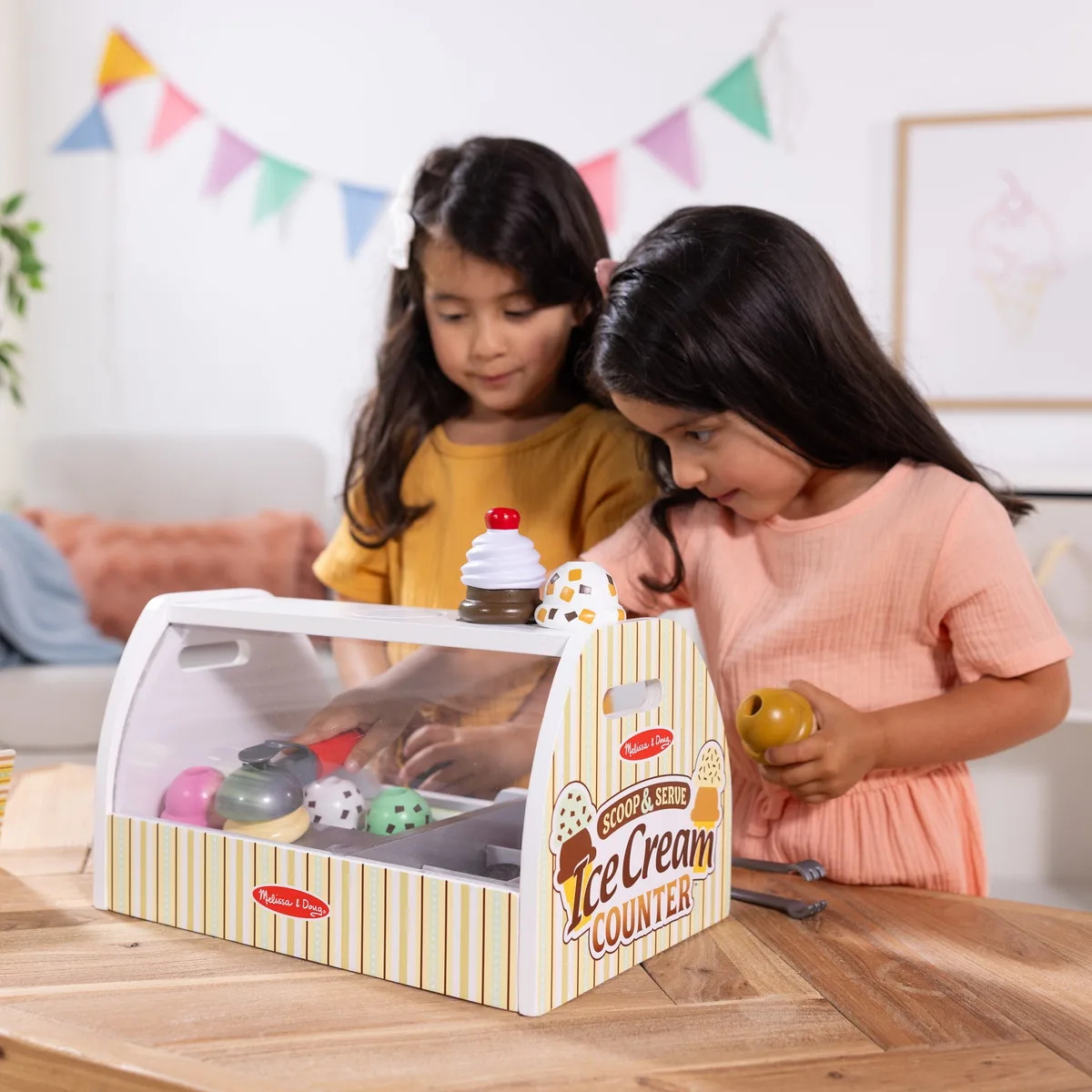
The ice cream shop scenario generates rich play naturally. Children take orders, count scoops, create combinations, serve customers, and manage a pretend business. In our testing, children created menus, assigned prices, made change with imaginary money, and resolved disputes about who ordered what. This is exactly the transactional play that research links to social and cognitive development.
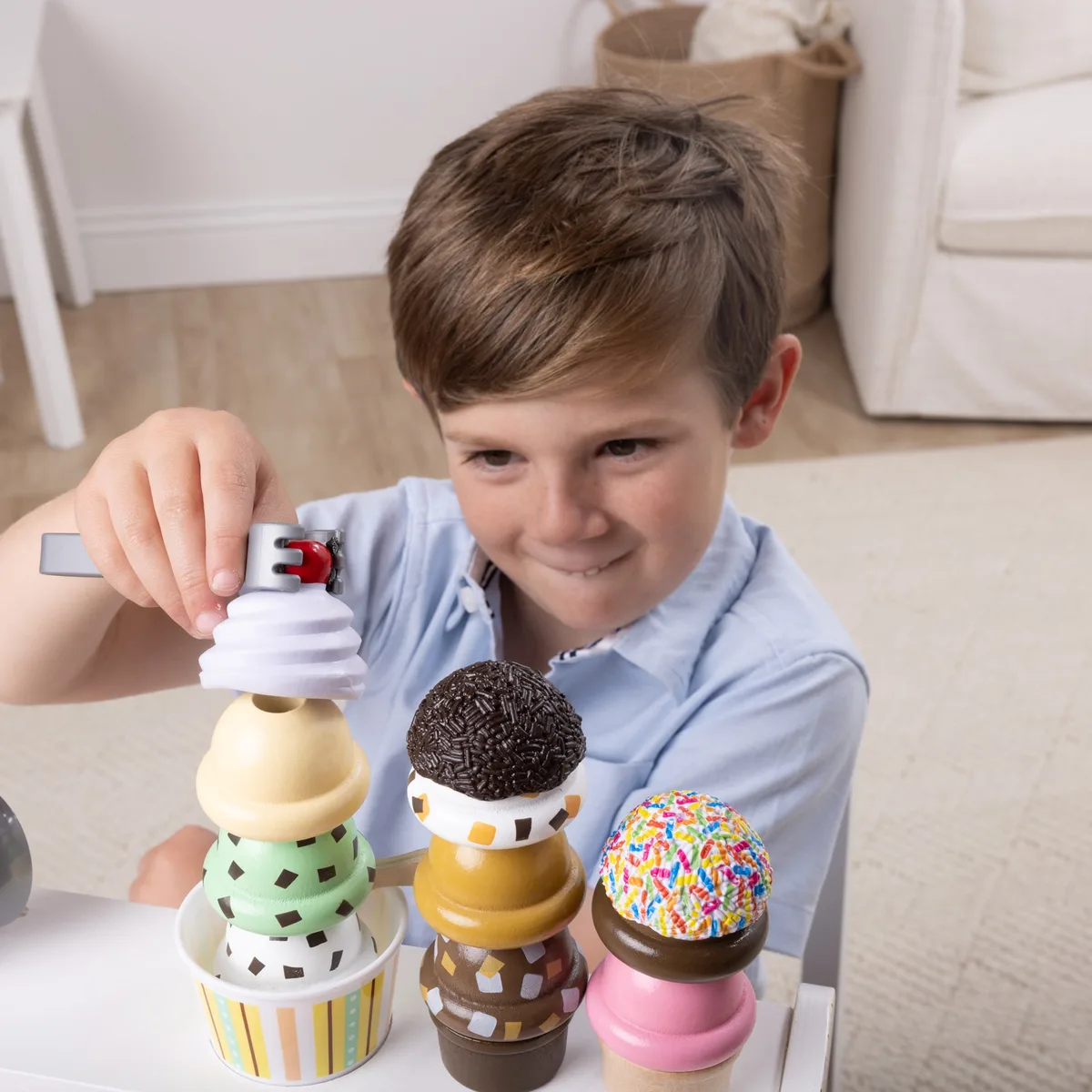
The set also invites multi-age play. A 3-year-old can scoop and serve. A 5-year-old can take orders and count. A 7-year-old can manage pricing and transactions. Siblings naturally found complementary roles.
Age Appropriateness: 9/10
The 3-7 range is well-targeted. The scooper mechanism is manageable for 3-year-olds with practice, and the social complexity scales with age.
Value for Money: 8/10
$50 for a wooden play set that generates daily engagement for years is strong value.
The Evidence
Transactional Play and Math Concepts. Pretend shop play naturally introduces counting, addition, and exchange concepts. Ginsburg et al. (2008) found that everyday mathematical thinking in preschoolers often emerges through play contexts.1 The ice cream counter provides a structured context for this mathematical play.
Social-Cognitive Development. Shop play involves perspective-taking (customer vs. server), social scripts, and negotiation — all components of social-cognitive development well-documented by Wellman (2014).2
The honest summary: Pretend transactional play has strong evidence for math and social-cognitive development. The ice cream counter is a specific, well-designed vehicle for this play type.
Safety Notes
Smaller toppings approach but don’t reach the choking hazard threshold. Appropriate for 3+. Meets ASTM F963. No CPSC recalls.
The Verdict
One of the best pretend play sets we’ve tested. The Melissa & Doug Ice Cream Counter generates rich social, mathematical, and creative play naturally and consistently.
Product Rating: 8/10 — Excellent engagement, quality, and developmental value.
Evidence Rating: Moderate — Transactional play and math development are well-supported.
Who Should Buy This
- Families with children ages 3-6 who enjoy pretend play
- Parents looking for social play that develops math concepts
- Siblings who need a collaborative play activity
- Gift-givers seeking a crowd-pleasing, high-engagement present
Who Should Skip This
- Families who already have extensive play food collections
- Children over 7 who have outgrown pretend food play
- Minimalist families seeking fewer toy categories
- Anyone allergic to finding wooden ice cream scoops in unusual places
This review reflects our independent evaluation. ScienceBasedKids.com purchased this product at retail price.
Footnotes
Enjoyed this review? We publish two new evidence-based evaluations every week.
Free. No spam. Unsubscribe anytime.
Counting and simple addition emerged naturally through order-taking and serving.
Recommended Accessories
Affiliate links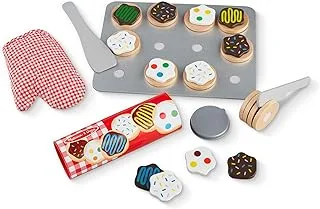
Melissa & Doug Slice and Bake Wooden Cookie Set
“Complementary dessert-themed play food. Extends the sweet shop narrative.”
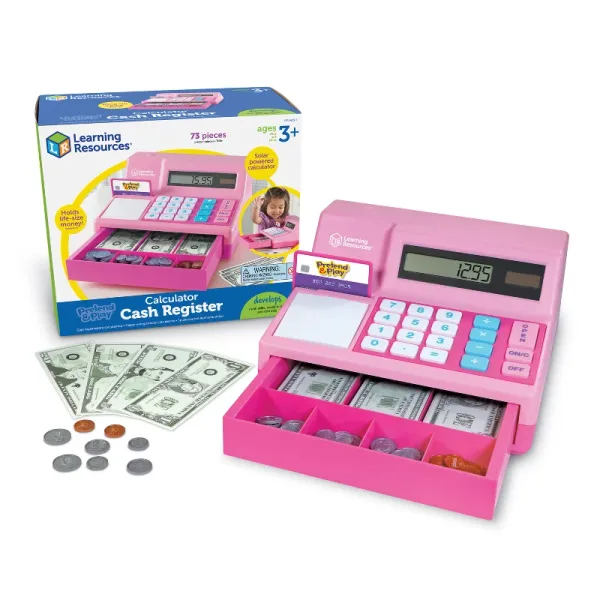
Learning Resources Pretend Play Calculator Cash Register
“Adds a transactional element. Children practice counting money alongside ice cream orders.”
Hape Playfully Delicious Wooden Play Food Set
“General play food alternative with wider food variety.”
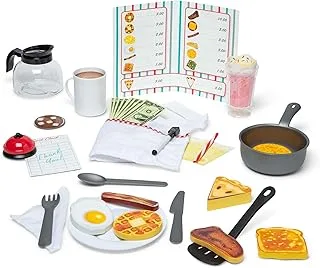
Melissa & Doug Order Up Diner Play Set
“Diner-themed companion with order pad and menu. Adds literacy to pretend play.”