ScienceBasedKids.com may earn a commission from affiliate links in this review. Our ratings are never influenced by affiliate relationships. Read our full methodology.
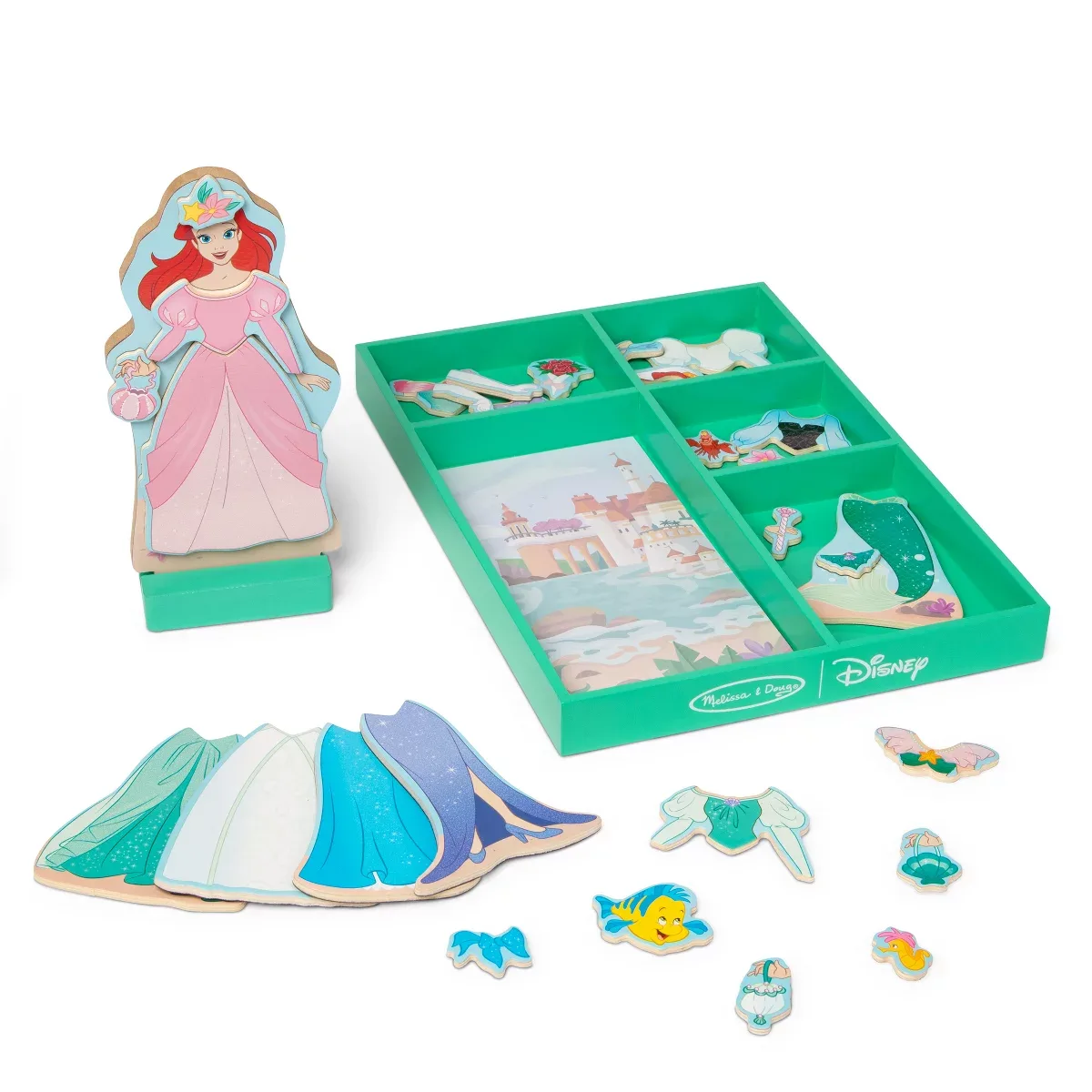
Dress-up play is one of the oldest forms of pretend play, and the Melissa & Doug Magnetic Dress-Up set distills it to its essence: a wooden figure, a set of magnetic clothing pieces, and the child’s imagination. No batteries, no screens, no complicated assembly — just the satisfying snap of magnetic pieces finding their place and the creative decision-making of “what should they wear today?”
We tested the set for six weeks with children ages 3 through 6, observing engagement patterns, fine motor development, and narrative play behaviors.
Product Overview
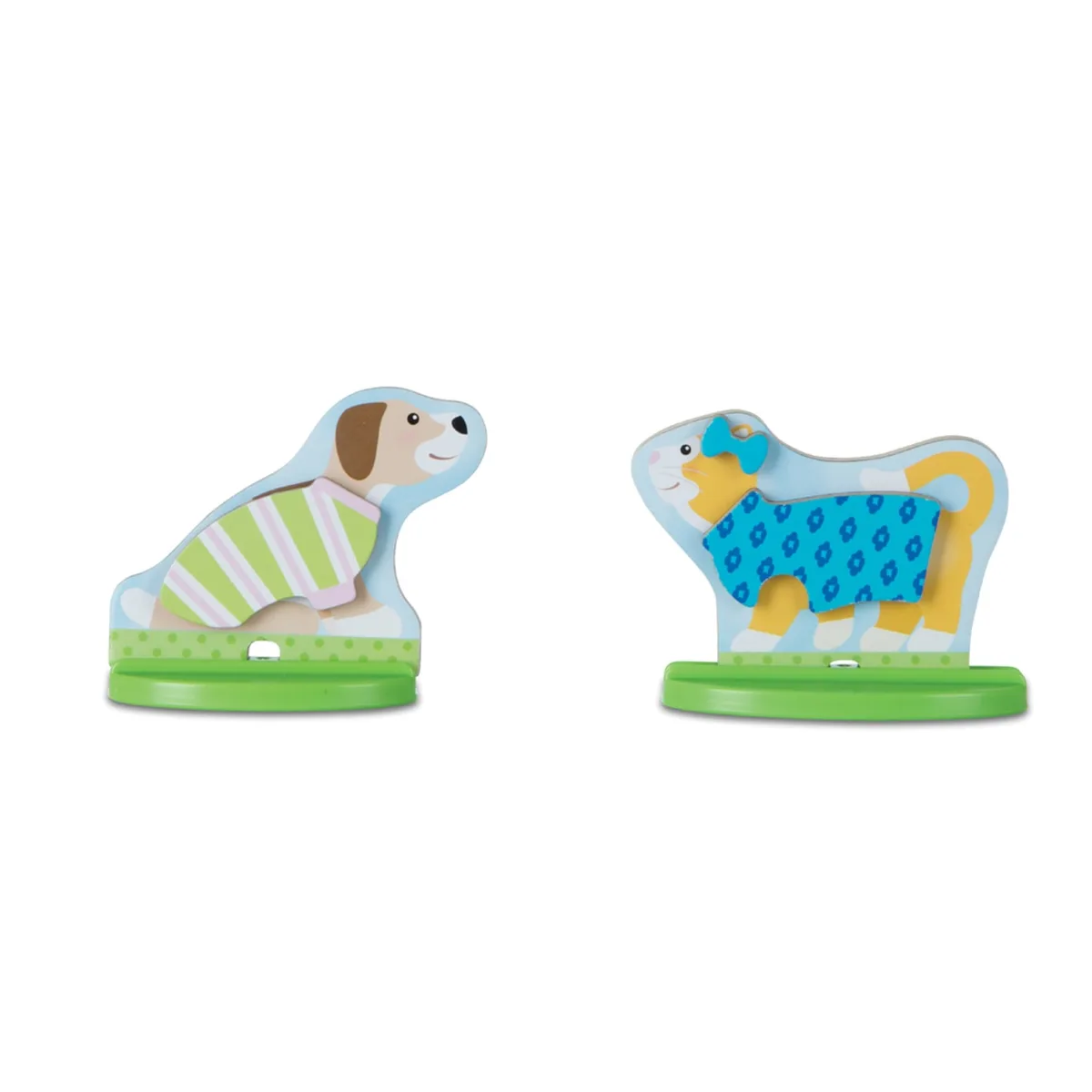
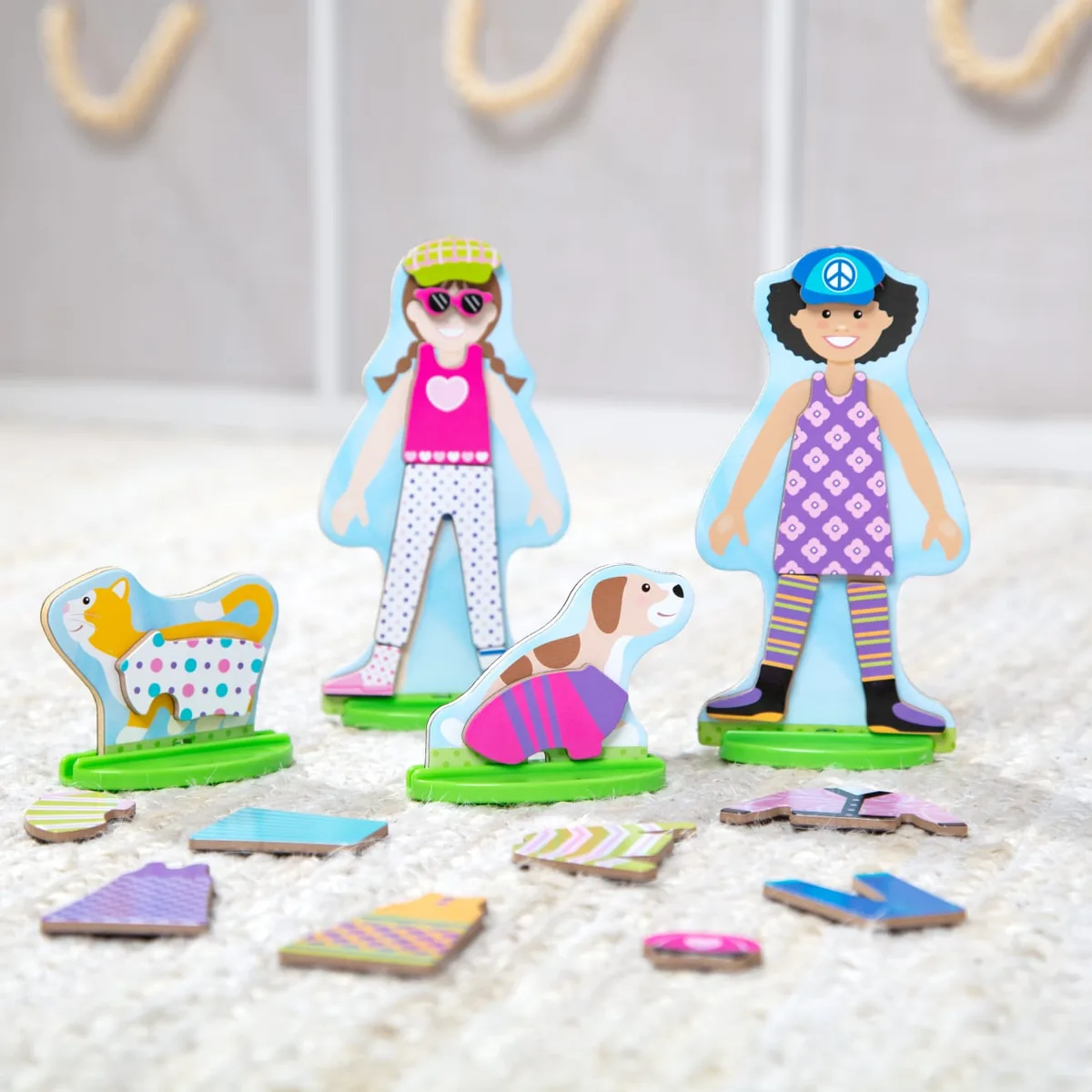
The set includes a wooden figure (approximately 10 inches tall) mounted on a stand, with 25+ magnetic clothing and accessory pieces stored in a wooden box. Pieces include tops, bottoms, dresses, hats, shoes, and accessories that mix and match across outfits. The magnets are embedded in both the figure and the clothing pieces, creating a satisfying snap-on connection.
Our Evaluation
Build Quality: 7/10
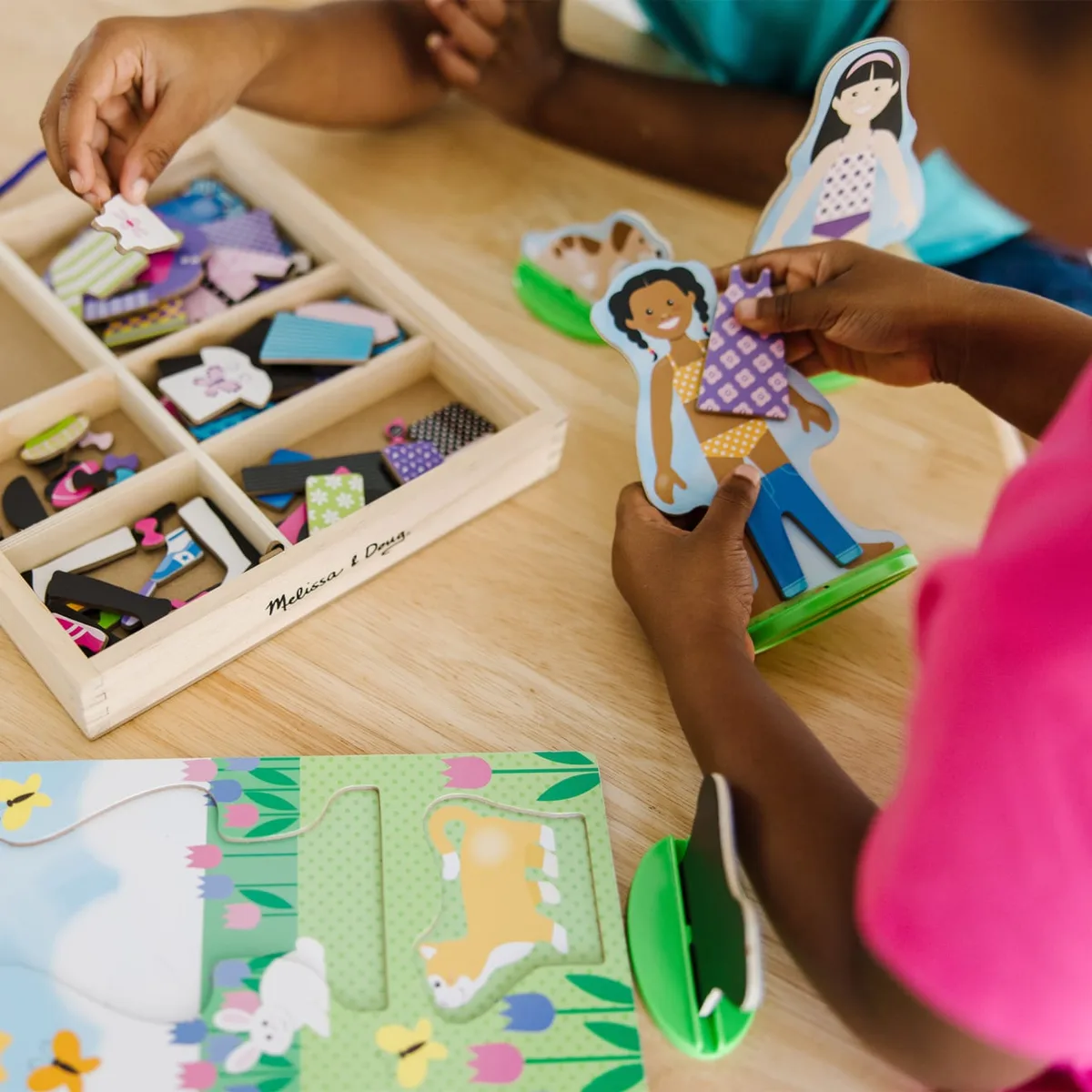
Solid Melissa & Doug wooden construction with clear, colorful printing. The magnets are strong enough to hold pieces during play but allow easy repositioning. The storage box keeps pieces organized. After six weeks, no pieces showed damage or demagnetization.
Play Value: 7/10
The dress-up play loop is simple and engaging: choose pieces, place them on the figure, admire/adjust, narrate a scenario, reset, repeat. Children in our testing created themed outfits, told stories about where the figure was going, and practiced the fine motor skill of precise magnetic placement.
The engagement window is typically 10-20 minutes per session — shorter than construction toys but appropriate for the activity type. The set was pulled out 3-4 times per week throughout the testing period.
Age Appropriateness: 9/10
The 3-7 range is accurate. Three-year-olds manage the magnetic placement with some effort. Five-year-olds are fluent and creative. Above 7, the activity becomes too simple for most children.
Value for Money: 9/10
At $20 for a well-made wooden toy with 25+ pieces and strong replayability, the value is excellent.
The Evidence
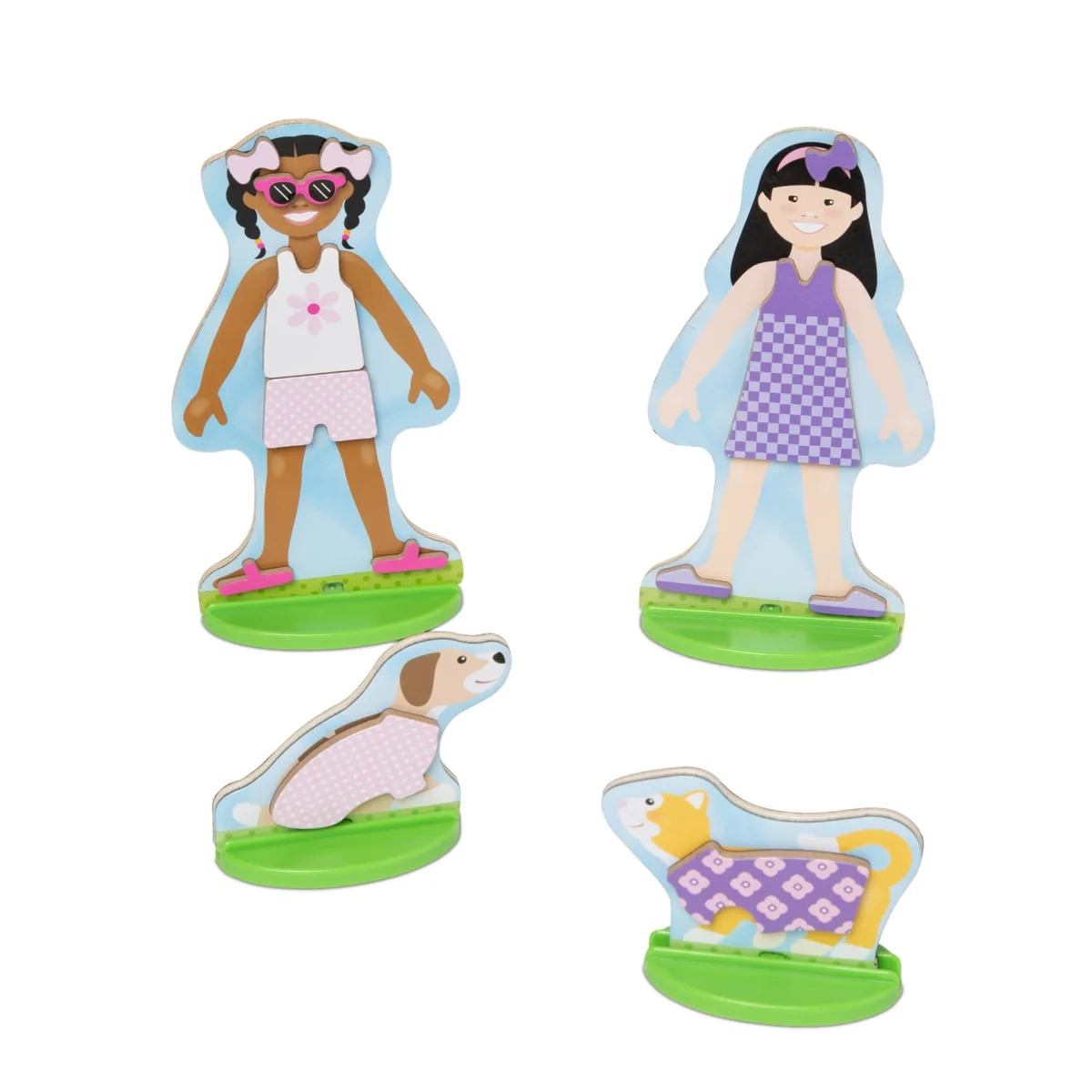
Pretend Play and Identity Exploration. Dress-up play allows children to explore different roles and identities in a safe context. Bergen (2002) found that pretend play supports social understanding and creative thinking.1 Dress-up specifically engages perspective-taking as children imagine different personas.
Fine Motor Development. Precise magnetic placement develops hand-eye coordination and fine motor control. Cameron et al. (2012) found fine motor skills predict later academic achievement.2
The honest summary: Pretend play and fine motor development are well-supported. Magnetic dress-up is a specific implementation with no dedicated research.
Safety Notes
All pieces exceed the choking hazard threshold. Magnets are fully enclosed. Meets ASTM F963 and CPSIA. No CPSC recalls.
The Verdict
A simple, well-made pretend play tool at an excellent price. The Melissa & Doug Magnetic Dress-Up set reliably engages creative expression and fine motor skills for the preschool audience.
Product Rating: 7/10 — Good quality, engaging play, excellent value. Limited complexity prevents a higher score.
Evidence Rating: Emerging — Pretend play and fine motor skills are well-supported domains.
Who Should Buy This
- Families with children ages 3-6 who enjoy pretend play
- Parents seeking screen-free, independent play activities
- Gift-givers looking for reliable, affordable preschool presents
- Families building a Melissa & Doug collection
Who Should Skip This
- Children over 7 who will find it too simple
- Families seeking high-complexity or open-ended play
- Parents of children who don’t engage with doll/figure-based play
- Anyone looking for digital or electronic entertainment
This review reflects our independent evaluation. ScienceBasedKids.com purchased this product at retail price.
Footnotes
Enjoyed this review? We publish two new evidence-based evaluations every week.
Free. No spam. Unsubscribe anytime.
Creative expression and fine motor coordination were the most consistently engaged skills.
Recommended Accessories
Affiliate links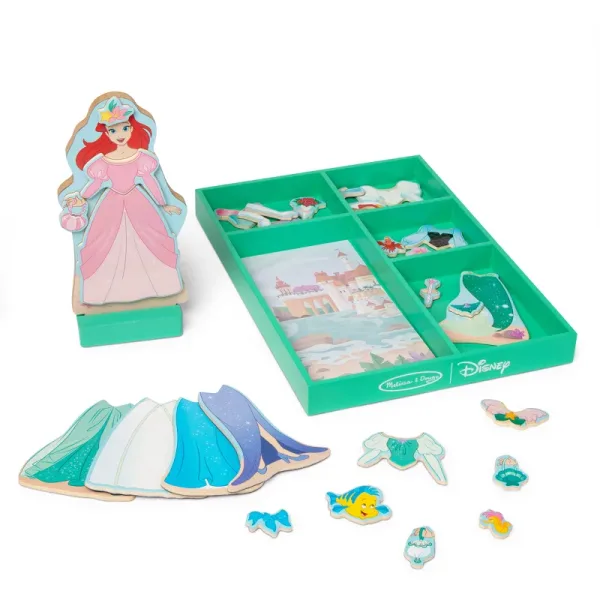
Melissa & Doug Magnetic Dress-Up - Careers
“Career-themed outfits expand narrative possibilities beyond everyday clothing.”
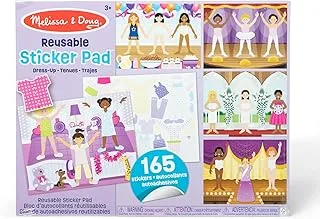
Melissa & Doug Reusable Sticker Pad - Dress Up
“Similar concept in sticker format. Portable and mess-free for travel.”
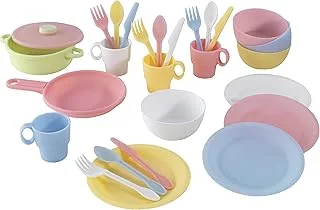
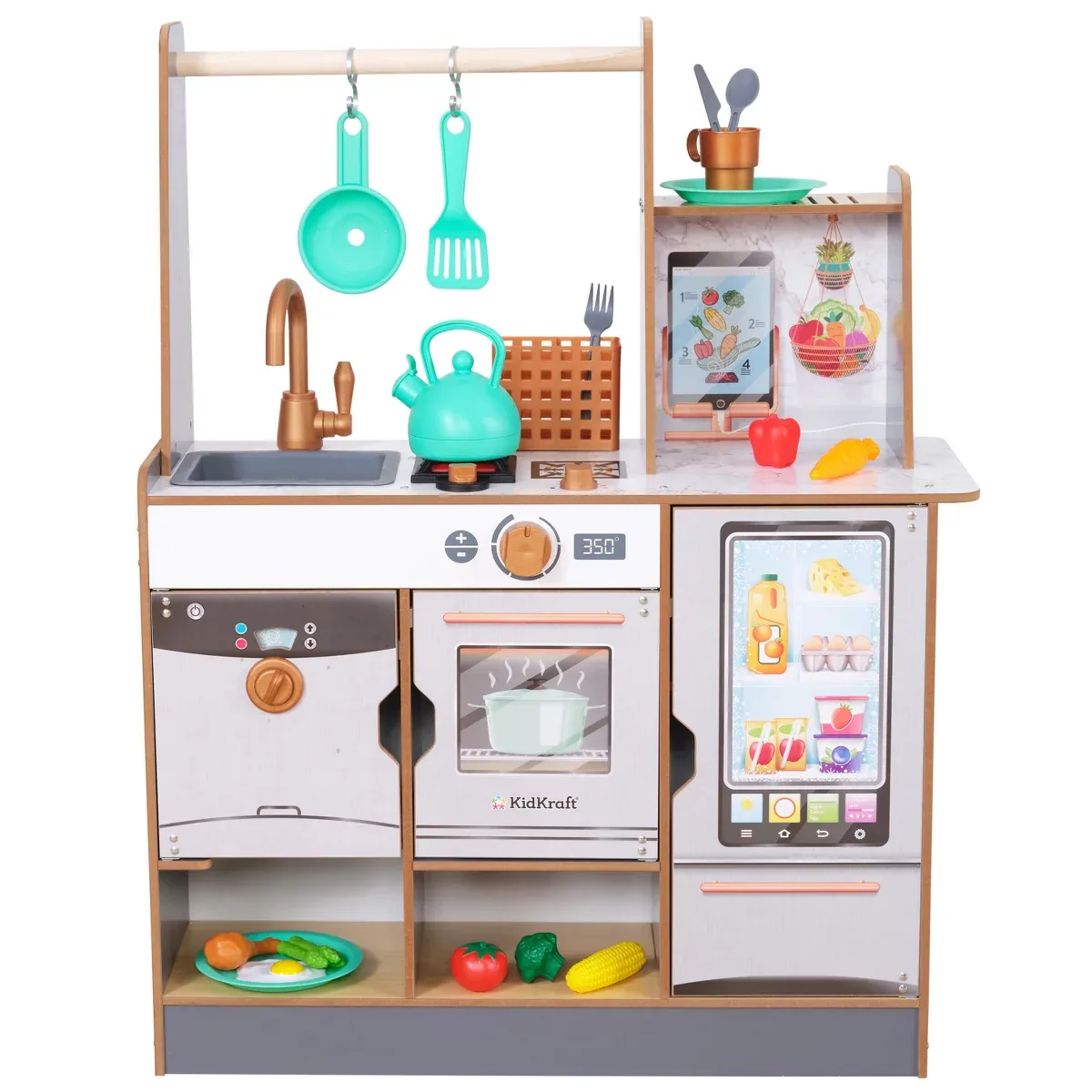
KidKraft 27-Piece Cookware Playset
“Extends pretend play to kitchen scenarios. Natural narrative complement.”
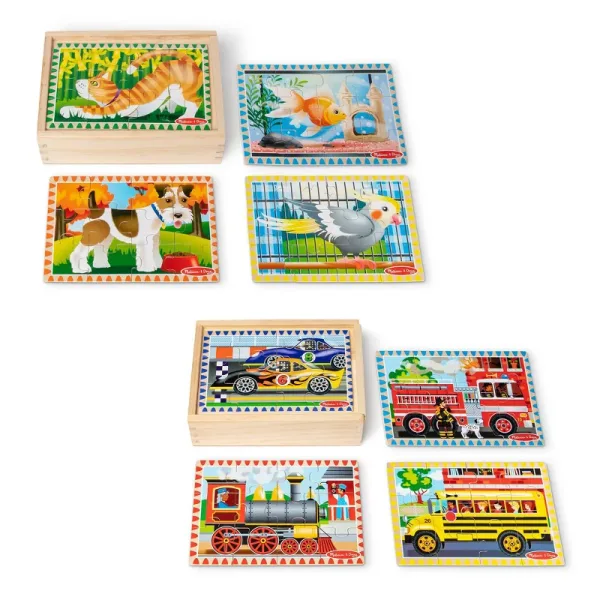
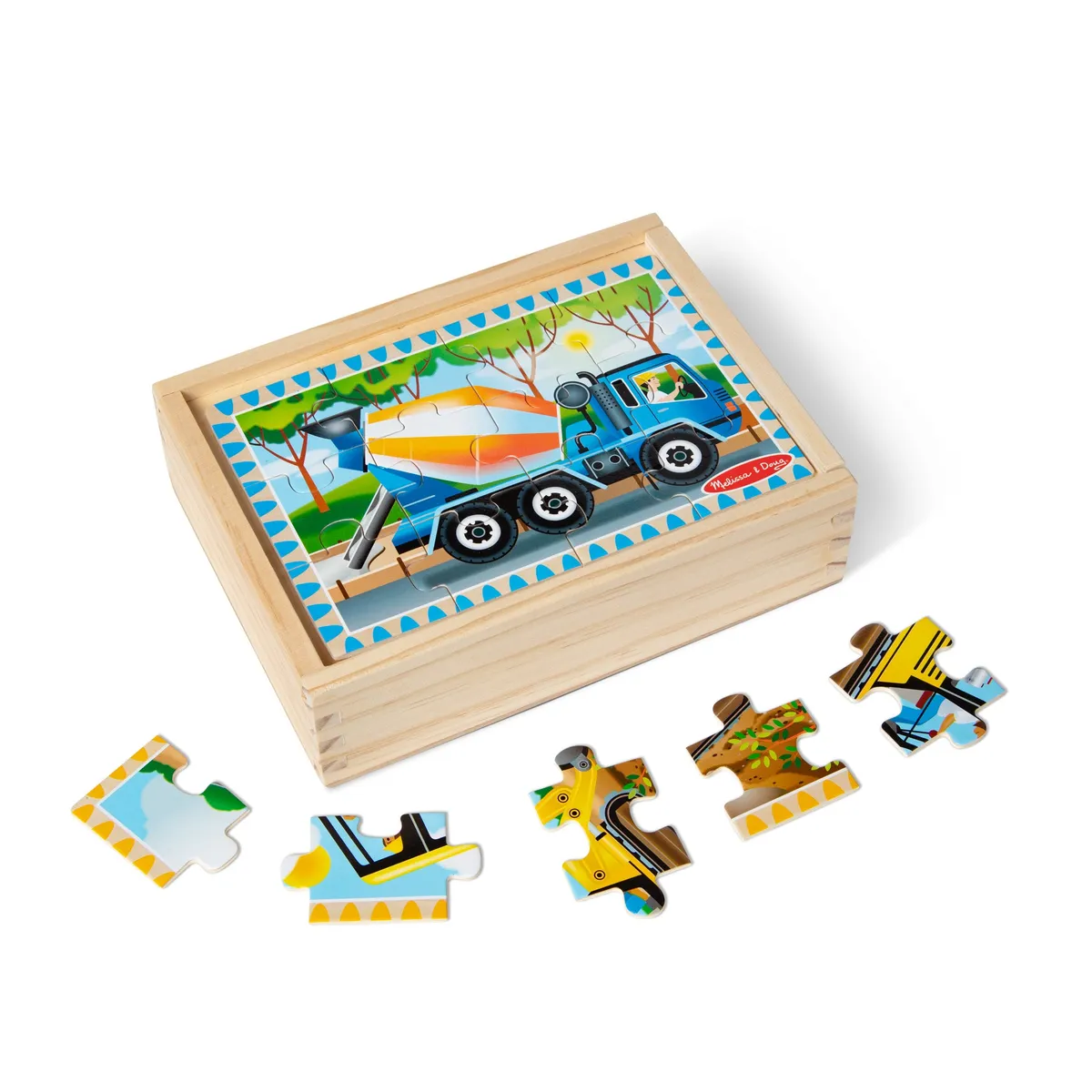
Melissa & Doug Wooden Jigsaw Puzzles (4-pack)
“Different fine motor activity from the same brand. Puzzles rather than dress-up.”