ScienceBasedKids.com may earn a commission from affiliate links in this review. Our ratings are never influenced by affiliate relationships. Read our full methodology.
Shape sorters have been a developmental toy staple for over a century. The concept is ancient — match the object to the hole — and the developmental rationale is equally timeless: spatial reasoning, shape discrimination, fine motor coordination, and the deeply satisfying clunk of getting it right. Melissa & Doug’s version doesn’t reinvent this wheel. It polishes it to a high-quality wooden finish and sells it for $16.
We tested the Shape Sorting Cube with children ages 18 months to 4 years across three households over five weeks.
Product Overview
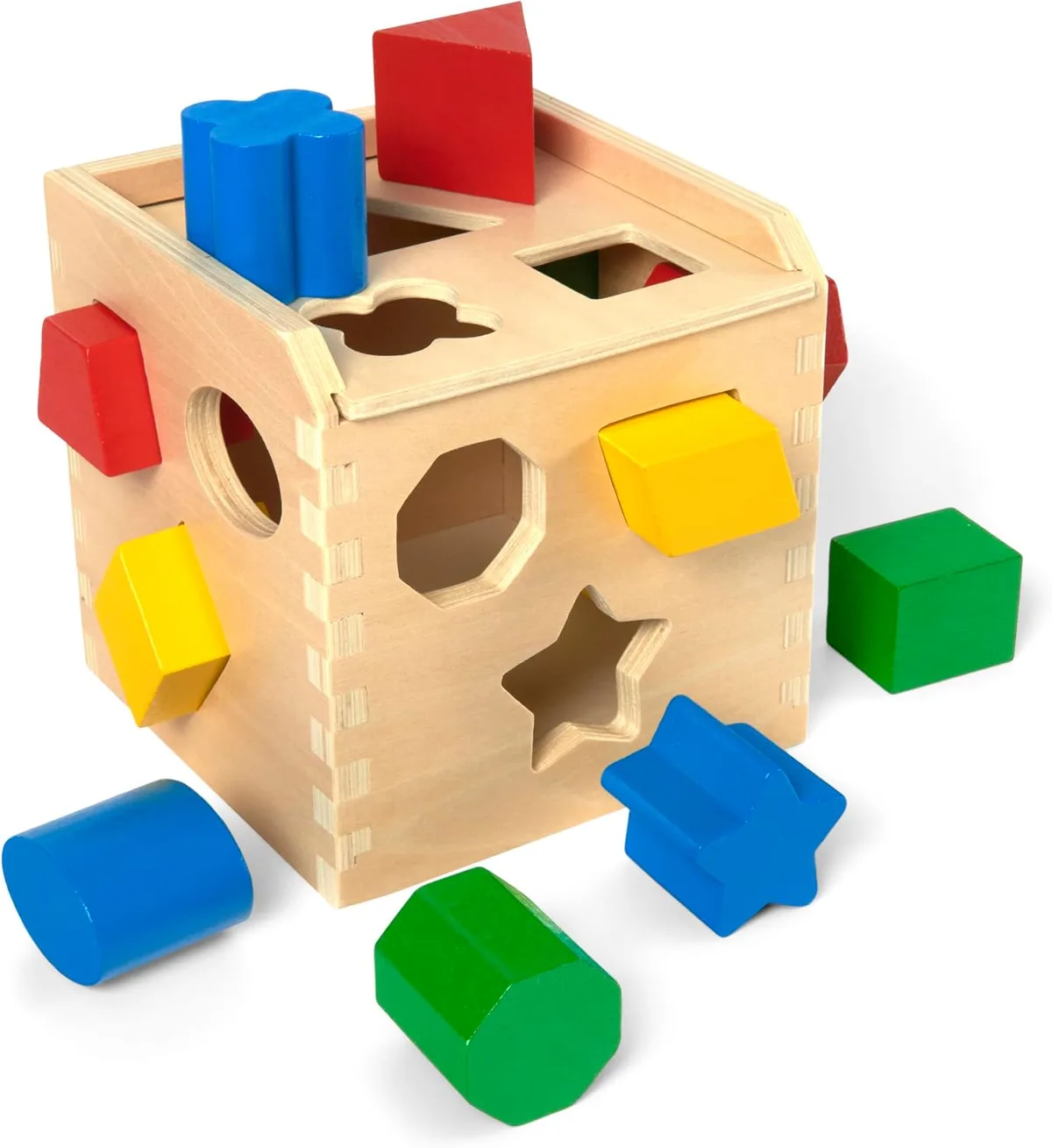
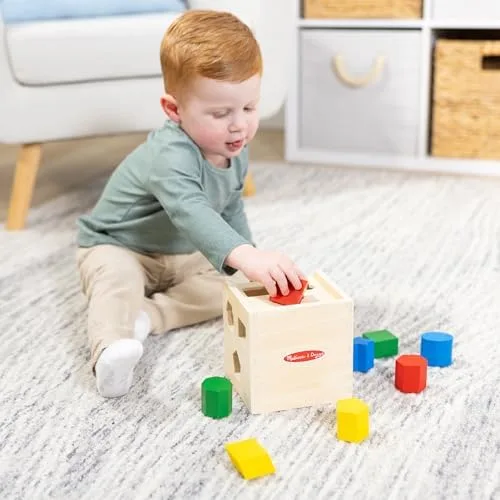
The Melissa & Doug Shape Sorting Cube ($16) is a 5.5-inch wooden cube with:
- 12 shaped cutout holes across four sides of the cube (the top and bottom are solid)
- 12 matching wooden shapes in bright primary and secondary colors
- A removable lid on top for retrieving shapes from inside the cube
- Shapes include: circle, square, triangle, rectangle, star, cross, diamond, heart, hexagon, pentagon, trapezoid, and semicircle
The shapes are painted with non-toxic, child-safe paint. Each shape is approximately 1.5-2 inches at its widest point and thick enough (about 0.75 inches) for small hands to grip comfortably. The cube is made from solid hardwood with a natural finish.
Our Evaluation
Build Quality: 9/10
This is where Melissa & Doug consistently excels. The cube is solid hardwood — heavy enough to feel substantial, light enough for a toddler to carry. The shapes are sanded smooth with no rough edges or splinters. The paint application is clean and even. The cutout holes are precisely sized with just enough tolerance for shapes to slide through without excessive force.
The removable lid fits snugly but lifts off easily enough for toddler hands. One minor note: the shapes will eventually show paint wear at contact points, particularly the edges that slide against the wooden holes. This is cosmetic and doesn’t affect function.
Play Value: 8/10
The core shape-matching activity provides reliable engagement for children in the 18-36 month developmental window. But the play extends beyond matching: toddlers in our testing also used the shapes for color naming, pretend play (the shapes become food, animals, characters), stacking, and rolling. The cube itself becomes a container, a drum, a building block.
The 12-shape variety is well-calibrated. Simpler shapes (circle, square, triangle) provide immediate success for younger children. More complex shapes (trapezoid, hexagon, semicircle) extend the challenge for older toddlers. This natural difficulty gradient means the toy grows with the child across approximately 18 months of active use.
Age Appropriateness: 8/10
The 2+ rating is appropriate for independent play. Supervised 18-month-olds can engage with the simpler shapes. By 3.5-4 years, most children have mastered all 12 shapes and the sorting activity loses its challenge — at that point, the shapes transition to imaginative play materials.
Durability: 9/10
Wooden toys from Melissa & Doug are built to survive toddlerhood. The cube and shapes showed no structural issues during our testing. The paint is the only vulnerability — expect gradual wear, especially on corners and edges. The shapes are too large for choking hazard concerns but small enough to disappear between couch cushions.
Value for Money: 9/10
At $16 for a high-quality wooden toy with 12+ months of active developmental use, the Shape Sorting Cube is one of the best values in our toddler toy coverage. The cost per month of meaningful engagement rivals any toy in its category.
The Evidence
Shape sorting and spatial cognition. Shape sorting is one of the most well-studied toy interactions in developmental psychology. Örnkloo and von Hofsten (2007) demonstrated that shape-fitting tasks require children to integrate visual perception with manual action — specifically, to mentally rotate shapes to match orientations, a foundational spatial skill.1
Object categorization. Gopnik and Meltzoff (1997) documented how shape sorting supports early categorization abilities — children learning to group objects by shared properties (shape, color) are building the cognitive infrastructure for later abstract thinking.2
Fine motor development. The precision required to orient and insert shapes through matched holes supports fine motor development. Lockman (2000) studied how children’s manipulation of objects in relation to openings (inserting keys, fitting shapes) develops across the second year of life.3
The honest summary: Shape sorting is among the most evidence-supported play activities for toddlers. The cognitive demands — spatial reasoning, shape discrimination, motor planning, categorization — are directly supported by developmental research. Melissa & Doug’s version is a well-executed example of a fundamentally sound toy concept.
Safety Notes
All Melissa & Doug products meet ASTM F963 and CPSIA standards. The shapes are large enough to pass choking tests. The paint is non-toxic and meets ASTM D4236 standards. No CPSC recalls have been issued for this product.
The shapes are small enough to be thrown with reasonable velocity by an enthusiastic toddler — the wooden construction means they can cause minor injury on impact. Standard supervision applies.
The Verdict
The Melissa & Doug Shape Sorting Cube is a near-perfect execution of one of the oldest and most validated toy concepts in developmental psychology. The build quality is excellent, the shape variety provides an appropriate difficulty progression, and the $16 price point makes it accessible to nearly any family. It doesn’t need batteries, apps, or smart features because the cognitive task itself — match the shape to the hole — is inherently engaging for the target age range.
Product Rating: 8/10 — Excellent build quality, well-calibrated difficulty, outstanding value. Would score higher with a refreshed color palette and paint durability improvements.
Evidence Rating: Moderate — Shape sorting is one of the most well-researched play activities for toddlers. Strong evidence for spatial cognition and categorization benefits.
Who Should Buy This
- Parents of 18-36 month olds looking for screen-free, battery-free learning toys
- Families who value wooden toy construction and durability
- Gift-givers seeking a reliable, universally appropriate toddler gift
- Daycare and preschool programs building a manipulative toy library
Who Should Skip This
- Parents of children over 3.5 years (they’ve likely outgrown the sorting challenge)
- Families who already own a quality shape sorter from another brand
- Anyone looking for an electronic or interactive learning toy
This review reflects our independent evaluation. ScienceBasedKids.com purchased this product at retail price. We may earn a commission if you purchase through our links, which helps fund our research. This never influences our ratings.
Footnotes
-
Örnkloo, H., & von Hofsten, C. (2007). “Fitting objects into holes: On the development of spatial cognition skills.” Developmental Psychology, 43(2), 404-416. ↩
-
Gopnik, A., & Meltzoff, A. N. (1997). Words, thoughts, and theories. MIT Press. ↩
-
Lockman, J. J. (2000). “A perception-action perspective on tool use development.” Child Development, 71(1), 137-144. ↩
12 shapes total. Success defined as correct hole identification and insertion without adult guidance.
Recommended Accessories
Affiliate links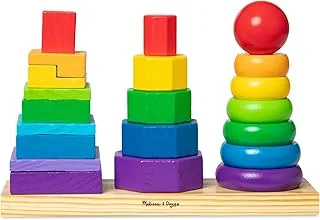
Melissa & Doug Geometric Stacker
“Ring stacking with shape and color sorting. Complementary skill set.”
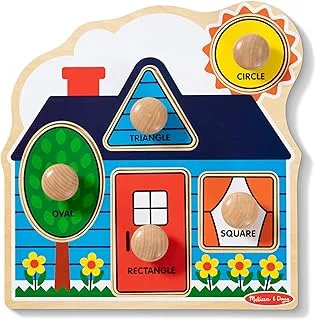
Melissa & Doug First Shapes Jumbo Knob Puzzle
“Flat puzzle version of shape matching. Large knobs for younger hands.”
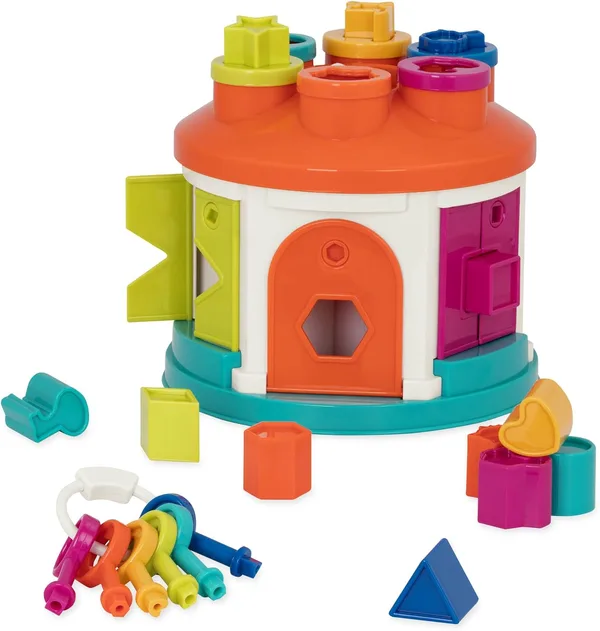
Battat Shape Sorter House
“More complex sorting with color-coded keys. Steps up the challenge.”
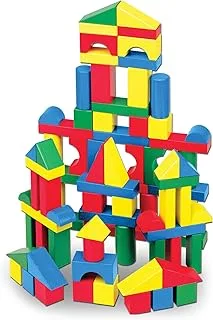
Melissa & Doug Wooden Building Blocks Set (100-piece)
“Extends the shape recognition into open-ended construction play.”