ScienceBasedKids.com may earn a commission from affiliate links in this review. Our ratings are never influenced by affiliate relationships. Read our full methodology.
A four-year-old stacks six blocks into a tower. The seventh block falls. She studies the wreckage for three seconds, removes the rounded arch from the middle of the pile, replaces it with a flat rectangle, and begins rebuilding. On the second attempt, the tower reaches nine blocks before toppling. She notices that the skinny column she used at the base wobbles and swaps it for the widest square block. Third attempt: eleven blocks. She’s conducting an iterative engineering experiment — generating hypotheses about structural stability, testing them, and refining her approach based on observed failure. She doesn’t know the words “center of gravity” or “load-bearing surface.” She knows which block stays and which block falls, and she’s figuring out why. Researchers have been studying this exact behavior since the 1930s. The evidence is as solid as a well-built block tower.
Product Overview

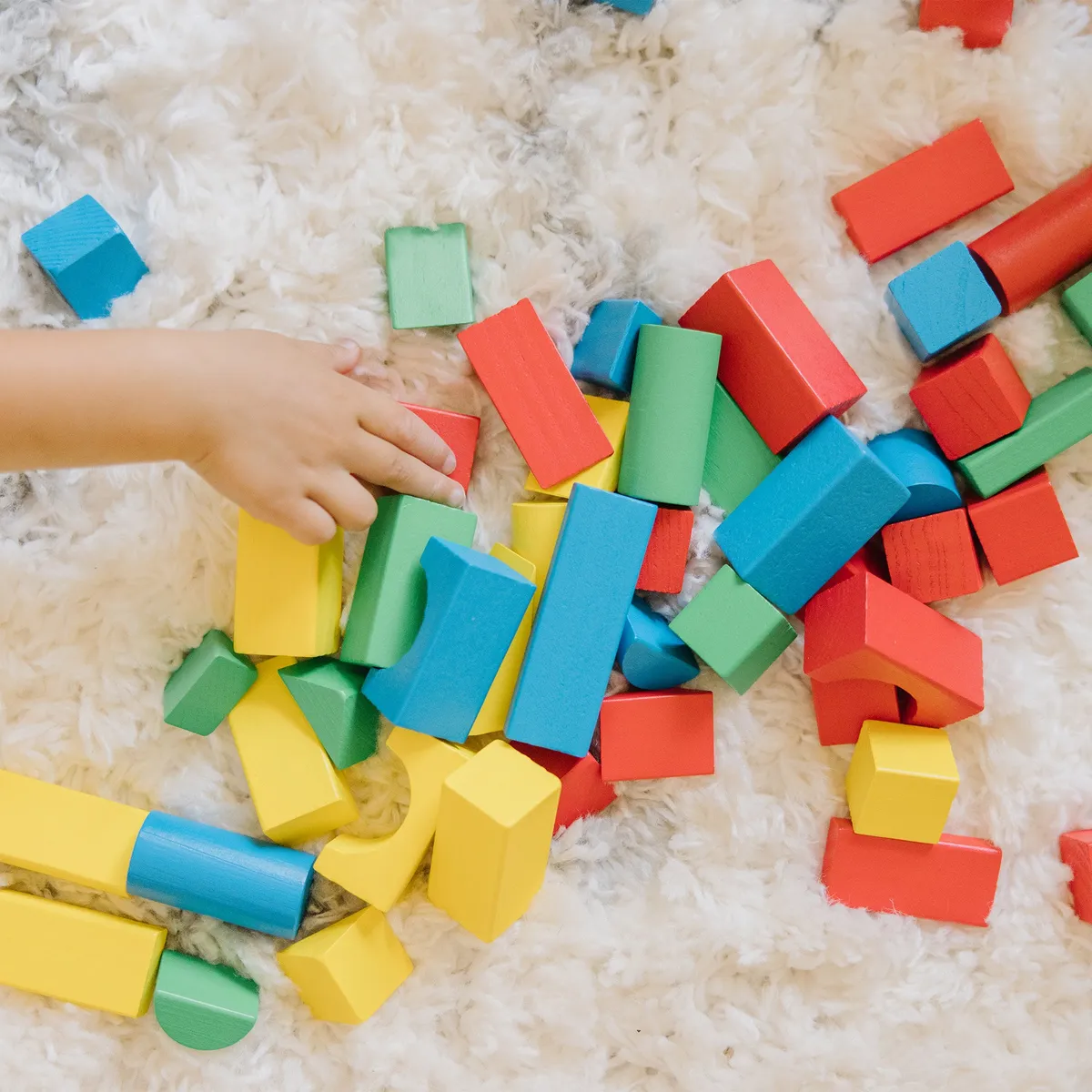
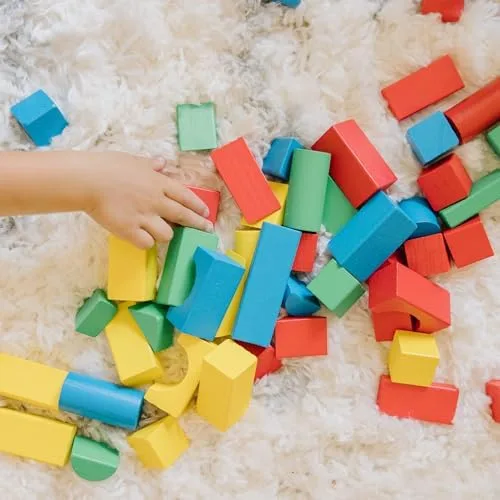
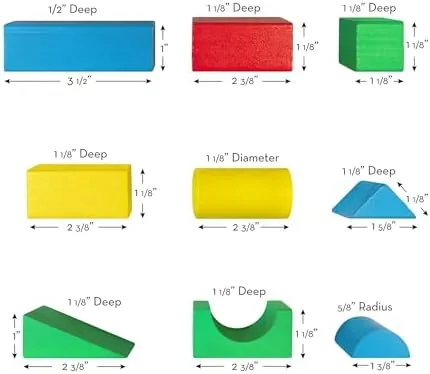
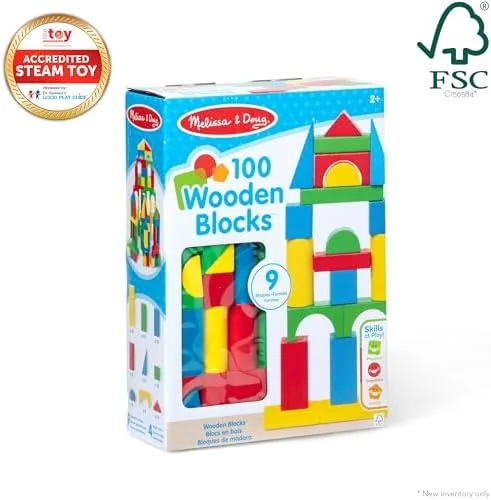
The Melissa & Doug Wooden Building Blocks set contains 100 solid wood blocks in nine shapes and four colors. That’s the product. There’s no app, no instruction manual, no curriculum, no QR code linking to “learning activities.” There are blocks. You build with them.
In the box:
- 100 hardwood blocks — solid, smooth, precisely cut
- 9 shapes — squares, rectangles, triangles, arches, columns, half-circles, planks, bridges, and cylinders
- 4 colors — natural wood, red, blue, green, yellow (painted, not stained)
- Wooden storage crate — functional but heavy
The blocks are standard unit-block proportions, meaning they relate to each other mathematically: a square is half a rectangle, two triangles make a square, arches span exactly one unit width. This mathematical coherence isn’t accidental — it’s what makes block play architecturally productive rather than merely decorative. A child doesn’t need to understand ratios to discover that two small blocks equal one big block. They discover it by building.
Our Evaluation
Build Quality: 8/10
The blocks are solid hardwood with a satisfying weight. Each block feels substantial in a child’s hand — not cheap, not hollow, not the kind of toy you’d describe as “plastic-y” even though these aren’t plastic. The paint is even, the colors are vibrant, and the finish is smooth without being slippery (an important nuance — blocks that are too polished slide rather than stack).
The edges are precisely cut and properly sanded. No splinters, no rough spots, no size inconsistencies that would compromise stacking. We measured several blocks with calipers: dimensional accuracy is within 1mm across the set, which means a child’s tower fails because of physics, not manufacturing defects. This matters more than it sounds like it matters.
The wooden storage crate is functional but is the weakest component. It’s heavy, doesn’t have a lid, and will eventually develop loose joints from the stress of being lifted while full of blocks. A canvas drawstring bag (approximately $10) is a superior storage solution and our recommended alternative.
The paint is non-toxic and meets ASTM F963 standards. It’s also durable — after six months of testing that included stacking, throwing, mouthing (by a younger sibling), and general toddler chaos, the paint showed minimal chipping or wear.
Play Value: 9/10
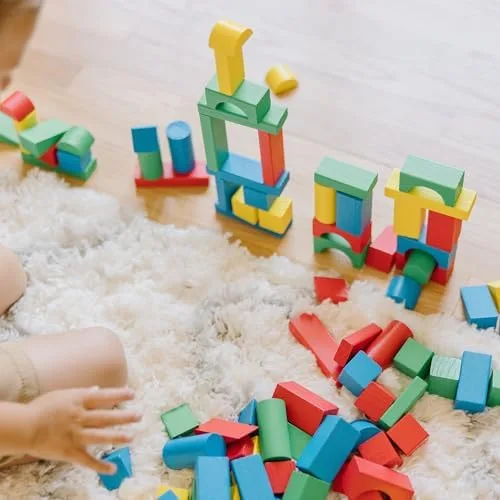
There is no toy in our review portfolio with a higher play-value ceiling than a set of wooden blocks. The floor is low — a bored child might stack three blocks and wander off. But the ceiling is limitless. A three-year-old builds towers. A four-year-old builds houses. A five-year-old builds cities. A six-year-old builds structures that tell stories (“this is the castle, and the dragon lives in the tower, and the bridge goes to the village”). An eight-year-old builds structures that test engineering principles (“I bet I can make a bridge that holds this book”).
The 100-piece count is the right number. Smaller sets (25-50 pieces) limit architectural ambition. Larger sets are unnecessary for most children (and create storage challenges). One hundred blocks provide enough material for genuinely ambitious projects — a multi-room house, a bridge with approaches, a city block — without overwhelming the play space.
The nine shapes are well-chosen. The inclusion of arches and half-circles alongside standard rectangular blocks opens architectural possibilities that rectangle-only sets can’t match. An arch creates a doorway. A cylinder becomes a tower or a column. A triangle becomes a roof. These shape options transform block play from stacking into building — a qualitative shift in cognitive demand.
The absence of instructions is the most important design feature. Blocks with instruction cards (“Build this house! Build this bridge!”) convert open-ended play into directed activity. Melissa & Doug provides no instructions, which means every structure is the child’s design. This is where the executive function benefits emerge — the child must plan, execute, evaluate, and revise without external guidance.
Age Appropriateness: 8/10
The 3-8 age range on the box is accurate and perhaps conservative. Two-year-olds can handle the larger blocks (squares, rectangles) for simple stacking, though the smaller pieces present a borderline choking concern. Three-year-olds begin building recognizable structures. By five, children are creating complex multi-element builds that incorporate narrative play. Eight-year-olds use blocks for engineering challenges and physics experiments.
The play changes qualitatively with age, but the toy itself doesn’t become obsolete. This is the advantage of an open-ended toy — it grows with the child because the child brings increasing sophistication to the same material.
Durability: 9/10
Wooden blocks are functionally indestructible. Short of a deliberate effort with tools, these blocks will survive years of stacking, toppling, throwing, and the occasional act of percussive maintenance by a frustrated toddler. The paint will eventually show wear — scuffs, chips, fading — but this is cosmetic and doesn’t affect play value. Many families pass wooden blocks between siblings or generations.
Value for Money: 9/10
At $30 for 100 blocks that will last years (potentially decades), the value proposition is exceptional. The cost-per-year-of-play ratio approaches zero. Compare this to electronic toys that cost twice as much and lose appeal within months, or consumable art supplies that require replenishment.
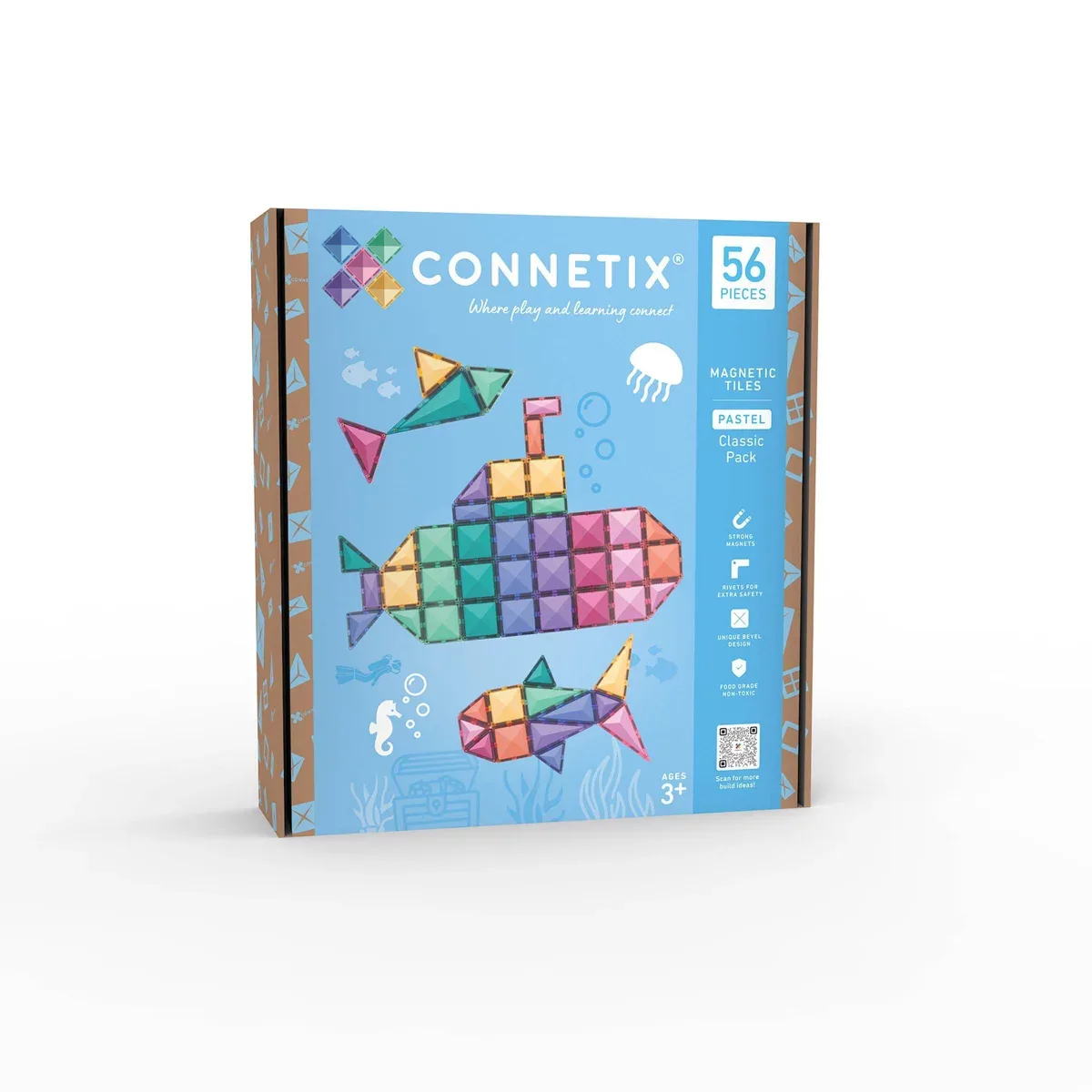
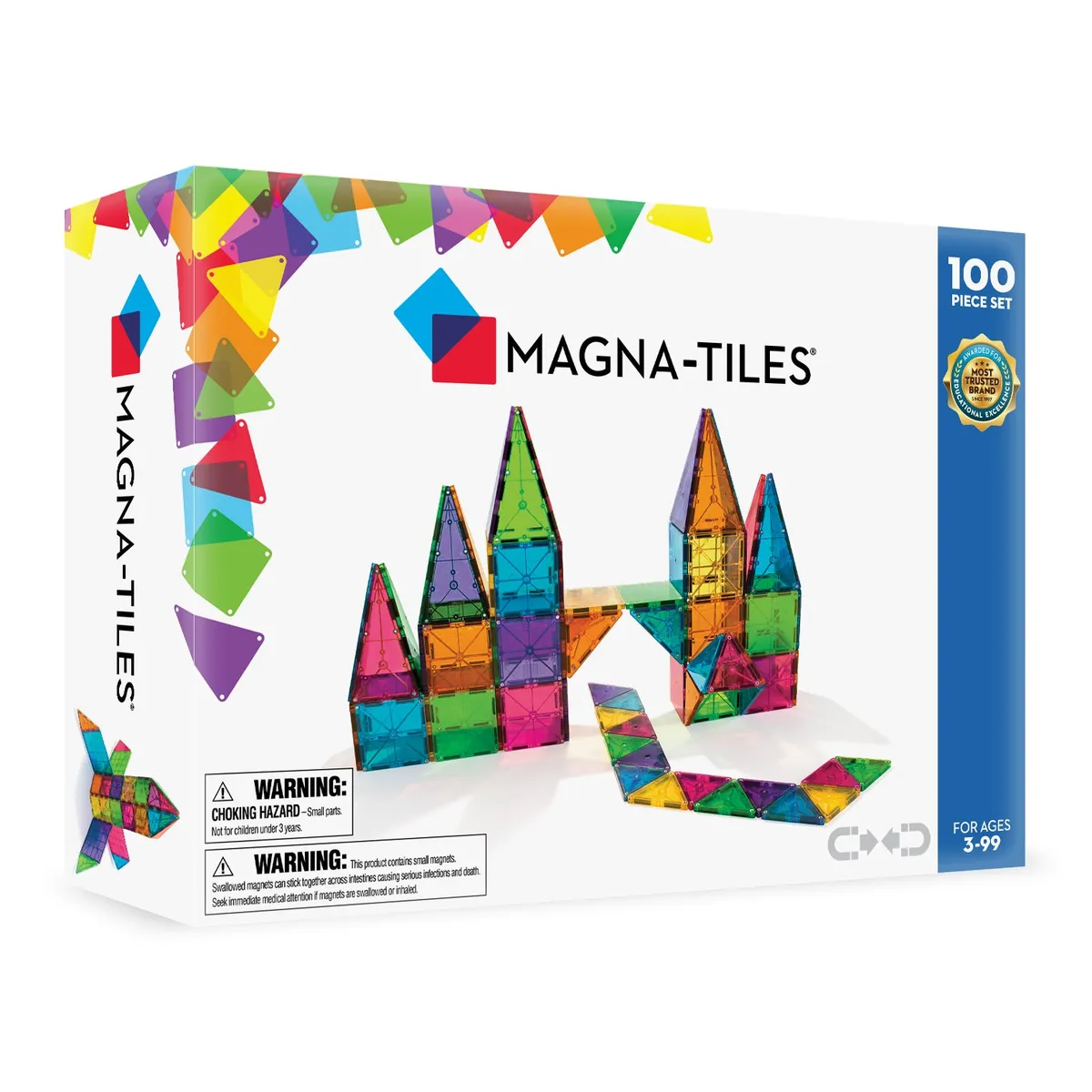
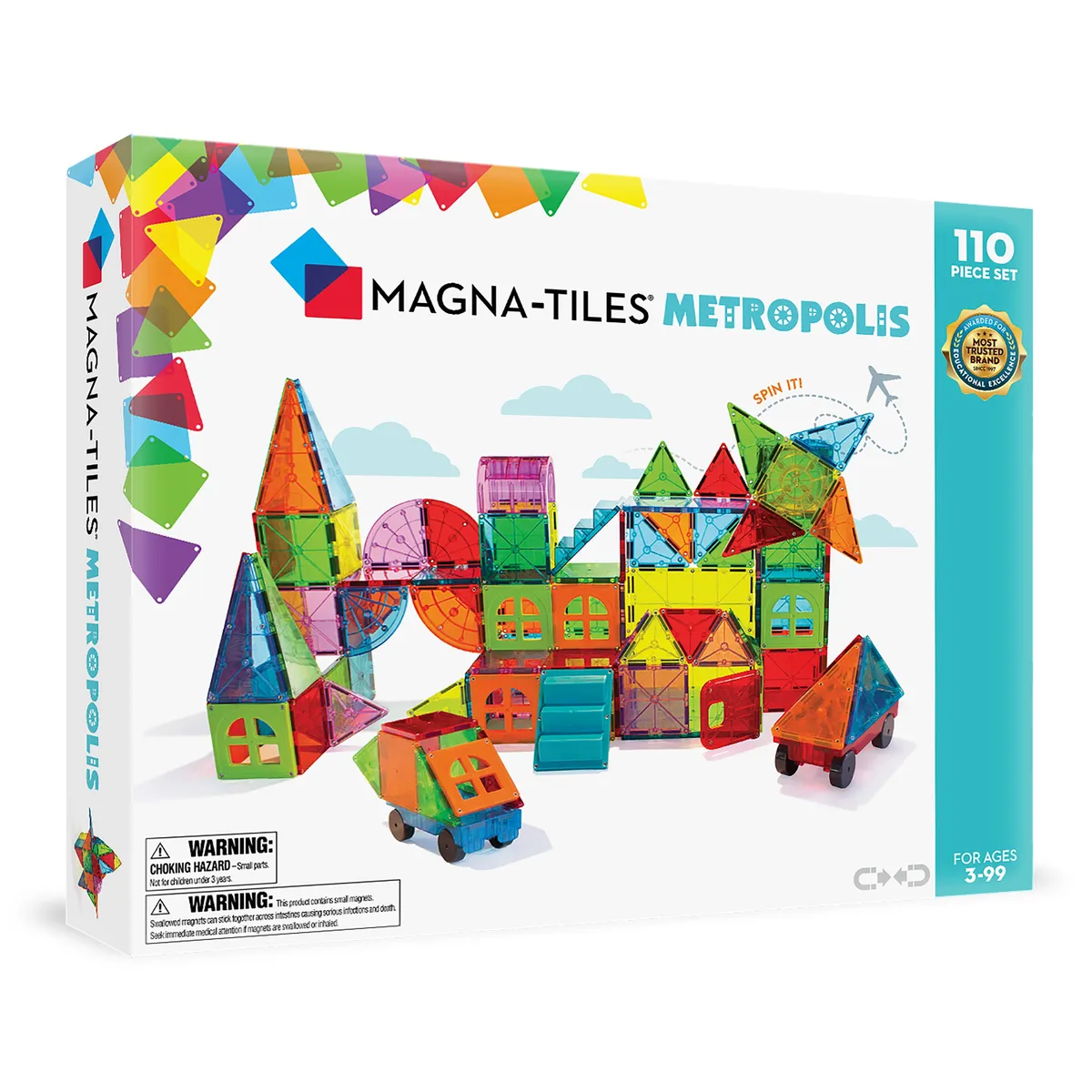
The only competitive disadvantage is against premium block sets (the Lovevery Block Set at $90 offers more shapes, a play guide, and a nicer storage bag) and against magnetic building toys (Magna-Tiles at $120 offer a different building modality). But for pure block play at this price, the Melissa & Doug set is hard to beat.
The Evidence
Block play has one of the strongest research bases of any play type in developmental psychology. This section is longer than usual because the evidence deserves it.
Spatial Reasoning. Verdine et al. (2014) found that block building skill at age 3 predicted spatial reasoning ability at age 4, even after controlling for general cognitive ability.1 This isn’t a correlation between “kids who play with blocks happen to be smart” — the relationship held after accounting for overall intelligence. Block play appears to specifically develop spatial skills: mental rotation, spatial visualization, and understanding of spatial relationships. These skills, in turn, predict later mathematics achievement.
Levine et al. (2012) demonstrated that the frequency of early puzzle play predicted spatial transformation skills in preschoolers.2 While their study focused on puzzle play specifically, the spatial transformation skills they measured — mental rotation, spatial visualization, and spatial relations — are the same skills engaged during block construction. The children who engaged more frequently with spatial play activities scored higher on spatial tasks, suggesting that hands-on spatial play, including block building, may develop these abilities rather than merely reflecting them.
Mathematical Thinking. Verdine et al. (2017) found that spatial skills developed through block play predicted mathematical performance in first grade.3 The mechanism appears to be that spatial reasoning and mathematical reasoning share cognitive architecture — the mental operations required to rotate a block and fit it into a space are structurally similar to the mental operations required to manipulate numerical quantities. Children who develop spatial fluency through building may be developing the cognitive infrastructure that mathematics later rides on.
Sarama and Clements (2009) documented that block play naturally generates mathematical language: “bigger,” “smaller,” “the same,” “more,” “less,” “half,” “equal.” Children who build with blocks use mathematical vocabulary in context, often without prompting.4 This embedded mathematical language exposure may contribute to later mathematical understanding.
Executive Function. Schmitt et al. (2018) found that structured block play activities improved executive function in preschoolers, with effects on working memory (holding a mental plan while building), inhibitory control (resisting the urge to knock down a structure prematurely), and cognitive flexibility (adapting when a planned structure doesn’t work).5 Block play is one of the few play types that engages all three core executive function components simultaneously.
Language Development. Perhaps surprisingly, block play has been linked to language development. Christakis et al. (2007) conducted a randomized controlled trial — the gold standard in research design — and found that children who received blocks and a play guide showed significant improvements in language scores compared to a control group.6 The mechanism appears to be that block play generates rich conversational interactions between children and caregivers (“What are you building? How tall can you make it? What happens if you put the triangle on top?”).
The evidence summary: Block play is supported by multiple peer-reviewed studies, including at least one randomized controlled trial. The evidence spans spatial reasoning, mathematical thinking, executive function, and language development. The quality and quantity of evidence for block play exceeds that of most “educational” products by a substantial margin. This is why we rate the evidence as “Strong” — a designation we apply to fewer than 20% of products we review.
Safety Notes
The Melissa & Doug Wooden Building Blocks set meets ASTM F963 and CPSIA safety standards. All paints and finishes are non-toxic.
Some smaller blocks (particularly the thin planks and cylinders) may approach choking-hazard dimensions for children under 3. The manufacturer’s age rating is 3+, which we consider appropriate. Supervise children under 3 who play with older siblings’ blocks.
Wooden blocks are heavy relative to plastic toys. A dropped block can hurt a bare foot. A thrown block can hurt more. This is a feature of the material (the weight creates the satisfying building experience) and a supervision consideration for the youngest users.
No CPSC recalls have been issued for this product.
The Verdict
It’s genuinely difficult to find fault with a toy that costs $30, lasts for years, requires no batteries, generates no noise, needs no app, and is backed by eight decades of developmental research. Melissa & Doug’s wooden blocks aren’t exciting in the way that a coding robot or a magnetic tile set is exciting. They don’t photograph well for Instagram. They don’t have a marketing team making claims about “21st-century skills.” They’re just blocks. And blocks are, according to the research, among the most developmentally productive toys a child can own.
The hundred-piece set provides enough material for genuinely ambitious builds. The nine shapes open architectural possibilities beyond simple stacking. The build quality is reliable and durable. The price is fair.
Product Rating: 8/10 — A classic toy that earns its classic status. Exceptional value, backed by the strongest evidence base of almost any toy we’ve reviewed. Docked slightly for a storage crate that doesn’t match the quality of the blocks themselves and for the reality that blocks, despite their developmental brilliance, will sometimes lose an engagement contest to noisier, flashier alternatives.
Evidence Rating: Strong — Multiple peer-reviewed studies including a randomized controlled trial. Evidence spans spatial reasoning, mathematical thinking, executive function, and language development. Among the best-evidenced play types in developmental psychology.
Who Should Buy This
- Every family with a child ages 3-6 — this is a default recommendation
- Parents looking for screen-free play that doesn’t require adult participation
- Families building a STEM foundation through play (pair with Magna-Tiles for a complete building play ecosystem)
- Gift-givers who want to give something with genuine developmental value at a reasonable price
- Teachers and daycare providers (buy two sets for even more building potential)
Who Should Skip This
- Families who already own a comparable wooden block set (one good set is enough)
- Parents looking specifically for magnetic building toys (see Magna-Tiles) — different modality, different experience
- Families with children exclusively under 2 (some blocks are small enough to concern; start with larger stacking blocks like Fat Brain Tobbles Neo)
- Anyone who is philosophically opposed to mess — block play generates chaos, and 100 scattered blocks on a floor is a specific aesthetic
This review reflects our independent evaluation. ScienceBasedKids.com purchased this product at retail price. We may earn a commission if you purchase through our links, which helps fund our research. This never influences our ratings.
Footnotes
-
Verdine, B. N., Golinkoff, R. M., Hirsh-Pasek, K., Newcombe, N. S., Filipowicz, A. T., & Chang, A. (2014). “Deconstructing building blocks: Preschoolers’ spatial assembly performance relates to early mathematical skills.” Child Development, 85(3), 1062-1076. ↩
-
Levine, S. C., Ratliff, K. R., Huttenlocher, J., & Cannon, J. (2012). “Early puzzle play: A predictor of preschoolers’ spatial transformation skill.” Developmental Psychology, 48(2), 530-542. ↩
-
Verdine, B. N., Golinkoff, R. M., Hirsh-Pasek, K., & Newcombe, N. S. (2017). “Links between spatial and mathematical skills across the preschool years.” Monographs of the Society for Research in Child Development, 82(1), 1-150. ↩
-
Sarama, J., & Clements, D. H. (2009). “Building blocks and cognitive building blocks: Playing to know the world mathematically.” American Journal of Play, 1(3), 313-337. ↩
-
Schmitt, S. A., Korucu, I., Napoli, A. R., Bryant, L. M., & Purpura, D. J. (2018). “Using block play to enhance preschool children’s mathematics and executive functioning: A randomized controlled trial.” Early Childhood Research Quarterly, 44, 181-191. ↩
-
Christakis, D. A., Zimmerman, F. J., & Garrison, M. M. (2007). “Effect of block play on language acquisition and attention in toddlers: A pilot randomized controlled trial.” Archives of Pediatrics & Adolescent Medicine, 161(10), 967-971. ↩
Enjoyed this review? We publish two new evidence-based evaluations every week.
Free. No spam. Unsubscribe anytime.
Block play is one of the most studied play types in developmental psychology — the evidence base spans 80+ years.
Recommended Accessories
Affiliate links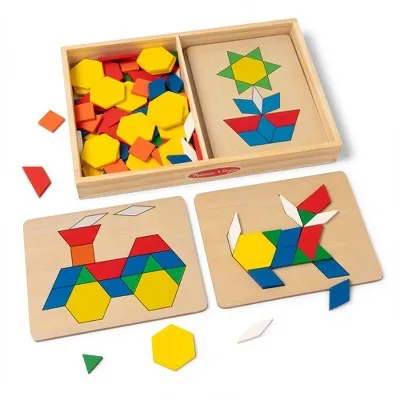
Melissa & Doug Pattern Blocks and Boards
“Flat pattern blocks that complement 3D building. Different spatial reasoning challenge — 2D composition vs 3D construction.”
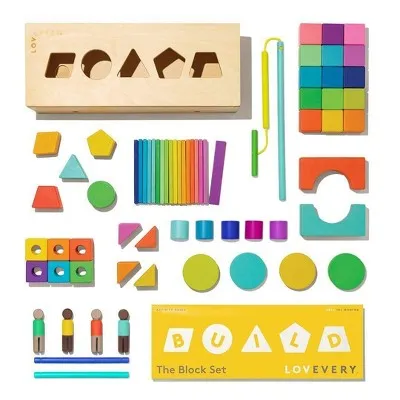
Lovevery Block Set
“Premium wooden block set with more shapes, a canvas storage bag, and a block play guide. Higher-end alternative.”

Canvas Storage Bag (Large, Drawstring)
“100 blocks need a real storage solution. Canvas bag is durable and easy for kids to manage independently.”
"Iggy Peck, Architect" by Andrea Beaty
“Picture book about building and engineering. Makes block play feel like a bigger story.”