ScienceBasedKids.com may earn a commission from affiliate links in this review. Our ratings are never influenced by affiliate relationships. Read our full methodology.
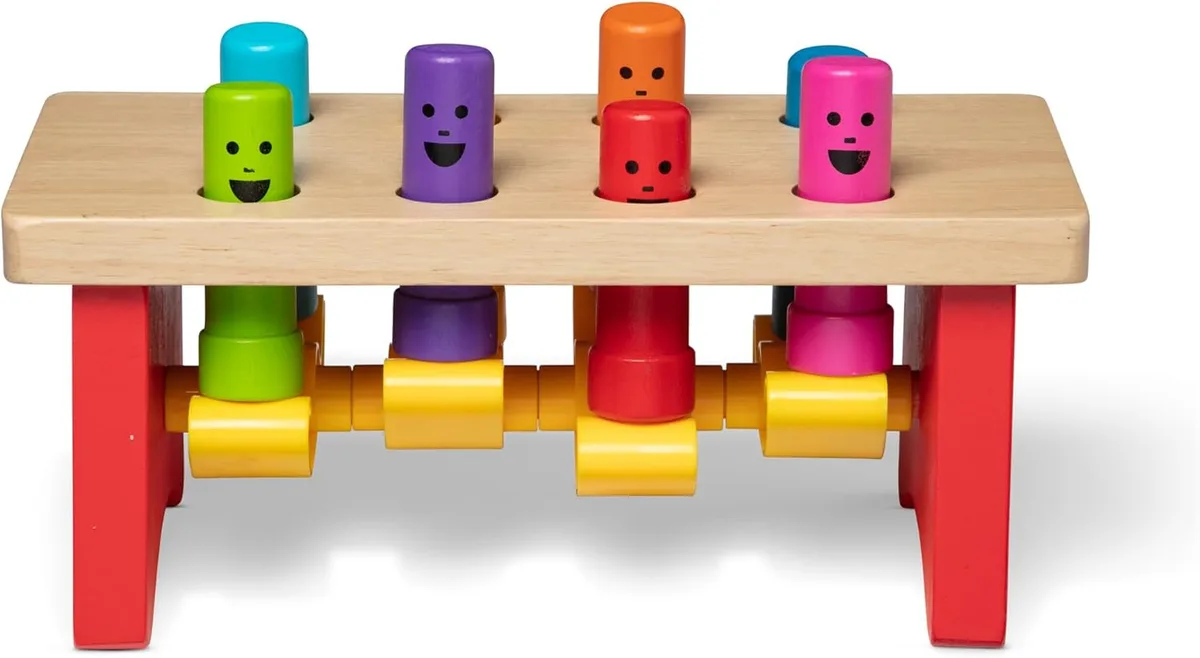
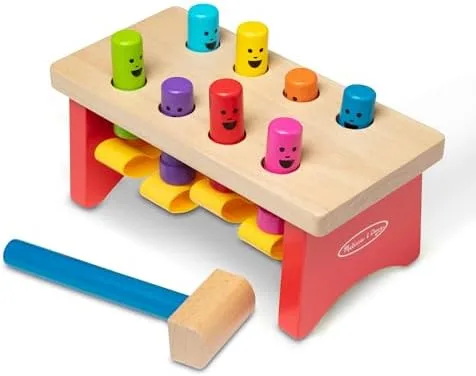
Toddlers want to hit things. This is not a behavioral problem — it’s a developmental reality. Children between 18 and 36 months are developing bilateral coordination, upper body strength, and cause-and-effect understanding through forceful manual actions. The Melissa & Doug Deluxe Pounding Bench takes this natural impulse and gives it a productive target: eight wooden pegs that sink satisfyingly into a wooden frame when struck with a mallet, then pop up on the reverse side for another round.
We tested the Pounding Bench with children ages 18 months to 4 years across three households over four weeks.
Product Overview
The Melissa & Doug Deluxe Pounding Bench ($16) is a wooden pounding toy:
- Frame: Solid hardwood bench with eight peg holes
- Pegs: Eight non-removable, brightly colored wooden pegs
- Mallet: Sturdy wooden mallet with rounded head
- Mechanism: Pegs are paired — pounding one side pushes the other up
- Dimensions: Approximately 10” L x 5” W x 5” H
- Weight: Solid — heavy enough to stay in place during pounding
The pegs are permanently installed and cannot be removed, eliminating choking hazards and the lost-piece problem simultaneously. The mallet is sized for toddler hands with a short handle and proportioned head.
Our Evaluation
Build Quality: 8/10
Melissa & Doug’s wooden construction is consistently excellent, and the Pounding Bench is no exception. The hardwood is smooth, the paint is vibrant and non-toxic, and the peg mechanism slides freely without sticking. The mallet is well-balanced for small hands and the head is large enough to make contact satisfying without requiring precision beyond toddler capabilities.
The pegs show minor paint wear at contact points after extended use — the mallet strikes gradually remove paint from the peg tops. This is cosmetic and doesn’t affect function.
Play Value: 7/10
The pounding action is intensely satisfying for toddlers. The immediate visual result (peg goes down), the auditory feedback (wooden thunk), and the kinesthetic sensation (mallet impact) create a rich cause-and-effect experience. Children in our testing typically engaged in pounding bursts of 3-5 minutes, returning to the bench multiple times throughout a play session.
The paired peg mechanism adds an element of surprise — pound one peg and a different peg pops up elsewhere. This introduces a rudimentary lesson in connected systems, though toddlers are mostly just delighted by the pop-up effect.
Age Appropriateness: 7/10
The 2+ age recommendation is conservative — supervised 18-month-olds in our testing could use the mallet effectively. The 4-year upper bound is accurate; by then, the pounding task is too simple to engage and children prefer more complex activities. The developmental sweet spot is 20-30 months.
Durability: 8/10
Wooden construction handles years of pounding. The mallet is the most stressed component and showed no damage during testing. The peg mechanism may require occasional loosening if pegs become sticky from paint wear — a drop of food-safe oil resolves this.
Value for Money: 8/10
At $16 for a high-quality wooden toy with 18+ months of active use, the value is excellent.
The Evidence

Tool use development. Using a mallet is early tool use — an important cognitive milestone. Keen (2011) reviewed the development of tool-use skills in early childhood, finding that children progress from reflexive striking to planned, targeted actions between 12 and 30 months.1
Bilateral coordination. Pounding requires coordinated action between both hands (one steadying, one striking) and between eyes and hands. This bilateral coordination is a precursor to many later fine motor skills including writing.
Emotional regulation through physical play. Physical outlets for energy and frustration support emotional regulation development. The pounding bench provides a sanctioned target for forceful action.
The honest summary: Pounding play supports tool use development, bilateral coordination, and cause-and-effect understanding. The research base is moderate — well-supported conceptually but limited in toy-specific studies.
Safety Notes
Meets ASTM F963 and CPSIA standards. Non-removable pegs eliminate choking hazards. Non-toxic paint meets ASTM D4236. The mallet should be used with supervision — it’s a wooden hammer in the hands of a toddler. No CPSC recalls on record.
The Verdict
The Melissa & Doug Deluxe Pounding Bench is a classic for good reason. It channels toddler energy into productive play, builds coordination and tool-use skills, and is built to survive years of enthusiastic hammering. It’s not innovative, it’s not electronic, and it doesn’t need to be either. Sometimes the best toys are the ones that have been working for decades.
Product Rating: 7/10 — Excellent build quality, satisfying play experience, great value. Narrow engagement window and simple concept limit the score.
Evidence Rating: Emerging — Tool use and bilateral coordination development are well-supported. Pounding toy-specific evidence is limited.
Who Should Buy This
- Parents of 18-30 month olds looking for physical, active play toys
- Families who value wooden toy construction
- Gift-givers seeking reliable, inexpensive toddler gifts
- Occupational therapy settings working on bilateral coordination
Who Should Skip This
- Families with children over 3 (likely outgrown)
- Parents looking for quieter play options
- Anyone expecting complex or extended play engagement
This review reflects our independent evaluation. ScienceBasedKids.com purchased this product at retail price. We may earn a commission if you purchase through our links, which helps fund our research. This never influences our ratings.
Footnotes
-
Keen, R. (2011). “The development of problem solving in young children: A critical cognitive skill.” Annual Review of Psychology, 62, 1-21. ↩
Recommended Accessories
Affiliate links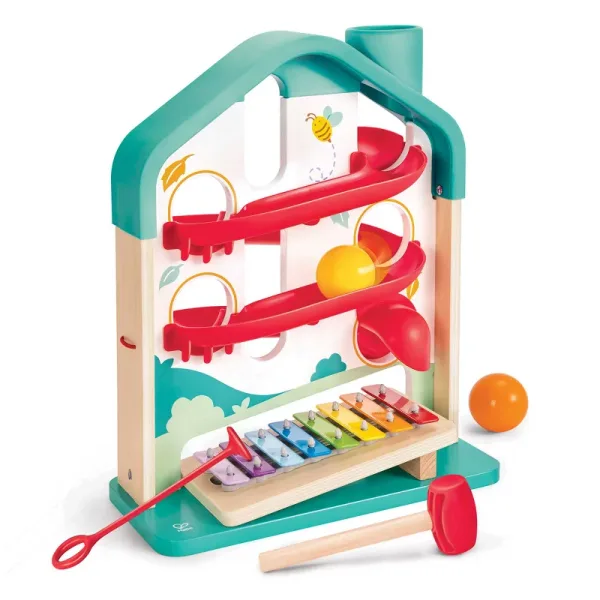
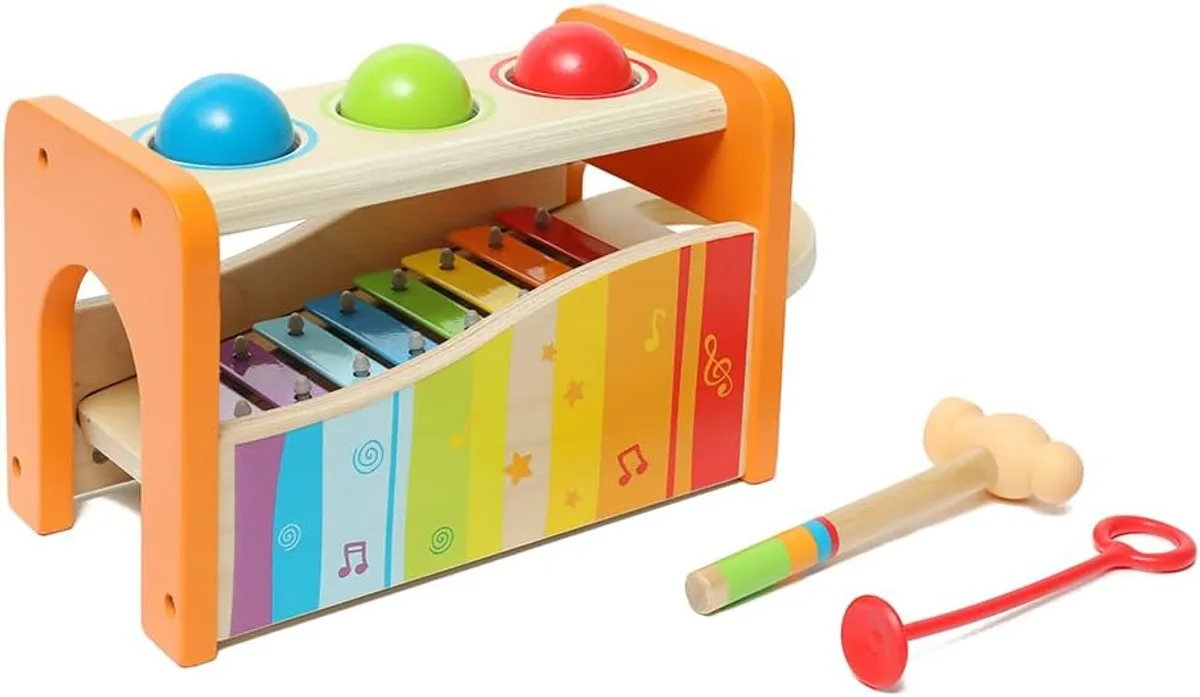
Hape Pound & Tap Bench with Slide Out Xylophone
“Similar pounding mechanism with added xylophone. Combines percussion and pounding.”
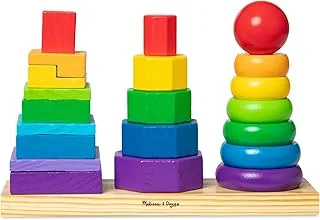
Melissa & Doug Geometric Stacker
“Fine motor complement to the gross motor pounding. Same brand, same quality.”
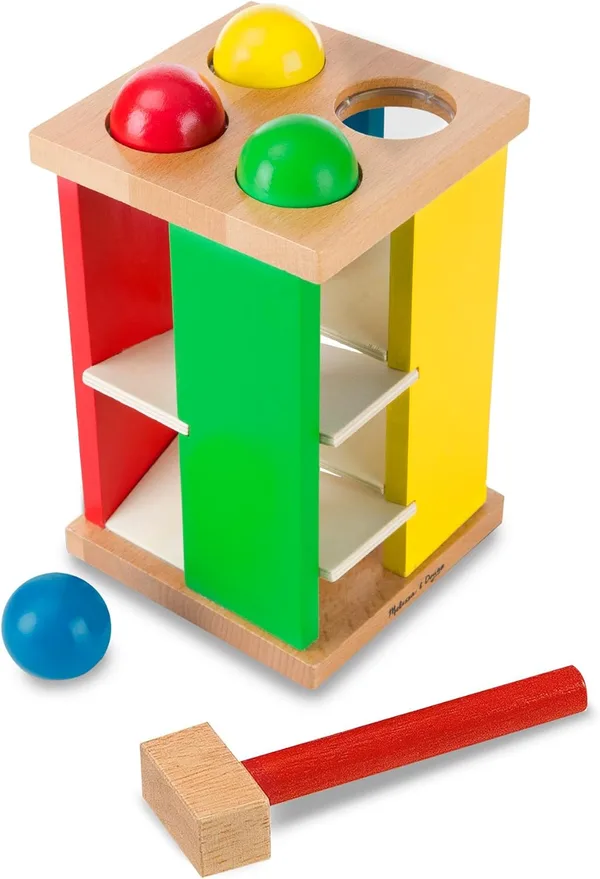
Melissa & Doug Deluxe Pound and Roll Tower
“Pound balls through holes and watch them roll down a tower. Different cause-and-effect.”
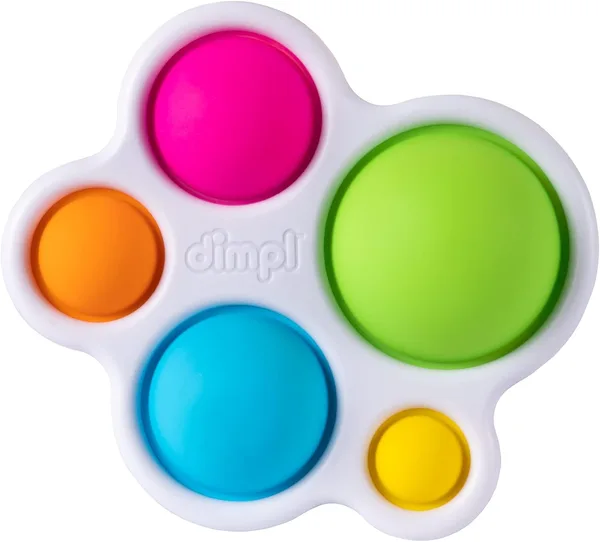
Fat Brain Toys Dimpl
“Gentler tactile complement. Pushing silicone bubbles after hammering wooden pegs.”