ScienceBasedKids.com may earn a commission from affiliate links in this review. Our ratings are never influenced by affiliate relationships. Read our full methodology.
The three-year-old stood in front of the easel, brush in one hand, the other hand planted on her hip, and painted a circle. “That’s the sun,” she announced. Then she painted a larger circle around it. “That’s the sun’s house.” Then she painted the entire paper red. “Now the sun’s house is on fire.” She turned to her mother with complete satisfaction. “I need more paper.”
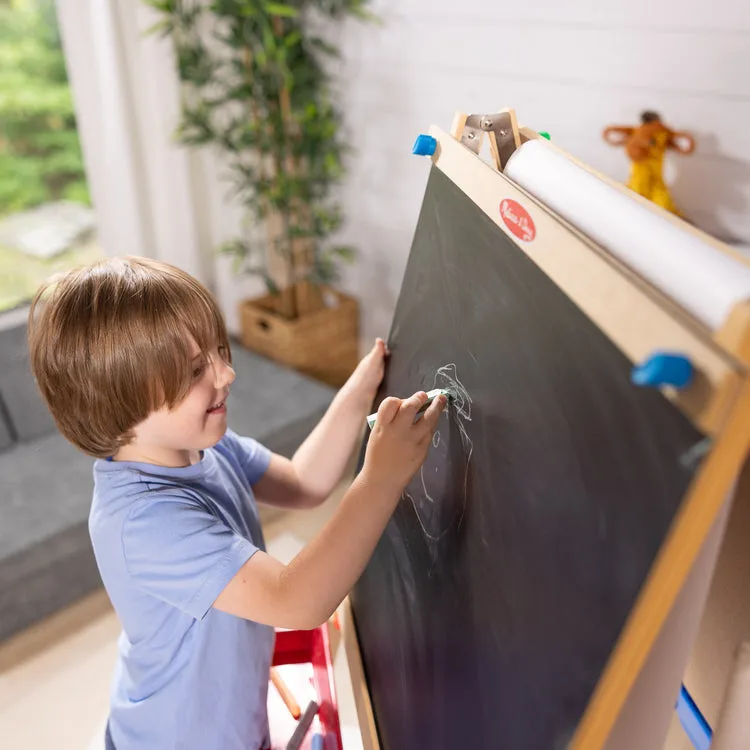
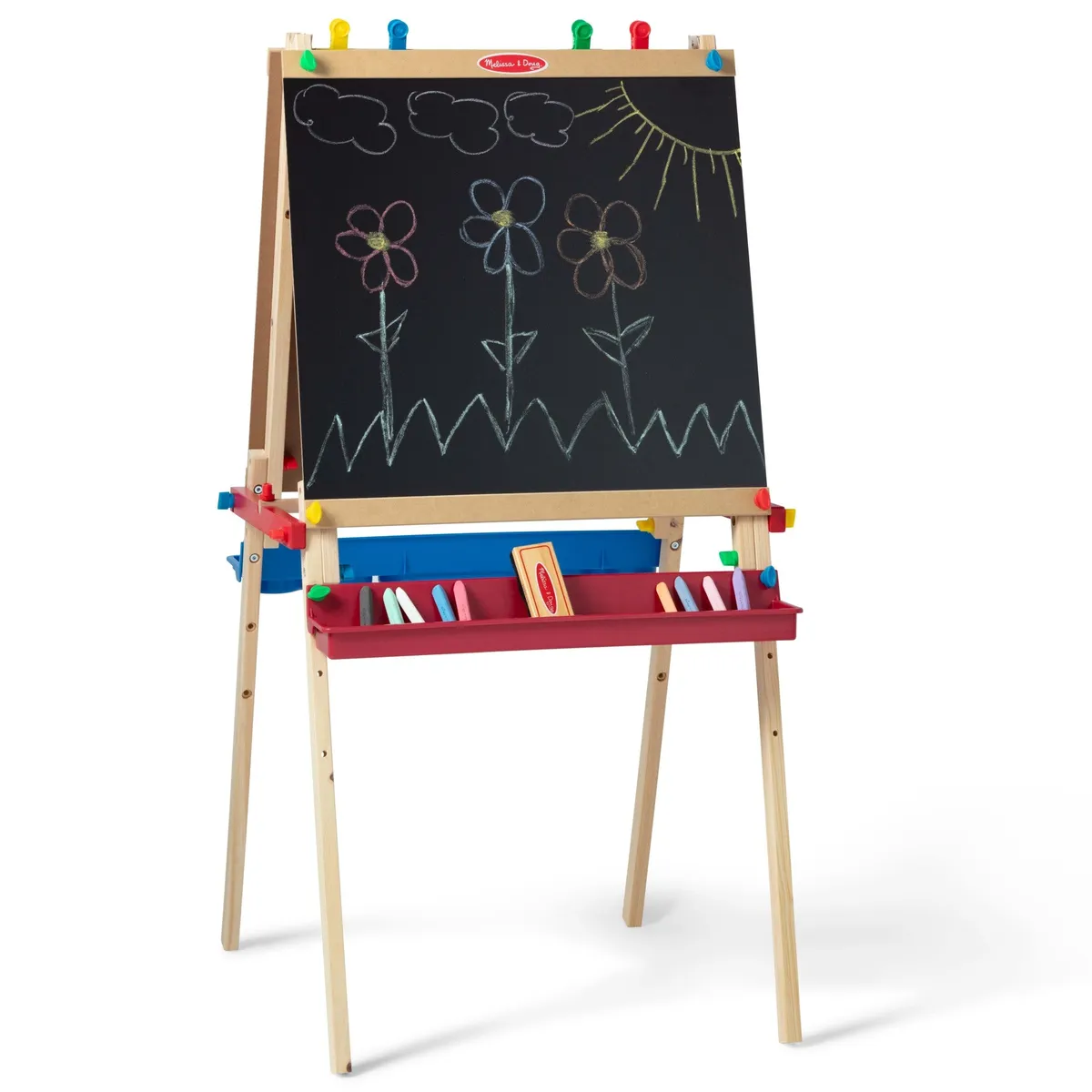
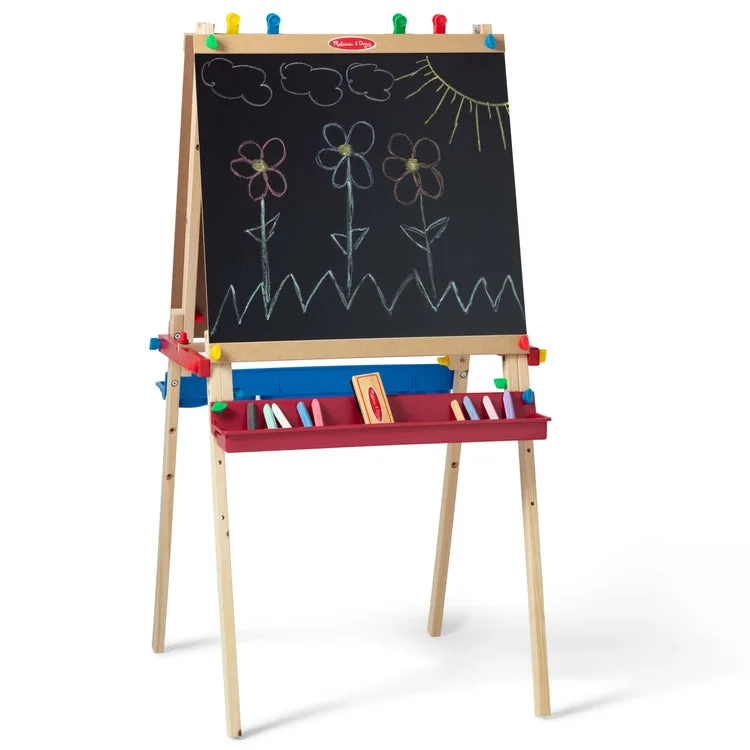
Vertical art changes everything. Something happens when a child stands at an easel rather than hunching over a table — the posture shifts, the arm movements get bigger, the work gets bolder. Whether this is biomechanics or psychology or some combination of both, the Melissa & Doug Deluxe Standing Art Easel is designed to put a child in front of a vertical surface and get out of the way. It offers three surfaces — chalkboard, whiteboard, and paper roll — in a wooden A-frame that folds flat for storage. At $70, it’s asking for a meaningful commitment of both money and living room floor space. Here’s whether it earns both.
Product Overview
The Melissa & Doug Deluxe Standing Art Easel is a double-sided wooden A-frame easel with:
- One side: chalkboard — a matte black surface for chalk and chalk markers
- Other side: dry-erase whiteboard — a glossy white surface for dry-erase markers
- Paper roll holder — a wooden dowel at the top of the whiteboard side that accepts standard 18-inch art paper rolls (one roll included)
- Paper cutter — a built-in edge for tearing paper from the roll
- Four paint cups — removable, non-spill cups that clip to a tray below the paper surface
- Storage tray — a wooden shelf at the base for holding supplies
The easel stands approximately 47 inches tall at its peak and adjusts in height by changing the leg spread. At its lowest setting, a 3-year-old can reach the full surface; at its highest, a 7-8 year old works comfortably. The frame is made from birch plywood and solid wood components, with a natural wood finish. It folds relatively flat (about 6 inches deep) for storage.
The included paper roll is 18 inches wide and 75 feet long — enough for about two weeks of active daily use. Replacement rolls are available from Melissa & Doug ($15 for two 75-foot rolls) and from various third-party suppliers.
Notably, the easel does not include paint, chalk, or markers. The four paint cups sit empty in the box. Budget an additional $25-40 for a basic set of washable tempera paints, chalk, and dry-erase markers to make the easel functional out of the box. This is our primary complaint with the product packaging — at $70, including basic consumables would be a meaningful improvement.
Our Evaluation
Build Quality: 6/10
The Melissa & Doug easel occupies a middle ground between toy-grade and art-supply-grade construction. The wooden frame is sturdy and well-sanded, with clean joints and a stable stance when properly set up. The A-frame design distributes weight effectively, and we experienced no tipping during eight weeks of use — even with enthusiastic painters who lean into their work.
The chalkboard surface is adequate. It’s not a true slate board — it’s a matte-painted panel that functions as a chalkboard. Chalk writes smoothly and erases cleanly with a damp cloth. Over time, “ghosting” (faint remnants of previous drawings) develops, which is normal for painted chalkboard surfaces but can frustrate perfectionists.
The whiteboard surface is the weakest element. It’s a glossy melamine panel that works fine with standard dry-erase markers but stains easily if markers are left on for more than a day or two. Erasing is clean when fresh but becomes increasingly difficult with age. By week six of our testing, the whiteboard had a persistent gray haze that no amount of cleaning removed. This is a common complaint in online reviews and represents the single biggest quality limitation of the product.
The paint cups are clever in concept — they clip to the tray and have lids to prevent spilling — but the execution is flawed. The clip mechanism is loose on several cups in our set, and the lids don’t seal tightly enough to prevent drying out between sessions. They’re functional during a painting session but not useful for storing paint overnight.
The paper roll mechanism works well. The dowel turns smoothly, the paper feeds without tearing, and the built-in paper cutter is surprisingly effective — even a four-year-old can tear a clean sheet.
Assembly takes about 20 minutes with a Phillips screwdriver. The instructions are adequate, though the folding mechanism isn’t immediately intuitive. Once assembled, folding and unfolding for storage is easy.
Play Value: 8/10
Three surfaces means three distinct creative experiences, and children used all three in our testing — not equally (paper dominated, as our chart shows), but with genuine variety. The ability to switch from painting to chalk to whiteboard in a single session, without cleanup between transitions, is the easel’s core value proposition.
Paper painting was the primary activity. Standing painting encourages large arm movements, full-body engagement, and a freedom that table-based painting doesn’t. We observed consistently larger, more gestural work from children at the easel compared to the same children painting at a table. Three-year-olds painted with their whole arms. Five-year-olds experimented with dripping and splattering. Seven-year-olds attempted perspective and composition. The vertical surface invites ambition.
Chalkboard play had a different character — quieter, more deliberate, more often used for drawing than painting. The erasability made it the preferred surface for children who wanted to iterate. One six-year-old spent an hour drawing, erasing, and redrawing a house until she was satisfied — behavior she wouldn’t have shown on paper, where each mark is permanent.
Whiteboard play was the least used but served a specific function: collaborative drawing. Two children would stand on opposite sides of the easel and call instructions to each other. The whiteboard’s easy-erase quality made it the surface of choice for games, tic-tac-toe, and “draw what I describe” activities.
The limitation is space. This is a big object. It needs a clear area of approximately 3 × 4 feet to use comfortably, plus room for a child to step back. In small apartments or shared play spaces, that’s a significant commitment. The folding feature helps but doesn’t eliminate the storage challenge — even folded, the easel is about 47” × 24” × 6”.
Age Appropriateness: 8/10
The 3-8 age range is accurate. Three-year-olds can use the easel with the legs spread wide (lowering the surface) and adult help for paint and paper management. The height adjustment mechanism accommodates growth well — our tallest tester (a 7-year-old, about 50 inches) used it comfortably at the highest setting.
The three surfaces address different developmental stages naturally:
- Ages 3-4: Primarily painting and chalkboard scribbling. Large motor movements, process-oriented art (the experience matters more than the result).
- Ages 5-6: All three surfaces. More representational drawing emerges. The paper roll gets used heavily for “projects” — long scrolls of sequential art, collaborative murals.
- Ages 7-8: Chalkboard and whiteboard dominate for iterative work. Painting continues but becomes more intentional. Some children begin outgrowing the easel’s surface area.
Children over 8 will find the surface size limiting and the overall design juvenile. They’re ready for a tabletop drafting setup or a full-size art easel.
Durability: 6/10
The wooden frame is durable — it will last for years under normal use. The surfaces are the weak point. As noted, the whiteboard degrades, the chalkboard develops ghosting, and both are difficult to restore to original condition. The paint cups are the most fragile component; expect replacements within the first year.
The paper roll mechanism is the most durable functional element, which is convenient since it’s also the most-used feature.
Value for Money: 7/10
At $70, the Melissa & Doug easel sits in a competitive middle ground. The IKEA MALA easel ($20) offers a similar two-sided design (chalkboard + whiteboard) at a fraction of the price, with acceptable quality. The KidKraft Deluxe Easel ($60-80) adds a paper roll and storage but with comparable surface quality. Premium easels from Hape and Guidecraft ($100-150) offer better surface materials and more refined construction.
The $70 price is reasonable for what you get — three surfaces, adjustable height, paper roll, folding storage — but the additional $25-40 in consumables needed to start using it pushes the effective cost closer to $100. At that total, the value is fair but not exceptional.
What you’re really buying is the daily availability of a vertical art surface. If your child uses the easel 3-4 times per week for a year, the cost-per-use is pennies. If it becomes furniture that collects dust after the first month, it’s an expensive clothes-drying rack.
The Evidence
Vertical Surfaces and Art Development. The distinction between vertical and horizontal art surfaces is more meaningful than most parents realize. Painting or drawing on a vertical surface engages different muscle groups than table-based art — the shoulder, upper arm, and wrist work against gravity, promoting what occupational therapists call “proximal stability” (strength and control in the large joints closest to the body’s core). Schneck and Henderson (1990) found that postural control and upper extremity stability directly influence handwriting development — skills that are practiced, incidentally, during easel work.1
Process-Oriented Art. The easel format naturally encourages process-oriented art — creative work where the experience of making matters more than the final product. Koster (2012) argues that process-oriented art is developmentally superior to product-oriented art for young children, because it supports creative risk-taking, material exploration, and intrinsic motivation rather than performance anxiety and adult-defined standards of quality.2 The easel’s three surfaces support this: the erasable chalkboard and whiteboard eliminate the “permanence pressure” of paper, inviting experimentation.
Creative Expression and Emotional Development. As we discussed in our Crayola Inspiration Art Case review, the research on art-making and emotional development in children is meaningful. Drake and Winner (2013) found that drawing about a distressing event improved mood more than drawing about an unrelated topic.3 The easel makes art-making available — a standing invitation in the living room to pick up a brush or a piece of chalk. Accessibility is a precondition for the emotional benefits of creative expression.
The honest summary: There’s no research on the Melissa & Doug easel specifically. But the evidence supporting vertical art surfaces, process-oriented creative play, and the emotional benefits of accessible art-making is solid. An easel in the living room changes a child’s relationship with art by making it a casual, always-available activity rather than a supervised, setup-required event. That shift — from art as project to art as habit — is the easel’s genuine contribution. We rate the evidence as Moderate based on the strong research support for the play behaviors the product facilitates.
Safety Notes
The Melissa & Doug easel meets ASTM F963 and CPSIA safety standards. Key considerations:
- Stability. Ensure the legs are fully spread and the locking mechanism is engaged before use. The easel is stable under normal use but can tip if a child leans heavily on one side or attempts to climb it. Place on a flat, level surface.
- Paint cups. The non-spill design is partial — cups can still spill if knocked off the tray. Use washable tempera paint exclusively. Place a drop cloth or old sheet under the easel during painting sessions.
- Paper cutter. The built-in edge is not sharp enough to cut skin under normal use, but supervise younger children who might press their fingers against it with force.
- Chalk dust. Regular chalkboard use produces airborne chalk dust, which can be an irritant for children with asthma or respiratory sensitivities. Chalk markers are a dust-free alternative for the chalkboard surface.
- Folding mechanism. The easel can pinch small fingers during folding and unfolding. This should be an adult-only operation for children under 5.
No CPSC recalls have been issued for this product.
The Verdict
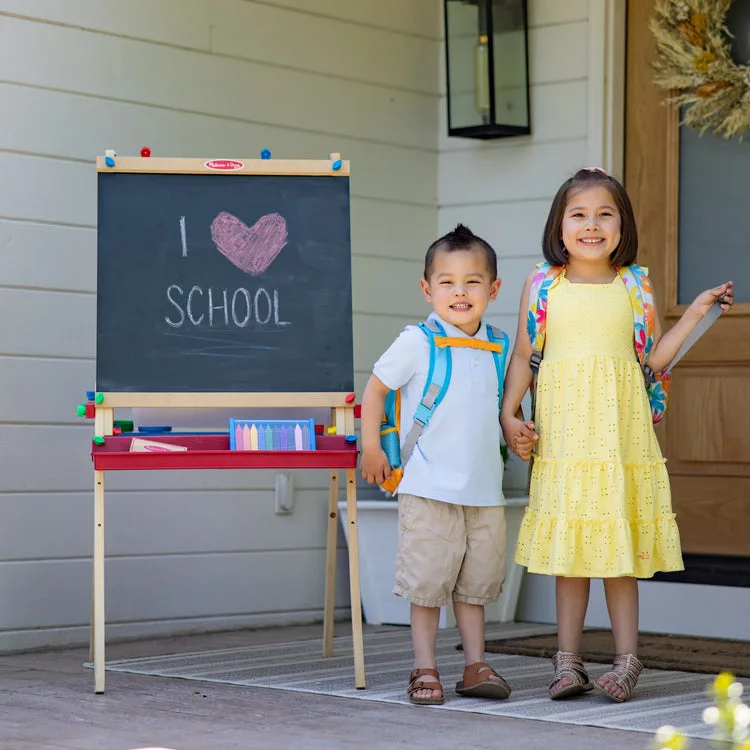
The Melissa & Doug Deluxe Standing Art Easel is a good product with a clear purpose: putting a vertical art surface at child height in your home and making art a daily possibility rather than an occasional project. The three-surface design is genuinely useful — children rotate between paper, chalk, and whiteboard based on mood and activity, and the variety sustains engagement longer than any single surface would.
The quality is adequate but not exceptional. The whiteboard will degrade. The paint cups are flimsy. You’ll need to buy consumables on day one. None of these are dealbreakers, but at $70, they’re worth noting. The IKEA MALA at $20 is a credible budget alternative for families who want to test whether their child will use an easel before committing to a mid-range model.
The right buyer is a family that values daily art access and has the floor space to accommodate a permanent or semi-permanent art station. For that family, the Melissa & Doug easel is a solid, reliable choice that will serve years of creative play.
Product Rating: 7/10 — A well-designed three-surface easel with adequate build quality and meaningful creative value.
Evidence Rating: Moderate — Vertical art surfaces, process-oriented creative play, and accessible art-making are well-supported by developmental research.
Who Should Buy This

- Families with children ages 3-7 who want to make art a daily household activity
- Parents who have floor space for a semi-permanent art station (minimum 3’ × 4’)
- Households where multiple children will share the easel (the two-sided design works well)
- Gift-givers looking for a substantial, impressive creative gift (pair with paints and a paper roll refill)
Who Should Skip This
- Families in small spaces who can’t dedicate room to an easel (consider a tabletop easel or wall-mounted alternative)
- Budget-conscious parents (the IKEA MALA at $20 serves the core function at a fraction of the price)
- Parents of children over 8 (they’ll outgrow the surface size and design quickly)
- Anyone who expects premium surface quality — the whiteboard and chalkboard are functional, not professional
This review reflects our independent evaluation. ScienceBasedKids.com purchased this product at retail price. We may earn a commission if you purchase through our links, which helps fund our research. This never influences our ratings.
Footnotes
-
Schneck, C. M., & Henderson, A. (1990). “Descriptive analysis of the developmental progression of grip position for pencil and crayon control in nondysfunctional children.” American Journal of Occupational Therapy, 44(10), 893-900. ↩
-
Koster, J. B. (2012). Growing Artists: Teaching the Arts to Young Children (5th ed.). Boston: Cengage Learning. ↩
-
Drake, J. E., & Winner, E. (2013). “How children use drawing to regulate their emotions.” Cognition & Emotion, 27(3), 512-520. ↩
Enjoyed this review? We publish two new evidence-based evaluations every week.
Free. No spam. Unsubscribe anytime.
Children were free to choose any surface. The paper roll dominated, but chalk and whiteboard usage increased as novelty wore off on paper.
Recommended Accessories
Affiliate links
Melissa & Doug Easel Paper Roll (2-pack)
“The easel needs paper rolls. Budget bulk option that fits perfectly.”

Crayola Washable Tempera Paint (6 colors)
“Easel has paint cups but no paint included. Washable tempera is the right medium for easel painting.”
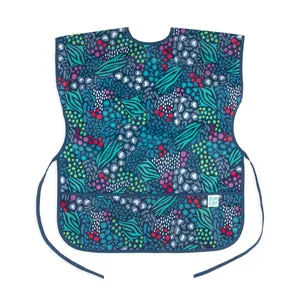
Art smock (Bumkins waterproof)
“Easel painting is messy by design. Smock removes barriers to creative freedom.”
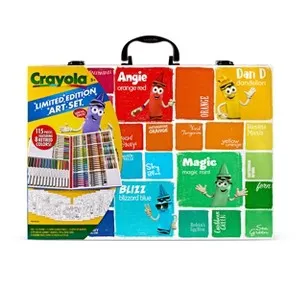
Crayola Inspiration Art Case
“Full set of markers, crayons, and colored pencils to use on the whiteboard and paper sides.”
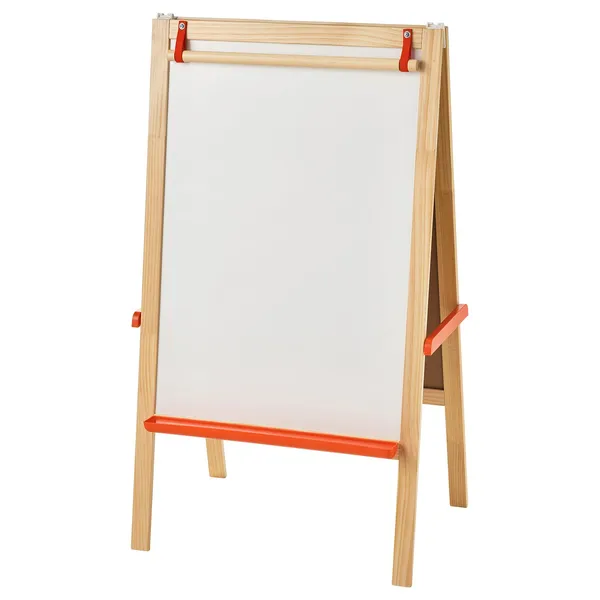
IKEA MALA Easel
“Budget alternative at a fraction of the price. Simpler but functional.”