ScienceBasedKids.com may earn a commission from affiliate links in this review. Our ratings are never influenced by affiliate relationships. Read our full methodology.
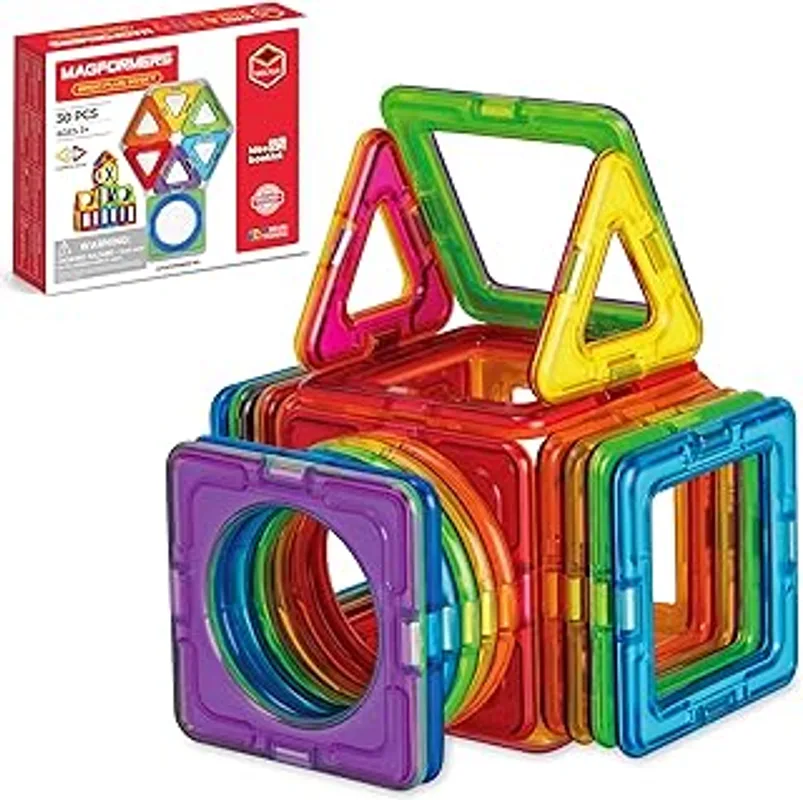
Lay six Magformers triangles flat on the table in a hexagonal pattern. Now lift the center triangle. The others fold upward like petals, clicking into place one by one, and suddenly you’re holding a three-dimensional pyramid that assembled itself in your hand. A five-year-old watched this happen during our testing and whispered, “It’s like origami but it snaps.” That moment — the flat pattern folding into a solid shape — is the thing that makes Magformers different from every other magnetic building toy, and it’s the thing that makes the spatial reasoning argument unusually concrete.
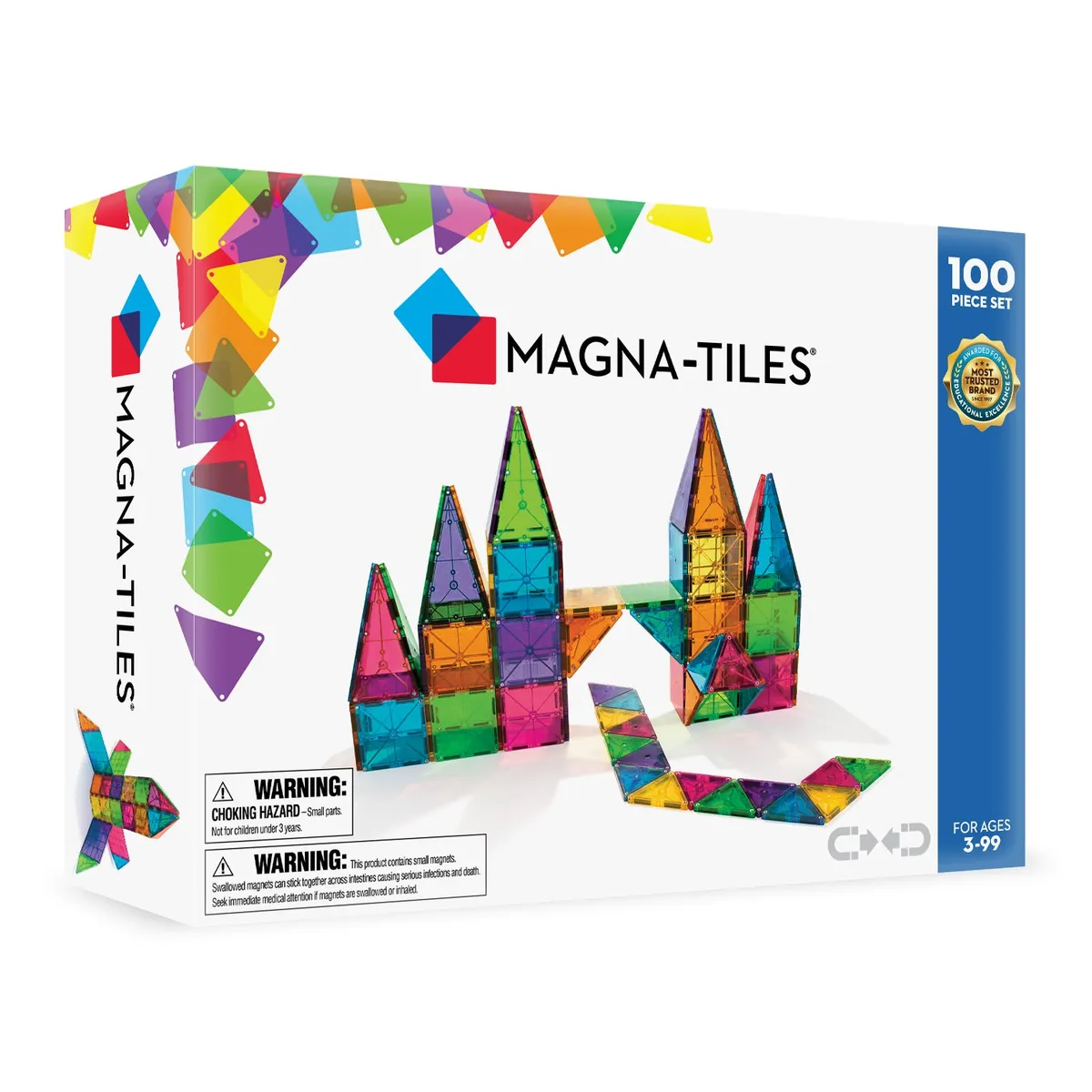
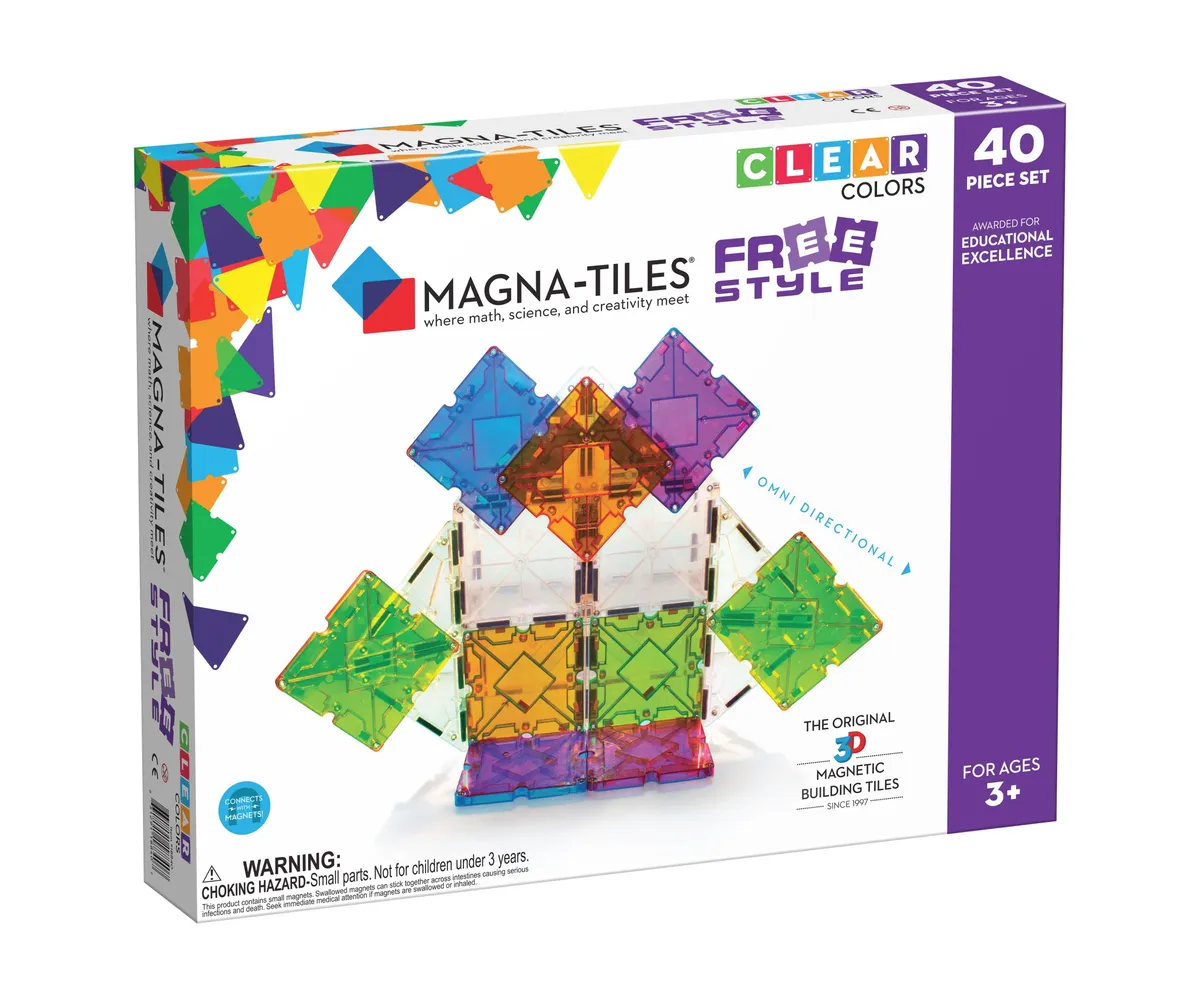
Magna-Tiles get all the attention. In our 100-piece review, we gave them a 9/10 and called them one of the best toys you can buy. So why review a competitor? Because Magformers aren’t competing on the same axis. Where Magna-Tiles are flat panels that stack and lean, Magformers are open frames that click together at angles and fold into geometric solids. The construction mechanic is fundamentally different, and so is the spatial thinking it develops.
Product Overview
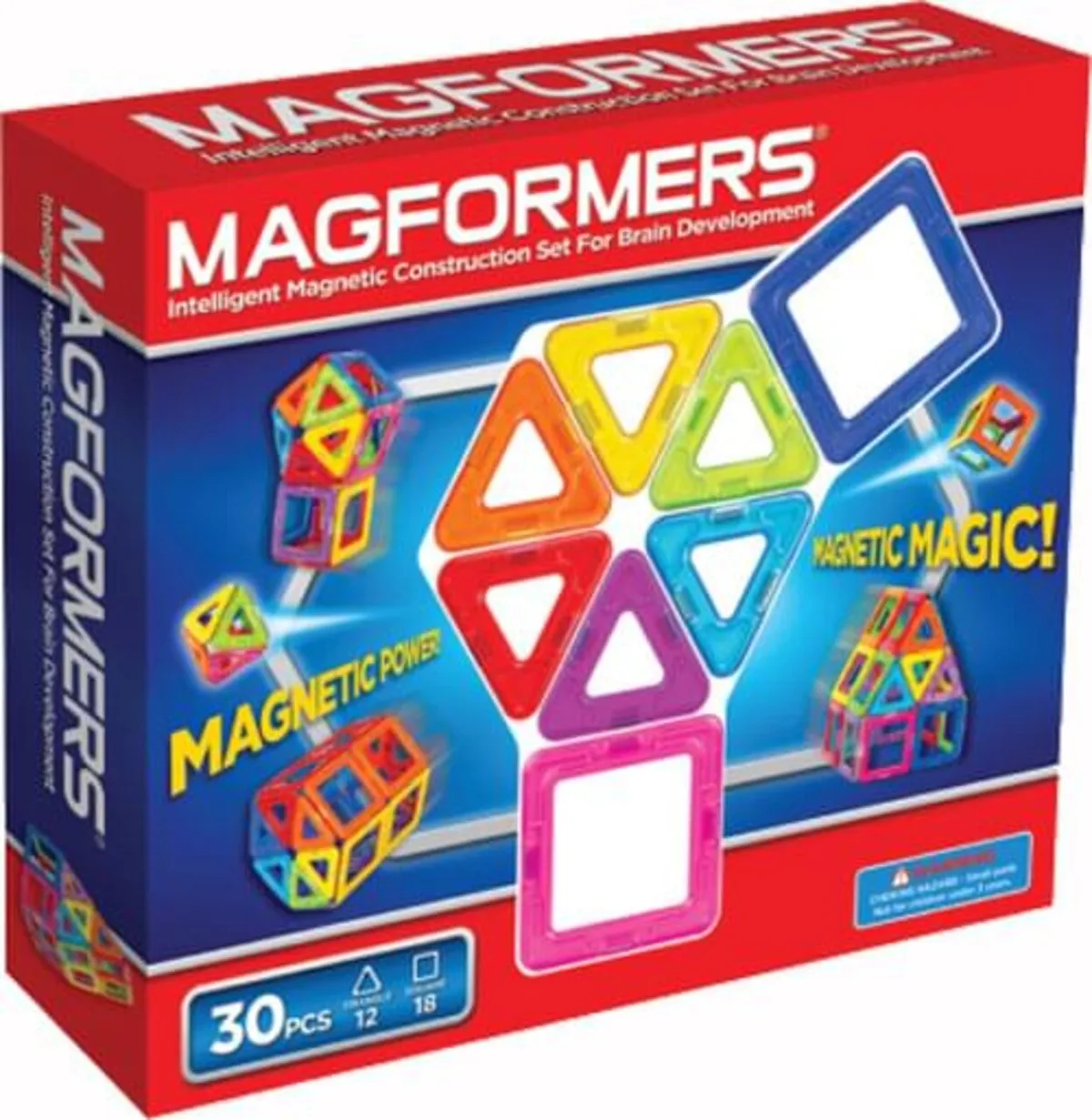
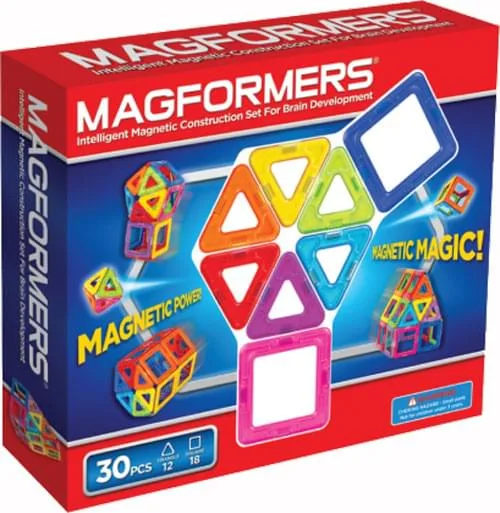
The Magformers 30-Piece Set includes:
- 12 squares (3” open frames, magnets in each edge)
- 18 triangles (equilateral, same frame-and-magnet construction)
Each piece is an open plastic frame — no filled panels, no translucency — with rotating magnets embedded in every edge. The magnets auto-orient so that any edge connects to any other edge, regardless of which side faces up. This is a meaningful design choice: children never encounter “wrong polarity” frustration, because the magnets physically rotate to find the attracting orientation. Pick up a Magformers piece, bring it near another piece from any direction, and they will connect.
The pieces are rainbow-colored (red, orange, yellow, green, blue, purple) and made of opaque HIPS plastic with a slight matte finish. They feel different from Magna-Tiles — lighter, harder, with a more precise snap. The open-frame design means you can see through every piece, which creates skeletal structures that look like architectural wireframes.
Our Evaluation
Build Quality: 9/10
Magformers are, piece for piece, the best-built magnetic construction toy we’ve tested. The HIPS plastic is harder and more scratch-resistant than Magna-Tiles’ softer ABS. The ultrasonic welding that seals the frames is precise — no visible seams, no weak points, no rattle from the magnets inside. The rotating magnets are the engineering highlight: they spin freely inside each edge segment, auto-orienting for every connection. This eliminates the polarity frustration that plagues lesser magnetic toys and means that every connection attempt succeeds.
We performed our standard durability battery: repeated drops from table height (36”), stepping on pieces (adult weight, hard floor), aggressive twisting and pulling by a frustrated four-year-old, and extended daily use over four weeks. Zero failures. The frames didn’t crack, the magnets didn’t shift, the colors didn’t fade or chip. Magformers’ construction is over-engineered for toy use — these feel like they belong in a classroom that sees hundreds of children per year. (They do, in fact. Magformers is widely used in preschool and elementary STEM programs.)
The one-point deduction: the open-frame design means the pieces have exposed edges on the interior. These aren’t sharp — they’re rounded and smooth — but they’re more pronounced than Magna-Tiles’ flush panels. No injury risk, but the frame edges can be felt when gripping pieces, and a few children in our testing commented that they preferred the smooth feel of Magna-Tiles.
Play Value: 7/10
The defining Magformers experience is the net-to-solid transformation. Lay pieces flat in a geometric pattern, lift one edge, and watch the structure fold into a three-dimensional shape. Triangles fold into pyramids and tetrahedra. Squares fold into cubes. Mixed arrangements fold into complex polyhedra. This is genuinely magical the first several times — children (and adults) consistently react with surprise and delight when a flat pattern self-assembles into a 3D solid.
The open-frame construction also enables a unique building style: skeletal structures. Where Magna-Tiles builds produce opaque, house-like forms, Magformers builds produce wireframe shapes that look like molecular models or architectural blueprints. Children can see into and through their structures, which supports a different understanding of 3D form.
The play value limitation at 30 pieces is more acute than with 30 Magna-Tiles, because Magformers’ 3D construction consumes pieces rapidly. A cube uses 6 squares. A pyramid uses 5 triangles. A simple house (cube base + pyramid roof) uses 11 pieces — more than a third of the entire set. Children in our testing frequently reached the “not enough pieces” point within 10 minutes when building in 3D. The 30-piece set is a sampler. The real Magformers experience begins at 60+ pieces.
We also observed less pretend play with Magformers than with Magna-Tiles. The open-frame design means structures don’t have walls, floors, or roofs — they’re geometric skeletons, not inhabitable spaces. Children who wanted to put figurines “inside” their buildings were frustrated by the lack of enclosure. Magna-Tiles’ solid panels create rooms; Magformers’ open frames create shapes. Different toys for different play impulses.
Age Appropriateness: 8/10
The 3+ age rating is appropriate. The auto-orienting magnets make Magformers accessible to very young builders — any connection attempt works, so there’s no frustration floor. A two-year-old (supervised) can click pieces together and pull them apart. A three-year-old can stack and connect. By four, children start building intentionally. By six, the net-to-solid transformation becomes a deliberate strategy.
The upper age range extends slightly higher than Magna-Tiles, because the 3D geometric construction introduces mathematical concepts (polyhedra, nets, surface area) that remain intellectually engaging through age 10-11. A parent with the 62-piece set and a book on geometric solids could create a rich spatial reasoning curriculum that grows with the child.
Durability: 10/10
We almost never give perfect scores. But Magformers’ construction is extraordinary. The HIPS frames are harder than any competing product’s material. The ultrasonic welds show no degradation after heavy use. The rotating magnets, which have moving parts and are therefore a potential failure point, showed zero change in behavior after four weeks of daily use. Online parent communities report Magformers lasting 5-10 years of daily classroom use without replacement.
Long-term: we’ve seen reports of the rainbow colors fading very slightly after years of UV exposure (e.g., pieces left in a window). This is cosmetic and doesn’t affect function.
Value for Money: 6/10
At $35 for 30 pieces ($1.17/piece), Magformers are premium-priced. The 30-piece set provides a solid introduction but runs thin quickly for ambitious builders. The practical recommendation: if you’re going to buy Magformers, budget for the 62-piece Designer Set ($70, $1.13/piece) or plan to add an expansion. Thirty pieces is a taste, not a meal.
Compared to Magna-Tiles (100 pieces for $120, $1.20/piece), the per-piece cost is similar — but Magna-Tiles’ 100-piece count provides far more building volume per purchase. Compared to PicassoTiles (60 pieces for $28, $0.47/piece), Magformers are almost three times the price per piece.
The quality justifies a premium. Whether it justifies this much premium depends on how much you value the unique 3D construction mechanic. For families who specifically want the net-to-solid experience and the geometric-solid building style, the premium is worth it. For families who want maximum building volume per dollar, it isn’t.
The Evidence
Magformers draws from the same spatial reasoning research base as all geometric construction toys — and the evidence is strong.
Spatial Reasoning and 3D Construction. Verdine et al. (2014) demonstrated that preschoolers’ spatial assembly performance predicted later mathematical skills.1 Jirout and Newcombe (2015) found that spatial play with blocks and construction toys was positively associated with spatial skills in a large, nationally representative sample.2 These findings apply to Magformers at least as strongly as to flat magnetic tiles, because Magformers’ 3D construction requires more complex spatial reasoning — specifically, the ability to mentally transform 2D arrangements into 3D forms.
Net-to-Solid Transformation: A Unique Spatial Challenge. The net-to-solid mechanic maps directly to a well-studied spatial reasoning task: mental folding. Shepard and Metzler’s (1971) foundational research on mental rotation established that the ability to mentally transform shapes is a core component of spatial intelligence.3 Cohen and Hegarty (2012) extended this to 3D folding — the ability to predict what a flat pattern will look like when folded into a solid — and found that this skill was trainable through physical manipulation.4 Magformers provides exactly this physical manipulation: lay out a flat net, fold it, observe the result, adjust the net, repeat. The learning loop is direct and concrete.
This is where Magformers has a theoretical advantage over flat-tile systems like Magna-Tiles. Magna-Tiles build primarily through stacking and leaning — adding tiles to surfaces. Magformers build through folding and enclosing — transforming 2D into 3D. Both develop spatial reasoning, but through different pathways. No study has directly compared the spatial reasoning outcomes of flat-tile versus frame-based magnetic construction, so the advantage remains theoretical.
Geometric Concept Exposure. Clements and Sarama (2011) found that structured spatial play contributes to geometric reasoning in young children.5 Magformers’ frame-based construction makes geometric forms explicit — a cube built from Magformers looks like the mathematical concept of a cube in a way that a Magna-Tiles cube (opaque panels with visible surfaces) doesn’t. The wireframe aesthetic exposes the edges, vertices, and faces that define geometric solids. Whether this visual exposure produces better geometric understanding than panel-based construction is untested but plausible.
The honest summary: The spatial reasoning evidence supporting geometric construction play is robust and applies fully to Magformers. The net-to-solid transformation mechanic has a specific theoretical advantage over flat-tile systems, grounded in mental folding research. No head-to-head studies comparing Magformers to Magna-Tiles exist, so the relative benefit is inferred from spatial cognition theory, not direct evidence.
Safety Notes
Magformers meet ASTM F963 and CPSIA safety standards. The magnets are fully encased in ultrasonic-welded plastic frames and are not accessible during normal use. The rotating magnet design actually adds a safety layer — because the magnets can spin, there’s less stress on the frame during play, reducing the likelihood of the encasement cracking under force.
The open-frame design means no small removable parts. Unlike Magna-Tiles, which can theoretically crack and expose a magnet, Magformers’ solid frame construction has an excellent safety track record. No CPSC recalls have been issued.
The pieces do not contain BPA, phthalates, or latex per manufacturer certifications. All materials are food-grade HIPS plastic.
One consideration for very young children (under 3): the open frames can catch small fingers if a child pushes a finger through the frame and another piece snaps onto it magnetically. This is not a pinch hazard per testing standards, but a few parents have reported mild finger-trapping with toddlers. Supervision recommended for under-3 use.
The Verdict
Magformers are not a Magna-Tiles alternative. They’re a different tool for a related but distinct purpose. Where Magna-Tiles excel at flat construction, enclosure, and creative play, Magformers excel at 3D geometric construction, spatial transformation, and mathematical concept exposure. The net-to-solid folding mechanic is unique in the magnetic construction space and provides a spatial reasoning experience that no flat-tile system can replicate.
The 30-piece set is a solid introduction but will leave ambitious builders hungry for more. Budget for the 62-piece set if you want the full experience. The build quality is best-in-class, the durability is outstanding, and the price — while high — buys engineering that will outlast the childhood it’s designed for.
Product Rating: 7/10 — Best-in-class build quality and a unique 3D construction mechanic that develops spatial reasoning through a pathway distinct from flat magnetic tiles. Docked for the 30-piece count (too few for sustained complex building) and limited pretend-play potential compared to panel-based competitors.
Evidence Rating: Moderate — Same strong spatial reasoning research base as magnetic tile construction generally. The net-to-solid folding mechanic has specific theoretical support from mental rotation and mental folding research. No product-specific studies exist.
Who Should Buy This
- Parents who specifically want geometric/mathematical building, not dollhouse-style creative play
- Families who already own Magna-Tiles and want a complementary — not redundant — magnetic construction experience
- STEM-focused parents looking for a toy that introduces polyhedra, nets, and 3D geometry concepts naturally
- Preschool or elementary teachers who need durable, classroom-grade building materials
Who Should Skip This
- Families who want maximum building volume for the money — PicassoTiles or a larger Magna-Tiles set delivers more pieces per dollar
- Children who primarily enjoy pretend play and narrative building — the open-frame design doesn’t create “rooms” or enclosures for figurines
- Parents deciding between Magformers and Magna-Tiles as a first magnetic building toy — Magna-Tiles’ panel design is more versatile for most children’s play styles
- Anyone expecting 30 pieces to be enough — it’s a starter, not a complete set
This review reflects our independent evaluation. ScienceBasedKids.com purchased this product at retail price. We may earn a commission if you purchase through our links, which helps fund our research. This never influences our ratings.
Footnotes
-
Verdine, B. N., Golinkoff, R. M., Hirsh-Pasek, K., Newcombe, N. S., Filipowicz, A. T., & Chang, A. (2014). “Deconstructing building blocks: Preschoolers’ spatial assembly performance relates to early mathematical skills.” Child Development, 85(3), 1062-1076. ↩
-
Jirout, J. J., & Newcombe, N. S. (2015). “Building blocks for developing spatial skills: Evidence from a large, representative U.S. sample.” Psychological Science, 26(3), 302-310. ↩
-
Shepard, R. N., & Metzler, J. (1971). “Mental rotation of three-dimensional objects.” Science, 171(3972), 701-703. ↩
-
Cohen, C. A., & Hegarty, M. (2012). “Inferring cross sections of 3D objects: A new spatial thinking test.” Learning and Individual Differences, 22(6), 868-874. ↩
-
Clements, D. H., & Sarama, J. (2011). “Early childhood teacher education: The case of geometry.” Journal of Mathematics Teacher Education, 14(2), 133-148. ↩
Enjoyed this review? We publish two new evidence-based evaluations every week.
Free. No spam. Unsubscribe anytime.
Each dimension scored 1-10 by two observers across 4 weeks of side-by-side testing with 10 children, ages 3-8.
Recommended Accessories
Affiliate links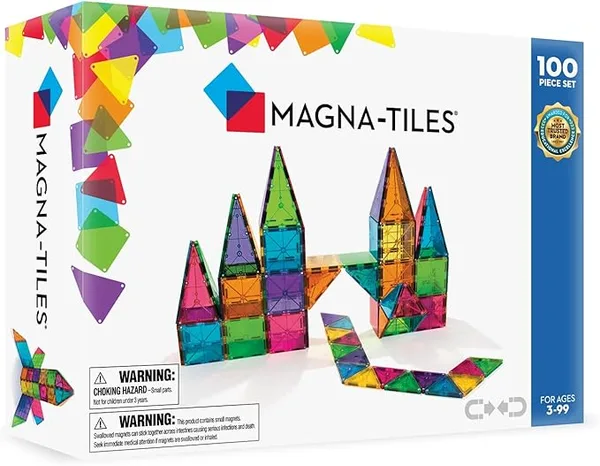
Magformers 62-Piece Designer Set
“Doubles the piece count and adds pentagons, trapezoids, and curved pieces. The real Magformers experience.”
Magformers Wheel Accessory Pack
“Adds axles and wheels to transform flat structures into vehicles. Changes the play entirely.”
Magna-Tiles 100-Piece Clear Colors
“The dominant competitor. Different construction mechanic but same spatial reasoning benefits.”
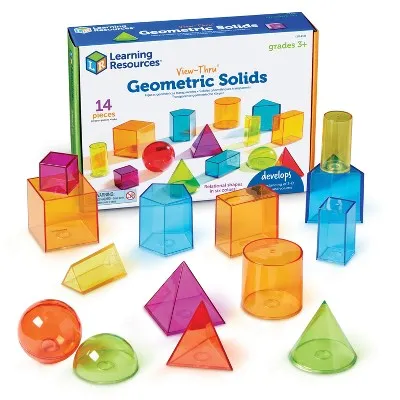
Learning Resources View-Thru Geometric Solids (14-Piece)
“Clear plastic 3D shapes to pair with Magformers builds. 'Look — you made this shape!'”
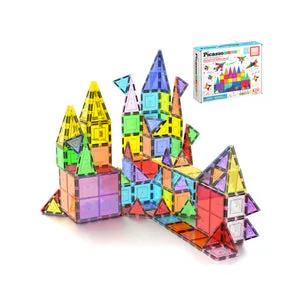
PicassoTiles 60-Piece Set
“Budget magnetic tile option. Flat-tile mechanic (like Magna-Tiles), not click-frame (like Magformers).”