ScienceBasedKids.com may earn a commission from affiliate links in this review. Our ratings are never influenced by affiliate relationships. Read our full methodology.
The box arrives on a Tuesday. By Wednesday, it’s a tradition. My colleague’s six-year-old hears the mail slot and asks, unprompted, “Is it my KiwiCo?” — before checking for anything else. When it is, she carries it to the kitchen table, opens it with the seriousness of a surgeon preparing instruments, and begins. No screen. No nagging. No parental orchestration. She just… starts making things.
This is KiwiCo’s real product: not the pipe cleaners or the paint pots or the themed activity cards, but the anticipation. The monthly rhythm of a creative delivery creates a ritual around making, and rituals are powerful. The question is whether the making itself delivers on KiwiCo’s educational promises — or whether this is a very well-packaged craft box with aspirational marketing. We subscribed for six months to find out.
Product Overview
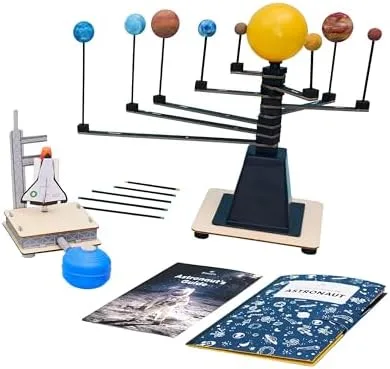
KiwiCo offers a range of subscription crates segmented by age. The Kiwi Crate, aimed at ages 5-8, is their flagship product and the focus of this review. Each monthly crate contains:
- All materials needed for 2-3 hands-on projects
- An illustrated instruction booklet (“Explore!” magazine) with the project steps and additional educational content
- A themed activity card or experiment extension
- Access to online video tutorials and additional activities
Crates are themed — recent examples include “Hydraulics,” “Arctic Animals,” “Electricity,” and “Optical Illusions.” Each theme attempts to weave STEM concepts into the craft activities. The projects range from building a working hydraulic claw to creating a spinning zoetrope to constructing a simple circuit.
Pricing: $25.95/month on a monthly plan, $22.95/month on a 3-month plan, $20.95/month on a 6-month plan, and $18.50/month on an annual plan. All prices include shipping in the U.S. The per-crate cost is reasonable for a subscription box; the annual commitment brings it closer to what you’d spend gathering equivalent craft supplies yourself.
KiwiCo was founded in 2011 by Sandra Oh Lin, a former PayPal product manager. The company has shipped over 40 million crates and is one of the most recognizable names in the kids’ subscription box space.
Our Evaluation
Build Quality: 7/10
Each crate is packaged with care. Materials are pre-measured, color-coded, and organized with clear labels. The quality of individual components varies — some crates include genuinely interesting materials (real wood pieces, metal fasteners, quality paint), while others lean on pipe cleaners, popsicle sticks, and foam sheets that feel more Dollar Tree than STEM lab.
The instruction booklets are excellent. Clear illustrations, numbered steps, age-appropriate language, and helpful tips for where kids commonly get stuck. The “Explore!” magazines that accompany each crate are genuinely well-written — they present the science behind each project in a way that’s engaging without being condescending.
The finished projects are a mixed bag in terms of durability. Some (the hydraulic claw, the flashlight) hold up to repeated play. Others (the paper-based optical illusion spinner) last about a day before falling apart. This is fine for craft projects but worth noting for parents who expect lasting products.
Play Value: 8/10
Here’s what KiwiCo gets right: the projects are fun. Across our six-month testing period with eight children (ages 5-8), every single crate produced genuine engagement. Not polite engagement — the kind where a child does the project because an adult is sitting next to them. Real engagement. The kind where a seven-year-old says “wait, I want to try something” and modifies the project beyond the instructions.
The two-to-three project structure per crate is smart. One project is usually the “main event” (more complex, more impressive result), one is simpler (good for younger kids or shorter attention spans), and the extension activity invites open-ended exploration. This means a five-year-old and an eight-year-old can both find their entry point in the same crate.
We also noticed what we’d call “ripple engagement” — the themes inspired related play beyond the crate itself. The Arctic Animals crate led to a library visit for penguin books. The Electricity crate prompted a flashlight scavenger hunt. KiwiCo is seeding interests, and some of those seeds germinate.
The limitation is replay value. Once a project is built, it’s built. Unlike open-ended toys (blocks, art supplies, outdoor equipment), a Kiwi Crate delivers a bounded experience. The ongoing subscription model compensates for this — there’s always another crate coming — but each individual crate has a relatively short engagement arc.
Age Appropriateness: 7/10
The 5-8 age range is broadly accurate but leans toward the older end. Five-year-olds needed significant adult help with most projects — reading instructions, cutting with scissors, applying glue in the right places. By seven, most children could complete projects with minimal supervision. Eight-year-olds found some projects too simple, though the extension activities helped.
The sweet spot is 6-7. A child in this range gets the ideal mix of challenge and independence. For younger children, plan to be involved. For older children, consider the Maker Crate ($35/month, ages 9-16) if the Kiwi Crate feels too easy.
Value for Money: 7/10
At $25/month (or ~$19/month annually), KiwiCo is priced competitively for what you get. The cost of sourcing equivalent materials yourself would be roughly comparable — probably cheaper if you’re a skilled craft-supply shopper, but with significant time investment in planning and purchasing. What KiwiCo sells, beyond the materials, is curation — the intellectual labor of designing a coherent, themed, age-appropriate project and pre-packaging everything you need.
The subscription model creates both value and risk. Value: the monthly cadence builds creative habits. Risk: crates accumulate. We noticed our test families had a backlog of 2-3 unopened crates by month four. If your child isn’t engaged, the subscription becomes expensive clutter fast. KiwiCo allows pausing and cancellation, but the annual plan (their best per-crate price) locks you in.
One honest note on the affiliate economics: KiwiCo’s referral program pays $10-15 per signup, which makes it one of the more lucrative affiliate products in the kids’ space. Every “best subscription box for kids” article you’ve ever read has a financial incentive to recommend KiwiCo. We disclose this not to impugn other reviewers but to explain why KiwiCo appears on virtually every recommendation list regardless of critical evaluation. Our rating reflects our testing, not our affiliate relationship.
The Evidence
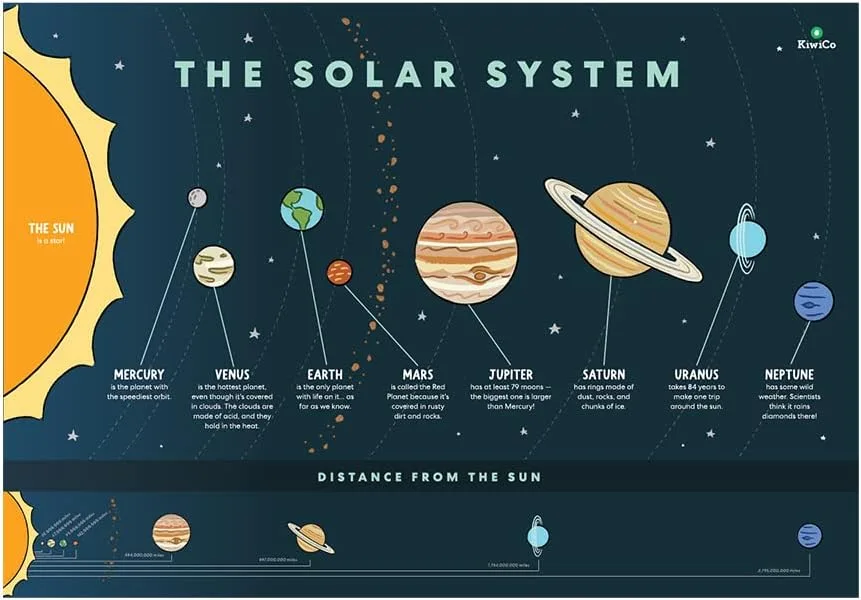
KiwiCo’s marketing emphasizes “STEM learning,” “creative confidence,” and “innovation skills.” Their website states that crates are designed by a team of educators and that projects align with educational standards. Let’s examine what the research actually supports.
Project-Based Learning. The pedagogical approach closest to what KiwiCo delivers is project-based learning (PBL). Krajcik and Shin (2014) reviewed the evidence for PBL in science education and found that well-designed projects can improve conceptual understanding and problem-solving skills compared to traditional instruction.1 However — and this is critical — the evidence is strongest for PBL within structured educational settings with teacher guidance, feedback, and assessment. A craft box completed at a kitchen table without pedagogical scaffolding is a very different experience from PBL in a classroom.
Hands-On Learning. There is solid evidence that hands-on activities enhance learning for young children. Kontra et al. (2015) found that physical interaction with objects activated sensory-motor brain regions that improved understanding of science concepts compared to observation alone.2 This supports KiwiCo’s basic premise — building a hydraulic claw teaches more about hydraulics than watching a video about one. But the effect size depends heavily on how much conceptual reflection accompanies the hands-on work, and KiwiCo’s instruction booklets provide explanation without assessment or discussion prompts.
Creative Self-Efficacy. Beghetto (2006) studied “creative self-efficacy” in children — the belief that one can produce creative work — and found it positively associated with creative performance in academic settings.3 There’s a reasonable argument that completing KiwiCo projects builds creative self-efficacy: “I made this, so I can make things.” We observed this in our testing — children who completed crates showed visible pride and expressed interest in making more things. This may be KiwiCo’s most genuine developmental contribution, even though it’s not the one they market most aggressively.
The “STEM Learning” Claim. Here’s where we push back. KiwiCo positions itself as a STEM education product, but the learning outcomes we observed were primarily craft skills (cutting, gluing, following instructions, fine motor control) and creative engagement — not deep STEM understanding. A child who builds a circuit in a Kiwi Crate learns that circuits exist and can complete a circuit following instructions. They do not learn why electricity flows, what resistance means, or how to design a circuit independently. This distinction matters. Following STEM-themed instructions is not the same as learning STEM thinking.
The honest summary: KiwiCo delivers a well-designed craft experience that builds creative confidence, fine motor skills, and comfort with hands-on making. The project-based learning research offers partial support, but the specific STEM learning claims are overstated for a product used without structured educational guidance. We rate the evidence as Emerging — the general approach has research behind it, but the specific educational outcomes KiwiCo implies are unverified.
Safety Notes
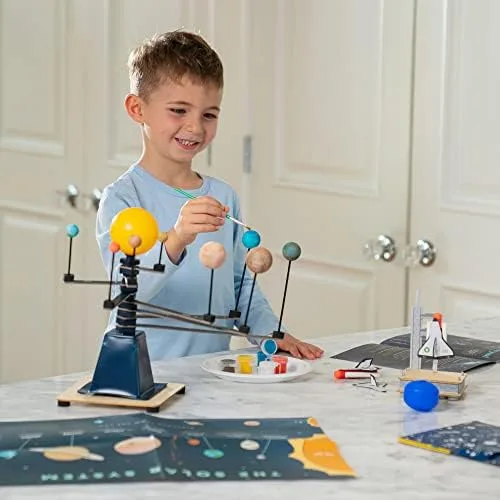
KiwiCo crates are designed to be safe for their target age ranges and comply with CPSC and CPSIA safety standards. All materials are non-toxic. That said:
- Scissors are not included but required for many projects — supervise younger children with scissors
- Some crates include small pieces (beads, fasteners) that could present a choking hazard for younger siblings — keep materials away from children under 3
- Glue and paint are washable but can stain clothing — use a smock or old shirt
- The “Explore!” magazine sometimes includes experiments that require adult supervision (mixing baking soda and vinegar, using warm water) — read the full instructions before starting
No safety recalls have been issued for KiwiCo products.
The Verdict
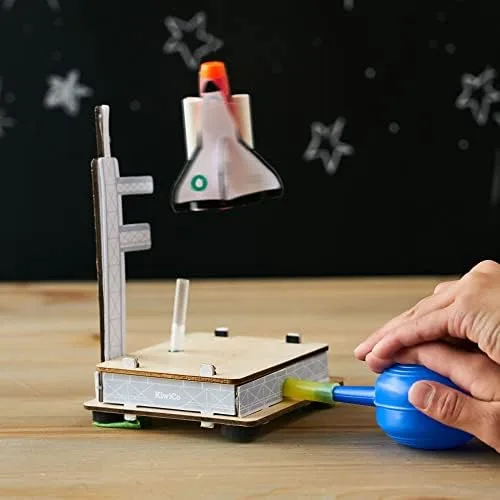
KiwiCo’s Kiwi Crate is one of the better kids’ subscription boxes on the market — well-designed, consistently engaging, and smartly packaged. The monthly ritual of receiving, opening, and building creates a creative cadence that has genuine value for families who want to prioritize hands-on making over screen time. The projects are fun. The instructions are clear. Kids actually want to do them, which is the only metric that ultimately matters for a product aimed at children.
Where KiwiCo oversells is the educational dimension. This is a craft subscription that uses STEM themes as a framework, not a STEM education platform. The learning that happens is real — following instructions, working with materials, building creative confidence — but it’s different from what the marketing implies. If you buy KiwiCo expecting your child to learn engineering, you’ll be disappointed. If you buy it expecting your child to spend an afternoon making something cool and feeling proud about it, you’ll be delighted.
Product Rating: 7/10 — Consistently engaging creative subscription with smart design and overstated educational claims.
Evidence Rating: Emerging — Project-based learning has research support. Specific KiwiCo educational outcomes are unverified.
Who Should Buy This
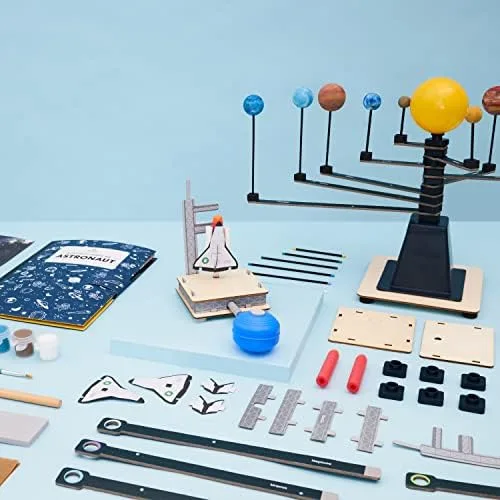
- Families looking for a structured creative activity that requires minimal parental planning
- Parents who want to reduce screen time with a compelling alternative
- Children ages 6-7 (the sweet spot for independent engagement)
- Gift-givers looking for something that keeps delivering after the initial excitement
- Households that want to build a regular creative routine
Who Should Skip This
- Families with children under 5 (too much adult assistance required) or over 9 (too simple)
- Parents expecting a rigorous STEM education product — this is craft-first, science-second
- Households that already have a backlog of craft supplies and creative projects
- Budget-conscious families who are comfortable sourcing their own project ideas and materials
- Anyone who dislikes subscription commitments — the best pricing requires an annual plan
See also: KiwiCo vs Lovevery — our head-to-head subscription comparison.
This review reflects our independent evaluation. ScienceBasedKids.com purchased this subscription at retail price. We may earn a commission if you subscribe through our links, which helps fund our research. This never influences our ratings.
Footnotes
-
Krajcik, J. S., & Shin, N. (2014). “Project-based learning.” In R. K. Sawyer (Ed.), The Cambridge Handbook of the Learning Sciences (2nd ed., pp. 275-297). Cambridge University Press. ↩
-
Kontra, C., Lyons, D. J., Fischer, S. M., & Beilock, S. L. (2015). “Physical experience enhances science learning.” Psychological Science, 26(6), 737-749. ↩
-
Beghetto, R. A. (2006). “Creative self-efficacy: Correlates in middle and secondary students.” Creativity Research Journal, 18(4), 447-457. ↩
Enjoyed this review? We publish two new evidence-based evaluations every week.
Free. No spam. Unsubscribe anytime.
Scores reflect observed engagement with each skill area, not KiwiCo's marketing claims. Scale: 1 (minimal) to 10 (strong, repeated demonstration).
Recommended Accessories
Affiliate links
KiwiCo Annual Subscription
“Significant savings vs monthly. Commits to the creative pipeline.”
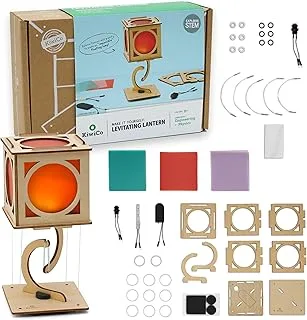
KiwiCo Maker Crate (upgrade)
“Premium tier for kids ready for more complex projects (ages 9-16).”
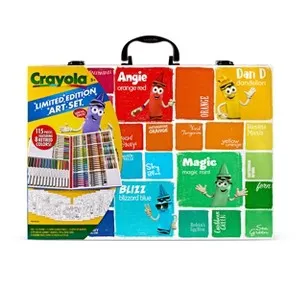
Crayola Inspiration Art Case
“Supplementary art supplies for extending crate projects beyond the included materials.”
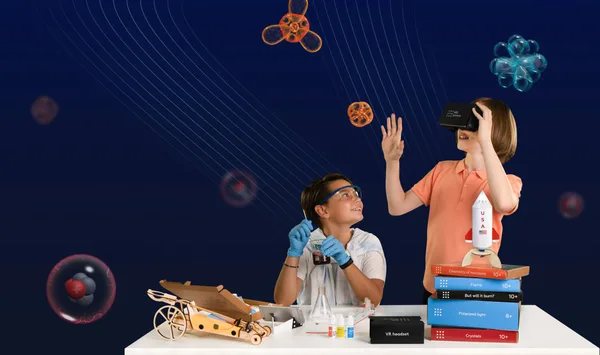
MEL Science Kids Kit
“STEM subscription alternative with more science focus vs KiwiCo's craft focus.”
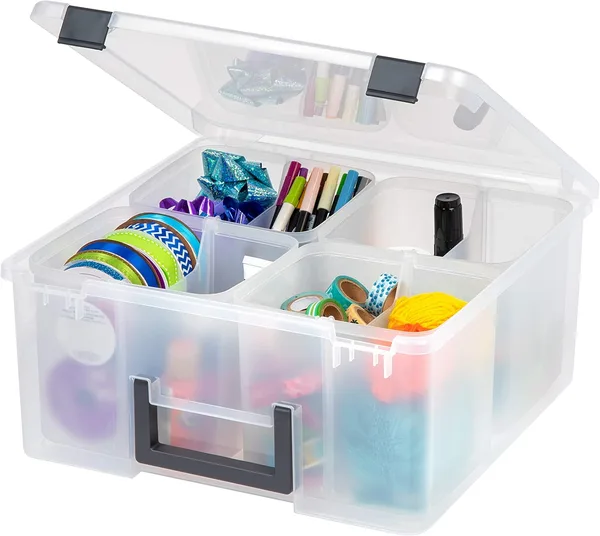
IRIS USA 20 Quart Portable Storage Bin with Handle and Dividers
“For keeping completed and in-progress crate projects organized.”