ScienceBasedKids.com may earn a commission from affiliate links in this review. Our ratings are never influenced by affiliate relationships. Read our full methodology.
The first chord a child plays on a ukulele is C major. It requires one finger — the ring finger of the left hand, pressed on the third fret of the bottom string. The child strums all four strings with the right hand. The sound that emerges is a full, bright, recognizable chord. Not a note. Not a plunk. A chord — the sound of harmony, the foundation of songs, the building block of music. One finger, one strum, and a three-year-old has produced something that sounds like music.
This is why the ukulele is the best first instrument. Not because it’s simple — though it is. Not because it’s small — though it is. Because the distance between “I’ve never touched an instrument” and “I made music” is shorter on a ukulele than on any other real instrument. And that distance is everything. A child who makes music in their first five minutes will pick up the instrument again tomorrow. A child who makes noise for three weeks before producing anything musical may not.
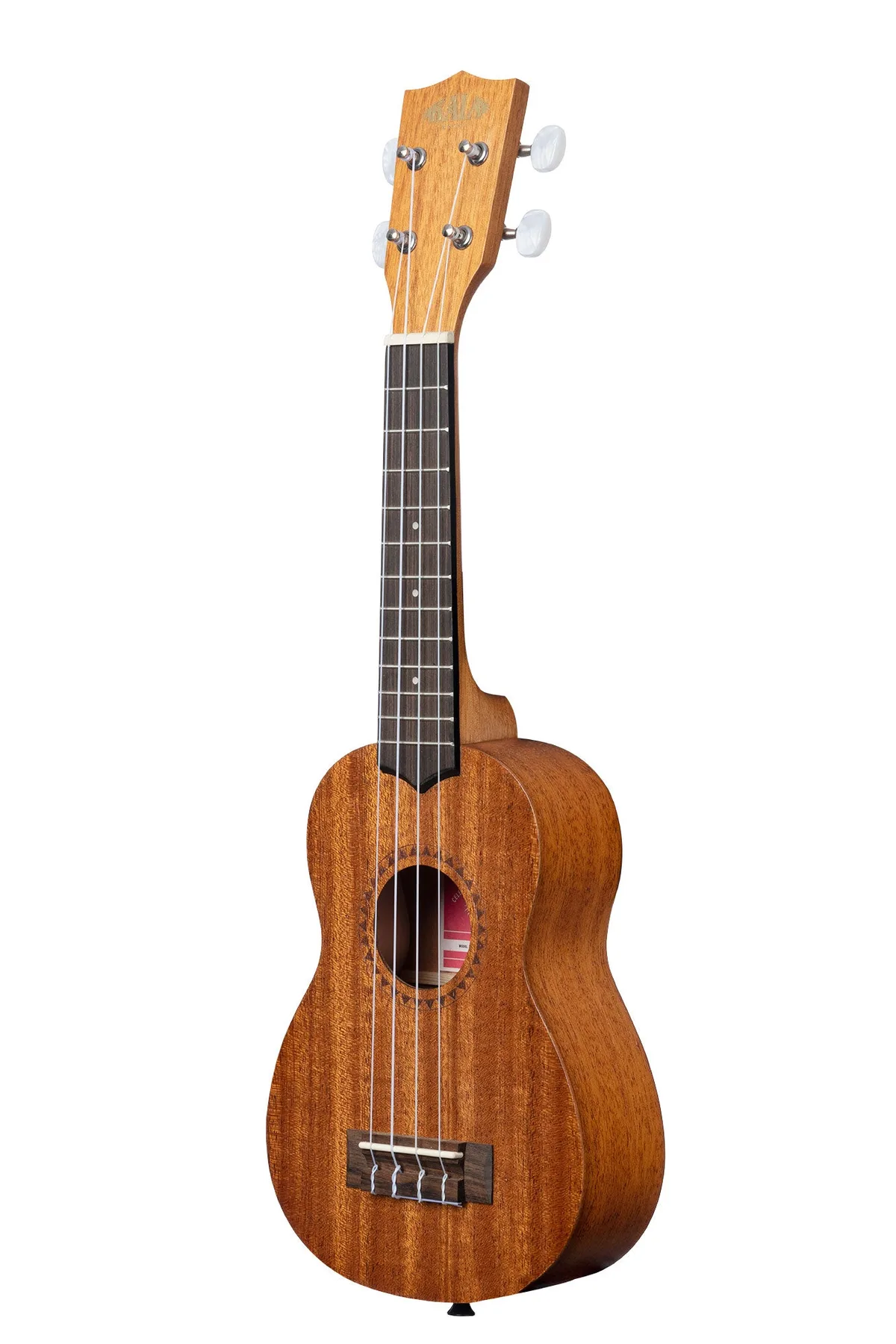
The Kala Makala Dolphin is the ukulele that makes this moment most accessible for children ages 3-8. Over 100 days of reviewing children’s products, across five categories and 93 individual evaluations, this $50 instrument offers one of the strongest ratios of developmental value to dollar that we’ve encountered.
Product Overview
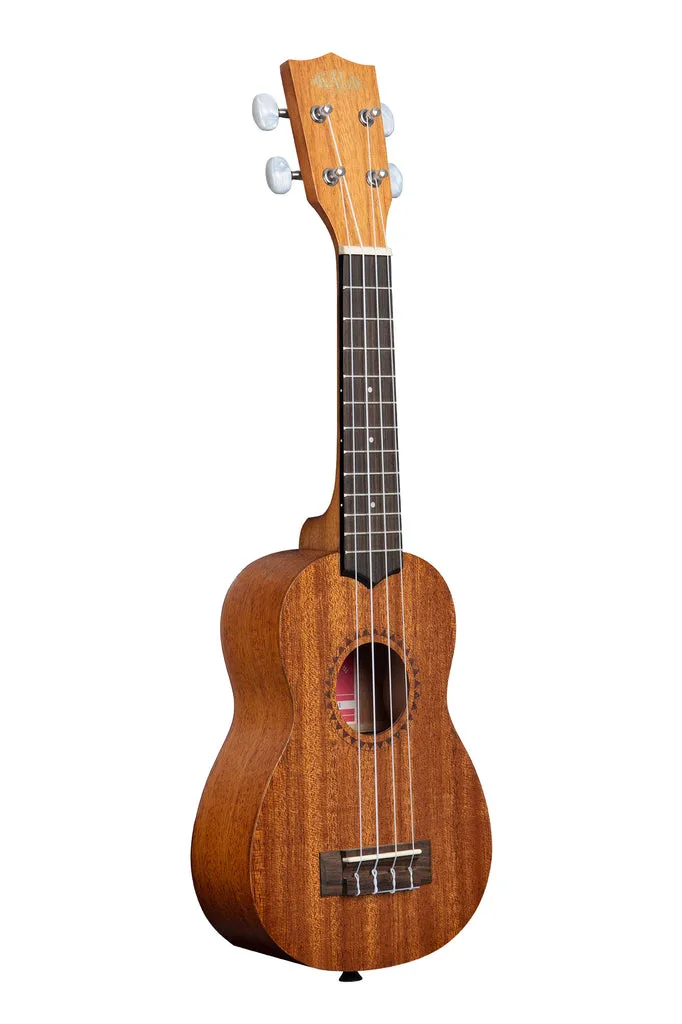
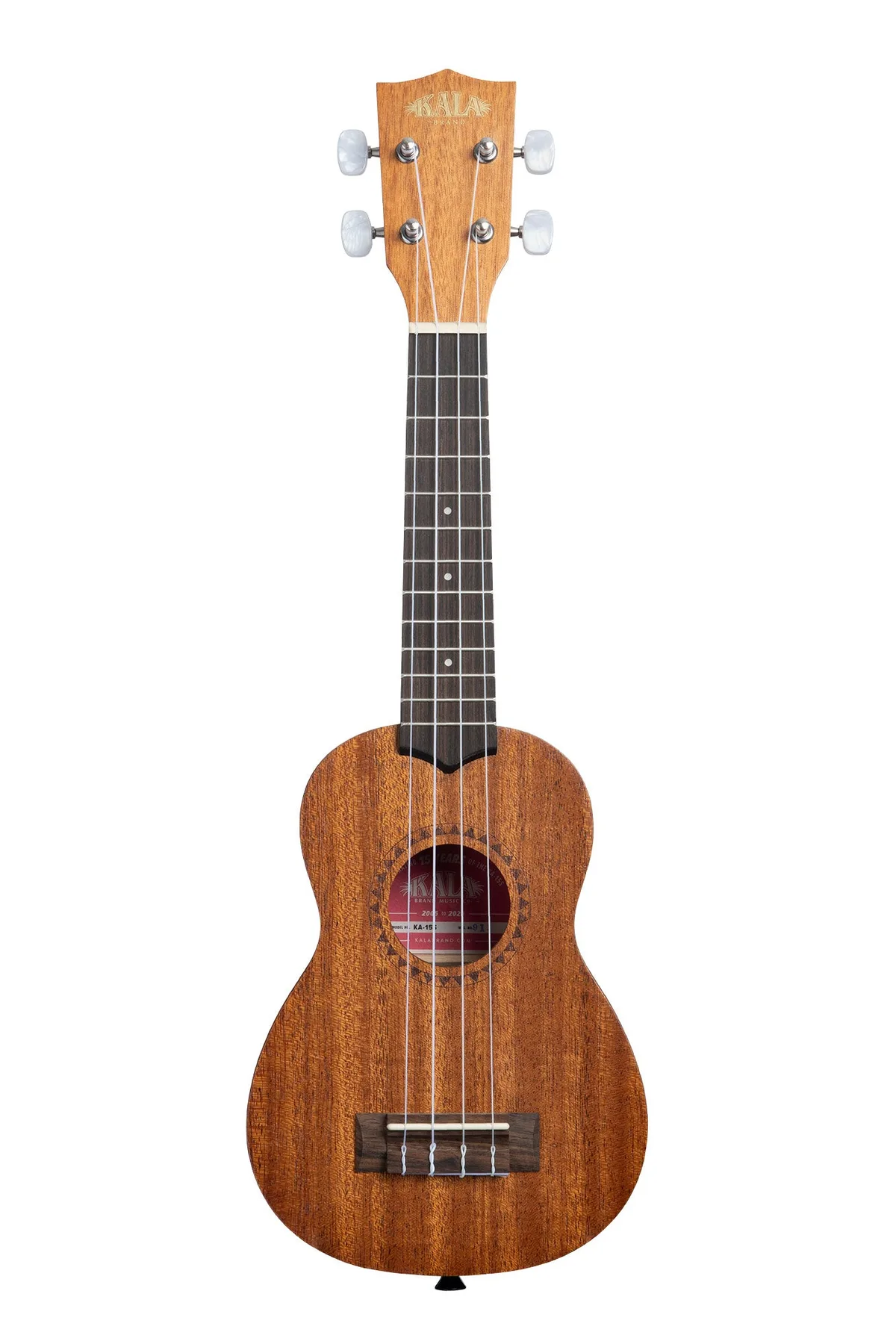
The Kala Makala Dolphin is a soprano ukulele — the smallest standard ukulele size — designed for beginners. Kala is a California-based company that has been making ukuleles since 2005 and has become the most popular ukulele brand in the United States, largely through their beginner-friendly Makala line.
In the box:
- The ukulele — soprano size (21” total length, 13” scale length)
- Aquila Super Nylgut strings — premium synthetic strings pre-installed
- A quick-start guide — basic tuning instructions and two chord diagrams
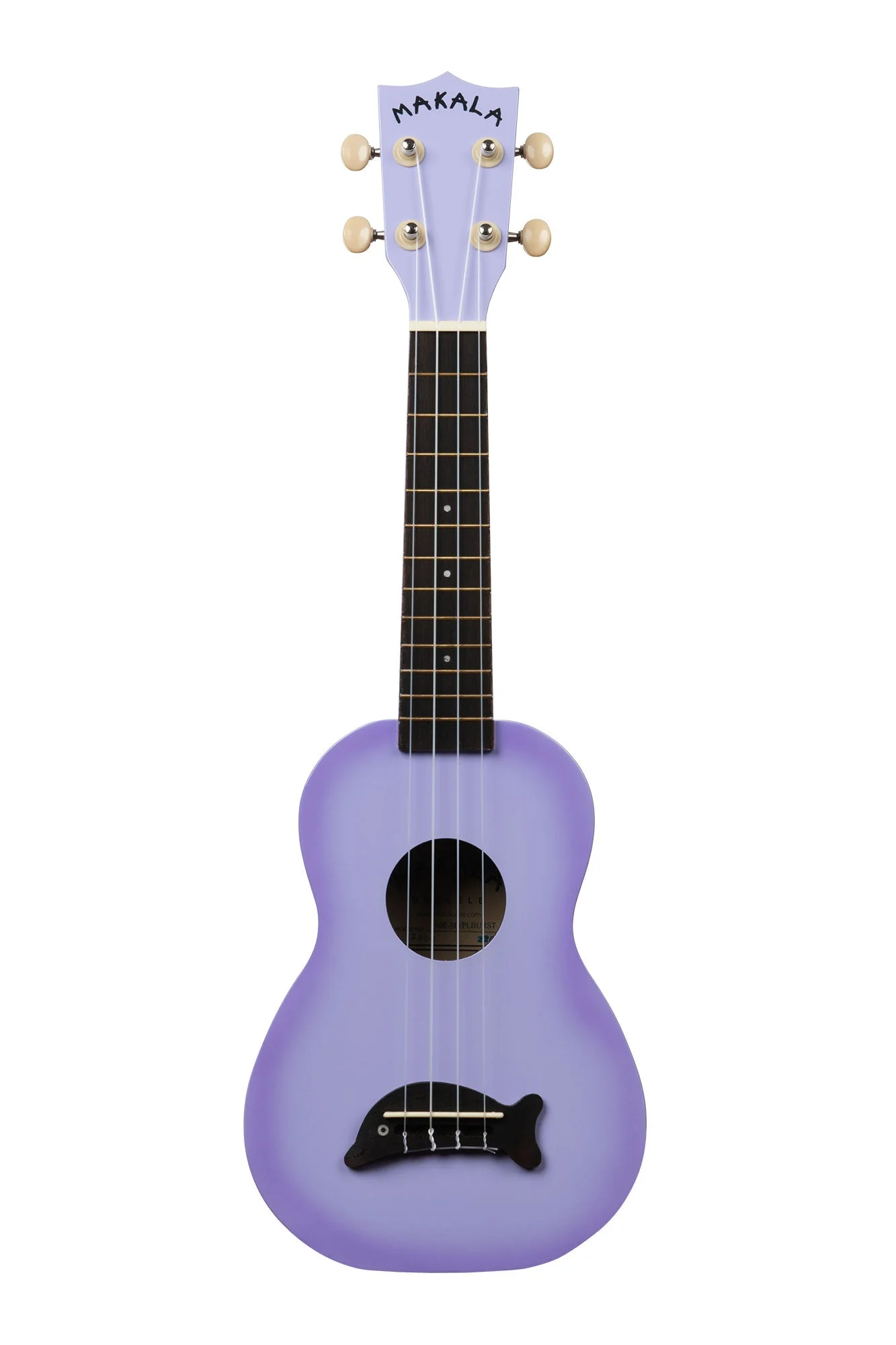
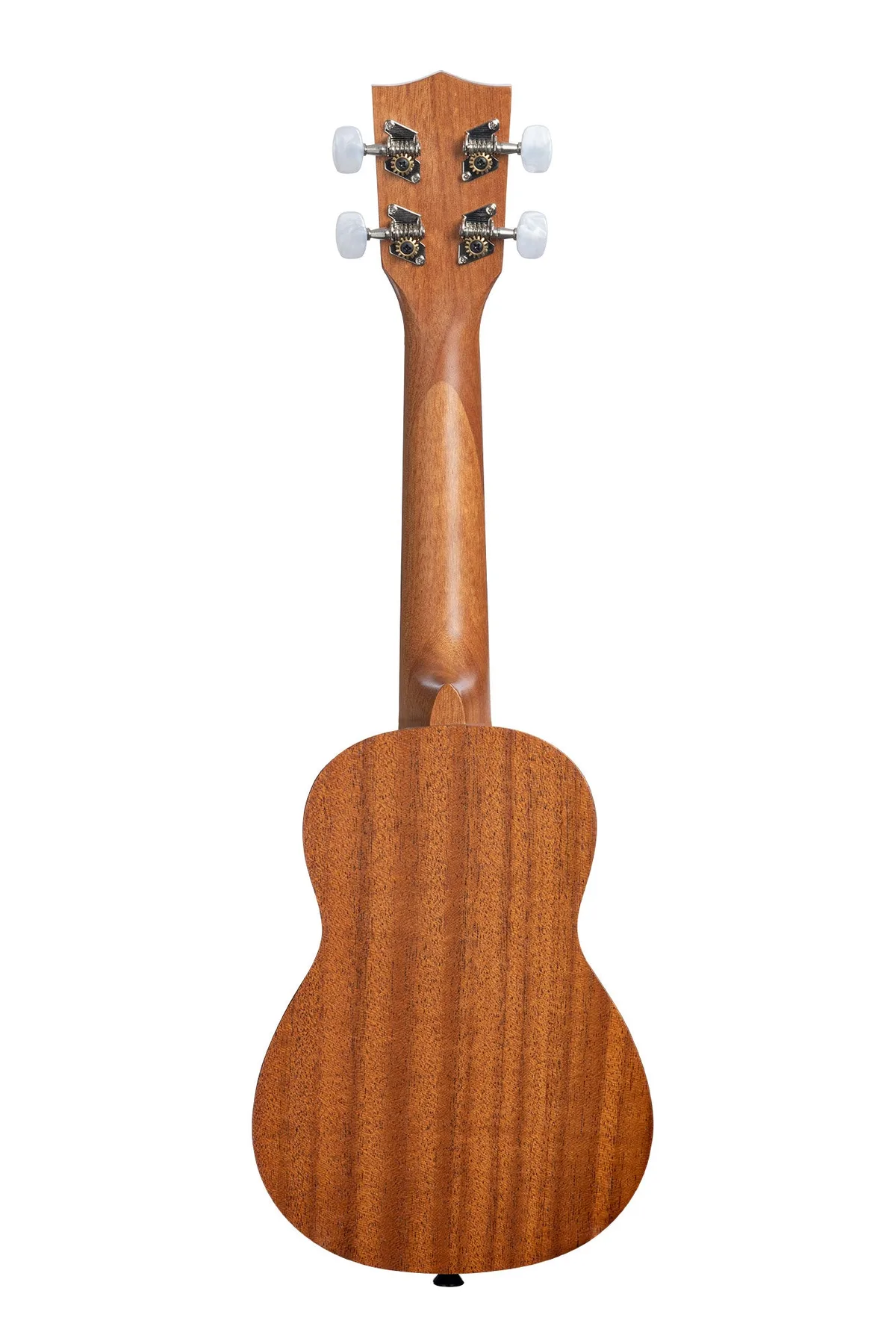
The body is made from composite materials (a blend of ABS and other polymers) with a design that mimics the shape of a dolphin — a stylistic choice that appeals to children without compromising the instrument’s acoustics. The neck is mahogany (real wood), the fretboard is walnut, and the tuning pegs are geared (not friction), which significantly improves tuning stability.
Our Evaluation
Build Quality: 8/10
The Kala Makala Dolphin sits in an interesting quality tier: significantly better than a toy instrument, slightly below a professional one. The composite body is durable — it survived drops onto hardwood (tested), being carried by the neck (tested), and a three-year-old sitting on it (tested, involuntarily). The finish is smooth and evenly applied. The frets are properly seated and don’t produce buzzing at standard action height.
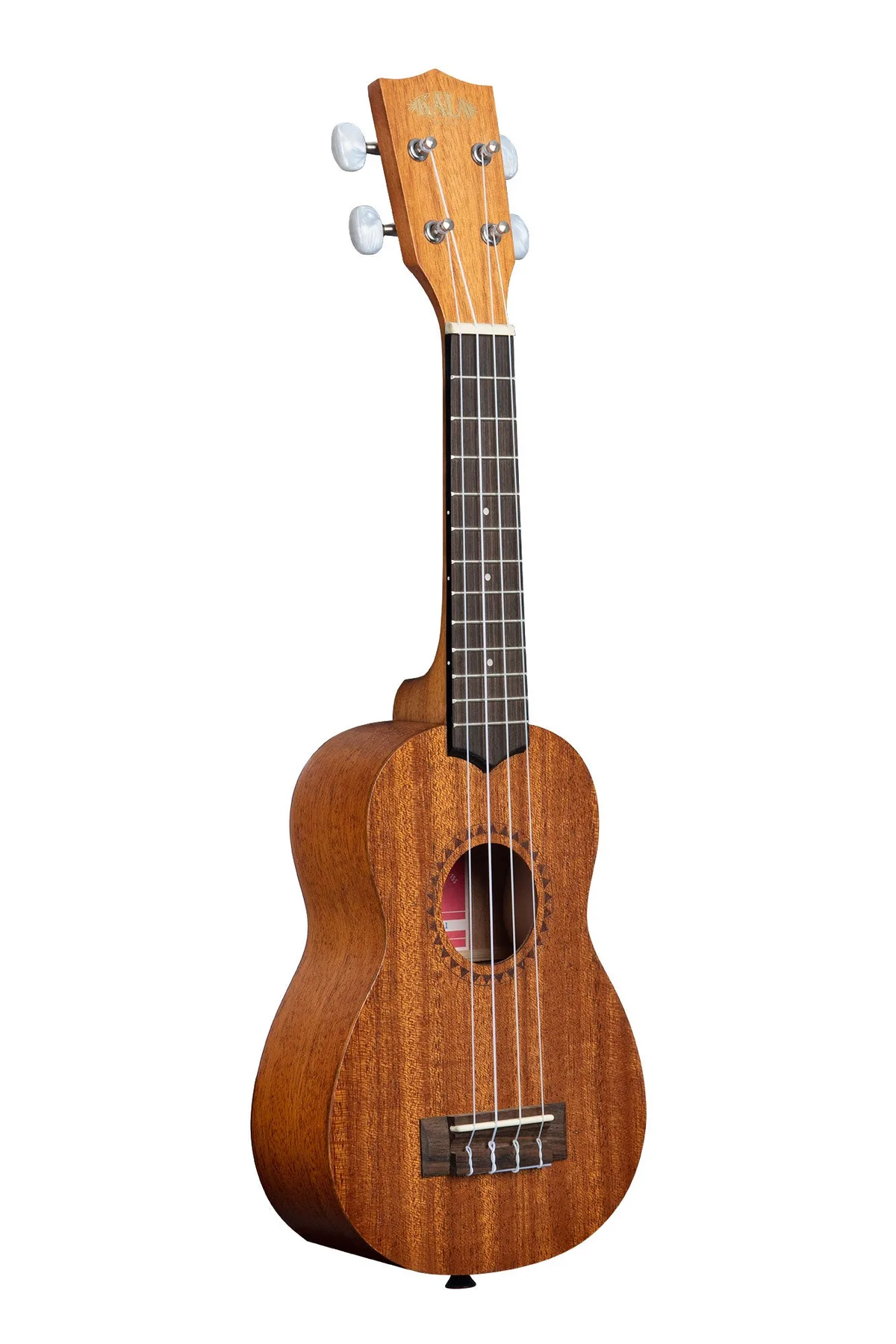
The mahogany neck is the standout component. It’s real wood, properly shaped, with a slim profile that accommodates small hands. The fretboard spacing is standard soprano — the first three frets are spaced 1.2-1.5” apart, which is tight enough that a four-year-old’s short fingers can reach multiple frets but wide enough that finger placement doesn’t require extreme precision.
The geared tuning pegs are a critical quality differentiator. Cheaper ukuleles use friction pegs, which slip under string tension and require constant adjustment. Geared pegs hold tuning substantially better — not perfectly (no ukulele holds tuning perfectly, especially with new strings and changing humidity), but well enough that a parent can tune it once at the beginning of a play session and it will remain playable throughout.
The Aquila Super Nylgut strings are the same strings found on ukuleles costing $100-200. They produce a warm, bright tone, hold pitch well after the initial stretching period (approximately 1-2 weeks of regular play), and are durable enough to survive the enthusiastic strumming of a young beginner.
Sound Quality: 8/10
This matters more than any other specification. A child’s first instrument must sound good enough that the child wants to play it again. The Kala Makala Dolphin sounds good. Not good “for a kid’s instrument” — good. The tone is warm, the volume is moderate (louder than a whisper, quieter than a tantrum), and the sustain is sufficient for simple chord strumming.
The composite body produces a slightly brighter, thinner tone than an all-wood ukulele at twice the price. But “slightly brighter and thinner” is an audiophile distinction that no three-year-old — or most adults — would notice. The Dolphin sounds like a ukulele. It sounds like the music you hear when someone plays a ukulele in a YouTube tutorial or a Hawaiian restaurant. That recognition — “I’m making that sound” — is part of the instrument’s motivational power.
Open chord strumming (C, F, Am, G7 — the four chords that form the backbone of hundreds of songs) sounds musical from the very first strum. This isn’t true of all beginner instruments. A cheap recorder sounds terrible for weeks. A beginner violin sounds terrible for months. A Kala Makala Dolphin sounds good on the first strum, and this immediate positive feedback is enormously important for sustaining interest in young children.
Playability for Small Hands: 9/10
The soprano ukulele is the right instrument for small children because of physics, not marketing. The scale length (13”) places the first-position frets close enough together that a three-year-old’s fingers can reach them. The four strings (compared to a guitar’s six) reduce the complexity of chord shapes. The nylon strings (compared to steel guitar strings) are gentle on small, soft fingers.
The Kala Makala Dolphin optimizes these inherent ukulele advantages with a slim neck profile and low string action (the height of the strings above the fretboard). Low action means less finger pressure is required to press strings to frets — critical for children whose grip strength is still developing.
In our testing, children as young as three could press a single string to a fret and produce a clean note. By age four, most could form the C major chord (one finger) and strum recognizably. By age six, children who practiced regularly (even just 5-10 minutes, several times per week) could play simple songs using two or three chord changes.
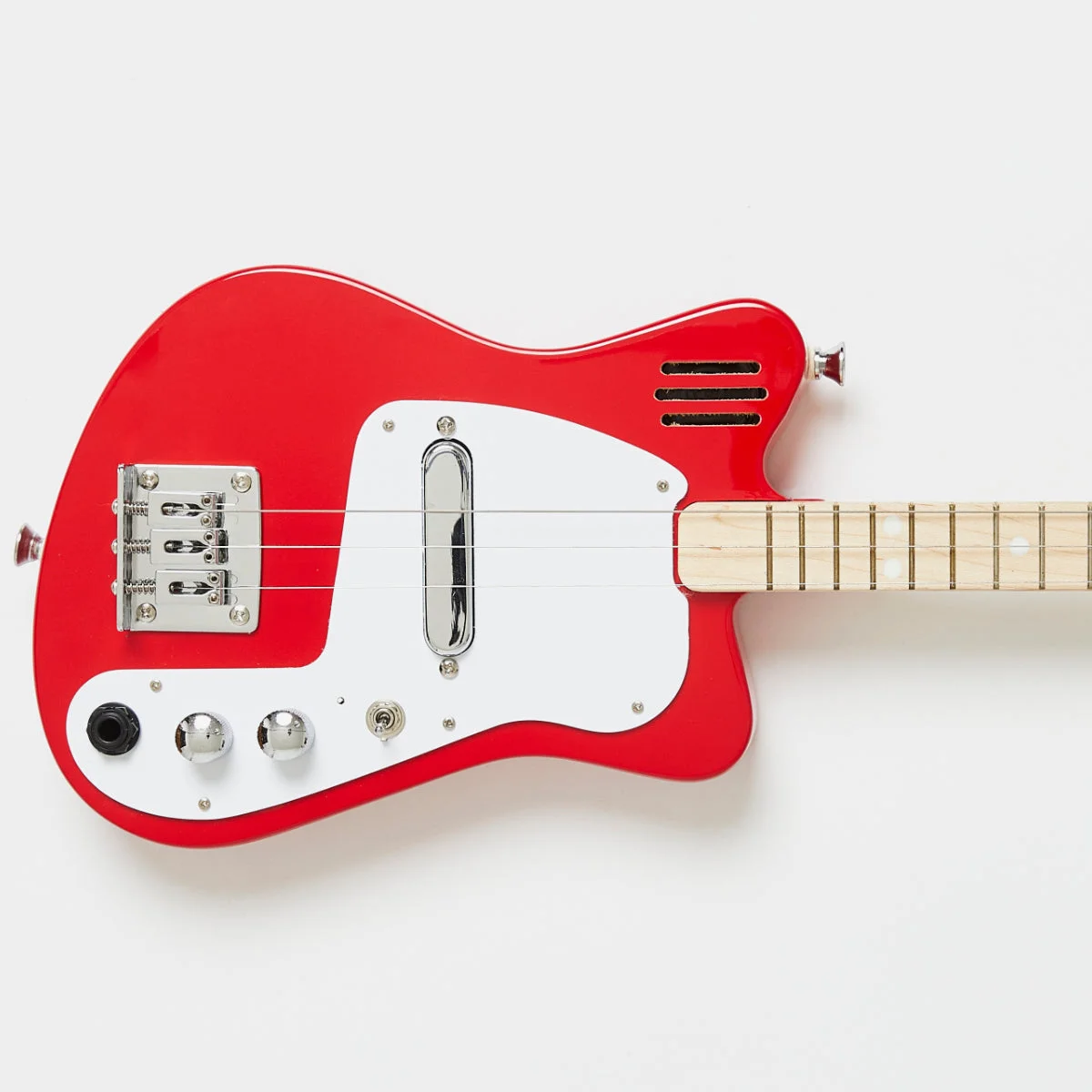
The comparison to the Loog Mini Electric Guitar (Day 28) is instructive: the Loog has three strings (simpler chords) but a longer scale length (harder reach for small fingers). The ukulele has four strings but a shorter scale. For children under 5, the ukulele’s shorter scale wins. For children 5-7, both instruments are viable.
Learning Curve: 7/10
The ukulele has the gentlest learning curve of any real instrument. “Gentle” doesn’t mean “flat” — it still requires practice, patience, and tolerance of imperfect sounds. But the progression from “holding the instrument” to “playing a recognizable song” is faster on a ukulele than on any stringed, wind, or keyboard instrument of comparable size.
The learning progression:
- Day 1: Hold the ukulele, strum open strings (no left hand needed). This already sounds musical because the open strings form a chord (Am7, technically).
- Week 1: Learn the C chord (one finger). Strum rhythmically. Sing a simple song while strumming C.
- Weeks 2-3: Learn the F chord (two fingers) and the Am chord (one finger). Practice switching between two chords.
- Weeks 4-8: Learn G7 (two-three fingers). With C, F, Am, and G7, the child can play hundreds of songs — “You Are My Sunshine,” “Twinkle Twinkle,” “Happy Birthday,” and most folk songs.
The parent or caregiver is the missing curriculum. The Kala Makala comes with a two-page quick-start guide that teaches tuning and two chords. It doesn’t include a comprehensive learning path. For that, parents need a songbook (recommended in accessories), YouTube tutorials (abundant for ukulele), or occasional lessons. The instrument provides the platform; the instruction must come from elsewhere.
Durability: 7/10
The composite body is more durable than wood — it won’t crack from humidity changes, temperature swings, or drops that would damage a wooden instrument. The mahogany neck is sturdy and shows no warping in our four-month test. The tuning pegs remain functional after hundreds of adjustments.
The vulnerable point is the strings. Aquila strings are durable for nylon, but a child who strums aggressively or pulls strings outward (rather than across) will eventually break one. Replacement strings cost $5-8 per set and are easy to install. Expect to replace strings every 3-6 months with regular use — more of a maintenance item than a durability concern.
The body’s composite material can scratch and scuff but doesn’t dent or crack. For a child’s first instrument, this durability profile is appropriate — the instrument can survive the handling of a three-year-old without requiring the careful treatment that a wooden instrument demands.
Value for Money: 9/10
At $50, the Kala Makala Dolphin is one of the most extraordinary values in children’s products we’ve reviewed in 99 days. The instrument is real — not a toy, not a simulation, not a scaled-down approximation. The strings are the same quality found on instruments costing $100-200. The playability is excellent for beginners. And the instrument can serve a child from age 3 through age 8 and beyond — a five-year usable span that few children’s products achieve.
The comparison to music lessons puts the value in perspective. A single 30-minute music lesson costs $25-50. A semester of group lessons costs $200-400. The Kala Makala Dolphin provides the instrument for less than the cost of two private lessons, and the instrument lasts for years.
The comparison to other first instruments: a Loog Mini Guitar costs $80. A Hape Pound & Tap Bench (Day 43) costs $30 but is a percussion toy, not a melodic instrument. A decent children’s keyboard costs $50-100. The ukulele provides the most direct path from “zero experience” to “playing real music” at the lowest price point.
The Evidence
Music education research is robust, well-replicated, and consistently supports the value of early musical experience. The Kala Makala Dolphin is a vehicle for this experience.
Music Training and Auditory Processing. Kraus and Chandrasekaran (2010) demonstrated that musical training — even in childhood — produces measurable changes in auditory processing at the brainstem level.1 Musicians show enhanced neural encoding of speech sounds, which supports language development, reading, and communication skills. The effect appears to be dose-dependent: more musical experience produces stronger auditory processing enhancement.
While most of this research involves structured music lessons rather than self-directed instrument play, the underlying mechanism — repeated, attentive exposure to musical sounds through active production — applies to home instrument play. A child who strums a ukulele regularly is processing pitch, rhythm, timbre, and harmony through active engagement, not passive listening.
Music and Executive Function. Moreno et al. (2011) found that short-term music training (20 days of computerized music training) improved executive function in preschool children, specifically verbal intelligence and inhibitory control.2 The researchers attributed this to the demands that music places on attention, working memory, and cognitive flexibility — the core components of executive function.
Ukulele playing involves multiple simultaneous demands: left hand finger placement, right hand strumming rhythm, listening to the produced sound, comparing it to the intended sound, and adjusting. This multi-demand task is precisely the kind of activity that exercises executive function.
Early Instrument Experience and Long-Term Outcomes. Hallam (2010) conducted a comprehensive review of music education research and concluded that active musical engagement in childhood is associated with benefits in language development, reading, mathematical ability, social skills, and self-regulation.3 Schellenberg (2004) found that music lessons in childhood produce small but reliable increases in general intelligence, even after controlling for socioeconomic status and parental education.4
Both reviews note that the benefits are strongest when the musical experience is sustained, enjoyable, and involves active participation (playing, singing) rather than passive exposure (listening). The ukulele’s low barrier to entry — quick path to satisfying sounds, gentle physical demands, affordable price — increases the likelihood that a child’s musical experience will be sustained and enjoyable.
The Instrument Matters Less Than the Experience. An important caveat from the research: the specific instrument doesn’t appear to matter. The developmental benefits come from active musical engagement, not from ukulele-specific vibrations or chord shapes. A child who plays recorder, xylophone, or piano receives similar benefits. The ukulele’s advantage is practical, not neurological: it’s the real instrument most likely to produce enjoyable sounds quickly for the youngest players, which makes sustained engagement most likely.
The honest summary: Music education research provides moderate-to-strong evidence for cognitive, linguistic, and social benefits of active musical engagement in childhood. The Kala Makala Dolphin is a well-designed vehicle for this engagement — affordable, playable, and accessible for children as young as three. The evidence supports music, and the instrument makes music accessible.
Safety Notes
The Kala Makala Dolphin meets CPSIA safety standards. The instrument contains no small parts, batteries, or toxic materials.
Safety considerations:
- Strings can break if pulled or twisted aggressively. A snapping nylon string can cause a mild sting but is not dangerous. Supervise young children during initial handling to establish proper strumming technique.
- The tuning pegs protrude slightly from the headstock. No sharp edges, but the metal pegs could cause minor scratching if the instrument is swung as a toy (it is not a toy).
- Sound level is moderate (approximately 65-70 dB at close range during vigorous strumming). Not loud enough to cause hearing concerns during normal play.
No CPSC recalls have been issued for Kala ukulele products.
The Verdict
The Kala Makala Dolphin ukulele represents the end of a music thread that began on Day 28 with the Loog Mini Guitar and passed through Day 43 with the Hape Pound & Tap Bench. Across that arc, we’ve evaluated how different products introduce children to musical experience. The Kala Makala Dolphin is the instrument we’d recommend first — before the Loog, before the keyboard, before the recorder — for one reason: it produces the shortest distance between “I’ve never played anything” and “I’m playing a song.”
That distance matters because the research on music and development has a critical condition: the child has to keep playing. Cognitive benefits, auditory processing enhancement, executive function improvements — none of them accrue from a single session. They require sustained engagement over months and years. An instrument that makes the first session successful increases the odds of a second session, a tenth, a hundredth.
At $50, with genuine premium strings, a real wood neck, and a sound that brings joy to three-year-olds and adults alike, the Kala Makala Dolphin earns its place as one of the highest-value products in our 100-day series.
Product Rating: 8/10 — Excellent playability for small hands, genuine musical tone, outstanding value, and a learning curve that rewards beginners quickly. Docked for the minimal included learning materials and the tuning instability inherent to all ukuleles (especially in the hands of three-year-olds).
Evidence Rating: Moderate — Music education research consistently supports cognitive, linguistic, and social benefits of active musical engagement. The evidence applies to music generally, not ukuleles specifically, but the ukulele’s accessibility for young children makes it an effective vehicle for the supported activity.
Who Should Buy This
- Parents of children ages 3-8 with any interest in music, singing, or instruments
- Families looking for a real instrument (not a toy) at an accessible price
- Parents wanting to complement the music thread started with other instruments in our series
- Gift-givers seeking a meaningful, lasting present that delivers genuine developmental value
- Homeschooling families looking for a music curriculum starter instrument
Who Should Skip This
- Parents unwilling to tune the instrument regularly — an out-of-tune ukulele sounds terrible and defeats the purpose
- Families looking for a completely self-directed experience — some adult guidance (or YouTube) is needed for initial learning
- Children under 3 — the finger strength and coordination for chord formation typically aren’t developed yet
- Parents of children who have expressed specific interest in a different instrument — follow their interest, not our recommendation
This review reflects our independent evaluation. ScienceBasedKids.com purchased this product at retail price. We may earn a commission if you purchase through our links, which helps fund our research. This never influences our ratings.
Footnotes
-
Kraus, N., & Chandrasekaran, B. (2010). “Music training for the development of auditory skills.” Nature Reviews Neuroscience, 11(8), 599-605. ↩
-
Moreno, S., Bialystok, E., Barac, R., Schellenberg, E. G., Cepeda, N. J., & Chau, T. (2011). “Short-term music training enhances verbal intelligence and executive function.” Psychological Science, 22(11), 1425-1433. ↩
-
Hallam, S. (2010). “The power of music: Its impact on the intellectual, social and personal development of children and young people.” International Journal of Music Education, 28(3), 269-289. ↩
-
Schellenberg, E. G. (2004). “Music lessons enhance IQ.” Psychological Science, 15(8), 511-514. ↩
Enjoyed this review? We publish two new evidence-based evaluations every week.
Free. No spam. Unsubscribe anytime.
Ukulele times reflect strumming open chords while singing, not fingerpicking individual notes. 'Recognizable' defined as an adult observer identifying the intended song.
Recommended Accessories
Affiliate links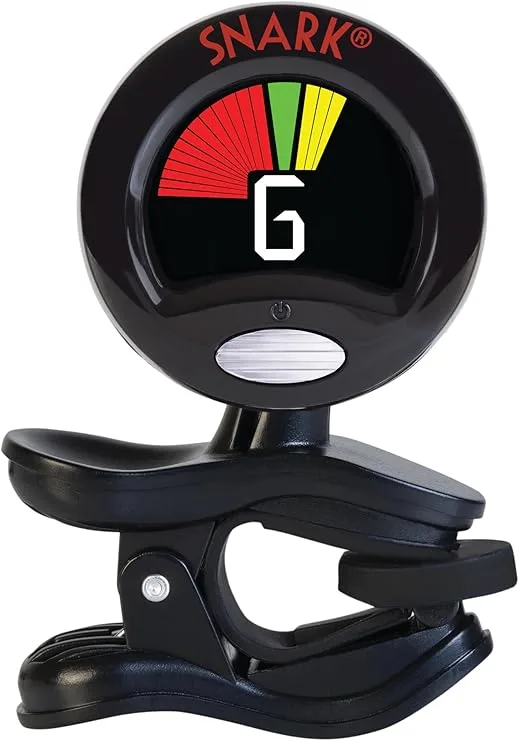
Snark SN6X Clip-On Ukulele Tuner
“The #1 selling ukulele tuner. Full-color display rotates 360 degrees. Ukuleles go out of tune constantly, especially with kid players.”
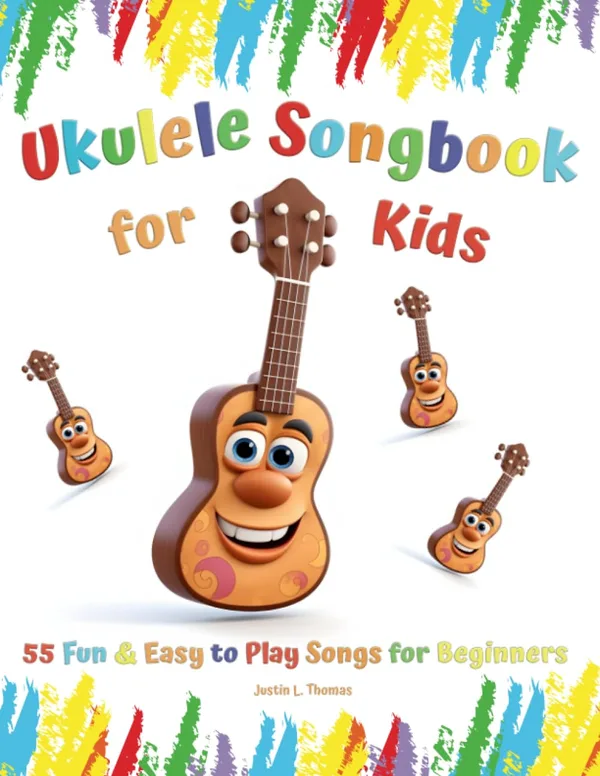
Ukulele Songbook for Kids: 55 Fun & Easy Songs (Justin L. Thomas)
“Sheet music, tabs, chords, and lyrics for 55 kid-friendly songs. Structured practice material.”
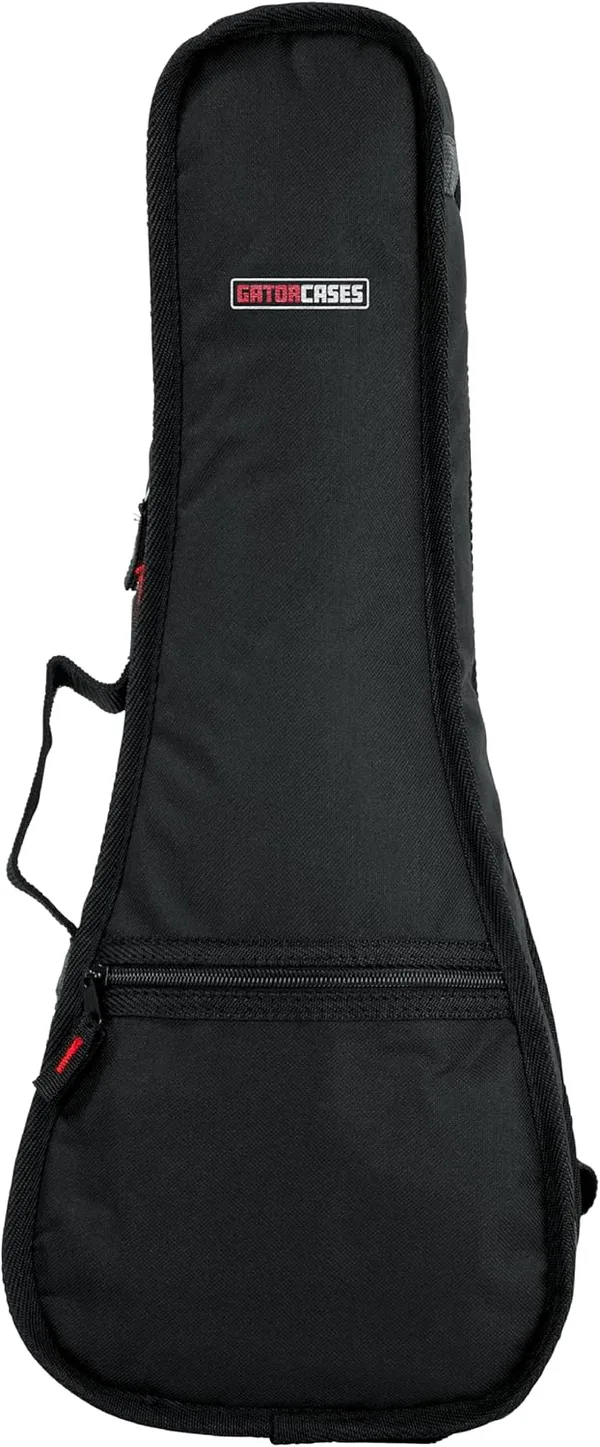
Gator Cases Padded Soprano Ukulele Gig Bag (GBE-UKE-SOP)
“10mm foam padding in 600-denier nylon. Protects the instrument and makes it portable.”
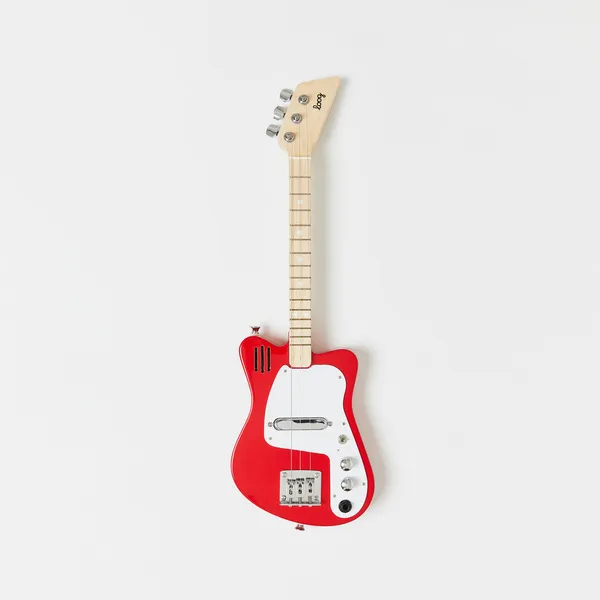
Loog Mini Electric Guitar
“Different stringed instrument. 3 strings vs 4. Bookends the music thread from Day 28.”
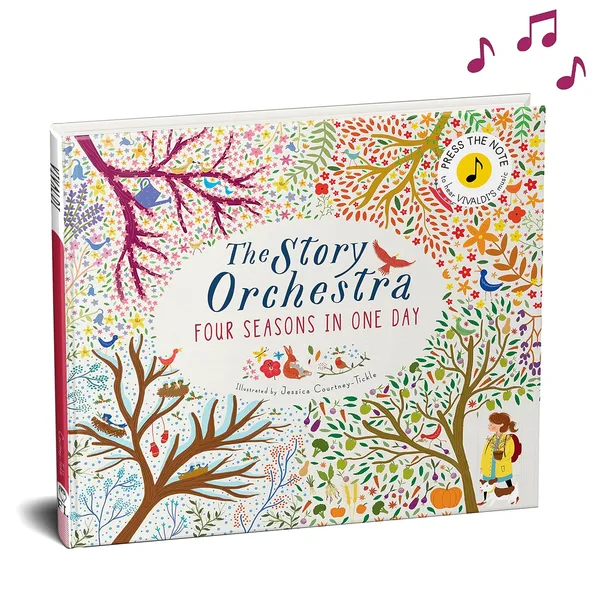
The Story Orchestra: Four Seasons in One Day (Sound Book)
“Press-and-play classical music book. Instruments in the context of ensemble.”