ScienceBasedKids.com may earn a commission from affiliate links in this review. Our ratings are never influenced by affiliate relationships. Read our full methodology.
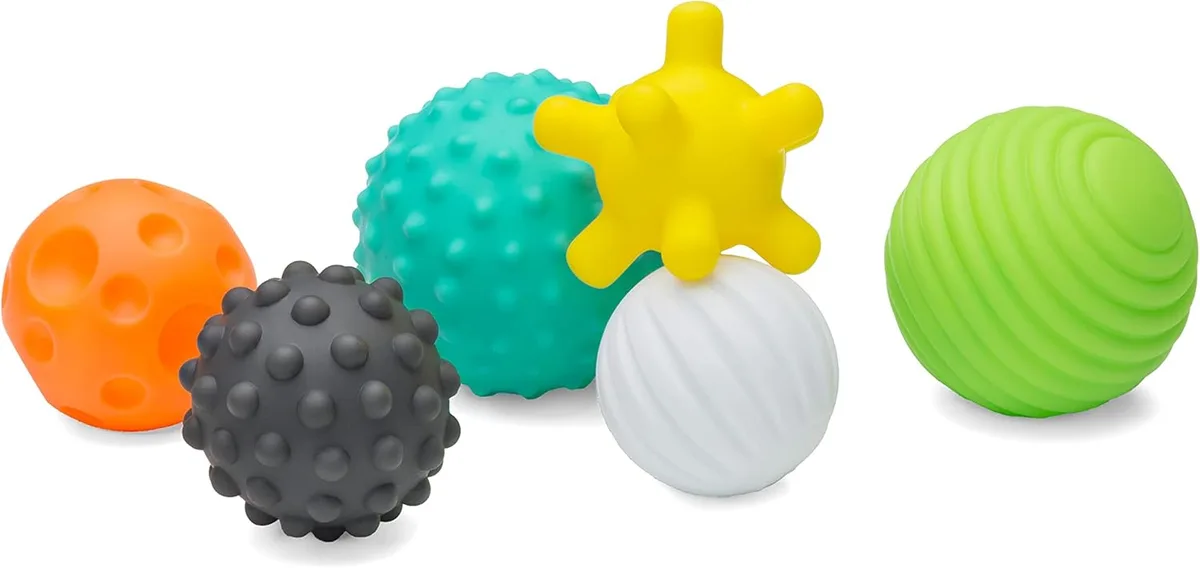
The Infantino Textured Multi Ball Set costs $10 and contains six balls. Each ball is a different color, a different size, and a different texture. Babies pick them up, mouth them, squeeze them, roll them, and drop them. The interaction is ancient — babies have been exploring objects with their hands and mouths since before recorded history. What the Infantino set does is provide six systematically different objects for this exploration at a price that amounts to $1.67 per ball.
We tested the Multi Ball Set across three households with infants ages 5 months to 20 months over four weeks.
Product Overview
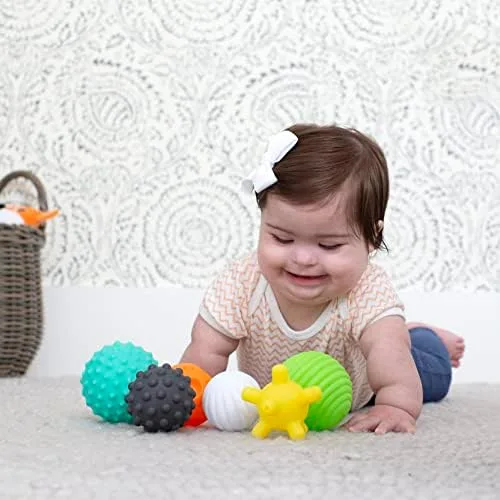
The Infantino Textured Multi Ball Set ($10) is a six-piece sensory toy set:
- Balls: Six soft plastic balls, each approximately 2-3 inches in diameter
- Textures: Each ball has a unique texture — bumps, ridges, knobs, swirls, soft spikes, and wavy lines
- Colors: Six bright, distinct colors for visual discrimination
- Material: BPA-free soft plastic
- Weight: Light enough for infant hands, heavy enough to roll predictably
The balls are soft enough to be safe for mouthing but firm enough to maintain shape during squeezing. The textures are pronounced — not subtle variations but genuinely different tactile experiences.
Our Evaluation
Build Quality: 6/10
The balls are competently made for the price point. The textures are well-defined and consistent. The plastic is smooth between texture elements. Colors are bright and durable — no fading observed during testing. The balls are not the most premium-feeling infant toys, but they’re well above what $10 typically buys.
Play Value: 7/10
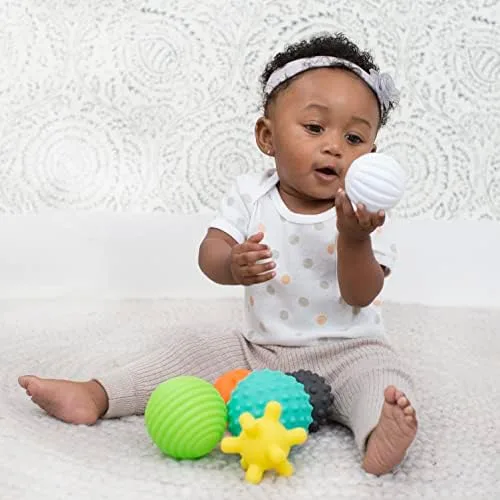
The systematic texture variation is the key design feature. When presented with all six balls, infants in our testing explored them sequentially, picking up one, mouthing it, examining its texture, then moving to the next. This self-directed exploration is exactly what developmental psychologists recommend for sensory development.
The balls also serve as excellent rolling toys during the crawling-to-walking transition. The different sizes and textures produce slightly different rolling behaviors, adding variety to chase-and-retrieve play.
Age Appropriateness: 7/10
The 6-month minimum is appropriate — younger infants can hold the balls but lack the manual dexterity for meaningful texture exploration. The effective ceiling is around 18-20 months, when the tactile novelty fades and children prefer more complex toys. The 6-18 month window provides about a year of primary engagement.
Durability: 7/10
The soft plastic withstands infant-level abuse — biting, throwing, squeezing. The balls can be wiped clean but should not be submerged in water (the texture crevices can trap moisture). No structural degradation observed during testing.
Value for Money: 9/10
At $10 for six balls providing approximately 12 months of primary engagement, the value is outstanding. This is one of the most cost-effective sensory toys available.
The Evidence

Tactile exploration and sensory development. Infants develop tactile discrimination through active exploration of objects with different textures. Rochat (1989) documented that infants as young as 2 months engage in systematic tactile exploration, and that varied tactile input supports sensory processing development.1
Object exploration and hand development. Handling objects of different shapes and textures supports the development of grip variety and manual dexterity. Corbetta and Snapp-Childs (2009) demonstrated that experience with differently shaped objects contributes to the development of sophisticated grasp patterns.2
The honest summary: Tactile exploration with varied objects is well-supported by developmental research. The Multi Ball Set provides systematic texture variation that supports this exploration.
Safety Notes
Meets ASTM F963 and CPSIA standards. BPA-free. All balls are too large for choking hazard classification. Easy to wipe clean. No CPSC recalls on record.
The Verdict
The Infantino Textured Multi Ball Set is a no-frills sensory toy that delivers on its simple promise: six different tactile experiences in six brightly colored balls. The developmental utility is genuine, the price is exceptional, and the engagement window covers the critical sensory exploration period of 6-18 months. It won’t win any design awards, but it will be one of the most-used toys in your baby’s first year.
Product Rating: 7/10 — Excellent sensory variety, outstanding value, appropriate age targeting. Basic construction and limited long-term engagement prevent a higher score.
Evidence Rating: Emerging — Tactile exploration research supports the concept. Multi-texture object sets are not specifically studied.
Who Should Buy This
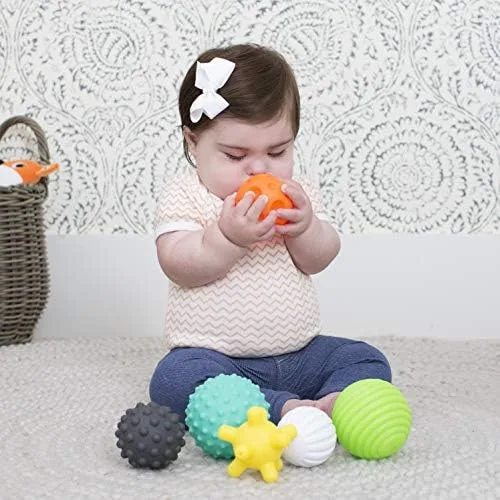
- Parents of infants 5-12 months looking for sensory exploration toys
- Families on a budget wanting maximum developmental value per dollar
- Gift-givers adding to a baby’s first toy collection
- Daycare programs needing washable, durable sensory toys
Who Should Skip This
- Families wanting premium construction and materials
- Parents of children over 18 months (they’ve likely outgrown the set)
- Anyone looking for toys with longer engagement windows
This review reflects our independent evaluation. ScienceBasedKids.com purchased this product at retail price. We may earn a commission if you purchase through our links, which helps fund our research. This never influences our ratings.
Footnotes
-
Rochat, P. (1989). “Object manipulation and exploration in 2- to 5-month-old infants.” Developmental Psychology, 25(6), 871-884. ↩
-
Corbetta, D., & Snapp-Childs, W. (2009). “Seeing and touching: The role of sensory-motor experience on the development of infant reaching.” Infant Behavior and Development, 32(1), 44-58. ↩
Recommended Accessories
Affiliate links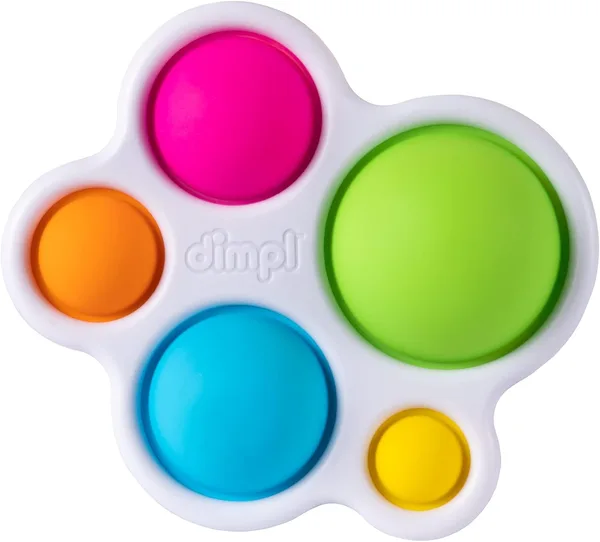
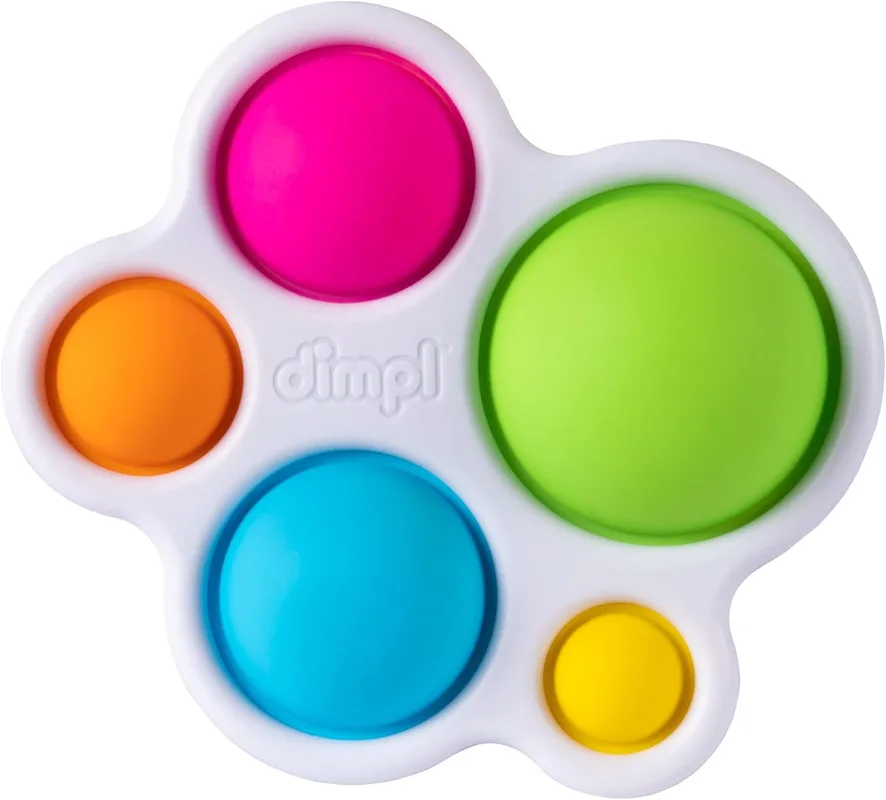
Fat Brain Toys Dimpl
“Silicone bubble sensory toy. Different tactile domain for variety.”
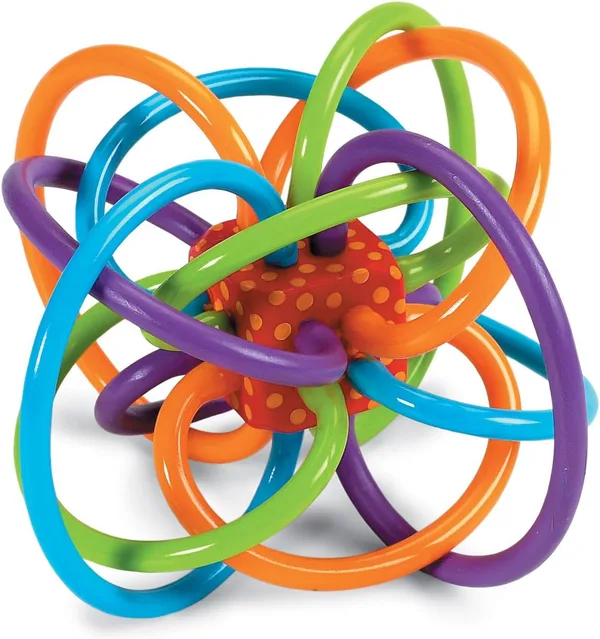
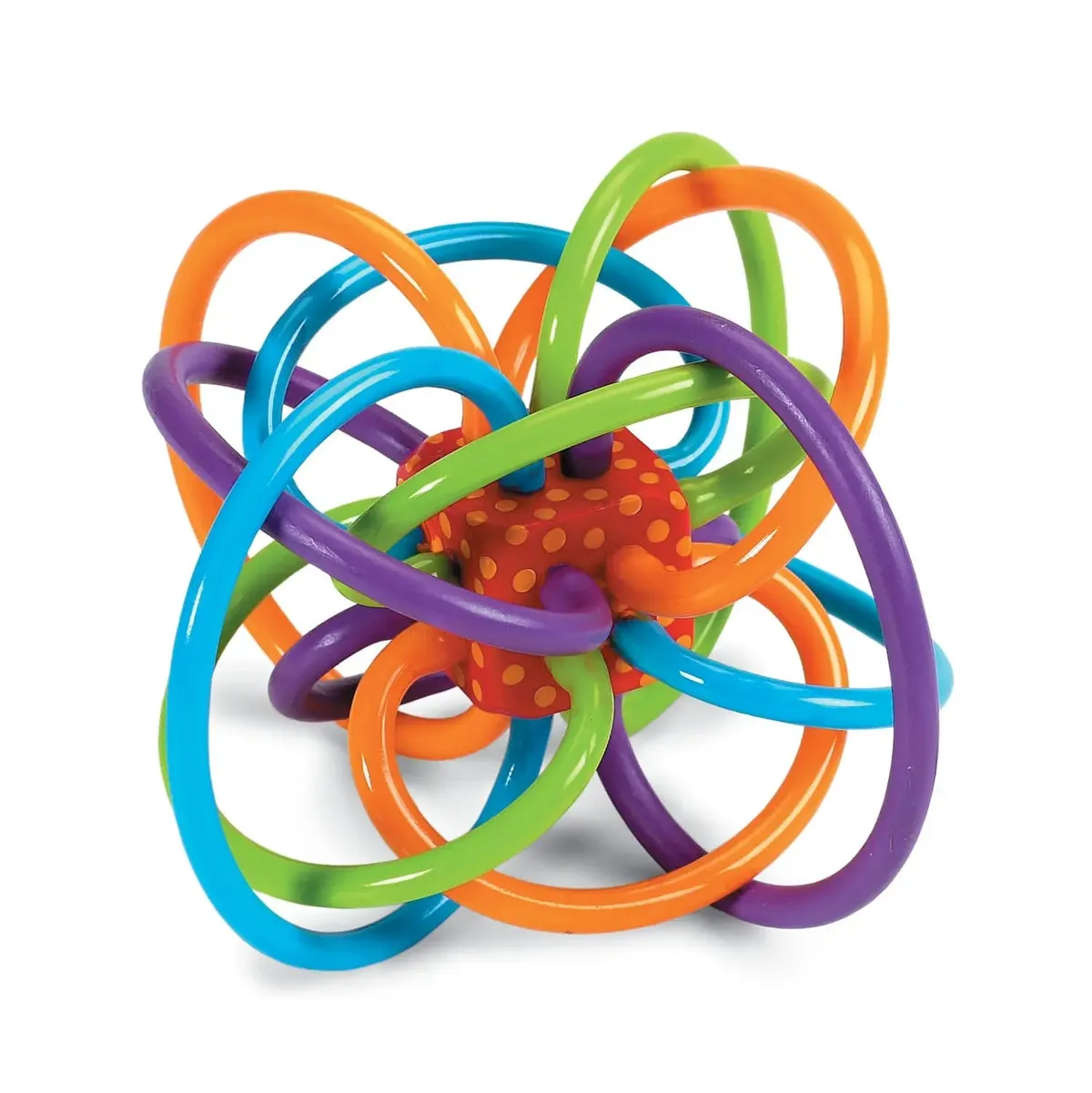
Manhattan Toy Winkel Rattle & Teether
“Tube-based grasping toy. Complements ball exploration with a different shape.”
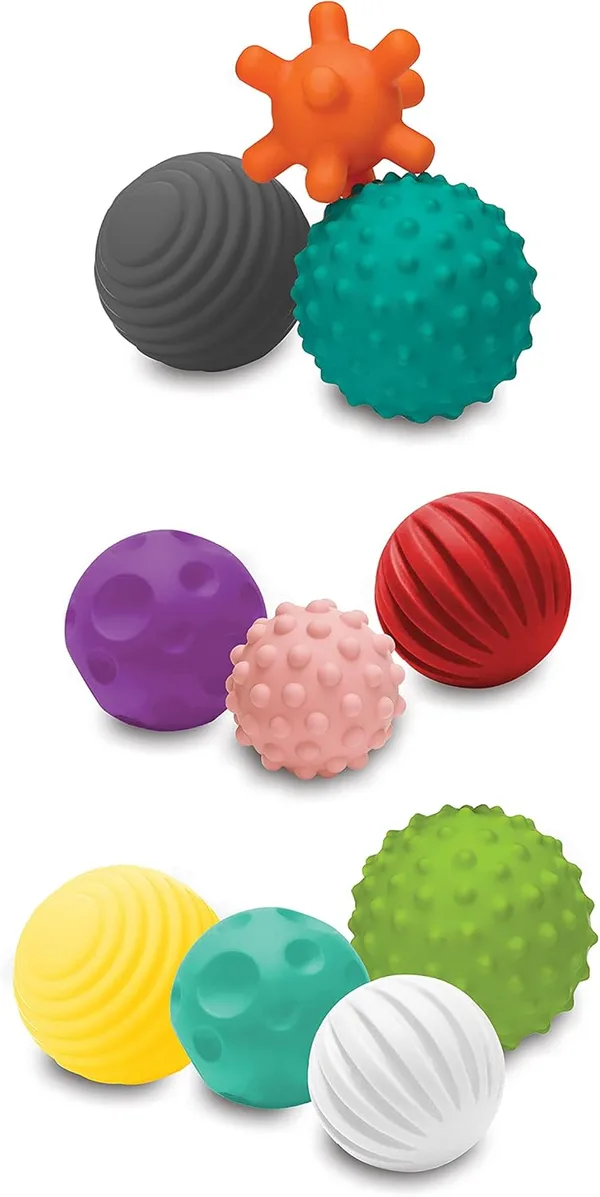
Infantino Textured Multi Ball Set (10-piece)
“Expanded set with four additional textures. More variety at a small premium.”
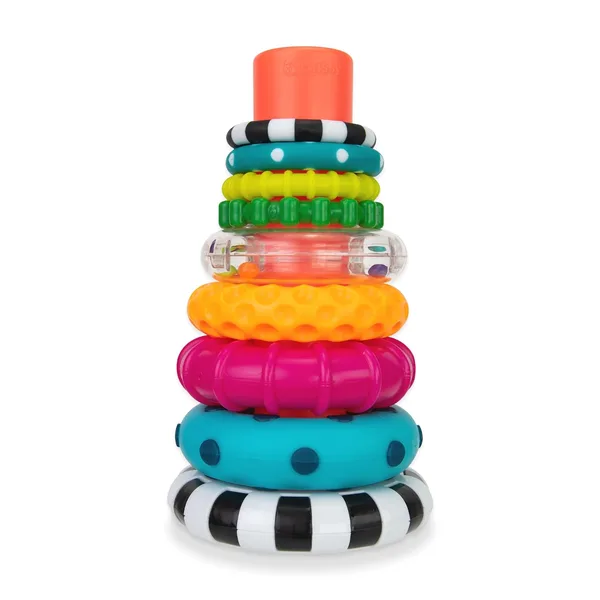
Sassy Stacks of Circles Ring Stacker
“Textured rings instead of balls. Stacking adds a construction element.”