ScienceBasedKids.com may earn a commission from affiliate links in this review. Our ratings are never influenced by affiliate relationships. Read our full methodology.
The fort was a failure. Two walls had collapsed, the tunnel section sagged in the middle, and the sheet draped over the top kept sliding off because my six-year-old hadn’t secured it to the connector joints. She stood inside the wreckage — approximately the same posture as a homeowner surveying storm damage — and announced, “I need to do the corners differently.” Not “this is broken.” Not “help me.” I need to do the corners differently. She had diagnosed a structural problem (insufficient corner bracing), identified a solution (rearranging the connector pieces at the joints), and was prepared to iterate. She spent the next forty minutes rebuilding. The second version held. She crawled inside, arranged three pillows and a flashlight, and declared it “the secret laboratory.” For the next two hours, the fort was a laboratory, then a castle, then a spaceship, then a veterinary hospital for stuffed animals. The building took forty minutes. The playing took two hours. The fort cost fifty dollars. The engineering lesson and the afternoon of imaginative play cost nothing extra.
Product Overview
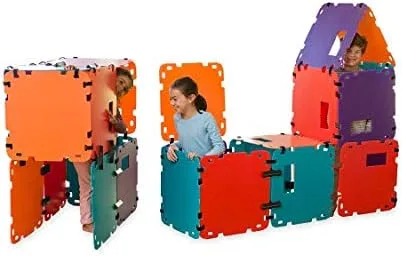
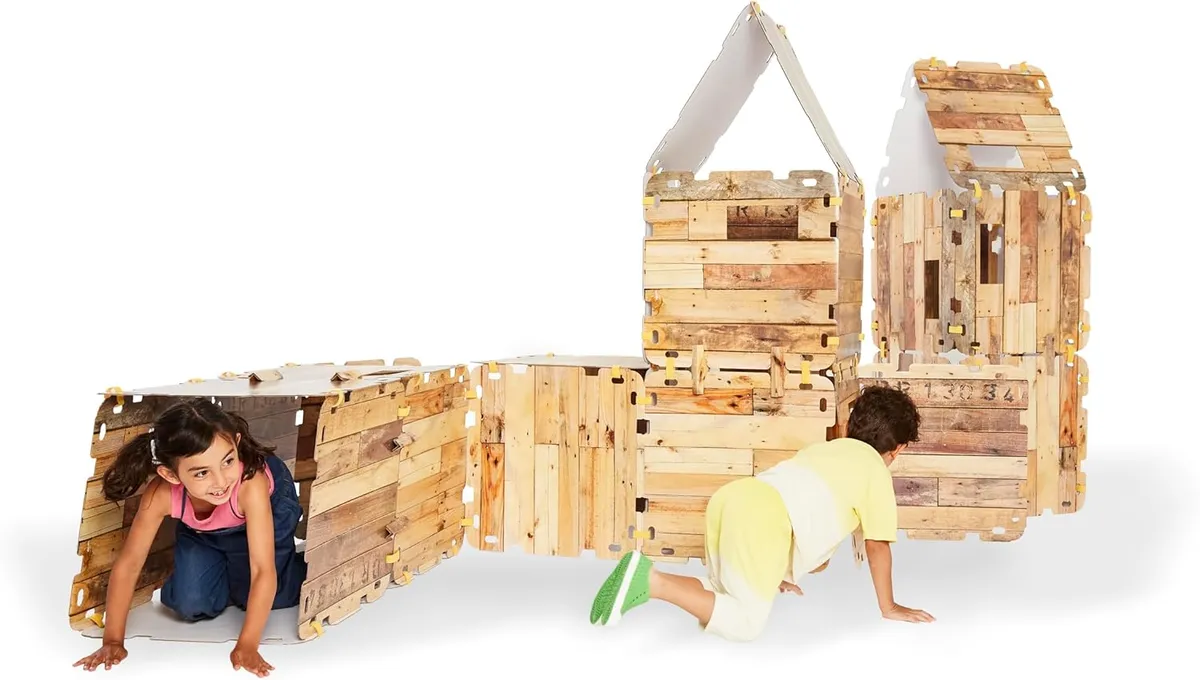
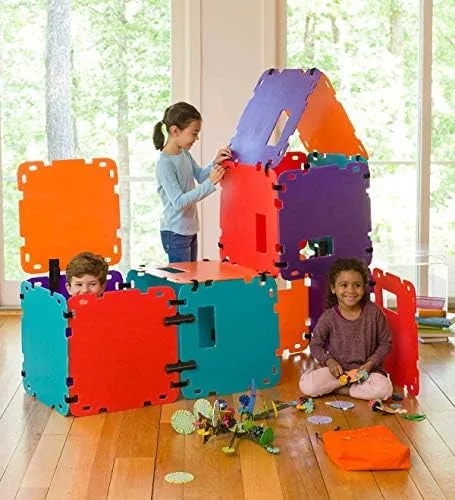
The Hearthsong Fantasy Fort Building Kit is a connector-and-rod system for building large-scale play structures. Think of it as a construction set where the finished product is big enough to sit inside.
In the box:
- 44 plastic connectors — multi-directional joints that accept rods at various angles
- 25 flexible rods — lightweight, semi-rigid poles approximately 20 inches long
- Carrying bag — for storage and transport
- No fabric covering — sheets, blankets, or tarps are supplied by the family (this is by design)
The system is simple: insert rods into connector joints to build a skeletal frame. Drape fabric over the frame. The result is a fort, tunnel, castle, or whatever architectural concept the child envisions. The connectors accommodate multiple rod angles, allowing straight walls, angled roofs, arched doorways, and branching tunnels. The rods are flexible enough to create curved structures but rigid enough to support draped fabric.
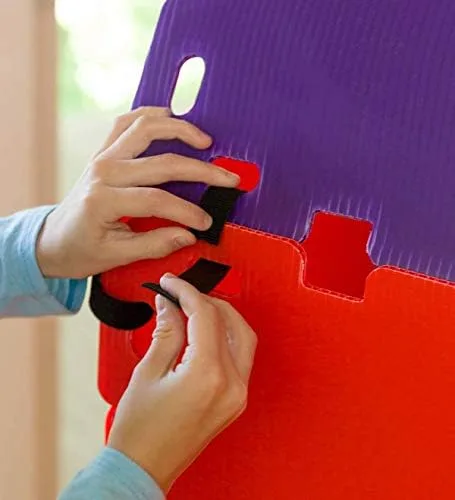
Assembly requires no tools and no fasteners beyond the friction-fit rod-to-connector joints. Children ages 5 and up can build independently. Children ages 3-4 can participate with adult help.
Our Evaluation
Build Quality: 6/10
The connectors are the quality bottleneck. They’re injection-molded plastic with multiple rod-receiving ports. The friction fit is adequate — rods stay in place once inserted — but the connectors flex under load, which means large or ambitious structures can wobble. The plastic is durable enough for indoor use but would likely crack under sustained outdoor UV exposure or freezing temperatures.
The rods are the better component. They’re lightweight, flexible without being flimsy, and resist snapping even when bent aggressively by enthusiastic builders. The length (approximately 20 inches) is well-chosen — long enough to create meaningful structure dimensions but short enough for children to handle easily.
The carrying bag is a thin nylon affair that works but won’t survive long-term use. A box or bin is a better storage solution.
The absence of included fabric covering is the right design choice. Any fabric — old sheets, lightweight blankets, beach towels, tarps — works over the frame. Including proprietary fabric would increase cost without improving the play experience. This decision keeps the price at $50 and lets families use what they have.
Play Value: 9/10
The Fantasy Fort generates play value in two distinct phases, and this is what makes it special.
Phase 1: Building. The construction process is genuine constructive play. Children must plan a structure (spatial reasoning), select appropriate connectors for desired angles (spatial-mechanical reasoning), and solve structural problems when walls wobble or roofs sag (engineering thinking). In our testing, building sessions lasted 20-45 minutes depending on the child’s age and the structure’s ambition. This is substantial sustained engagement for an activity that is fundamentally problem-solving.
The building process is naturally cooperative when two or more children are involved. One child can’t hold a rod, attach a connector, and drape fabric simultaneously — collaboration is structurally required. Our testers demonstrated task distribution (“you hold that corner, I’ll connect this rod”), negotiation (“I think the door should be here” / “no, here, so we can see the TV”), and joint problem-solving (“it keeps falling — what if we add another connector?”).
Phase 2: Inhabiting. Once built, the fort becomes a stage for dramatic and imaginative play. The enclosed space creates a psychologically distinct zone — inside the fort is different from outside the fort, and this boundary fuels narrative play. Our testers’ forts became (in no particular order): a house, a spaceship, a cave, a restaurant, a library, a doctor’s office, a castle, a submarine, and a “secret meeting room for spies.” Each narrative lasted 30-90 minutes.
The combination of these two phases — building then inhabiting — is unusual. Most construction toys (blocks, LEGO, Magna-Tiles) produce structures that are admired or played with from the outside. The Fantasy Fort produces structures that are played with from the inside. This shift in perspective — from architect to inhabitant — adds a qualitative dimension to the play experience.
Age Appropriateness: 7/10
The 3-10 age range on the box is aspirational at the lower end and accurate at the upper end. At three, a child can insert rods into connectors with help but cannot plan or execute a structure independently. The play value at three is mostly inhabiting a fort built by an older sibling or parent.
At five, children can build simple structures (two walls and a roof, a basic tunnel) with moderate adult guidance. At seven, children build independently, creating multi-room structures and solving structural problems without help. At nine-ten, children are building complex, multi-section forts and beginning to care about architectural details (symmetry, entrance placement, roof angles).
The upper age limit is less about capability and more about social context. By ten or eleven, many children shift from physical fort building to digital construction (Minecraft, Roblox). The Fantasy Fort remains functional and enjoyable, but the child may not choose it.
Durability: 6/10
The connector joints are the wear point. Repeated assembly and disassembly gradually widens the rod-receiving ports, loosening the friction fit over time. After approximately 30-40 build-and-disassemble cycles, some connectors in our test set began to hold rods less securely. The rods themselves show no degradation.
The system is designed for repeated use but has a finite lifespan measured in build cycles rather than years. At $50, the cost-per-build-cycle for a system that lasts 30-40 cycles is approximately $1.25-$1.67 — reasonable for the play value generated.
Value for Money: 7/10
At $50, the Fantasy Fort sits in the “deliberate purchase” category — more than an impulse buy, less than a major investment. The value depends on how frequently the child builds. A child who builds a fort every weekend for a year gets extraordinary value. A child who builds three forts and loses interest gets adequate value. The initial build is guaranteed to be exciting; sustained use depends on the child’s temperament and the availability of cooperative building partners.
The Crazy Forts alternative ($30) offers a similar experience at a lower price point with a different connector system (balls and sticks rather than multi-port connectors). The Crazy Forts system produces slightly smaller structures but is more budget-friendly. For families uncertain about whether fort building will be a sustained interest, starting with Crazy Forts is a reasonable strategy.
The Evidence
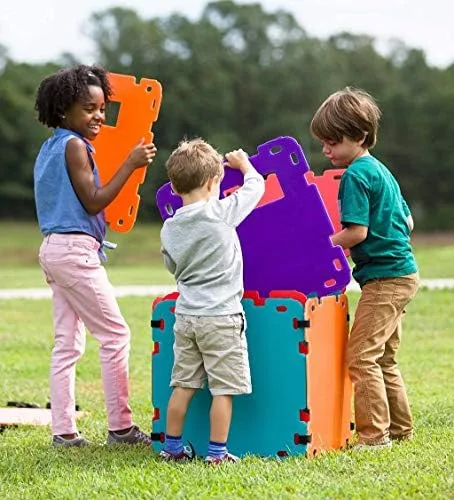
Fort building sits at the intersection of constructive play and dramatic play — two well-researched play types.
Constructive Play and Cognitive Development. Forman (1982) identified constructive play — play involving the creation of something from materials — as a distinct play type with specific cognitive demands: spatial planning, material selection, problem-solving, and iterative refinement.1 Block play is the most-studied form of constructive play, but fort building involves the same cognitive operations at a larger physical scale. The spatial reasoning required to plan a three-dimensional structure, select appropriate joints and angles, and troubleshoot structural failures is developmentally analogous to block building.
Dramatic Play and Social-Emotional Development. Lillard et al. (2013) reviewed the evidence for pretend play’s role in social-emotional development, finding that pretend play provides opportunities for perspective-taking, narrative construction, emotional regulation, and social negotiation.2 Fort inhabiting — the second phase of fort play — is a specific form of pretend play where the physical environment (the fort) structures and stimulates the narrative. The enclosed space creates a “pretend boundary” that helps children maintain imaginative scenarios.
Den-Making as a Developmental Activity. Tovey (2007) specifically examined den-making (the British term for fort building) as a developmental activity, arguing that it combines constructive play, dramatic play, cooperative play, and risk-taking in a unique configuration.3 The den provides ownership of space — a rare commodity for children — and the building process provides agency over the physical environment. Tovey found that den-making was particularly valuable for children’s developing sense of competence and autonomy.
Cooperative Play and Communication. Fort building with peers requires communication, negotiation, and task coordination. Vygotsky’s concept of the zone of proximal development (ZPD) applies here: a child building a fort with a more experienced peer can accomplish structural solutions beyond what they would achieve alone, and the scaffolding process builds competence that transfers to independent building.4
The honest summary: Fort building is supported by research on constructive play, dramatic play, den-making, and cooperative learning. No studies examine the Hearthsong Fantasy Fort specifically, but the play types it generates are well-characterized in the developmental literature.
Safety Notes
The Hearthsong Fantasy Fort meets CPSC general toy safety standards. The rods are flexible and rounded at the ends, minimizing poking hazards. The connectors have no sharp edges.
Supervision is recommended for children under 5, primarily because the rods can be used as poking implements and because young children may attempt to climb the frame structure, which is not designed to bear weight beyond draped fabric.
The fort frame should not be used outdoors in wind conditions, as fabric acting as a sail can destabilize the structure.
No CPSC recalls have been issued for the Hearthsong Fantasy Fort.
The Verdict
The Hearthsong Fantasy Fort earns its recommendation by being two toys in one: a construction set and an imagination theater. The building phase exercises spatial reasoning, engineering thinking, and cooperative planning. The inhabiting phase exercises dramatic play, narrative construction, and imaginative exploration. Few toys generate both constructive and dramatic play in a single product, and the transition from builder to inhabitant — from architect to character — adds a qualitative dimension that purely constructive or purely dramatic toys don’t provide.
The system is simple, which is its strength. Rods and connectors. No batteries, no apps, no programmed outcomes. The child designs the fort. The child builds the fort. The child inhabits the fort. Every decision is theirs.
Product Rating: 7/10 — Strong play value across two play types (constructive and dramatic), genuine cooperative play demands, and a design that scales from simple tunnels to complex multi-room structures. Docked for connector quality that degrades with repeated use, a lower age bound that’s optimistic, and build quality that’s functional rather than premium.
Evidence Rating: Emerging — Constructive play, dramatic play, and den-making are all supported by developmental research. No product-specific studies exist, but the play types generated by fort building are well-characterized.
Who Should Buy This
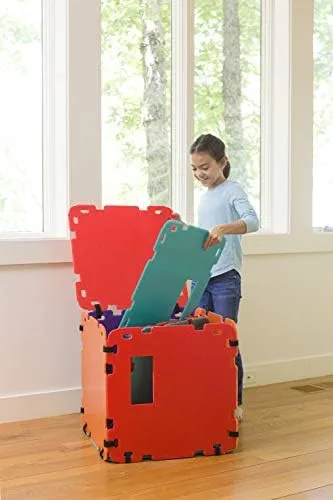
- Families with children ages 5-9 who enjoy building and imaginative play
- Siblings or friend groups who play together regularly — fort building shines as a cooperative activity
- Parents looking for large-scale constructive play beyond blocks and LEGO
- Families with indoor space for fort building (living rooms, basements, playrooms)
- Gift-givers for 6-8 year old birthdays — universally appealing, generates immediate play
Who Should Skip This
- Families with very limited indoor space — forts take up room
- Parents who want a product that stores compactly — disassembled, the rods and connectors fill a large bag
- Children under 4 (they can inhabit but can’t meaningfully build)
- Families looking for outdoor-only play equipment — the Fantasy Fort works outdoors but isn’t weather-resistant
- Parents who will resent providing sheets for draping — this is part of the system, not a flaw
This review reflects our independent evaluation. ScienceBasedKids.com purchased this product at retail price. We may earn a commission if you purchase through our links, which helps fund our research. This never influences our ratings.
Footnotes
-
Forman, G. E. (1982). Action and Thought: From Sensorimotor Schemes to Symbolic Operations. Academic Press. ↩
-
Lillard, A. S., Lerner, M. D., Hopkins, E. J., Dore, R. A., Smith, E. D., & Palmquist, C. M. (2013). “The impact of pretend play on children’s development: A review of the evidence.” Psychological Bulletin, 139(1), 1-34. ↩
-
Tovey, H. (2007). Playing Outdoors: Spaces and Places, Risk and Challenge. Open University Press. ↩
-
Vygotsky, L. S. (1978). Mind in Society: The Development of Higher Psychological Processes. Harvard University Press. ↩
Enjoyed this review? We publish two new evidence-based evaluations every week.
Free. No spam. Unsubscribe anytime.
Fort building is unique in generating both constructive play (the building) and dramatic play (the inhabiting) in a single activity.
Recommended Accessories
Affiliate links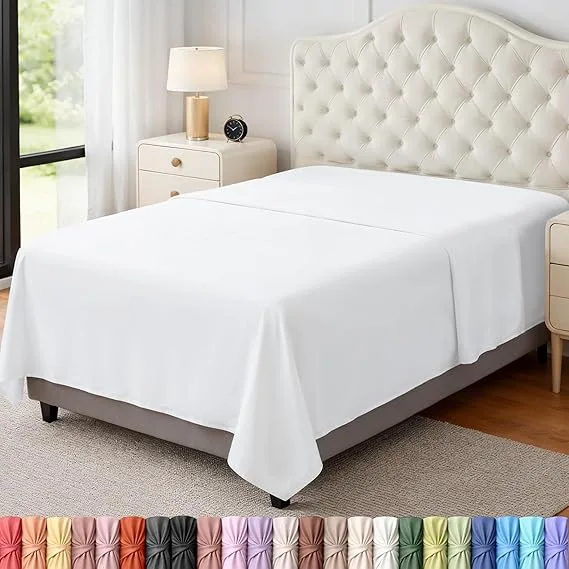
Utopia Bedding Flat Sheet Twin (White)
“Fort frames need coverings. Dedicated flat sheets prevent the 'don't use the good sheets' argument. Lightweight microfiber drapes easily over fort frames.”
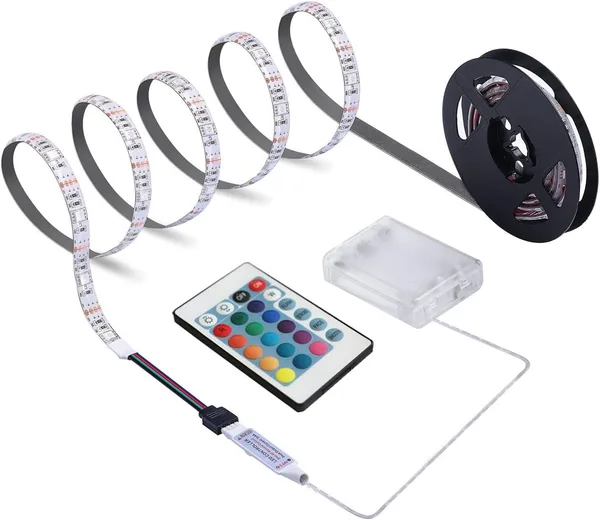
HIKENRI Battery Powered LED Strip Lights (6.56ft, Waterproof, Remote Control)
“Fort interior lighting transforms the space. Same recommendation as the Nugget Couch — magic ambiance.”
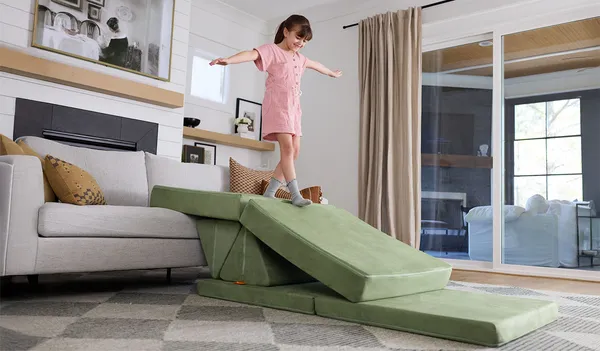
Nugget Comfort Couch
“Soft furnishing inside the fort. Fort frame plus Nugget equals the ultimate indoor play structure.”
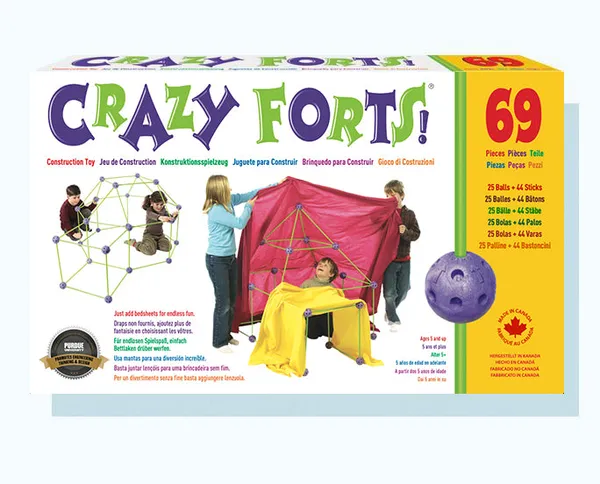
Crazy Forts 69-Piece Fort Building Kit (Everest Toys)
“Budget fort-building alternative with 25 balls and 44 sticks. Smaller structures, lower price.”