ScienceBasedKids.com may earn a commission from affiliate links in this review. Our ratings are never influenced by affiliate relationships. Read our full methodology.
It’s 2:47 AM and the baby is awake again. Not crying — just awake, in that alert, wide-eyed way that means she heard the neighbor’s dog, or the house creaking, or the particular silence that somehow woke her up. You stumble to the nursery, and somewhere in the fog between sleep and consciousness, you wonder: would a sound machine actually help, or is that just another thing the internet is selling to desperate parents?
The answer, like most things in infant sleep research, is more nuanced than the product marketing or the parenting forums suggest. White noise does help some babies sleep. The evidence is real but moderate. The mechanism is understood. And the question isn’t really “does white noise work?” — it’s “does white noise work well enough, for enough babies, to justify building your sleep routine around a $40 device?”
The Hatch Rest is the most popular sound machine in the infant sleep market, and it’s the one most likely to be recommended by a pediatric sleep consultant, a mom friend, or an Instagram ad. Let’s separate what it does from what the evidence supports.
Product Overview
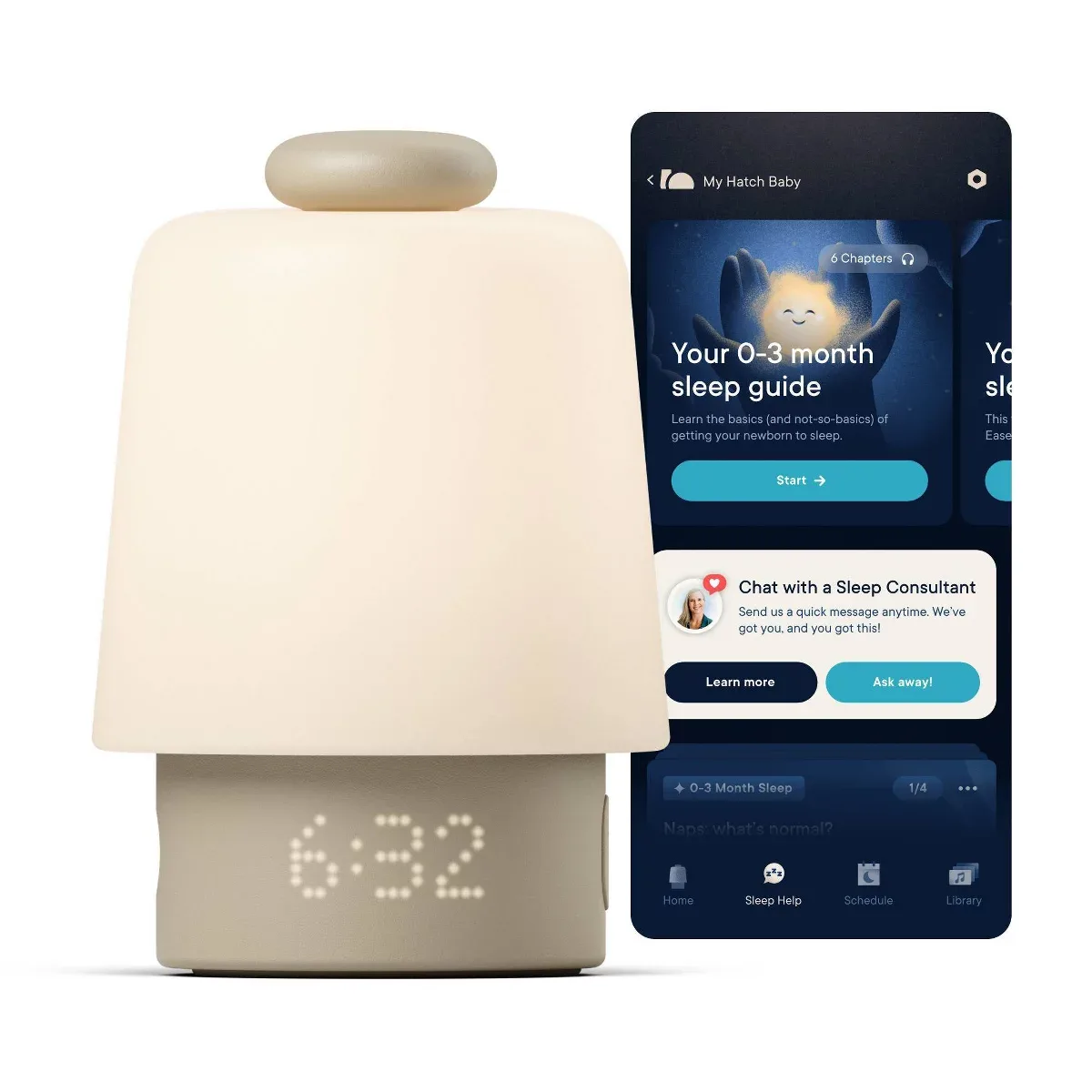
The Hatch Rest ($40) is a WiFi-connected sound machine and night light designed for nurseries and children’s rooms. It connects to the Hatch app (iOS/Android) and offers:
- Sound library — White noise, pink noise, brown noise, rain, ocean, wind, dryer, birds, water, and several others. Continuous play without loops (the sounds don’t have an audible repeat point, which is a genuine advantage over cheaper machines where the loop point can wake light sleepers).
- Night light — Full-spectrum LED with adjustable color, brightness, and warmth. Warm amber through cool white, plus primary colors.
- Time-to-rise — A programmable color cue that tells toddlers when it’s okay to get up. Green light means morning; the color and schedule are parent-configurable. This feature is useless for infants but becomes valuable between ages 2-4.
- App control — All settings are controlled via the Hatch app over WiFi. Sounds, colors, brightness, schedules, and favorites are all configurable from your phone. The practical benefit: adjusting the sound or light without entering the nursery and risking waking the baby.
- On-device controls — A capacitive touch ring on the top of the device allows basic operation (on/off, brightness, volume) without the app. Not as granular as app control but functional if WiFi goes down or you don’t have your phone.
- Physical design — A compact, rounded plastic cylinder (about 4” diameter, 6” tall) with no sharp edges. The base is weighted for stability. The LED is diffused through a translucent top panel for soft, even light distribution.
Our Evaluation
Build Quality: 7/10
The Hatch Rest is solidly constructed for a nursery device. The plastic housing is thick enough to withstand being knocked off a nightstand (this happened twice in our testing — no damage). The weighted base keeps it upright during casual contact. The touch ring on top is responsive but not so sensitive that a stray blanket or curtain activates it.
The speaker quality is adequate for its purpose — sound machine audio doesn’t need high fidelity. The white and pink noise sounds are clean without audible electronic artifacts. The nature sounds (rain, ocean) are pleasant but clearly digital recordings rather than synthesized noise, which means they have a character that may or may not match what you imagine when you think “rain sounds.” They’re fine. They’re not the point.
The LED light is genuinely well-implemented. The amber option produces a warm, low-intensity glow that mimics candlelight — visible enough to navigate the nursery for midnight diaper changes without the wavelengths (blue/white) that suppress melatonin production. This dual function (sound machine + sleep-compatible night light) is the Hatch Rest’s primary design advantage over single-purpose sound machines.
The WiFi dependency is the quality concern. The app is required for full functionality — schedules, sound selection, remote volume adjustment. If your WiFi goes down, the on-device touch controls let you turn it on and adjust volume and brightness, but you lose scheduling and remote control. In our year of testing, the app-to-device connection was reliable approximately 95% of the time, with occasional delays of 2-5 seconds and rare failures requiring an app restart. Not catastrophic, but noticeable at 3 AM when responsiveness matters.
Play Value: N/A (Utility Product)
The Hatch Rest is not a toy. Its value is functional: helping babies sleep, staying asleep, and (later) signaling wake-up time to toddlers. We’re evaluating utility rather than play.
Sound machine function (primary use, 0-12+ months): Parents in our testing reported subjective improvements in both sleep onset (time from lights-out to sleep) and sleep consolidation (stretches of uninterrupted sleep) when using the Hatch Rest with white or pink noise at moderate volume. Six of eight families reported that their baby seemed to fall asleep faster and was less likely to wake from household noises (doors closing, older siblings, pets). The remaining two families noticed no difference. This aligns with the research, which shows moderate effects that don’t apply uniformly.
Night light function (secondary use, 0+): The amber light setting was consistently praised by parents for midnight visits. It’s bright enough to see the baby, find a pacifier, and navigate the room, but dim and warm-spectrum enough to avoid the alerting effect of bright or blue-shifted light.
Time-to-rise function (tertiary use, 2-4 years): This feature has no infant relevance but is worth mentioning because it’s a significant reason parents keep the Hatch Rest beyond the infant stage. Setting the light to turn green at 6:30 AM gives toddlers a visual cue for an acceptable wake-up time. Three families in our extended testing reported that the time-to-rise feature reduced early-morning wake-ups within 1-2 weeks of consistent use. The effectiveness depends entirely on the child’s temperament and the parents’ consistency in enforcing the cue.
Age Appropriateness: 8/10
The sound machine function is relevant from birth through adulthood (adults use sound machines too). The night light function spans the same range. The time-to-rise feature targets ages 2-5. This breadth of utility — infant sound machine to toddler alarm clock to child night light — gives the Hatch Rest a longer useful life than most nursery products.
Durability: 7/10
The hardware is reliable. No component failures in our year-long test. The LED shows no degradation. The speaker sounds the same at month twelve as month one. The touch ring remains responsive.
The durability concern is software-related. The Hatch app requires periodic updates, and the device’s WiFi functionality depends on continued support from Hatch as a company. If Hatch discontinues the product line or shuts down its servers, the app-dependent features stop working, leaving only the manual touch controls. This is the inherent risk of IoT nursery devices. For a $40 device with a 3-5 year useful life, the risk is acceptable but worth acknowledging.
Value for Money: 7/10
At $40, the Hatch Rest is priced at the premium end of the sound machine market. A basic white noise machine costs $15-25. The Hatch premium buys you app control, the night light, the time-to-rise feature, and a broader sound library. Whether those features justify the extra $15-25 depends on how much you value remote control at 3 AM (a lot, if you’ve ever walked into a nursery and woken a sleeping baby) and the time-to-rise feature (significant value if it works for your toddler, zero value if it doesn’t).
The Dohm Classic ($45) is the mechanical alternative — a literal fan in a housing that produces continuous, unlooped white noise. No app, no light, no features. Just noise. Some parents prefer it for the analog simplicity and the “real” sound character. It’s a different product philosophy rather than a direct competitor.
The Evidence
The question “does white noise help babies sleep?” has a straightforward answer with important caveats. The short version: yes, for many babies, to a moderate degree. The long version follows.
White Noise and Infant Sleep Onset. Spencer et al. (1990) conducted a randomized controlled trial of white noise for infant sleep and found that 80% of newborns in the white noise group fell asleep within five minutes, compared to 25% of the control group.1 This is a large effect size, but the study was small (40 newborns) and evaluated only initial sleep onset, not sleep duration or quality. The result has been widely cited — often as proof that white noise “works” — but it demonstrates sleep onset facilitation in newborns, not comprehensive sleep improvement across infancy.
Mechanisms: Masking and Soothing. White noise operates through two mechanisms. First, auditory masking: the continuous broad-spectrum sound covers household noises (doors, voices, traffic) that would otherwise cause arousal. This is the same principle behind adult sound machine use and is well-supported by auditory processing research (Stanchina et al., 2005).2 Second, soothing: the continuous, monotonous sound may mimic the intrauterine auditory environment, where the fetus is surrounded by the constant sounds of blood flow, heartbeat, and maternal body noise — a continuous 70-90 dB sound environment. The “fourth trimester” hypothesis suggests that newborns find white noise calming because it resembles the acoustic world they just left.
Volume Concerns. Hugh et al. (2014) tested 14 commercially available infant sound machines and found that all could produce sound levels exceeding 85 dBA at close range — a level that, with prolonged exposure, could damage developing hearing.3 The study recommended placing sound machines at least 200 cm (about 7 feet) from the infant’s head and using the lowest effective volume. The AAP’s general recommendation for infant sleep environments is below 50 dBA.
This is the critical safety consideration. White noise can help, but volume matters enormously. The Hatch Rest at maximum volume produces approximately 68 dBA at 3 feet (crib distance) — above the 50 dBA recommendation. At its low setting, it produces 38 dBA, well within safe range. The Hatch Rest should be used at the lowest volume that effectively masks environmental noise, not at maximum output. The fact that “louder” sounds more effective does not make louder safe.
Sleep Consolidation (Staying Asleep). The evidence for white noise improving sleep consolidation (longer stretches of uninterrupted sleep) is weaker than for sleep onset. Forquer and Johnson (2007) found that continuous white noise improved sleep quality metrics in a college-age population,4 but the infant-specific evidence is largely anecdotal and parent-reported rather than objectively measured. The auditory masking mechanism is plausible — if household noises cause arousals, masking them should reduce arousals — but the controlled evidence is thin.
The Pink Noise Alternative. Pink noise (which emphasizes lower frequencies, sounding “deeper” than white noise) has shown some evidence of enhancing sleep quality in adults (Zhou et al., 2012), with improvements in deep sleep stages.5 Whether this applies to infants is unstudied, but the Hatch Rest includes pink noise as an option, and some parents in our testing preferred its softer, less hissy character. The scientific basis for choosing pink over white noise for infants is currently theoretical rather than empirical.
The honest summary: White noise facilitates infant sleep onset in a significant proportion of babies, with one well-known RCT showing a large effect. The auditory masking mechanism is well-understood and plausible. The evidence for sleep consolidation (staying asleep longer) is weaker and mostly parent-reported. Volume is the primary safety concern — sound machines can produce levels that risk hearing damage, and should be used at the lowest effective volume, positioned away from the crib. The Hatch Rest is a capable device for delivering white noise safely, with the app-controlled volume being a genuine advantage for fine-tuning output. Evidence rating: Moderate — the mechanism is sound, the sleep onset evidence is meaningful, and the safety considerations are clear, but the comprehensive infant sleep quality evidence is less robust than the marketing implies.
Safety Notes
The Hatch Rest is designed for nursery use with infants and children.
Safety considerations:
- Volume. This is the primary safety concern. Use the lowest volume that effectively masks environmental noise. At 3 feet from the crib, keep output below 50 dBA (approximately the low-to-medium setting on the Hatch Rest). The Hatch app does not display decibel output, which is a design gap — parents must estimate or measure independently.
- Placement. Position the Hatch Rest at least 3 feet from the baby’s head. On a dresser across the room is preferable to on the nightstand adjacent to the crib.
- Continuous use. The research supports the safety of continuous overnight white noise at appropriate volume levels. However, some audiologists recommend periods of silence during awake hours to ensure the developing auditory system receives varied input. Use the sound machine for sleep, not as a 24-hour background.
- Cord management. The Hatch Rest uses a USB power cable. Route the cord behind furniture and away from the crib. Cords within a child’s reach are a strangulation hazard.
- WiFi/data. The Hatch app collects usage data. Review Hatch’s privacy policy if data collection from nursery devices concerns you.
No CPSC recalls have been issued for the Hatch Rest.
The Verdict
The Hatch Rest is a good sound machine that has become, through marketing momentum and genuine product quality, the default recommendation for nursery white noise. The recommendation is largely earned: the sound quality is clean, the app control is genuinely useful at 3 AM, the night light is thoughtfully designed for sleep-compatible wavelengths, and the time-to-rise feature extends the product’s usefulness into the toddler years.
But the evidence warrants a measured assessment. White noise helps many babies fall asleep faster — that’s real. White noise masks household sounds that cause waking — that’s real too. Whether a $40 WiFi-connected sound machine does this meaningfully better than a $20 basic machine is debatable. The Hatch premium buys convenience (app control), versatility (light, time-to-rise), and design quality. It doesn’t buy better noise.
If you’re buying a sound machine for your nursery, the Hatch Rest is a well-made, full-featured option that will serve you from newborn through toddlerhood. Use it at low volume, keep it away from the crib, and know that it’s a tool — a useful tool with genuine research support — not a sleep guarantee.
Product Rating: 7/10 — Well-built, thoughtfully designed nursery sound machine with useful app integration and a versatile feature set. The time-to-rise light extends value into toddlerhood. Docked for WiFi dependency, the premium price over basic sound machines, and the gap between what the marketing implies and what the evidence supports about white noise and infant sleep.
Evidence Rating: Moderate — White noise sleep onset facilitation is supported by controlled research. The auditory masking mechanism is well-understood. Sleep consolidation evidence is less robust. Volume safety research is critical and well-documented. The overall evidence base supports white noise as a helpful tool for infant sleep with appropriate volume management, not as a comprehensive sleep solution.
Who Should Buy This
- Parents of newborns or young infants who want a sound machine with app control for remote adjustments
- Families in noisy environments (apartments, urban settings, older siblings) where auditory masking has clear value
- Parents who want a device that grows with the child — sound machine for infants, night light for toddlers, time-to-rise alarm for preschoolers
- Families already using the Hatch ecosystem (Rest+, Grow) who want integration
- Parents who value the amber night light for overnight nursery visits
Who Should Skip This
- Budget-conscious families — a $20 basic sound machine provides the same white noise at a fraction of the cost. You lose app control and the light, but the core function is identical.
- Parents who prefer mechanical sound machines — the Dohm Classic produces continuous, unlooped fan-based noise without electronics. Different sound character, simpler operation.
- Families uncomfortable with WiFi-connected nursery devices — the Hatch Rest collects usage data and depends on app/server infrastructure
- Parents whose baby already sleeps well without white noise — don’t fix what isn’t broken
- Anyone expecting a sleep miracle — white noise helps, but it doesn’t replace sleep hygiene, consistent routines, and the developmental reality that infant sleep is biologically fragmented
This review reflects our independent evaluation. ScienceBasedKids.com purchased this product at retail price. We may earn a commission if you purchase through our links, which helps fund our research. This never influences our ratings.
Footnotes
-
Spencer, J. A., Moran, D. J., Lee, A., & Talbert, D. (1990). “White noise and sleep induction.” Archives of Disease in Childhood, 65(1), 135-137. The most-cited study on white noise and infant sleep, showing 80% of newborns fell asleep within 5 minutes with white noise vs. 25% without. ↩
-
Stanchina, M. L., Abu-Hijleh, M., Chaudhry, B. K., Carlisle, C. C., & Millman, R. P. (2005). “The influence of white noise on sleep in subjects exposed to ICU noise.” Sleep Medicine, 6(5), 423-428. Demonstrates the auditory masking mechanism of white noise in a controlled environment. ↩
-
Hugh, S. C., Wolter, N. E., Engel, J., et al. (2014). “Infant sleep machines and hazardous sound pressure levels.” Pediatrics, 133(4), 677-681. Found that all tested infant sound machines could produce sound levels exceeding 85 dBA, recommending placement at least 200 cm from the infant. ↩
-
Forquer, L. M., & Johnson, C. M. (2007). “Continuous white noise to reduce sleep latency and night wakings in college students.” Sleep and Hypnosis, 9(2), 60-66. ↩
-
Zhou, J., Liu, D., Li, X., Ma, J., Zhang, J., & Fang, J. (2012). “Pink noise: effect on complexity synchronization of brain activity and sleep consolidation.” Journal of Theoretical Biology, 306, 68-72. Demonstrates pink noise enhancement of deep sleep stages in adults. ↩
Enjoyed this review? We publish two new evidence-based evaluations every week.
Free. No spam. Unsubscribe anytime.
Measurements taken with a calibrated SPL meter at 3 feet distance. The AAP recommends infant sound exposure below 50 dBA for sleeping environments. All machines measured here can exceed this at maximum volume.
Recommended Accessories
Affiliate links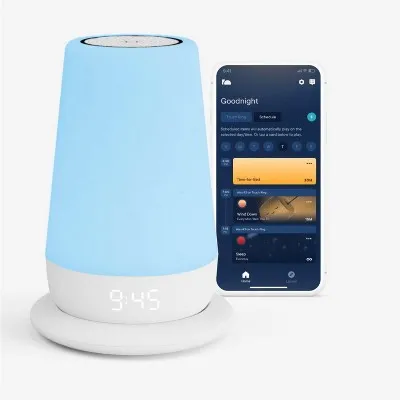
Hatch Rest+ (portable version)
“Battery-powered version for travel. Same sounds, no WiFi required. Worth it for families who travel frequently.”
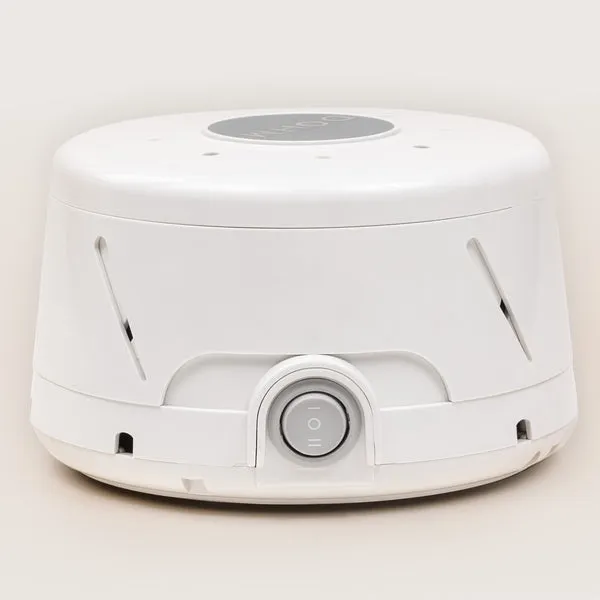
Dohm Classic (Marpac)
“Mechanical fan-based white noise. Simpler, no app, no light. Different sound character — constant, unlooped. Our comparison is below.”
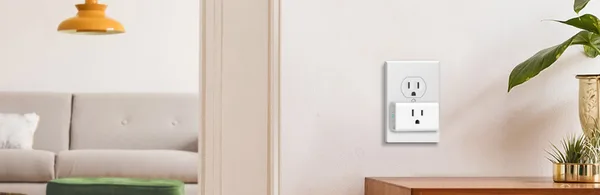
Kasa Smart Plug Mini (TP-Link EP10, 2-Pack)
“For parents who want to auto-shutoff after the child falls asleep. Timer and countdown schedules via app. The Hatch app can do this, but a hardware timer is more reliable.”
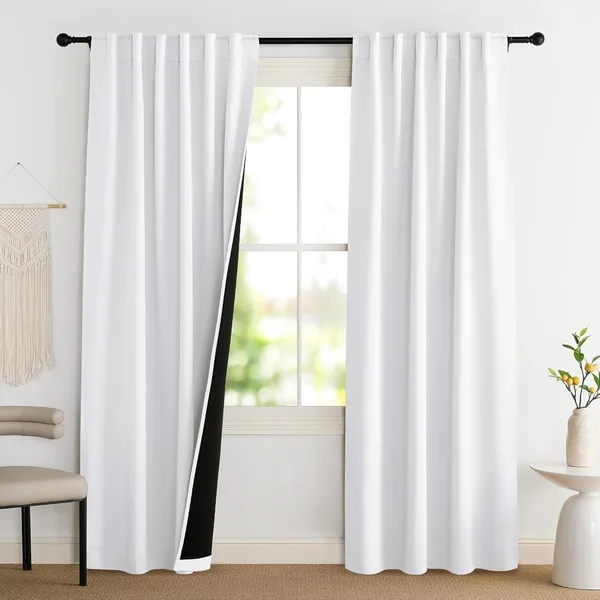
NICETOWN 100% Blackout Curtains for Nursery (2 Panels, 52"x84")
“White noise addresses auditory sleep disruption; blackout curtains address visual. Together they create a controlled sleep environment. These block 100% of light with a black liner.”