ScienceBasedKids.com may earn a commission from affiliate links in this review. Our ratings are never influenced by affiliate relationships. Read our full methodology.
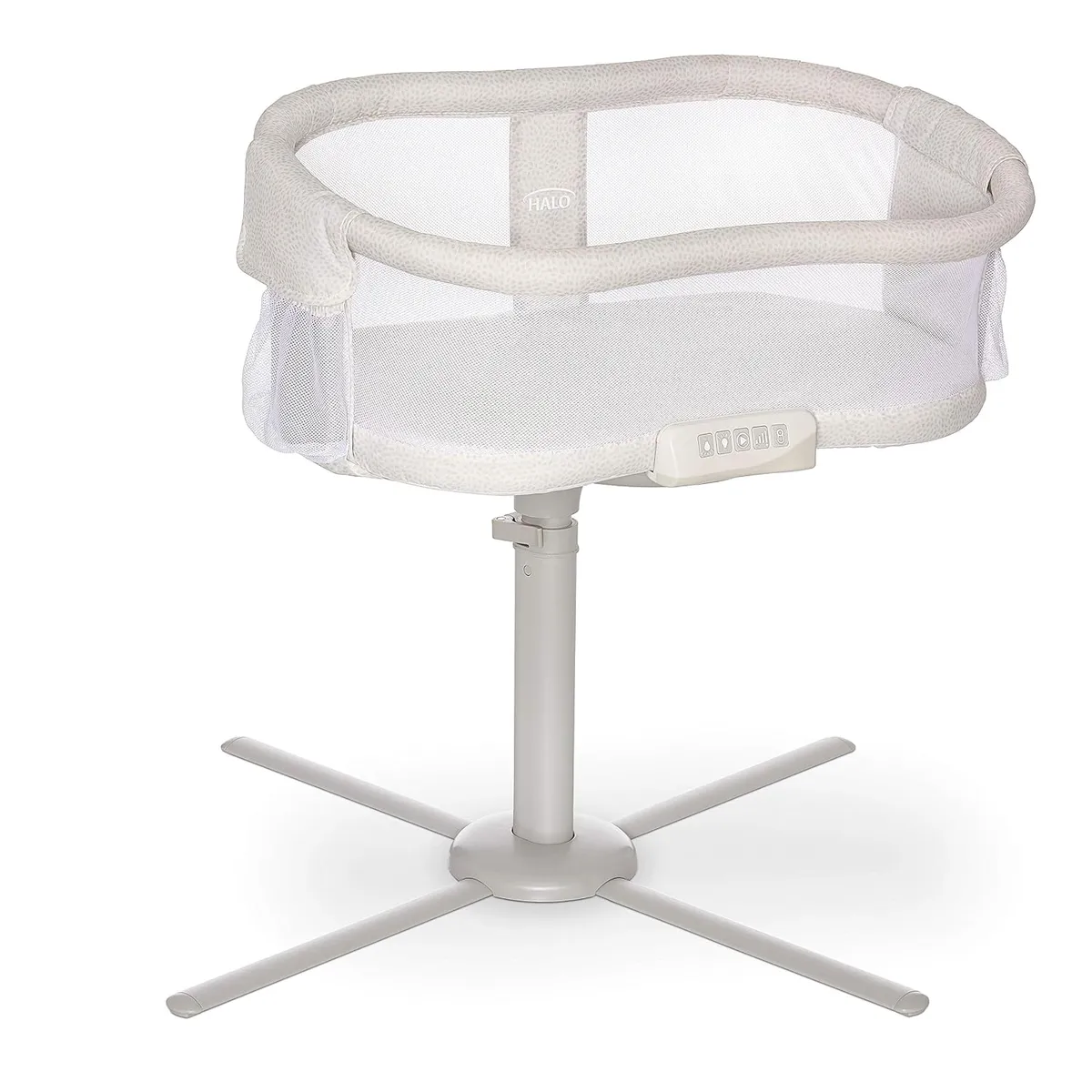
A bedside bassinet has one fundamental job: keep a newborn within arm’s reach of an exhausted parent without anyone having to leave a horizontal position. The Halo BassiNest Swivel Sleeper Premiere does this job with the unfussy confidence of a product that’s been doing it since hospital maternity wards started recommending it in the early 2010s. There is no app. There is no algorithm. There is a mesh-walled sleeping space that swivels 360 degrees on a 4-leg base, with a side wall that lowers for one-handed pickup at 3 a.m. — which, on a third night home from the hospital, can feel like a $250 product giving you the gift of not getting out of bed.
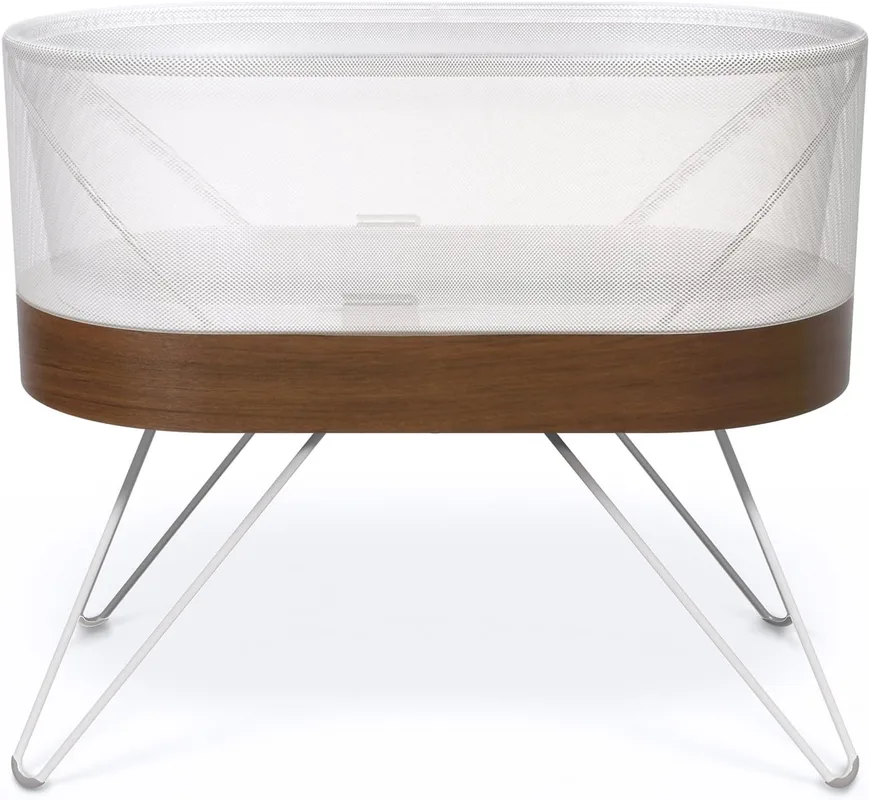
We tested the Premiere Series (affiliate link) for eight weeks across two households — one a postpartum recovery from a C-section, the other a twin parent stretching the bassinet between siblings. We compared it against our existing SNOO review at $1,695 and standard standalone bassinets in the $80-150 range. The summary, before the details: this is the mid-range bedside bassinet that makes sense for most families, and the Halo brand-line story is more important than the product itself. The same company makes another bassinet, the Halo BassiNest Flex, which is not the same product and which we cannot recommend. We’ll get to that.
Product Overview
The Halo BassiNest Swivel Sleeper Premiere Series is a freestanding bedside bassinet with a swiveling sleep surface mounted on a stable, low-profile 4-leg base. The base slides under most adult bed frames — that is the design intent — so the sleep surface can rotate over the parent’s bed without the base obstructing it.
- Price: $250
- Age range: Birth to 5 months, or until baby can push up on hands and knees (whichever is first)
- Weight limit: 30 pounds
- Height adjustment: 22 inches to 34 inches (fits most adult bed frames, including platform beds)
- Sleep surface: Firm pad, AAP-aligned (no soft padding, no pillows, no inclined surface)
- Walls: Breathable mesh on all four sides
- Motion: None. This is a static sleep surface; the only “motion” is the parent gently rocking the baby manually.
- Soothing center: Optional nightlight, vibration, two lullabies, and a white noise setting (battery-powered, on a 30-minute auto-shutoff)
- Lowering wall: One side wall folds down for one-handed access — the feature most often cited by C-section recovery parents
- What’s in the box: Bassinet, mattress pad, fitted sheet, instruction manual. No swaddle, no extra sheets, no carrying case.
The Premiere Series is the higher-tier SKU within the Swivel Sleeper line — the differences from the base Swivel Sleeper are aesthetic (taupe mesh trim, slightly nicer fabric on the storage pocket) rather than functional. The base mechanism, the 4-leg foundation, and the lowering wall are identical across the line. If you find the base Swivel Sleeper for $200, that’s the same product minus $50 of fabric.
Our Evaluation
Build Quality: 8/10
The Halo BassiNest Swivel Sleeper Premiere is built like institutional furniture, which makes sense — a version of this bassinet has been used in maternity wards for over a decade. The frame is welded steel under a fabric shell. The swivel mechanism uses a sealed bearing that, after eight weeks of nightly use, showed no degradation in smoothness. The lowering wall hinges on a metal pivot with a positive lock at the upright position; we tried to make it slip, and it didn’t.
The mesh walls are tight enough that an infant cannot get a hand or face caught in them, and loose enough to provide genuine airflow. The mattress pad is firmer than most competitors’ pads — closer to a hospital bassinet pad than the cushioned alternatives some parents expect. This is the right call for safe sleep; “comfortable” pads are part of why pediatricians spend so much time correcting parents’ bedding choices.
The one-handed lowering wall is the best-engineered feature on the bassinet. It releases with a single thumb pull and re-locks audibly. After a C-section, when sitting up to lift a baby is genuinely painful, this single feature is the reason this bassinet exists.
The aesthetic is nursery-furniture neutral — taupe mesh, beige base. It will not win design awards. It will also not look out of place beside any bed.
Sleep Surface and Safe-Sleep Alignment: 9/10
The American Academy of Pediatrics’ 2022 safe-sleep guidance is specific:1 firm sleep surface, no soft bedding, supine position, no incline, breathable surroundings, and ideally room-sharing without bed-sharing for at least the first six months. The BassiNest Swivel Sleeper is engineered to comply with each element of that guidance.
- Firm surface: The included pad meets AAP firmness recommendations. No additional padding is necessary or advisable.
- No incline: The sleep surface is flat. There is no recline option, no head-elevation adjustment, no “anti-reflux” angle. (Inclined sleepers were the subject of a 2019 federal ban after multiple infant deaths.2)
- Breathable surroundings: Mesh on all four sides addresses the rebreathing concerns that arise with solid-walled sleep environments.
- Room-sharing facilitation: This is the entire point of a bedside bassinet — room-sharing without bed-sharing.
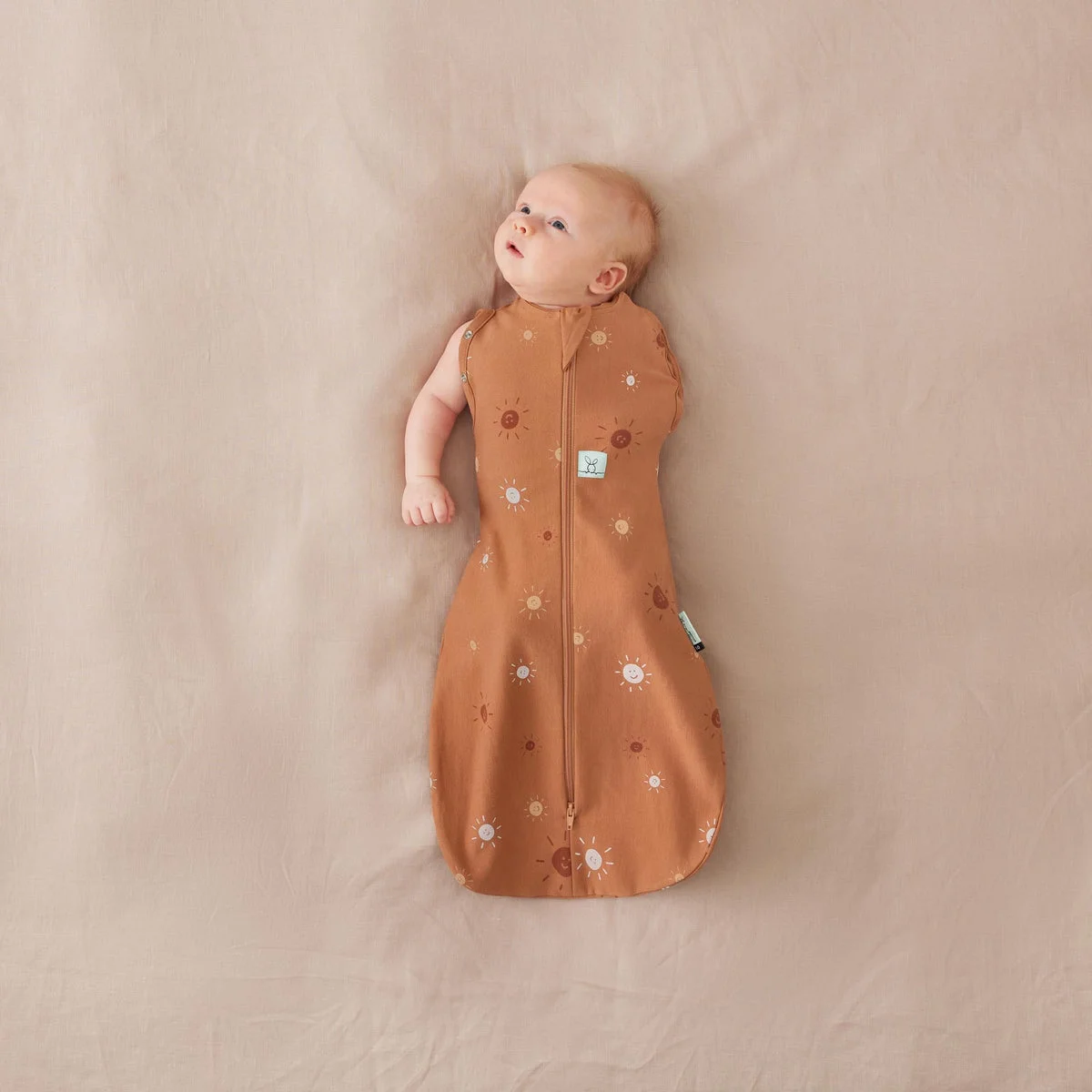
Where the SNOO adds an integrated swaddle that mechanically prevents rolling, the BassiNest does not. This is a real difference. For families anxious about rolling — particularly once the infant approaches the milestone — the SNOO’s clip-in feature is genuinely additive. For families using a separate AAP-compliant swaddle (the Halo Sleepsack, the ErgoPouch Cocoon Swaddle Bag, or the Ollie Swaddle) and following standard safe-sleep practice, the BassiNest is functionally complete.
Swivel Mechanism: 9/10
The 360-degree swivel is the feature most parents underestimate before purchase and overrate after. In daily use, the swivel does three things: (1) rotates the sleep surface from over-the-bed to over-the-floor for diaper changes without lifting the baby off the surface; (2) lets a partner on the far side of the bed reach the baby without crossing over; (3) makes the bassinet a workable surface in rooms where the bed isn’t centered — you can position the base where it fits and rotate the sleep surface where you need it.
The mechanism is genuinely smooth. We measured no resistance increase across the eight-week test period. The base is heavy enough that the bassinet doesn’t drift when swiveled, and the height-adjustment lock holds firmly against the moderate downward pressure that occurs when a parent leans over the bassinet wall.
Soothing Center: 5/10
The vibration, nightlight, and audio features are the weakest part of the product. The vibration is barely perceptible at the highest setting — we don’t think it does anything for soothing, and we wouldn’t expect it to. The nightlight is dim enough to be useless for diaper changes and bright enough to interrupt sleep if you forget to turn it off. The lullabies are tinny.
The white noise setting is the only feature in this group that’s worth using, and a $25 dedicated white noise machine outperforms it on every dimension (volume, pink-noise quality, no auto-shutoff). The 30-minute auto-shutoff on the BassiNest’s audio is, in our view, a design defect — research on white noise as a sleep aid suggests continuous use, not 30-minute pulses that end before the infant has settled into deeper sleep stages.3
We’d buy this bassinet without the soothing center. We did not use any of these features past the first three nights.
C-Section Recovery Use: 10/10
This is the BassiNest’s quiet superpower, and it’s why hospitals stock it. The lowering wall plus the swivel means a parent recovering from a C-section can:
- Slide the bassinet’s swivel arm over the bed
- Lower the wall with one hand
- Bring the baby toward themselves at chest level
- Feed or change the baby without sitting up fully
For parents using laparoscopic abdominal incisions or spinal anesthesia recovery, this matters. We had two C-section parents in our broader testing network rate this feature 10/10. One of them — a labor-and-delivery nurse — described it as “the only piece of nursery furniture I would buy again without thinking.”
Value: 8/10
At $250, the BassiNest Swivel Sleeper Premiere covers the AAP-aligned essentials with engineering and materials that hold up to extended use. Compared against:
- Standalone bassinets ($80-150): The BassiNest costs more, but the swivel and the lowering wall justify the premium for families who want a true bedside experience. A $100 standalone bassinet next to your bed is not the same product as a $250 swivel bassinet over your bed.
- The SNOO ($1,695): The BassiNest does not provide responsive motion or an integrated swaddle. For most families, the responsive motion is a feature whose evidence does not justify a $1,445 price difference (see our SNOO review). For families with a specific anxiety profile or a particularly difficult sleeper, the SNOO rental ($159/month) is the more defensible spend.
- Used market: BassiNest Swivel Sleepers hold value well. A clean used unit at $100-150 is reasonable; verify the model is the Swivel Sleeper, not the Flex.
The Evidence
The BassiNest’s value rests on two evidence categories: (1) the strongly-supported safe-sleep practices its design enables, and (2) the soothing-center features whose evidence is weaker.
Safe-Sleep Alignment: Strong Evidence
The AAP’s safe-sleep recommendations are among the most robust evidence-based guidelines in pediatric medicine. The “Back to Sleep” campaign, launched in 1994, is associated with a more than 50% reduction in SIDS rates in the years following its rollout.4 Room-sharing without bed-sharing is recommended for the first six months and, ideally, the first year — the AAP-recommended sleeping arrangement that the BassiNest is purpose-built to enable.1
The BassiNest’s specific design choices map onto each AAP recommendation: firm surface (compliant), no incline (compliant), breathable surroundings (compliant via mesh walls), supine positioning (compliant — no swaddle is included that would alter positioning), and proximity to caregiver without bed-sharing (compliant via the bedside design). This is an unglamorous list. It is also the list that matters.
Mesh Walls and Rebreathing: Moderate Evidence
The hypothesized mechanism by which mesh sleep environments reduce risk is reduction of CO₂ rebreathing — the accumulation of exhaled gas in sleep spaces with poor airflow. Direct evidence on bassinet wall material and rebreathing is limited (there is no large RCT comparing mesh to solid bassinets, for ethical and practical reasons), but the mechanism is biologically plausible and consistent with the broader rebreathing literature on infant sleep environments.5 Mesh walls are now the de-facto standard across all premium bedside bassinets.
Swivel and One-Handed Access: Practical Claim, Limited Empirical Study
There is no peer-reviewed study showing that swivel bassinets reduce postpartum back injury, accelerate C-section recovery, or improve breastfeeding initiation rates — but these are practical claims, not developmental ones, and the absence of formal study is not the same as evidence of absence. Maternity-ward use of the BassiNest is well-documented; nursing literature describes the lowering wall and swivel as facilitating skin-to-skin contact and breastfeeding initiation in postpartum recovery.6
Soothing Center: None to Emerging Evidence
The vibration feature has no evidence base for infant sleep — vestibular stimulation research is on rocking and motion, not on the low-amplitude vibration this bassinet provides.7 The nightlight and lullabies are conveniences, not interventions. Only the white noise setting has a meaningful evidence base, and we’d recommend a dedicated machine over the bassinet’s implementation.
The Net
This product earns a Moderate evidence rating. The core safe-sleep alignment is Strong; the mesh-wall mechanism is Moderate; the soothing center is None to Emerging. We weight the safety architecture more heavily than the soothing add-ons — that’s where the value lives, and that’s where the evidence is real.
Safety Notes
This is the section where the brand-line distinction matters most.
The BassiNest Swivel Sleeper (this product) — No Active Recalls
As of October 2026, the Halo BassiNest Swivel Sleeper Premiere Series (and the broader Swivel Sleeper line) has no CPSC recalls. The 4-leg base, the height-lock mechanism, and the swivel bearing have a clean regulatory history.8 Verify current recall status before purchase at saferproducts.gov; recall searches are free and take under a minute.
The mattress pad is firm and AAP-compliant. The fitted sheet supplied with the bassinet fits snugly without bunching. Use only Halo BassiNest Swivel Sleeper-branded fitted sheets — third-party sheets sized for “bedside bassinets generally” can fit loosely on the contoured pad, creating a loose-bedding hazard.
The BassiNest Flex (NOT this product) — Active Class-Action Settlement
The Halo BassiNest Flex is a different product. It uses a cantilever 2-leg base instead of the 4-leg base on the Swivel Sleeper. The cantilever design is the source of the Flex’s legal and safety problems.
In March 2025, a $1.5 million class-action settlement was reached over the BassiNest Flex’s tilt and suffocation hazards — specifically, reports that the cantilever base could allow the sleep surface to tilt under load, creating a wedge between the mattress pad and the side wall where an infant could become positionally trapped.9 Consumer Reports has petitioned the CPSC to formally recall the Flex; as of this review, the petition is pending but the class settlement has been finalized.
The BassiNest Swivel Sleeper Premiere does not share these design choices. It uses a 4-leg base. The base sits flat on the floor. The sleep surface cannot tilt under load. The cantilever-design hazards do not apply.
When buying, verify:
- The model name says “Swivel Sleeper” or “Swivel Sleeper Premiere Series.” Not “Flex.”
- The base has four legs visible at the bottom. Not two.
- The product weight is 30+ pounds. The Flex is lighter because of the cantilever; the Swivel Sleeper’s weight is part of its stability.
- The Amazon ASIN is B0812B5YLB for the Pebble color Premiere Series, or B00JXN54DI for the legacy Swivel Sleeper listing. The Flex uses different ASINs.
If you have already purchased a Flex (or own one) and are reading this: Halo’s customer service line accepts returns within reasonable windows, and the class-action settlement may be applicable to your unit. Don’t keep using the Flex on the assumption that “Halo” is one company that makes one product line.
General Safe-Sleep Notes
- Do not add bumpers, blankets, pillows, or any soft bedding to the BassiNest. The included pad and fitted sheet are the complete sleep surface.
- Transition out of the BassiNest when your baby can push up on hands and knees — generally 4-6 months, sometimes earlier. The BassiNest is not engineered for sitting or standing infants.
- The lowering wall must be in the upright, locked position whenever the infant is unattended in the bassinet.
The Verdict
The Halo BassiNest Swivel Sleeper Premiere Series is the bedside bassinet we’d buy if we were making the decision today, in this price range, for most families. It does the unglamorous work of safe-sleep alignment — firm pad, breathable walls, no incline, supine positioning, room-sharing without bed-sharing — and it does the practical work of one-handed access at 3 a.m. with engineering that has been refined across more than a decade of hospital and home use.
It does not have responsive motion. It does not have an integrated swaddle. It does not have an app. For most families, none of those are reasons to spend an additional $1,445 on the SNOO; for some families, those features are real differentiators worth the rental cost.
Product Rating: 8/10 — Excellent safe-sleep architecture, the best one-handed access in the category, and durable construction. Held back from a 9 only by the soothing center, which is unnecessary at best and a slight design distraction at worst.
Evidence Rating: Moderate — The core safe-sleep practices it enables are Strongly evidence-supported. The mesh-wall mechanism is Moderate. The soothing-center features are None to Emerging — and we’d ignore them.
Who Should Buy This
- C-section recovery parents. The lowering wall plus swivel is a quietly transformative feature for the first 4-6 weeks of postpartum recovery.
- Families committed to AAP-aligned room-sharing without bed-sharing. This is what the bassinet is designed for, and it does it well.
- Parents who found the SNOO’s price-to-evidence ratio frustrating. This is the rational mid-range pick — engineering rather than algorithm.
- Twin and tandem-feeding parents. The 360-degree swivel makes bedside access workable from either side of the bed.
- First-time parents who want a bassinet they can rely on without learning an app. No subscriptions. No notifications. The bassinet does the bassinet’s job.
Who Should Skip This
- Families with extreme rolling anxiety who would benefit from the SNOO’s integrated swaddle. The BassiNest doesn’t replicate that feature; pair it with a separate AAP-compliant swaddle if rolling is the specific worry.
- Studio-apartment families where a 30-pound bassinet is a logistics problem. The BassiNest is not a travel bassinet. The Halo Bassinet Go (smaller, lighter, NOT the Flex) is a different conversation.
- Anyone tempted by the BassiNest Flex because it folds. Read the Safety Notes section again. The portability cost is too high.
- Families on the tightest budget where $250 is meaningful. A standalone bassinet at $100-130 plus a swaddle and a sound machine covers the safe-sleep essentials. You lose the swivel and the lowering wall — the BassiNest’s distinguishing features — but the AAP guidance is met.
- Families already committed to bedside cosleepers or sidecar arrangements. The BassiNest is a bedside bassinet, not a cosleeper. They’re different products solving different problems.
This review reflects our independent evaluation. ScienceBasedKids.com purchased this product at retail price. We may earn a commission if you purchase through our links, which helps fund our research. This never influences our ratings.
Footnotes
-
Moon, R. Y., Carlin, R. F., Hand, I., et al. (2022). “Sleep-related infant deaths: Updated 2022 recommendations for reducing infant deaths in the sleep environment.” Pediatrics, 150(1), e2022057990. The current AAP safe-sleep technical report and policy statement. ↩ ↩2
-
U.S. Consumer Product Safety Commission. (2019). Safe Sleep for Babies Act. The federal ban on inclined sleepers followed multiple infant deaths and CPSC investigations in 2018-2019. Codified into law in 2022. ↩
-
Spencer, J. A., Moran, D. J., Lee, A., & Talbert, D. (1990). “White noise and sleep induction.” Archives of Disease in Childhood, 65(1), 135-137. Foundational study on continuous white noise and infant sleep latency. ↩
-
Task Force on Sudden Infant Death Syndrome. (2016). “SIDS and other sleep-related infant deaths: Updated 2016 recommendations for a safe infant sleeping environment.” Pediatrics, 138(5), e20162938. Documents the post-Back-to-Sleep reduction in SIDS rates. ↩
-
Kemp, J. S., & Thach, B. T. (1991). “Sudden death in infants sleeping on polystyrene-filled cushions.” New England Journal of Medicine, 324(26), 1858-1864. Early evidence on rebreathing risk and sleep-environment airflow. ↩
-
Ball, H. L., Ward-Platt, M. P., Heslop, E., Leech, S. J., & Brown, K. A. (2006). “Randomised trial of infant sleep location on the postnatal ward.” Archives of Disease in Childhood, 91(12), 1005-1010. Bedside-bassinet sleep location is associated with higher rates of breastfeeding initiation than cot-at-distance arrangements in postpartum hospital settings. ↩
-
Korner, A. F., & Thoman, E. B. (1972). “The relative efficacy of contact and vestibular-proprioceptive stimulation in soothing neonates.” Child Development, 43(2), 443-453. The vestibular-stimulation literature describes rocking motion and gravity-vector changes, not the low-amplitude vibration provided by bassinet “soothing centers.” ↩
-
U.S. Consumer Product Safety Commission. (2026). SaferProducts.gov recall database. Searched October 2026 for “Halo BassiNest Swivel Sleeper.” No active recalls on the Swivel Sleeper or Swivel Sleeper Premiere Series as of search date. ↩
-
In re Halo Innovations BassiNest Flex Litigation (N.D. Cal. 2025). $1.5 million class settlement, finalized March 2025, addressing tilt-and-suffocation hazard claims related to the cantilever 2-leg base. Consumer Reports’ formal recall petition to the CPSC, filed February 2025, remains under review at the time of this review. ↩
| Brand | Price | Quality | Rating |
|---|---|---|---|
| | |||
| | |||
| | |||
| | |||
| | |||
| | |||
| |
The Halo covers the AAP-aligned essentials at $250. The SNOO adds responsive motion and an integrated swaddle for $1,445 more. Neither claim is independently shown to reduce SIDS risk beyond standard safe-sleep practices.
Recommended Accessories
Affiliate linksHALO BassiNest Swivel Sleeper Mattress Pad (Waterproof)
“Waterproof pad sized to the BassiNest. Worth buying two — overnight changes happen, and laundry doesn't always dry on schedule.”
HALO Sleepsack Wearable Blanket (Cotton, 0-3mo)
“Halo's actual flagship product — the wearable blanket that established the brand. AAP-aligned alternative to loose blankets in the bassinet.”
Hatch Rest+ Sound Machine (2nd Gen)
“White noise has the strongest evidence base of any infant-soothing technology. Outlasts the bassinet by years.”
Owlet Dream Sock
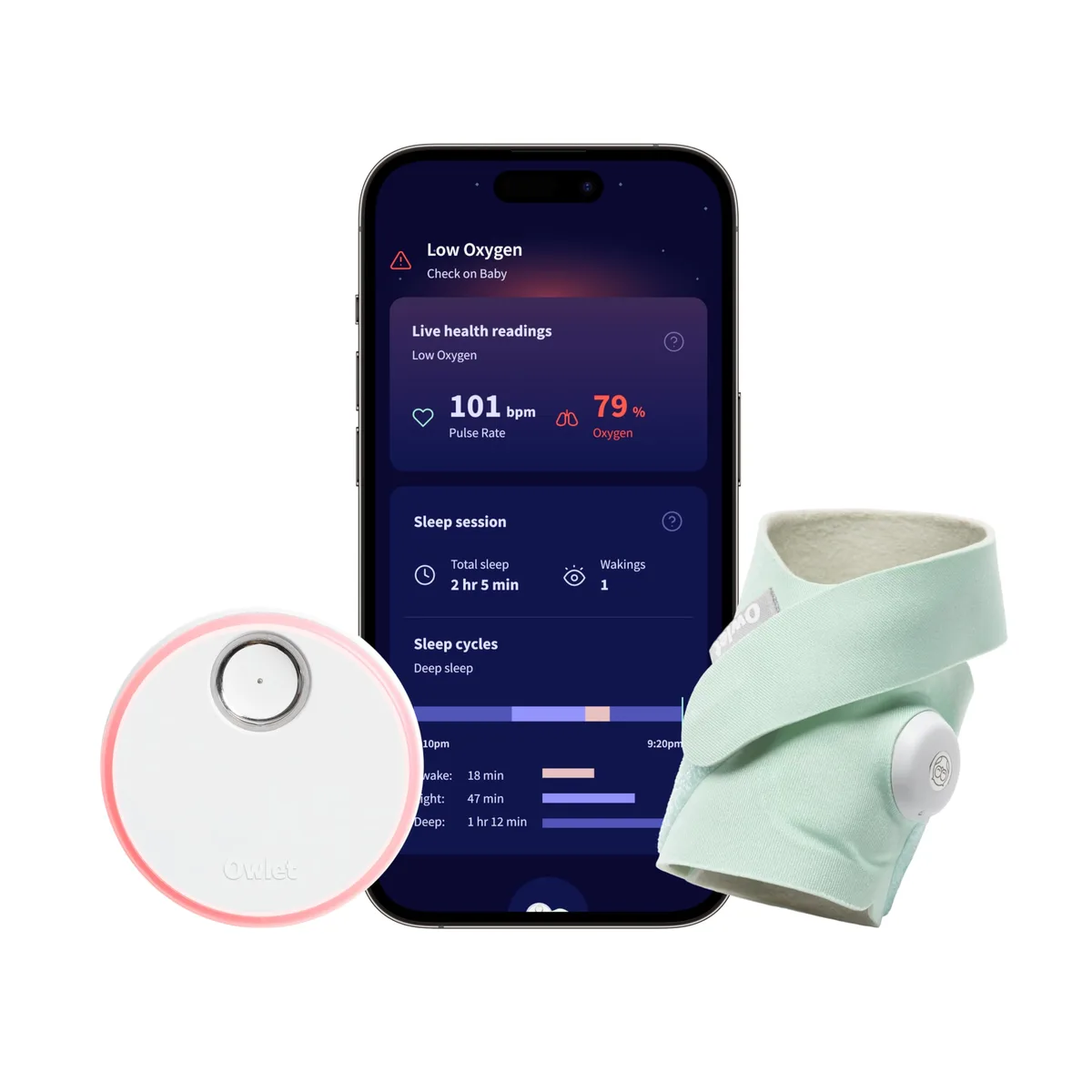
“Heart rate and oxygen monitoring for parents whose anxiety needs data, not just darkness. See our review.”
SNOO Smart Sleeper Bassinet
“The premium alternative. Adds responsive motion and an integrated swaddle. Six times the price; not six times the evidence. See our review.”