ScienceBasedKids.com may earn a commission from affiliate links in this review. Our ratings are never influenced by affiliate relationships. Read our full methodology.
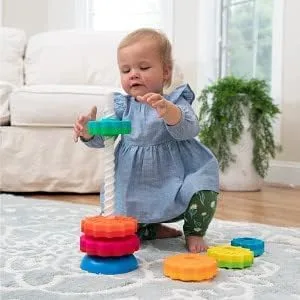
Ring stackers are a toddler toy staple dating back to when Fisher-Price was a young company. The concept hasn’t changed: put rings on a pole, take them off, repeat. Fat Brain Toys’ SpinAgain asks a simple question — what if the rings spun on the way down? — and the answer turns out to be surprisingly compelling. The corkscrew pole creates a helical descent that transforms each disc drop from a dull plop into a mesmerizing spiral. Toddlers in our testing watched the spin with genuine fascination and repeated the drop cycle with a frequency that standard ring stackers don’t typically generate.
We tested SpinAgain across three households with children ages 10 months to 3 years over five weeks.
Product Overview
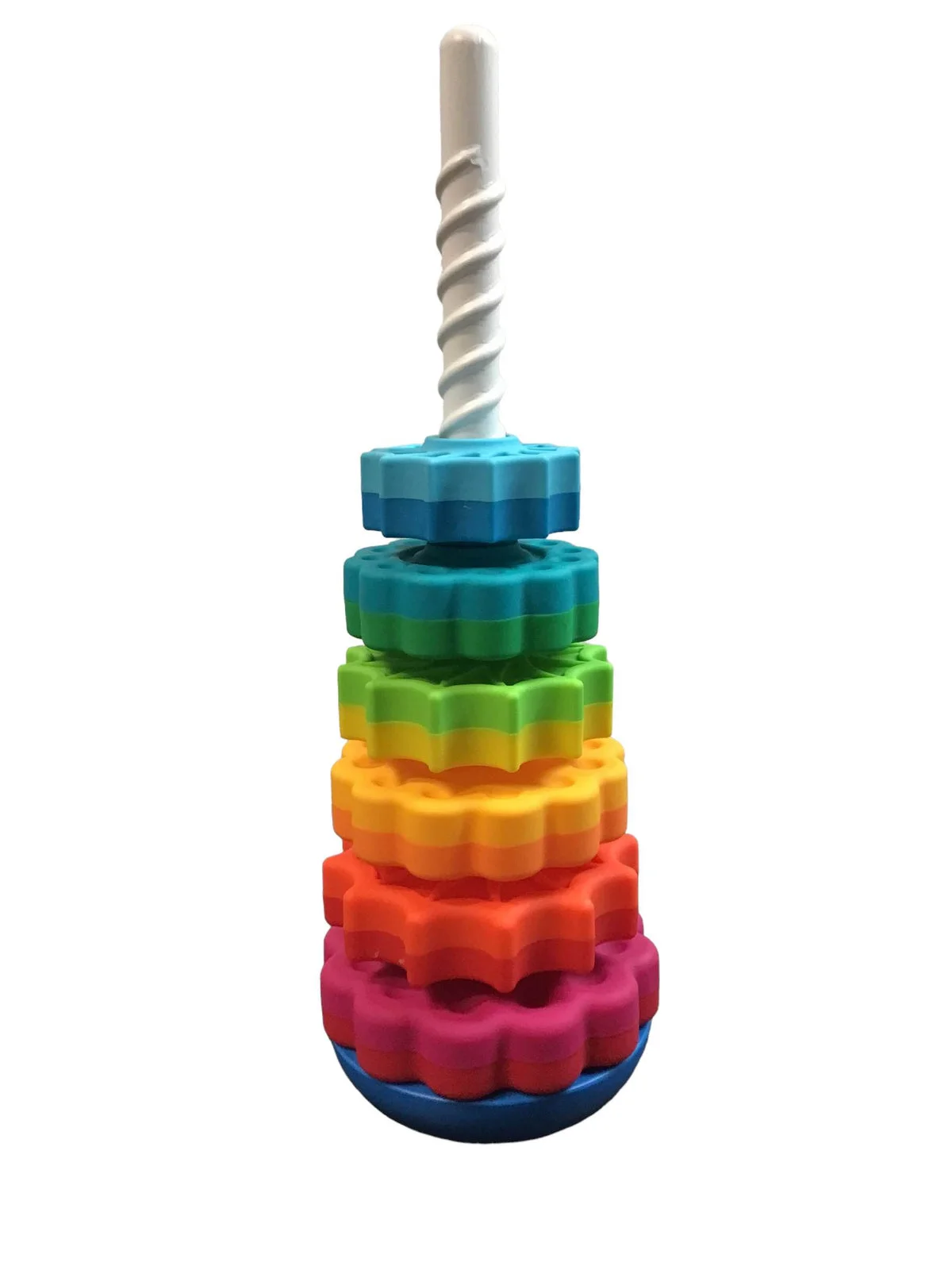
The Fat Brain Toys SpinAgain ($25) is a spinning stacking toy:
- Pole: Corkscrew/helical pole mounted on a reversible base
- Discs: Six colorful discs in alternating flower and starburst shapes, graduated in size
- Base: Reversible — one side is flat (stable), the other is rounded (wobble mode)
- Material: BPA-free ABS plastic
- Size: Approximately 10” tall when assembled
- Award: 2016 Parents’ Choice Silver Honor
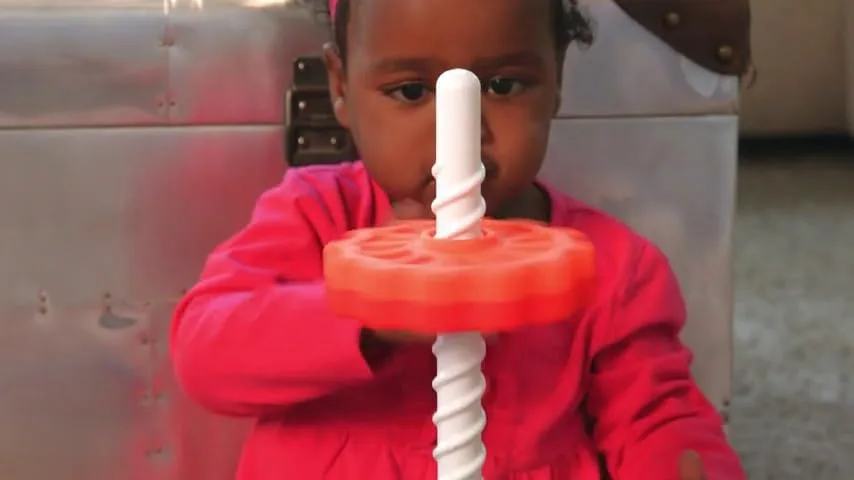
The mechanism is purely mechanical — no batteries required. Drop a disc onto the corkscrew pole, and it spirals down under gravity, spinning as the disc traces the helical path. The graduated disc sizes allow stacking in any order, though big-to-small provides the most visually satisfying result.
Our Evaluation
Build Quality: 8/10
The plastic construction is solid and well-finished. Colors are vivid and durable. The corkscrew pole is smooth with no catching points — discs descend freely without jamming. The base is heavy enough to resist tipping during enthusiastic stacking. The reversible wobble feature adds a clever design element that extends play value.
Play Value: 8/10
The spin effect is the key differentiator. Standard ring stackers provide a visual “stack” result; SpinAgain adds the kinetic pleasure of watching each disc spiral down. This transforms the interaction from a task (stack the rings) into a spectacle (watch the disc spin). The result is longer engagement sessions and more repeat cycles compared to standard stackers in our testing.
The wobble base adds a secondary challenge for older toddlers who have mastered the standard stacking. When the base wobbles, the pole sways, and disc placement becomes less predictable — an elegant difficulty escalation.
Age Appropriateness: 8/10
Children as young as 10 months can drop discs onto the pole, though targeting improves significantly by 12-15 months. The effective engagement window runs through about 30 months, with the wobble base extending interest for older toddlers.
Durability: 8/10
No failure points observed during testing. The plastic is impact-resistant. The corkscrew pole maintains its shape after five weeks of daily use. The discs show no wear from repeated stacking and dropping.
Value for Money: 7/10
At $25, SpinAgain is significantly more expensive than a $7 Fisher-Price Rock-a-Stack but offers a meaningfully different and more engaging play experience. The spin mechanism justifies the premium.
The Evidence
Stacking and fine motor development. Stacking tasks require hand-eye coordination, precision release, and spatial targeting. These are foundational fine motor skills documented extensively in the developmental literature.1
Visual tracking and attention. The spinning descent requires visual tracking — following an object through a complex motion path. Visual tracking development in the first two years is well-documented and important for later reading and spatial skills.2
The honest summary: SpinAgain combines well-supported stacking play with visual tracking stimulation. The spin mechanism adds a genuine developmental dimension to the standard stacker format.
Safety Notes
Meets ASTM F963 and CPSIA standards. BPA-free. All discs pass choking tests. The base is weighted to prevent tipping. No CPSC recalls on record.
The Verdict
Fat Brain Toys SpinAgain is a thoughtfully designed upgrade to the classic stacking toy. The corkscrew spin mechanism transforms routine stacking into visually captivating play, and the reversible wobble base adds an elegant difficulty progression. It’s more expensive than basic stackers but provides a meaningfully better play experience for the 12-30 month developmental window.
Product Rating: 8/10 — Innovative spin mechanism, excellent build quality, clever wobble base. The $25 price point is fair but not a value play.
Evidence Rating: Emerging — Stacking play and visual tracking are well-supported. The spin mechanism adds developmental value but lacks specific research.
Who Should Buy This
- Parents of 10-24 month olds looking for engaging stacking toys
- Families who already own basic ring stackers and want something different
- Gift-givers seeking a distinctive, award-winning toddler toy
Who Should Skip This
- Families happy with a standard $7 ring stacker
- Parents of children over 2.5 years (engagement window closing)
- Anyone looking for an electronic or musical stacking toy
This review reflects our independent evaluation. ScienceBasedKids.com purchased this product at retail price. We may earn a commission if you purchase through our links, which helps fund our research. This never influences our ratings.
Footnotes
Recommended Accessories
Affiliate links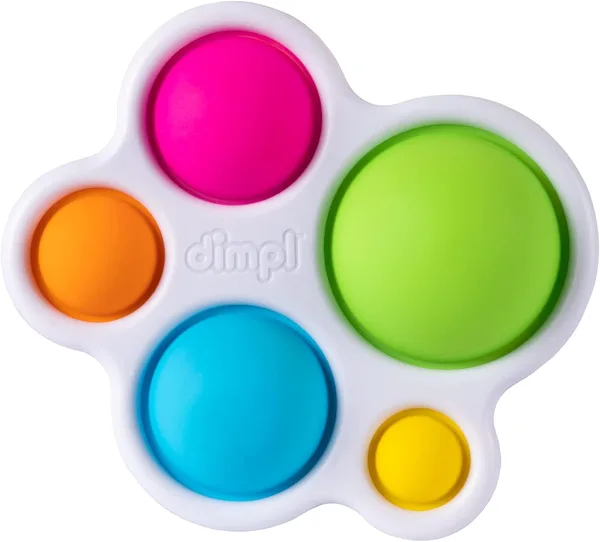
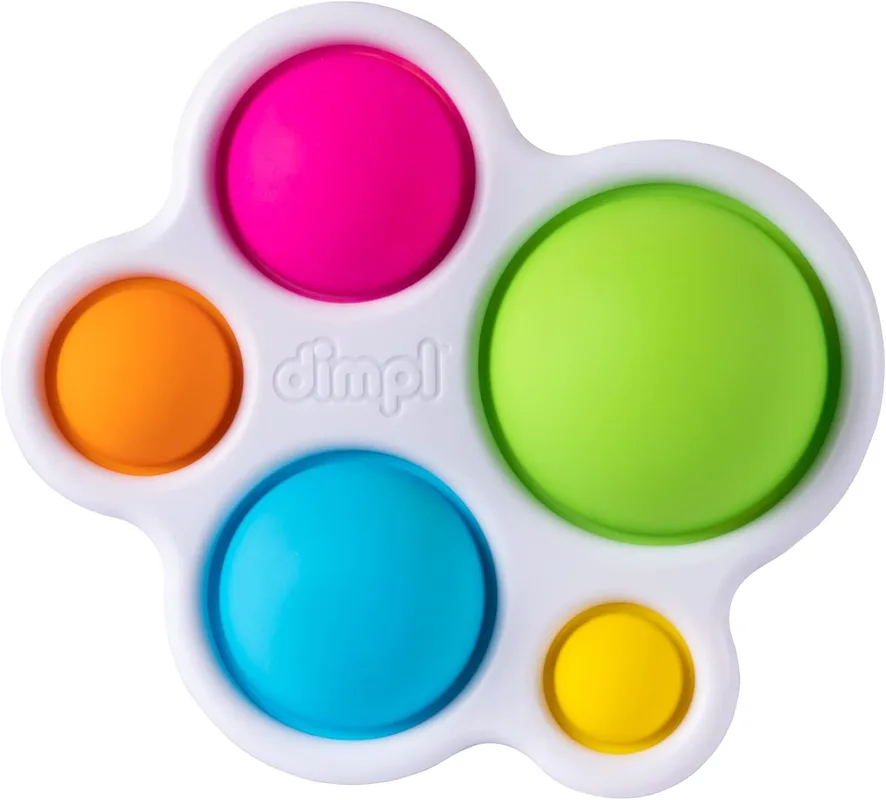
Fat Brain Toys Dimpl
“Different sensory profile — pushing silicone bubbles vs spinning discs. Great pairing.”
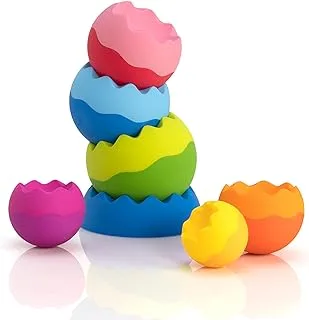
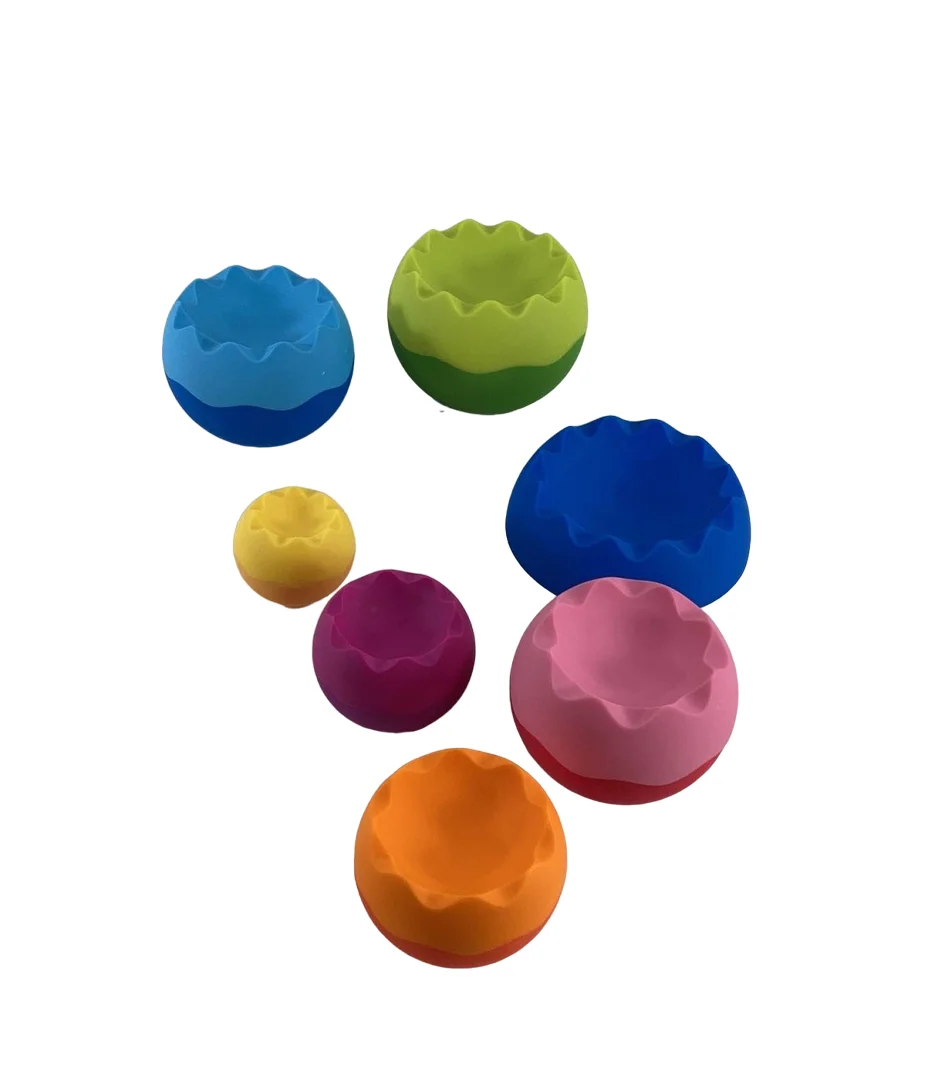
Fat Brain Toys Tobbles Neo
“Weighted stacking spheres that wobble. Complementary stacking challenge.”
Fat Brain Toys MiniSpinny
“Smaller, simpler spinning toy for younger babies (10+ months).”
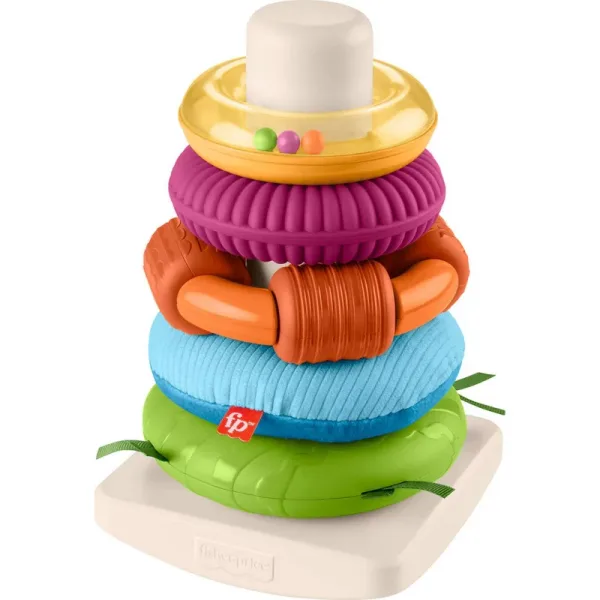
Fisher-Price Rock-a-Stack
“Classic ring stacker at a fraction of the price. No spin, but proven design.”