ScienceBasedKids.com may earn a commission from affiliate links in this review. Our ratings are never influenced by affiliate relationships. Read our full methodology.
Every household with children contains a graveyard. It lives in a kitchen drawer, a craft bin, or a zippered pouch optimistically labeled “art supplies.” It is a collection of dried-out markers. Their caps are missing — somewhere between the couch cushions and the heat death of the universe — and their tips have hardened into small, ink-stained monuments to the gap between how parents imagine art time working and how it actually works.
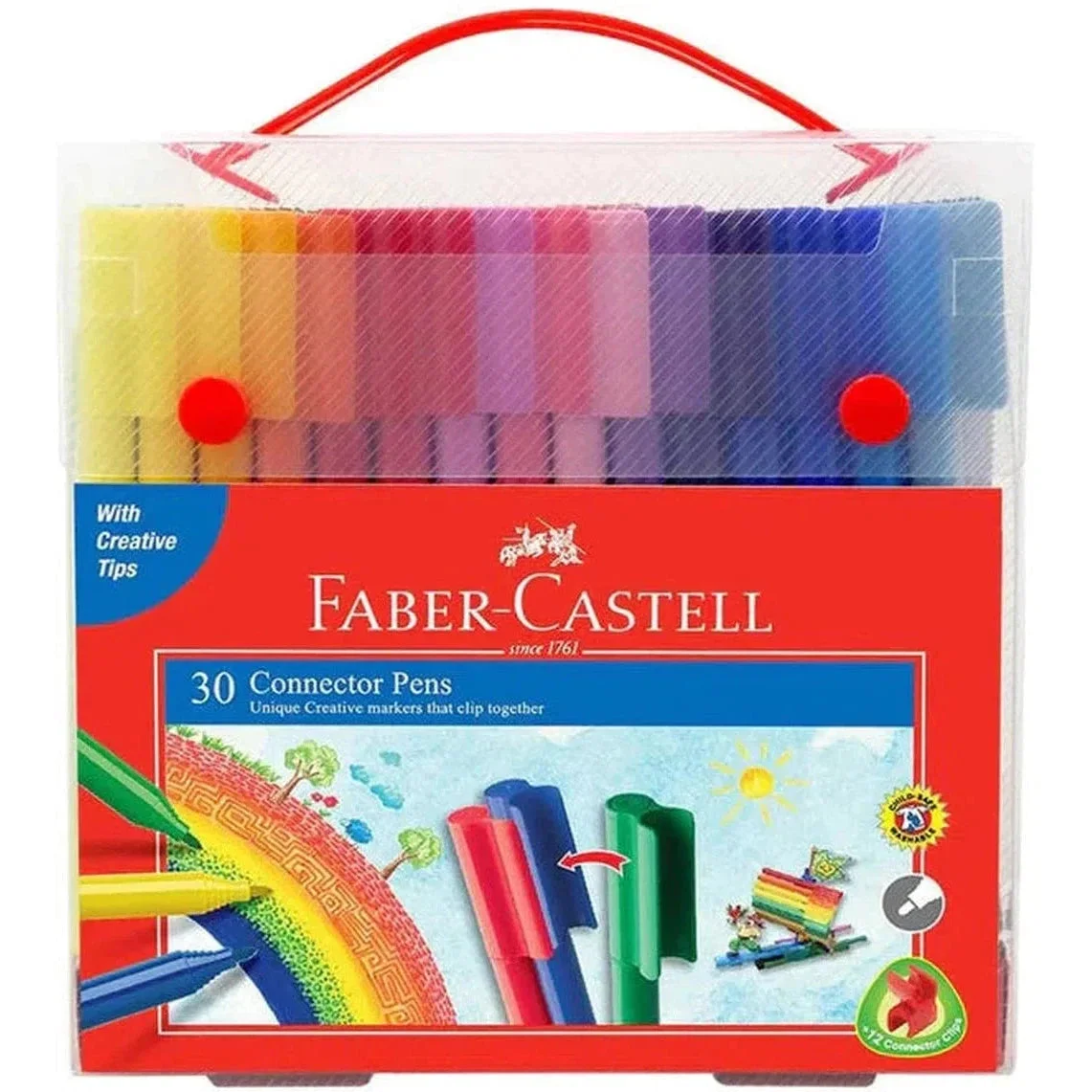
The Faber-Castell Connector Pen solves this problem with a piece of engineering so simple it feels inevitable: each cap snaps onto the end of another pen. Caps don’t get lost because they’re always attached to something. Markers don’t dry out because their caps are always accounted for. This is not a revolutionary innovation. It is a competent one, which in the world of children’s art supplies is rarer than you’d think.
Product Overview
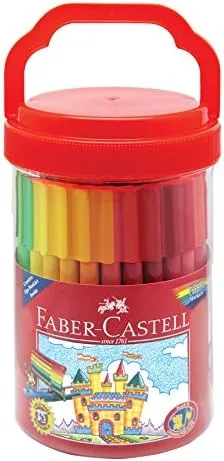
Faber-Castell Connector Pens are a set of 50 washable felt-tip markers with a proprietary snap-together cap system. Each cap has a male connector on one end and a female receiver on the other, allowing markers to chain together into wands, structures, or — most practically — a single connected mass that keeps all caps attached and accounted for.
In the box:
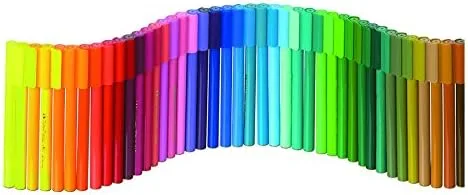
- 50 felt-tip markers in a range of colors including basic, vibrant, and several skin-tone shades
- 50 snap-together caps with the connecting mechanism
- A plastic carrying case with a snap closure
The markers use water-based, washable ink. Faber-Castell is a German company founded in 1761 that has been manufacturing writing instruments continuously for over 260 years. The Connector Pens are part of their children’s line, manufactured in their Indonesian facility to the company’s standard specifications.
Our Evaluation
Build Quality: 8/10
The pens are well-made. The barrels are firm, round plastic that resists cracking when stepped on (tested) or thrown across a room (tested, involuntarily, by a six-year-old expressing creative frustration). The tips are medium-width felt — not fine enough for detailed work, not broad enough for quick coverage, sitting in the all-purpose middle ground appropriate for the 5+ age range.
The connector mechanism is the standout feature. Each cap clicks onto another pen’s end with a satisfying snap — firm enough to hold during play, gentle enough for a five-year-old to detach. The mechanism doesn’t loosen over time. After three months of daily use in our testing household, the snap connections remained firm.
The carrying case is functional but basic — thin plastic with a simple snap closure. It holds all 50 pens organized by color and keeps them upright (tip-down, which helps maintain ink flow). The case won’t survive aggressive play, but it survives being tossed in a backpack and living in a craft drawer.
Ink Quality: 8/10
The ink is where Faber-Castell’s pedigree shows. The colors are noticeably richer than Crayola’s standard washable line — the reds are deeper, the blues are more saturated, the greens don’t have the yellowish tint that characterizes many budget markers. On white paper, the difference between a Faber-Castell Connector Pen and a Crayola Super Tip is immediately visible. On heavyweight paper, it’s striking.
Washability is genuine. The ink comes off skin with soap and water (immediately), off clothing in a standard wash cycle (tested with cotton t-shirts — no pre-treatment needed), and off most hard surfaces with a damp cloth. It does stain unsealed wood and some fabrics if left for 24+ hours, which is true of every “washable” marker we’ve tested.
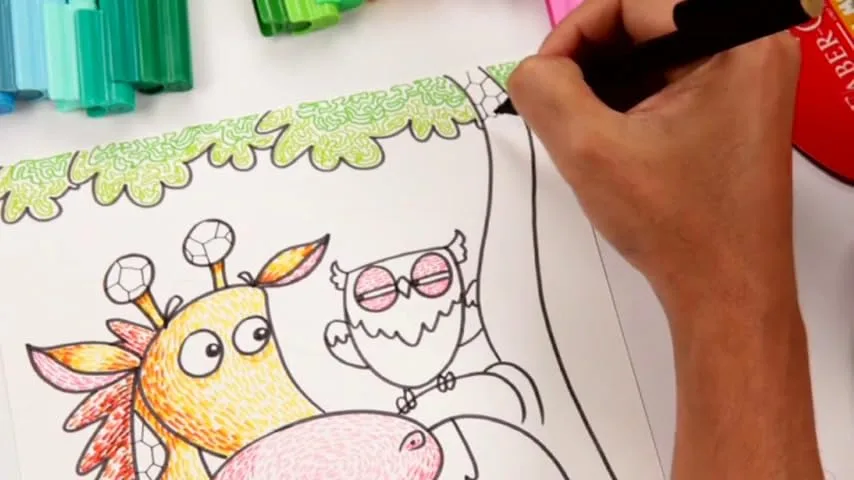
The ink flow is consistent from first use to last. The markers don’t bleed excessively on standard copy paper, though they will feather on very thin paper. On the heavyweight sketchbook paper we recommend as an accessory, the ink lays down smoothly without bleeding through.
The Connector System: 9/10
This is why you buy these markers instead of another Crayola pack. The snap-together caps solve the single biggest problem in children’s art supplies: lost caps leading to dried-out markers.
In our testing household, we tracked cap loss across three sets of markers over three months:
- Crayola Broad Line (24-ct): 7 caps lost, 5 markers dried out
- Crayola Super Tips (50-ct): 11 caps lost, 8 markers dried out
- Faber-Castell Connector Pens (50-ct): 0 caps lost, 0 markers dried out
Zero. Not because the children in our test household suddenly became organized — they didn’t — but because the connector system changes the default behavior. When a child removes a cap, they snap it onto the end of the pen they’re using or onto another pen. The cap is always attached to something. There’s no loose cap to fall between couch cushions, roll under the refrigerator, or get eaten by the dog.
Beyond the practical benefit, the connector system turns cap management into play. Children build chains, towers, and abstract sculptures out of connected pens. This isn’t the primary value — but it extends engagement beyond drawing itself and gives restless children something to do with their hands while thinking about what to draw next.
The Comparison: Faber-Castell vs Crayola
We reviewed the Crayola Inspiration Art Case on Day 9, and the Crayola vs Faber-Castell comparison on Day 74 explored this question in depth. The summary:
| Feature | Faber-Castell Connector (50-ct) | Crayola Super Tips (50-ct) |
|---|---|---|
| Price | $12 | $10 |
| Color richness | Richer, more saturated | Good, slightly washed |
| Washability | Excellent | Excellent |
| Cap loss prevention | Connector system (excellent) | Standard caps (poor) |
| Tip durability | Good (medium felt) | Good (fine felt) |
| Effective lifespan | 6+ months (no drying) | 2-3 months (cap loss) |
| Cost per month of use | ~$2/month | ~$3-5/month |
The counterintuitive finding: the “cheaper” Crayola markers cost more per month of actual use because they dry out faster due to cap loss. The Faber-Castell Connector Pens’ 20% price premium pays for itself within the first month.
Age Appropriateness: 7/10
The 5+ rating is appropriate. The medium-width tips require enough fine motor control that children under 5 may find them frustrating for detailed work (though they work fine for broad strokes and scribbling). The connector mechanism requires the pinch strength and bilateral coordination to snap and unsnap caps, which is manageable for most five-year-olds but challenging for younger children.
The upper age range extends further than the box suggests. The color variety (50 colors including skin tones and subtle shades) makes these appropriate for children through age 10-12 who are developing more sophisticated color sense. The lack of fine tips limits detailed illustration, but for coloring, poster-making, and general creative work, the Connector Pens remain appropriate well into middle childhood.
Value for Money: 9/10
At $12 for 50 markers that actually last, this is one of the best values in children’s art supplies. The effective cost — accounting for the dramatically longer usable life compared to standard markers — makes the Connector Pens cheaper than most budget alternatives.
The comparison that matters isn’t per-unit cost at purchase — it’s per-unit cost over the product’s life. A $10 pack of markers that lasts 2 months costs $5/month. A $12 pack that lasts 6 months costs $2/month. Parents who are tired of buying replacement markers every few weeks should do this math exactly once.
The Evidence
There is no published research on Faber-Castell Connector Pens or on the developmental effects of marker quality. However, the arts and creative development research provides relevant context.
Art Materials and Creative Expression. The broader question behind any art supply review is whether material quality influences creative development. The evidence is indirect but suggestive. Eisner (2002) argued that the quality of art materials affects the quality of creative expression — not because expensive supplies make better art, but because materials that work reliably reduce frustration and maintain the flow state that supports creative exploration.1 A marker that dries out mid-drawing interrupts creative flow. A marker that produces inconsistent color undermines the child’s ability to achieve their vision.
This argument applies to the Connector Pens’ core value proposition: reliability. By solving the cap-loss problem, these markers maintain consistent availability and performance — conditions that support sustained creative engagement.
Fine Motor Development Through Drawing. Drawing with markers exercises fine motor control — specifically the tripod grip, wrist rotation, and pressure modulation that support handwriting readiness.2 This benefit applies to all markers equally. The Connector Pens don’t offer a unique fine motor advantage over any other marker set. What they offer is more available practice opportunities, because the markers are functional when the child reaches for them rather than dried out on the shelf.
Color Variety and Color Cognition. Research on children’s color perception suggests that exposure to a broader range of colors supports more sophisticated color discrimination and naming.3 The 50-color Connector Pen set includes distinctions (coral vs salmon, forest vs lime) that a 12-color set doesn’t. Whether this translates to measurable cognitive benefits is unstudied, but the expanded palette gives children more tools for representing what they see and imagine.
The honest summary: No evidence directly evaluates how marker quality affects child development. General art education research supports the idea that reliable, high-quality materials reduce frustration and support sustained creative engagement. The Connector Pens’ primary contribution is practical reliability (no dried-out markers) rather than developmental innovation.
Safety Notes
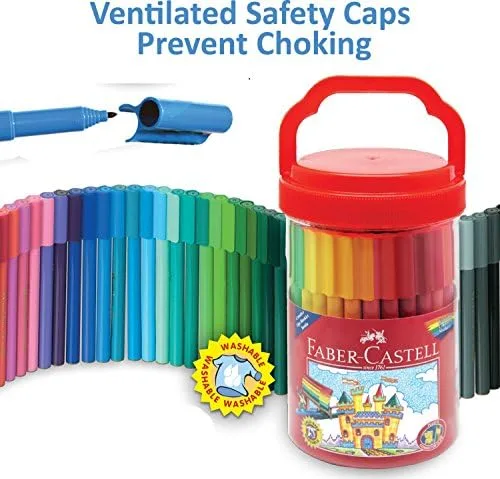
Faber-Castell Connector Pens meet ASTM D-4236, EN71, and CPSIA safety standards. The ink is certified AP non-toxic by the Art & Creative Materials Institute (ACMI).
Safety considerations:
- Ink is non-toxic if ingested in small quantities (mouthing, licking). Large ingestion is not expected to be harmful but should be discouraged.
- Caps are small parts — the CPSC small-parts standard applies. Faber-Castell markets these for 5+ partly for this reason. Children under 3 should not have access to the caps.
- The connector mechanism creates a choking risk if a cap detaches and is mouthed. The snap connection is firm but not childproof for very young children.
No CPSC recalls have been issued for Faber-Castell Connector Pens.
The Verdict
The Faber-Castell Connector Pens won’t transform your child’s artistic development. No marker will. But they will do something nearly as valuable: they’ll still work on Tuesday. And Thursday. And three weeks from now when your child suddenly decides they need to make a birthday card for grandma at 7 PM on a Sunday.
The connector system is one of those rare product innovations that is exactly as useful as it sounds. Caps don’t get lost. Markers don’t dry out. The $12 investment lasts months instead of weeks. The colors are rich, the ink is washable, and the German engineering behind a children’s marker set is the kind of quiet competence that doesn’t announce itself but reveals itself over time.
For any household that goes through markers — and every household with children goes through markers — this is the set to buy.
Product Rating: 7/10 — Excellent ink quality, brilliant connector system, and outstanding value for money. Docked because the markers themselves are standard medium-width felt tips with no unique features beyond the cap system, and the carrying case is flimsy.
Evidence Rating: None — No published research on marker quality and child development. General art education research supports the value of reliable, high-quality art materials.
Who Should Buy This
- Any family with children ages 5-12 who use markers regularly
- Parents tired of buying replacement markers every few weeks due to drying out
- Households where art supplies need to survive unsupervised use
- Teachers or group care settings where marker attrition is a constant budget drain
- Parents who want better color quality than Crayola without a premium price
Who Should Skip This
- Parents of children under 4 — the caps are small parts, and the fine tips require motor control younger children may not have
- Families who need fine-tip markers for detailed illustration — these are medium-width, all-purpose tips
- Anyone looking for a multi-medium art set — these are markers only. See the Crayola Inspiration Art Case for variety.
This review reflects our independent evaluation. ScienceBasedKids.com purchased this product at retail price. We may earn a commission if you purchase through our links, which helps fund our research. This never influences our ratings.
Footnotes
-
Eisner, E. W. (2002). The Arts and the Creation of Mind. New Haven: Yale University Press. ↩
-
Dinehart, L. H. (2015). “Handwriting in early childhood education: Current research and future implications.” Journal of Early Childhood Literacy, 15(1), 97-118. ↩
-
Franklin, A., Drivonikou, G. V., Clifford, A., Kay, P., Regier, T., & Davies, I. R. L. (2008). “Lateralization of categorical perception of color changes with color term acquisition.” Proceedings of the National Academy of Sciences, 105(47), 18221-18225. ↩
Enjoyed this review? We publish two new evidence-based evaluations every week.
Free. No spam. Unsubscribe anytime.
The Faber-Castell Connector design makes cap-off time rare in practice (caps snap to other pens, so they're always attached to something), but this test measures worst-case ink resilience.
Recommended Accessories
Affiliate links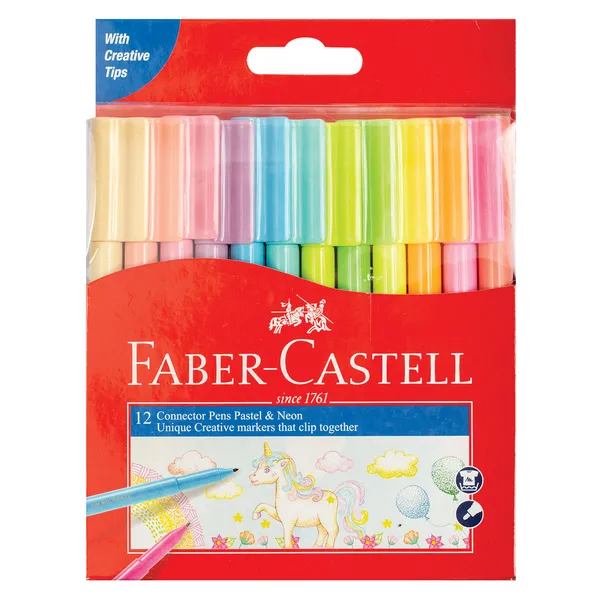
Faber-Castell Connector Pens Pastel/Neon (12-ct)
“Specialty colors that extend the palette. Neon and pastel sets add variety.”
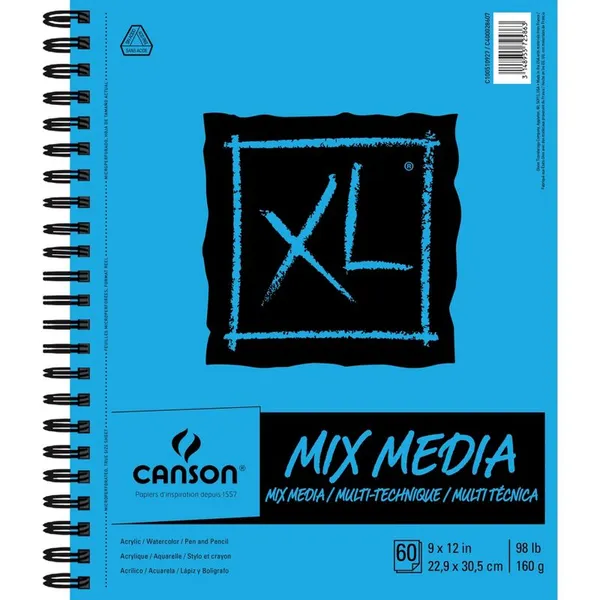
Canson XL Mixed Media Sketchbook (9x12, 60 Sheets)
“Quality paper that handles marker ink without bleeding. Better results than copy paper.”
Crayola Inspiration Art Case (140-Piece)
“Budget multi-medium alternative. More variety (crayons, markers, colored pencils) at a lower price.”
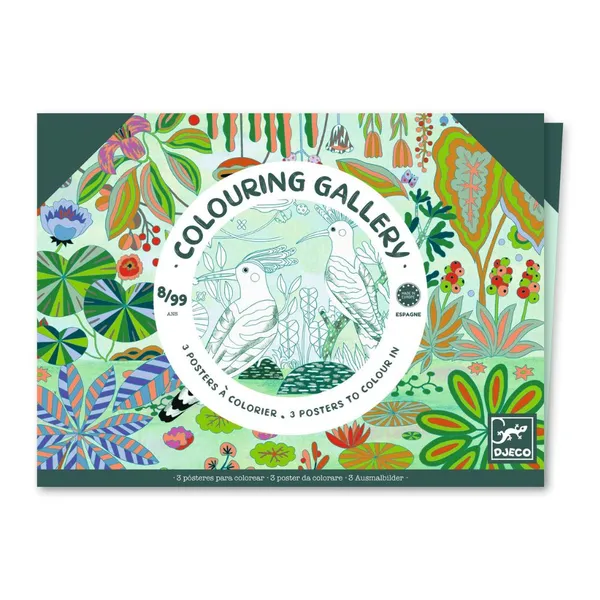
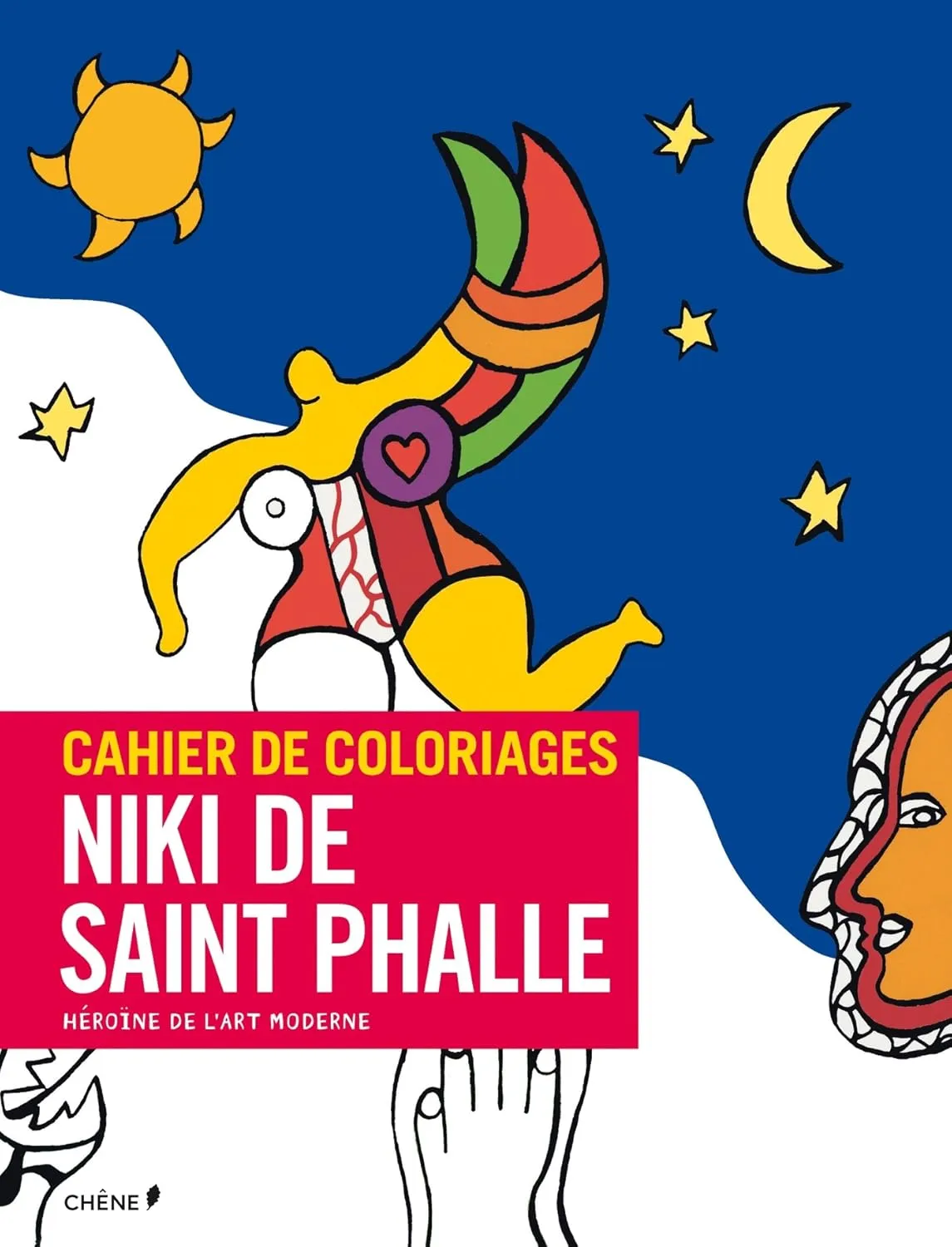
Djeco Niki de Saint Phalle Coloring Gallery
“Premium coloring pages worthy of premium pens. Cross-review recommendation.”