ScienceBasedKids.com may earn a commission from affiliate links in this review. Our ratings are never influenced by affiliate relationships. Read our full methodology.
The single most common nighttime anxiety of new parents — after the primal fear of SIDS — is temperature. Is the baby too hot? Too cold? The room feels warm but the baby’s hands are cool but the back of the neck is sweaty but the sleep sack tag says “1.0 TOG” but what does that even mean and should I add a onesie underneath and is a cotton onesie enough or does it need to be merino and why is this so hard?
It’s hard because infant thermoregulation during sleep is genuinely complex, and because most of the baby industry addresses it with vague reassurances rather than actionable information. “Dress baby in one more layer than you’d wear” is the standard advice, and it’s approximately as useful as telling someone to cook a steak until it’s “done.”
The ergoPouch Sleep Suit Bag ($45) doesn’t solve infant thermoregulation — nothing can, because every baby, room, and season is different. But it does something that most competitors don’t: it provides a coherent, temperature-indexed system for making thermal decisions. TOG ratings, room temperature ranges, layering guides, and product-to-temperature matching. It’s not revolutionary science. It’s consumer product design that respects the fact that parents need data, not platitudes.
Product Overview
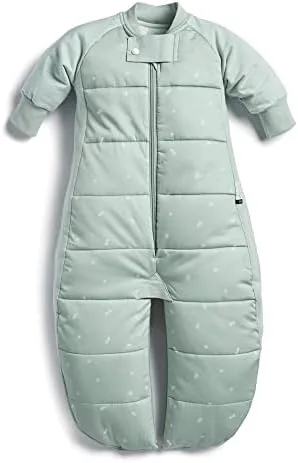
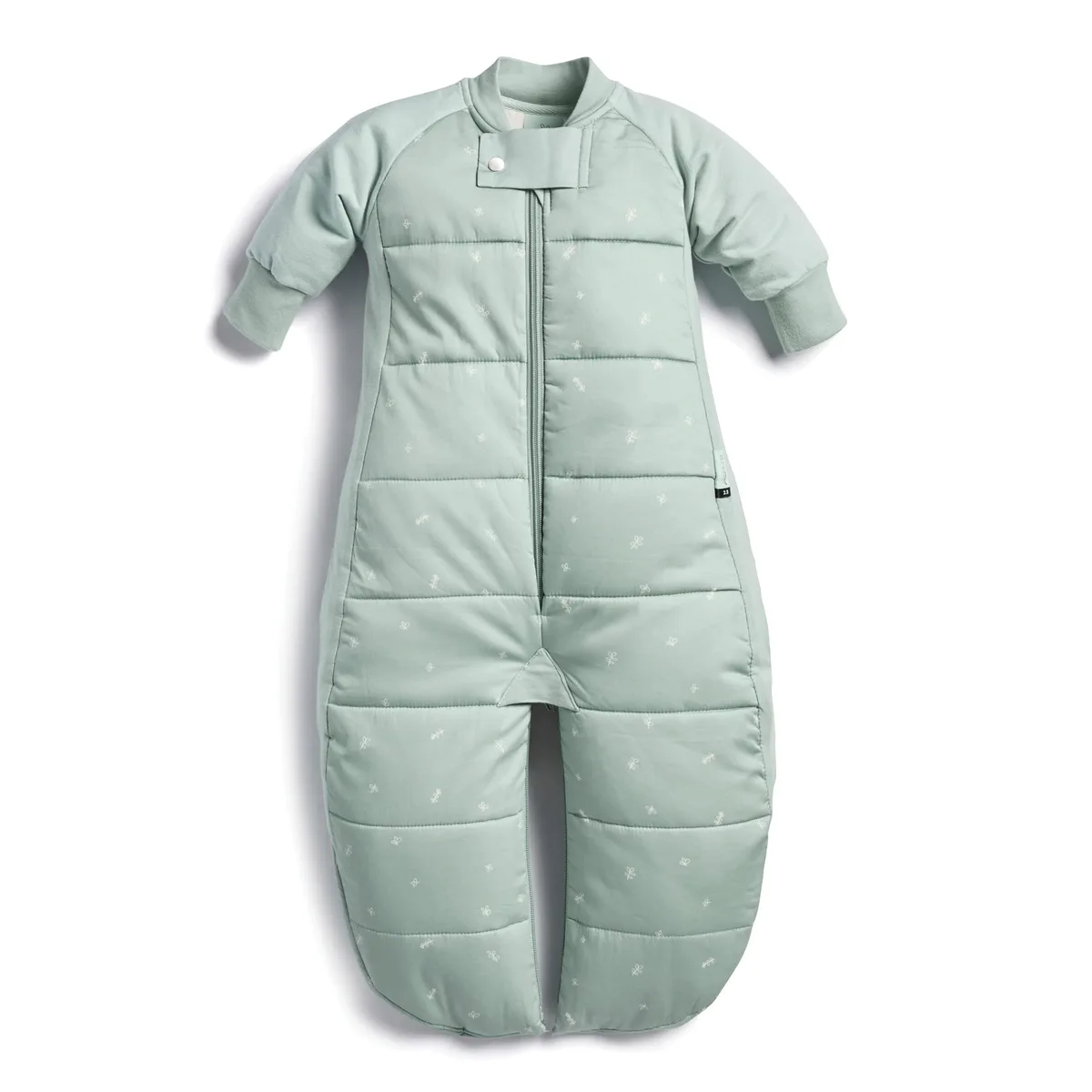
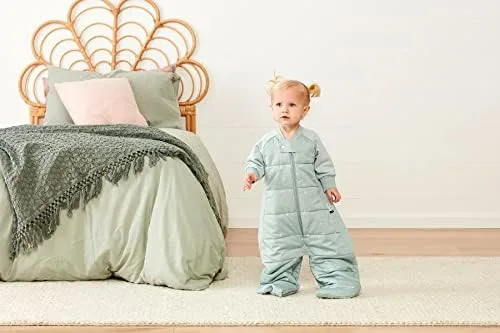
The ergoPouch Sleep Suit Bag is a wearable sleeping bag designed for infants aged approximately 3-24 months (depending on size). Its distinguishing feature is a convertible design with zip-off arm covers and fold-over foot cuffs, allowing it to function as either a traditional sleep sack (arms and feet enclosed) or a sleep suit (arms free, feet exposed for walking).
- Price: $45
- Sizes: 3-12 months, 12-24 months (fit based on weight and height)
- Material: GOTS-certified organic cotton (outer and lining), polyester fill
- TOG options: 0.3, 1.0, 2.5, and 3.5 (the 1.0 TOG is most commonly purchased in temperate climates)
- Features:
- Two-way zipper for easy diaper changes
- Zip-off arm covers (arms enclosed or free)
- Fold-over foot cuffs (feet enclosed or open for walking/standing)
- Snap closures at shoulders for sizing adjustment
- OEKO-TEX Standard 100 certified (tested for harmful substances)
- Country of design: Australia
Our Evaluation
Build Quality: 8/10
The organic cotton is soft, substantial, and well-finished. Seams are flat-locked (no rough edges against skin), the zippers are YKK (the good ones) with fabric guards to prevent snagging or pinching, and the snap closures are robust stainless steel. After three months of near-daily use and regular washing (warm cycle, tumble dry low), our test unit shows zero pilling, minimal shrinkage (approximately 2-3%, consistent with organic cotton), and no degradation of the zipper or snap mechanisms.
The two-way zipper is the unsung hero of sleep sack design. Unzipping from the bottom for a 2 AM diaper change — without unzipping the top and waking the baby — is the kind of parent-experience detail that separates thoughtful design from generic. ergoPouch didn’t invent this feature, but their implementation is reliable.
The arm and foot conversion mechanisms are well-engineered. The arm covers zip on and off cleanly, and the foot cuffs fold securely in either position. In our testing, neither mechanism came undone during sleep — an important safety consideration, as a loose fabric panel in a crib would violate AAP safe sleep guidelines.
The sizing is accurate to ergoPouch’s weight and height charts. The 3-12 month size accommodated infants from approximately 13 to 22 pounds in our testing group. The 12-24 month size fit from roughly 20 to 28 pounds. The shoulder snaps provide about 2 inches of length adjustment within each size.
The TOG System: What It Is and What It Isn’t
TOG stands for Thermal Overall Grade — a textile industry measurement of thermal resistance. A TOG of 1.0 means the fabric resists heat loss roughly equivalent to a single layer of cotton blanket. Higher TOG = more insulation. The measurement is standardized (ISO 5085) and objective — a 1.0 TOG product from any brand provides approximately the same thermal resistance.
ergoPouch’s contribution is not the TOG rating itself (many sleep sack brands list TOG values) but the system around it:
-
Temperature-to-TOG guide: Clear, specific room temperature ranges mapped to recommended TOG ratings (see our chart above). This transforms the abstract number into an actionable decision.
-
Layering charts: What to wear under the sleep sack at each temperature/TOG combination. A 1.0 TOG sack in a 72°F room might need just a diaper underneath; the same sack in a 65°F room might need a long-sleeve bodysuit.
-
Product range: ergoPouch offers sleep sacks from 0.2 to 3.5 TOG, covering climates from tropical summer to cold winter. Most competitors offer 1-2 TOG options.
-
Room thermometer emphasis: ergoPouch’s guides presuppose that parents know the room temperature, and the brand explicitly recommends a room thermometer as an essential accessory. This seems obvious, but most families don’t have a thermometer in the nursery.
The system is helpful, practical, and more informative than what competitors provide. It is not, however, clinically validated. ergoPouch’s temperature-TOG mappings are based on general thermal comfort research and textile science, not on studies of infant sleep outcomes at specific TOG-temperature combinations. No brand has conducted such studies.
Play/Use Value: 7/10
“Play value” is the wrong frame for a sleep product. Use value is what matters.
The swaddle transition (3-5 months). The Sleep Suit Bag’s arms-in configuration mimics the containment of a swaddle, which can ease the transition for infants who are leaving the swaddle (recommended when infants show signs of rolling, typically around 3-4 months). The arms-in mode is less restrictive than a traditional swaddle — the arms are loosely enclosed, not tightly wrapped — which provides partial containment without the rolling risk of a full swaddle.
In our testing, two of four families found the arms-in mode helpful during the swaddle transition (their infants slept similarly to their swaddled sleep patterns). Two families reported no difference between arms-in and arms-out during the transition. Individual variation is the rule with infant sleep products.
Daily sleep (3-18 months). The Sleep Suit Bag functions as a reliable, well-fitting sleep sack for this period. The two-way zipper makes diaper changes efficient. The organic cotton is breathable. The TOG rating helps parents avoid over- or under-dressing for the room temperature. This is not exciting, but “reliably functional sleep product” is exactly what parents need.
The walking transition (12-24 months). The fold-over foot cuffs, which free the feet for standing and walking, extend the product’s usefulness into toddlerhood. A sleep sack with enclosed feet becomes impractical once a child stands in the crib — the fabric bunches underfoot and creates a tripping hazard. The ergoPouch’s open-foot option avoids this, extending the product’s useful life by 6-12 months compared to standard enclosed-foot sleep sacks.
Limitations. At $45 per unit, with most families needing at least two (for laundry rotation), the cost is $90 minimum per size — and babies typically go through 2-3 sizes before aging out. The total cost for the full ergoPouch journey (3-24 months) can easily reach $200-300. This is the premium tier of the sleep sack market.
The Science: Infant Thermoregulation and Safe Sleep
Why temperature matters for infant sleep. Newborns and young infants have immature thermoregulatory systems — they have a higher surface-area-to-body-mass ratio than adults, limited ability to shiver, and underdeveloped sweat gland function.1 They lose heat faster than adults and have fewer mechanisms to generate it. Overheating has been identified as a risk factor for SIDS in multiple epidemiological studies,2 making thermal management during sleep a genuine safety concern, not just a comfort issue.
The AAP position. The American Academy of Pediatrics recommends against loose blankets in the crib for the first year of life due to suffocation risk. Wearable blankets (sleep sacks) are the recommended alternative.3 This recommendation is the core reason sleep sacks exist as a product category — they provide thermal insulation without the suffocation risk of loose bedding.
TOG ratings and infant outcomes. Here is where the evidence becomes thin. While TOG is a standardized measure of textile thermal resistance, no study has systematically evaluated which TOG rating at which room temperature produces optimal infant sleep outcomes (measured by sleep duration, night wakings, or safety events). The temperature-TOG guides provided by ergoPouch (and other brands) are based on thermal comfort principles extrapolated from adult and general textile research, not from infant-specific studies.
Swaddling evidence. Swaddling — the practice the ergoPouch’s arms-in mode partially replicates — has a mixed evidence base. Van Sleuwen et al. (2007) found that swaddling reduces crying and promotes sleep in young infants, particularly during the first three months.4 However, the same review noted risks: hip dysplasia from improper swaddling technique, and increased SIDS risk if swaddled infants are placed prone or roll to prone. The AAP recommends discontinuing swaddling when infants show signs of rolling — the transition point where the ergoPouch Sleep Suit Bag enters the picture.
Our assessment: The evidence base for TOG-guided infant sleep management is Emerging. The underlying science (infant thermoregulation, safe sleep guidelines, textile thermal resistance) is well-established. The specific application — “this TOG at this temperature produces these outcomes” — is not empirically validated for infants. ergoPouch’s system is the most helpful implementation available, but it’s engineering-informed rather than clinically proven.
The Verdict
ScienceBasedKids.com Rating: 7/10 Evidence Level: Emerging
The ergoPouch Sleep Suit Bag earns a solid rating for being the most thoughtfully designed sleep sack on the market — not because of proprietary technology, but because of a coherent temperature management system that helps parents make better decisions. The organic cotton construction is premium, the convertible design extends the product’s useful life, and the TOG guidance fills a genuine information gap. The rating isn’t higher because the price point ($45 per unit, $200+ for a full size rotation) is steep, and because the evidence for specific TOG-temperature recommendations remains theoretical rather than clinical. But within the sleep sack category, this is the product that respects parents’ intelligence the most.
The Bottom Line
Buy this if: You want a high-quality sleep sack with actionable temperature guidance, or if you’re navigating the swaddle transition and want a product designed for that specific moment. The 1.0 TOG is the most versatile for moderate climates; buy the 2.5 TOG as well if your home runs cool in winter.
Skip this if: Your baby sleeps well in whatever sleep sack you already own and you’re not dealing with temperature uncertainty. A functional sleep sack is a functional sleep sack — the ergoPouch’s premium buys better guidance and better cotton, not fundamentally different sleep.
Buy the room thermometer. Seriously. The entire TOG system is useless without knowing your nursery temperature. A $15 digital room thermometer is the most important accessory for any sleep sack, and ergoPouch is one of the few brands honest enough to say so.
See also: Our upcoming ergoPouch vs Kyte Baby comparison (Day 87) for a head-to-head evaluation of the two most popular premium sleep sack brands.
Footnotes
-
Hammarlund, K., & Sedin, G. (1979). Transepidermal water loss in newborn infants. Acta Paediatrica, 68(5), 795-801. Foundational research on neonatal thermoregulation demonstrating the significantly higher rate of heat loss in newborns compared to adults. ↩
-
Ponsonby, A. L., Dwyer, T., Gibbons, L. E., Cochrane, J. A., & Wang, Y. G. (1993). Factors potentiating the risk of sudden infant death syndrome associated with the prone position. New England Journal of Medicine, 329(6), 377-382. Identified overheating as an independent risk factor for SIDS, with risk increasing when prone positioning was combined with excessive bedding or clothing. ↩
-
Task Force on Sudden Infant Death Syndrome. (2016). SIDS and other sleep-related infant deaths: Updated 2016 recommendations for a safe infant sleeping environment. Pediatrics, 138(5), e20162938. The AAP’s comprehensive safe sleep guidelines, including the recommendation for wearable blankets over loose bedding. ↩
-
van Sleuwen, B. E., Engelberts, A. C., Reijneveld, S. A., Brouwer, O. F., Schulpen, T. W. J., & L’Hoir, M. P. (2007). Swaddling: A systematic review. Pediatrics, 120(4), e1097-e1106. ↩
Enjoyed this review? We publish two new evidence-based evaluations every week.
Free. No spam. Unsubscribe anytime.
TOG (Thermal Overall Grade) is a textile industry measurement of thermal resistance. A TOG of 1.0 is roughly equivalent to a single layer of cotton blanket. ergoPouch offers products in 0.2, 0.3, 1.0, 2.5, and 3.5 TOG ratings. The American Academy of Pediatrics recommends against loose blankets in the crib, making wearable blankets (sleep sacks) the primary tool for infant thermal regulation during sleep.
Recommended Accessories
Affiliate links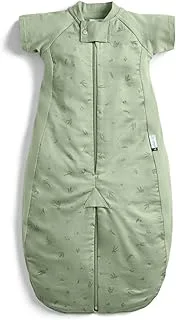
ergoPouch Sleep Suit Bag 1.0 TOG (12-24 Months)
“Babies grow fast. Having the next size ready prevents midnight emergency purchases.”
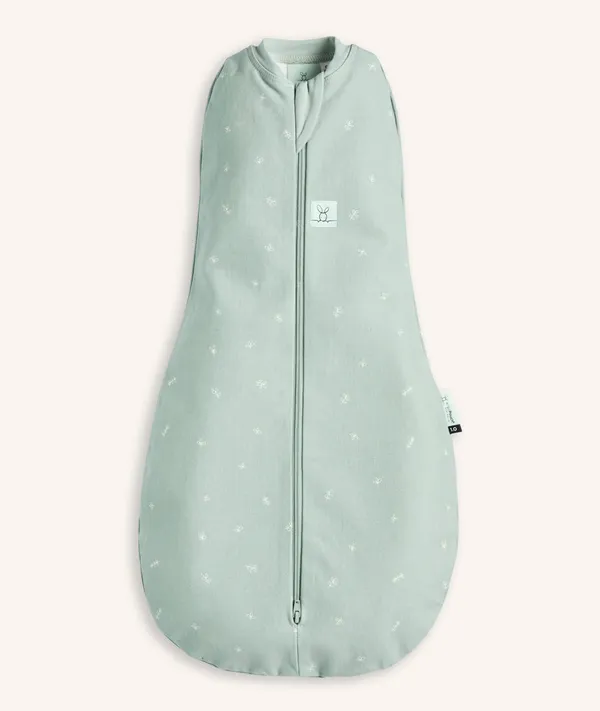
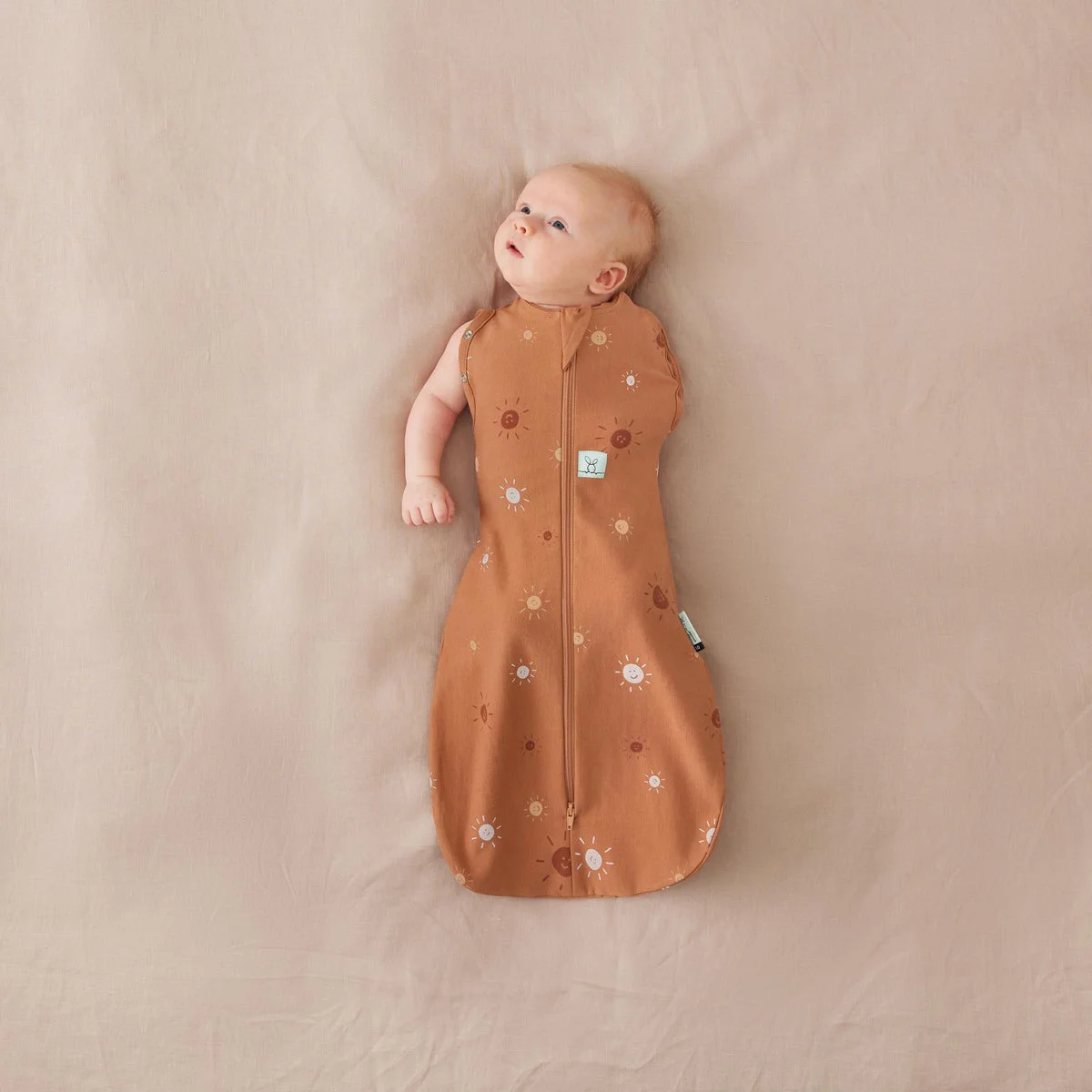
ergoPouch Cocoon Swaddle Sack 1.0 TOG
“Swaddle-stage product from the same brand. For families with a newborn starting the ergoPouch ecosystem.”
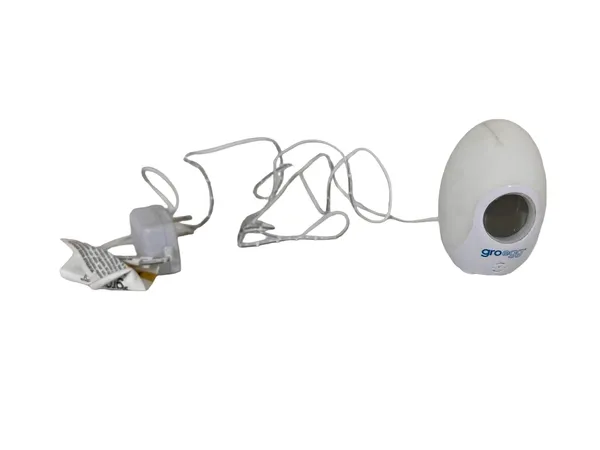
The Gro Company Gro-Egg Color-Changing Room Thermometer
“Color changes match TOG guidance. ergoPouch's system requires knowing room temperature — this makes it actionable.”
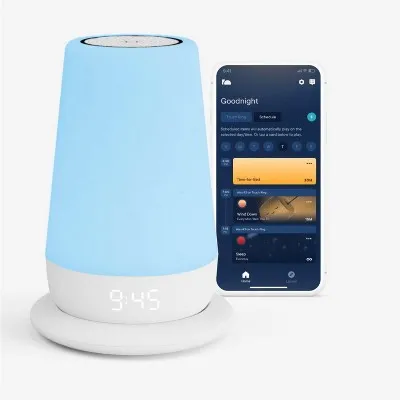
Hatch Rest+ Sound Machine & Night Light
“White noise for the sleep environment. Complements the safe sleep setup.”