ScienceBasedKids.com may earn a commission from affiliate links in this review. Our ratings are never influenced by affiliate relationships. Read our full methodology.
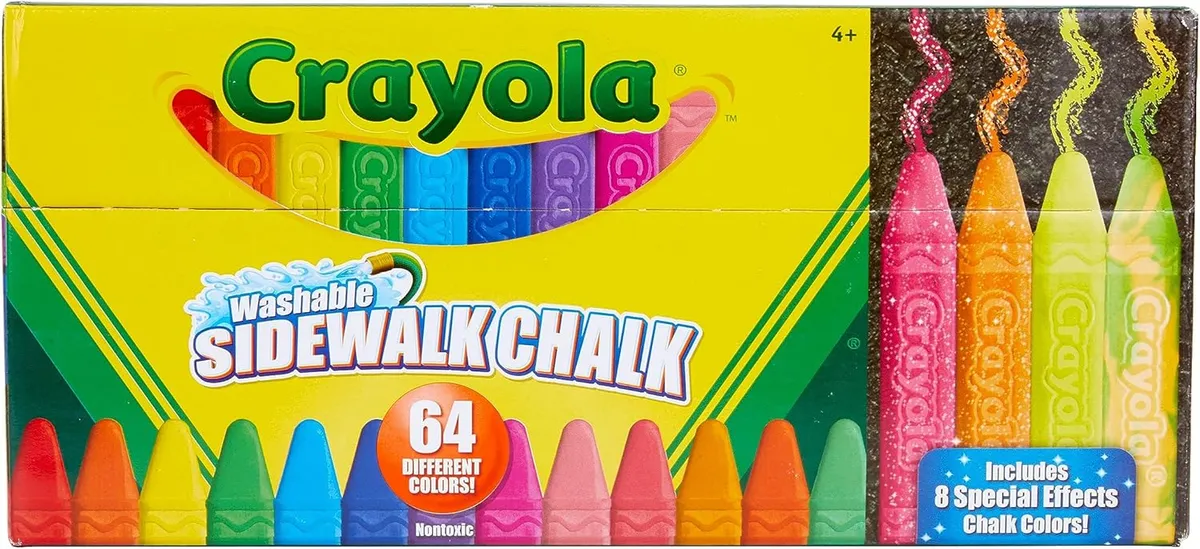
A driveway is, depending on your perspective, a place to park a car or the largest art studio your child will ever have. It requires no easel, no paper, no setup, and no cleanup beyond the next rainstorm. Crayola’s 64-count Washable Sidewalk Chalk set — a bucket of thick, colorful sticks for $12 — is the medium that opens up this studio. And if the phrase “washable sidewalk chalk” seems redundant (all sidewalk chalk washes off, doesn’t it?), Crayola would like you to know that their formula is especially washable, meaning it won’t ghost into your concrete and haunt your HOA for weeks. Whether this distinction matters depends on the porosity of your driveway and the disposition of your neighbors.
What isn’t in question: sidewalk chalk is one of the most underrated creative tools in children’s play. Not because anyone has studied it — nobody has — but because it does something almost no other art medium does. It makes the world the canvas.
Product Overview
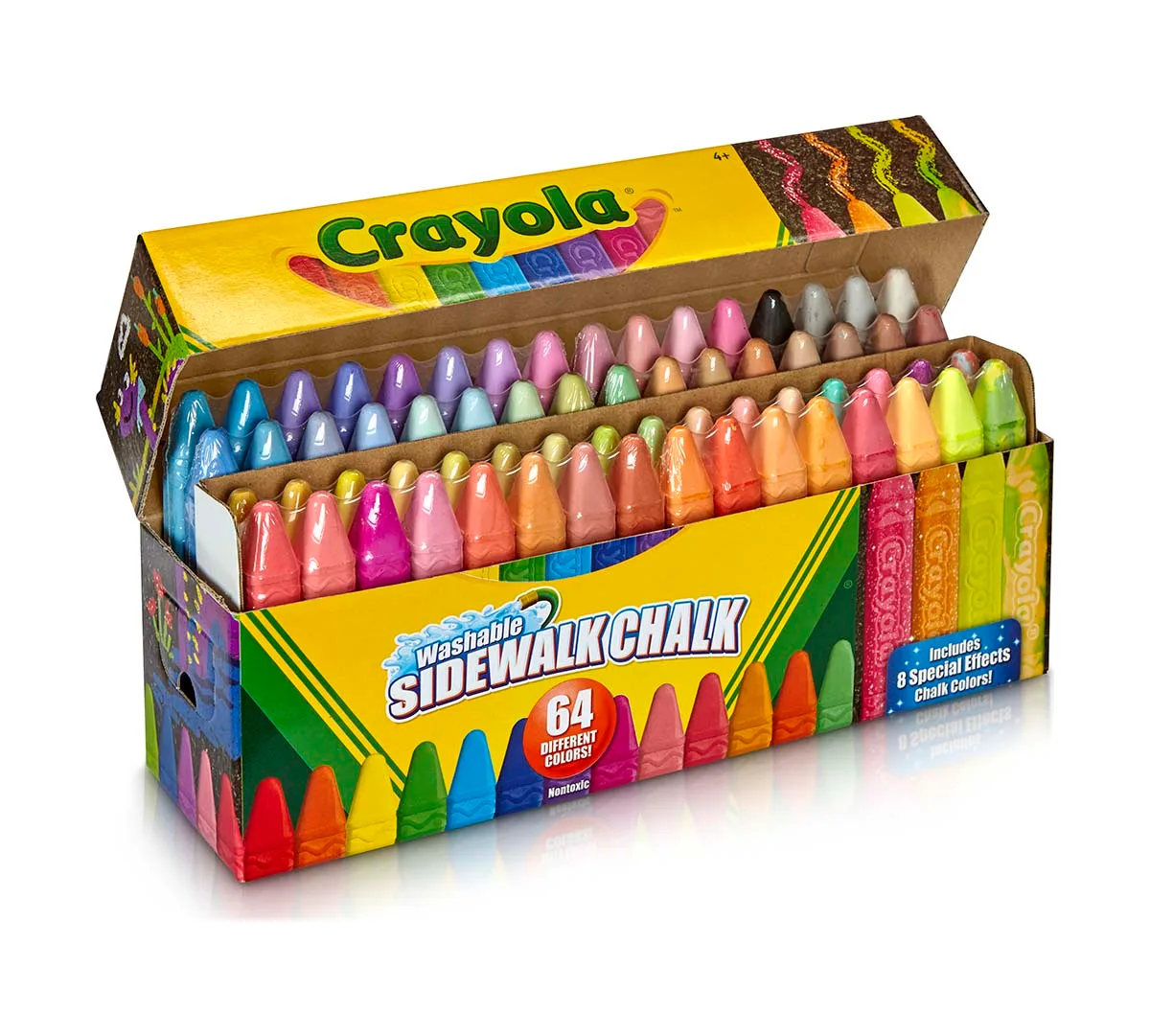
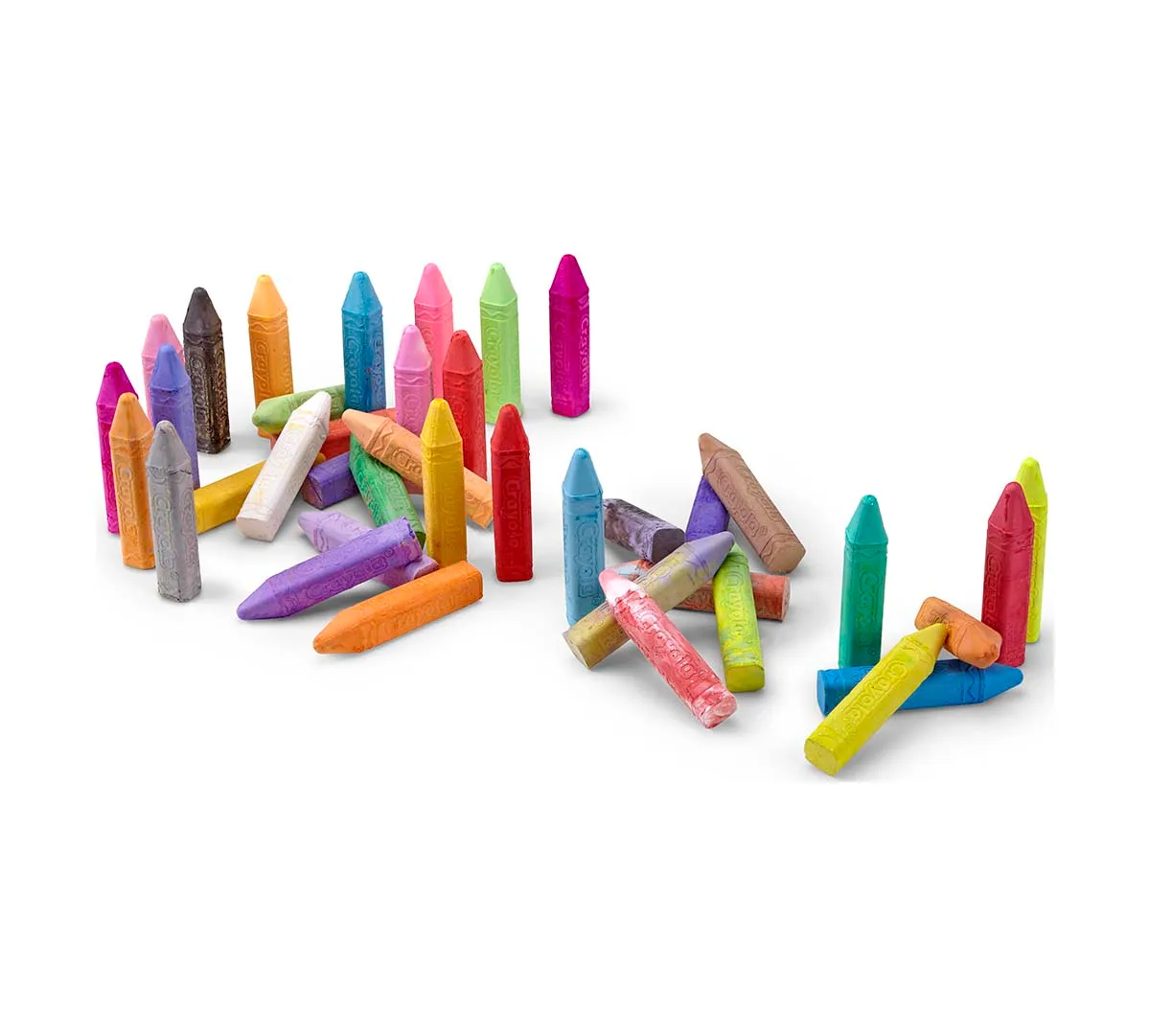
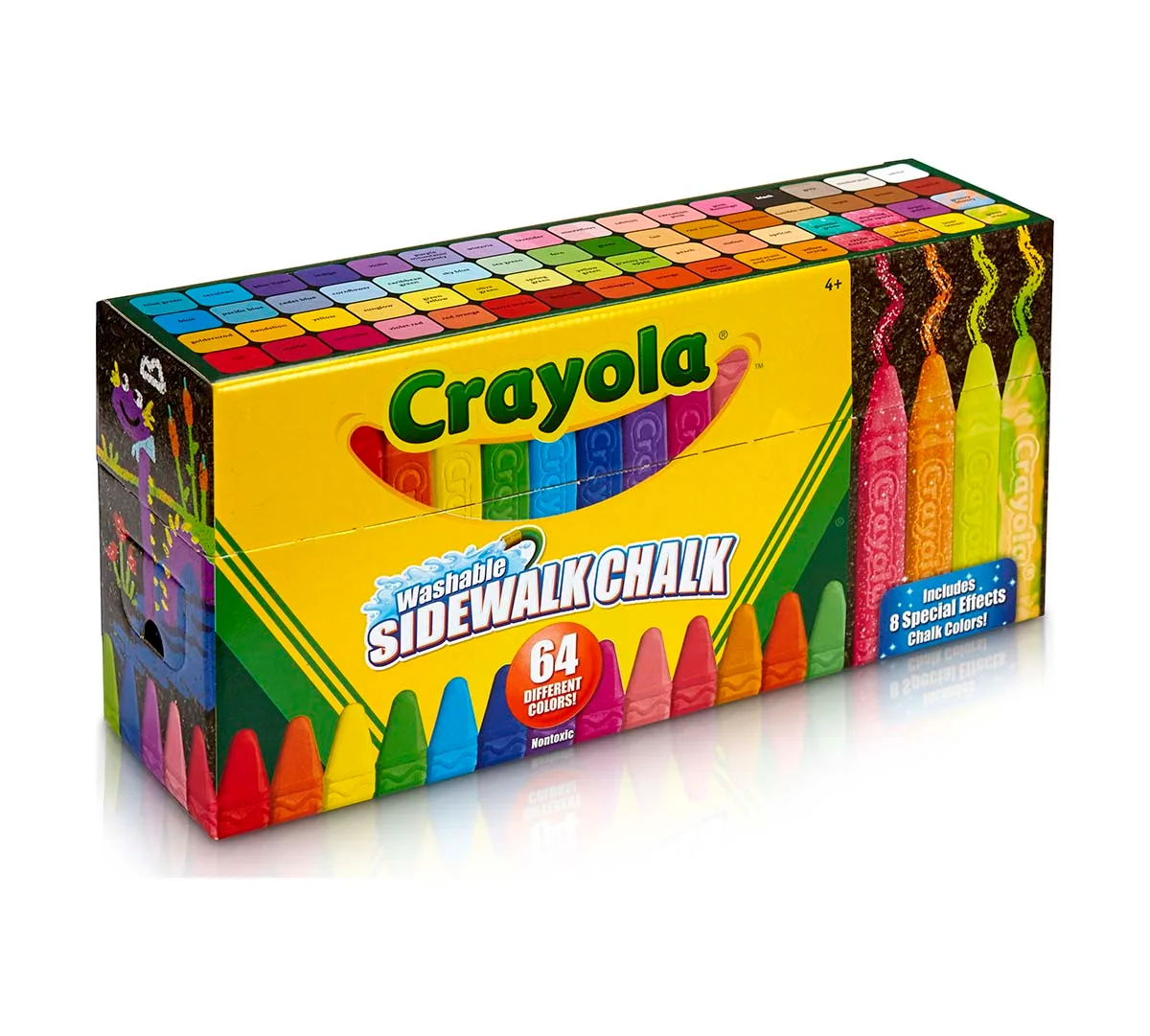
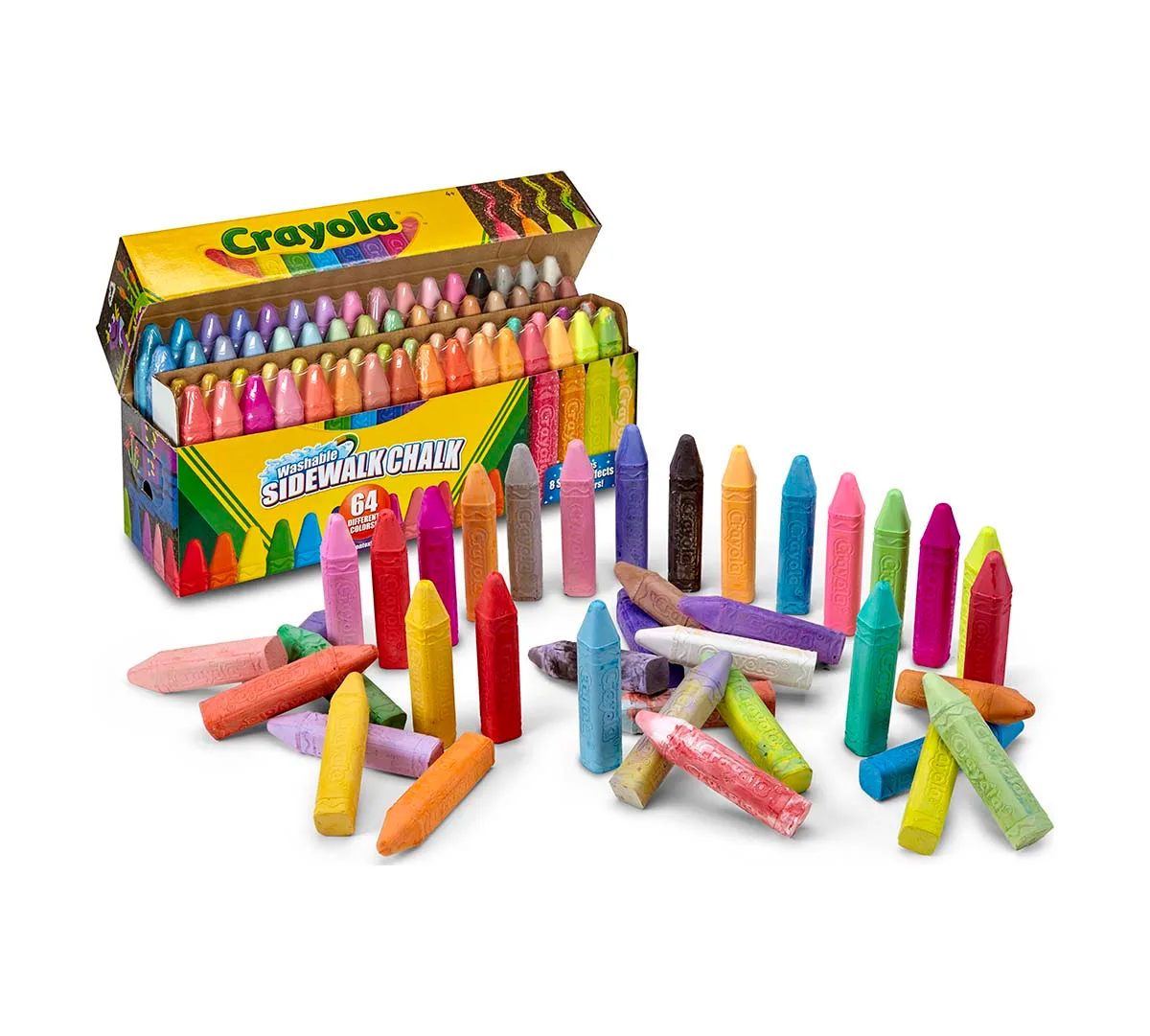
The Crayola Washable Sidewalk Chalk 64-count set ($12) includes 64 chalk sticks in assorted colors, packaged in a plastic bucket with a handle. Each stick measures approximately 4 inches long and 1 inch in diameter — significantly thicker than standard classroom chalk, designed for the grip patterns of young children and the rough texture of concrete.
The chalk is calcium sulfate-based (gypsum), with added pigments for color and a binding agent that Crayola says improves both color intensity and washability. It is non-toxic and conforms to ASTM D-4236. The formula is allergen-friendly — no wheat, gluten, dairy, or nut ingredients.
What 64 sticks gets you:
- Color range that matters outdoors. Subtle pastels disappear on gray concrete. Crayola’s set includes enough vivid, saturated colors — deep blues, bright reds, electric greens — to actually show up against pavement. The lighter colors (yellows, light pinks) are borderline invisible on most surfaces, which is a limitation of the medium rather than the product.
- Enough volume for large-scale work. Sixty-four thick sticks means multiple children can work simultaneously on ambitious projects — murals, hopscotch courses, neighborhood-spanning color trails — without running out mid-session.
- The bucket. This sounds trivial. It’s not. The bucket serves as storage, transport, and sorting container. Children naturally organize by color. The handle means a four-year-old can carry their art supplies outside independently. Good design disguised as packaging.
Our Evaluation
Build Quality: 6/10
Sidewalk chalk is not a precision instrument. It’s a thick stick of compressed gypsum that you grind against pavement until it’s gone. By that standard, Crayola’s chalk is fine. The sticks are uniformly shaped, the colors are consistent, and the lay-down is smooth without excessive crumbling.
The breakage issue deserves mention. These sticks break. Dropped from toddler height onto a driveway, roughly one in four sticks snaps. This is not a manufacturing defect — it’s the physics of chalk. The sticks are dense enough to write smoothly but not so reinforced that they’re indestructible. Younger children (ages 4-5) who grip tightly and press hard will go through sticks faster and break more frequently. The broken pieces are still usable, just harder to hold, which is where a rubber chalk holder ($6 accessory) becomes genuinely useful.
Color vibrancy varies significantly across the 64-stick range. The warm colors — reds, oranges, pinks — lay down vivid and bold. Blues and purples are strong. Greens range from vivid to pastel. Yellows and light colors are the weak links: they require heavy application to be visible on standard gray concrete and effectively disappear on darker surfaces. On light-colored concrete or smooth asphalt, the color range is better. This is important because a child who reaches for the yellow stick and gets invisible marks will be frustrated.
The “washable” claim is accurate with an asterisk. On smooth, sealed concrete, Crayola sidewalk chalk washes clean with a garden hose in one pass. On porous or unsealed concrete, textured pavers, or aggregate driveways, some pigment embeds in the surface and requires scrubbing or multiple rain cycles to fully disappear. Red and purple are the worst offenders. This won’t bother most families, but if your landlord cares about driveway aesthetics, test on an inconspicuous area first.
Play Value: 8/10
Sidewalk chalk’s play value is almost entirely context-dependent. The chalk itself is just a stick. The magic is in the surface.
Scale changes everything. Indoor art happens on paper — typically 9 by 12 inches or, at most, easel-sized. Sidewalk chalk art happens on driveways, sidewalks, patios, and basketball courts. The shift from tabletop to ground-scale changes how children use their bodies. Drawing a circle on paper requires wrist rotation. Drawing a circle on a driveway requires shoulder rotation, trunk bending, and whole-arm movement. The gross motor engagement of sidewalk chalk art is fundamentally different from indoor art, and for many children, more physically satisfying.
Outdoor context adds dimensions. Sidewalk chalk play happens outside, which layers in environmental benefits that indoor art doesn’t provide: natural light, fresh air, ambient sounds, physical movement between drawing zones, and the social dynamics of a shared public surface. We observed that children draw more with sidewalk chalk — larger figures, longer narratives, more ambitious compositions — than they do indoors. The driveway gives them permission to think big.
The play patterns we observed:
- Ages 4-5: Color exploration and body-scale marks. Scribbles, lines, “rainbows,” and attempts at letters. The physical act of crouching, sweeping an arm across concrete, and seeing a bright line appear is intrinsically rewarding. Engagement averaged 20-30 minutes per session.
- Ages 5-7: Representational drawing (houses, suns, people, animals) and game creation (hopscotch, tic-tac-toe, obstacle courses, “roads” for bikes). This is where sidewalk chalk transcends art and becomes infrastructure for imaginative play. Average session: 30-45 minutes.
- Ages 7-10: Collaborative murals, elaborate designs, and social projects. Groups of kids claiming driveway squares and creating themed panels. The public visibility of the art adds a performance element — children draw partly because people walking by will see it and react.
The rain factor. Everything washes away. This is sidewalk chalk’s greatest limitation and its greatest gift. The impermanence removes pressure. Nobody frames sidewalk chalk art. Nobody says “you used too much blue.” Nobody worries about mistakes. A child can fill an entire driveway with color and know that tomorrow’s sprinklers or next week’s rain will reset the canvas completely. Like Play-Doh’s smashability, chalk’s washability liberates the creative process from the tyranny of the permanent product.
Age Appropriateness: 7/10
The 4+ rating is reasonable but slightly conservative. We tested with some three-year-olds who enjoyed the sensory experience of chalk on pavement — the sound, the gritty feel, the drag of color across concrete. But three-year-olds lack the grip strength to consistently produce satisfying marks, and the frustration of light, barely-visible lines dampened their enthusiasm. By age 4, most children have sufficient grip strength and intentionality to produce marks that satisfy them.
The upper age range is essentially unlimited. Sidewalk chalk is used in professional art installations, competitive street art, and adult recreational drawing. For children, engagement naturally shifts from “draw on the ground” to “I’d rather do something else” around age 10-11, but the medium never becomes inappropriate — it just faces competition from screens and social activities.
Durability: 5/10
Chalk is a consumable. It gets used up. This is fine and expected. The 64-count set provides enough material for approximately 8-15 substantial outdoor sessions, depending on how many children participate and how aggressively they draw.
The storage factor matters more than the consumption rate. Sidewalk chalk left in a humid environment absorbs moisture and becomes soft, crumbly, and less vivid. Chalk left in direct sunlight in the bucket can fade. The bucket helps — it has a lid that closes reasonably well — but it’s not sealed. Store the bucket in a dry area (garage, mudroom) and the chalk performs well all season. Leave it on the porch through a humid week and you’ll notice degradation.
Value for Money: 9/10
Twelve dollars for 64 sticks of chalk that can cover a driveway in color. The cost per hour of outdoor creative play is among the lowest of any product we’ve evaluated — lower than Play-Doh, lower than coloring books, lower than virtually any toy with moving parts. If your family has access to any paved outdoor surface, this is one of the highest-value creative materials you can buy.
The only value comparison that matters is against store-brand sidewalk chalk, which typically runs $4-6 for a 20-pack. Store-brand chalk is chalkier (more crumbly, less vivid, rougher texture) and usually comes in fewer colors. The Crayola premium is $6-8 for significantly better color saturation, smoother application, and better washability. Whether that premium matters depends on your surface and your standards. For most families, the Crayola set is worth the difference.
The Evidence
We need to be transparent: there is no published research on sidewalk chalk and child development. Not “limited research” or “emerging evidence.” None. Zero studies examining the developmental benefits of large-scale outdoor chalk drawing in children.
This absence doesn’t mean sidewalk chalk is developmentally empty. It means nobody has studied it specifically. What we can do is map sidewalk chalk’s characteristics onto domains that have been studied.
Gross Motor and Fine Motor Overlap. Most art activities for children engage fine motor skills (hand and finger muscles). Sidewalk chalk uniquely engages both fine motor skills (grip, pressure modulation, controlled mark-making) and gross motor skills (shoulder movement, trunk rotation, weight shifting, crouching, standing). Adolph and Franchak (2017) describe how children’s motor development progresses through increasingly complex coordination of multiple body systems.1 Sidewalk chalk drawing is one of the few creative activities that demands this multi-system motor coordination.
Outdoor Play and Wellbeing. The outdoor context of sidewalk chalk play connects to a substantial body of research on children and nature exposure. Fjortoft (2004) demonstrated that children who play in natural outdoor environments show improved motor fitness compared to those who play exclusively in traditional playgrounds or indoor settings.2 While a driveway isn’t a forest, the outdoor play component — fresh air, natural light, physical freedom of movement, and the proprioceptive feedback of kneeling on hard surfaces — represents a meaningful environmental difference from indoor art.
Large-Scale Art and Self-Expression. Lowenfeld and Brittain (1987), in their foundational work on children’s creative development, described how the scale of art materials influences creative expression.3 Larger canvases encourage larger movements, bolder compositions, and greater physical engagement with the creative process. Sidewalk chalk provides the largest “canvas” of any common children’s art medium. While this hasn’t been studied in the specific context of sidewalk chalk, the principle that scale affects creative behavior is well-established in art education.
Social Play and Public Art. Sidewalk chalk art is inherently public — it’s created in shared spaces where others see it. This visibility creates a social dynamic absent from most children’s art. We observed that children drawing on sidewalks and driveways frequently adjusted their work based on audience response — a passing neighbor’s comment, a sibling’s reaction, a friend’s request to “draw one for me too.” This responsive, socially embedded creative process has parallels to collaborative art practices described in the arts education literature, though it hasn’t been studied in this specific form.
The honest summary: There is no direct evidence supporting sidewalk chalk as a developmental tool. The activity’s characteristics — multi-system motor engagement, outdoor play, large-scale creative expression, and social visibility — map onto domains with established research bases. We rate the evidence as “None” because intellectual honesty requires us to distinguish between “no one has studied this” and “research supports this.” We believe sidewalk chalk is developmentally valuable. We cannot cite a study that proves it.
Safety Notes
Crayola Washable Sidewalk Chalk is certified non-toxic and conforms to ASTM D-4236. The primary ingredient is calcium sulfate (gypsum), which is not a significant health hazard.
Safety considerations:
- Dust inhalation. Vigorous chalk use produces fine dust. Children with asthma or respiratory sensitivities should use chalk in well-ventilated outdoor areas (which is the natural use case) and avoid intentionally blowing chalk dust.
- Eye irritation. Chalk dust can irritate eyes on contact. Wash hands before touching face during chalk play.
- Surface slipperiness. Heavy chalk application on smooth concrete can create a slightly slippery surface, especially when wet. Be aware of this if children are running through chalked areas.
- Supervision for young children. Children under 3 may attempt to eat chalk. While non-toxic, ingestion of significant quantities can cause gastrointestinal discomfort.
- Staining on porous surfaces. Despite the “washable” label, chalk can temporarily stain very porous or unsealed concrete, especially in red and purple pigments. Test on inconspicuous areas if surface staining is a concern.
No CPSC recalls have been issued for Crayola Washable Sidewalk Chalk products.
The Verdict
Sidewalk chalk doesn’t need science to justify itself. It needs a driveway and a dry afternoon. Crayola’s 64-count set is a good execution of an inherently excellent medium — vivid enough to satisfy, durable enough to last a session, washable enough to reset, and cheap enough that nobody worries about waste.
The chalk itself is not exceptional. It’s competent. The colors are vivid (warm tones) to adequate (cool tones) to nearly invisible (yellows on gray concrete). The sticks break. The lighter colors underperform. These are chalk problems, not Crayola problems, and the 64-count volume compensates for attrition.
What makes this product worth recommending is the activity it enables. Crouching on warm concrete, arm sweeping in broad arcs, filling a driveway with color while the neighbors walk by and smile — this is one of childhood’s great creative experiences. That it washes away tomorrow makes it more valuable, not less.
Product Rating: 7/10 — Good chalk at a great price, enabling one of the best outdoor creative activities available to children. Docked for color inconsistency across the range, breakage rate, and the inherent limitations of the medium on darker surfaces.
Evidence Rating: None — No published research exists on sidewalk chalk and child development. The activity’s characteristics map onto studied domains (motor development, outdoor play, large-scale creative expression), but sidewalk chalk itself has not been the subject of developmental research.
Who Should Buy This
- Families with access to any paved outdoor surface — driveway, sidewalk, patio, basketball court
- Parents looking for low-cost, low-setup outdoor creative activities for summer
- Children ages 4-8 who enjoy drawing, coloring, or outdoor play (this is most children)
- Educators planning outdoor art activities for groups
- Families seeking screen-free outdoor engagement that doesn’t require equipment or supervision
Who Should Skip This
- Families without outdoor paved surfaces — chalk doesn’t work well on grass, dirt, or wood decks
- Parents in climates with frequent rain during the intended use period — chalk art washes away immediately
- Families with HOA or landlord restrictions on driveway markings (even washable chalk may concern some property managers)
- Children with significant respiratory sensitivities who react to fine particulate dust
This review reflects our independent evaluation. ScienceBasedKids.com purchased this product at retail price. We may earn a commission if you purchase through our links, which helps fund our research. This never influences our ratings.
Footnotes
-
Adolph, K. E., & Franchak, J. M. (2017). “The development of motor behavior.” Wiley Interdisciplinary Reviews: Cognitive Science, 8(1-2), e1430. This comprehensive review covers the progression from basic motor milestones to complex multi-system motor coordination. ↩
-
Fjortoft, I. (2004). “Landscape as Playscape: The effects of natural environments on children’s play and motor development.” Children, Youth and Environments, 14(2), 21-44. ↩
-
Lowenfeld, V., & Brittain, W. L. (1987). Creative and Mental Growth (8th ed.). Macmillan. The foundational text on children’s artistic development, describing how materials and scale influence creative expression across developmental stages. ↩
Enjoyed this review? We publish two new evidence-based evaluations every week.
Free. No spam. Unsubscribe anytime.
Sidewalk chalk's creative surface area dwarfs every indoor medium. The driveway is a functionally unlimited canvas — we capped measurement at the point where children chose to stop, not where material ran out.
Recommended Accessories
Affiliate links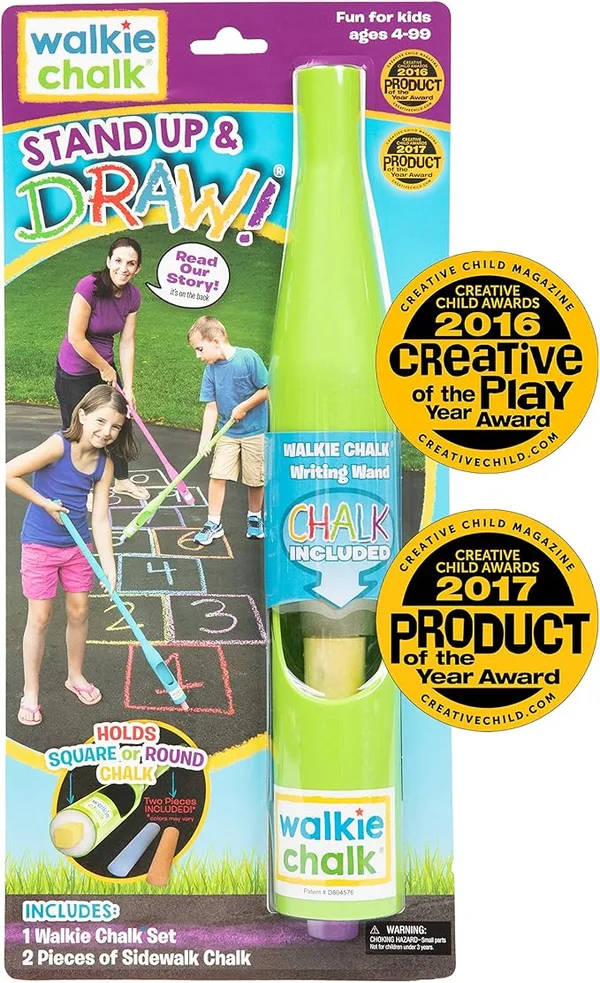
Walkie Chalk Stand-Up Sidewalk Chalk Holder
“Prevents broken chalk and colored fingers. Patented foam grip, inserts/removes chalk in seconds.”
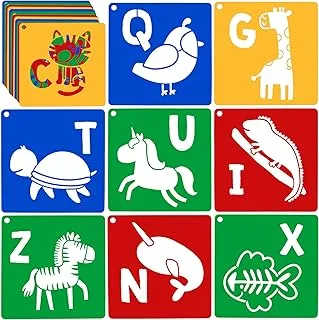
Sturdy Alphabet & Animal Shape Sidewalk Chalk Stencils (26-Pack)
“8-inch A-to-Z letter and animal stencils turn chalk play into pre-writing practice.”
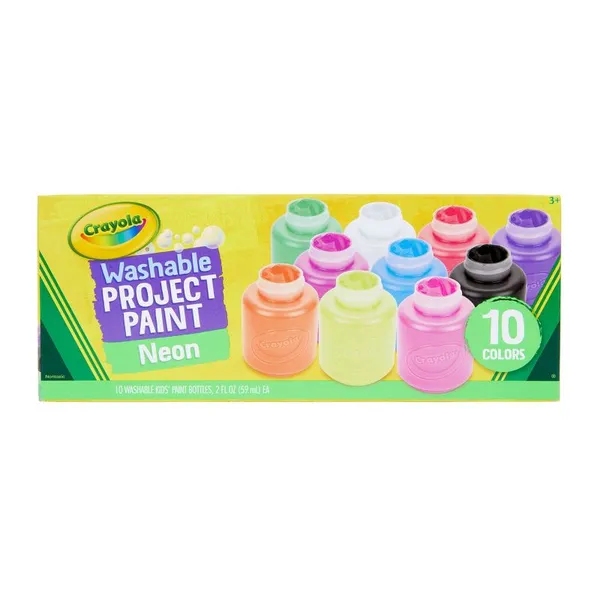
Crayola Washable Neon Sidewalk Paint Kit (9-Piece)
“3 neon paints, brush, roller, and chalk sticks. Different application for bigger creative canvases.”
"The Dot" by Peter H. Reynolds (Hardcover)
“Picture book about creative courage. 'Make your mark' pairs perfectly with chalk art outdoors.”