ScienceBasedKids.com may earn a commission from affiliate links in this review. Our ratings are never influenced by affiliate relationships. Read our full methodology.
Bath toys occupy an awkward position in the toy ecosystem. They need to be engaging enough to make bath time enjoyable, durable enough to survive daily water exposure, and resistant to the mold that inevitably colonizes most bath toys within weeks. Boon Pipes thread this needle better than any bath toy we’ve tested — five modular pipes that suction to tile walls and create custom water channels, each with a different water-flow effect. They’re fun, they’re educational, and they don’t turn into mold farms.
We tested Boon Pipes across three households with children ages 12 months to 4 years over six weeks.
Product Overview
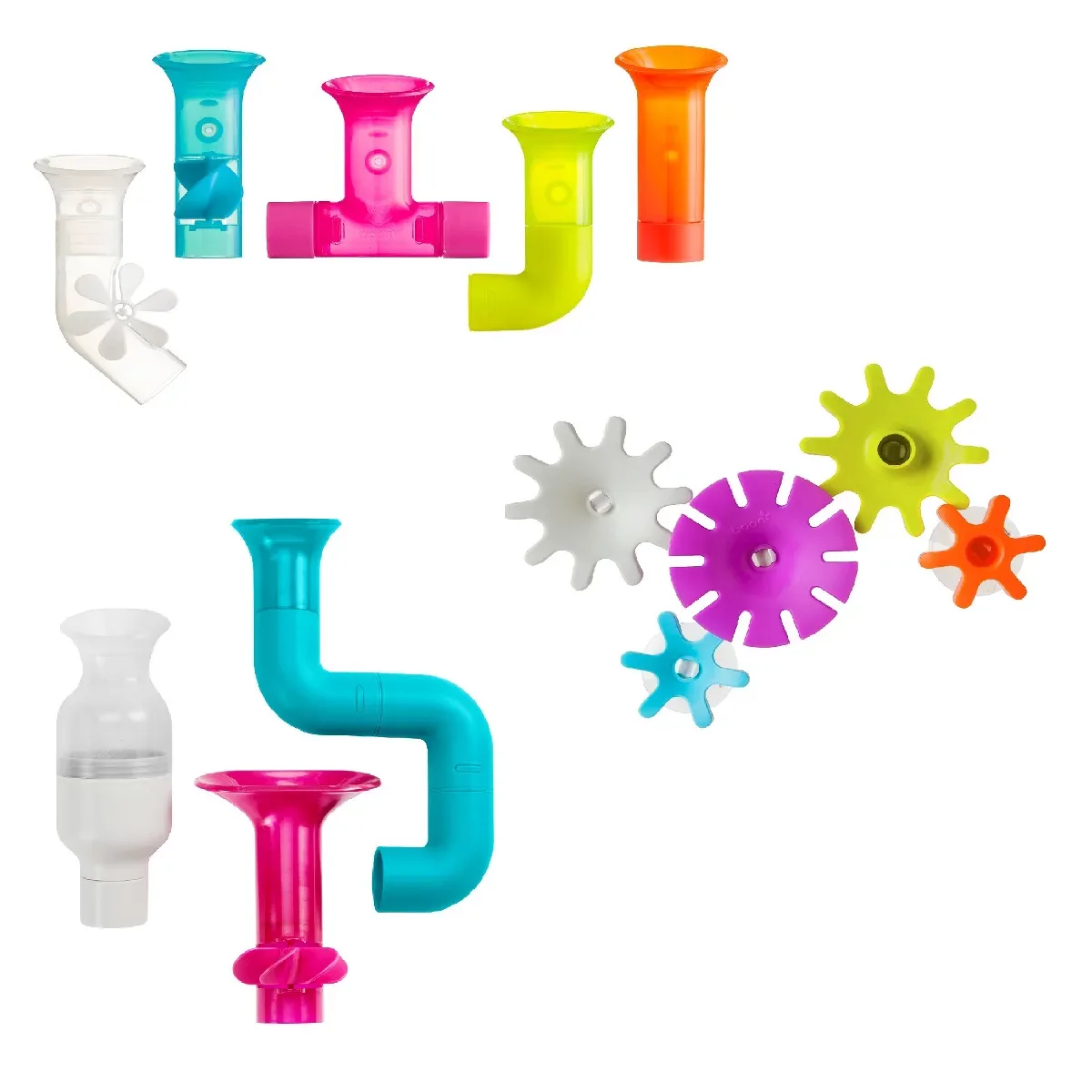
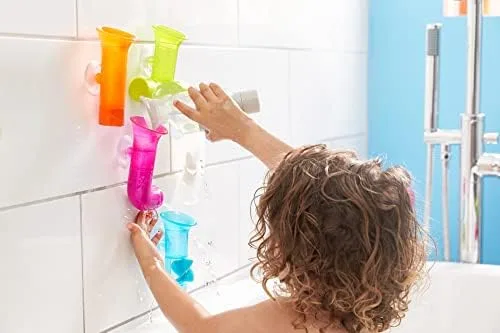
The Boon Pipes ($15) is a five-piece modular bath toy:
- Five pipes: Each with a unique function — spinning water wheel, funnel, strainer, cascade ledge, and straight flow
- Suction cups: Each pipe has suction cups for mounting on smooth tile, glass, or tub walls
- Material: BPA-free, phthalate-free plastic
- Connections: Pipes can be arranged in any order to create different water flow paths
- Drainage: Open-back design allows complete drainage after bath — critical for mold prevention
The design is intentionally modular. No pipe connects permanently to another — children rearrange the configuration each bath, creating different water paths. Pour water into the top pipe and it flows through whatever channel the child has constructed.
Our Evaluation
Build Quality: 7/10
The pipes are well-constructed with smooth plastic and bright colors. The suction cups are strong — they hold through an entire bath session on smooth tile (they struggle on textured surfaces). Each pipe has a distinct function that’s immediately apparent when water flows through it. The spinning water wheel is the design highlight — it creates visible motion that children find endlessly entertaining.
Play Value: 8/10
The combination of water play and building play is powerful. Children in our testing spent genuine cognitive effort configuring the pipes — deciding which pipe goes where, predicting where water will flow, and adjusting based on results. This is hands-on physics experimentation in a bath toy format.
The modular design means the play experience changes with each bath. Different configurations produce different water flow effects. Younger children use one or two pipes independently; older children build full five-pipe cascades that channel water from the top of the tub to the bottom.
Age Appropriateness: 7/10
The 12-month minimum is appropriate for individual pipe play (pouring water through a single pipe). Full multi-pipe construction play begins around 24 months. By 4 years, most children have explored the configuration possibilities and are ready for more complex water play.
Durability: 8/10
The open-back drainage design is the key durability feature — it prevents the trapped water and mold growth that plague enclosed bath toys. The suction cups maintained their grip throughout our testing period. The plastic showed no degradation from daily water exposure.
Value for Money: 8/10
At $15 for five modular pipes with years of bath-time use, the value is excellent. The mold-resistant design means the toys actually last, unlike cheaper bath toys that need replacement every few months.
The Evidence
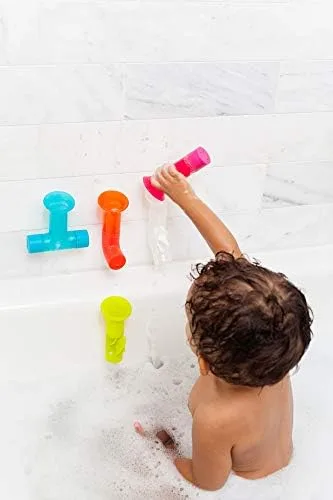
Water play and early physics understanding. Water play supports early understanding of physical properties — flow, gravity, volume, and cause-and-effect. Evangelou et al. (2009) documented how children develop scientific understanding through everyday play with materials including water.1
Construction play in novel contexts. The modular pipe construction applies building principles in a novel context (vertical wall mounting with water flow), which supports transfer of spatial reasoning skills.
The honest summary: Water play supports early physics understanding. The construction element adds spatial reasoning to the standard water play experience.
Safety Notes
Meets ASTM F963 and CPSIA standards. BPA-free and phthalate-free. No small parts — all pipes are large enough to pass choking tests. As with all bath play, adult supervision is required. No CPSC recalls on record.
The Verdict

Boon Pipes are the best-designed bath construction toy on the market. The modular pipe system combines water play with building play, the suction cups work reliably, and the open-back drainage design prevents the mold that destroys most bath toys. At $15, they’re a bath time essential.
Product Rating: 7/10 — Excellent design, good build quality, mold-resistant construction. The five-pipe set could benefit from more variety, addressed by the companion Cogs and Tubes products.
Evidence Rating: Emerging — Water play and construction play are both well-supported. Specific evidence for bath-format building toys is limited.
Who Should Buy This
- Families with children ages 12-36 months looking for engaging bath toys
- Parents frustrated by moldy bath toys
- Families wanting educational elements in bath time
- Gift-givers seeking practical, durable bath toys
Who Should Skip This
- Families with textured tub/tile surfaces (suction cups require smooth surfaces)
- Parents looking for a single-piece, simple bath toy
- Children over 4 who have outgrown the configuration challenge
This review reflects our independent evaluation. ScienceBasedKids.com purchased this product at retail price. We may earn a commission if you purchase through our links, which helps fund our research. This never influences our ratings.
Footnotes
-
Evangelou, D., Dobbs-Oates, J., Bagiati, A., Liang, S., & Choi, J. Y. (2009). “Talking about artifacts: Preschool children’s explorations with sketches, stories, and tangible objects.” Early Childhood Research & Practice, 12(2). ↩
Recommended Accessories
Affiliate links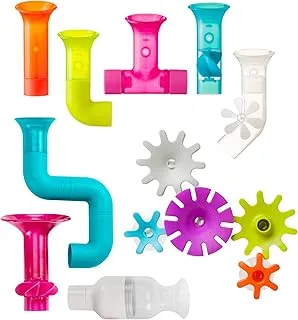
Boon Cogs Water Gears Bath Toy
“Suction-cup gears that spin with water flow. Perfect companion to the pipes.”
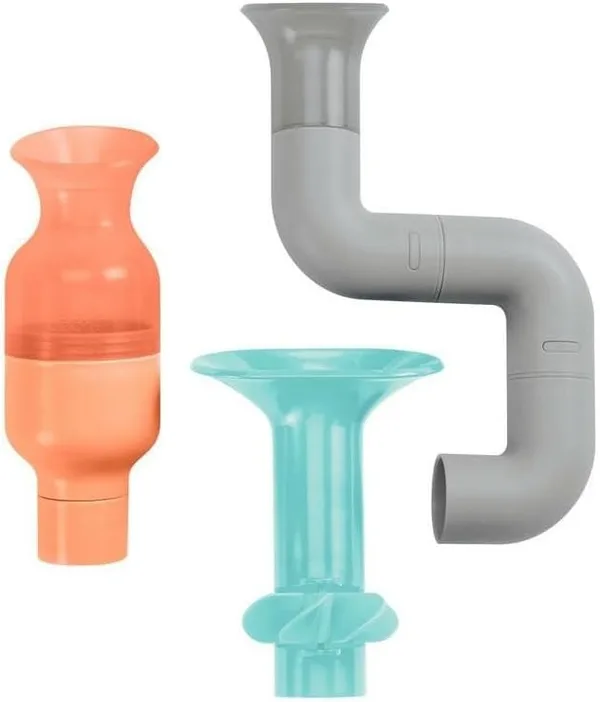
Boon Tubes Builder Bath Toys
“Flexible tubes that connect to the pipes system. Extends the water channel.”
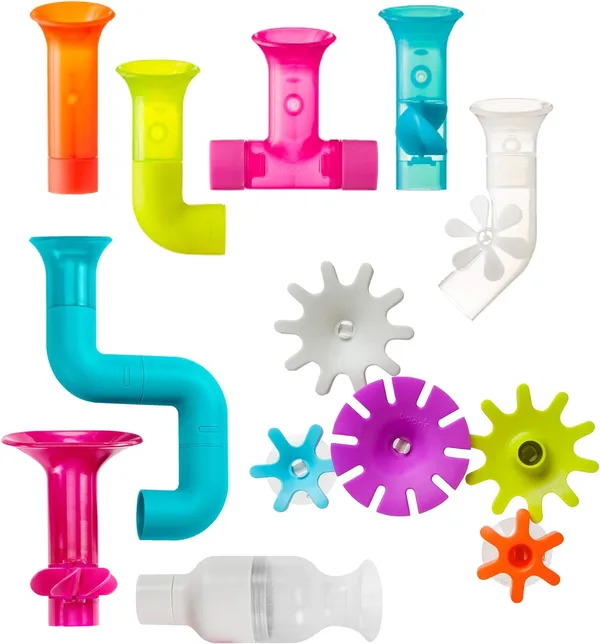
Boon Pipes, Cogs, and Tubes Bundle
“All three Boon bath construction sets in one bundle. Maximum bath engineering.”
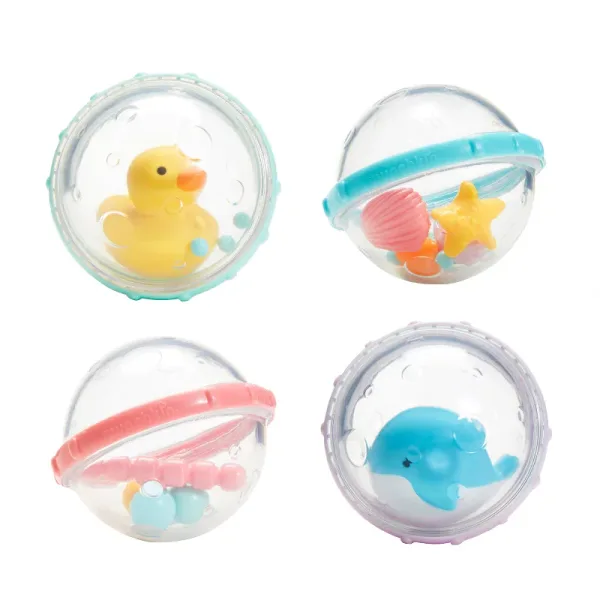
Munchkin Falls Bath Toy
“Simpler suction-cup water toy. Lower complexity, lower price.”