ScienceBasedKids.com may earn a commission from affiliate links in this review. Our ratings are never influenced by affiliate relationships. Read our full methodology.
The Battat Shape Sorter House takes the classic shape sorting toy and adds a welcome layer of complexity: color-coded keys that unlock the house’s sides so children can retrieve their sorted shapes. It’s a small addition with a meaningful developmental impact — the key-lock mechanism introduces sequential problem-solving (sort the shape, then find the right key, then unlock the door) that standard shape sorters don’t require. For toddlers who have mastered basic shape sorting, this is the natural next step.
We tested the Shape Sorter House with children ages 20 months to 4 years across three households over four weeks.
Product Overview
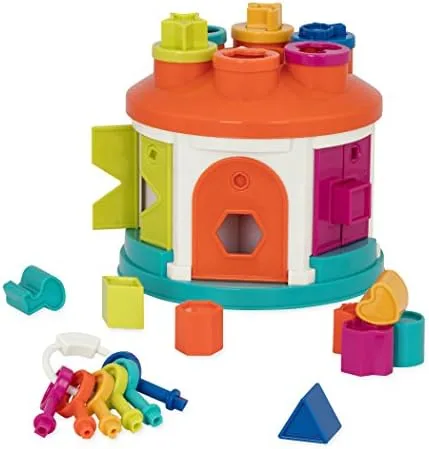
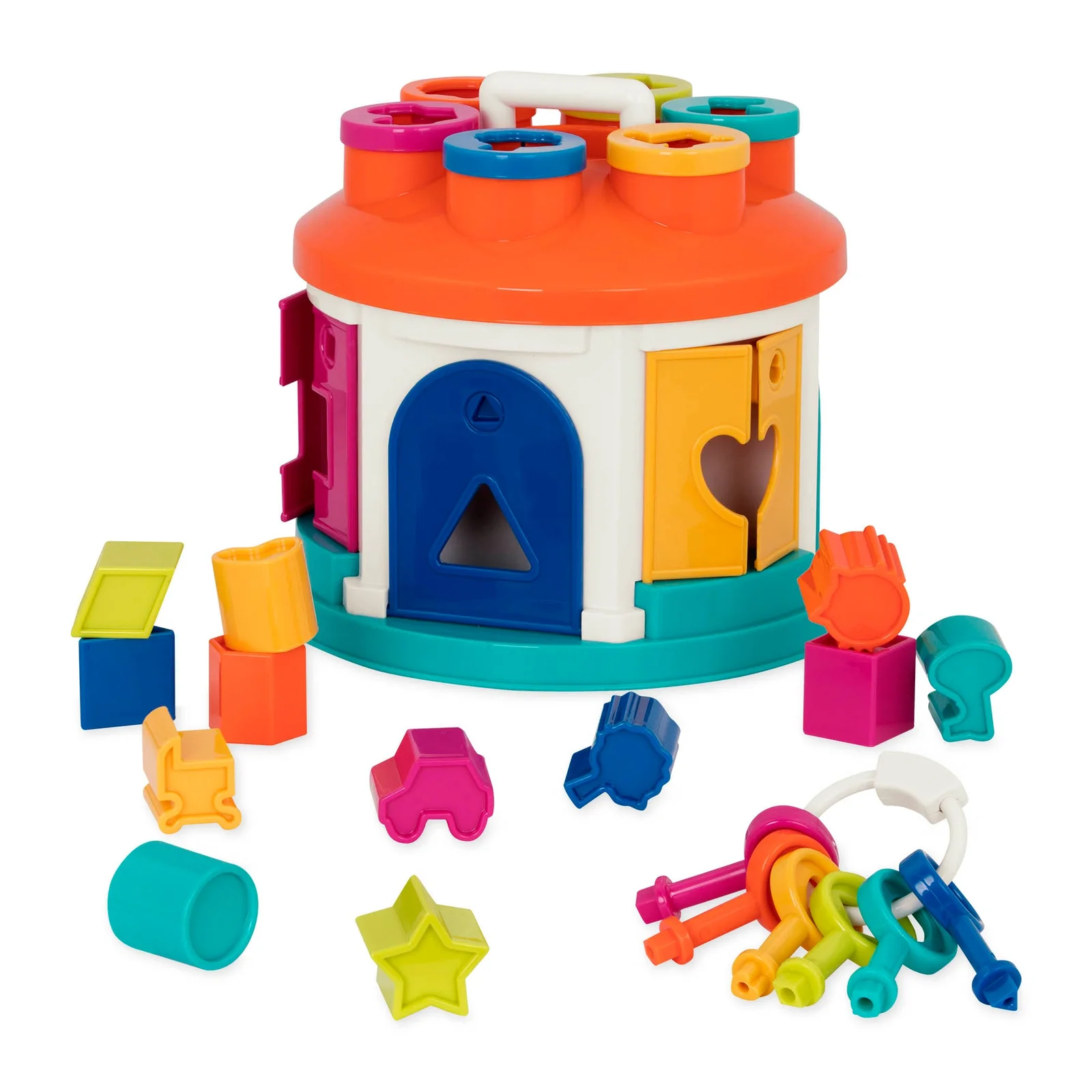
The Battat Shape Sorter House ($20) is a house-shaped sorting toy:
- House: Plastic construction with six sides, each featuring two shape holes and a color-coded lock
- Shapes: 12 different shapes in bright colors
- Keys: Six color-coded keys on a ring, each matching one side of the house
- Roof: Hinged opening for easy shape retrieval (bypass for the key mechanism)
- Dimensions: Approximately 8” × 8” × 8”
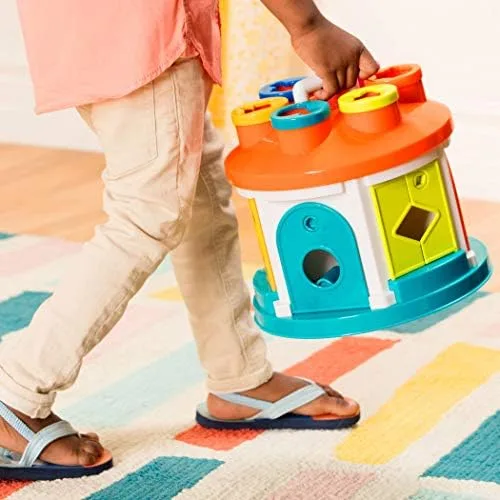
- Carry handle: Built into the roof for transport
The dual-mechanism design is clever: children can retrieve shapes either by matching the correct key to the correct lock or by simply opening the hinged roof. This allows younger children to bypass the key challenge while still engaging with shape sorting, then graduate to the key mechanism as their skills develop.
Our Evaluation
Build Quality: 7/10
The plastic construction is solid and well-finished. The shape holes are precisely cut with appropriate tolerance. The keys are sturdy enough for toddler handling, though smaller than ideal — the ring helps prevent individual key loss. The hinged roof mechanism is secure and easy to operate.
The color matching between keys and locks is clear and consistent. The house feels lighter than a comparable wooden shape sorter, which makes it more portable but slightly less premium.
Play Value: 7/10
The three-layer play experience — shape sorting, key matching, lock opening — provides more sustained engagement than basic shape sorters. Children in our testing progressed through a clear skill sequence: first mastering the shapes (with roof retrieval), then learning the key-color matching, then executing the full sort-key-unlock sequence independently.
The 12 shapes provide good variety, including standard geometric forms and some more complex shapes that challenge older toddlers.
Age Appropriateness: 7/10
The 2+ recommendation is appropriate. Children under 2 can engage with the roof-access shape sorting but will struggle with the key mechanism. The key-lock challenge typically becomes accessible around 30 months. By 4 years, the full activity is mastered and the toy loses its challenge.
Durability: 7/10
Plastic construction handles normal toddler play well. The keys are the most vulnerable component — the ring keeps them together but they’re small enough to misplace if separated. The lock mechanisms showed no degradation during testing.
Value for Money: 8/10
At $20 for a multi-skill sorting toy with 12 shapes and 6 keys, the value is excellent. The progressive difficulty design extends the useful lifespan beyond basic shape sorters.
The Evidence
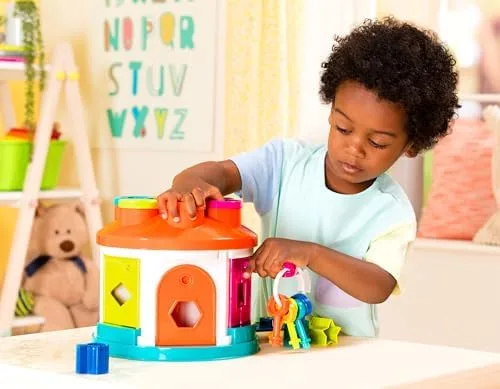
Shape sorting and spatial cognition. See our Melissa & Doug Shape Sorting Cube review for the full evidence review. Shape sorting supports spatial reasoning, shape discrimination, and fine motor coordination.1
Sequential problem-solving. The key-lock mechanism requires a multi-step sequence: identify the correct key, orient it, insert into the lock, turn. This sequential task supports executive function development — specifically planning and sequencing skills documented by Zelazo et al. (2003).2
The honest summary: Shape sorting is well-supported by developmental research. The key-lock addition provides a sequential problem-solving challenge that aligns with executive function development research.
Safety Notes
Meets ASTM F963 and CPSIA standards. BPA-free. All shapes pass choking tests. The keys are small enough to require supervision with children who still mouth objects. No CPSC recalls on record.
The Verdict
The Battat Shape Sorter House adds meaningful complexity to the classic shape sorting format through its color-coded key-lock mechanism. The progressive difficulty design — from simple roof-access sorting to full sort-key-unlock sequences — extends the toy’s useful lifespan and provides a natural developmental progression. It’s well-priced and well-designed.
Product Rating: 7/10 — Clever multi-skill design, good shape variety, excellent value. Plastic construction and small key size prevent a higher score.
Evidence Rating: Moderate — Shape sorting and sequential problem-solving are both well-supported by developmental research.
Who Should Buy This
- Parents of 2-3 year olds who have outgrown basic shape sorters
- Families looking for progressive difficulty in sorting toys
- Gift-givers seeking a multi-skill developmental toy under $25
Who Should Skip This
- Families preferring wooden toy construction
- Parents of children under 2 (the key mechanism is too advanced)
- Anyone who already owns a quality shape sorter and doesn’t need the added complexity
This review reflects our independent evaluation. ScienceBasedKids.com purchased this product at retail price. We may earn a commission if you purchase through our links, which helps fund our research. This never influences our ratings.
Footnotes
-
Örnkloo, H., & von Hofsten, C. (2007). “Fitting objects into holes: On the development of spatial cognition skills.” Developmental Psychology, 43(2), 404-416. ↩
-
Zelazo, P. D., Müller, U., Frye, D., & Marcovitch, S. (2003). “The development of executive function in early childhood.” Monographs of the Society for Research in Child Development, 68(3), vii-137. ↩
Recommended Accessories
Affiliate links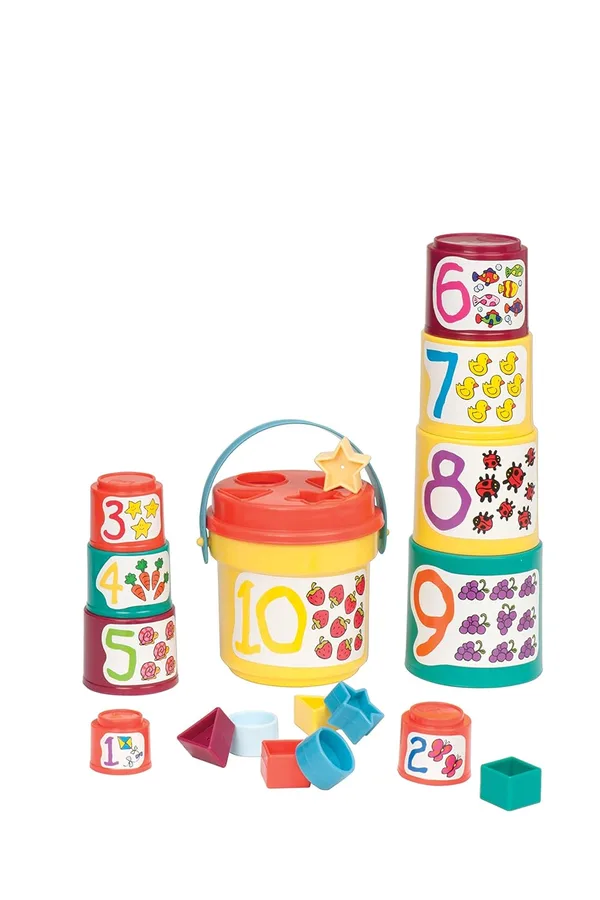
Battat Sort and Stack Toy
“Stacking complement to the sorting house. Different motor skill emphasis.”
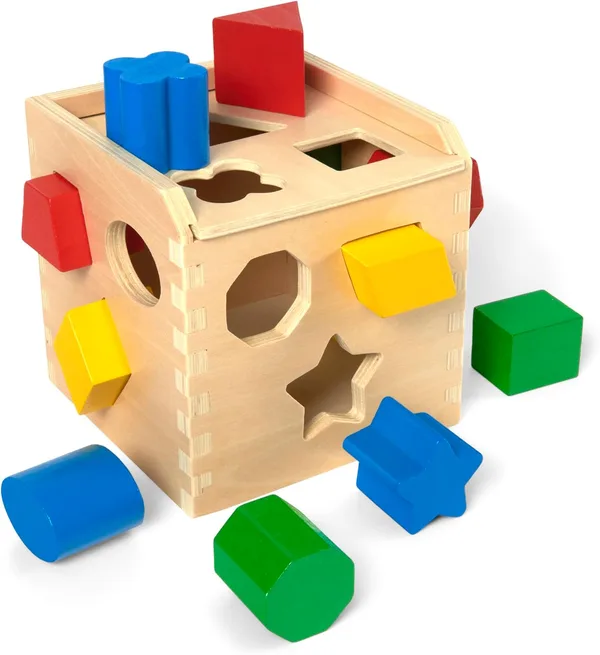
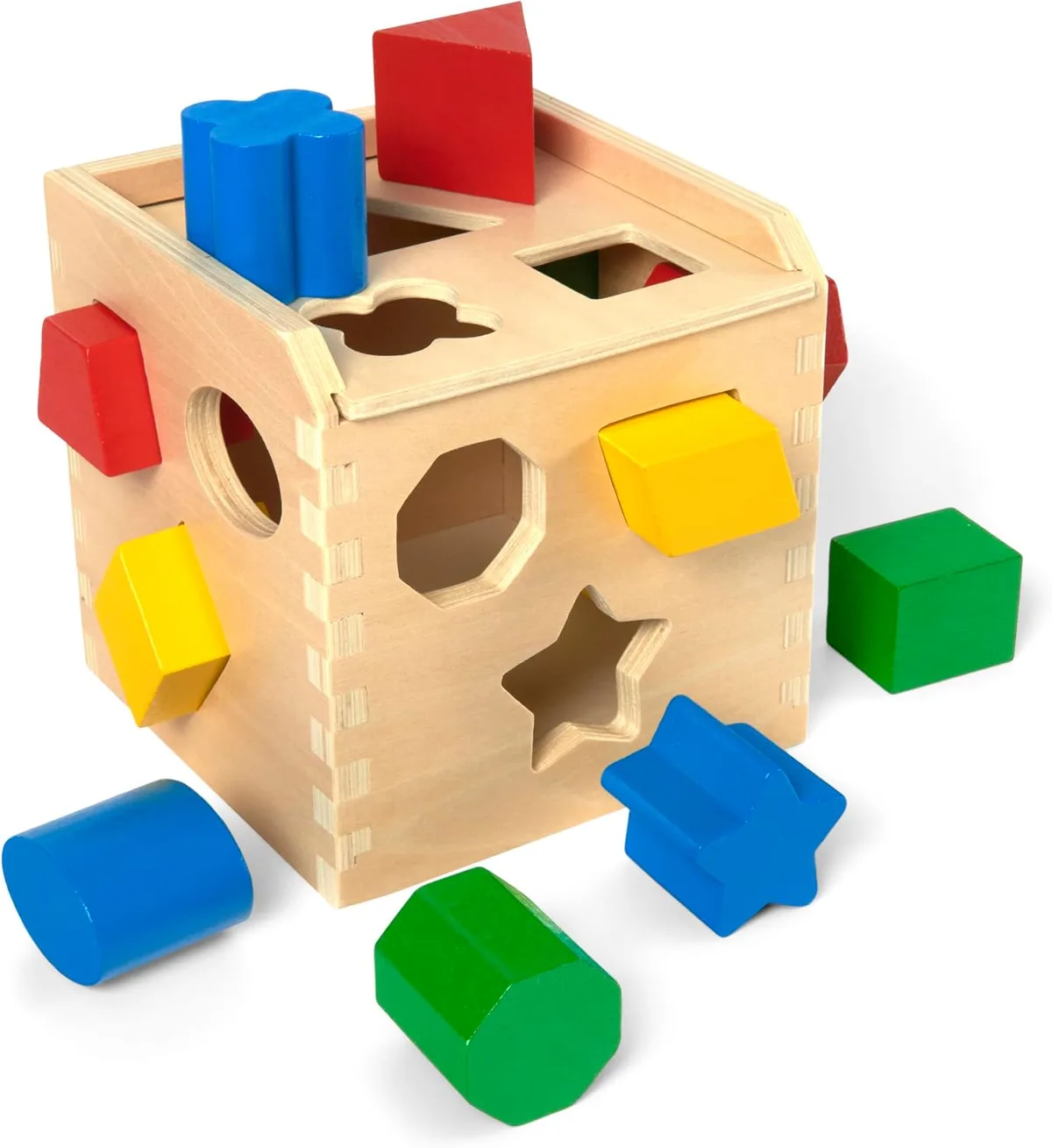
Melissa & Doug Shape Sorting Cube
“Simpler sorting without keys. Wooden construction, lower price.”
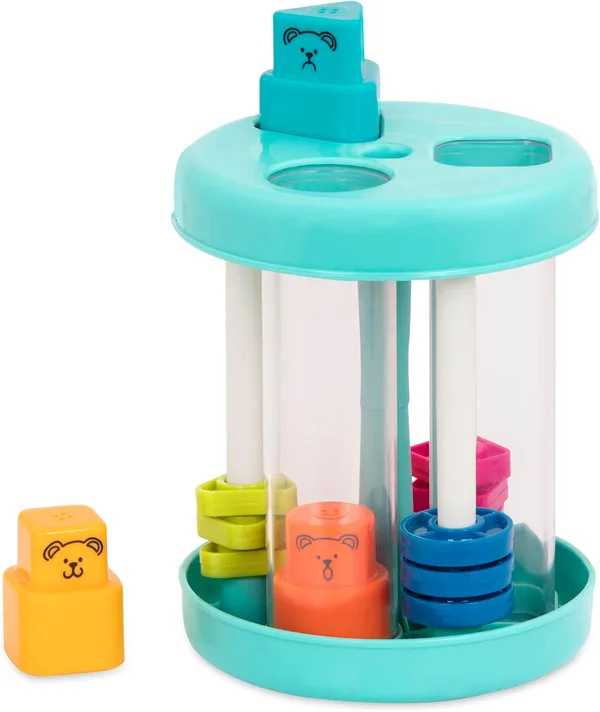
Battat Shapes and Sounds Sorter
“Adds sound feedback to shape sorting. Three shapes with auditory reward.”
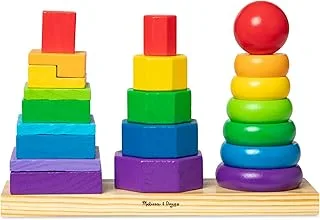
Melissa & Doug Geometric Stacker
“Stacking rings complement the sorting task with a different spatial challenge.”