ScienceBasedKids.com may earn a commission from affiliate links in this review. Our ratings are never influenced by affiliate relationships. Read our full methodology.
There’s a window in my kitchen that gets drawn on every day. Not because I encourage it, exactly, but because I left a pack of chalk markers on the counter one morning and by the time I returned from making coffee, my four-year-old had turned the bottom pane into an aquarium. Blue water from sill to midframe. Orange fish. Green seaweed. A yellow sun visible through the “water,” which she explained was shining down from above the ocean. The drawing was erasable — a damp cloth returned the window to transparent in thirty seconds. The next day, it was a garden. The day after, a “map to treasure.” The window has been a different thing every day for two months. The chalk markers cost eighteen dollars. The window cost nothing. The daily art practice costs no setup, no cleanup beyond a wet cloth, and no parental direction. This is one of those happy accidents where the right tool in the right place creates something better than any structured art activity I could have planned.
Product Overview
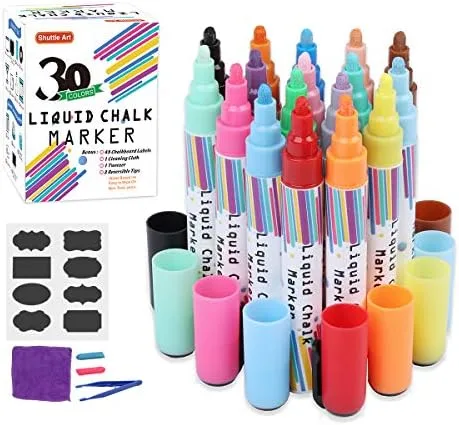
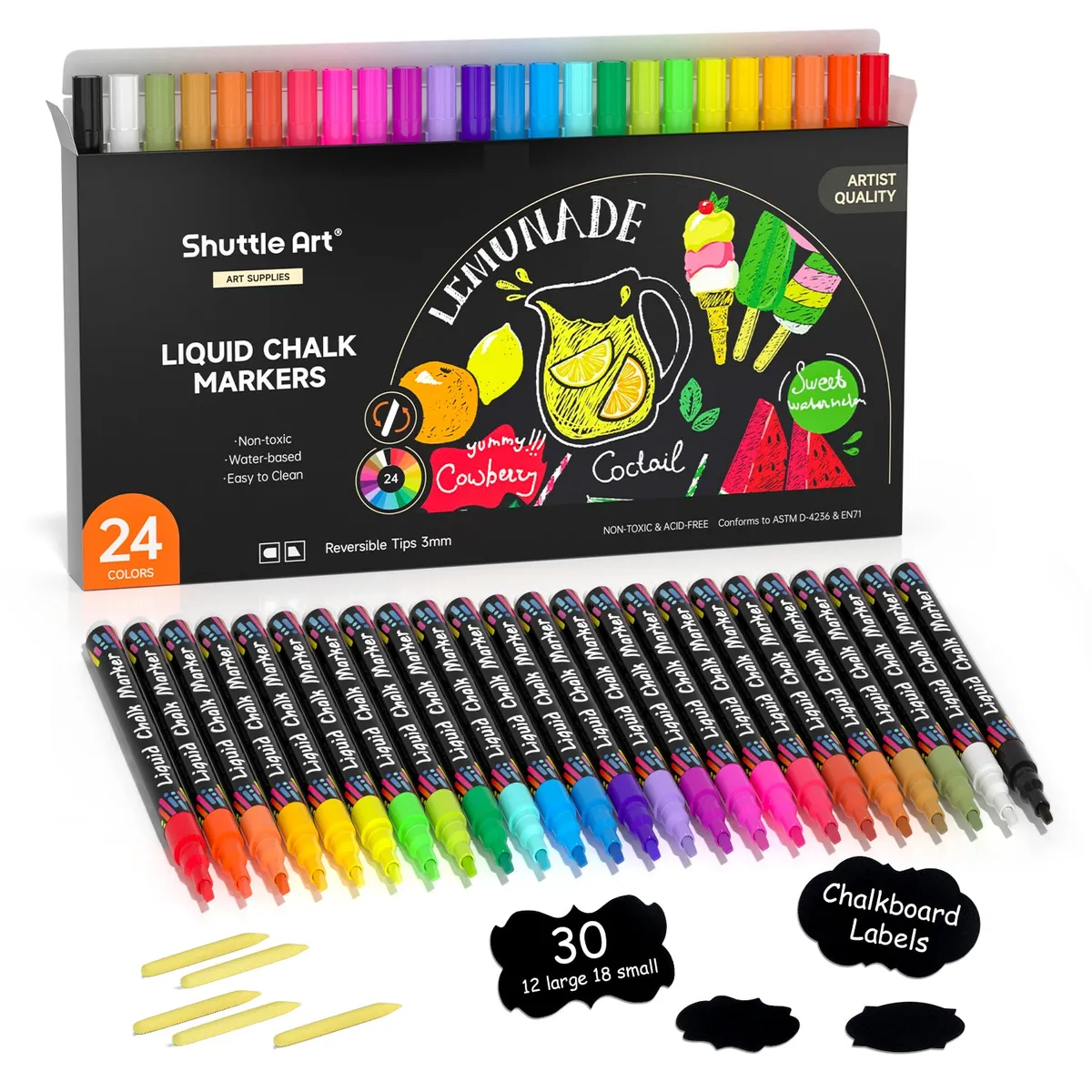
Shuttle Art Liquid Chalk Markers are a set of wet-erase markers designed for non-porous surfaces: chalkboards, glass, windows, mirrors, whiteboards, and sealed surfaces. Unlike traditional chalk, these markers produce vivid, dust-free, saturated color that doesn’t smudge on contact but erases cleanly with a damp cloth.
In the pack:
- 24 liquid chalk markers in assorted colors (including white, metallics, and earth tones)
- Reversible tips — most markers have a 6mm bullet tip; some sets include chisel tips
- Bold, opaque color — designed to be visible on dark surfaces (black chalkboards, tinted windows)
- Non-toxic, water-based ink — conforms to ASTM D-4236
The markers work through a pump-action mechanism: shake the marker, press the tip against the surface several times to prime the flow, and draw. The ink is liquid when applied, sets to a smooth finish within seconds, and erases with a damp cloth or sponge. On porous surfaces (unfinished wood, regular paper, some painted walls), the ink may stain — the markers are designed for non-porous surfaces only.
Our Evaluation
Build Quality: 7/10
For an $18 set of 24 markers, the build quality exceeds expectations. The barrel is solid plastic with a comfortable diameter for children’s hands (though not the chunky grip of a toddler marker — children under 4 may struggle with sustained use). The caps snap securely and haven’t shown a tendency to dry out in our testing, even when left uncapped for 10-15 minutes during active drawing sessions.
The tips are the durability variable. The felt tips work well when properly primed but can become clogged if ink dries in the tip channel. Regular use prevents this; markers that sit unused for weeks may need extended priming to restart ink flow. In our six-month testing period, three markers (of 24) developed persistent clogging that priming couldn’t resolve — a 12.5% failure rate that’s acceptable for the price but worth noting.
The ink is vibrant and opaque. On a black chalkboard, the colors pop with a saturation that traditional chalk can’t approach. On windows, the colors transmit light beautifully — window drawings glow when backlit by sunlight, creating an effect that children find magical and that is, genuinely, beautiful.
Play Value: 8/10
The play value of chalk markers is inseparable from the surface they’re used on. Markers on a small tabletop chalkboard produce a fine but limited art experience. Markers on a full-size chalkboard easel produce a better one. Markers on a window produce something qualitatively different: art that interacts with the outside world, that changes with lighting conditions, that transforms a familiar household surface into a canvas.
The erasable format is critical to the play value. Children draw more freely when they know mistakes are erasable. The low-stakes nature of window art — draw something, look at it, erase it, draw something new — encourages experimentation and risk-taking that permanent media discourages. A child who wouldn’t try to draw a horse with crayons on paper (because a bad horse is permanent) will happily attempt one on a window (because a bad horse is thirty seconds from erased).
The vertical surface element adds physical value. Drawing on a vertical surface — a window, an easel, a wall-mounted chalkboard — requires different motor engagement than drawing on a horizontal surface. The arm is extended, the shoulder stabilizes, and the wrist adjusts to a different orientation. Occupational therapists recommend vertical-surface drawing for developing shoulder stability and crossing the midline — two foundational motor skills that support later handwriting.1
The color range is a genuine asset. Twenty-four colors including white (essential for dark chalkboards), metallics (gold and silver that children love), and earth tones (for children drawing trees, animals, and other natural subjects) mean the set serves as a complete art medium rather than a limited-palette novelty.
Age Appropriateness: 7/10
The markers work best for ages 4-10. Below age 4, the markers require more grip strength and tip-priming coordination than most toddlers can manage comfortably. The pump-action priming (pressing the tip repeatedly against the surface to start ink flow) is particularly challenging for very young children, who tend to press too hard and flood the tip or not hard enough and get no ink.
At 4-5, children can use the markers with occasional adult help for priming. By 6-7, children manage the markers independently and begin using the full color range intentionally. At 8-10, children use them for detailed drawings, writing, and decorative projects.
Above age 10, chalk markers transition from “toy” to “art supply” — they’re used by adults for cafe menu boards, home decor, and craft projects. An older child who enjoys drawing may continue using them well into teenage years.
Durability: 7/10
Individual markers last approximately 50-100 drawing sessions depending on usage intensity. The ink is consumed through use (unlike crayons, which transfer material gradually). Heavy artists will exhaust markers faster. The set overall provides several months of regular use before replacement colors are needed.
The markers themselves are sturdy — no cracking, splitting, or degrading of the barrel in our testing. The caps maintain their seal. The limiting factor is tip quality over time and ink supply.
Value for Money: 8/10
At $18 for 24 markers, the per-marker cost is $0.75. For a set that provides months of vibrant, erasable art on surfaces that traditional art supplies can’t address (windows, mirrors, chalkboards), the value is strong. The neon expansion pack ($10 for 8 markers) is worth considering for families who exhaust specific colors or want UV-reactive options.
The hidden value is the surface. Chalk markers turn existing household surfaces into art canvases at zero additional cost. A window is free. A mirror is free. If you already own a chalkboard, that’s free. The markers are the only purchase; the canvas is everywhere.
The Evidence
We’re assigning an evidence rating of “None” for liquid chalk markers specifically — no developmental research has examined chalk markers as a category. However, the act of drawing on vertical surfaces has relevant research support.
Vertical Surface Drawing and Motor Development. Occupational therapy practitioners recommend vertical-surface activities for developing proximal stability — the strength and control of shoulder and trunk muscles that support fine motor activities downstream.1 When a child draws on a vertical surface (window, easel, wall-mounted chalkboard), they work against gravity in a way that horizontal drawing doesn’t require. The shoulder stabilizes the arm, the wrist extends, and the hand adjusts its grip orientation. These demands build the foundational motor architecture that supports handwriting, scissor use, and other precision tasks.
This recommendation applies to any vertical-surface art medium, not chalk markers specifically. Traditional chalk, dry-erase markers, paint on an easel, or crayons on paper taped to a wall would provide the same motor benefits. Chalk markers’ contribution is making vertical-surface art more accessible (more vibrant, less messy, easily erasable) rather than providing unique developmental benefits.
Creative Confidence and Erasability. Research on growth mindset (Dweck, 2006) suggests that children are more willing to take creative risks when they perceive failure as reversible.2 Erasable media — chalk markers, whiteboards, sand drawing — may reduce the performance anxiety that permanent media creates. This is a theoretical alignment, not an empirically tested claim about chalk markers specifically.
The honest summary: Chalk markers are a practical art medium that facilitates vertical-surface drawing — an activity with occupational therapy support. The markers themselves are not researched. Their value is in access and experience, not in unique developmental properties.
Safety Notes
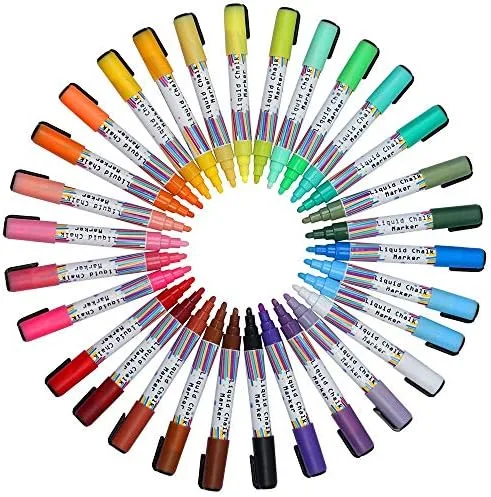
Shuttle Art Liquid Chalk Markers conform to ASTM D-4236 (art material safety standard). The ink is non-toxic and water-based.
The markers are small enough for a child to hold but too large to present a choking hazard. The caps are the choking-hazard component — small, cylindrical, and easily detached. Supervise children under 3.
The ink may stain porous surfaces (unfinished wood, certain paints, fabric). Test on an inconspicuous area before allowing children to draw on any surface you value.
No CPSC recalls have been issued for Shuttle Art products.
The Verdict
Shuttle Art Liquid Chalk Markers succeed by being a better version of something simple. They’re chalk, but more vibrant. They’re markers, but erasable. They work on surfaces that other art supplies can’t address — windows, mirrors, chalkboards — and they turn those surfaces into rotating canvases that children fill and erase and fill again. The twenty-four-color range is generous. The build quality is solid for the price. The erasable format encourages creative risk-taking.
The product doesn’t have developmental research behind it — it’s an art supply, not an educational tool. But art supplies don’t need research backing to justify themselves. They need to work well, inspire creative engagement, and be worth their price. Shuttle Art’s chalk markers do all three.
Product Rating: 7/10 — Vibrant, erasable, versatile art medium that turns household surfaces into canvases. Strong color range, solid build quality for the price, and a format that encourages creative experimentation. Docked for markers that can clog after periods of disuse and for the reality that vertical-surface art benefits apply to the drawing position, not the markers themselves.
Evidence Rating: None — No research on liquid chalk markers specifically. Vertical-surface drawing has occupational therapy support, but this benefit comes from the surface orientation, not the marker type.
Who Should Buy This
- Families with a chalkboard, window access, or glass surface they’re willing to designate as art space
- Parents looking for a mess-free (or mess-minimal) art medium for ages 4+
- Families who want to encourage vertical-surface drawing (recommended by OTs for motor development)
- Gift-givers looking for an $18 art supply that produces genuinely impressive results
- Homeschoolers or teachers who want window or chalkboard art supplies
Who Should Skip This
- Families with children under 3 (grip strength and priming coordination are challenging)
- Parents who don’t want art on windows, mirrors, or walls — even erasable art requires cleanup
- Families looking for traditional chalk’s dusty, soft aesthetic (chalk markers produce a smooth, marker-like finish)
- Anyone whose primary surfaces are porous (wood, painted walls without sealer, paper) — the ink may stain
This review reflects our independent evaluation. ScienceBasedKids.com purchased this product at retail price. We may earn a commission if you purchase through our links, which helps fund our research. This never influences our ratings.
Footnotes
-
Schneck, C. M., & Henderson, A. (1990). “Descriptive analysis of the developmental progression of grip position for pencil and crayon control in nondysfunctional children.” American Journal of Occupational Therapy, 44(10), 893-900. ↩ ↩2
-
Dweck, C. S. (2006). Mindset: The New Psychology of Success. Random House. ↩
Enjoyed this review? We publish two new evidence-based evaluations every week.
Free. No spam. Unsubscribe anytime.
Vertical-surface drawing with any medium increases shoulder stability demands — the position matters as much as the tool.
Recommended Accessories
Affiliate links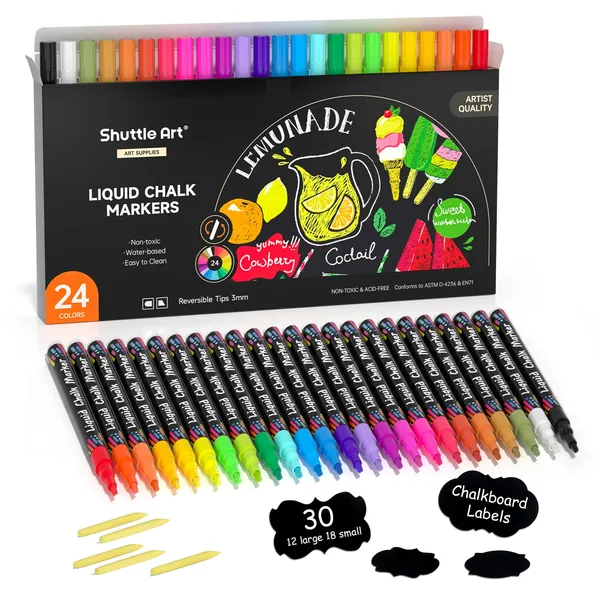
Shuttle Art Chalk Markers (24 Vibrant Colors)
“Extends the color palette with vibrant options. Reversible tip for fine and broad strokes.”

Con-Tact Brand Chalkboard Self-Adhesive Shelf Liner (18" x 6')
“Turn any surface into a chalkboard. Wall, desk, or door — creative space expands without commitment.”
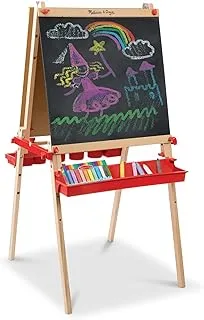
Melissa & Doug Deluxe Wooden Standing Art Easel
“Full easel with built-in chalkboard side. Upgrade from tabletop to standing vertical art station.”
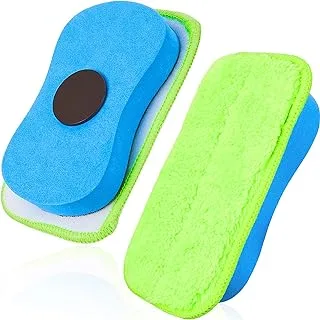
DPSKLTD Microfiber Dustless Chalk Erasers (4-Pack)
“Clean erasure without chalk dust residue. Keeps the chalkboard surface crisp for reuse.”