ScienceBasedKids.com may earn a commission from affiliate links in this review. Our ratings are never influenced by affiliate relationships. Read our full methodology.
Walk into any kindergarten classroom in America and you’ll find a bin of small plastic objects used for counting, sorting, and early math. These “math manipulatives” are a staple of early mathematics education for a reason backed by decades of research: young children learn mathematical concepts more effectively when they can touch, move, and arrange physical objects. Rainbow Counting Bears are the home version of this classroom essential.
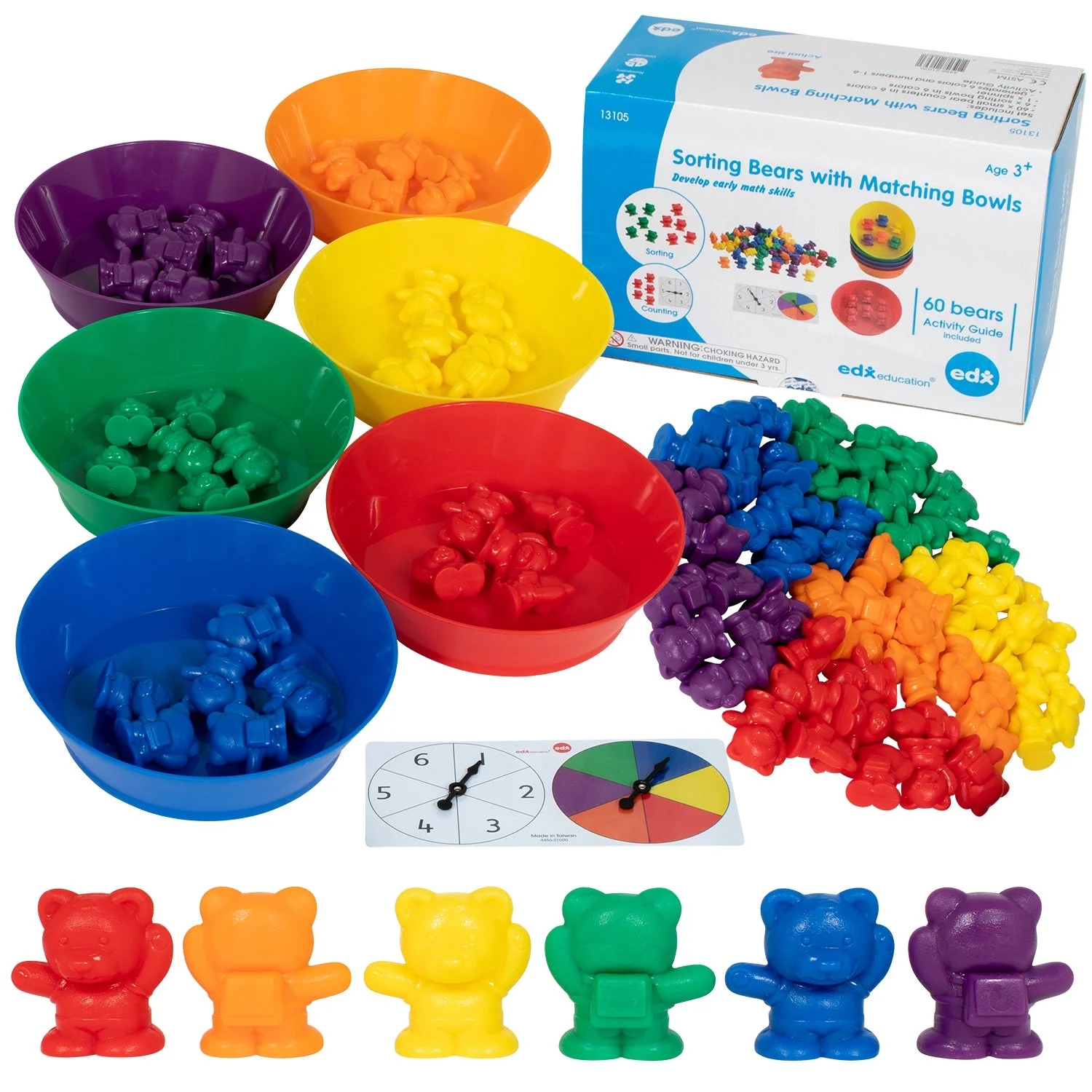
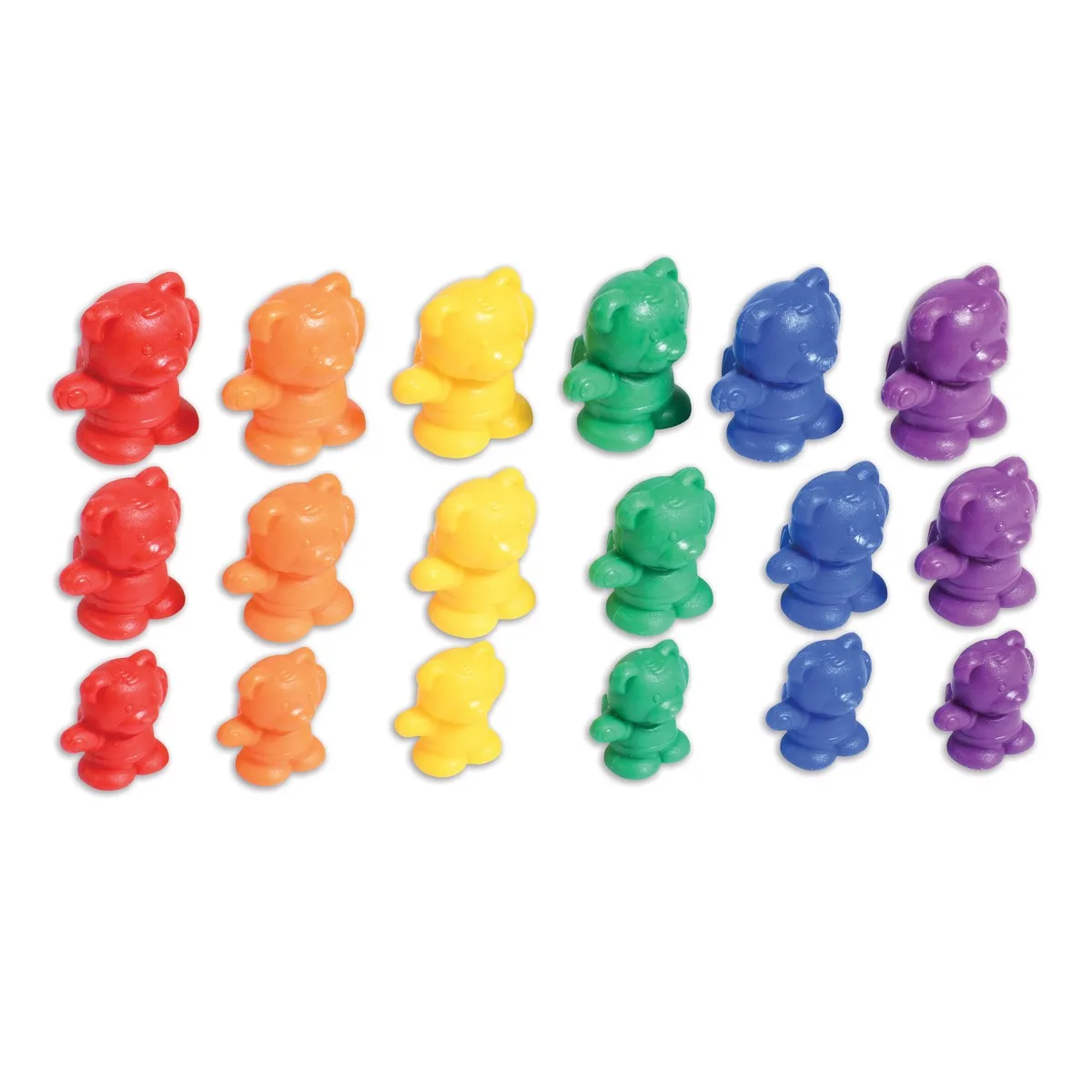
The Edx Education Rainbow Counting Bears set ($25) includes 96 bears in three sizes and six colors, six matching sorting cups, and an activity guide. We tested them for six weeks with children ages 3 through 7 to evaluate whether a set of small plastic bears really delivers the math learning their educational reputation suggests.
Product Overview
The set includes:
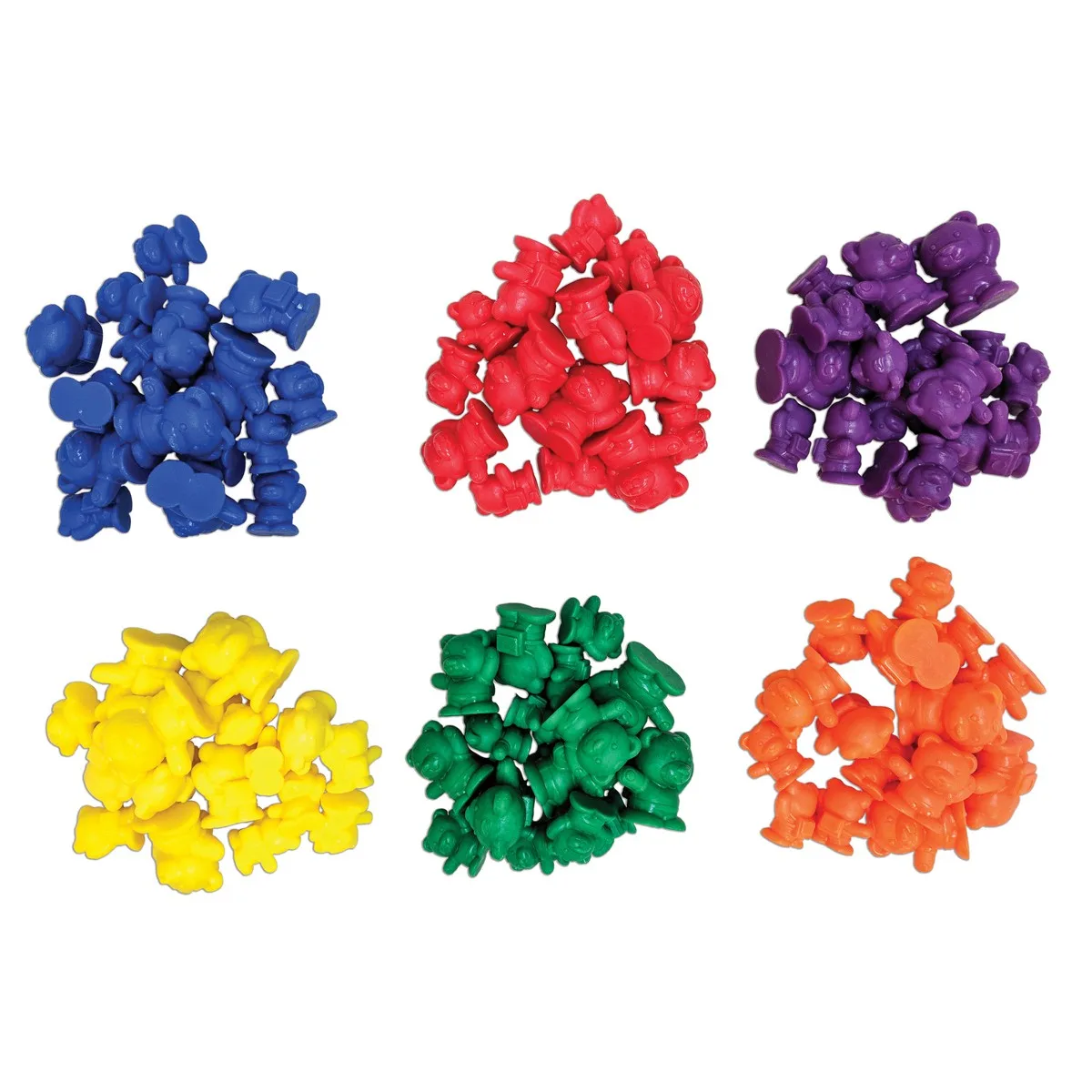
- 96 plastic bears — 16 each in red, orange, yellow, green, blue, and purple
- Three sizes within each color — small (1”), medium (1.5”), and large (2”)
- 6 sorting cups — one in each bear color
- Activity cards — 12 double-sided cards with sorting, counting, and pattern challenges
- Storage container
The bears are solid plastic with a matte finish, small enough to grasp with one hand but large enough to be easily manipulated. The three sizes within each color add a second dimension for sorting and pattern work — children can sort by color, by size, or by both.
Our Evaluation
Build Quality: 7/10
The bears are sturdy injection-molded plastic that withstands rough handling. Colors are consistent and distinct. The sorting cups are thinner plastic — functional but not premium. The activity cards are laminated and durable. For a $25 educational product, the quality is appropriate.
Play Value: 7/10
The bears are inherently appealing to young children — small, colorful, animal-shaped objects that invite handling. In our testing, 3-year-olds immediately began sorting by color without prompting. Four-year-olds created patterns (red, blue, red, blue). Five-year-olds used them for counting stories (“Three bears were in the house, two more came — how many now?”). Six-year-olds explored size comparisons and basic graphing.
The open-ended nature is both a strength and a limitation. Without adult scaffolding, some children simply played with the bears as toy figures rather than math tools. The activity cards provide structure, but the deepest math engagement happened when an adult guided the exploration.
Age Appropriateness: 9/10
The 3-7 age range accurately spans from color sorting (age 3) through basic operations (age 6-7). The bears are above the choking hazard threshold but are small enough that children under 3 should be supervised.
Value for Money: 9/10
At $25 for 96 manipulatives plus sorting cups and activity cards, the per-piece cost is exceptionally low. This is one of the most cost-effective math learning tools we’ve reviewed.
The Evidence
Manipulative-Based Mathematics Learning. Moyer (2001) found that physical manipulatives help children build mental representations of mathematical concepts.1 Carbonneau et al. (2013) conducted a meta-analysis of 55 studies and found a moderate positive effect of manipulative use on mathematics learning, with the strongest effects when manipulatives were used with guided instruction.2
Sorting and Classification. Sorting by attributes (color, size, shape) is foundational to mathematical thinking. Clements and Sarama (2014) identified sorting and classification as core early math competencies that predict later mathematical achievement.3
The honest summary: The evidence for manipulative-based math learning is among the strongest in educational toy research. Rainbow counting bears are a straightforward implementation of well-supported principles. Adult scaffolding significantly enhances the learning outcome.
Safety Notes
Bears are above the CPSC small-parts threshold for ages 3+. The plastic is BPA-free and phthalate-free per manufacturer certifications. No CPSC recalls.
The Verdict
Rainbow Counting Bears are one of the best-supported educational toys in our portfolio — not because the bears themselves are special, but because the evidence for manipulative-based math learning is robust. The set provides a versatile, affordable tool for sorting, counting, patterning, and early operations. Adult guidance significantly enhances the math learning; left to their own devices, children will mostly sort by color and play pretend.
Product Rating: 7/10 — Excellent educational value with strong evidence support. Limited independent play engagement prevents a higher score.
Evidence Rating: Moderate — Manipulative-based math learning has strong, well-replicated evidence. Sorting and classification are documented foundational skills.
Who Should Buy This
- Parents who want to support early math learning at home
- Families looking for affordable, evidence-based educational materials
- Homeschooling families needing math manipulatives
- Teachers seeking classroom-quality tools at home-friendly prices
Who Should Skip This
- Families looking for independent play toys — these work best with adult scaffolding
- Parents of children under 3 — the pieces are small
- Families who prefer digital or app-based math learning
- Anyone expecting a toy rather than an educational tool
This review reflects our independent evaluation. ScienceBasedKids.com purchased this product at retail price.
Footnotes
-
Moyer, P. S. (2001). “Are we having fun yet? How teachers use manipulatives to teach mathematics.” Educational Studies in Mathematics, 47(2), 175-197. ↩
-
Carbonneau, K. J., Marley, S. C., & Selig, J. P. (2013). “A meta-analysis of the efficacy of teaching mathematics with concrete manipulatives.” Journal of Educational Psychology, 105(2), 380-400. ↩
-
Clements, D. H., & Sarama, J. (2014). Learning and teaching early math: The learning trajectories approach (2nd ed.). Routledge. ↩
Enjoyed this review? We publish two new evidence-based evaluations every week.
Free. No spam. Unsubscribe anytime.
The same physical manipulative supports increasingly complex mathematical thinking as children develop.
Recommended Accessories
Affiliate links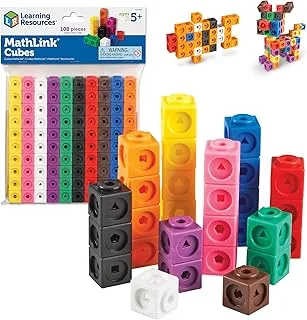
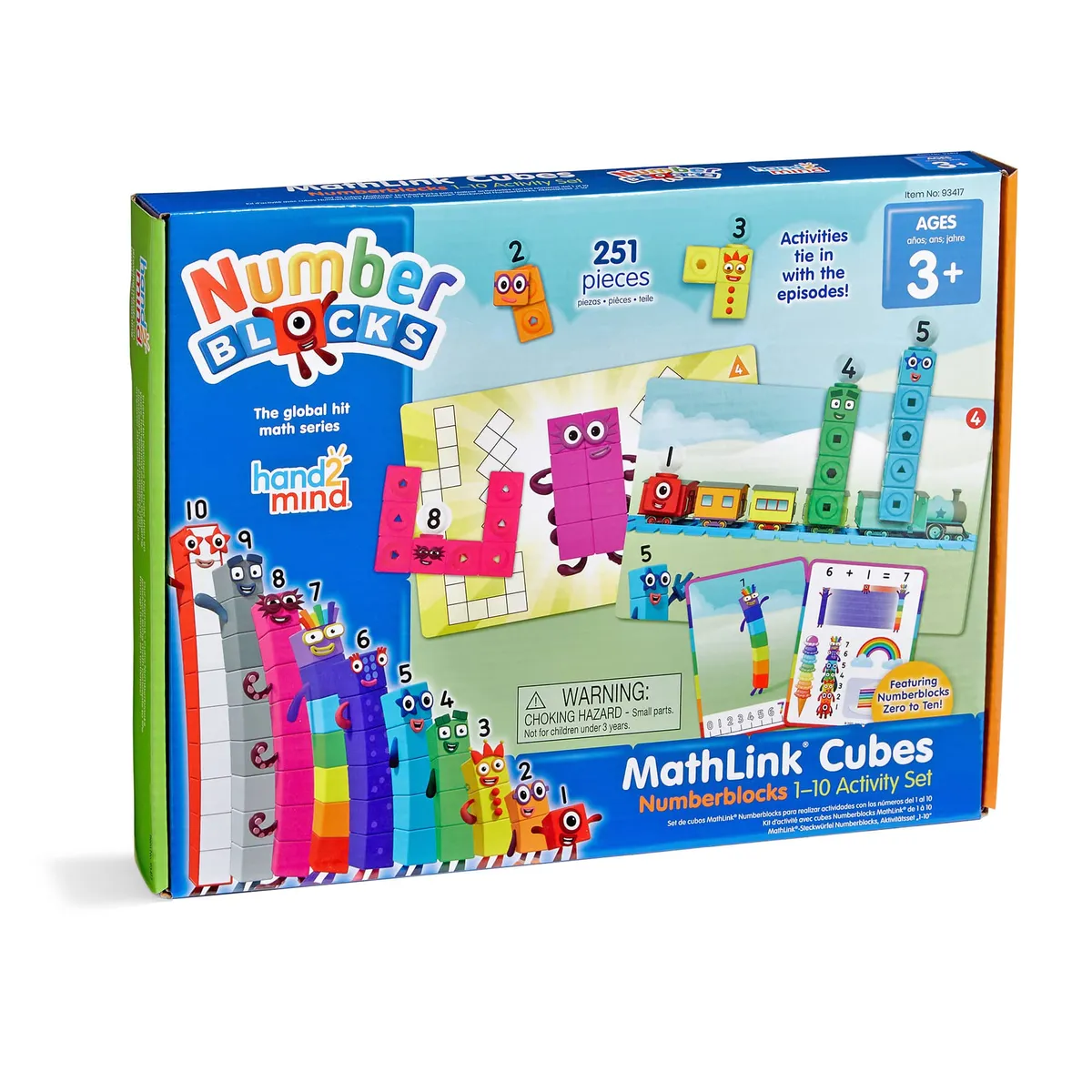
Learning Resources MathLink Cubes (Set of 100)
“Interlocking cubes for number lines, addition, and measurement. Natural companion to bears.”
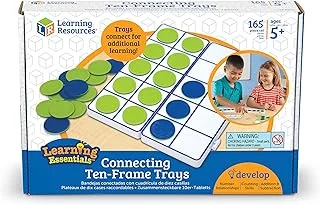
Learning Resources Ten Frame Trays (4-pack)
“Ten frames make counting bears concrete for addition and number sense to 20.”

Learning Resources Tweezers (Set of 12)
“Jumbo tweezers for picking up bears. Adds fine motor challenge to sorting activities.”
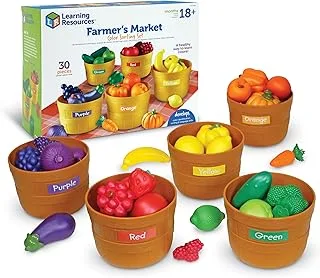
Learning Resources Farmer's Market Color Sorting Set
“Fruit-themed alternative for children who prefer realistic objects over bears.”