ScienceBasedKids.com may earn a commission from affiliate links in this review. Our ratings are never influenced by affiliate relationships. Read our full methodology.
Some products require no introduction. The Radio Flyer Classic Red Wagon has been in production since 1930 — ninety-six years of an all-steel body, a wooden handle, and that particular shade of red that exists nowhere else in the consumer products universe. If you grew up in America, you either had one or wanted one. The question for our purposes isn’t whether the wagon is iconic — it is — but whether it’s developmentally valuable and practically useful in 2026.
We tested the Radio Flyer Model 18 Classic Red Wagon ($130) for eight weeks across two families with children ages 2 through 7. The answer is straightforward: this is a genuinely useful outdoor tool that facilitates exactly the kind of unstructured outdoor play that developmental research supports.
Product Overview
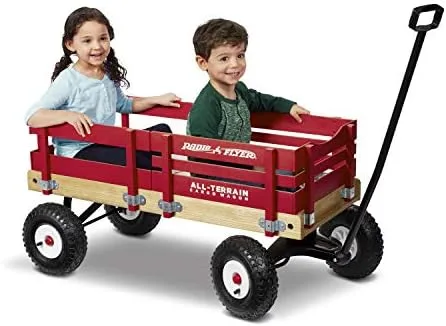
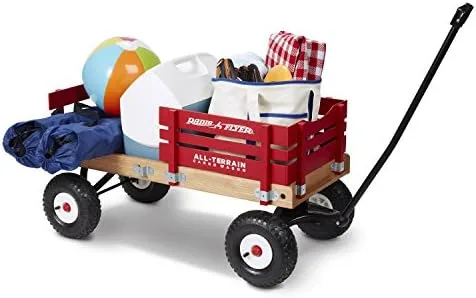
The Radio Flyer Classic Red Wagon (Model 18) is an all-steel pull wagon with:
- All-steel body with a red powder-coat finish
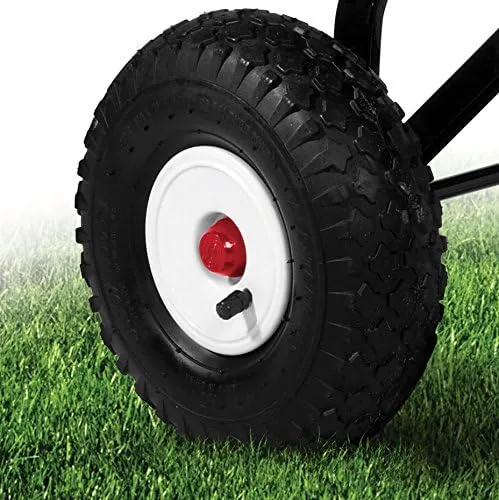
- No-scratch rubber tires with steel rims
- Controlled turning radius — front axle limits the turn angle to prevent tip-overs
- Foldable handle with a wooden grip
- Weight capacity: 150 lbs
- Interior dimensions: approximately 36” x 17” x 10” deep
- Total weight: 25 lbs
The wagon is heavy, sturdy, and unapologetically analog. There are no electronics, no adjustable features, and no accessories included. It is a steel box on wheels with a handle.
Our Evaluation
Build Quality: 10/10
The Radio Flyer Classic wagon is built like a piece of industrial equipment. The all-steel body is thick-gauge and shows no flex under load. The powder-coat finish is uniform and resistant to scratching under normal use. The rubber tires roll smoothly on pavement, grass, and gravel. The controlled turning radius prevents the front wheels from jackknifing — a genuine safety feature that many cheaper wagons lack.
After eight weeks of regular outdoor use including hauling children, groceries, beach supplies, and garden materials, the wagon shows zero structural wear. Online community reports consistently describe Radio Flyer wagons lasting 10-20+ years.
Play Value: 8/10
The wagon’s play value comes from what it enables rather than what it is. In our testing:
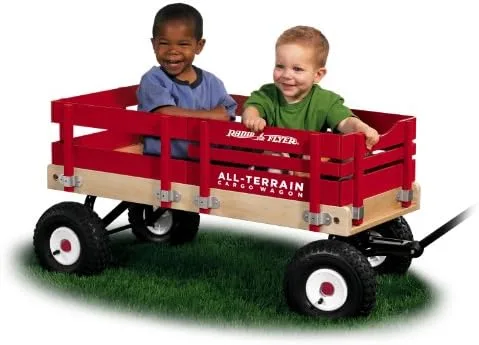
- Rides — Children ages 2-5 treat the wagon as a vehicle, requesting rides around the neighborhood. The ride itself is enjoyable, and the experience of seeing the world from wagon height is distinct from walking or strolling.
- Hauling — Children ages 3-7 independently loaded and transported toys, rocks, sticks, and found objects. The hauling behavior is intrinsically motivating — children naturally enjoy transporting objects.
- Collaborative play — Older children pulled younger siblings, negotiating turns, speed, and destination.
- Pretend play — The wagon became a ship, a race car, a train, and a moving truck at various points.
The simplicity means the wagon’s play value scales entirely with the child’s imagination and the outdoor environment.
Age Appropriateness: 8/10
Children as young as 18 months can ride safely in the wagon (with parental pulling and supervision). By age 3-4, children can pull the wagon themselves with light loads. By age 5-7, children can manage loaded wagons and use them for transport games. Above age 8, the wagon becomes primarily a utility tool rather than a play object.
Durability: 10/10
Functionally indestructible under normal use. The all-steel construction handles weather, UV exposure, impacts, and years of use without degradation. This is genuinely a product you buy once and use for decades.
Value for Money: 8/10
At $130, the Classic wagon is not cheap. Plastic wagons start at $50-60. But the durability math strongly favors the Classic — a product that lasts 15+ years and retains resale value is cheaper per year than a plastic wagon that degrades in 3-5 years.
The Evidence
Outdoor Play and Development. Burdette and Whitaker (2005) reviewed evidence that outdoor play supports gross motor development, social skills, attention, and emotional regulation.1 The wagon facilitates outdoor exploration by extending the range and duration of outdoor excursions — hauling snacks, water, and supplies makes longer adventures practical.
Physical Activity and Gross Motor Skills. Pulling a loaded wagon is a whole-body exercise engaging arms, legs, core, and balance. Timmons et al. (2012) found that physical activity in early childhood is positively associated with motor skill development, fitness, and bone health.2
The honest summary: The wagon’s developmental value is indirect — it facilitates outdoor play and physical activity, both of which have strong evidence bases. No research specifically examines wagon play.
Safety Notes
The Radio Flyer Classic wagon is not intended for use on roads or steep hills. The controlled turning radius helps prevent tip-overs but does not eliminate the risk on slopes. Children should remain seated during rides. The steel body can heat up in direct sun — check surface temperature before placing children in the wagon on hot days.
No CPSC recalls for the current Model 18 Classic.
The Verdict
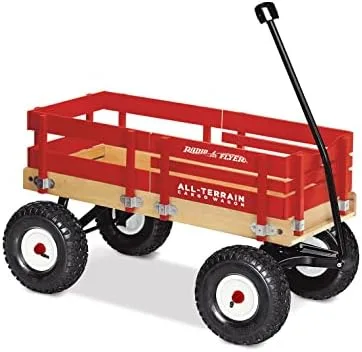
The Radio Flyer Classic Red Wagon is a product that has earned its place in the cultural landscape through sheer quality and utility. It’s the rare product where the nostalgia is justified — the wagon is well-made, useful, and fun for children across a wide age range.
Product Rating: 8/10 — Exceptional build quality and genuine outdoor utility. Limited inherent play value (it enables play rather than creating it) prevents a higher score.
Evidence Rating: Emerging — Outdoor play and physical activity benefits are well-established. Wagon-specific research is nonexistent.
Who Should Buy This
- Families who spend significant time outdoors and want a versatile hauling/riding tool
- Parents who value buy-once-for-life durability
- Families with multiple children who will use the wagon across years
- Anyone who appreciates classic design and materials
Who Should Skip This
- Families with limited outdoor space or primarily indoor lifestyles
- Anyone needing a foldable, portable wagon — the Classic is large and heavy
- Budget-conscious families who can get a functional plastic wagon for less
- Urban families without storage space for a full-size wagon
This review reflects our independent evaluation. ScienceBasedKids.com purchased this product at retail price.
Footnotes
-
Burdette, H. L., & Whitaker, R. C. (2005). “Resurrecting free play in young children: Looking beyond fitness and fatness to attention, affiliation, and affect.” Archives of Pediatrics & Adolescent Medicine, 159(1), 46-50. ↩
-
Timmons, B. W., LeBlanc, A. G., Carson, V., et al. (2012). “Systematic review of physical activity and health in the early years.” International Journal of Behavioral Nutrition and Physical Activity, 9(1), 134. ↩
Enjoyed this review? We publish two new evidence-based evaluations every week.
Free. No spam. Unsubscribe anytime.
The wagon's utility surprised us — it became a daily-use outdoor tool, not just a toy.
Recommended Accessories
Affiliate links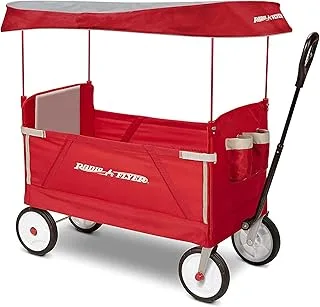
Radio Flyer Wagon Canopy
“UV-protective canopy that fits the Classic wagon. Essential for sunny days.”
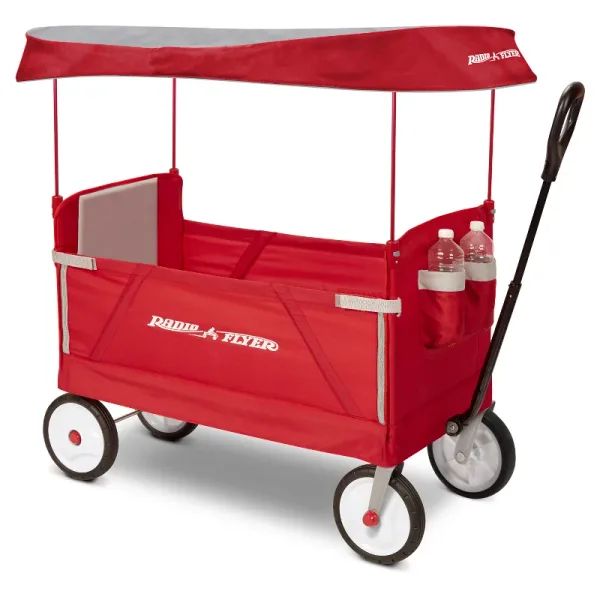
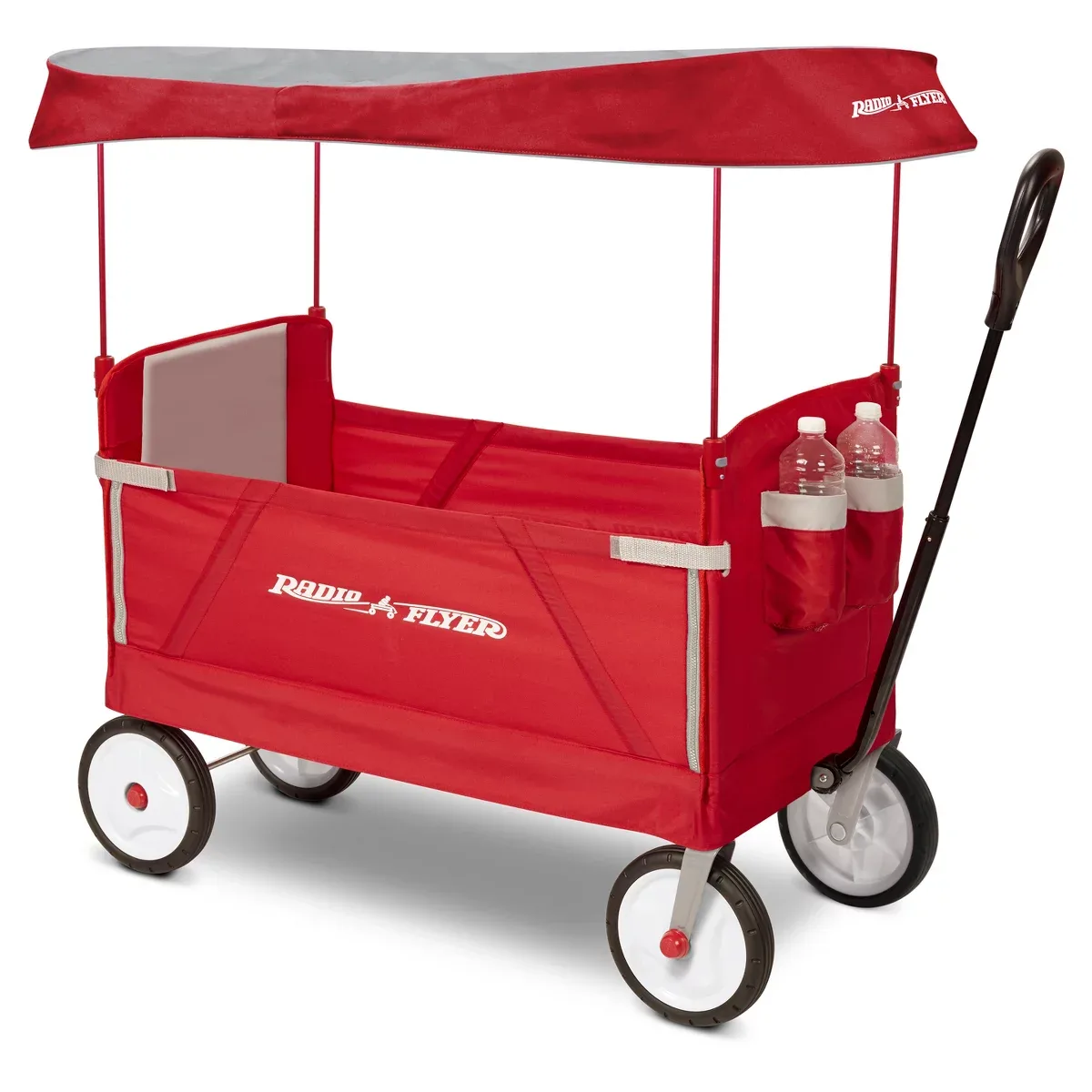
Radio Flyer 3-in-1 EZ Fold Wagon
“Foldable fabric alternative for portability. Less iconic but more practical for storage.”

National Geographic Outdoor Explorer Kit
“Binoculars, compass, flashlight, and magnifying glass. Pack them in the wagon for nature walks.”
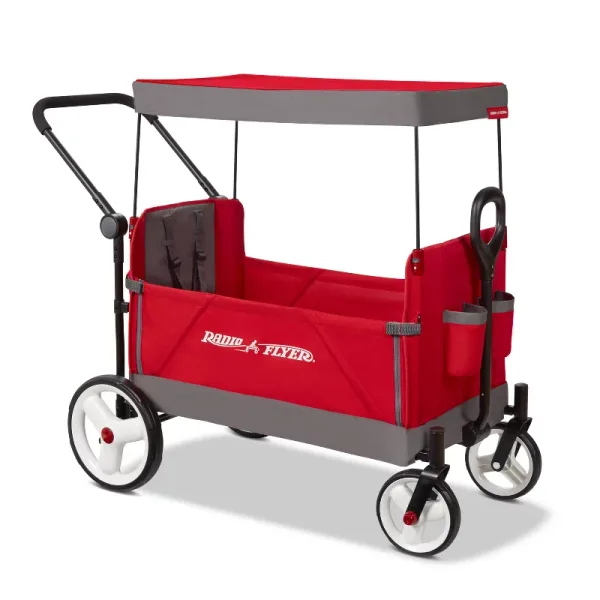
Radio Flyer Seat Pad for Classic Wagon
“Padded seat insert that makes the steel bed more comfortable for rides.”