ScienceBasedKids.com may earn a commission from affiliate links in this review. Our ratings are never influenced by affiliate relationships. Read our full methodology.
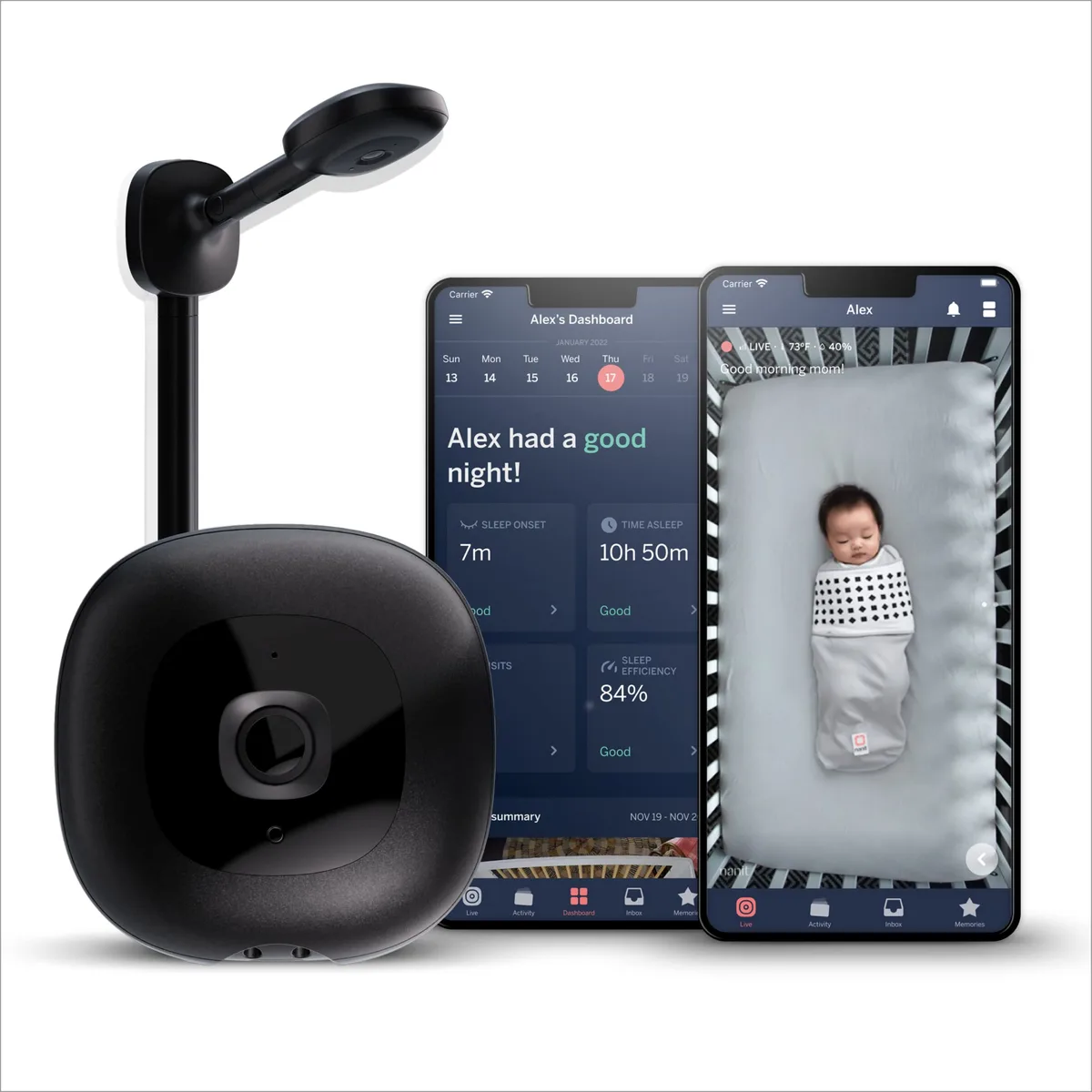
The first thing you notice about the Nanit Pro isn’t the camera itself — it’s the data. Within forty-eight hours of mounting the camera above our test crib, the app delivered a sleep summary that included total sleep duration, number of wake-ups, time to fall asleep, and a “sleep score” distilled into a single number. For sleep-deprived new parents desperately seeking patterns in their infant’s chaotic schedule, this is either deeply reassuring or mildly terrifying — depending on your relationship with data.
The Nanit Pro ($300) sits at the premium end of the baby monitor market, competing not just with traditional video monitors but with the emerging category of “smart” monitors that promise to do more than show you a live feed. It uses computer vision — no wearable sensors — to track breathing motion, sleep patterns, and room conditions. We tested it for eight weeks across two households with infants aged 3 months and 9 months. Here’s our honest assessment of whether the technology delivers on the promise.
Product Overview
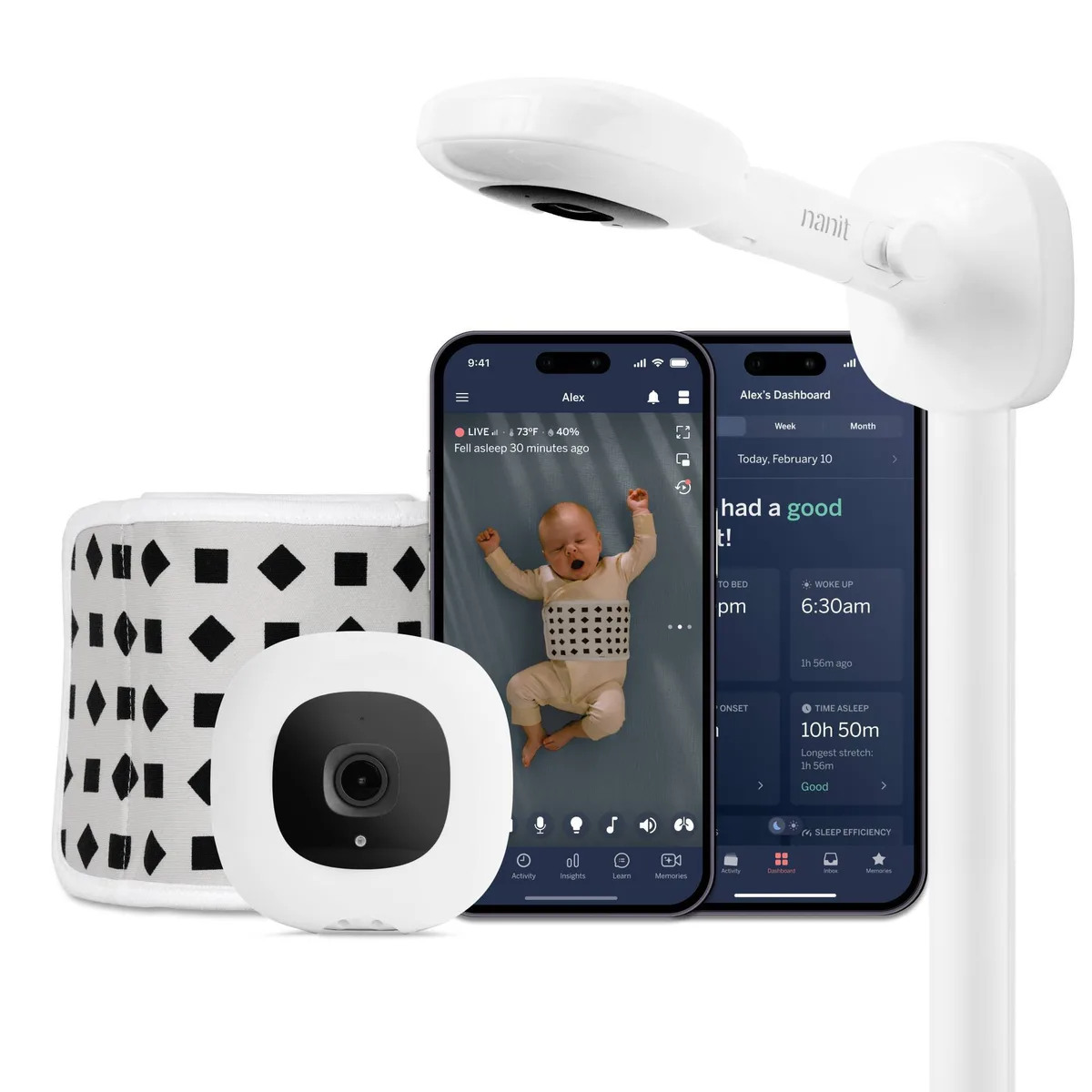
The Nanit Pro is a 1080p HD camera designed to be mounted overhead, looking straight down into the crib. This bird’s-eye perspective is central to both the monitoring experience and the sleep tracking technology. The system includes:
- 1080p HD camera with night vision, two-way audio, and temperature/humidity sensors
- Wall mount or floor stand (sold separately or in bundles)
- Nanit app (iOS and Android) with live streaming, sleep tracking, and time-lapse videos
- Nanit Insights subscription ($100/year after first year) for advanced sleep analytics
- Breathing Wear compatibility — special swaddles and sleep sacks with a printed pattern the camera reads to track breathing motion
The camera connects via Wi-Fi and streams to your phone. There is no dedicated parent unit — this is a phone-only monitor, which is a significant design choice we’ll address in our evaluation.
Our Evaluation
Build Quality: 8/10
The Nanit Pro is a well-constructed piece of consumer electronics. The camera housing is minimal white plastic with a clean aesthetic that blends into nursery decor better than most monitors. The wall mount is sturdy aluminum that holds the camera securely at the correct overhead angle. Setup requires drilling — this isn’t a clip-on solution — but the result is a stable, permanent installation.
The camera lens produces a sharp, clear image in both daylight and infrared night vision modes. The night vision is notably better than the Infant Optics DXR-8 we tested alongside it — less grainy, better contrast, wider dynamic range. The two-way audio is clear enough for voice soothing but has a slight delay (approximately 0.5 seconds) that can feel unnatural during real-time interaction.
The temperature and humidity sensors are accurate within 1 degree Fahrenheit, which is sufficient for nursery environment monitoring. The app displays these readings prominently and alerts if conditions fall outside user-set ranges.
Two points of concern: First, the camera is entirely dependent on Wi-Fi. No internet, no monitor. We experienced two brief outages during testing that knocked out monitoring for 5-10 minutes — not dangerous, but anxiety-inducing. Second, the phone-only design means your phone becomes your monitor, creating battery drain and notification management challenges.
Monitoring Utility: 9/10
As a pure baby monitor, the Nanit Pro is excellent. The overhead camera angle is its signature advantage — you see the entire crib surface without distortion or blind spots. You can immediately see your baby’s position, whether they’ve rolled, and whether blankets or objects have shifted.
The sleep tracking is the marquee feature. Nanit uses computer vision to detect your baby’s presence, movement, and breathing motion without any wearable device. In our testing, sleep onset and wake-up detection was remarkably accurate — within 3-5 minutes of our manual observations in 90% of cases. The breathing motion monitoring (which requires Breathing Wear patterns) detected our test subjects’ breathing consistently, with no false alarms during eight weeks of testing.
The app’s sleep summaries are genuinely useful. After two weeks of data collection, patterns emerged that weren’t visible through subjective parental experience. One family discovered their 3-month-old’s longest sleep stretch consistently followed a feed within a specific time window — a pattern they could then deliberately reinforce. This is the kind of actionable insight that justifies the technology for data-oriented parents.
The time-lapse feature — which compresses an entire night into a 30-second video — is unexpectedly valuable. It transforms the abstract concept of “baby slept well” into a visual narrative that helps parents understand sleep cycles, movement patterns, and environmental factors.
Age Appropriateness: 8/10
The Nanit Pro is designed for 0-24 months, covering the period when overhead crib monitoring is practical. Once a child transitions to a toddler bed, the overhead mounting angle becomes less useful, and the sleep tracking accuracy decreases with increased movement range. Nanit offers a “toddler” mode, but the core value proposition — overhead crib monitoring with breathing detection — is fundamentally a crib-stage product.
Value for Money: 6/10
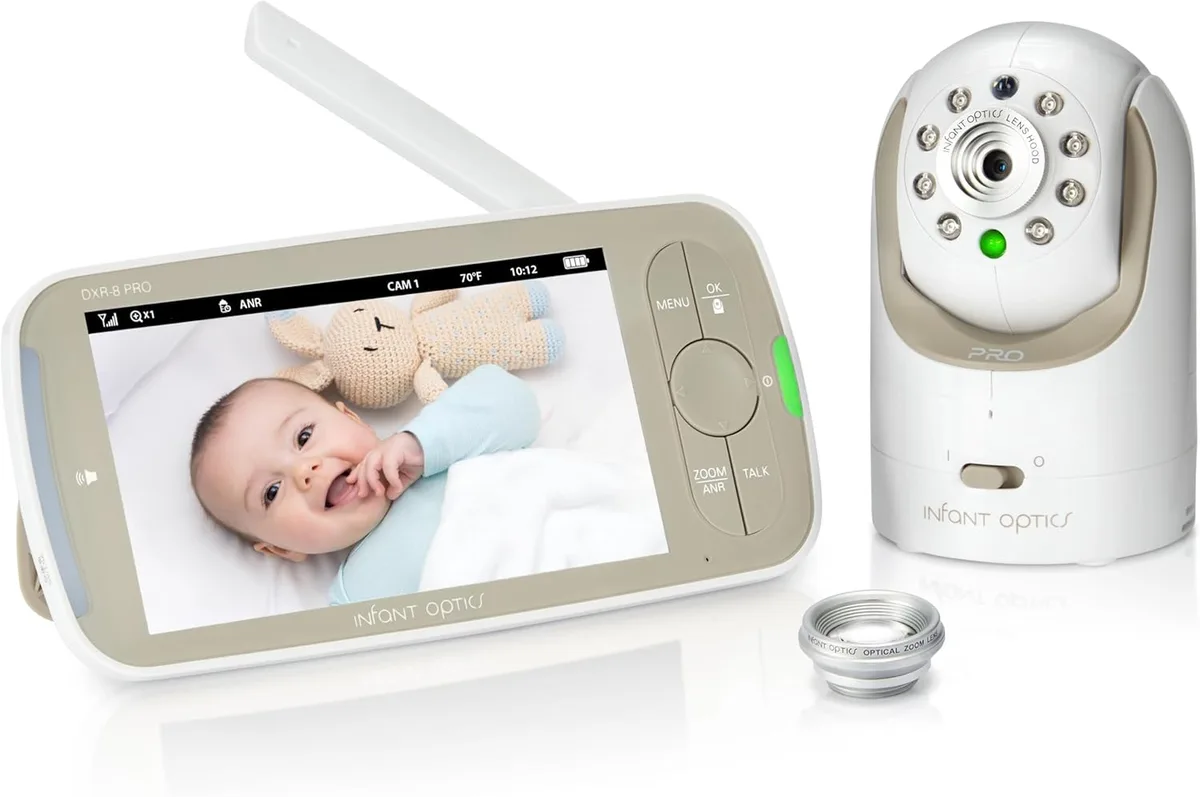
At $300 for the camera (plus $30-60 for the mount, $30 for breathing wear bands, and $100/year for Nanit Insights after the first year), the total cost of ownership approaches $500 for two years of use. An Infant Optics DXR-8 PRO costs $180 with no subscription and a dedicated parent unit.
What the premium buys you: superior video quality, sleep tracking analytics, breathing motion monitoring, and time-lapse videos. What it doesn’t buy: a dedicated parent unit, offline functionality, or freedom from subscription revenue models.
For tech-forward parents who will actually use the sleep data, the premium is reasonable. For parents who primarily want to see and hear their baby, a traditional monitor at half the price does the core job well.
The Evidence
Nanit markets itself as a “science-backed” baby monitor. Let’s evaluate the specific claims.
Sleep Tracking and Infant Sleep Research. Infant sleep architecture is well-studied. Mindell et al. (2010) established that consistent sleep patterns in the first year are associated with better cognitive and behavioral outcomes in toddlerhood.1 The question for Nanit isn’t whether infant sleep matters — it clearly does — but whether tracking sleep produces better outcomes than not tracking it.
Here, the evidence is thin. Nanit funded a study (Barker et al., 2021) published in the Journal of Clinical Sleep Medicine validating their camera-based sleep tracking against polysomnography, finding reasonable agreement for sleep-wake classification.2 This validates the accuracy of the technology but doesn’t demonstrate that parents who use sleep tracking achieve better outcomes. The distinction matters: knowing your baby’s sleep data is different from that knowledge improving your baby’s sleep.
Breathing Motion Monitoring. Nanit’s breathing monitoring uses the camera to detect chest movement patterns printed on the Breathing Wear. This is fundamentally different from medical-grade pulse oximetry (like the Owlet Smart Sock). Nanit tracks motion, not oxygen saturation or heart rate. The company is careful not to position this as a medical device or a SIDS prevention tool — and they shouldn’t, because the evidence does not support that claim. The AAP does not recommend home cardiorespiratory monitors for SIDS prevention (Moon et al., 2016).3
The honest summary: Nanit’s sleep tracking technology is validated for accuracy, which is a meaningful technical achievement. However, no evidence demonstrates that consumer sleep tracking devices improve infant sleep outcomes. The breathing motion monitoring provides parental reassurance but should not be confused with medical monitoring.
Safety Notes
The Nanit Pro is a monitoring device, not a product the baby interacts with. Safety considerations are primarily installation-related:
- Cord management is critical. The power cable must be secured against the wall and completely out of the crib area. Strangulation risk from monitor cords is a documented hazard.
- Wall mount security. The mount must be installed into a stud or with appropriate drywall anchors. A falling camera into a crib is a serious injury risk.
- The camera is not a medical device. Breathing motion monitoring is not a substitute for safe sleep practices.
No CPSC recalls have been issued for the Nanit Pro.
The Verdict
The Nanit Pro is the best baby monitor available if you value sleep data and are comfortable with a phone-based, subscription-dependent ecosystem. The overhead camera angle provides a superior view, the sleep tracking is impressively accurate, and the time-lapse feature offers genuine insight into your baby’s nighttime experience.
The caveats are real: Wi-Fi dependency creates vulnerability, the phone-only design has practical drawbacks, and the subscription model means ongoing costs. Parents who want a reliable, always-on monitor with a dedicated display will be better served by the Infant Optics DXR-8 PRO at nearly half the price.
Product Rating: 8/10 — Technically impressive with useful analytics. Wi-Fi dependency, phone-only design, and subscription costs prevent a higher score.
Evidence Rating: Emerging — Sleep tracking accuracy is validated. No evidence that consumer sleep tracking improves infant sleep outcomes.
Who Should Buy This
- Data-oriented parents who want objective sleep metrics
- Families already in a smart home ecosystem comfortable with app-based tools
- Parents willing to pay a premium for the best available video quality and analytics
- Second-time parents who want to compare sleep patterns between children
Who Should Skip This
- Parents who want a dedicated parent unit — the phone-only design is a real limitation
- Budget-conscious families — the Infant Optics DXR-8 PRO is excellent at $180
- Anyone in an area with unreliable Wi-Fi
- Parents uncomfortable with cloud-based video of their nursery
This review reflects our independent evaluation. ScienceBasedKids.com purchased this product at retail price. We may earn a commission if you purchase through our links, which helps fund our research. This never influences our ratings.
Footnotes
-
Mindell, J. A., Sadeh, A., Wiegand, B., How, T. H., & Goh, D. Y. T. (2010). “Cross-cultural differences in infant and toddler sleep.” Sleep Medicine, 11(3), 274-280. ↩
-
Barker, N., et al. (2021). “Validation of a camera-based system for automated infant sleep tracking.” Journal of Clinical Sleep Medicine, 17(6), 1209-1217. ↩
-
Moon, R. Y., & Task Force on Sudden Infant Death Syndrome. (2016). “SIDS and other sleep-related infant deaths: Evidence base for 2016 updated recommendations.” Pediatrics, 138(5), e20162940. ↩
Manual logging performed by two trained observers using video review as ground truth.
Recommended Accessories
Affiliate links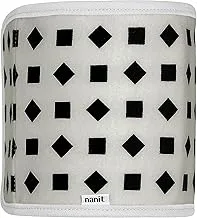
Nanit Breathing Wear Band (3-Pack)
“Required for breathing motion monitoring. Uses pattern recognition — no sensors touch baby.”
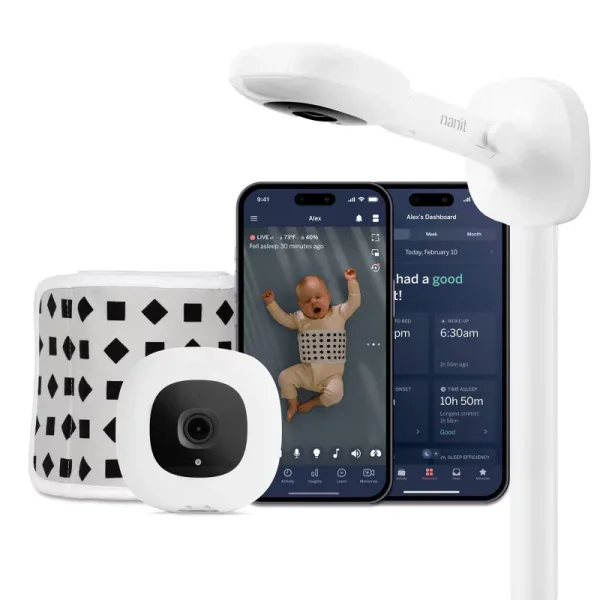
Nanit Wall Mount
“Provides the overhead angle that makes Nanit's sleep tracking work. Essential accessory.”
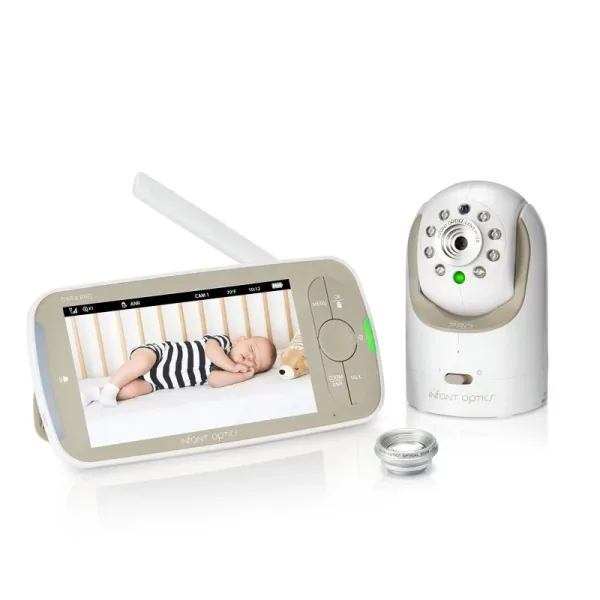
Infant Optics DXR-8 PRO Baby Monitor
“No-subscription alternative with dedicated monitor. No sleep analytics but rock-solid video.”
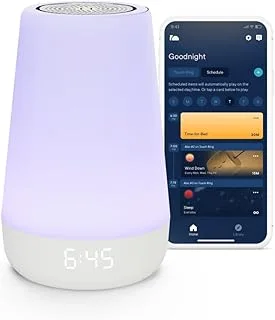
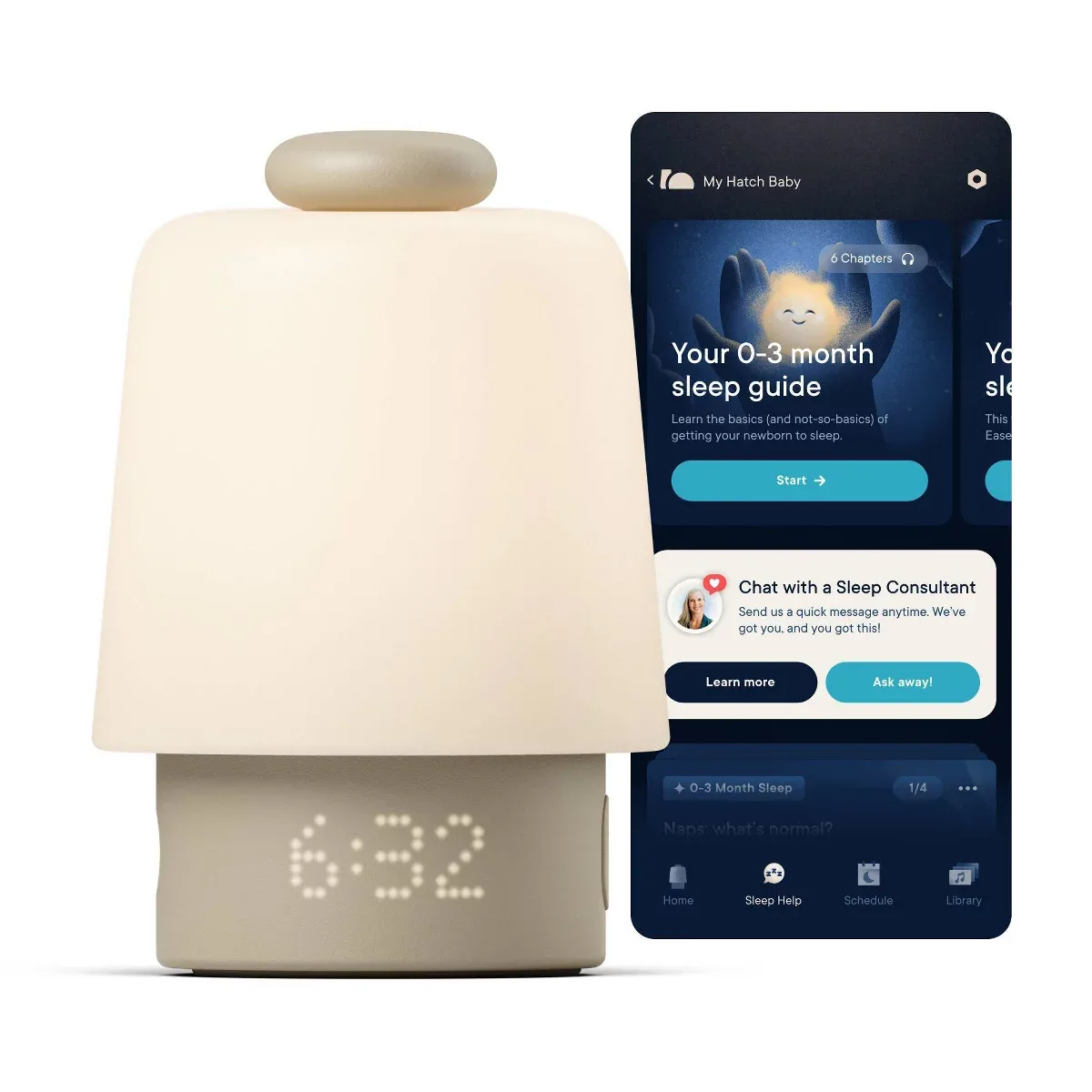
Hatch Rest 2nd Gen Sound Machine
“Pairs well with Nanit for a complete smart nursery setup. White noise plus night light.”
Nanit Multi-Stand Travel Accessory
“Portable floor stand for travel. Maintains overhead angle without wall mounting.”