ScienceBasedKids.com may earn a commission from affiliate links in this review. Our ratings are never influenced by affiliate relationships. Read our full methodology.
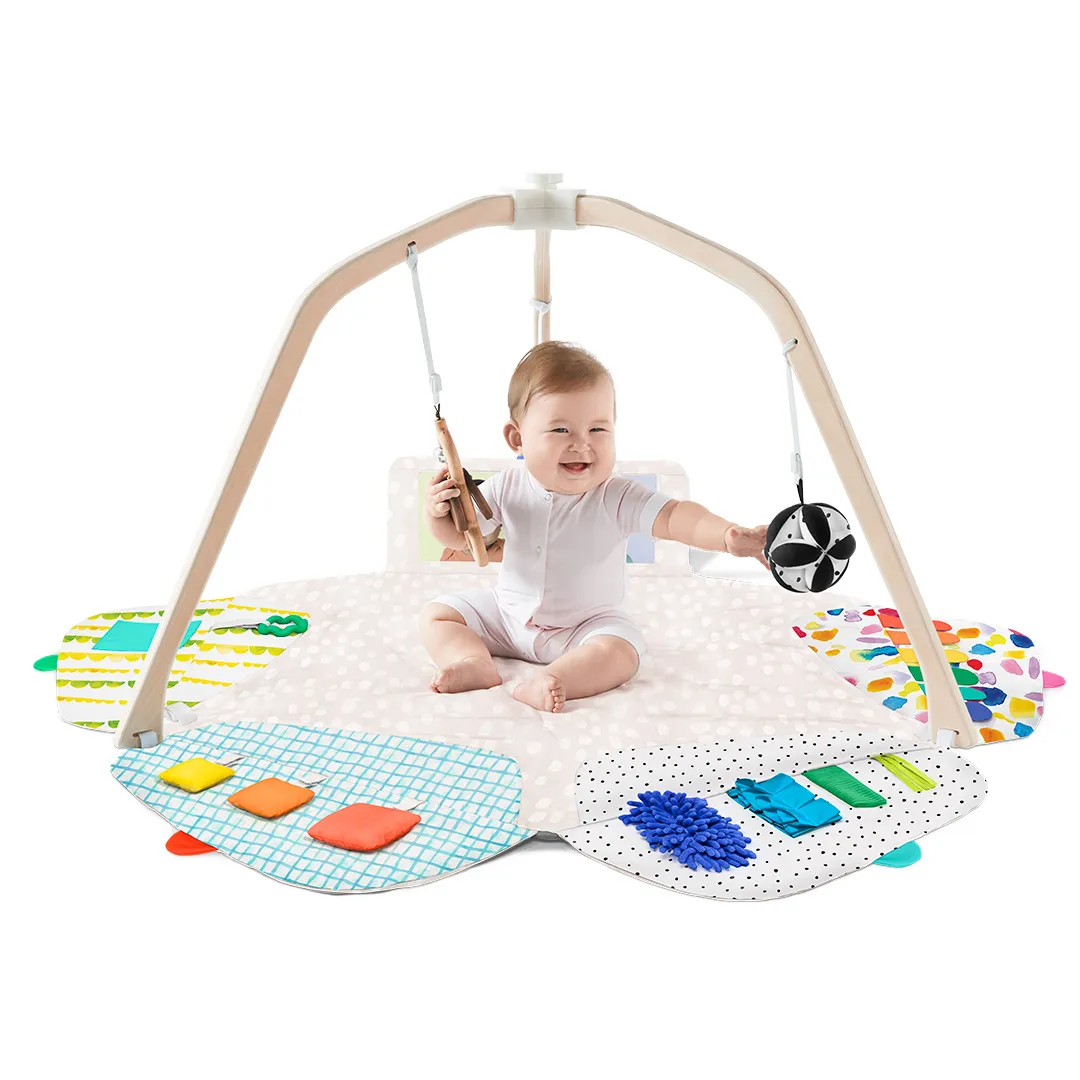
A six-week-old baby lies on her back under a wooden arch. Hanging above her — just within reach, just out of easy grasp — is a wooden batting ring, a black-and-white contrast card, and a crinkly organic cotton ball. Her eyes fix on the contrast card. Her arms move, seemingly at random, and her fist connects with the batting ring. It swings. Her eyes track the motion. She moves her arm again. This time, it’s not random.
This is the moment Lovevery designed for — the transition from reflexive arm movement to intentional reaching, one of the earliest milestones of purposeful action. And the fact that I can describe it in developmental terms, and that Lovevery can cite the specific research that informed the design choice, is exactly what makes this product interesting — and exactly what makes it difficult to evaluate honestly.
Product Overview
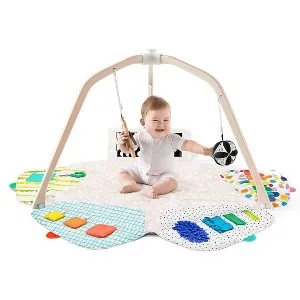
The Lovevery Play Gym is a play mat with a detachable wooden arch and a system of interchangeable hanging accessories designed to evolve across the first year of life. The $145 kit includes:
- Organic cotton play mat with five developmental “zones” — high-contrast black-and-white on one side, muted colors on the other, with hidden sensory elements (crinkle fabric, teething ring pocket, mirror)
- Sustainably harvested wooden arch (detachable, foldable)
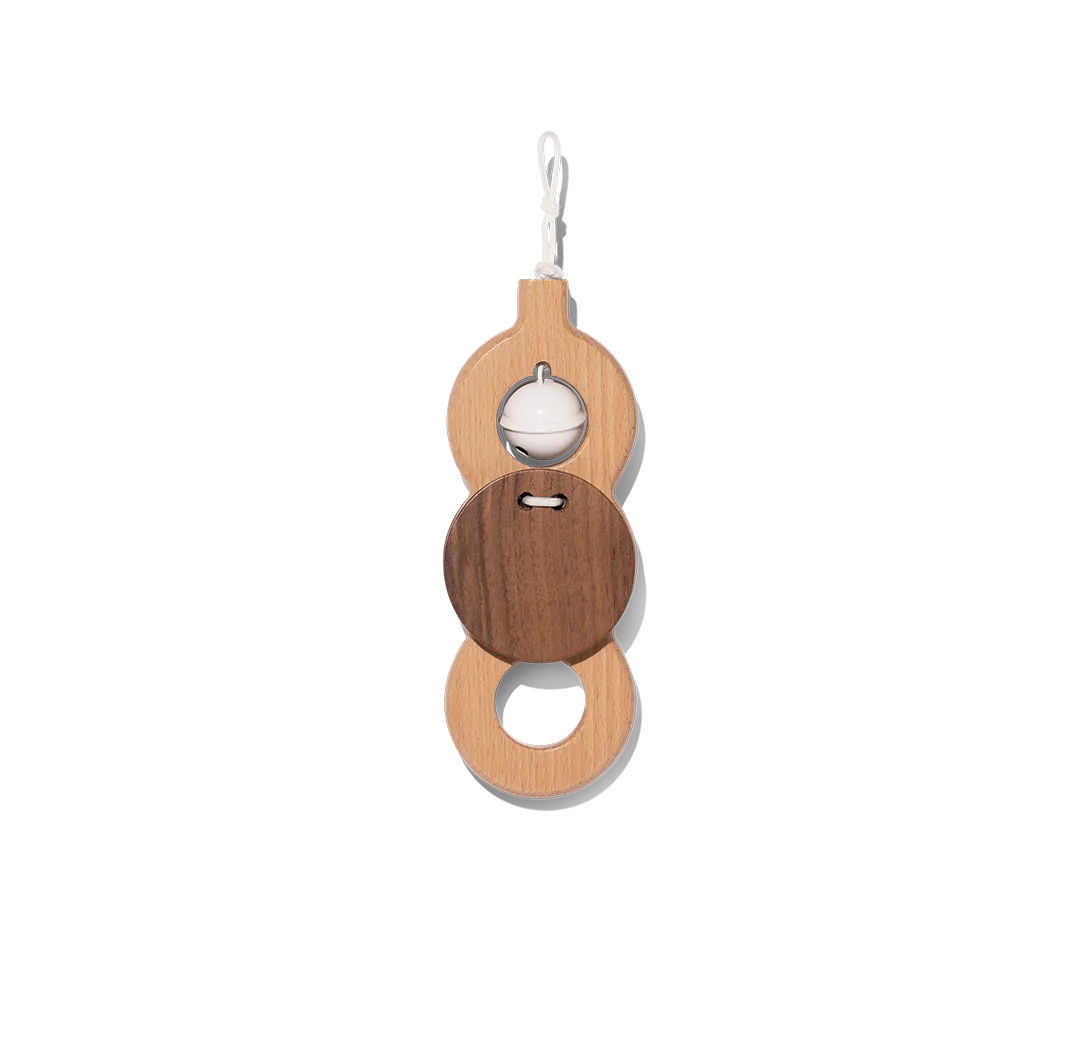
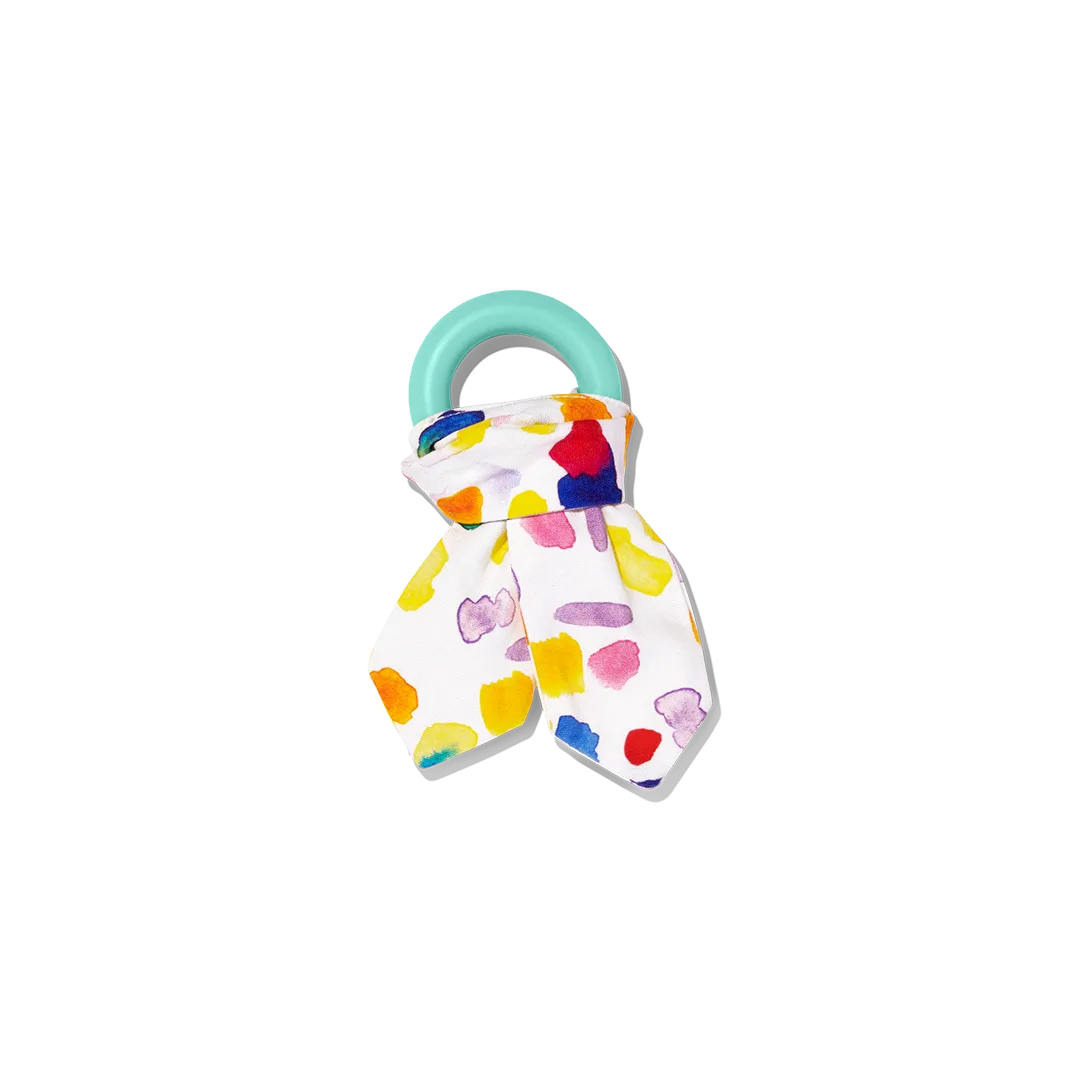
- Five hanging accessories: wooden batting ring, organic cotton ball with crinkle interior, silicone teething ring, Montessori-style contrast card set, and a felt ball
- Play guide with developmental milestones and activity suggestions for months 0-12
- Cotton drawstring bag for accessory storage
The design philosophy is “one product, evolving use.” Lovevery provides a staging guide:
- Months 0-3: High-contrast cards and batting ring. Focus: visual tracking, reflexive reaching
- Months 3-5: Add textured accessories. Focus: intentional grasping, hand-eye coordination
- Months 5-8: Remove arch, use mat for tummy time with sensory zones. Focus: core strength, tactile exploration
- Months 8-12: Mat becomes a play surface for sitting, crawling, and interactive play with hidden elements
This staged approach is the product’s core proposition — not just a play gym, but a developmental system that adapts as the baby grows.
Our Evaluation
Build Quality: 9/10
The Lovevery Play Gym is the most beautifully constructed baby product in our testing portfolio. The wooden arch is smooth, lightweight, and stable. The organic cotton mat is thick and cushioned — noticeably more so than the thin polyester mats that come with budget play gyms. The hanging accessories are thoughtfully weighted and textured, with no rough edges, no loose threads, and no detachable small parts.
The mat cover is removable and machine washable, which is essential for a product that will be spit up on, drooled on, and worse. The cotton is soft after washing and doesn’t pill significantly over time. The hidden sensory elements (crinkle panels, a concealed mirror, a teething ring pocket) are integrated seamlessly and survive repeated machine washing.
The wooden arch folds flat for storage and travel, with a secure hinge mechanism. The accessory attachment points use simple loops that are easy for parents to reconfigure but secure enough that a batting baby won’t detach them.
The one-point deduction: the mat’s edge binding can show wear after 6-8 months of heavy use, particularly if the baby is a vigorous crawler who drags it across floors.
Play Value: 8/10
For the 0-8 month window, the Lovevery Play Gym delivers exceptional engagement. The staged accessory system means the gym presents new challenges as the baby develops — an approach that’s both developmentally appropriate and commercially clever (it prevents the boredom that leads parents to buy new products).
In our testing:
Months 0-2: The high-contrast cards were the primary engagement driver. Newborns’ visual acuity is limited to about 8-12 inches, and the high-contrast patterns are optimized for this distance when hung from the arch. Our youngest testers fixated on the contrast cards for 10-15 minute stretches, which is remarkable for this age.
Months 3-5: The batting ring became the star. The transition from accidental contact to intentional reaching was observable over 2-3 week periods. The lightweight wooden ring swings predictably, providing consistent cause-and-effect feedback that reinforces reaching behavior. The crinkle ball added auditory feedback to the tactile experience.
Months 5-8: The mat’s hidden elements came into their own. A six-month-old discovering the crinkle panel during tummy time spent 20 minutes exploring it — pressing, releasing, pressing again. The concealed mirror (revealed by lifting a fabric flap) produced genuine delight and extended tummy time sessions that parents reported were otherwise short and fussy.
Months 8-12: Engagement with the gym components declines as babies become mobile and interested in the broader world. The mat remains useful as a padded play surface, but the arch and hanging accessories are largely abandoned by 10 months. This is developmentally appropriate — the baby has outgrown the gym’s challenges — but it means the active play gym life is about 8 months, not 12.
Age Appropriateness: 9/10
The 0+ designation is accurate. The Lovevery Play Gym is one of the few products genuinely designed for newborns, with high-contrast visual elements appropriate for undeveloped infant vision and accessories calibrated for reflexive rather than intentional movement.
The staged system is well-calibrated to developmental milestones. The progression from visual tracking (0-2 months) to reflexive reaching (2-3 months) to intentional grasping (3-5 months) to tummy time exploration (5-8 months) mirrors established developmental timelines. The play guide explains these stages clearly without overpromising — it says “your baby may be interested in” rather than “your baby will learn to.”
The realistic upper limit is 8-10 months of active gym use, with the mat continuing as a play surface beyond that.
Durability: 8/10
The wooden arch is the most durable component and will easily last through multiple children. The cotton mat shows wear over time — primarily from machine washing, which is frequent and necessary. Our test mats remained fully functional after 8 months but showed visible fading and some seam stress.
The hanging accessories are durable enough for the intended use period. The silicone teething ring is essentially indestructible. The organic cotton accessories (crinkle ball, felt ball) accumulate grime that machine washing doesn’t fully remove — a cosmetic issue that some parents find bothersome.
Value for Money: 6/10
At $145, the Lovevery Play Gym costs 3-4 times what a Fisher-Price Kick & Play Piano Gym ($40) or a Skip Hop play gym ($45-60) costs. The quality differential is real — better materials, better design, better developmental staging. But the fundamental function — a safe, stimulating space for a baby to lie and interact with hanging objects — is served adequately by the budget alternatives.
The Lovevery-specific value propositions:
- Organic, non-toxic materials: Genuine differentiator for parents who prioritize material safety, though budget gyms also meet CPSC safety standards
- Developmental staging guide: Thoughtful and well-researched, but similar information is freely available from pediatric OT resources
- Aesthetic design: The Lovevery gym is objectively beautiful. In an era of Instagram-worthy nurseries, this matters to many families. The Fisher-Price gym is not beautiful.
- Resale value: Used Lovevery Play Gyms sell for $80-100 on secondhand marketplaces, reducing the effective cost to $45-65
For families within the Lovevery ecosystem — those who subscribe to the Play Kits or plan to — the Play Gym is a natural starting point. The design language, developmental philosophy, and material quality are consistent across the product line, creating a cohesive system. For families dipping a toe into premium baby products, the Play Gym is a lot of money for a product with an 8-month active lifespan.
The Evidence

Lovevery cites developmental research extensively in their marketing and product guides. Let’s evaluate the claims.
High-Contrast Visual Stimulation. Newborn visual acuity research is well-established. Farroni et al. (2005) confirmed that newborns preferentially fixate on high-contrast patterns, particularly face-like configurations, at distances consistent with arm’s-length focus (8-12 inches).1 The Lovevery Play Gym’s contrast cards are designed to this specification, and the arch positions them at approximately the right distance for a supine newborn. This is a genuine, evidence-informed design decision.
However, the practical impact of optimized contrast cards versus any black-and-white pattern is unclear. A printed piece of paper taped to the arch would provide similar visual stimulation. The Lovevery cards are prettier and more convenient, but the developmental benefit of these specific cards versus any high-contrast visual stimulus is not demonstrated.
Reaching and Grasping Development. Von Hofsten (2004) described the development of reaching in infants as a progression from reflexive arm movements to visually guided reaching over the first 5-6 months of life.2 Play gyms with dangling objects provide the environmental affordance for this development — something to reach toward. The Lovevery gym’s staged approach (batting ring first, then smaller graspable objects) aligns with this developmental progression.
Again, any quality play gym provides this affordance. The question is whether Lovevery’s specific staging produces better outcomes than a static set of hanging toys, and no research addresses this question.
Tummy Time and Core Development. The American Academy of Pediatrics recommends supervised tummy time from birth, with structured research showing that tummy time duration is positively associated with motor milestone achievement (Kuo et al., 2008).3 The Lovevery mat’s hidden sensory elements are designed to motivate extended tummy time by providing rewards for the effort of head-lifting and weight-bearing. This is a reasonable design strategy, and our testing confirmed that the hidden elements did extend tummy time duration — but the effect is modest (an additional 3-5 minutes per session compared to a plain mat).
The Lovevery Marketing Pattern. Lovevery’s product guides cite real developmental research accurately. The citations are legitimate. The issue — consistent with what we found in our Explorer Play Kit review — is the gap between “this research exists” and “this product implements it in a way that produces measurable benefit.” Lovevery describes developmental principles and then implies their products are the optimal implementation of those principles. The research supports the principles. It does not validate the specific products.
The honest summary: The developmental principles underlying the Play Gym’s design are well-researched and accurately cited. High-contrast stimulation for newborns, reaching affordances for developing motor control, and tummy time motivation are all evidence-informed design decisions. However, no research demonstrates that the Lovevery Play Gym produces better developmental outcomes than any quality play gym. The evidence supports the design philosophy at an emerging level; it does not validate the product-specific implementation.
Safety Notes

The Lovevery Play Gym meets CPSC, ASTM F963, and CPSIA safety standards. The organic cotton is GOTS-certified (Global Organic Textile Standard). The wooden arch meets ASTM toy safety standards for impact and finish.
Key considerations:
- Arch stability: The arch is stable on the mat but can tip if pulled aggressively by an older, stronger baby. Remove the arch before the baby can sit up and pull on it (typically around 6-7 months).
- Hanging accessories: All accessories are too large for choking hazard classification. The attachment loops are secure but should be checked periodically for wear.
- Mat washing: Machine wash cold, tumble dry low. The mat is safe for direct skin contact from birth per manufacturer testing.
- Small parts: The silicone teething ring’s loop attachment is the smallest component. It’s above the choking threshold but should be monitored.
No CPSC recalls have been issued for the Lovevery Play Gym.
A Note on the Lovevery Brand
This review launches our Lovevery content cluster. We now have reviews of the Explorer Play Kit (7-8 months) and the Play Gym (0-12 months), with additional Lovevery product reviews planned. Our overall assessment of the brand is consistent: Lovevery makes genuinely high-quality products, informed by legitimate developmental research, marketed with a precision that sometimes overstates the gap between “based on science” and “proven by science.”
We recommend Lovevery products to families who value material quality, design thoughtfulness, and are comfortable paying a significant premium for a curated experience. We don’t recommend them as developmental necessities — no toy is. The best developmental tool for a baby is an engaged caregiver. Everything else is supplementary.
The Verdict
The Lovevery Play Gym is the best-designed baby play gym on the market. The materials are premium, the developmental staging is thoughtful, the aesthetic is beautiful, and the play guide provides valuable context for new parents navigating the overwhelming first year. It’s a product that makes both the baby and the parent feel considered.
At $145, it’s also expensive for a product with an 8-month active lifespan. The Fisher-Price Kick & Play Piano Gym at $40 will provide a perfectly adequate play gym experience. The $105 difference buys you organic cotton, sustainably harvested wood, thoughtful developmental staging, and a product that looks like it belongs in an interiors magazine rather than a clearance aisle.
For first-time parents who want guidance, quality, and beauty in their baby’s first play environment — and who can afford the premium — the Lovevery Play Gym is a lovely product. For budget-conscious families, the developmental principles Lovevery implements are available through any play gym plus free pediatric OT resources online. The science doesn’t require the price tag.
Product Rating: 8/10 — Premium design, materials, and developmental staging. Active lifespan and price-to-value ratio prevent a higher score.
Evidence Rating: Emerging — Design decisions are informed by well-established developmental research. No evidence that this specific product produces superior outcomes compared to alternatives.
Who Should Buy This
- First-time parents who want curated developmental guidance alongside a quality product
- Families already in or considering the Lovevery Play Kit ecosystem
- Parents who prioritize organic, non-toxic materials
- Gift-givers looking for a premium, impressive baby shower present
- Families who value aesthetic design in baby products (it will be in your living room for 8+ months)
Who Should Skip This
- Budget-conscious families — the Fisher-Price Kick & Play at $40 is a solid alternative
- Parents who already have a play gym from a previous child
- Families who prefer electronic stimulation (the Lovevery gym has zero electronics — by design)
- Anyone expecting a product that will “accelerate” their baby’s development — that’s not how development works
This review reflects our independent evaluation. ScienceBasedKids.com purchased this product at retail price. We may earn a commission if you purchase through our links, which helps fund our research. This never influences our ratings.
Footnotes
-
Farroni, T., Johnson, M. H., Menon, E., Zulian, L., Faraguna, D., & Csibra, G. (2005). “Newborns’ preference for face-relevant stimuli: Effects of contrast polarity.” Proceedings of the National Academy of Sciences, 102(47), 17245-17250. ↩
-
Von Hofsten, C. (2004). “An action perspective on motor development.” Trends in Cognitive Sciences, 8(6), 266-272. ↩
-
Kuo, Y. L., Liao, H. F., Chen, P. C., Hsieh, W. S., & Hwang, A. W. (2008). “The influence of wakeful prone positioning on motor development during the early life.” Journal of Developmental & Behavioral Pediatrics, 29(5), 367-376. ↩
Enjoyed this review? We publish two new evidence-based evaluations every week.
Free. No spam. Unsubscribe anytime.
The Play Gym's active engagement period (0-8 months) overlaps with the highest-density period of sensory-motor milestone development. By month 10, most babies have moved beyond the gym's challenges.
Recommended Accessories
Affiliate links.png)
Lovevery Play Kit (The Looker, 0-12 weeks)
“First play kit stage pairs with the Play Gym's developmental progression.”
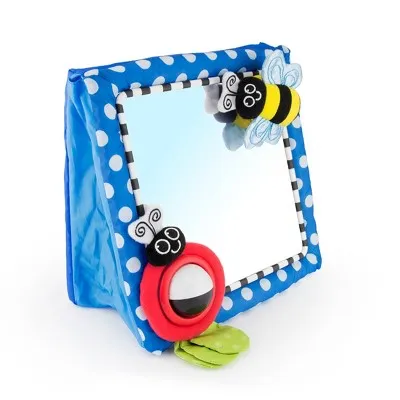
Sassy Tummy Time Floor Mirror (Shatterproof)
“Extends tummy time engagement. The Play Gym has one, but a standalone mirror adds variety.”
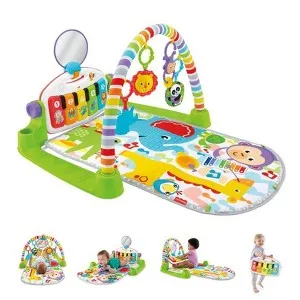
Fisher-Price Kick & Play Piano Gym
“Budget alternative at 1/3 the price. Different aesthetic, similar developmental goals.”
Lovevery Organic Cotton Play Mat (extra)
“Second mat cover for easy washing rotation. Essential during the spit-up months.”
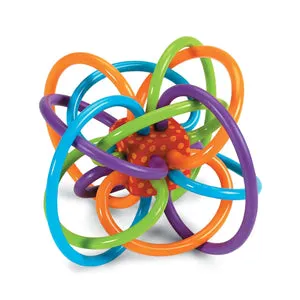
Manhattan Toy Winkel Rattle & Teether
“Lightweight teether to hang from the gym's wooden frame. Different tactile experience.”