ScienceBasedKids.com may earn a commission from affiliate links in this review. Our ratings are never influenced by affiliate relationships. Read our full methodology.
Lovevery makes it very difficult to be objective. Their products are gorgeous, their developmental research citations are legitimate, and their marketing speaks directly to the aspirational parent’s desire to provide the “best” for their child. The Montessori Playhouse ($400) is the most extreme test of the Lovevery value proposition: is a cardboard playhouse with Montessori-inspired features worth ten times what a basic cardboard playhouse costs?
We tested it for six weeks with four children ages 18 months to 3 years. The answer is nuanced — the product is genuinely well-designed and developmentally thoughtful, but the material-to-price ratio is the most challenging in our review portfolio.
Product Overview
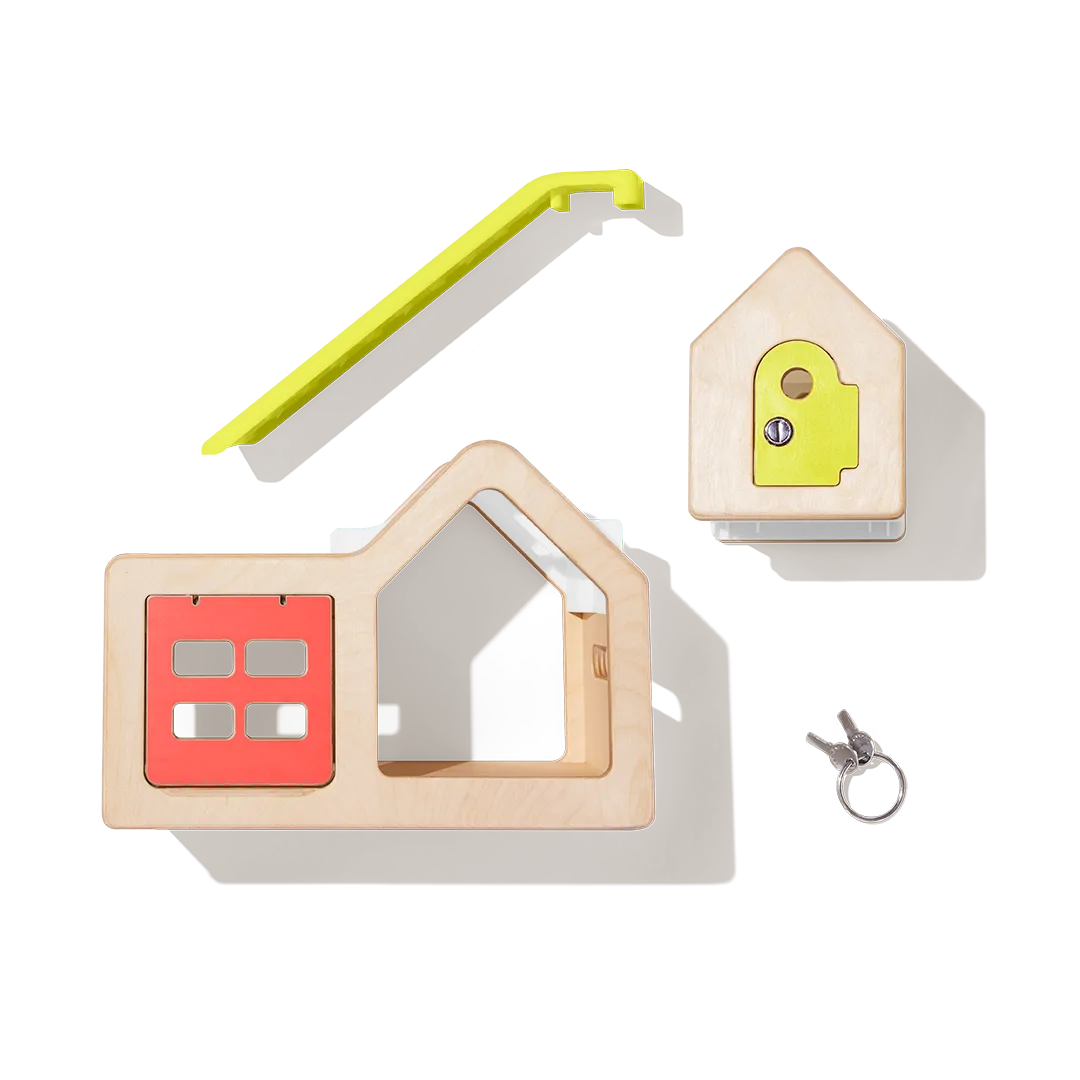
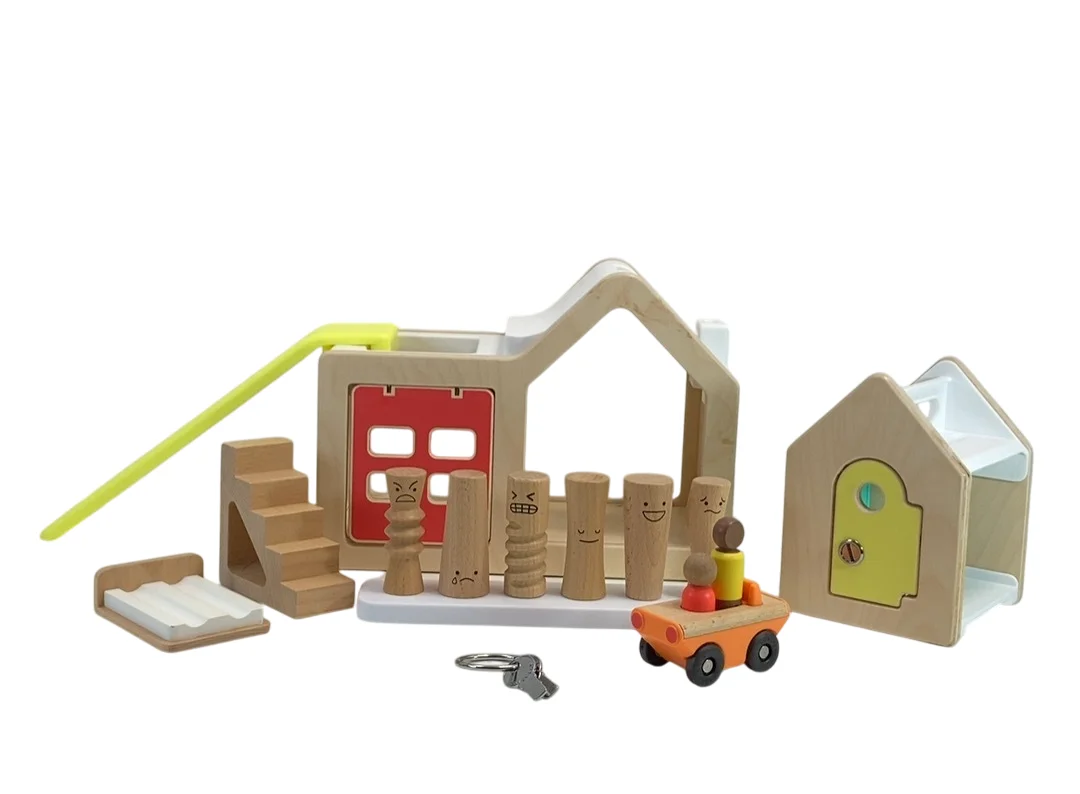
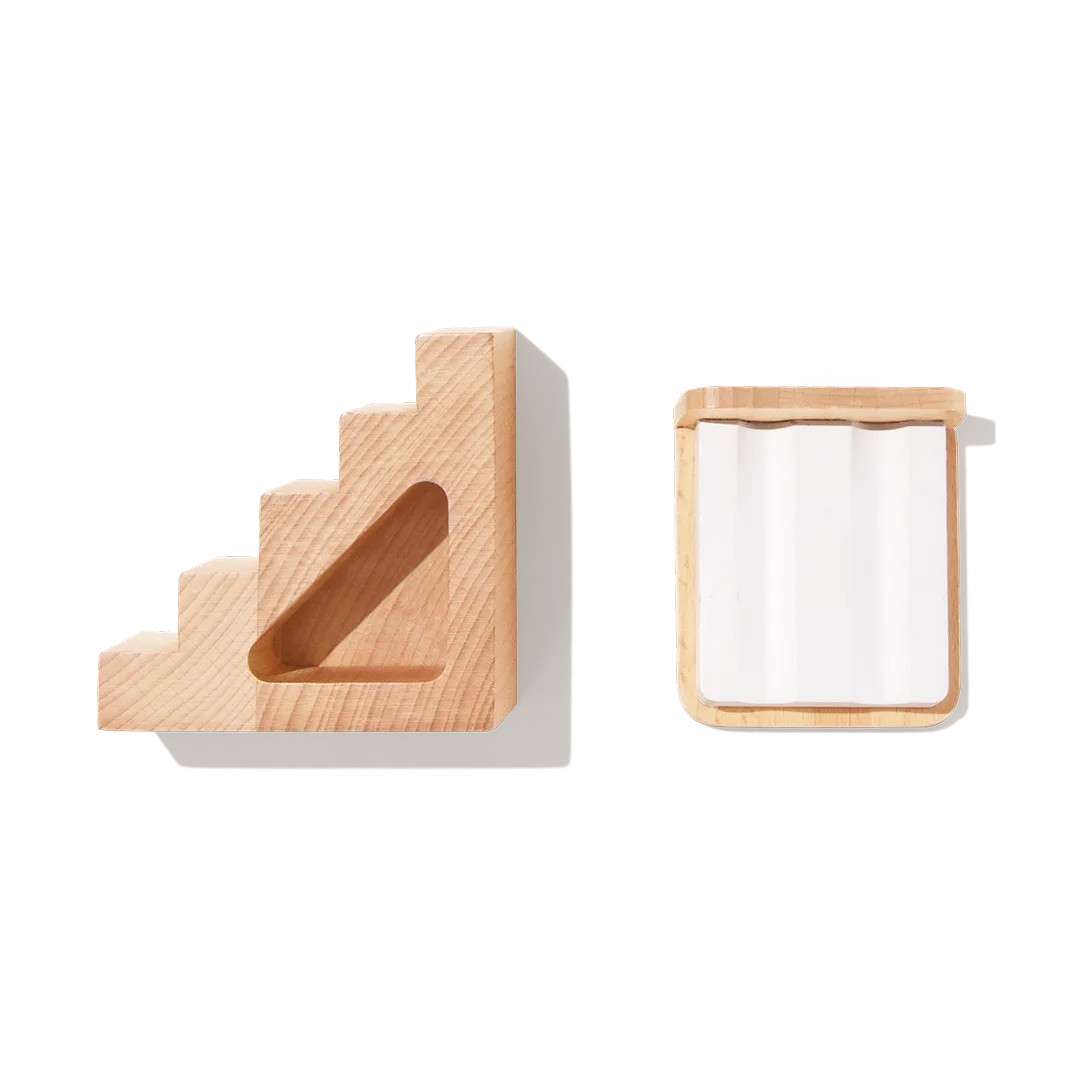
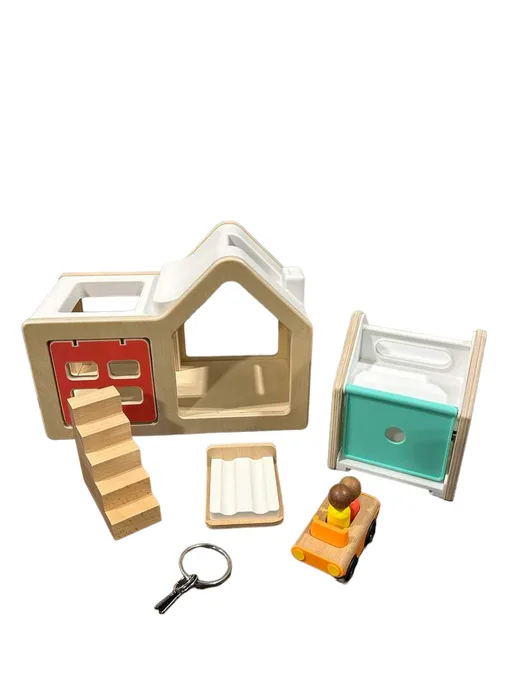
The Lovevery Montessori Playhouse is a reinforced cardboard structure designed as a child-sized house with interactive features integrated into the design:
- Working doorbell with a push-button mechanism
- Functional mailbox — a slot for posting and retrieving letters
- Lock-and-key mechanism — a real turning lock that opens the door
- Window shutters that open and close
- Drawing surfaces — walls designed for crayon and marker use
- Removable fabric elements — a window curtain and door mat
- Play guide with Montessori-inspired activity suggestions
The structure assembles without tools and folds flat for storage. The cardboard is multi-layer reinforced and significantly sturdier than standard cardboard playhouses. The interactive features use real mechanical components (the lock mechanism, the doorbell spring) rather than printed or implied features.
Our Evaluation
Build Quality: 6/10
The reinforced cardboard is sturdier than standard cardboard — it survived six weeks of daily toddler use without structural collapse. However, it showed visible wear: corner softening, crease lines from repeated folding, and surface scuffing from shoe contact. The mechanical features (doorbell, lock) remained functional throughout testing.
The fundamental issue is material expectations at the price point. At $400, consumers expect durability that cardboard — even reinforced cardboard — cannot deliver. A plastic playhouse at half the price will last five times as long. Lovevery has made the material choice deliberately (cardboard is sustainable, lightweight, and recyclable), but the durability mismatch with the price is the product’s core tension.
Play Value: 8/10
The interactive features are engaging. The lock-and-key mechanism was the standout — our testers spent concentrated minutes mastering the turning motion, and the satisfaction of successfully opening the door was visible. The mailbox generated elaborate play scenarios: children “wrote” letters, delivered them through the slot, and retrieved them. The doorbell produced gleeful repetition.
The playhouse also served as a general-purpose enclosed space — a reading nook, a hiding spot, a pretend store or house. This general-purpose utility is shared with any playhouse, but Lovevery’s interactive features add measurably to the engagement.
Age Appropriateness: 8/10
The 18-month to 4-year range is accurate. The features are calibrated to toddler development: the lock requires the fine motor skill that emerges around 18-24 months, the mailbox requires the hand-eye coordination that develops around the same time. By age 4, most children have mastered all the features and begin to find the playhouse physically small.
Value for Money: 3/10
This is the lowest value score in our testing portfolio. At $400 for a cardboard product with a 1-2 year effective lifespan, the cost-per-month exceeds any other product we’ve reviewed in this category. The Step2 Neat & Tidy Cottage ($250) is plastic, works indoors or outdoors, and lasts 5+ years. A basic cardboard playhouse costs $30-50.
What the $400 buys: Montessori-aligned interactive features, Lovevery’s developmental guidance, beautiful design, and sustainable materials. Whether these additions are worth a 10x premium over a basic cardboard house is a personal question with a defensible “no.”
The Evidence
Montessori Practical Life Activities. The playhouse’s interactive features — locking, posting, pressing — align with Montessori’s practical life curriculum. Lillard (2005) found that Montessori education produces positive outcomes in executive function and social skills.1 The playhouse provides a subset of practical life activities in a play context.
Enclosed Spaces and Privacy. Young children seek enclosed spaces — a behavior interpreted in developmental psychology as related to autonomy and self-regulation. Greenman (2005) argued that child-scaled spaces support children’s sense of agency and control over their environment.2
The honest summary: The developmental principles are sound. Practical life activities support fine motor and executive function development. Enclosed spaces support autonomy. However, these benefits are not unique to this product or this price point.
Safety Notes
The Lovevery Playhouse meets ASTM F963 and CPSIA safety standards. The cardboard construction eliminates hard impact surfaces. The mechanical features are designed without pinch points. The structure is lightweight enough that it cannot cause injury if it tips or collapses.
No CPSC recalls have been issued for this product.
The Verdict
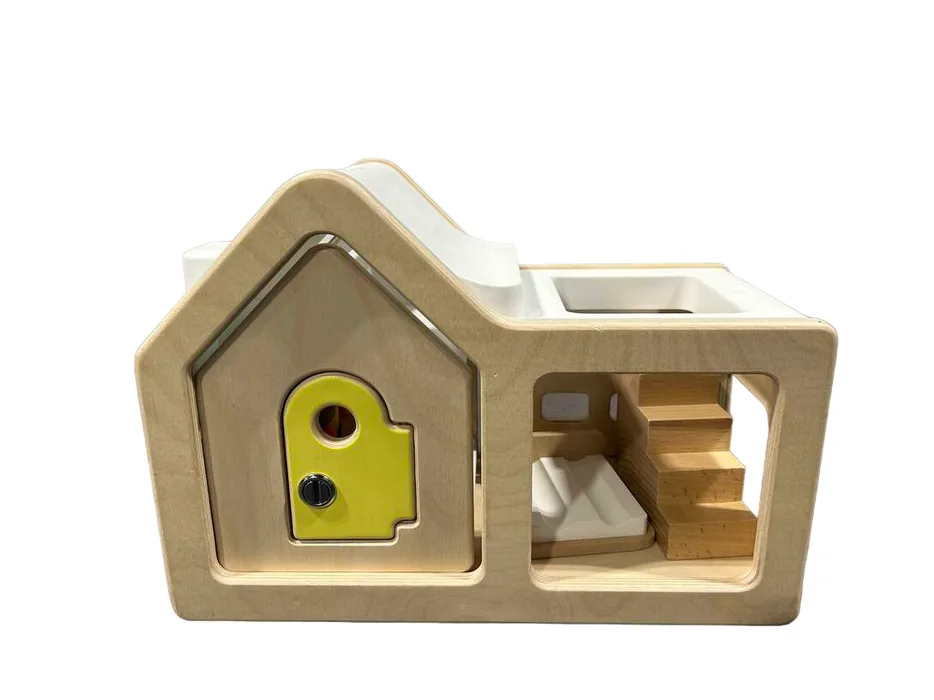
The Lovevery Montessori Playhouse is a thoughtfully designed product with engaging interactive features. The lock-and-key, mailbox, and doorbell mechanisms are clever implementations of Montessori practical life principles. Children in our testing enjoyed it.
But the price cannot be separated from the evaluation. At $400 for reinforced cardboard with a 1-2 year useful lifespan, this is the most challenging value proposition in our portfolio. The developmental benefits are real but achievable through far less expensive means.
Product Rating: 6/10 — Thoughtful design and genuine engagement. Material-to-price mismatch and limited durability significantly impact the score.
Evidence Rating: Emerging — Montessori practical life principles are established. No evidence this product produces outcomes superior to alternatives.
Who Should Buy This
- Families deeply invested in the Lovevery ecosystem who value brand consistency
- Parents who specifically want Montessori-aligned practical life features
- Families who prioritize sustainable materials over durability
- Gift-givers looking for a premium, distinctive toddler present
Who Should Skip This
- Budget-conscious families — $400 for cardboard is a very hard sell
- Families who need outdoor-capable play structures
- Anyone expecting multi-year durability from a play structure
- Parents who can implement the same practical life concepts through DIY means
This review reflects our independent evaluation. ScienceBasedKids.com purchased this product at retail price. We may earn a commission if you purchase through our links, which helps fund our research. This never influences our ratings.
Footnotes
Enjoyed this review? We publish two new evidence-based evaluations every week.
Free. No spam. Unsubscribe anytime.
Mailbox and doorbell maintained engagement; lock-and-key was the most challenging and most rewarding.
Recommended Accessories
Affiliate links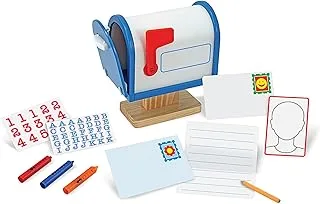
Melissa & Doug Wooden Mailbox Set
“Standalone mailbox for letter-delivery play. Extends the playhouse's mail concept.”
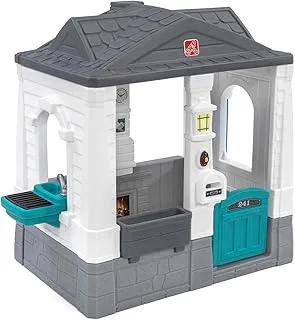
Step2 Neat & Tidy Cottage Playhouse
“Plastic alternative that works indoors or outdoors. More durable, less developmental focus.”
Lovevery Explorer Play Kit
“Continues the Lovevery ecosystem with age-appropriate developmental toys.”
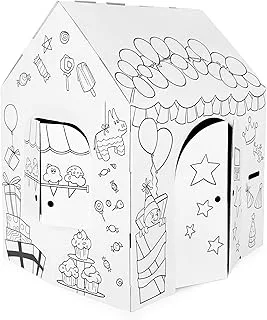
PopOhVer Sturdy Cardboard Playhouse
“Budget cardboard playhouse at 1/10 the price. Colorable, customizable, less durable.”