ScienceBasedKids.com may earn a commission from affiliate links in this review. Our ratings are never influenced by affiliate relationships. Read our full methodology.
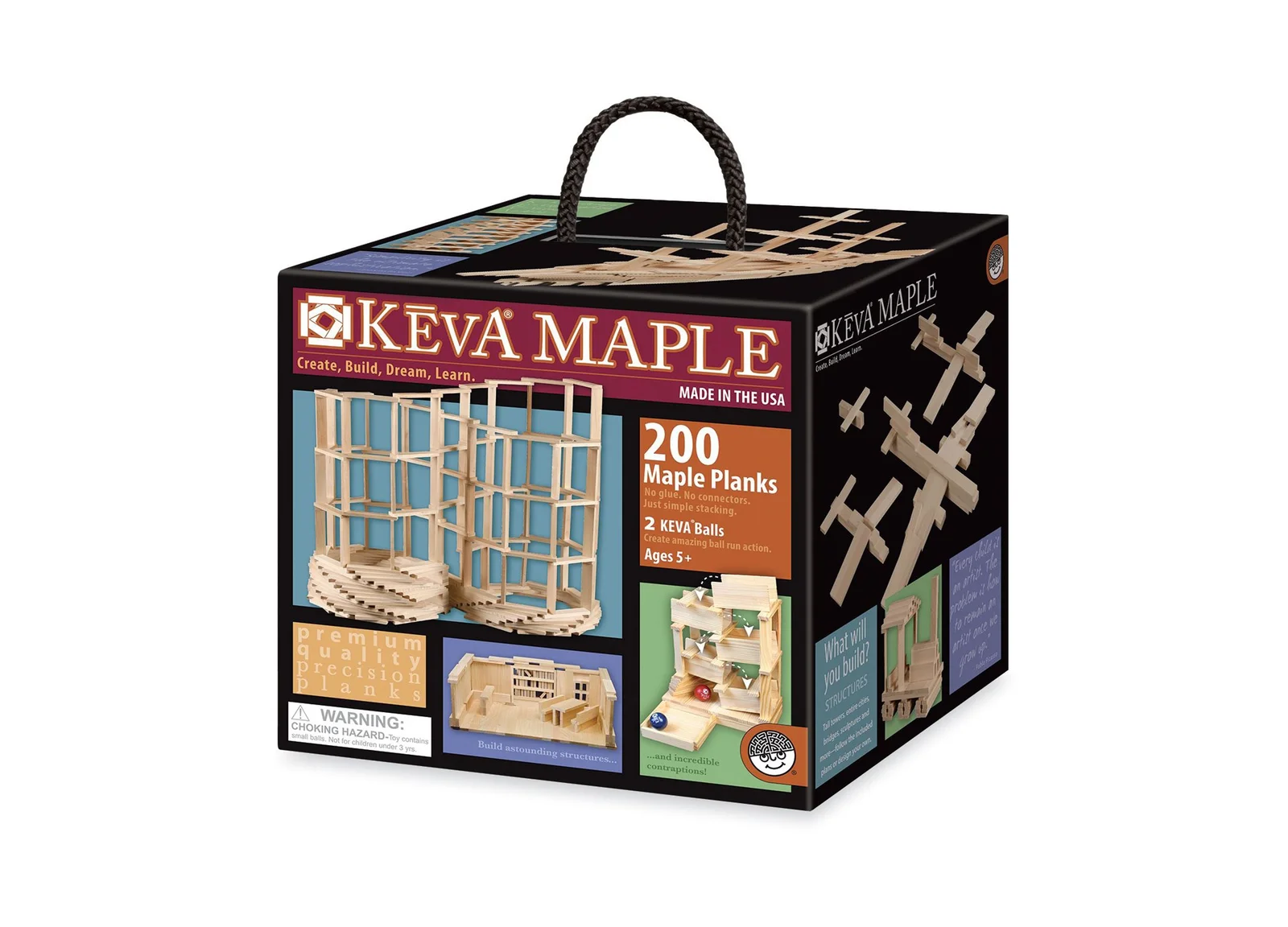
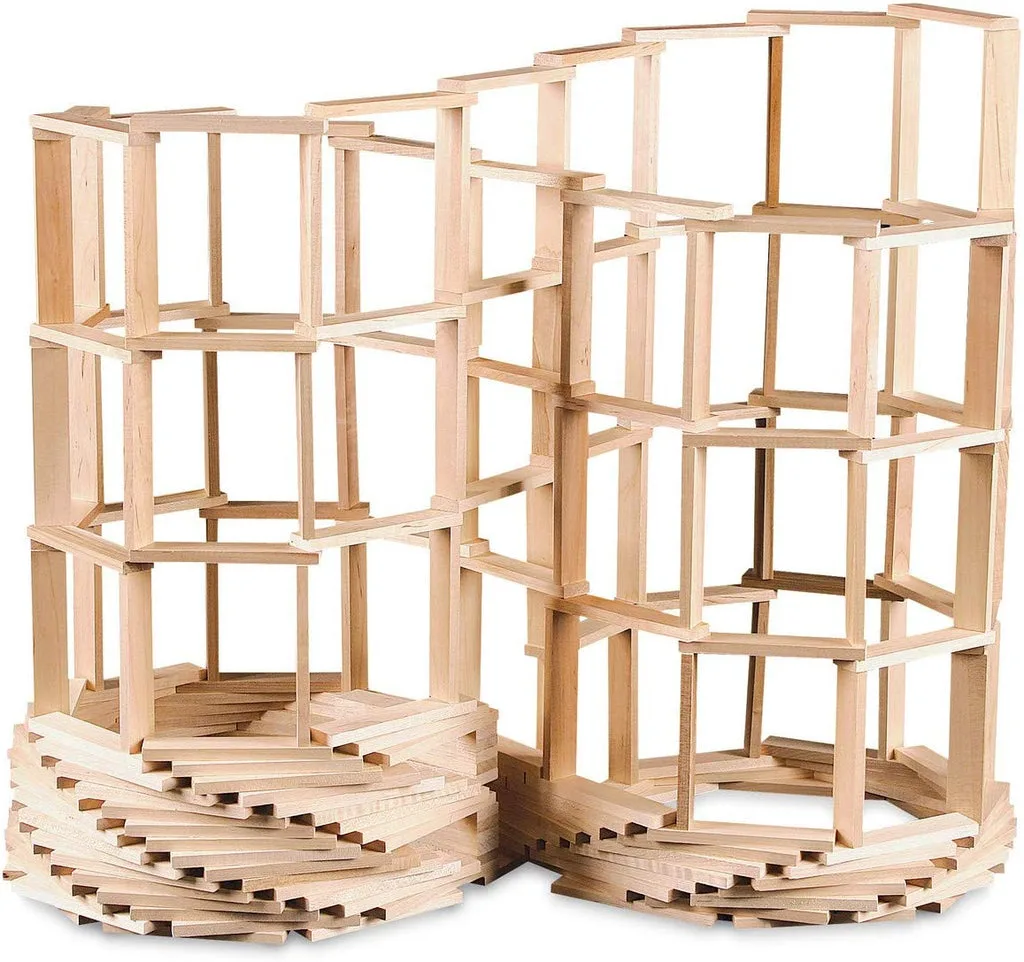
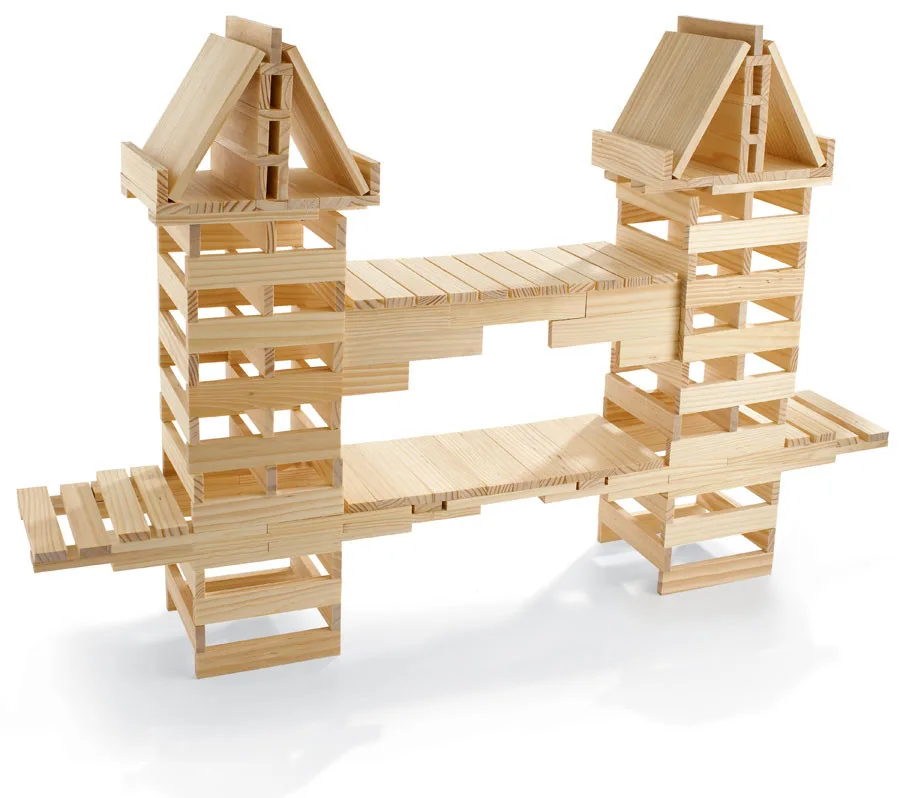
KEVA Planks embody a radical design philosophy: what if every piece was identical? No special connectors, no interlocking mechanisms, no magnets. Just 200 precision-milled pine planks, each exactly 4.5” x 0.75” x 0.25”. Every structure built from KEVA Planks is held together by nothing but gravity and the builder’s understanding of balance. This constraint sounds limiting until you see what children (and adults) create — towers, bridges, domes, spirals, and architectural forms that demonstrate structural engineering principles in real time.
We tested the 200-piece set for eight weeks with children ages 5 through 12.
Product Overview
200 identical pine planks in a storage container. Each plank is precision-milled to identical dimensions (±0.5mm). No paint, no coating — natural wood finish. Includes an idea booklet.
Our Evaluation
Build Quality: 9/10
The planks are precisely dimensioned, smooth, and splinter-free. The consistency is critical — stacking requires planks that are truly identical, and KEVA delivers. The natural pine is light enough for tall structures but dense enough to feel substantial.
Play Value: 8/10
The building experience is uniquely meditative and educational. Every placement decision involves implicit physics — will this balance? Can this cantilever? Where will this fail? The immediate feedback of success (structure holds) or failure (collapse) teaches structural engineering intuitively.
The collapse itself is part of the play. KEVA towers fall dramatically and satisfyingly, producing a cascading failure that children find thrilling and motivating. Rebuilding after collapse is not frustrating — it’s the game.
Age Appropriateness: 8/10
Ages 5-6 build simple towers and walls. Ages 7-10 attempt complex structures with cantilevers and arches. Ages 11+ create genuinely impressive architectural forms. Adults find them engaging.
Value for Money: 8/10
$45 for 200 planks ($0.23/plank) that last indefinitely. No consumable elements, no batteries, no replacement parts.
The Evidence
Block and plank construction engages spatial reasoning (Verdine et al., 2014)1 and engineering design thinking (NAE, 2009).2 The gravity-only constraint makes physics concepts explicit — every structure is a physical demonstration of balance and load distribution.
Safety Notes
No choking hazard (pieces are too large). Tall structures can topple — build on soft surfaces. Stepping on planks is uncomfortable but not dangerous. No CPSC recalls.
The Verdict
KEVA Planks are one of the most purely educational building toys available — every structure is an implicit physics and engineering lesson. The simplicity of one identical piece creates surprising depth.
Product Rating: 8/10 — Exceptional engineering play. Requires patience and floor space.
Evidence Rating: Moderate — Spatial reasoning and engineering thinking are well-supported.
Who Should Buy This
- Families seeking genuine STEM learning through building play
- Children ages 6+ who enjoy precision and patience
- Parents who value simple, screen-free, battery-free toys
- Architecture and engineering enthusiasts of any age
Who Should Skip This
- Children under 5 who lack the patience for balance building
- Families seeking colorful, visually stimulating toys
- Children who prefer interlocking systems (LEGO, Magna-Tiles)
- Anyone with limited floor space for building and displaying structures
This review reflects our independent evaluation. ScienceBasedKids.com purchased this product at retail price.
Footnotes
Enjoyed this review? We publish two new evidence-based evaluations every week.
Free. No spam. Unsubscribe anytime.
Recommended Accessories
Affiliate links
KEVA Planks 400-Piece Set
“Doubles the building material. 400 planks unlock truly ambitious structures.”

KEVA Contraptions Ball Track Building Set
“Adds balls and track pieces to KEVA planks for marble-run-style builds.”
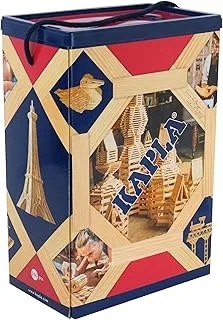
Kapla 200-Plank Set
“Premium French alternative with slightly different dimensions. Denser wood.”
Sterilite 56-Quart Storage Container
“Clear storage bin for 200+ planks. Essential for organization.”