ScienceBasedKids.com may earn a commission from affiliate links in this review. Our ratings are never influenced by affiliate relationships. Read our full methodology.
Every child builds forts. Couch cushions, blankets draped over chairs, cardboard boxes duct-taped together — the impulse to create enclosed spaces is so universal it borders on biological. What varies is the structural sophistication of the result. A blanket draped over two chairs creates a fort. But it doesn’t teach anything about why structures stand up or fall down. Crazy Forts does.
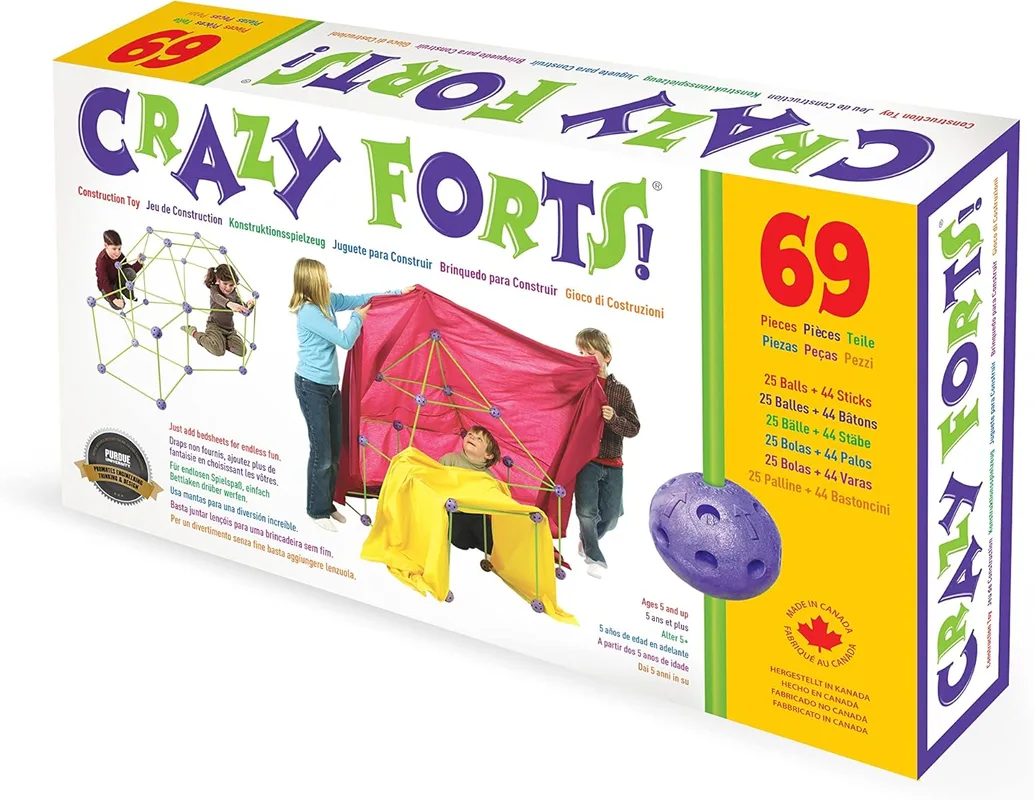
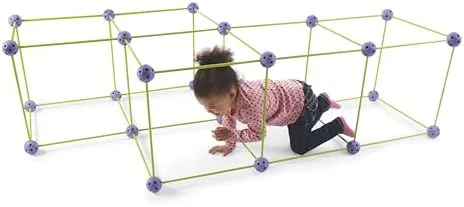
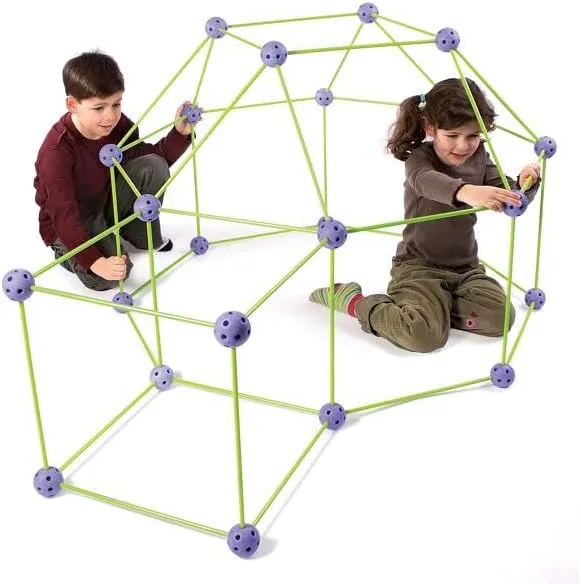
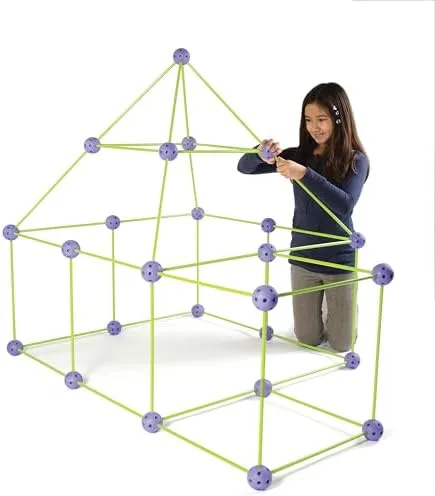
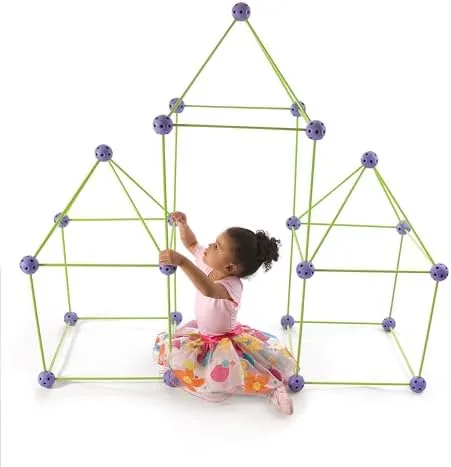
The Crazy Forts construction set ($45) is a ball-and-stick framework system — think molecular model kit scaled up to furniture size — that lets children build structures large enough to sit inside. The 69-piece set (25 connector balls, 44 sticks) creates domes, tunnels, castles, and custom structures that, when covered with sheets or blankets, become inhabitable spaces. We tested it for six weeks with children ages 5 through 11 and found a toy that’s simultaneously simpler and more educational than it first appears.
Product Overview
The system is straightforward: hollow plastic sticks (approximately 20 inches each) connect to hollow plastic balls with multiple socket holes. The balls have 6-8 connection points, allowing branching structures. Children create frames, then drape sheets or blankets over them to create enclosed spaces.
The set includes:
- 25 connector balls — purple/green multi-socket connectors
- 44 sticks — lightweight, flexible plastic tubes
- Illustrated instruction sheet with suggested designs
No sheets are included — families provide their own, which is actually an advantage: it means any blanket, sheet, or fabric becomes a building material, integrating the toy into the household rather than isolating it.
Our Evaluation
Build Quality: 6/10
The plastic is functional but not premium. The connector balls hold sticks firmly enough for most builds, but some connections loosen over time, particularly in structures under tension. The sticks are lightweight and slightly flexible, which aids in creating curved structures but means very large builds can feel somewhat wobbly.
The materials are clearly engineered for low cost rather than durability. The plastic shows scuff marks after moderate use, and one connector ball in our test set cracked after approximately four weeks of regular building and disassembly. For a $45 toy, the build quality is acceptable but not impressive.
Play Value: 9/10
The play value is exceptional because Crazy Forts serves two distinct play modes that feed each other:
Construction mode: The building itself is engaging. Children learn through trial and error which structures are stable and which collapse. A tall, narrow tower falls over. A wide, triangulated dome holds firm. These discoveries happen naturally, without instruction, as children’s ambitions exceed the structural capacity of their designs and they must figure out why.
Inhabitation mode: Once built, the fort becomes a space for pretend play, reading, socializing, or just existing in a self-created environment. The pride children take in occupying a structure they designed and built themselves is palpable and distinct from playing in a purchased play tent.
In our testing, the construction-inhabitation cycle repeated daily. Children would build, inhabit, identify improvements, partially disassemble, rebuild, and re-inhabit. The iterative design process is exactly the kind of engineering thinking that STEM education aims to cultivate — and it happens here without any curriculum or adult direction.
Age Appropriateness: 8/10
The 5+ recommendation is appropriate. Children under 5 lack the fine motor control and spatial planning ability to build independently, though they can participate with older siblings or parent assistance. The sweet spot is 6-10, where children can plan and execute builds independently. Children over 10 may find the structural limitations frustrating.
Durability: 5/10
This is the weakest dimension. The connectors wear over time with repeated assembly/disassembly. Sticks can bend permanently if stepped on. The plastic is not designed for multi-year daily use. Most families will get 1-2 years of active use before the components degrade enough to frustrate building.
Value for Money: 8/10
At $45 for a toy that generates hours of daily engagement across multiple play modes, the value is strong despite the durability limitations. The cost-per-hour metric is very favorable.
The Evidence
Engineering Thinking and Construction Play. The National Academy of Engineering has advocated for engineering education beginning in early childhood, emphasizing design thinking — the iterative process of designing, testing, failing, and redesigning.1 Crazy Forts naturally implements this cycle: children design structures, test them (by covering with sheets and inhabiting), observe failures (collapses, instability), and redesign.
Spatial Reasoning. Fort construction requires spatial visualization — imagining how a 3D structure will look from a 2D plan, predicting which angles create stability, and understanding geometric relationships. Uttal et al. (2013) conducted a meta-analysis finding that spatial skills are malleable and trainable, and that training effects are durable and transferable.2
The honest summary: Fort building engages genuine engineering thinking and spatial reasoning. These are well-supported developmental domains. No research specifically examines Crazy Forts or commercial fort-building kits.
Safety Notes
Crazy Forts meets ASTM F963 and CPSIA safety standards. Key considerations:
- Sticks should not be used as weapons (a rule that requires enforcement)
- Large structures can collapse — instruct children to avoid heavy items on top
- Connector balls are small enough for mouthing by very young children — store securely if younger siblings are present
No CPSC recalls have been issued for Crazy Forts.
The Verdict
Crazy Forts is an imperfect toy that produces exceptional play. The plastic construction won’t win any quality awards, and the connectors will eventually wear out. But the play experience — iterative structural design followed by inhabitation of self-built spaces — engages engineering thinking, spatial reasoning, and creative play in a combination few toys achieve. At $45, the value equation is strongly positive.
Product Rating: 7/10 — Outstanding play value and genuine engineering engagement. Mediocre build quality and limited durability prevent a higher score.
Evidence Rating: Emerging — Engineering design thinking and spatial reasoning are well-supported developmental domains. No kit-specific research.
Who Should Buy This
- Families with children ages 5-10 who enjoy building and active play
- Parents who want engineering concepts introduced through play rather than instruction
- Families with space for large indoor structures
- Siblings who want collaborative building projects
Who Should Skip This
- Families seeking premium build quality — this is functional, not elegant
- Children under 5 — the assembly requires fine motor skills and spatial planning
- Families with very limited indoor space
- Parents who prefer mess-free, contained toys
This review reflects our independent evaluation. ScienceBasedKids.com purchased this product at retail price. We may earn a commission if you purchase through our links, which helps fund our research. This never influences our ratings.
Footnotes
-
National Academy of Engineering & National Research Council. (2009). Engineering in K-12 Education: Understanding the Status and Improving the Prospects. National Academies Press. ↩
-
Uttal, D. H., Meadow, N. G., Tipton, E., Hand, L. L., Alden, A. R., Warren, C., & Newcombe, N. S. (2013). “The malleability of spatial skills: A meta-analysis of training studies.” Psychological Bulletin, 139(2), 352-402. ↩
Enjoyed this review? We publish two new evidence-based evaluations every week.
Free. No spam. Unsubscribe anytime.
Most concepts were encountered implicitly through trial and error rather than explicit instruction.
Recommended Accessories
Affiliate links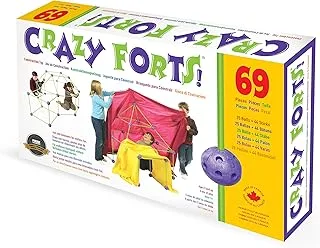
Crazy Forts 69-Piece Expansion Pack
“Doubles your building material. Enables truly massive multi-room structures.”

Crazy Forts Glow-in-the-Dark Sticks (20-pack)
“Glow-in-the-dark sticks that replace standard ones. Turn the fort into a nighttime experience.”
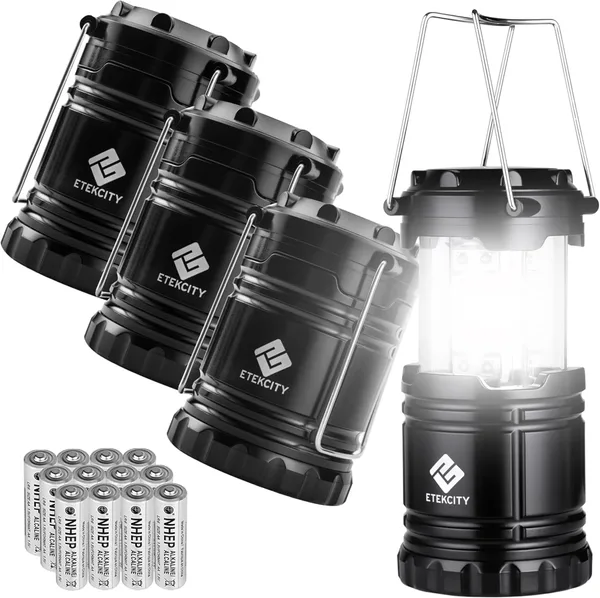
Etekcity LED Camping Lantern (2-pack)
“Battery-powered lanterns for inside the fort. Creates a cozy reading or hangout space.”
HearthSong Fantasy Fort Kit
“Alternative fort-building kit with included fabric panels. Less customizable but faster setup.”