ScienceBasedKids.com may earn a commission from affiliate links in this review. Our ratings are never influenced by affiliate relationships. Read our full methodology.
Ask a parent of a four-year-old what toy gets the most use in their house and an outsized number will say “the train set.” Not a specific brand, not a specific set — just “the trains.” Wooden railway play has a hold on early childhood that transcends trends, and BRIO is the name that started it all. The Swedish company has been manufacturing wooden toys since 1884 and wooden trains since 1958. When people picture “wooden train set,” they’re picturing BRIO, even if they don’t know it.
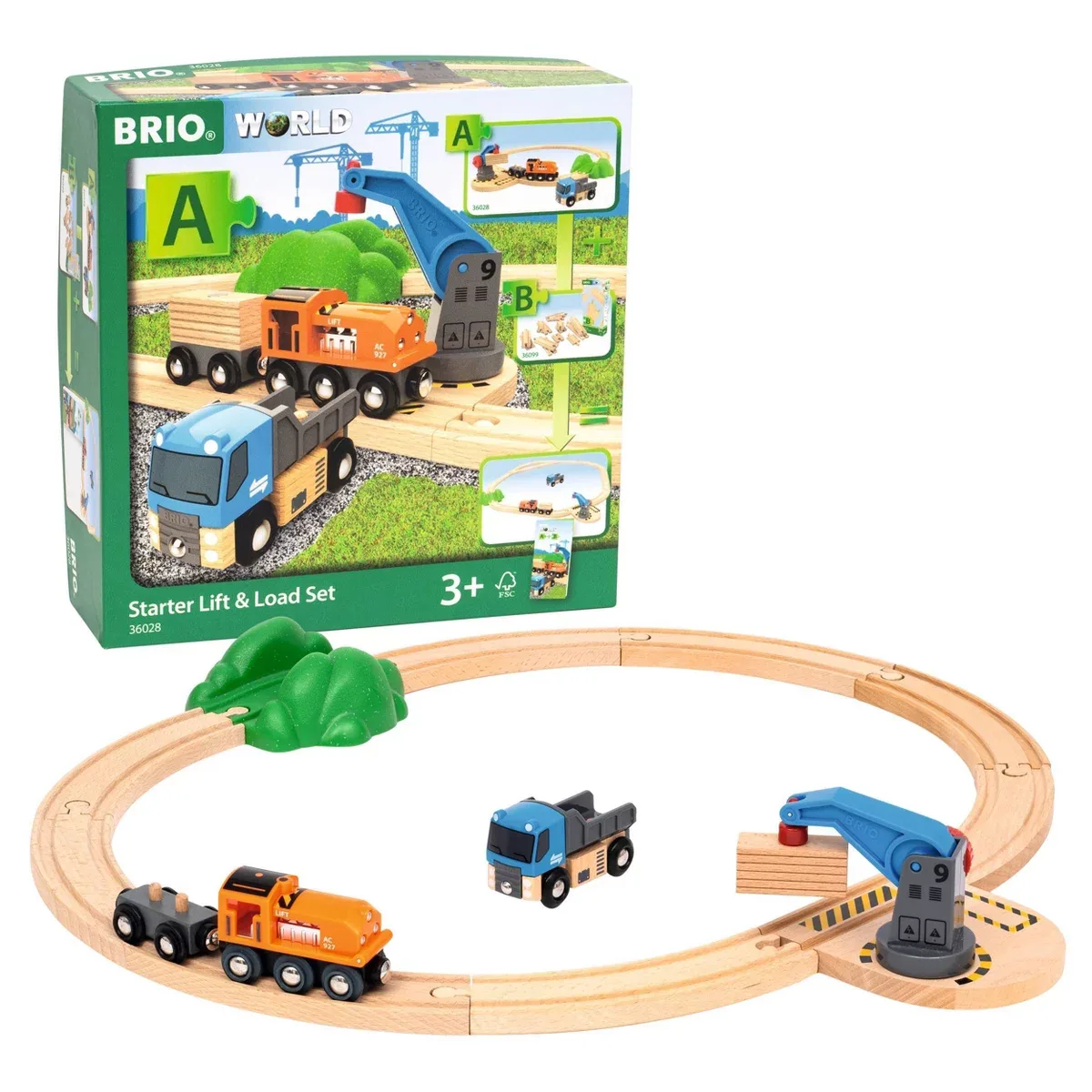
The Railway Starter Set ($55) is BRIO’s entry point — 26 pieces including track, a train with magnetic couplings, a bridge, and a few scenic accessories. We tested it for six weeks with children ages 2 through 6, alongside a budget alternative (Conductor Carl) for comparison. Here’s what we found.
Product Overview
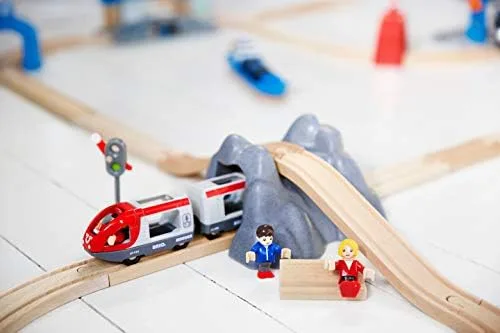
The BRIO World Railway Starter Set includes 26 pieces that create a figure-eight track layout with an elevation change via a small bridge:
- 12 track pieces — curves, straights, and ascending/descending ramp sections
- 1 locomotive with magnetic couplings front and rear
- 1 cargo car with removable load
- 1 bridge with support structure
- 1 tunnel
- Scenic accessories — trees, a signal, and a small figure
The track uses BRIO’s standard gauge, which is compatible with most other wooden train brands (Thomas & Friends Wooden Railway, Ikea LILLABO, Conductor Carl, and others). This cross-brand compatibility is one of the strengths of the wooden railway format.
The pieces are made from FSC-certified European beechwood with water-based paint finishes. The track connections use a simple tongue-and-groove joint that provides just enough friction to hold layouts together while remaining easy for small hands to connect and disconnect.
Our Evaluation
Build Quality: 9/10
BRIO’s manufacturing quality is immediately apparent. The beechwood is dense and smooth, with a finish that feels warm and natural. The track pieces are precisely dimensioned — connections are snug without being tight, and layouts sit flat on any surface. The locomotive and cars have solid wheels that roll smoothly on the track grooves.
The magnetic couplings on the train cars are strong enough to pull connected cars reliably but weak enough for a toddler to separate. This balance is harder to achieve than it sounds, and BRIO gets it right.
Compared to the Conductor Carl set we tested alongside, the difference is substantial. BRIO’s wood is denser and more uniform. The track connections are more precise. The paint finish is more durable. The Conductor Carl set is functional and compatible, but handling both side by side makes the quality gap obvious.
Play Value: 9/10
Wooden train play engages children at multiple levels simultaneously:
Motor play (ages 2-3): Pushing trains along track, connecting and disconnecting cars, driving through tunnels. The physical manipulation is satisfying and develops fine motor coordination. Our youngest testers spent most of their time in this mode — the trains themselves were the primary attraction.
Layout planning (ages 3-6): Designing track layouts is the hidden depth of wooden train play. A child figuring out how to connect track pieces into a complete loop is solving a genuine spatial puzzle. Adding switches, intersections, and elevation changes increases the complexity. In our testing, layout planning engagement increased with age, which is the sign of a well-designed toy — it reveals new challenges as the child develops.
Narrative play (all ages): Train play naturally generates stories. The train is going somewhere, carrying something, encountering obstacles. This narrative layer appeared spontaneously in every child we observed, from the two-year-old making “choo choo” sounds to the six-year-old creating elaborate scenarios involving schedules, passengers, and emergencies.
The 26-piece starter set provides enough material for satisfying play but is clearly designed as a beginning. The figure-eight layout is the simplest meaningful loop, and children quickly want more track to build larger, more complex layouts.
Age Appropriateness: 9/10
The 2+ rating is accurate. The pieces are large, smooth, and free of small parts. The magnetic train couplings are secure and cannot be removed during normal play. The track connections require just enough dexterity to be achievable for a two-year-old with some effort.
Durability: 10/10
BRIO trains are genuinely heirloom toys. The beechwood construction resists denting, cracking, and wear. The paint finish holds up to years of handling. The track connections maintain their fit over time. Online parent communities are full of reports of BRIO sets lasting 10-20 years and being passed down between families. In our six-week test, we saw zero degradation despite daily, sometimes aggressive, use.
Value for Money: 7/10
At $55 for 26 pieces, BRIO is premium-priced. The Conductor Carl 100-piece set costs $35 and provides compatible track at a fraction of the per-piece cost. The quality difference is real but may not be decisive for every family.
The long-term value calculation favors BRIO: these sets last for years, survive multiple children, and retain 50-60% of their value on the resale market. The cost-per-hour-of-play over a 4-5 year lifespan is exceptionally low.
The Evidence
Spatial Reasoning and Layout Planning. The track layout planning element of wooden train play engages spatial reasoning directly. Children must visualize how pieces connect, anticipate where the track will lead, and solve the spatial puzzle of creating a complete loop. Jirout and Newcombe (2015) found that spatial play with construction toys positively predicted spatial skills in a large representative sample.1
Narrative and Pretend Play. Train play naturally generates pretend play scenarios. Lillard et al. (2013) reviewed the literature on pretend play and found associations with language development, social understanding, and self-regulation, though the causal relationships remain debated.2
Fine Motor Development. Connecting track pieces, coupling train cars, and manipulating small accessories all require fine motor coordination. Cameron et al. (2012) found that fine motor skills in kindergarten predicted later academic achievement in reading and math.3
The honest summary: Wooden train play engages spatial reasoning, narrative play, and fine motor development — all well-supported developmental domains. No research specifically examines BRIO or wooden train play as distinct from other construction and pretend play activities.
Safety Notes
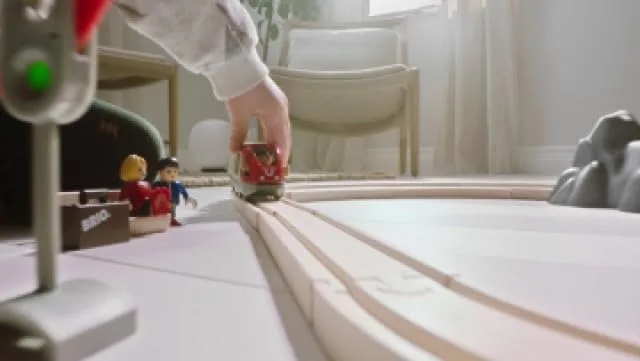
BRIO Railway products meet ASTM F963, EN-71, and CPSIA safety standards. All pieces are above the small-parts threshold for ages 2+. The magnetic couplings are enclosed within the train body and inaccessible during normal play. The water-based paint is non-toxic and meets European and American standards for toys intended for mouthing.
No CPSC recalls have been issued for the BRIO World Railway Starter Set.
The Verdict
The BRIO World Railway Starter Set is the best introduction to wooden train play. The build quality is exceptional, the play value spans years, and the expandable system means you’re investing in a platform, not just a toy. The figure-eight layout is satisfying enough to start with and limited enough to make expansion feel natural.
Product Rating: 8/10 — Heirloom quality, multi-year engagement, excellent play value. The 26-piece limitation and premium price prevent a higher score.
Evidence Rating: Emerging — Wooden train play engages spatial reasoning, narrative play, and fine motor skills. No train-specific research, but the developmental domains are well-supported.
Who Should Buy This
- Families with children ages 2-4 looking for an enduring construction/pretend play toy
- Parents who value natural materials and lasting build quality
- Families looking for a platform that grows through expansion sets
- Gift-givers seeking a classic, well-received toddler present
Who Should Skip This
- Budget-conscious families — Conductor Carl or IKEA LILLABO offer compatible track at lower cost
- Families with limited floor space for track layouts
- Children over 7 who may want more complexity than wooden trains offer
- Anyone looking for electronic or remote-control train features
This review reflects our independent evaluation. ScienceBasedKids.com purchased this product at retail price. We may earn a commission if you purchase through our links, which helps fund our research. This never influences our ratings.
Footnotes
-
Jirout, J. J., & Newcombe, N. S. (2015). “Building blocks for developing spatial skills: Evidence from a large, representative U.S. sample.” Psychological Science, 26(3), 302-310. ↩
-
Lillard, A. S., Lerner, M. D., Hopkins, E. J., Dore, R. A., Smith, E. D., & Palmquist, C. M. (2013). “The impact of pretend play on children’s development: A review of the evidence.” Psychological Bulletin, 139(1), 1-34. ↩
-
Cameron, C. E., Brock, L. L., Murrah, W. M., Bell, L. H., Worzalla, S. L., Grissmer, D., & Morrison, F. J. (2012). “Fine motor skills and executive function both contribute to kindergarten achievement.” Child Development, 83(4), 1229-1244. ↩
Enjoyed this review? We publish two new evidence-based evaluations every week.
Free. No spam. Unsubscribe anytime.
Track layout planning increased dramatically with age, suggesting genuine spatial reasoning engagement.
Recommended Accessories
Affiliate links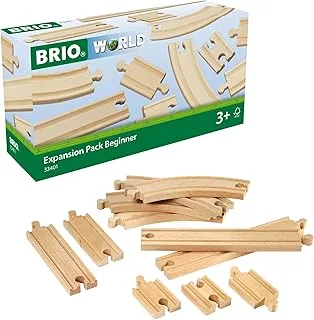
BRIO World 33773 Railway Expansion Pack
“11 track pieces that add curves, switches, and layout possibilities to the starter set.”
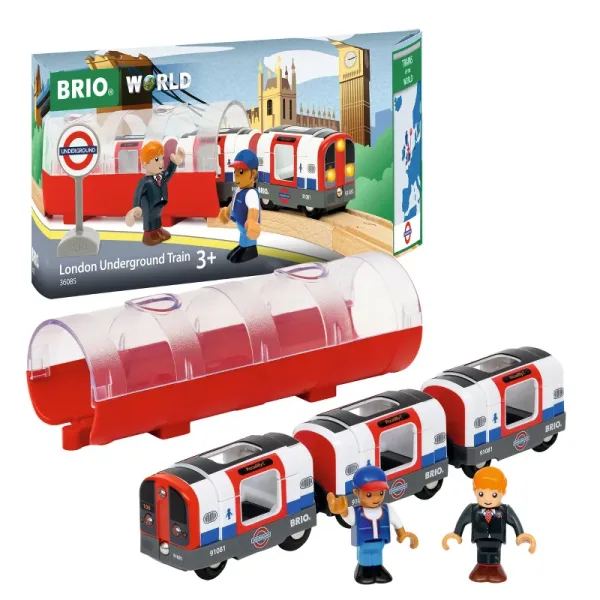
BRIO World Smart Tech Sound Action Tunnel
“Adds sound and technology to the wooden rail system. Bridge between analog and digital play.”

Conductor Carl 100-Piece Wooden Train Set
“Budget alternative with more pieces. Compatible track gauge. Lower wood quality.”
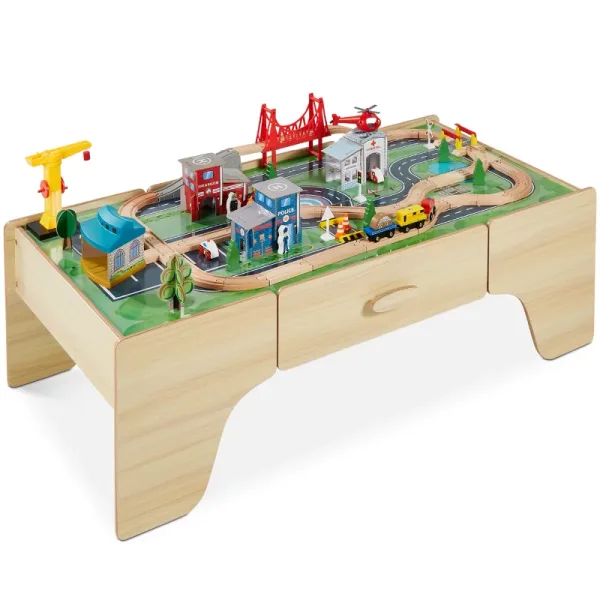
KidKraft Wooden Train Table
“Dedicated play surface keeps layouts intact. Standard gauge fits BRIO track.”
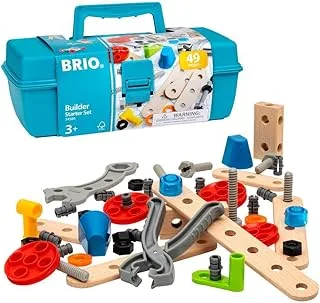
BRIO Builder Starter Set (49-piece)
“Construction toolkit in the same BRIO quality. Pairs with train play for building stations and scenery.”